Source Self-Priming Corn Flour Mill for Flour Rice Flour Beans
Find 30 self-priming corn flour mill units with varying power ratings and capacities. Compare specifications for flour, rice flour, and beans processing to select the right machinery for your needs; compare the available evidence and request quotations based on your requirements.
Updated
Key considerations
Products List
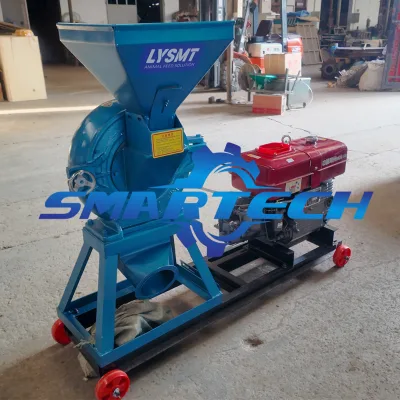


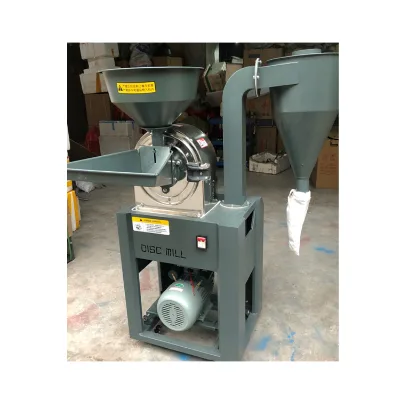


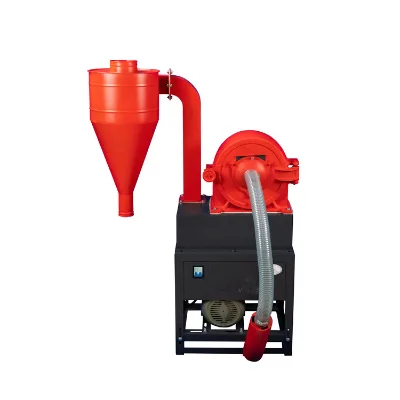
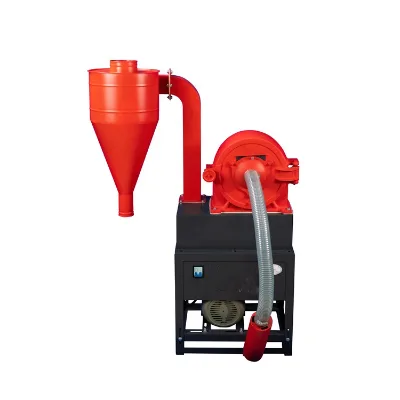
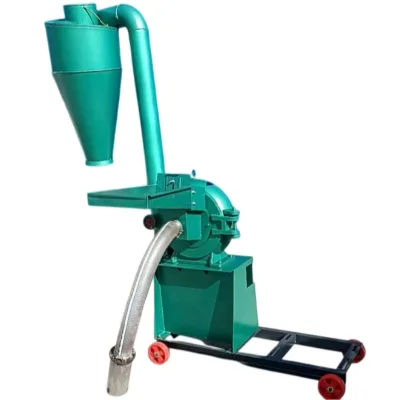
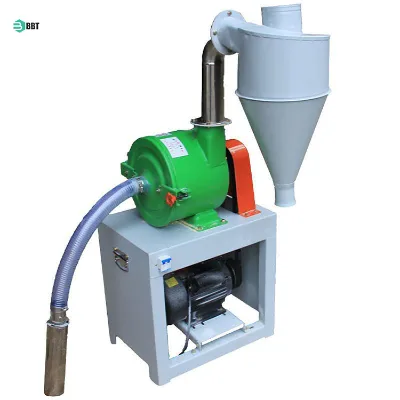
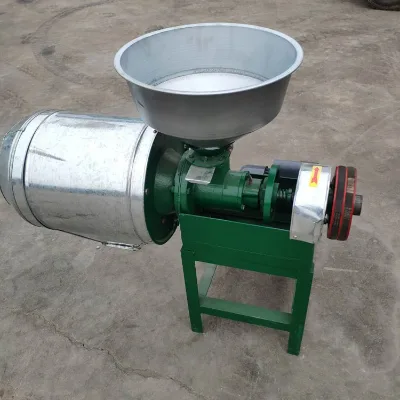


Comprehensive Sourcing Guide
Self-Priming Corn Flour Mill Sourcing Guide
A self-priming corn flour mill automatically draws grain into the grinding chamber, reducing the need for manual feeding and making it a practical choice for small mills, farm operations, and commercial flour producers. When sourcing this equipment on B2B platforms, buyers should treat each listing as a starting point for verification rather than a finished specification. The machines marketed under this keyword range from compact electric grinder mills to larger vertical flour mill units, and the differences in capacity, power, and construction directly affect both price and suitability for a given production line.
This guide walks through the key decisions at each stage of procurement: scoping the product category, verifying technical parameters, reviewing documentation, negotiating commercial terms, qualifying suppliers, and planning for long-term operation. Throughout, the emphasis is on confirming claims with the seller before committing funds. Because flour milling equipment touches food production, documentation and build quality carry as much weight as quoted price. Buyers who systematically verify model details, output ratings, and packing arrangements consistently avoid the most common sourcing failures in this category.
Product Scope and Observed Listing Signals
Listings under this keyword show a wide spread of machine types. Observed product pages include models such as the 6FD and 6FY flour mill series, the 9FC/FFC grinding series, and an MSD-series press machine for corn, alongside a KELLEN-branded grain grinder corn flour mill maize milling machinery unit. Applications cited across these listings include flour, rice flour, wheat, beans, and starch, with one corn press machine explicitly listing corn as its press material. Buyers should note these are observations from individual listings, not guarantees that every product under the keyword shares these attributes.
Listing signals also reveal the commercial shape of the category. Minimum order quantities observed range from one set upward, with at least one listing stating an MOQ of 1 set, and customization appears both as a listed attribute (customized and non-customized variants) and as an explicit availability statement. Observed price points span from modest figures for benchtop-style units to substantially higher values for complete lines, reflecting the diversity of scale within the keyword. Buyers should map each candidate listing against their own capacity needs before comparing prices across the range.
Technical Specifications to Verify
Power and capacity figures deserve the closest scrutiny. Observed listings show power ratings including 7.5 kW and 11/15/22 kW options, output capacities of 400/500/600 kg for one model series, and a production capacity of 600–800 kg/h for another listing. Voltage is listed at 380 V, which buyers in regions with different grid standards must reconcile with their local supply or plan for transformation equipment. Roller teeth configurations appear as 16, 18, and 20 teeth, a parameter that affects grind fineness and should be matched to the intended flour texture.
Physical and mechanical details matter equally. Observed dimensions include 1220×750×2470 mm, 58×95×115 cm, 1460×1560×1822 mm, 590×390×125 mm, and a single package size of 100×100×100 cm, while one listing cites 40-foot container shipping dimensions—evidence that large units may be shipped as complete container loads. Weight figures observed include 760/810/850 kg and 65 kg for smaller units. Buyers should confirm the self-priming mechanism's feed behavior, the adjustable fine powder size advantage cited in one listing, and the appearance type—axle or vertical—matches their installation layout.
Compliance and Safety Documentation
Because corn flour mills feed into food production, buyers should request documentation demonstrating that contact materials and electrical systems meet the destination market's requirements. Observed listing attributes include a machinery test report being provided, which buyers should ask to see before ordering, along with any warranty terms—one observed listing states a 2-year warranty. Low-confidence signals such as CE and ISO 9001 references appear in the surrounding context, but buyers must not assume these certifications apply to a specific machine; certification status should be confirmed directly with the supplier and validated through certificate numbers where possible.
Safety verification should focus on the areas that flour milling equipment makes critical: guarding around rotating rollers and belts, electrical enclosure protection appropriate to dusty environments, and emergency-stop accessibility. Buyers should ask how the self-priming feed is protected against foreign objects and how the machine behaves under overload or blockage conditions. Requesting the operating manual and wiring diagrams in advance of shipment allows the buyer's own technician or a third-party inspector to review the design. Documenting these items in the purchase contract creates a clear basis for recourse if delivered equipment differs from what was agreed.
Cost Drivers and Commercial Terms
Price variation across observed listings is extreme, from figures as low as 46 USD to as high as 415,000 USD, so buyers must first isolate what drives the spread. Capacity tier, power rating, degree of customization, and whether the listing covers a single machine or a complete milling line are the primary drivers. A one-set MOQ lowers the entry barrier for trial orders—observed MOQ values range from 1 to 10—but unit economics typically improve at higher volumes. Buyers should request itemized quotations separating machine cost, packing, and inland freight to the port.
Packing and shipping terms directly affect landed cost and risk. Observed packing methods include wooden boxes, plywood cases, and standard wooden cases, with one listing referencing 40-foot container dimensions for large equipment. Buyers should confirm whether packing is seaworthy for their route, whether the quoted price includes export packing, and which Incoterm governs the transaction. Payment structure is another negotiation point: splitting payment against inspection milestones protects the buyer on customized orders. For non-customized standard models, buyers can compare quotes more directly, but must still verify that the same model number and specification sheet underlie each offer.
Supplier Qualification and Quality Control
Supplier qualification should begin with a verification of the supplier's own claims. Observed origin data points to production in Shandong, Henan (including Kaifeng), and elsewhere in China, so buyers sourcing remotely should use a third-party inspection service or video audit to confirm the factory actually produces the model under discussion. The KELLEN brand name appears on one listing, and brand claims should be checked against business licenses and any trademark registration the supplier can evidence. A machinery test report being provided, as one listing states, is a useful signal but only meaningful if the buyer reviews the actual document.
Quality control during production is the buyer's leverage point. For customized orders, agreeing on a specification sheet that locks dimensions, power rating, output capacity, and materials before production prevents disputes. Requesting photos or videos of the machine running before final payment, testing with the buyer's own grain sample where feasible, and pre-shipment inspection are standard practices for this equipment class. Buyers should also clarify which core components—motor and other parts—are sourced from which manufacturers, since motor brand and quality materially affect reliability. Warranty terms, such as the observed 2-year coverage, should specify what is covered and how spare parts are supplied.
Long-Term Procurement Checks
After installation, long-term value depends on consumables, spare parts, and service access. Roller teeth wear directly affects grind consistency, so buyers should confirm the availability of replacement rollers and the teeth configurations offered—16, 18, and 20 teeth per the observed listings. Screens, belts, and bearings for the self-priming feed system should be stocked based on the supplier's wear-parts list. Buyers operating at the 400–800 kg/h range observed in listings should plan maintenance intervals around actual throughput rather than nameplate figures, and should document baseline performance at commissioning to detect degradation early.
Procurement teams should also build the relationship for repeat orders and fleet standardization. Standardizing on one model series—for example, the 6FD or 6FY families where they fit the application—simplifies spare-parts inventory and operator training. Maintaining records of the specification sheet, test report, packing configuration, and warranty terms for each purchase creates a reference baseline for future negotiations. Finally, buyers should periodically re-verify supplier responsiveness on spare-parts requests and technical questions; a supplier's post-sale behavior during the warranty period is the strongest predictor of whether they deserve a place in the next sourcing cycle.
FAQs
How much power does a self-priming corn flour mill require?
Power requirements vary by model, with listed machines ranging from 7.5kw up to 11, 15, or 22kw depending on capacity. Larger outputs need higher power ratings, so confirm your available electrical supply before ordering. Most units operate on 380V three-phase power, so buyers should verify that local voltage and wiring match the machine specification before purchase.
What output capacity can these flour mill machines achieve?
Listed models show outputs of 400, 500, or 600kg, while one electric grinder mill unit lists a production capacity of 600-800KG/H. Actual output depends on the model selected, the material processed, and roller configuration. Buyers should match the capacity rating to their daily production plan and confirm the exact figure with the supplier for the chosen model.
Which materials can these mills process besides corn?
Applications listed include flour, rice flour, starch, beans, and wheat, with some models covering all of these materials. Roller teeth options of 16, 18, or 20 teeth affect grinding fineness and suitability for different grains. If you plan to switch between corn and other materials, confirm with the supplier that the selected model handles each material you need.
Can the self-priming corn flour mill be customized for specific needs?
Yes, customization is available on several listed models, while other units are sold non-customized. Customization may cover specifications suited to your processing requirements, so state your needs clearly when requesting quotes. Also note packaging differences, as machines ship in wooden boxes, wooden cases, or plywood cases depending on the model and supplier arrangement.
What warranty and testing support is offered with these machines?
One listed electric grinder mill includes a 2-year warranty, a machinery test report provided, and core components including the motor. Warranty terms differ between models and suppliers, so confirm coverage duration and included parts before ordering. Requesting a test report before shipment helps verify that the machine performs as specified for your flour production needs.
What are the shipping dimensions and packing options for these mills?
Listed dimensions include 590x390x125mm for a compact grinder, 58x95x115cm, 1220x750x2470mm, and 1460x1560x1822mm for larger units, with some packaged in 40 feet containers. Packing options include wooden boxes, wooden cases, plywood cases, and standard wooden cases. Measure your loading space and confirm final shipping dimensions with the supplier before arranging transport.
How do I choose between different roller teeth configurations?
Available roller teeth options are 16 teeth, 18 teeth, and 20 teeth, and this choice affects grinding texture and throughput. Fewer teeth generally suit coarser milling while more teeth support finer powder, and one model highlights adjustable fine powder size as an advantage. Match the configuration to your target flour fineness and discuss expected results with the supplier.
Which models suit small workshop versus larger production use?
Compact electric grinder mills with single package size around 100x100x100cm and 65kg weight suit smaller workshops with lower output needs. Vertical axle-type models with 11 to 22kw power and 400 to 600kg output suit higher-volume production. Evaluate available floor space, power supply, and daily capacity targets before selecting a model, since installation footprints differ significantly between types.