Source FDA Glass Seasoning Jar with Grinder for Home, Restaurant, and Kitchen Use
Find and compare 30 FDA Glass Seasoning Jar with Grinder options for home, restaurant, and kitchen applications. Evaluate manual styles, plastic or glass materials, and customization features to select the right spice mill for your sourcing needs.
Key considerations
Products List


Comprehensive Sourcing Guide
FDA Glass Seasoning Jar with Grinder Sourcing Guide
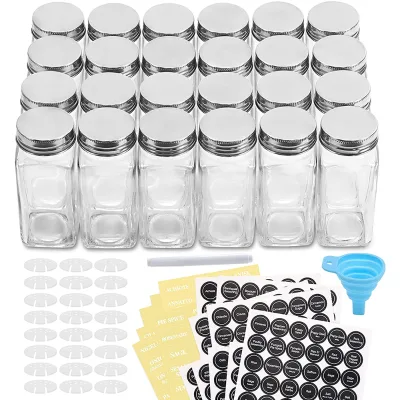
The market for FDA glass seasoning jars with grinders presents a distinct opportunity for buyers seeking durable, food-safe storage solutions that integrate functionality with aesthetic appeal. Based on observed product listings, these items are frequently categorized as manual mills designed for home, restaurant, and kitchen applications, specifically targeting the milling of spices such as salt, pepper, and chili. The core value proposition lies in the combination of glass construction, which offers transparency and chemical inertness, with a mechanical grinding mechanism that allows users to control particle size for optimal flavor release.
Buyers must navigate a landscape where product attributes vary significantly between listings, ranging from compact 56mm units to larger 192mm models. While some products are explicitly described as "Pepper & Salt Grinders" with specific dimensions like 563131mm, others appear as "Spice Shaker Jars" or "Salt and Pepper Grinders" with different form factors, including square bottles and round shapes. This variation necessitates a rigorous verification process to ensure the specific unit selected matches the intended operational requirements, whether for high-volume restaurant service or individual household use.
Product Scope and Observed Listing Signals
The observed product scope reveals a diverse array of configurations, including manual mills and shaker jars that accommodate various spice types. Listings indicate that customization is available for color and branding, allowing buyers to align the product with specific brand identities. The materials observed include both plastic and glass, with glass being the preferred material for the core jar component in many high-end listings to ensure food safety and visual clarity. The application is consistently noted for home and restaurant environments, suggesting a dual-market potential for procurement strategies.
A critical signal in the current market is the presence of specific product models such as H51-2504, H51-2532, and H53-266G, each with distinct dimensions and capacities. For instance, one model features a capacity of 100ml with a size of 563131mm, while another offers 180ml capacity with a height of 192mm. Buyers should note that while some listings highlight features like "Sustainable" and "Stocked" availability, others emphasize sealing types like screw caps or specific shapes such as square bottles. This diversity requires careful filtering to isolate products that meet the exact physical and functional criteria of the procurement request.
Technical Specifications to Verify
When evaluating technical specifications, the primary focus must be on the dimensional accuracy and capacity of the glass jar relative to the grinding mechanism. The observed data shows a wide range of sizes, from small units measuring 52132mm to larger ones reaching 65192mm, with weights varying from 128g to 277g. Buyers must verify that the stated dimensions, such as the top diameter of 50mm and base diameter of 42mm for specific models, align with the intended shelf space and ergonomic handling requirements. Inconsistent reporting of dimensions across different listings underscores the need for physical sample verification before bulk ordering.
The grinding mechanism and sealing integrity are equally critical technical parameters that require detailed scrutiny. While some products are described as having a "Seal" feature, others specify a "Screw Cap" sealing type, which impacts the freshness retention of the spices. The capacity standards observed include 100ml, 120ml, and 180ml, which directly influence the frequency of refilling and the suitability for different usage scenarios. Additionally, the material composition must be confirmed as glass for the jar body to ensure it meets the "FDA glass" requirement, distinguishing it from plastic alternatives that may be listed under similar product names but lack the same thermal and chemical properties.
Compliance and Safety Documentation
Compliance with food safety standards is non-negotiable for any product intended for direct food contact, particularly when the core keyword specifies "FDA glass." The observed product data explicitly lists LFGB and FDA certifications, which are essential for validating that the materials used in the glass and grinding components are safe for human consumption. Buyers should request current, valid certificates of compliance from the supplier to confirm that the specific batch of glass seasoning jars meets these rigorous safety thresholds. Without these documents, the risk of regulatory non-compliance in the destination market increases significantly.
Beyond the primary certifications, the documentation should also address the manufacturing standards and origin of the product to ensure traceability. The observed listings indicate origins in Ningbo and Shandong, China, which are major manufacturing hubs for glass and kitchenware. While ISO9001 is mentioned in background data, it should not be assumed as a guaranteed attribute without explicit confirmation from the supplier. Buyers must verify that the supplier can provide a complete compliance dossier, including material safety data sheets and test reports, to substantiate the FDA and LFGB claims made in the product listings.
Cost Drivers and Commercial Terms
The cost structure for FDA glass seasoning jars with grinders is heavily influenced by the material quality, customization options, and order volume. The observed minimum order quantities (MOQ) range widely from 500 pieces to 10,000 pieces, with specific models like the H53-266G requiring a higher MOQ of 5000 pieces. This variation suggests that smaller buyers may face higher per-unit costs or limited model availability, while larger orders can leverage economies of scale to reduce the price per unit. Buyers must carefully calculate the total landed cost, including the impact of the MOQ on inventory holding and cash flow.
Pricing and commercial terms are further affected by the complexity of customization and packaging requirements. The observed data indicates that color customization is accepted, which can introduce additional tooling or setup costs. Packaging options range from simple cartons to color boxes, display boxes, and palletized shipments, each adding a layer of cost to the final product. The observed price range of 0.02 to 2.62 USD reflects the disparity between basic shaker jars and more complex grinder systems. Buyers should negotiate based on the specific configuration, ensuring that the quoted price includes all necessary packaging and that the payment terms align with the production lead time.
Supplier Qualification and Quality Control
Supplier qualification for this category requires a deep dive into their manufacturing capabilities and quality assurance protocols. Given the fragility of glass and the mechanical complexity of grinders, suppliers must demonstrate robust quality control measures to minimize breakage rates and ensure consistent performance. Buyers should verify the supplier's experience with glass molding and assembly, as well as their ability to handle the specific customization requests observed in the market, such as color matching and branding. A supplier with a proven track record in exporting to markets requiring FDA and LFGB compliance is essential.
Quality control checks should extend beyond the final product to include raw material inspection and in-process monitoring. The observed product attributes, such as the "Sustainable" feature and specific weight ranges, indicate that suppliers are expected to maintain tight tolerances. Buyers should implement a pre-shipment inspection protocol that tests the sealing integrity, grinding smoothness, and dimensional accuracy of the jars. It is also advisable to request samples from different production batches to ensure consistency, as the observed data shows variations in weight and size even within the same model number, such as the H51-2532 series.
Long-Term Procurement Checks
Establishing a long-term procurement relationship for FDA glass seasoning jars requires a commitment to continuous monitoring and performance evaluation. Buyers should regularly review the supplier's ability to maintain the observed certifications and standards over time, as regulatory requirements can evolve. The initial verification of FDA and LFGB compliance must be followed by periodic audits to ensure that the production processes have not drifted from the approved standards. This proactive approach helps mitigate the risk of supply chain disruptions due to non-compliance issues.
Sustainability and supply chain resilience are also critical factors for long-term success. The observed "Sustainable" feature suggests a growing market demand for eco-friendly products, and buyers should assess the supplier's commitment to sustainable practices in their glass sourcing and manufacturing. Additionally, the variability in lead times and stock availability, as indicated by the "Stocked" attribute in some listings, necessitates a flexible procurement strategy. Buyers should maintain a diversified supplier base or secure buffer stock to handle fluctuations in demand and ensure a steady supply of high-quality seasoning jars for their customers.
FAQs
What certifications do these seasoning grinders have?
These seasoning grinders hold FDA and LFGB certifications, ensuring they meet strict food safety standards for direct contact with spices. This compliance is essential for buyers targeting regulated markets in North America and Europe, providing assurance that the materials used in the grinder and jar components are safe for culinary use.
Can I customize the color and packaging of the grinder?
Yes, customization is available for both the product color and its packaging options. Buyers can select from various packing methods including carton, color box, display box, or pallet configurations. This flexibility allows businesses to tailor the visual presentation and logistics handling to match their specific brand identity and retail requirements.
What is the minimum order quantity for these products?
The minimum order quantity varies by model, typically ranging from 500 pieces to 5000 pieces. For instance, the H51-2504 model has an MOQ of 500 pieces, while the H53-266G spice shaker jar requires 5000 pieces. Buyers should verify the specific MOQ for their chosen model to plan inventory effectively.
What materials are used in the construction of these grinders?
The grinders are constructed using plastic and glass materials to ensure durability and aesthetic appeal. The plastic components often form the body or mechanism, while glass is used for the jar section to maintain spice freshness. This combination provides a sturdy, sealable container suitable for home and restaurant kitchen environments.
Where are these seasoning grinders manufactured?
These products are manufactured in China, with specific origins noted in Ningbo and Shandong regions. Sourcing from these locations offers access to established manufacturing hubs known for producing high-quality kitchenware. Buyers can leverage this geographic advantage for efficient logistics and supply chain management when importing these seasoning tools.
What sizes are available for the glass seasoning jars?
Available sizes include standard capacities such as 100ml and 180ml, with dimensions like 56*31*31mm and 65*192mm. The H51-2504 model offers a 100ml capacity, while the H51-2532 provides 180ml. These varied sizes cater to different spice storage needs, from small household portions to larger commercial kitchen requirements.