Source FDA LFGB Rectangular Ice Cube Mold with Lid for Bars, Catering, and Home Use
Source FDA LFGB Rectangular Ice Cube Mold with Lid from 30 verified listings. Compare silicone materials, hardness options, and customization features to find the right solution for commercial bars, catering services, and home kitchens.
Key considerations
Products List


Silicone Ice Cube Tray/Maker/Mold with Transportation Patterns Easy Release
$1.00 - $10.00
MOQ: 50 Pieces


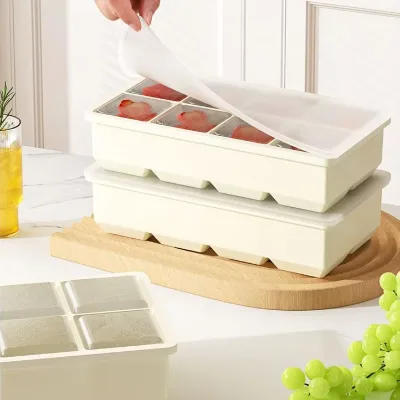


China Manufacturer 6 Cells Panda Shape FDA Rubber Promotional Ice Cube Mold
$1.20 - $1.28
MOQ: 1000 Pieces

China Manufacturer 6 Cells Tiger Shape FDA Rubber Ice Cube Silicone Mold
$1.20 - $1.28
MOQ: 1000 Pieces


Comprehensive Sourcing Guide
FDA LFGB Rectangular Ice Cube Mold with Lid Sourcing Guide
Sourcing silicone ice cube molds that meet both FDA and LFGB standards requires a disciplined approach to material verification and supplier qualification. The core keyword highlights a specific product category where food safety compliance is non-negotiable, particularly for buyers targeting the European and North American markets. While many suppliers claim broad compliance, the distinction between general food-grade silicone and certified materials that withstand rigorous testing is critical. Buyers must understand that "FDA" and "LFGB" are not single certifications but rather frameworks of compliance that require specific test reports and material declarations to validate.
The presence of a lid adds a layer of complexity to the sourcing process, as it introduces additional components that must also meet safety standards. This guide focuses on the rectangular form factor, which is common for commercial and household use, but the principles of verification apply to any shape. The goal is to move beyond marketing claims and establish a procurement strategy based on observable product attributes, verified certifications, and clear commercial terms. By focusing on these elements, buyers can mitigate the risk of receiving non-compliant products that could lead to regulatory penalties or brand damage.
Product Scope and Observed Listing Signals
The observed market signals indicate a wide range of silicone products, including candy molds, ice lattice molds, and standard ice cube trays, with prices ranging from $0.1 to $10 USD. This price variance suggests significant differences in material quality, mold complexity, and certification depth. For instance, some listings highlight specific hardness values like 30-90 Shore A or a fixed 70A, while others mention custom hardness options. Buyers should note that the presence of a lid is not explicitly detailed in all observed listings, so it is essential to confirm this feature directly with the supplier rather than assuming it is included in the standard rectangular mold offering.
Material composition is a primary differentiator in this category, with most observed products specifying silicone or silicone rubber as the base material. Some listings mention the use of platinum catalysts or double vulcanizing agents, which are indicators of higher-quality, food-safe silicone that minimizes residual odors and improves durability. The observed weights for similar products range from 83g to 200g, which can serve as a benchmark for assessing the thickness and robustness of the mold. Buyers should use these observed attributes as a baseline for comparison, ensuring that the specific rectangular mold with a lid they are considering matches or exceeds these quality indicators.
Technical Specifications to Verify
Hardness and tolerance are critical technical specifications that affect the usability and longevity of the ice cube mold. The observed data shows a hardness range of 30-90 Shore A, with some specific products listed at 70A, which is a common balance between flexibility for easy demolding and structural integrity. Buyers should verify the exact hardness specification for their chosen mold, as a hardness that is too soft may lead to deformation during stacking, while one that is too hard may make it difficult to remove ice cubes without breaking them. Additionally, the observed tolerance of ±0.2mm for rubber mold parts indicates a standard level of precision, but buyers should confirm if tighter tolerances are available for custom designs to ensure a snug fit for the lid.
The curing process and temperature are vital for ensuring the silicone is fully vulcanized and safe for food contact. Observed listings mention a second cure temperature of 200°C for 2-4 hours, which is a standard post-curing step to remove volatile organic compounds. Buyers should request evidence of this process, as inadequate curing can lead to off-gassing and unpleasant odors in the final product. Furthermore, the volume of the molds, observed in ranges like 89ml, 60ml, and 37ml, should be matched to the buyer’s specific needs for ice cube size. The shape, described as creative styling or standard rectangular, should also be verified to ensure it meets the aesthetic and functional requirements of the end-user.
Compliance and Safety Documentation
Compliance with FDA and LFGB standards is the cornerstone of sourcing food-grade silicone products. The observed listings mention certifications such as FDA, RoHS, and ISO/TS 16949 (listed as Isoiatf2016), which provide a foundation for trust. However, buyers must distinguish between general product certifications and specific food-contact compliance. FDA compliance typically requires a statement of compliance or test reports demonstrating that the material meets 21 CFR 177.2600 for silicone rubber. LFGB compliance, which is stricter than FDA in some aspects, requires migration tests to ensure that no harmful substances leach into food under simulated use conditions.
RoHS certification, while primarily focused on restricting hazardous substances in electronics, is often included in silicone product listings as an indicator of overall material purity. Buyers should request specific test reports from accredited laboratories for both FDA and LFGB compliance, ensuring that the reports cover the exact material grade used in the mold. It is also important to verify that the lid, if made of a different material such as plastic or metal, also holds the necessary food-contact certifications. The absence of specific test reports for the lid is a common gap that buyers must actively address to ensure complete product compliance.
Cost Drivers and Commercial Terms
The cost of silicone ice cube molds is influenced by several factors, including material quality, mold complexity, and customization options. The observed price range of $0.1 to $10 USD reflects the diversity of products available, with higher prices typically associated with custom designs, higher hardness ratings, or additional features like lids. Buyers should be aware that the MOQ (Minimum Order Quantity) ranges from 10 to 1000 units, with some specific listings showing an MOQ of 160 units. Understanding the MOQ is crucial for budgeting, as smaller orders may incur higher per-unit costs due to setup fees for compression molding.
Packaging and logistics also play a significant role in the total cost of ownership. Observed packaging methods include PE bags inside cartons, OPP bags, and custom color boxes, each with different cost implications. Buyers should consider the durability of the packaging to prevent damage during transit, especially for products with lids that may be prone to loss or breakage. Additionally, the origin of the products, primarily Shenzhen, China, should be factored into shipping cost calculations. Buyers should negotiate clear terms for sample availability, as observed listings mention sample costs around $280, which can be a significant upfront investment for testing multiple suppliers.
Supplier Qualification and Quality Control
Supplier qualification is a multi-step process that begins with verifying the manufacturer’s capabilities and quality management systems. The observed listings mention ISO/TS 16949 and RoHS certifications, which suggest a level of organizational maturity. However, buyers should conduct a deeper due diligence process, including reviewing the supplier’s audit reports and checking their track record for food-grade silicone production. It is essential to confirm that the supplier has experience in producing molds with lids, as this adds complexity to the molding process and requires precise alignment mechanisms.
Quality control measures should be clearly defined in the purchase agreement, including in-process inspections and final random inspections. Buyers should request a quality control plan that outlines the steps taken to ensure consistency in hardness, tolerance, and curing. The observed process of compression molding should be verified to ensure that it is suitable for the specific design of the rectangular mold. Additionally, buyers should establish a protocol for handling defects, including clear criteria for rejection and procedures for replacement or refund. This proactive approach to quality control helps minimize the risk of receiving substandard products.
Long-Term Procurement Checks
Long-term procurement success depends on establishing a robust relationship with the supplier and implementing continuous improvement mechanisms. Buyers should schedule regular reviews of product quality and supplier performance, using metrics such as defect rates, on-time delivery, and responsiveness to issues. The observed customization options, including logo printing and packaging design, should be leveraged to enhance brand value, but buyers must ensure that these customizations do not compromise the material’s safety or durability. Regular re-testing of materials, especially if the supplier changes their silicone source, is a critical step to maintain compliance.
Market trends and regulatory changes should be monitored to ensure that the products remain compliant and competitive. The observed product models, such as GYF11106 and GYF7414, provide a reference for specific designs, but buyers should be open to innovation and new designs that may offer better functionality or cost efficiency. Building a diversified supplier base can also mitigate risks associated with single-source dependency. By maintaining a focus on compliance, quality, and continuous improvement, buyers can secure a reliable supply of FDA and LFGB compliant silicone ice cube molds with lids for their business needs.
FAQs
Can I customize the color and hardness of the silicone mold?
Yes, customization is available for both color and hardness. The product offers customized color options and a hardness range of 30-90 Shore A, allowing buyers to select specific properties that match their unique design requirements and functional needs.
What certifications does the silicone rubber mold hold?
The product holds FDA and RoHS certifications, ensuring safety for food contact applications. Some listings also reference ISO standards, confirming compliance with international safety and environmental regulations for materials used in household and daily use items.
How is the silicone mold packed for shipping?
The standard packing involves a PE bag inside and a carton outside for protection. Alternative options include OPP bags, color boxes, or customized packing solutions, ensuring the molds arrive safely while meeting specific logistical or branding requirements.
What is the minimum order quantity for this product?
The minimum order quantity ranges from 10 to 1000 units depending on the specific supplier and product model. Some specific models list an MOQ of 160 units, while others may start as low as 10, requiring verification with the vendor.
Where are these silicone molds manufactured?
These molds are manufactured in Shenzhen, China, which is a major hub for silicone rubber production. The origin is consistently listed as China, providing a centralized location for sourcing and potential logistics coordination for international buyers.
What molding process is used to make these molds?
Compression molding is the primary process used to manufacture these silicone rubber parts. This method ensures high precision and durability, often utilizing platinum catalysts or double vulcanizing agents for optimal curing and material performance.