Anti-Static Memory Foam Seat Cushion Suppliers and Manufacturers
Source 18 verified suppliers for Anti-Static Memory Foam Seat Cushion products. Compare key dimensions including location, lead time, MOQ, and response time to identify suitable partners. Review product specifications and certifications to streamline your procurement process; review the available evidence before requesting comparable quotations from suitable candidates.
Suppliers List

Guangzhou Mingjie Household Products Co. Ltd
- Verified by TUVRHEINLAND
- Combined
- China Guangdong
- Lead time23 days
- Avg. response≤ 1h
Main marketsSouth America,Southeast Asia/ Mideast,East Asia(Japan/ South Korea),Domestic,Europe,Australia,North America

Ningbo Comfort Industry Co., Ltd.
- Verified by TUVRHEINLAND
- Manufacturer/Factory
- China Zhejiang
- Lead time45 days
- Avg. response≤ 6h
Main productsElectric Adjustable Beds, Adjustable Beds, Lift Recline Chairs, Memory Foam Mattress, Massage Adjustable Beds, Massage Lift Chairs, Memory Foam Pillows, Wallhugger Adjustable Bed, Electric Bed, Massage Chair
Main marketsSouth America,North America,Southeast Asia,Eastern Asia,Oceania,Western Europe

Shanghai Touch Industrial Development Co., Ltd.
- Verified by TUVRHEINLAND
- Combined
- China Shanghai
- Lead time15 days
- Avg. response≤ 5h
Main productsInstant Hot Pack, Hot Cold Pack, Gel Eye Mask, Gel Ice Pack, Gel Bottle Cooler, Instant Ice Pack, Hand Warmer, Heat Pack, Cooling Scarf, Gel Beads
Main marketsSouth America,Others(foreignTradeCapacity.exportBusinessCapacityMarketOther),Southeast Asia/ Mideast,East Asia(Japan/ South Korea),Domestic,Europe,Australia,North America

Dongguan Julisheng New Material Technology Co., Ltd.
- Verified by BV
- Combined
- China Guangdong
- Lead time30 days
- Avg. response≤ 5h
Main productsPU Foam, PU Corner Guard, Accessories PU Armrest, PU Self-Skinning, PU High Rebound, PU Slow Rebound, PU Imitation Wood Hard Foam, PU Foam Rugby, PU Traction Pillow, PU Foam Wheel
Main marketsDomestic


Comfort Memory Foam Car Seat Cushion Tailbone Pain Relief Driving Seat Cushion
$15.00 - $17.00
Moq: 200


Zhengzhou Yuexiu Industrial Co., Ltd
- Trading Company,Manufacturer/Factory
- China Henan
- Lead time23 days
- Avg. response≤ 5h
Main productsPU Integral Skin Foam, High Resilience PU Foam, Low Resilience PU Foam, Molded PU Foam, Corner Guard, PU Handles, Foam Seat, Foam Insert, PU Suspension Bushing, PU Foam Products
Main marketsSouth America,Eastern Europe,Mid East,North America,Southeast Asia,Eastern Asia,Oceania,Western Europe,Africa

Shandong Haosong New Material Technology Co., Ltd.
- Verified by BV
- Combined
- China Shandong
- Lead time30 days
- Avg. response≤ 5h
Main productsPolyurethane Foam, Car Seat, PU Foam, PU Armrest
Main marketsDomestic


Design Molded Seat PU Car Seat Cushion Wholesale Seat Cushion PU Foam Cushion
$25.00 - $30.00
Moq: 200


Wuxi Wonderful Import & Export Co., Ltd.
- Verified by TUVRHEINLAND
- Trading Company
- China Jiangsu
- Lead time30 days
- Avg. response≤ 11h
Main productsHome & Garden Products
Main marketsSouth America,Southeast Asia/ Mideast,Europe,Australia,North America

Qingdao ShengHong Rubber and Plastic Co., Ltd
- Verified by TUVRHEINLAND
- Trading Company
- China Shandong
- Lead time15 days
- Avg. response≤ 8h
Main productsOil Sealing, Damping and Buffering, Flexible Fittings for Fluid Pipelines, Protective Seals, Sealing Strip, Metal Stamped Products, Framework Oil Seals, Stamping, Rubber Product, Rubber Seal
Main marketsEurope

PUYANG SELFAIDING INDUSTRIAL CO., LTD.
- Verified by SGS
- Manufacturer
- China Henan
- Lead time15 days
- Avg. response≤ 2h
Main productsAdult Bib, Pet Pad, Underpad, Baby Bib, Protective Panties, Washable Sanitary Pad, Compression Stockings, Patient Care Clothing, Pet Nest, Pet Toy

Shenzhen Jintongyuan Technology Co., Ltd.
- Verified by TUVRHEINLAND
- Manufacturer/Factory
- China Guangdong
- Lead time30 days
- Avg. response≤ 8h
Main productsMemory Foam Pillow, Travel Neck Pillow, Knee Pillow, Lumbar Cushion, Topper, Mattress, Wedge Pillow, Pet Pat, Reading Pillow, Baby Pillow
Main marketsSouth America,Eastern Europe,Mid East,North America,Southeast Asia,Eastern Asia,Oceania,Western Europe,Africa

Weifang Bai Yi Garment Co., Ltd.
- Verified by CTI
- Combined
- China Shandong
- Lead time30 days
- Avg. response≤ 7h
Main productsCushions, Pillows, Seat Cushion, Pet Bed, Mattress, Folding Sofa, Compression Sofa Bed, Outdoor Cushion, Sofa Cushion, Lounge Cushion
Main marketsSoutheast Asia/ Mideast,Domestic,Europe,Australia,North America

Yongkang HOBO Tattoo Equipment Manufactory
- Verified by TUVRHEINLAND
- Combined
- China Zhejiang
- Lead time30 days
- Avg. response≤ 18h
Main productsTattoo Tube, Tattoo Needle, Tattoo Cartridges, Tattoo Power Supply, Tattoo Machine, Tattoo Kit, Tattoo Needle Cartridges, Tattooo Grips, Tattoo Supplies, Piercing Supplies
Main marketsNorth America
Henan E-Choice Household Products Co., Ltd.
- Trading Company
- Henan, China
- Lead time15 days
- Avg. response≤ 1h
Main productsMemory foam neck pillow,Memory foam mattress,Cushion,Modular sofa
Main marketsDomestic Market(35.0%), South America(30.0%), Mid East(15.0%), North America(15.0%), Eastern Europe(5.0%)
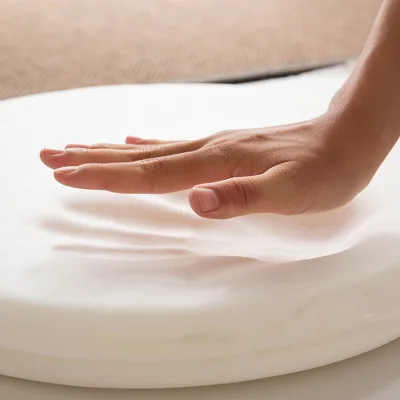
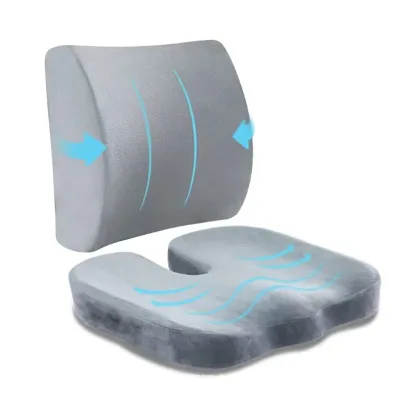
Slow Rebound Memory Foam Lumbar & Hip Support Ergonomic Office/Car Seat Cushion
Contact supplier
Moq: 100

Ningde Crius Electronic Co., Ltd.
- Verified by TUVRHEINLAND
- Combined
- China Fujian
- Lead time30 days
- Avg. response≤ 4h
Main productsMassage Chair, Jade Massage Bed, Massage Pillow, Tourmaline Bracelet, Foot Massager, Jade Mattress, Massage Cushion, Massage Belt, Eye Massager, Neck and Shoulder Massager
Main marketsAustralia

Ningbo Jiangbei Ringlong Import & Export Co., Ltd.
- Verified by BV
- Combined
- China Zhejiang
- Lead time23 days
- Avg. response≤ 3h
Main productsKitchenware, Textile, Memory Foam Series, Household Items, Outdoor Products, Packing Box, Air Conditioning System, TV Products, Fitness, Baby Products
Main marketsEurope


New Design Slow Rebound Ergonormic Sitting Memory Foam Back Support Seat Cushion
$5.99 - $7.00
Moq: 500

Dongying Jiusheng Trading Co., Ltd
- Combined
- China Shandong
- Lead time15 days
- Avg. response≤ 12h
Main productsFoam Mattress, Mattress, PU Foam, Tri-Fold Mattress, Foam Sofa Bed, Foam Cushion, Custom Sponge Foam, Household Sponge Foam, PU Foam Sheet, PU Foam Block
Main marketsEast Asia(Japan/ South Korea)

Comfort Soft Foam Back Pain Relief Perfect Seat Cushion for Office Chair Car Seats
$3.50 - $3.80
Moq: 100


Shanghai Huaqi Industrial Co., Ltd.
- Verified by TUVRHEINLAND
- Trading Company
- China Shanghai
- Lead time15 days
- Avg. response≤ 6h
Main productsCar Mats, Seat Cover, Car Cover, Wiper Blade, Air Compressor, Steering Wheel Cover, Car Lock, Baby Mirror, Car Jack, Racing Seat
Main marketsSouth America,Africa,Southeast Asia/ Mideast,Europe,Australia,North America

Shanghai David International Trade Co., Ltd.
- Verified by TUVRHEINLAND
- Combined
- China Shanghai
- Lead time15 days
- Avg. response≤ 6h
Main productsPromotional Gifts, Gift Sets, Tshirts, Hats, Hot Packs, Hot Cold Packs, Ice Packs, Bags, Umbrellas, Water Bottles
Main marketsSouth America,Africa,Southeast Asia/ Mideast,East Asia(Japan/ South Korea),Domestic,Europe,Australia,North America


Comprehensive Sourcing Guide
Anti-Static Memory Foam Seat Cushion Supplier Concentration and Factory Types
Current data indicates a concentration of suppliers in China Guangdong and China Zhejiang, suggesting these regions are active hubs for this category. In Guangdong, results show combined company types that often blend trading and manufacturing capabilities, while Zhejiang suppliers appear as dedicated manufacturers or factories. This distinction matters because combined entities may offer broader product ranges, whereas factories might provide deeper control over the production process for specific items like memory foam cushions. Buyers should verify if a supplier's primary focus aligns with their volume needs, as factory types often emphasize in-house capacity for OEM and ODM services.
When evaluating the factory types, look for explicit mentions of RD capacity such as OEM, ODM, or own-brand capabilities. Some suppliers list specific main products like electric adjustable beds or massage chairs alongside seat cushions, indicating a broader manufacturing scope that could impact focus on cushion-specific quality. A supplier claiming to be a manufacturer should ideally demonstrate direct control over materials like memory foam and polyester covers. If the location is not explicitly confirmed as a manufacturing cluster in the current results, buyers must ask for factory photos or video tours to confirm the physical presence of production lines rather than relying solely on company type labels.
How to Verify Anti-Static Memory Foam Seat Cushion Suppliers
Verification is critical when sourcing memory foam products, and current results highlight specific credentials like ISO9001:2015 certificates and TUVRHEINLAND verification status. These labels provide a baseline for quality management systems, but buyers must confirm that the certification covers the specific production lines for seat cushions. Some product attributes list additional certifications such as SGS or patent information, which can indicate a commitment to innovation and safety standards. It is essential to request valid certificate copies directly from the supplier to ensure they are current and not expired, as generic claims on a profile page do not guarantee active compliance.
Response time and verification status are also key indicators of supplier reliability. Data shows response times ranging from 0.90 to 5.31, which can reflect the efficiency of the communication channel and the availability of the sales team. A faster response time often correlates with better project management and quicker resolution of technical queries regarding anti-static properties or foam density. Buyers should prioritize suppliers with verified badges and prompt response metrics, as these factors reduce the risk of miscommunication during the sampling phase. Always cross-reference the verification badge with the supplier's business license to ensure the entity is legally registered and authorized to export these goods.
What to Compare Across Anti-Static Memory Foam Seat Cushion Suppliers
Comparing suppliers requires a focus on tangible metrics like lead time, minimum order quantity, and price ranges found in the current results. Lead times vary significantly, with some suppliers offering 23 days while others require up to 45 days for production. This difference can impact inventory planning and market launch schedules, making it vital to align lead times with your specific timeline. Minimum order quantities also differ, ranging from 50 units to 300 units, which affects the initial capital outlay and risk exposure for new buyers. Understanding these thresholds helps in selecting a partner that matches your order volume and cash flow constraints.
Price and customization options are equally important dimensions for comparison. Current data shows price ranges from 3.50 to 13.99 for standard cushions, with higher prices potentially reflecting specialized features or larger order volumes. Customization availability is listed as "Available" across many profiles, but buyers must clarify the specific requirements for logo printing, fabric patterns, or foam density adjustments. Some suppliers accept OEM and ODM requests warmly, while others may have stricter constraints on design changes. Evaluating the balance between unit cost and the flexibility to customize ensures that the final product meets both budgetary and branding requirements without compromising on quality or delivery schedules.
Common Anti-Static Memory Foam Seat Cushion Sourcing Risks
One significant risk involves the discrepancy between claimed product attributes and actual manufacturing capabilities. While many profiles list features like "Anti-Decubitus" or "Memory" foam, the specific anti-static properties required for certain applications may not be standard across all memory foam types. Buyers must explicitly request test reports or material specifications to confirm that the foam meets the necessary anti-static standards, as generic descriptions do not guarantee functional performance. Relying solely on product keywords without verifying technical data can lead to receiving products that fail to meet safety or functional requirements in the target market.
Another risk lies in the variability of packing and shipping standards, which can affect product integrity during transit. Some suppliers use polypropylene bags, while others utilize cartons or color boxes, and the choice of packaging influences protection against compression and moisture. Inconsistent packing standards can lead to damaged goods upon arrival, especially for memory foam products that rely on their shape for comfort. Additionally, the lack of standardized lead times across different suppliers creates uncertainty in supply chain planning. Buyers should establish clear packing requirements and confirm production schedules in writing to mitigate the risk of delays or product damage during the shipping process.
Anti-Static Memory Foam Seat Cushion Regional Sourcing and Logistics
Sourcing from China Guangdong and China Zhejiang offers access to established supply chains, but logistics planning must account for regional differences in port access and shipping costs. Guangdong is a major manufacturing hub with proximity to ports like Shenzhen and Guangzhou, often facilitating faster export processes for combined trading companies. In contrast, suppliers in Zhejiang may have different logistical advantages depending on their specific location within the province. Buyers should verify the nearest port for each supplier to estimate freight costs accurately, as shipping distances can vary significantly even within the same country.
Logistics also involve understanding the implications of lead times on overall delivery schedules. A 23-day lead time versus a 45-day lead time represents a substantial difference in the total time from order placement to arrival. This variance affects how buyers manage inventory levels and respond to market demand fluctuations. When sourcing from these regions, it is crucial to factor in customs clearance times and potential seasonal delays that could extend the effective lead time. Buyers should discuss shipping terms with the supplier to determine who bears the risk during transit and to ensure that the chosen logistics partner can handle the specific dimensions and weight of the cushion products.
Anti-Static Memory Foam Seat Cushion Commercial Terms and Order Planning
Commercial terms such as payment methods and escrow services play a pivotal role in securing a safe transaction. While specific escrow details are not always visible in the initial product data, buyers should insist on using secure payment channels that offer protection for both parties. The minimum order quantities observed, ranging from 10 to 300 units, dictate the initial investment required and influence the negotiation of unit prices. Larger orders often allow for more favorable pricing, but buyers must ensure they have the storage capacity and sales channels to absorb the inventory before committing to high MOQs.
Order planning must also consider the customization lead times and the complexity of the product specifications. Suppliers offering OEM and ODM services may require additional time for mold creation or fabric sourcing, which can extend the standard lead time. Buyers should plan for these variables by setting realistic timelines that include buffer periods for sampling and approval. Furthermore, understanding the product standards and dimensions, such as the 43039090mm specifications noted in some profiles, is essential for calculating shipping volumes and container loads. Proper planning ensures that the order aligns with production capabilities and that the final delivery meets the expected quality and quantity standards.
FAQs
What is the price range for memory foam seat cushions?
Prices typically range from $3.50 to $13.99 per unit depending on specifications. Basic models start around $3.50, while premium options with specialized features can reach $13.99. Buyers should verify exact costs based on customization needs and order volume to ensure accurate budgeting for their specific requirements.
What is the minimum order quantity for these cushions?
Minimum order quantities vary significantly by supplier and product type. Some manufacturers require as few as 50 units, while others set the threshold at 100 or even 300 pieces. Buyers must check individual supplier listings to confirm the specific MOQ applicable to their desired cushion model and customization level.
How long does production take for custom orders?
Lead times generally range from 23 to 45 days depending on the supplier and order complexity. Some facilities offer faster turnaround times around 23 days, while others may require up to 45 days for production. Buyers should confirm specific timelines with suppliers to align with their delivery schedules effectively.
Are these cushions available with custom logos or designs?
Yes, customization is widely available across many suppliers. Manufacturers typically accept OEM and ODM requests, allowing buyers to add custom logos, patterns, or specific design elements. Buyers should verify customization options and any associated costs directly with suppliers to ensure their branding requirements are met accurately.
What certifications do these seat cushions hold?
Many suppliers hold ISO9001:2015 or ISO 9001 system certifications, ensuring quality management standards. Some products also feature SGS or patent certifications. Buyers should request valid certification documents from suppliers to verify compliance with their specific quality and safety requirements before placing large orders.
Where are these memory foam cushions manufactured?
Manufacturing locations primarily include China, specifically in Guangdong and Zhejiang provinces. These regions are known for their textile and foam production capabilities. Buyers should verify the exact origin of their orders to understand logistics, tariffs, and supply chain dynamics associated with these specific manufacturing hubs.
How quickly do suppliers respond to inquiries?
Response times vary, with some suppliers responding within 0.90 hours and others taking up to 5.31 hours. Faster response times indicate higher availability and potentially quicker communication during the sourcing process. Buyers should prioritize suppliers with quicker response rates for more efficient negotiation and order placement.