Bike Cover Rain Cape Suppliers and Manufacturers
Source Bike Cover Rain Cape options from 12 verified suppliers in China. Compare lead times, MOQs, certifications, and response rates to find the right partner. Contact suppliers directly to request quotes and samples; review the available evidence before requesting comparable quotations from suitable candidates.
Updated
Suppliers List

Dongguan Tangxia Huadi Outdoor Cycling Equipment Factory
- Verified by SGS
- Combined
- China Guangdong
- Lead time15 days
- Avg. response≤ 5h
Main productsBike Part, Mountain Bike/Road Bike Rearview Mirror, Bicycle Umbrella Stand, Road Bike Handlebar Tape, Bicycle/Electric Scooter Phone Mount, Bicycle Computer Mount, Bicycle Water Bottle Holder with Non-Drilling St, Multifunctional Cup Holder, Bicycle Water Bottle Holder
Main marketsDomestic


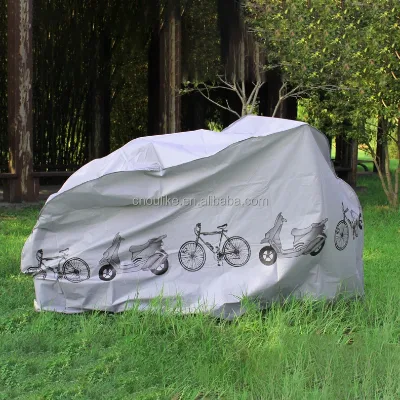
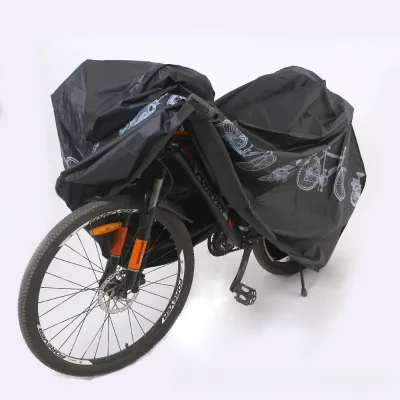
Hot Selling Waterproof Protector Cycling Outdoor Dust Cover New Rain Cover for Bike Bicycle
$0.90 - $1.30
MOQ: 100 Pieces
Hebei Gefeida Trading Co., Ltd.
- Verified by SGS Group
- Trading Company
- Lead time20 days
- Avg. response≤ 6h
Main productsBicycle, Bicycle Accessories, Kids Toy
Main marketsNorth America(12%), Eastern Europe(12%), Oceania(10%)

Shanghai Haocover Outdoor Products Co. Ltd.
- Verified by SGS
- Trading Company,Manufacturer/Factory
- China Jiangsu
- Lead time60 days
- Avg. response≤ 17h
Main productsCar Cover, Motorcycle Cover, Furniture Cover, Boat Cover, BBQ Cover, ATV Cover, UTV Cover
Main marketsSouth America,Eastern Europe,North America,Southeast Asia,Eastern Asia,Oceania,Western Europe


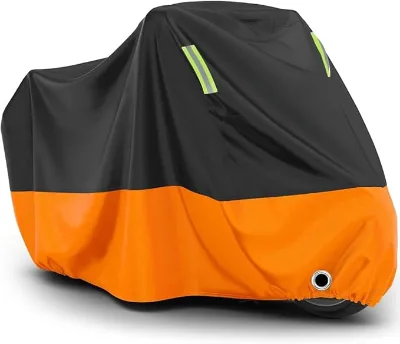
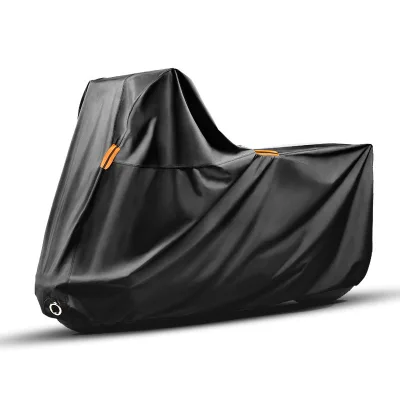
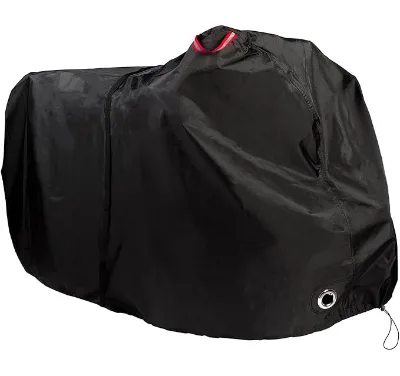
All Season Heavy Duty Motorcycle Cover Waterproof Cover Bike Accessories
$11.00 - $13.00
MOQ: 100 Pieces

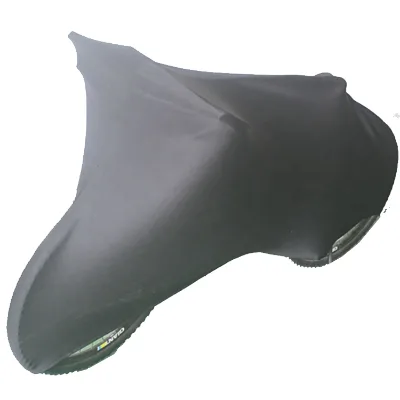
Premium Motorcycle Covers Stretchable Rain Dust UV Protection Motorbike Cover
$25.00 - $30.00
MOQ: 100 Pieces


Hefei Flywing Outdoor Products Co., Ltd.
- Trading Company
- Anhui, China
- Lead time15 days
- Avg. response≤ 1h
Main productsraincoat,Luggage set,Handbag set,Plastic raincoat,Vintage Suitcase
Main marketsNorth America(60.00%), Northern Europe(6.00%), Southeast Asia(5.00%), Africa(4.00%), Mid East(4.00%), Eastern Europe(3.00%), Central America(2.00%), South Asia(2.00%), Southern Europe(2.00%), South America(2.00%), Domestic Market(1.00%), Western Europe(1.00%), Eastern Asia(1.00%), Oceania(1.00%)

Zhongshan Oulike New Material Technology Co., Ltd.
- Trading Company
- Guangdong, China
- Lead time5 days
- Avg. response≤ 5h
Main productsScooter parts,E-bike parts,Car accessories,Entertainment goods,Sports goods
Main marketsWestern Europe(25.00%), Domestic Market(20.00%), North America(20.00%), Northern Europe(15.00%), Southeast Asia(5.00%), South America(5.00%), Eastern Asia(5.00%), Mid East(2.50%), South Asia(2.50%)

Nanjing Zhengyu Rainproof Products Co., Ltd.
- Verified by CTI
- Trading Company
- China Jiangsu
- Lead time30 days
- Avg. response≤ 12h
Main productsAdult Trench Raincoat, Umbrella, Gloves, Bicycle Rain Poncho, Kid Trench Raincoat, Adult Motorcycle Raincoat, Pullover Rain Poncho with Sleeves, Adult High Rain Shoe Covers, Kids High Rain Shoe Covers, Adult MID-Calf Rain Shoe Covers
Main marketsSouth America,Southeast Asia/ Mideast,East Asia(Japan/ South Korea),Domestic,North America

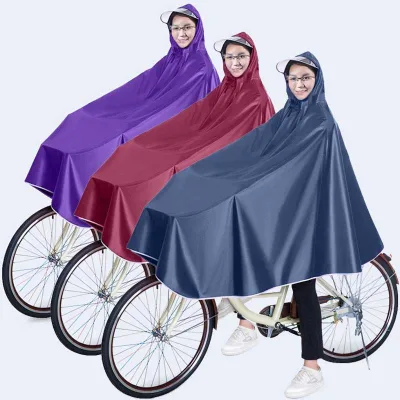
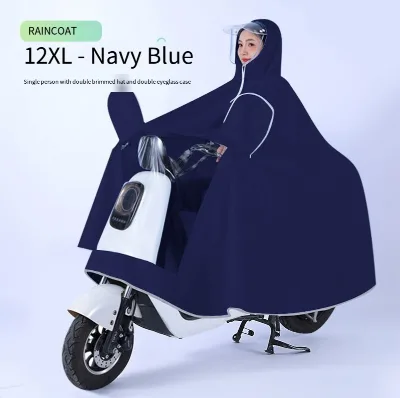
Scooter Rain Cape with Mirror Cover Oxford Fabric Adjustable Hood Purple Raincoat
$5.01 - $6.29
MOQ: 50 Pieces

2-in-1 Oxford PVC-Coating Rain Cape for Scooter Zipper Mirror Cover Khaki Raincoat
$7.47 - $9.40
MOQ: 50 Pieces
Henan Chengjiao Trading Co., Ltd.
- Trading Company
- Henan, China
- Lead time7 days
- Avg. response≤ 7h
Main productsRaincoat for,PVC Polyester PVC Raincoat,Adults Raincoat,Children's home clothing,Children's clothing
Main marketsDomestic Market(7.00%), South Asia(7.00%), Southern Europe(7.00%), Northern Europe(7.00%), Central America(7.00%), Western Europe(7.00%), Eastern Asia(7.00%), Mid East(7.00%), Oceania(7.00%), Africa(7.00%), Southeast Asia(7.00%), Eastern Europe(7.00%), South America(7.00%), North America(7.00%)

Ningbo Jiangbei JK Auto Accessories Co., Ltd.
- Verified by BV
- Trading Company,Manufacturer/Factory
- China Zhejiang
- Lead time0 days
- Avg. response≤ 12h
Main productsCar Cover, Seat Cover, Tailgate Pad, Motorcycle Cover, Boat Cover, RV Cover, Pet Seat Cover, Car Fender Cover, Car Organizer, Luggage Cover
Yongkang Taige Daily Necessities Business Department.
- Trading Company
- Jinhua, China
- Lead time15 days
- Avg. response≤ 2h
Main productscup,bottle,Musical Instruments,bicycle,camping
Main marketsCentral America(30.00%), North America(20.00%), South America(20.00%), Southern Europe(10.00%), Northern Europe(10.00%), Western Europe(10.00%)
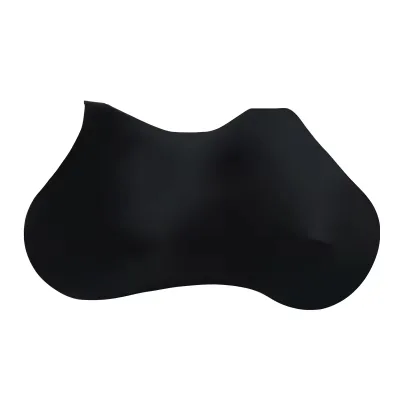
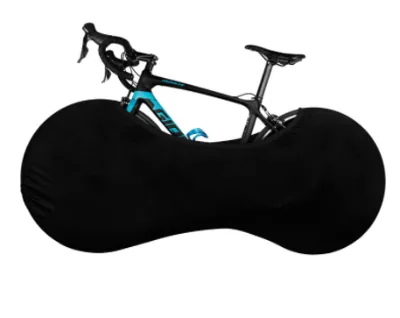
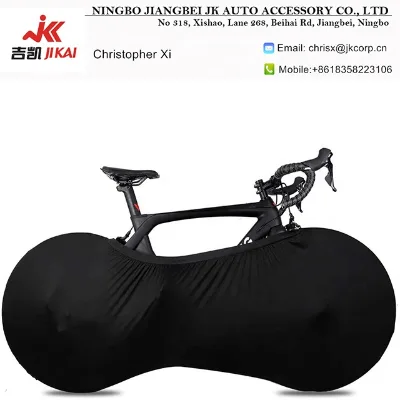
Colorful Bicycle Cover Dust Cover Wheel Cover Elastic Fits 99% of All Adult Bicycles
$2.4013 - $2.611
MOQ: 2 pieces

Ningbo Jiangbei Jk Auto Accessories Co., Ltd.
- Manufacturer
- Zhejiang, China
- Lead time35 days
- Avg. response≤ 7h
Main productsCar Cover,Car Seat Cover,Motorcycle Cover,Boat Covers,Luggage Cover
Main marketsWestern Europe(50.00%), Mid East(10.00%), North America(10.00%), South America(10.00%), South Asia(5.00%), Northern Europe(5.00%), Africa(5.00%), Eastern Asia(5.00%)
Huimin Xurui Auto Supplies Co., Ltd.
- Manufacturer, Trading Company
- Shandong, China
- Lead time60 days
- Avg. response≤ 1h
Main productsCar Cover,Motorcycle Cover,Caravan Cover,Furniture Cover,Boat Cover
Main marketsNorth America(30.00%), Central America(10.00%), Western Europe(10.00%), Eastern Europe(10.00%), South America(10.00%), Africa(6.00%), Southeast Asia(6.00%), Mid East(5.00%), Domestic Market(3.00%), South Asia(3.00%), Eastern Asia(3.00%), Oceania(2.00%), Northern Europe(1.00%), Southern Europe(1.00%)
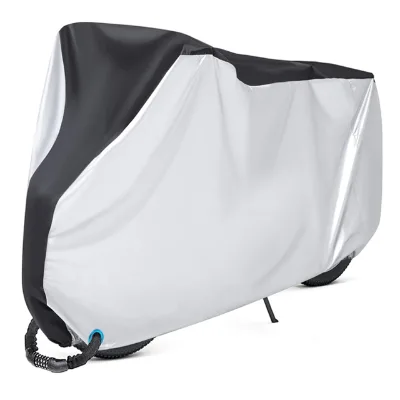
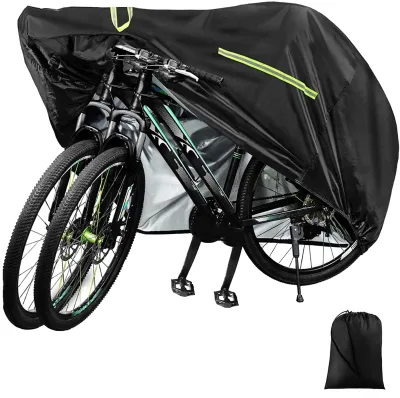
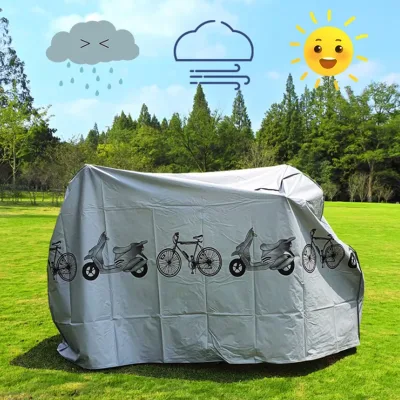
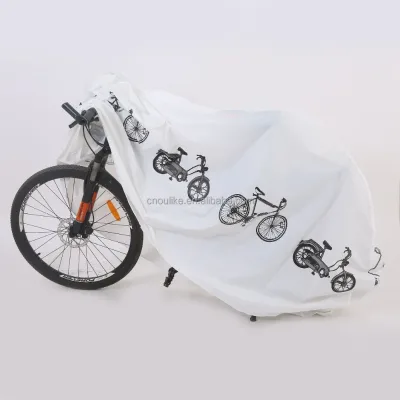
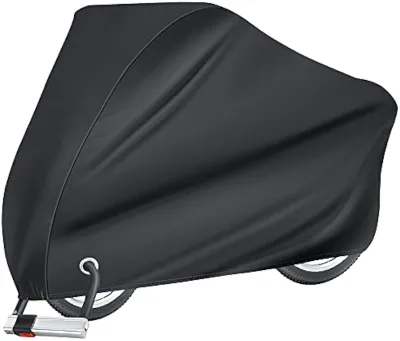
Update Design Waterproof Bicycle Cover Dust Snow UV Protection Cover for Bicycle Four Season
$3.90 - $5.90
MOQ: 100 pieces
$3.0784 - $5.1307
MOQ: 100 pieces
- Verified by SGS Group
- Manufacturer, Trading Company
- Lead time35 days
- Avg. response≤ 3h
Main productsCooler Bag, Backpack, Travel Bag, Storage Bag, Waist Bag
Main marketsNorth America(60%), Western Europe(12%), Domestic Market(12%)


Comprehensive Sourcing Guide
Bike Cover Rain Cape Supplier Concentration and Factory Types
Suppliers handling Bike Cover Rain Cape products in the observed results cluster around a few Chinese provinces. Guangdong appears as a base for combined manufacturers and traders whose catalogs extend well beyond covers into handlebar tape, phone mounts, mirrors and bottle holders, suggesting these are cycling-accessory specialists rather than textile-focused plants. Jiangsu appears as a base for trading companies and factory hybrids whose core products are car, motorcycle, furniture, boat and BBQ covers, meaning waterproof textile fabrication is their primary trade rather than an add-on. One product listing also cites a Hebei place of origin for a foldable outdoor cover, which hints at additional production capacity in northern China even where the selling entity is registered elsewhere.
When full cluster data is unavailable, buyers should identify concentrations themselves: filter supplier results by province, note which regions repeatedly list cover-type products as main products rather than as catalog fillers, and check whether factory or trading company labels are displayed. The observed mix includes a combined manufacturer-trader, a pure trading company and a trading company with factory capabilities, so assume both models are active in this category. Traders may aggregate output from multiple workshops, while manufacturer-labeled entities usually control their own cutting and sewing lines. Match the model to your needs: deep customization and fabric control favor factories, while mixed assortments and consolidation across accessory lines often favor traders with broad supplier networks.
How to Verify Bike Cover Rain Cape Suppliers
Verification should start with the credentials actually displayed in supplier results, then move to items the buyer must confirm independently. In the current results, two suppliers carry SGS-related verification labels, one listed as SGS and another as SGS Group, which signals third-party audit involvement but does not specify audit scope or date. Other suppliers show no verification label in the observed data, which does not mean they are unreliable, but it shifts the burden of proof to you. Ask any unverified supplier for their business license, factory photos or video walkthrough, and export history for cover products.
Because verification badges are snapshots, verify what the badge does not cover. Request the specific certifications claimed on product listings — one cover listing cites ISOEEC, BSCI and CE marks — and ask for certificate copies showing the certifying body, covered product scope and expiry. Confirm the legal entity name on the license matches the name on quotations and bank details, since trading intermediaries sometimes operate under multiple names. For quality assurance, ask whether pre-shipment inspection is permitted and whether the supplier accepts third-party inspectors visiting the sewing floor. Check whether the supplier's main products genuinely include covers or outdoor textiles; a supplier whose catalog is dominated by unrelated accessories may be sourcing your covers from a third party, which complicates quality control and after-sales claims.
What to Compare Across Bike Cover Rain Cape Suppliers
Build a comparison table using the attributes visible in supplier results, but treat missing fields as blanks to investigate rather than weaknesses to penalize. Displayed dimensions worth comparing include: location and company type (combined manufacturer-trader versus trading company versus factory hybrid); verification status; average response time; standard lead time; research or customization capacity labels such as ODM, OEM, or light and graphic customization; and main product categories. In the observed data, response times range from under five hours to more than sixteen, and lead times span roughly fifteen, twenty and sixty days — a threefold difference that matters greatly for seasonal retail calendars.
Product-level evidence is equally comparable. One Guangdong-listed cover shows an MOQ of 100 pieces with unit pricing between roughly $0.90 and $1.30, while another supplier's listing shows an MOQ of 10 pieces at a different price tier, and a Jiangsu motorcycle-cover listing prices between $9.50 and $12.00 depending on specification. These gaps reflect material grade, size and supplier type, not just margin. Compare fabric type (non-woven, woven, weft knitting, oxford cloth), weight per unit, size ranges, color options and features such as lock holes or UV resistance. Also compare whether suppliers offer made-to-order production, OEM services and customization options, since these determine how easily your branding, sizing and packaging requirements can be absorbed into their standard processes.
Common Bike Cover Rain Cape Sourcing Risks
The most frequent risk is assuming a cover supplier is a cover manufacturer. Some observed suppliers list covers among dozens of unrelated bike accessories, meaning the cover may be procured from a subcontractor whose identity is undisclosed. This creates risks around quality consistency, material substitution and accountability when defects appear. Mitigate by asking directly who performs cutting, sewing and coating, and by requesting material specifications for the waterproof layer, seams and elastic hems in writing before sampling.
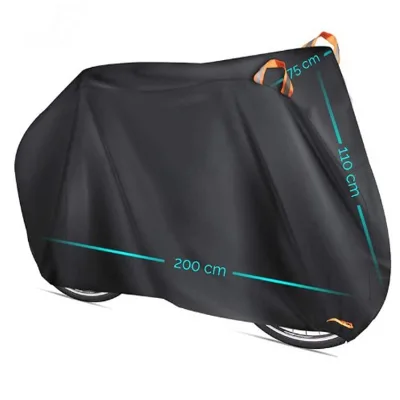
Other risks concentrate in specification and communication gaps. Waterproofing claims like rainproof, dustproof and UV protection are easy to write in a listing and hard to verify without testing; agree on measurable criteria such as fabric weight, coating type and water column expectations, and have samples tested before mass production. Size mismatch is another trap: observed listings show anything from 170×60×85 cm to 200×110 cm, so confirm which bike sizes and wheel diameters your target cover must fit. Lead-time assumptions also carry risk — the observed range of fifteen to sixty days suggests some suppliers hold stock while others produce only to order, and late production during peak cycling season can cost a selling window. Finally, watch for low MOQ offers that carry higher per-unit prices and limited customization; cheap trial orders are useful, but confirm the same unit price and quality hold when volumes scale.
Bike Cover Rain Cape Regional Sourcing and Logistics
Region selection should follow the evidence you can see and verify. Guangdong's supplier ecosystem in the observed results is anchored in cycling accessories and combined manufacturing-trading operations, which suits buyers who want covers bundled with other bike parts in a single shipment or who value suppliers familiar with bicycle-industry expectations. Jiangsu's suppliers position around protective covers for cars, motorcycles, boats and furniture, which suits buyers whose priority is textile expertise — waterproof coatings, seam construction and fabric durability — even if bicycle-specific design input is thinner. A Hebei origin cited on one product suggests that northern capacity exists too, so do not assume coastal provinces are the only production bases.
Logistically, the province matters less than freight consolidation and lead-time structure. Suppliers with long quoted lead times, such as the sixty-day figure observed in Jiangsu, likely produce to order and need earlier commitments from you, while suppliers quoting fifteen to twenty days may hold semi-finished stock or run faster cycles. Ask each supplier to quote EXW, FOB and, where relevant, delivered terms so you can compare true landed cost rather than unit price. Confirm packing formats — observed listings mention OPP bags and cartons — and check carton dimensions and gross weights for freight estimates. If you combine covers with other bike accessories, ask whether the same supplier or a nearby one can consolidate goods to reduce container splitting and customs complexity.
Bike Cover Rain Cape Commercial Terms and Order Planning
Commercial terms in the observed results vary enough to reward negotiation. Payment terms appear explicitly on some listings as T/T and L/C; others are silent, so confirm accepted methods, deposit percentages and balance timing in your first inquiry. Price quotes in the data range widely — roughly $0.90 to $1.30 for one lightweight cover, $7 to $8 for a foldable heavier unit, and up to $9.50 to $13 for motorcycle-grade covers — reflecting fabric weight, size and finish. Always obtain tiered pricing at several volumes, since an MOQ of 100 pieces and an MOQ of 10 pieces will carry very different unit economics and customization ceilings.
Order planning should map lead times backward from your selling season. With observed lead times of fifteen, twenty and sixty days, plus sampling and shipping time, a buyer targeting a spring launch may need to place orders in late autumn for slower suppliers. Clarify whether quoted lead times start at order confirmation or after deposit receipt, and whether they include inspection. Product-specific delivery notes — one listing cites five to seven delivery days for that item — may apply only to stock items, not custom runs. Define packaging (OPP versus box), labeling, and whether customization options shown as available extend to logos, colors and sizes. Finally, agree on defect thresholds, replacement terms and inspection rights in a written proforma invoice before transferring any deposit, and keep escrow or secure payment options in view where offered.
FAQs
What is the typical lead time for bike covers?
Manufacturers generally require 15 to 60 days to produce orders. Specific items like waterproof covers may ship within 5 to 7 days, while custom motorcycle covers often need 30 days. Buyers should confirm exact timelines with suppliers before placing bulk orders to ensure timely delivery.
What certifications are available for bicycle rain covers?
Suppliers offer products certified under ISO, BSCI, and CE standards. These certifications ensure quality and safety compliance for various markets. Buyers should verify specific certification documents directly with the supplier to confirm they meet their regional import requirements and quality expectations.
What is the minimum order quantity for bike covers?
Minimum order quantities typically range from 10 to 100 pieces. Some suppliers accept orders as low as 10 units, while others require 100 pieces for standard waterproof covers. Buyers should check individual product listings to determine the specific MOQ applicable to their order size.
What materials are used for waterproof bike covers?
Common materials include Oxford cloth, PVC, PU, polyester, and woven fabrics. These materials provide waterproof, anti-UV, and anti-scratch protection. Buyers should select materials based on their specific durability needs and environmental conditions for optimal performance and longevity of the cover.
What is the price range for bicycle rain covers?
Prices generally range from $0.90 to $30.00 per unit. Basic waterproof covers start around $0.90, while premium heavy-duty options cost up to $30.00. Buyers should compare features and materials to find the best value within their budget constraints.
Can suppliers provide OEM or ODM services?
Many suppliers offer both OEM and ODM customization services. Buyers can request custom designs, logos, or specific fabric types. This allows for brand differentiation and tailored solutions. Buyers should discuss their specific customization requirements directly with the supplier to ensure feasibility.