Eco-Friendly Wooden Egg Box Suppliers and Manufacturers
Compare 20 verified suppliers offering Eco-Friendly Wooden Egg Box options with varying lead times, MOQs, and customization capabilities. Review response times and pricing to select a manufacturer that fits your production schedule and budget requirements; review the available evidence before requesting comparable quotations from suitable candidates.
Suppliers List
Fujian Hoyee Household Items Co., Ltd.
- Verified by BV
- Manufacturer/Factory
- China Fujian
- Lead time0 days
- Avg. response≤ 10h
Main productsBamboo Products, Cutting Board, Bathtub Caddy, Bath Mat, Bath Towel Rack, Shoes Rack, Office Organizer, Desk Organizer, Cheese Board, Serving Tray


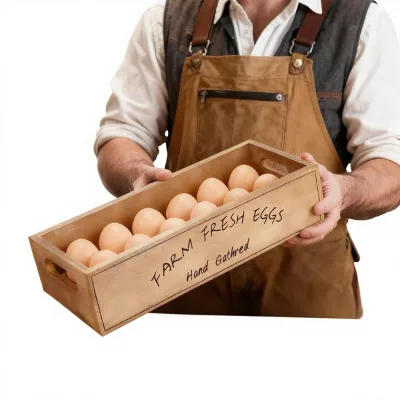
Wooden Egg Holder Tray - Egg Display Stand -Egg Crate Carrier Storage Containers
$3.87 - $7.74
MOQ: 500 Pieces


Caoxian Huashen Arts & Crafts Co., Ltd.
- Manufacturer, Trading Company
- Shandong, China
- Lead time25 days
- Avg. response≤ 2h
Main productsWooden box wine box,wooden pet product,wooden shelf,wooden garden plant box,Wooden toy
Main marketsNorth America(60.00%), Domestic Market(20.00%), Oceania(5.00%), Eastern Europe(3.00%), South America(3.00%), Southeast Asia(2.00%), Western Europe(2.00%), Eastern Asia(1.00%), Southern Europe(1.00%), Northern Europe(1.00%), Central America(1.00%), Mid East(1.00%)
Shaowu City Nafu Bamboo and Wood Industry Co., Ltd.
- Manufacturer
- China Fujian
- Lead time15 days
- Avg. response≤ 17h
Main productsBamboo and Wood Cutting Board Cheese Board, Bamboo and Wood Storage Box, Bamboo and Wood Plate, Bamboo and Wood Tray, Marble Wood Cheese Board, Bamboo and Wood Table, Bamboo and Wood Bathroom Products, Bamboo and Wood Shelf, Bamboo and Wood Kitchen Utensil, Bamboo and Wood Bowl
Main marketsEast Asia(Japan/ South Korea),Domestic,Europe,Australia,North America


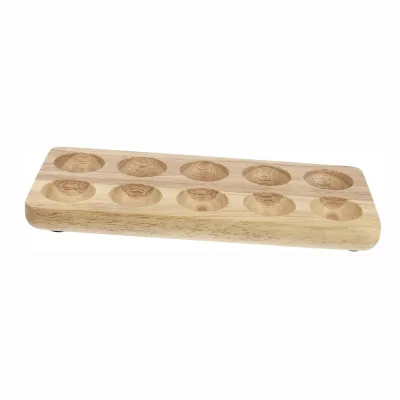
10 Holes Egg Tray Wooden Egg Holder for Eggs Usable in Kitchen Refrigerator
$2.00 - $3.00
MOQ: 300 Pieces

Dezhou Chunyang Environmental Protection Materials Co., Ltd.
- Verified by SGS
- Combined
- China Shandong
- Lead time23 days
- Avg. response≤ 1h
Main productsKidney Dish, Gift Box, Lunch Box, Kidney Basin, Paper Pulp Bowl, Plant Pot, Coffee Cup Holder, Egg Tray, Paper Box, Custom Packaging Box
Main marketsDomestic

Eco-Friendly Pulp Egg Tray Recyclable Paper Eggs Box Biodegradable Paper Egg Tray
$0.07 - $0.30
MOQ: 1000 Pieces

Eco-Friendly Carton Egg Storage Box Packaging Paper Egg Tray for 30 Eggs
$0.07 - $0.30
MOQ: 1000 Pieces

30 Hole Eco-Friendly Pulp Egg Tray Recyclable Paper Eggs Box Biodegradable Paper Egg Tray
$0.07 - $0.30
MOQ: 1000 Pieces


Cao County Huiy Arts & Crafts Factory
- Verified by SGS Group
- Manufacturer, Trading Company
- Lead time30 days
- Avg. response≤ 3h
Main productsWooden Box, Wooden Decoration, Bird House, Wood Craft, Wood Homeware
Main marketsNorth America(22%), Western Europe(18%), Eastern Asia(16%)

- Verified by TUVRHEINLAND
- Combined
- China Fujian
- Lead time15 days
- Avg. response≤ 21h
Main productsFridge Magnet, Decorative Hook, Metal Plaque, Wood Plaque, Wooden Photo Frame, Wood Chalkboard, Book Mark, Linen Painting, Canvas Box, Cup Coasters
Main marketsSouth America,Africa,Southeast Asia/ Mideast,East Asia(Japan/ South Korea),Europe,Australia,North America


Wood Gift Boxes, Wooden Box, Natural Wood Boxes with Sliding Lid, Storage Boxes for Organize Boxes
$1.22 - $5.22
MOQ: 100 Pieces


- Manufacturer/Factory
- China Fujian
- Lead time45 days
- Avg. response≤ 9h
Main productsBamboo Chopping Board, Bamboo Box, Bamboo Tray, Bamboo Bottle, Bamboo Products, Bamboo Cutlery, Bamboo Plywood, Bamboo Furniture, Bamboo Plate, Bamboo Broom
Main marketsSouth America,Eastern Europe,Mid East,North America,Southeast Asia,Oceania,Western Europe,Africa

Eco-Friendly Custom Wooden Tea Box with Glass Lid - Premium Wooden Gift Box
$1.00 - $10.00
MOQ: 300 Pieces

Eco-Friendly Bamboo Wooden Box for Food, Coffee or Chocolate Gift Packaging
$1.00 - $10.00
MOQ: 300 Pieces


Wooden Custom Logo Eco-Friendly Luxury Unfinished Packing Fashion Rice Box
$1.00 - $5.00
MOQ: 300 Pieces

Wooden Customized Eco-Friendly Luxury Unfinished Packaging Small Storage Box
$1.00 - $5.00
MOQ: 300 Pieces
- Verified by SGS Group
- Trading Company
- Lead time20 days
- Avg. response≤ 10h
Main productsKitchenware, Coffee French Maker, Plastic Bento Box, Bamboo Wooden Kitchen Items, Ceramic & Glass Products
Main marketsNorthern Europe(20%), South Asia(20%), North America(10%)
Shanghai EGS Industry Co., Ltd.
- Verified by SGS
- Trading Company,Manufacturer/Factory
- China Shanghai
- Lead time30 days
- Avg. response≤ 3h
Main productsPaper Cup, Coffee Cup, Plastics Cup, Cup Lid, Biodegradable Tableware, Straw, Biodegradable Bag, Sugarcane Series, Chicken Egg Tray, Cling Film
Main marketsSouth America,Eastern Europe,Mid East,North America,Southeast Asia,Eastern Asia,Oceania,Western Europe,Africa

Eco Friendly Customized Biodegradable Paper Egg Box Cardboard Egg Cartons Sale
$0.03 - $0.14
MOQ: 20000 Pieces

Zhejiang Jinzheng Home Supplies Co., Ltd.
- Verified by Intertek
- Manufacturer, Trading Company
- Zhejiang, China
- Lead time20 days
- Avg. response≤ 3h
Main productsLearning Tower, Children's Table And Chair Set, Children's Climbing Frame, Storage Cabinet, Children's Fence
Main marketsNorth America(24%), South America(22%), Eastern Europe(15%)
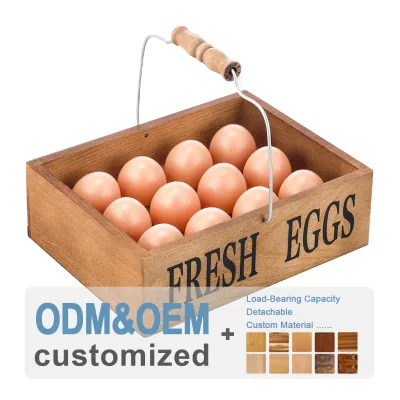
Acacia Wood Storage Crate Gifts Farm Wooden-Egg-Crates for Collecting Eggs With Handle
$3.33 - $4.57
MOQ: 200 pieces
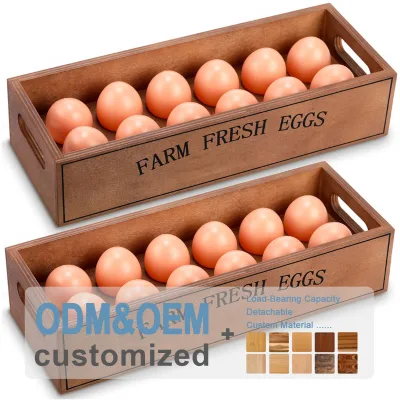
Square-Wooden-Crate Dark Storage Pallets Wooden Egg Crate With Handle for Easter Supermarket Farm
$1.99 - $2.82
MOQ: 200 pieces
Xiamen Ehang Household Products Co., Ltd.
- Trading Company
- Fujian, China
- Lead time37 days
- Avg. response≤ 6h
Main productsKitchenware,bamboo and wooden products,Houseware,Kitchen gadgets,Garden
Main marketsSoutheast Asia(20.00%), North America(20.00%), Southern Europe(10.00%), Northern Europe(10.00%), Western Europe(10.00%), South America(10.00%), Eastern Europe(10.00%), Central America(5.00%), Domestic Market(1.00%), Mid East(1.00%), Oceania(1.00%), Eastern Asia(1.00%), Africa(1.00%)
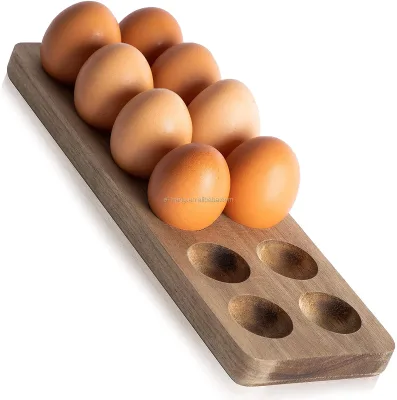
$1.02 - $9.22
MOQ: 500 Minimum
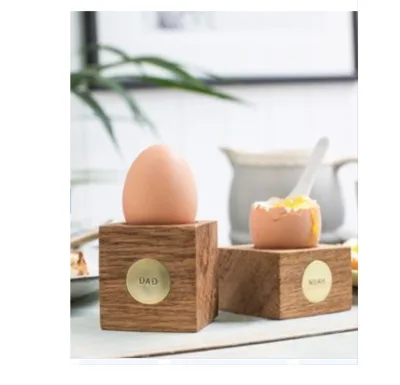
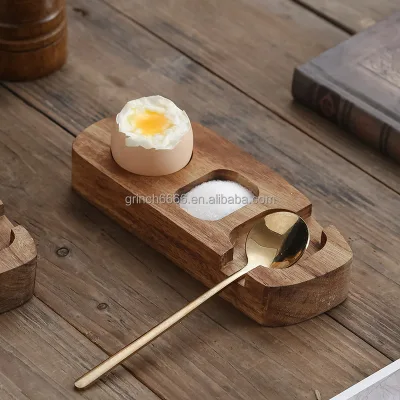
Wooden Hard and Soft Boiled Eggs Holder Personalised Brass Wood Egg Cup Wooden Egg Cup
$0.50 - $3.00
MOQ: 1000 pieces

SG Packaging (Dongguan) Co., Ltd.
- Verified by SGS
- Combined
- China Guangdong
- Lead time15 days
- Avg. response≤ 6h
Main productsPackaging Materials, Packaging Molds, Packaging Equipment, Gift Box, Carton Box, Paper Bag, Insert Card, Corrugated Box, Plastic Tape, Poly Bag
Main marketsAfrica,Southeast Asia/ Mideast,East Asia(Japan/ South Korea),Europe,Australia,North America

Qingdao Rolinda Manufacture and Trade Co., Ltd.
- Verified by BV
- Trading Company
- China Shandong
- Lead time30 days
- Avg. response≤ 10h
Main productsChiavari Chairs, Dining Chairs, Rental Chairs, Wedding Chairs, Event Chairs, Hotel Chairs, Napoleon Chairs, Wedding Folding Chairs, Cross Back Chairs, Banquet Chairs
Main marketsSouth America,Africa,Southeast Asia/ Mideast,East Asia(Japan/ South Korea),Domestic,Europe,Australia,North America

Caoxian Zhongyi Wooden Co.,Ltd
- Verified by BV
- Combined
- China Shandong
- Lead time30 days
- Avg. response≤ 10h
Main productsWoodwork
Main marketsEurope


Customization Wooden Box Different Shape Solid Wooden Storage Box with Sliding Lid
$4.69 - $5.82
MOQ: 500 Pieces
Hebei Wentong International Trading Co., Ltd.
- Trading Company
- China Hebei
- Lead time30 days
- Avg. response≤ 4h
Main productsPaper Box
Main marketsEurope
Caoxian Shuanglong Arts & Crafts Plant
- Verified by SGS Group
- Manufacturer, Trading Company
- Lead time30 days
- Avg. response≤ 1h
Main productsWooden packaging, Wooden pet products, Wooden holiday decoration, Wooden home decoration, Wooden box
Main marketsDomestic Market(45%), North America(8%), Southeast Asia(8%)
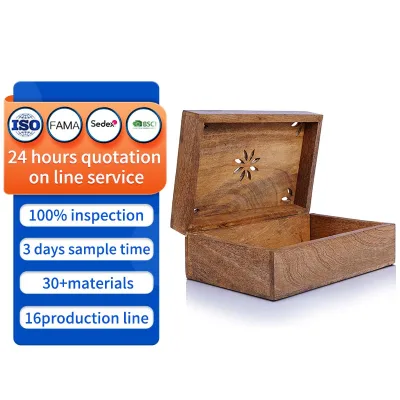
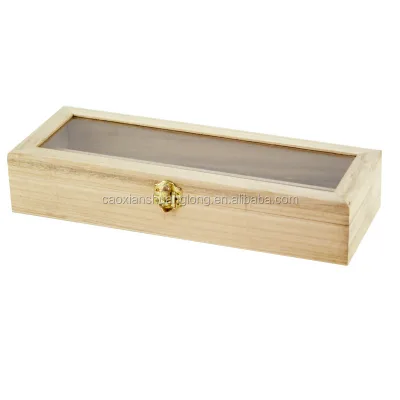
Wood Decorative Wooden Box with Hinged Lid Wooden Storage Box, Decorative
$1.55 - $1.88
MOQ: 500 pieces
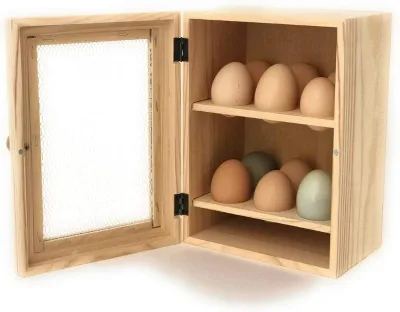
Hot Sale Wooden Storage Egg Box Egg Holder Countertop Egg Cabinet for Kitchen
$2.75 - $3.06
MOQ: 1000 pieces

Forever Standing Stationery Co., Ltd.
- Combined
- China Guangdong
- Lead time30 days
- Avg. response≤ 25h
Main productsCosmetic Box, Jewelry Box, Make up Box, Wine Box, Wine Bags, Wine Rack, Storage Box, Gift Packing Box, Photo Albums, Stationery and Office Supply
Main marketsSouth America,Africa,Southeast Asia/ Mideast,East Asia(Japan/ South Korea),Domestic,Europe,Australia,North America

Xiamen Ebei Import & Export Co., Ltd.
- Verified by CTI
- Trading Company,Manufacturer/Factory
- China Fujian
- Lead time45 days
- Avg. response≤ 2h
Main productsEco-Friendly Products, Bamboo Tableware, Bamboo Furniture, Bamboo Kitchenware, Bamboo Office Supply, Bamboo Fibre Products, Biodegradable Products, Bamboo Towel, Solar Energy Products, Bamboo Garden Products
Main marketsSouth America,Eastern Europe,Mid East,North America,Southeast Asia,Eastern Asia,Oceania,Western Europe,Africa

Bamboo Wooden Storage Box with Hinged Lid
MOQ: 500 Pieces

Bamboo Storage Box with Lid Gift Wooden Cases
MOQ: 1000 Pieces
Nanchang Dian Chuang Packaging Co., Ltd.
- Verified by CTI
- Combined
- China Jiangxi
- Lead time23 days
- Avg. response≤ 6h
Main productsCustom Packaging Box, Wooden Box, Paper Box, Magnetic Folding Gift Box, Pull-out Box, Product Packaging Box, Cosmetic Box, Food Box, Clothing Packaging Box
Main marketsSoutheast Asia/ Mideast,Domestic,Europe,Australia,North America

Customized Logo Eco-Friendly Recycled Plywood Takeaway Food Container with Wooden Lid Box
$2.20 - $3.70
MOQ: 100 Pieces

$2.20 - $3.70
MOQ: 100 Pieces
Ningbo Hongwei Plastic Co., Ltd
- Verified by SGS
- Combined
- China Zhejiang
- Lead time23 days
- Avg. response≤ 1h
Main marketsDomestic


Comprehensive Sourcing Guide
Eco-Friendly Wooden Egg Box Supplier Concentration and Factory Types
Current data indicates a concentration of manufacturers and factories located in Fujian, China, specializing in bamboo products and various wooden storage solutions. These suppliers often list main products including cutting boards, bath accessories, and diverse office organizers alongside egg storage units. The presence of BV verification on some entities suggests a baseline of operational legitimacy, though buyers must confirm if this specific certification applies to the exact wooden egg box models requested. The supplier pool includes both pure manufacturers and trading companies, particularly those based in Shandong, China, which offer a mix of wooden wine boxes, pet products, and garden planters. This dual nature of the supplier base means buyers may encounter different operational models; a factory might handle direct production while a trading company aggregates goods from multiple workshops. Understanding this distinction is critical because a trading company might offer broader variety but less direct control over the manufacturing process compared to a dedicated factory.
When evaluating the factory type, buyers should look for explicit statements regarding their primary business model. Some suppliers in the results are identified strictly as manufacturers, while others operate as a combination of manufacturer and trading company. This distinction impacts the ability to customize product specifications, such as the rectangular shape or specific dimensions like 3211.55.6cm found in certain listings. A dedicated factory is often better positioned to handle complex customizations like logo printing or specific material treatments, whereas a trading company might rely on third-party production lines. Buyers should verify if the supplier claims direct factory ownership or if they act as an intermediary. The location in Fujian suggests a strong supply chain for bamboo, while Shandong suppliers appear to focus on general wood processing. Confirming the exact nature of the entity ensures the buyer aligns their sourcing strategy with the supplier's actual capabilities and capacity to deliver eco-friendly wooden egg boxes.
How to Verify Eco-Friendly Wooden Egg Box Suppliers
Verification begins with checking for recognized third-party audit badges, such as BV, which appears on some supplier profiles in the current results. This verification status provides a layer of confidence regarding the company's business license and operational history, but it does not automatically guarantee product quality or specific eco-friendly claims. Buyers must request detailed documentation to substantiate any environmental assertions, as the term "eco-friendly" is not defined by the platform alone. The presence of a verified badge is a positive signal, yet it should be treated as a starting point rather than a final seal of approval. It is essential to cross-reference the supplier's claimed certifications with independent test reports that specifically address the materials used, such as bamboo or untreated wood, to ensure they meet international safety and environmental standards.
Beyond digital verification, buyers should assess the supplier's responsiveness and communication history as a proxy for reliability. The data shows response times varying significantly, with some suppliers averaging around 9.42 hours while others respond within 2 hours. A faster response time often correlates with better customer service and a more active sales team capable of addressing specific inquiries about material sourcing. Buyers should also examine the product attributes listed, such as the "Eco-Friendly" feature tag on certain wooden egg racks, and ask for proof of the specific standards these tags represent. Since no specific environmental certification numbers are provided in the general facts, the buyer must explicitly ask for the test reports or certificates that validate the "eco-friendly" designation. This proactive verification step prevents reliance on marketing terms and ensures the final product aligns with the buyer's sustainability requirements.
What to Compare Across Eco-Friendly Wooden Egg Box Suppliers
When comparing suppliers, the minimum order quantity (MOQ) is a primary differentiator that affects inventory planning and cash flow. Current listings show MOQs ranging from 200 pieces for certain wooden egg racks to 500 pieces for bamboo storage boxes. This variance allows buyers to select partners that match their order volume needs, whether they are testing the market with smaller batches or committing to larger production runs. Alongside MOQ, the price range per unit is a critical factor, with observed costs spanning from approximately $2.27 to $7.74 depending on the specific model, size, and material composition. Buyers must weigh the lower price points against the potential for higher quality or better customization options offered by suppliers with higher price brackets. It is vital to compare the total landed cost, including shipping, rather than focusing solely on the unit price.
Lead time and sample availability are equally important metrics for supply chain stability. Production lead times can extend from 45 to 50 days for standard orders, while sample lead times are typically shorter, ranging from 5 to 7 days. Some suppliers list a lead time of 25 days, which may indicate a more streamlined process or a different product category. Buyers should compare these timelines against their own sales cycles to ensure timely delivery. Additionally, the customization options available, such as logo printing or specific packaging, vary by supplier. While many offer customizable logos and packaging, the specific constraints on these services should be clarified. Comparing these operational parameters helps buyers identify suppliers who can meet their specific volume, timing, and branding requirements without compromising on the quality of the eco-friendly wooden egg boxes.
Common Eco-Friendly Wooden Egg Box Sourcing Risks
One significant risk involves the ambiguity surrounding material sourcing and the actual environmental impact of the products. While suppliers list materials as bamboo or wood, the specific treatment processes and the origin of the raw materials are not always detailed in the initial product data. There is a risk that "eco-friendly" claims may be superficial if the wood is not sustainably harvested or if chemical treatments are used that contradict the eco-friendly label. Buyers must verify the supply chain transparency to ensure the wood is sourced responsibly. Without explicit certification details in the provided facts, there is a potential gap between marketing claims and the actual environmental footprint of the finished egg boxes. This discrepancy can lead to reputational damage if the products do not meet the buyer's sustainability standards or if they fail to comply with import regulations regarding wood treatment.
Another risk relates to the consistency of product quality and the reliability of the supplier's production capacity. The variation in lead times, from 25 days to over 50 days, suggests differences in production efficiency and capacity management. If a supplier promises a short lead time but lacks the necessary workforce or machinery, delays can occur, disrupting the buyer's inventory. Furthermore, the reliance on third-party verification like BV does not guarantee that every batch of products will meet the same quality standards. Buyers should be cautious of suppliers who offer extremely low prices, as this may indicate the use of inferior materials or shortcuts in the manufacturing process. Ensuring that the supplier has a robust quality control system in place is essential to mitigate the risk of receiving defective or non-compliant wooden egg boxes that could lead to returns or customer dissatisfaction.
Eco-Friendly Wooden Egg Box Regional Sourcing and Logistics
Sourcing from China, specifically from regions like Fujian and Shandong, offers access to established manufacturing clusters for bamboo and wood products. Fujian is noted for its expertise in bamboo processing, which is a key material for eco-friendly egg boxes, while Shandong suppliers often handle general wood processing and various wooden goods. Buyers should consider the logistical implications of shipping from these regions, as the distance and port availability can influence freight costs and transit times. The location of the factory also impacts the ability to conduct on-site audits or inspections. A supplier in Fujian might be more specialized in bamboo, whereas a Shandong-based entity might offer a broader range of wooden items. Understanding the regional strengths helps buyers select the most appropriate partner for their specific material needs.
Logistics planning must account for the specific dimensions and weight of the wooden egg boxes, which vary by model. For instance, some products have standard sizes like 29.2114.62cm, while others are larger, such as 3211.55.6cm. These dimensions affect packaging efficiency and shipping costs, as larger or irregularly shaped items may require more space in containers. Buyers should verify the packing details, such as whether items are packed in inner boxes or custom packaging, to optimize freight volume. Additionally, the origin of the goods, confirmed as China in the product attributes, means that import duties and tariffs will apply based on the buyer's local regulations. Planning for these logistical variables ensures that the total cost of ownership remains within budget and that the supply chain remains resilient against potential shipping disruptions or delays.
Eco-Friendly Wooden Egg Box Commercial Terms and Order Planning
Commercial terms, particularly payment structures, vary among suppliers and require careful negotiation to manage financial risk. Common terms observed include a 30% deposit with a 70% balance payment, often structured as T/T (Telegraphic Transfer). Some listings mention specific payment percentages like 30% deposit and 70% balance, while others may have slight variations. Buyers should ensure that the payment terms align with their cash flow management and that they include provisions for quality assurance before the final balance is released. Escrow services or trade assurance options can provide an additional layer of security, protecting the buyer's funds until the goods are shipped and verified. Understanding these financial terms is crucial for maintaining a healthy business relationship and ensuring that the supplier is committed to fulfilling the order as agreed.
Order planning must also consider the customization requirements and the associated lead times for production. Customization options, such as adding a logo or altering the packaging, are widely available but can extend the production timeline. Buyers should factor in the sample lead time of 5 to 7 days for approval before committing to full production. The production lead time, ranging from 45 to 50 days for some items, must be integrated into the overall supply chain schedule to avoid stockouts. Additionally, the MOQ of 200 or 500 pieces dictates the minimum investment required per order. Buyers should plan their orders to maximize the efficiency of their production runs while adhering to the supplier's minimum requirements. Careful coordination of these commercial and logistical elements ensures a smooth procurement process and timely delivery of the eco-friendly wooden egg boxes.
FAQs
What is the typical lead time for wooden egg boxes?
Production lead times for wooden egg boxes typically range from 45 to 50 days based on current supplier data. Some suppliers offer sample lead times of 5 to 7 days for initial quality checks. Buyers should confirm specific timelines with manufacturers in Fujian or Shandong before placing bulk orders.
What is the minimum order quantity for bamboo egg storage?
The minimum order quantity for bamboo egg storage boxes is generally 500 pieces. Some suppliers offer lower thresholds of 200 pieces for specific wooden models. Customization options are available for these quantities, allowing buyers to tailor packaging and branding to their specific market requirements.
Are suppliers verified for quality assurance?
Yes, several suppliers in the results hold BV verification status to ensure quality standards. This verification helps confirm that the manufacturer meets specific business and product criteria. Buyers should look for this badge when selecting a partner for eco-friendly wooden egg boxes to reduce sourcing risks.
What materials are used for these egg holders?
Most products are crafted from natural bamboo or wood to ensure an eco-friendly profile. Specific items include bamboo wooden fresh egg storage boxes and rustic wooden egg holders. These materials are selected for durability and sustainability, making them suitable for kitchen storage and food preservation applications.
How quickly do suppliers respond to inquiries?
Response times vary, with some suppliers averaging around 9.42 hours and others responding within 2 hours. Fast response rates indicate active engagement and readiness to handle urgent sourcing needs. Buyers should prioritize suppliers with shorter response times to ensure efficient communication during the negotiation phase.
What is the price range for wooden egg trays?
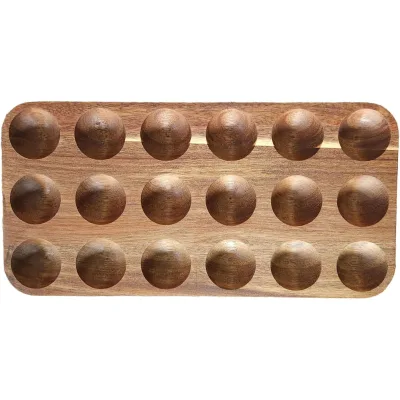
Prices for wooden egg trays range from approximately 2.27 to 7.74 USD per unit depending on size and customization. Specific models like the 18-hole tray start near 4.84 USD, while larger storage boxes may cost up to 7.49 USD. Bulk orders often influence the final unit price significantly.
Can I customize the logo on these products?
Yes, customization is available for logos on most wooden egg storage products. Suppliers accept customized logos and packaging to meet brand requirements. This service allows buyers to create unique products for retail or corporate gifting while maintaining the eco-friendly nature of the bamboo or wood material.