Encrypted Explosion Proof Walkie Talkie Suppliers and Manufacturers
Compare 14 verified suppliers offering Encrypted Explosion Proof Walkie Talkie with ATEX certification, IP68 ratings, and AES encryption. Review response times, lead times, and MOQs to select the right partner for your industrial communication needs; review the available evidence before requesting comparable quotations from suitable candidates.
Updated
Suppliers List
- Trading Company
- Hong Kong S.A.R.
- Lead time0 days
- Avg. response≤ 3h
Main productsWalkie Talkie, Two-way Radio, Antenna, Drones, Satellite Phone
Main marketsMid East(15.00%), North America(13.00%), South America(10.00%), Africa(8.00%), Western Europe(7.00%), Eastern Europe(7.00%), Domestic Market(7.00%), Southeast Asia(7.00%), South Asia(5.00%), Eastern Asia(5.00%), Southern Europe(5.00%), Central America(5.00%), Oceania(3.00%), Northern Europe(3.00%)
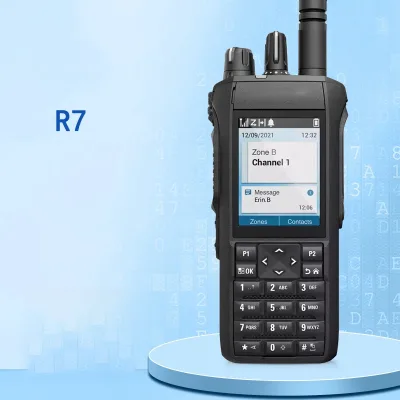
R7 Talkie-walkie Gps Encrypted Walkie Talkie
$638.00 - $650.00
$82.757 - $85.8998
MOQ: 5 pieces

Fujian Belfone Communications Technology Co., Ltd.
- Verified by SGS
- Combined
- China Fujian
- Lead time30 days
- Avg. response≤ 8h
Main productsWalkie Talkie, Two Way Radio, Amateur Ham Radio, Dmr Radio, Mobile Radio, Poc Radio, VHF UHF Repeater Base Station, VHF UHF Radio Transceiver, Radio Communication System, ATEX Explosion-Proof Radio
Main marketsSoutheast Asia/ Mideast

Belfone Intrinsically Safe Two Way Radios Explosion Proof Walkie Talkie
$238.00 - $398.00
MOQ: 5 Pieces

Portable Radio ATEX Certified Explosion-Proof Radio Intrinsically Safe Walkie Talkie
$248.00 - $398.00
MOQ: 5 Pieces

Two Way Marine VHF Radio Telephone/Transceiver/ Walkie Talkie with Explosion-Proof Certificate
$248.00 - $398.00
MOQ: 5 Pieces

Belfone Intrinsically Safe Radio Explosion-Proof Walkie Talkie (BF-TD930Ex)
$368.00 - $458.00
MOQ: 5 Pieces

Belfone Dmr Explosion Proof Tactical Walkie Talkie with IP68 (BF-Td930ex)
$368.00 - $458.00
MOQ: 5 Pieces

Hangzhou Taihang Technology Import&Export Co., Ltd
- Trading Company
- China Zhejiang
- Lead time60 days
- Avg. response≤ 15h
Main productsMarine Propulsion System, Marine Window, Marine Door, Marine Wheelhouse Console, Laser Cutting Servies, Marine Paint, Marine Pump, Marine Capstan, Airboat, Aluminum Catamaran
Main marketsSouth America,Africa,Southeast Asia/ Mideast

Xiamen Aisite Technology Co., Ltd
- Verified by SGS
- Combined
- China Fujian
- Lead time15 days
- Avg. response≤ 2h
Main marketsDomestic


IP67 Waterproof Dmr Digital Walkie Talkie M4ex Explosion Proof Two-Way Radio
$66.00 - $71.00
MOQ: 10 Pieces

Quanzhou Hengluda Electronic Technology Co., Ltd.
- Manufacturer, Trading Company
- Fujian, China
- Lead time15 days
- Avg. response≤ 2h
Main productswalkie talkie,two way radio,intcom,poc radios,Analog radio
Main marketsNorth America(28.88%), Domestic Market(20.01%), South America(14.80%), South Asia(12.66%), Eastern Europe(7.90%), Africa(4.66%), Mid East(3.55%), Western Europe(3.00%), Southern Europe(2.88%), Northern Europe(1.66%)

- Verified by BV
- Trading Company
- China Fujian
- Lead time23 days
- Avg. response≤ 3h
Main productsMouth Care and Soap, Field Kitchen Trailer, Camping Tents, Boots and Shoes, Camo Uniform and Clothes, Outdoor Backpacks and Bags, Camouflage Net and Ghillie Suit, Blankets and Sleeping Bags, Canteens and Mess Tins, Tactical Helmet
Main marketsSouth America,Africa,Southeast Asia/ Mideast,East Asia(Japan/ South Korea),Europe,Australia,North America
Fujian JJCC Electronic Co., LTD
- Manufacturer
- Fujian, China
- Lead time7 days
- Avg. response≤ 2h
Main productsWalkie Talkie,Walkie Talkie Accessories
Main marketsSoutheast Asia(50.00%), Domestic Market(20.00%), Oceania(10.00%), North America(5.00%), Eastern Asia(4.00%), South Asia(2.00%), South America(2.00%), Eastern Europe(1.00%), Southern Europe(1.00%), Mid East(1.00%), Northern Europe(1.00%), Central America(1.00%), Western Europe(1.00%), Africa(1.00%)

Quanzhou Saiwei Technology Co., Ltd.
- Verified by SGS
- Combined
- China Fujian
- Lead time15 days
- Avg. response≤ 23h
Main marketsDomestic


LED Screen Customization Efficient Advanced Dmr Radio Walkie Talkie for Safe Communication
$79.00 - $89.00
MOQ: 1 Pieces


Shenzhen Mainlink Technology Co., Ltd.
- Manufacturer, Trading Company
- Guangdong, China
- Lead time0 days
- Avg. response≤ 1h
Main productsWalkie-Talkie,Restaurant Pager,Wireless Tour Guide Explainer,Referee Intercom,Drone loudspeaker
Main marketsNorth America(30.00%), Domestic Market(20.00%), South America(10.00%), Africa(10.00%), Southeast Asia(10.00%), Eastern Europe(10.00%), Western Europe(5.00%), Southern Europe(5.00%)
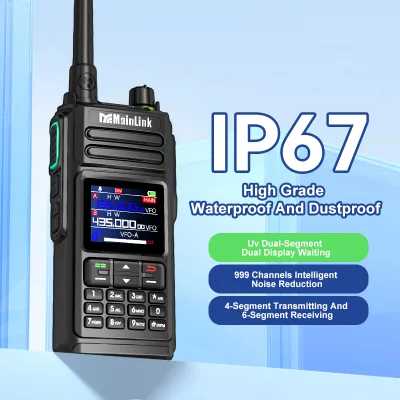
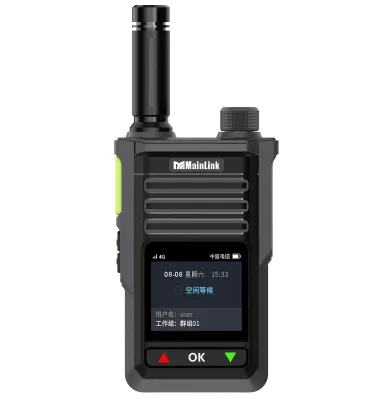
$52.00 - $58.00
MOQ: 2 pieces
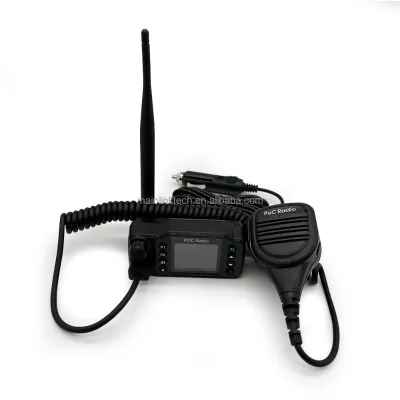
$51.4428 - $59.6728
MOQ: 2 pieces
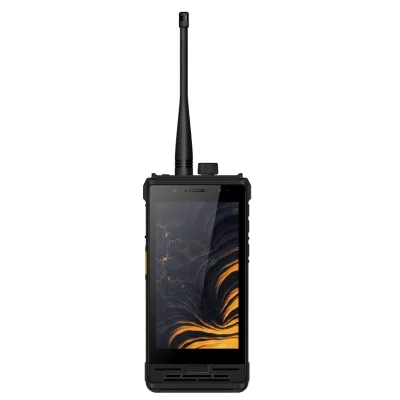
$36.9377 - $45.1452
MOQ: 2 pieces
Quanzhou Maruzai E-Commerce Co., Ltd.
- Trading Company
- Fujian, China
- Lead time0 days
- Avg. response≤ 1h
Main productsWalkie Talkie,charger,battery,Microphone,earphone
Main marketsSoutheast Asia(30.00%), North America(30.00%), South America(20.00%), Central America(10.00%), Southern Europe(5.00%), Oceania(5.00%)
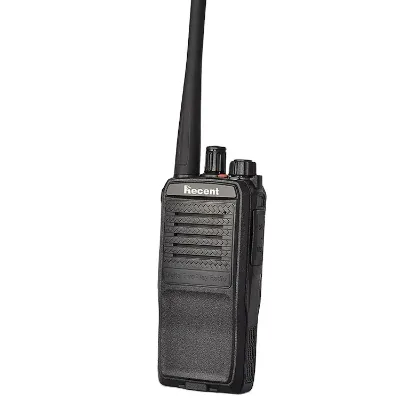
Atex Explosion Proof Portable VHF 256CH Walkie Talkie Recent RS-538DE 10km Range Hot Sale Radio
$144.1391 - $154.4348
MOQ: 2 pieces
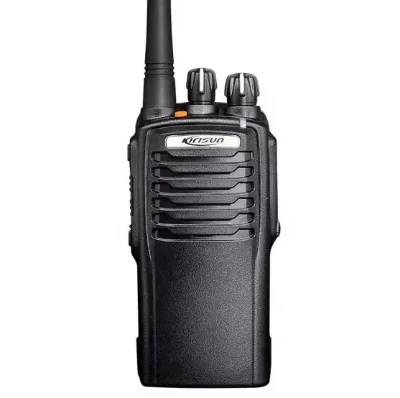
$260.9231 - $271.1545
MOQ: 2 pieces
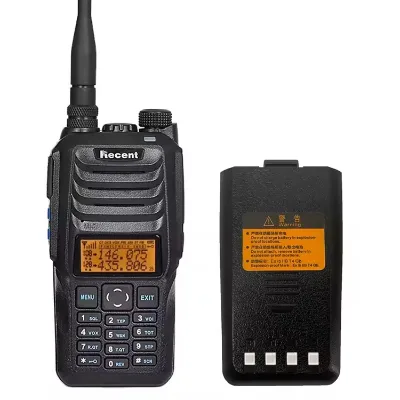
$113.878 - $124.2306
MOQ: 2 pieces
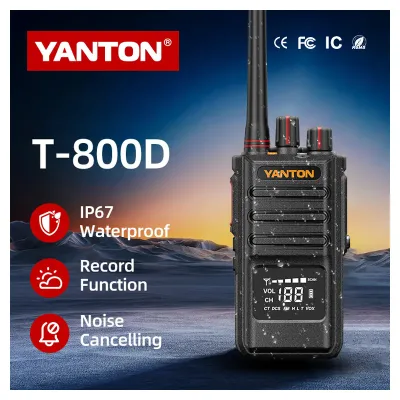
$64.1863 - $66.2565
MOQ: 2 pieces
Shenzhen Hanghui Technology Development Co., Ltd.
- Manufacturer, Trading Company
- Guangdong, China
- Lead time0 days
- Avg. response≤ 22h
Main productswalkie-talkie,radio station,fire fighting helmet,infrared telescope,Thermal imaging telescope
Main marketsEastern Asia(1.00%), North America(1.00%)

Quanzhou Ruihui Electronic Technology Co., Ltd.
- Verified by SGS
- Trading Company
- China Fujian
- Lead time15 days
- Avg. response≤ 4h
Main marketsDomestic

$545.00 - $555.00
MOQ: 2 Pieces


- Verified by BV
- Manufacturer/Factory
- China Fujian
- Lead time23 days
- Avg. response≤ 4h
Main productsTwo Way Radio, Walkie-Talkie, Mobile Radio, Repeater, Dmr Radio, Poc Radio
Main marketsSouth America,Eastern Europe,Mid East,North America,Southeast Asia,Eastern Asia,Oceania,Western Europe,Africa

$55.00 - $65.00
MOQ: 50 Pieces

$100.00 - $150.00
MOQ: 100 Pieces

- Trading Company
- Zhejiang, China
- Lead time7 days
- Avg. response≤ 1h
Main productsmotorola two way radio,Radio accessories,antenna,Communication antenna,Speaker Micphone
Main marketsCentral America(9.00%), South Asia(9.00%), Southeast Asia(9.00%), Mid East(9.00%), South America(9.00%), North America(9.00%), Domestic Market(8.00%), Northern Europe(8.00%), Eastern Asia(8.00%), Eastern Europe(8.00%), Africa(6.00%), Oceania(4.00%), Southern Europe(2.00%), Western Europe(2.00%)




Comprehensive Sourcing Guide
Encrypted Explosion Proof Walkie Talkie Supplier Concentration and Factory Types
The landscape for sourcing encrypted explosion-proof walkie talkies reveals a distinct concentration of manufacturing activity in specific industrial hubs, with Fujian, China emerging as a primary location for production. Suppliers located in this region often specialize in a diverse array of communication devices, including two-way radios, amateur ham radios, and specialized DMR radios, indicating a mature ecosystem for digital mobile radio technology. This geographic clustering suggests that buyers can find factories with established supply chains for critical components like batteries and antennas, which are essential for maintaining the integrity of encrypted and intrinsically safe devices. The presence of combined supplier types in these areas implies that some entities may offer both manufacturing capabilities and trading services, allowing for greater flexibility in order sizes and customization options.
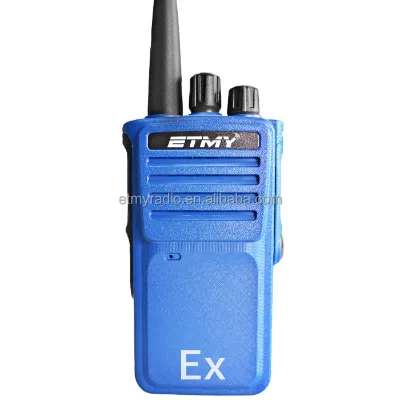
Factory types in this sector vary significantly, ranging from pure trading companies to combined entities capable of original design manufacturing and original equipment manufacturing. Trading companies often provide a broader selection of models, such as the R7 Talkie-walkie or the ET-D330EX, catering to buyers who need immediate availability of standard products without the lead time associated with custom manufacturing. In contrast, factories with ODM and OEM capabilities, such as those verified by SGS, offer deeper customization for encryption protocols and explosion-proof certifications. These manufacturers can tailor features like AES256 encryption and ATEX/IEC EX certification to meet specific industry requirements for oil, gas, and mining environments. Understanding this distinction is crucial for buyers who must balance the need for rapid deployment against the desire for proprietary or highly specialized communication solutions.
How to Verify Encrypted Explosion Proof Walkie Talkie Suppliers
Verifying the legitimacy and capability of suppliers requires a multi-layered approach that goes beyond simple product listings, focusing heavily on certification and verification badges. Buyers should prioritize suppliers who display specific verification statuses, such as SGS verification, which indicates that an independent third party has audited the company’s operations and quality management systems. This is particularly important for explosion-proof devices, where safety compliance is non-negotiable. Additionally, checking for product-specific certifications like FCC and CE is essential, as these mark the device’s compliance with international safety and electromagnetic compatibility standards. For devices intended for hazardous environments, confirming ATEX or IEC EX certification is critical, as these standards ensure the radio will not ignite flammable gases or dust. Buyers must actively request documentation for these certifications rather than relying solely on marketing claims, ensuring that the encryption and explosion-proof features are legally recognized and technically sound.
Beyond certifications, assessing the supplier’s response time and communication efficiency provides insight into their operational reliability and customer service quality. A supplier with a response time of three days or less, as observed in some trading companies, may indicate a streamlined sales process, whereas a response time of over seven days, seen in some combined factories, might suggest a more complex internal approval workflow. Buyers should also examine the main products listed by the supplier to ensure they have a dedicated focus on walkie talkies and two-way radios rather than a scattered inventory. A supplier whose main products include DMR radios, VHF/UHF repeaters, and ATEX explosion-proof radios is more likely to possess the technical expertise required to support encrypted communication devices. This focused product portfolio suggests a deeper understanding of the nuances between analog and digital mobile radios, which is vital for troubleshooting and providing accurate technical support post-purchase.
What to Compare Across Encrypted Explosion Proof Walkie Talkie Suppliers
When evaluating multiple suppliers, buyers must compare key operational metrics such as lead times, minimum order quantities, and price ranges to determine the best fit for their procurement strategy. Lead times can vary significantly, with some suppliers offering immediate availability while others, particularly those engaged in OEM work, may require up to thirty days for production. This variance is crucial for buyers planning inventory for large-scale deployments in remote locations. Minimum order quantities also differ, with some suppliers requiring as few as five units, which is ideal for small teams or pilot programs, while others may have higher thresholds. Price comparisons should account for the specific features of the device, such as the inclusion of GPS positioning, AES256 encryption, and explosion-proof ratings. For instance, prices for encrypted DMR radios can range from approximately eighty-two dollars to over one thousand dollars, depending on the brand, certification level, and additional features like long-range capabilities or intrinsically safe designs.
Technical specifications and product attributes are another critical dimension for comparison, including talk range, output power, and battery capacity. Buyers should compare devices based on their frequency types, such as VHF and UHF, and their water resistance levels, which can range from IP54 to IP68. The talk range, often specified as zero to ten kilometers, and output power, typically between three and five watts, directly impact the effectiveness of communication in challenging terrains. Battery capacity, usually between fifteen hundred and three thousand milliampere-hours, determines the operational endurance of the device in the field. Additionally, comparing the operating languages and storage channel capacities can help buyers select devices that are user-friendly for their specific workforce. By systematically comparing these attributes across different suppliers, buyers can identify the optimal balance between cost, performance, and reliability for their encrypted explosion-proof walkie talkie requirements.
Common Encrypted Explosion Proof Walkie Talkie Sourcing Risks
One of the primary risks in sourcing encrypted explosion-proof walkie talkies is the potential mismatch between claimed specifications and actual product performance, particularly regarding encryption strength and explosion-proof ratings. Buyers may encounter suppliers who advertise AES256 encryption but fail to provide verifiable evidence of the encryption module’s implementation, leaving communications vulnerable to interception. Similarly, explosion-proof claims must be backed by legitimate certification from recognized bodies, as counterfeit or substandard devices can pose severe safety hazards in hazardous environments. Another risk is the variability in build quality and durability, which can affect the device’s ability to withstand harsh conditions. Buyers should be cautious of devices with low IP ratings when operating in wet or dusty environments, as this can lead to premature failure and increased maintenance costs.
Supply chain disruptions and inconsistent lead times also pose significant risks, especially for buyers relying on just-in-time inventory models. Suppliers with longer lead times, such as those requiring thirty days, may struggle to meet urgent demand, leading to operational delays for the buyer. Additionally, the complexity of encrypted devices means that technical support and firmware updates are critical for long-term usability. Buyers risk investing in devices that lack adequate post-sale support, making it difficult to resolve issues related to encryption keys or software updates. Furthermore, the risk of receiving products with incorrect frequency ranges or incompatible accessories can disrupt integration into existing communication networks. To mitigate these risks, buyers must conduct thorough due diligence, including requesting sample units for testing and verifying the supplier’s track record in delivering compliant and reliable products.
Encrypted Explosion Proof Walkie Talkie Regional Sourcing and Logistics
Sourcing encrypted explosion-proof walkie talkies from regional hubs like Fujian, China, offers logistical advantages due to the concentration of manufacturing facilities and established export infrastructure. Suppliers in this region are often well-versed in international shipping requirements, ensuring that devices are packaged and labeled correctly for global distribution. The proximity of component suppliers in Fujian can also reduce production lead times, allowing for faster turnaround on orders. However, buyers must consider the logistical implications of shipping from different locations, such as Malaysia, where some explosion-proof radios are manufactured. Shipping from Malaysia may involve different transit times and customs procedures, which can impact the overall delivery schedule. Understanding these regional differences is essential for planning inventory and managing expectations regarding delivery dates.
Logistics planning must also account for the specific handling requirements of electronic devices, particularly those with lithium-ion batteries. Suppliers must comply with international regulations for shipping batteries, which can affect packaging costs and shipping methods. Buyers should verify that their chosen supplier has experience in handling these regulatory requirements to avoid delays at customs. Additionally, the choice of shipping method, whether air or sea freight, will impact the cost and speed of delivery. For urgent orders, air freight may be necessary, while larger bulk orders can benefit from the cost savings of sea freight. Buyers should work closely with their suppliers to determine the most efficient logistics strategy, considering factors such as order volume, delivery urgency, and destination country regulations. Proper logistics planning ensures that encrypted explosion-proof walkie talkies arrive on time and in good condition, ready for immediate deployment in the field.
Encrypted Explosion Proof Walkie Talkie Commercial Terms and Order Planning
Commercial terms and order planning are critical components of a successful procurement strategy for encrypted explosion-proof walkie talkies. Buyers should negotiate clear terms regarding payment methods, warranty periods, and return policies to protect their investment. Given the high value of these specialized devices, securing favorable payment terms, such as partial upfront payment and balance upon shipment, can help manage cash flow and reduce financial risk. Warranty periods should be clearly defined, covering defects in materials and workmanship, and should include provisions for repair or replacement of faulty units. Buyers should also inquire about the availability of spare parts, such as batteries and chargers, to ensure long-term operational readiness. Understanding these commercial terms helps buyers avoid unexpected costs and ensures a smooth transaction process.
Order planning must consider the scalability of the procurement, allowing for future expansion or replacement of devices. Buyers should assess the supplier’s capacity to handle large orders and their ability to maintain consistent quality across batches. For suppliers with OEM capabilities, buyers can plan for custom branding or specific feature configurations that align with their organizational needs. Additionally, buyers should consider the total cost of ownership, including maintenance, software updates, and potential training costs for users. By carefully planning orders and negotiating favorable commercial terms, buyers can secure a reliable supply of encrypted explosion-proof walkie talkies that meet their operational requirements and budget constraints. This strategic approach ensures that the procurement process supports the long-term success of the buyer’s communication infrastructure.
FAQs
What encryption standards are available for explosion-proof radios?
Explosion-proof walkie talkies often feature AES256 encryption to secure communications in hazardous environments. This standard ensures that sensitive data remains protected from unauthorized access. Buyers should verify specific model capabilities, as some units may offer analog transmission without advanced digital security features for basic operational needs.
What is the typical price range for these devices?
Prices for encrypted explosion-proof walkie talkies vary significantly based on features and certification. Basic models may start around $82, while advanced digital units with ATEX certification can exceed $1,000. The cost reflects differences in output power, battery capacity, and specific safety ratings required for oil, gas, or mining applications.
Which certifications ensure safety in explosive atmospheres?
Look for radios certified with ATEX or IEC EX standards for use in explosive atmospheres. These certifications confirm the device is intrinsically safe and prevents ignition sources. Some models also carry FCC and CE marks for general compliance. Always verify the specific certification level matches your industry's regulatory requirements before purchasing.
What is the minimum order quantity for bulk purchases?
Minimum order quantities for these specialized radios typically start at five units. This MOQ allows buyers to test performance in their specific environment before committing to larger orders. Suppliers may offer flexible terms for established partners, but the initial threshold ensures efficient production runs for customized or certified equipment batches.
How long does production and shipping usually take?
Lead times for these radios generally range from zero to thirty days depending on stock levels. Standard models may ship quickly, while custom OEM orders require additional manufacturing time. Buyers should confirm current availability with suppliers, as production schedules can vary based on component supply and specific certification testing requirements for each batch.
What water and dust resistance ratings are common?
Many explosion-proof walkie talkies feature IP68 or IPX7 ratings for water and dust resistance. This ensures reliable operation in harsh industrial conditions, including rain or submersion. Some models also specify IP54 for general protection. Check the specific IP level for each unit to ensure it meets your environmental exposure standards.