Handmade Sequins Lace Trims Suppliers and Manufacturers
Compare 22 verified suppliers offering Handmade Sequins Lace Trims with details on certifications, lead times, and MOQs. Review product attributes like material and width before requesting samples or placing orders; review the available evidence before requesting comparable quotations from suitable candidates.
Suppliers List
Guangzhou Marigold Trading Co., Ltd.
- Verified by TüVRheinland
- Trading Company
- Lead time12 days
- Avg. response≤ 4h
Main productsEmbroidery Fabric, Trimmings, Patches, Buttons, Buckles
Main marketsNorth America(9%), Southeast Asia(9%), Western Europe(9%)
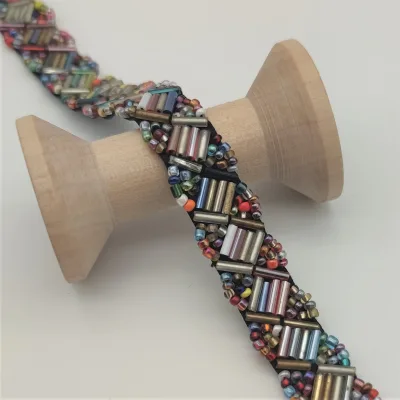
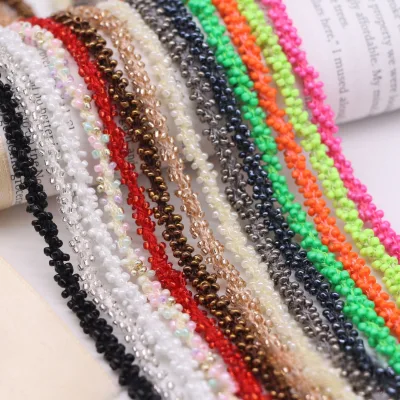
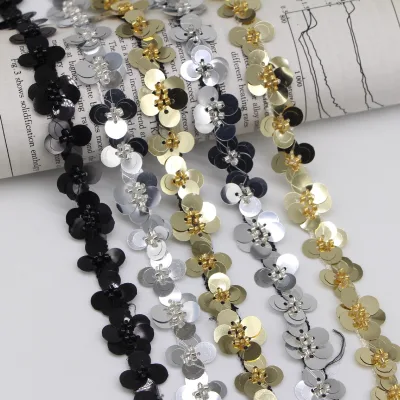
Multi-color Sequin Trims New Hand Beaded Trims Decorative Tape Lace Trimmings for Collar
$1.95 - $2.05
MOQ: 100 yards
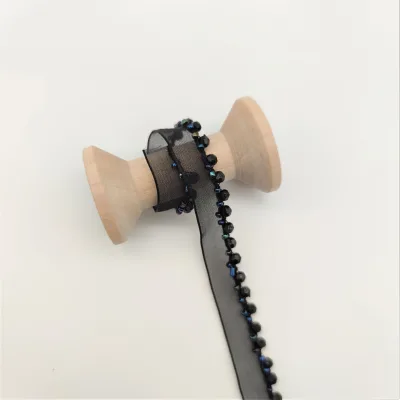
Black Organza Trim Handmade Costume Dress Sewing Bead Lace Trim Design Pearl Trims
$0.30 - $0.80
MOQ: 1000
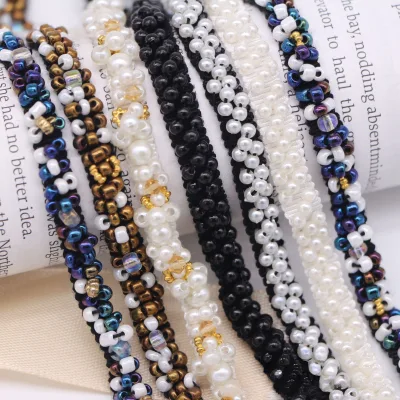
Handmade DIY Black and White Beaded Lace Trim Fancy Mesh Flower Ribbon Pearl Lace Trim
$17.50 - $18.60
MOQ: 1000 yards
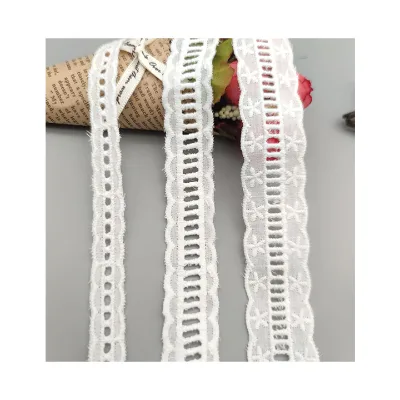

Kingswick Technology Group Limited
- Trading Company,Manufacturer/Factory,Group Corporation,Other
- China Guangdong
- Lead time15 days
- Avg. response≤ 17h
Main productsHotfix Rhinestones, Nail Rhinestones, Flat Back Rhinestones, Sew on Rhinestones, Hot Fix Rhinestone Machines, Rhinestone Appliques, Glass Crystal Beads, Rhinestone Ribbons, Jewelry Beads, Pearl Beads
Main marketsSouth America,Eastern Europe,Mid East,North America,Southeast Asia,Eastern Asia,Oceania,Western Europe,Africa

Hot Selling Beaded Sequin Lace Trim Beautiful Polyester Embroidery Sequins Beaded Lace Trims
$2.00 - $3.00
MOQ: 100 Yards


Mesh Bead Lace Beaded Sequins Lace Clothing Accessories Embroidered Lace Trim
$1.28 - $2.50
MOQ: 100 Yards


Wholesale New Many Colors Fashion Sequin Lace Trim for Wedding Dress Decoration
$1.30 - $1.50
MOQ: 10000 Yards
- Trading Company
- Zhejiang, China
- Lead time30 days
- Avg. response≤ 10h
Main productsgarment trimming,bra&underwear accessories,lace trim collection,bag parts and hardware,fabric and lining
Main marketsSoutheast Asia(40.00%), North America(15.00%), South America(15.00%), Western Europe(10.00%), Eastern Europe(10.00%), Domestic Market(5.00%), Mid East(5.00%)
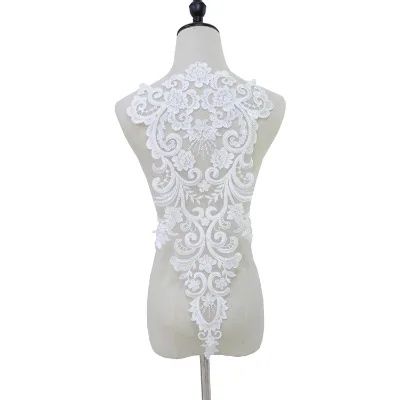
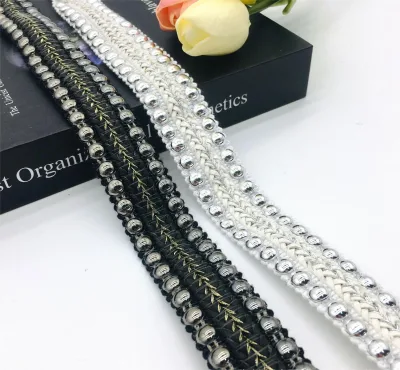
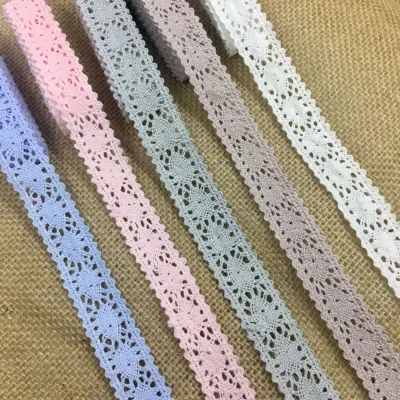
$0.80 - $1.02
MOQ: 50 yards
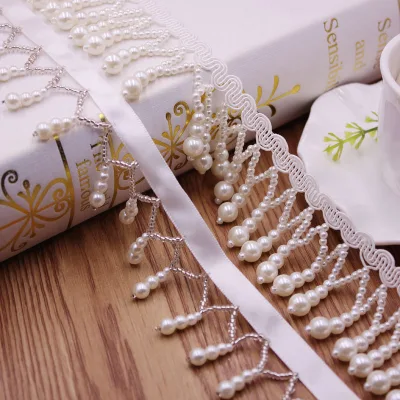
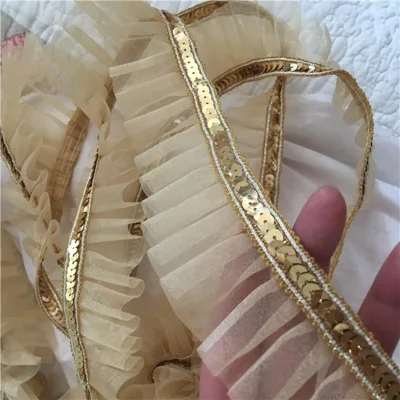

Lanxi Sange Industry Co., Ltd.
- Verified by TUVRHEINLAND
- Trading Company
- China Zhejiang
- Lead time15 days
- Avg. response≤ 18h
Main productsLace, Lace Fabric, Cotton Lace, Chemical Lace, Fringe Tassel, Tassel Fringe, Garment Accessories, Chainette Fringe, Embroidery Lace, Crochet Lace
Main marketsSouth America,Africa,Others(foreignTradeCapacity.exportBusinessCapacityMarketOther),Southeast Asia/ Mideast,Europe,North America


Hot Sell More Style Embroidery Cotton Lace Trim for Home Textile Accessories
$0.28 - $0.48
MOQ: 10 Yard/Yards


High Quality More Style Cotton Lace Trim for Home Textile Accessories
$0.28 - $0.48
MOQ: 10 Yard/Yards

Wuxi Glolinker Technology Co., Ltd.
- Verified by CTI
- Trading Company
- China Jiangsu
- Lead time15 days
- Avg. response≤ 11h
Main productsClothing Fabrics, Pillows, Blankets, Duvet Cover, Fabric, Bed Sheets, Satin Fabric, Pillowcase, Embroidery Fabric, Sequin Fabric
Main marketsDomestic


Exquisite Lace Embroidery Adorned with Bright Sequins for Fashion Accessories
$4.00 - $9.00
MOQ: 300 Meters


Weihai Sisco International Trade Co., Ltd
- Verified by SGS
- Trading Company
- China Shandong
- Lead time23 days
- Avg. response≤ 16h
Main marketsSoutheast Asia/ Mideast,East Asia(Japan/ South Korea)
Guangzhou Dhorse Garment Accessory Firm
- Trading Company
- Guangdong, China
- Lead time5 days
- Avg. response≤ 4h
Main productsEmbroidery Lace Fabric,Beaded Lace Trim,Beaded Lace Applique,Glitter Tulle,Garment Patch
Main marketsNorth America(30.00%), Western Europe(15.00%), South America(15.00%), Southeast Asia(10.00%), South Asia(5.00%), Eastern Europe(5.00%), Eastern Asia(5.00%), Mid East(5.00%), Oceania(5.00%), Africa(5.00%)
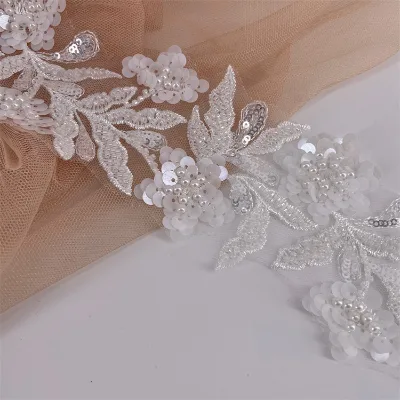
2024 Organza Lace Trim Pearl Beaded Lace Trim With Sequins for Bridal Dress
$1.79 - $1.89
MOQ: 150 yards
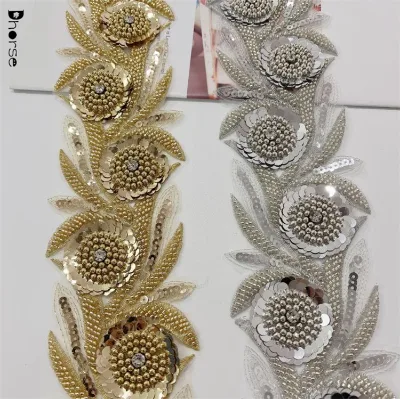
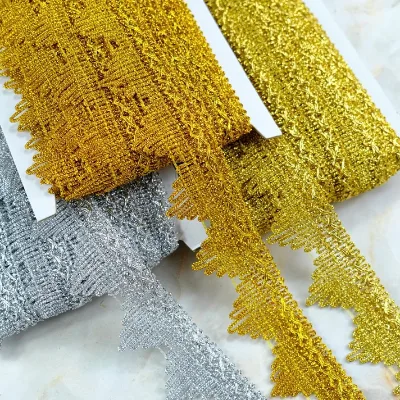
Wholesale Luxury Metallic Gold and Silver 3d Sequins Beaded Lace Trim for Garment
$3.80 - $4.35
MOQ: 20 yards
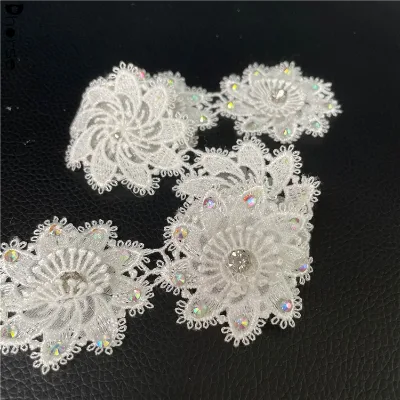
Sparkling 5cm Sewing Flower Lace Polyester 3D Floral Lace Trim With Rhinestone Trimming
$1.50 - $1.60
MOQ: 75 yards
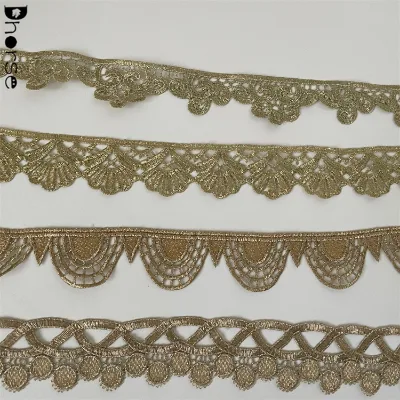
Hot Selling Guipure Gold Color Embroidered Lace Trim by the Yard for Women
$0.41 - $0.56
MOQ: 300 Minimum

Ningbo DH Textile Industry&Trade Co., Ltd.
- Verified by TUVRHEINLAND
- Trading Company
- China Zhejiang
- Lead time15 days
- Avg. response≤ 13h
Main productsLace, Interlining, Embroidery Thread, Poplin, Hook and Loop, Satin Ribbon, Sewing Thread, Button, Zipper, Lace Fabric
Main marketsAfrica,Southeast Asia/ Mideast,North America

Marigold Garment Accessories Co., Ltd.
- Trading Company
- China Guangdong
- Lead time15 days
- Avg. response≤ 11h
Main productsLace, Lace Trimming, Rhinestone Trimming, Embroidery, Patches, Elastic Trim, Brooches, Button, Rhinestone Patch, Lace Fabric
Main marketsSouth America,Africa,Southeast Asia/ Mideast,Europe,North America

Fashion Lace Trim Embroidered Cord Bridal Lace Trim with Hot Fix Rhinestone
$0.90 - $2.00
MOQ: 500 Yards


- Verified by TUVRHEINLAND
- Combined
- China Zhejiang
- Lead time30 days
- Avg. response≤ 7h
Main productsThread, Zipper, Lace, Button, Webbing & Tape, Ribbon, Interlining, Fabric, Tailoring Materials, Hook & Loop
Main marketsSouth America,Africa,Europe,Australia

- Verified by BV
- Trading Company,Manufacturer/Factory
- China Zhejiang
- Lead time23 days
- Avg. response≤ 6h
Main productsGarment Accessories, Zipper, Button, Lace Trim, Metal Zipper, Nylon Zipper, Plastic Zipper, Metal Button, Snap Button, Cotton Lace
Main marketsNorth America,Africa

- Verified by BV
- Trading Company
- China Zhejiang
- Lead time30 days
- Avg. response≤ 8h
Main productsTextile, Zipper, Lace, Elastic, Ribbon, Thread, Tape, Fabric, Interlining, Button
Main marketsSouth America,Africa,Europe


Hot Sale Cotton Lace Embroidery Trimming Lace Trim for Wedding Dress Accessories
$0.01 - $0.10
MOQ: 1000 Yards

Changsha Smurfs Import And Export Trade Co., Ltd.
- Trading Company
- Hunan, China
- Lead time15 days
- Avg. response≤ 5h
Main productspatches,Zipper,button,lace fabric,coconut bowl
Main marketsEastern Europe(20.00%), North America(20.00%), Southern Europe(10.00%), Western Europe(10.00%), South America(10.00%), Northern Europe(5.00%), Mid East(5.00%), Southeast Asia(5.00%), Central America(3.00%)

Guangzhou Govolon Trade Co., Ltd.
- Trading Company,Manufacturer/Factory
- China Guangdong
- Lead time15 days
- Avg. response≤ 24h
Main productsGarment Accessories, Lace, Button, Zipper, Fringe and Tassels, Belt Ribbon, Garment Trimming, Patch Badge, Buckle, Hotfix
Main marketsSouth America,Mid East,North America,Southeast Asia,Western Europe,Africa
Guangzhou Diandian Jewelry Co., Ltd.
- Verified by TüVRheinland
- Trading Company
- Lead time15 days
- Avg. response≤ 2h
Main products3D Three-dimensional Flowers, Lace, Zhangzi Embroidery, Lace Barcode, Heat Transfer Printing
Main marketsNorth America(15%), Mid East(15%), Eastern Asia(15%)
Fuzhou Jingshengtong Trade Co., Ltd.
- Trading Company
- Fujian, China
- Lead time30 days
- Avg. response≤ 11h
Main productsLace,Lace materials,Fabric,Lace Trim,Eyelash Lace
Main marketsNorth America(30.00%), Northern Europe(20.00%), Domestic Market(10.00%), Southern Europe(10.00%), South America(10.00%), Central America(10.00%), Africa(10.00%)
Oriental Dimension (Chengdu) Textile Co., Ltd.
- Trading Company
- Sichuan, China
- Lead time0 days
- Avg. response≤ 6h
Main productsEmbroidery Lace,French Lace,Fashion Dress Lace,Wedding Veil,Trimming And Motif
Main marketsDomestic Market(100.00%), South Asia(100.00%), Southern Europe(100.00%), Northern Europe(100.00%), Central America(100.00%), Western Europe(100.00%), Eastern Asia(100.00%), Mid East(100.00%), Oceania(100.00%), Africa(100.00%), Southeast Asia(100.00%), Eastern Europe(100.00%), South America(100.00%), North America(100.00%)
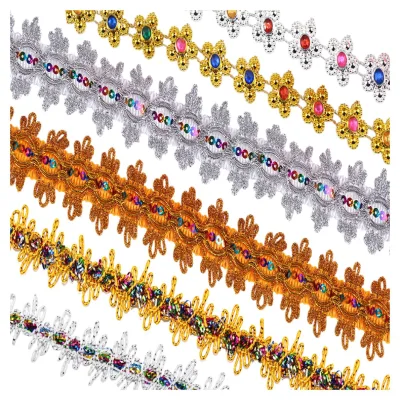
$0.15 - $0.18
MOQ: 15 yards

Ningbo Yinzhou Xindew Textile Co., Ltd.
- Trading Company
- China Zhejiang
- Lead time15 days
- Avg. response≤ 9h
Main productsKnitting Needles, Knitting Looms, Knitting Crochet Hook Set, Acrylic Yarn, Elastic Tape, Zipper, Thread, Hook and Loop, Baby Blankets, Baby Bibs
Main marketsSouth America,Africa,Southeast Asia/ Mideast,East Asia(Japan/ South Korea),Domestic,Europe,Australia,North America
Shenzhen Zhenshangmei Garment Accessories Co., Ltd.
- Manufacturer, Trading Company
- Guangdong, China
- Lead time27 days
- Avg. response≤ 3h
Main productsGuipure lace,Lace products,Crochet lace,Bead,ribbon
Main marketsWestern Europe(30.00%), North America(25.00%), South Asia(15.00%), Eastern Europe(15.00%), Eastern Asia(15.00%)

Ningbo Yuena Import & Export Co., Ltd.
- Verified by TUVRHEINLAND
- Trading Company
- China Zhejiang
- Lead time23 days
- Avg. response≤ 3h
Main productsLace, Thread, Button, Ribbon, Zipper, Tailors Materials, Fabric, Reflective Materials, Sewing Machine Part, Bra Parts
Main marketsSouth America,Africa,Southeast Asia/ Mideast,Europe,North America


Custom High Quality Fashion Design Cotton Lace Trim for Curtain Accessories
$0.26 - $0.29
MOQ: 9000 Yards

- Verified by TUVRHEINLAND
- Trading Company,Manufacturer/Factory
- China Zhejiang
- Lead time23 days
- Avg. response≤ 7h
Main productsGarment Accessories, Zipper, Button, Lace Trim, Metal Zipper, Nylon Zipper, Plastic Zipper, Metal Button, Snap Button, Cotton Lace
Main marketsNorth America,Africa

Shaoxing City Beita Trade Co., Ltd.
- Verified by BV
- Manufacturer/Factory
- China Zhejiang
- Lead time15 days
- Avg. response≤ 9h
Main productsStock Textiles, Stock Fabrics, Lycra Printed, Stock Polo, Chiffon, Fresh Order
Main marketsEastern Europe,Mid East,North America,Southeast Asia,Western Europe,Africa








Comprehensive Sourcing Guide
Handmade Sequins Lace Trims Supplier Concentration and Factory Types
Handmade Sequins Lace Trims sourcing starts with understanding who actually makes the product. Supplier results for this category show listings concentrated in Guangdong, China, which appears repeatedly as the declared place of origin across multiple trim products. This aligns with the region's established garment accessories ecosystem, where lace, beading, sequins and embroidery trades overlap. When your own search results show origin data, treat repeated locations as a clustering signal and prioritize suppliers physically close to that base, because proximity to trimming workshops, bead suppliers and embroidery houses usually shortens sampling loops for hand-beaded work.
The supplier mix in this category is varied rather than purely factory-based. Verified results include a trading company listing embroidery fabric, trimmings, patches, buttons and buckles, and another entity combining trading company, manufacturer/factory, group corporation and other labels. Trading companies can be advantageous for handmade trim buyers because they aggregate small-batch capacity across workshops, while direct factories offer tighter process control over handwork quality. Check whether the supplier supports OEM service, since several trim listings explicitly accept it. Also review research and development capability labels: one supplier reports no R&D capacity but offers sample processing, graphic processing and customized-on-demand work, while another lists OEM and ODM. Match this capability profile to whether your designs require pattern development or only reproduction of existing sequin trim styles.
How to Verify Handmade Sequins Lace Trims Suppliers
Verification for handmade trims should begin with third-party verification status, then move to documentation. In current results, one supplier carries TÜV Rheinland verification, which is an independent on-site inspection signal rather than a self-declared claim. Treat verification badges as a screening filter, not proof of handwork quality: a verified profile tells you the company exists at the stated address, not that its beaded lace trims will survive washing or wear. Ask every candidate to explain their role in the supply chain plainly, because the category mixes trading companies, factories and hybrid group entities.
Certification evidence should be requested in certificate form with validity dates. Results show suppliers listing system certifications including Oeko-Tex 100, RoHS, AATCC 20, DIN 54231, CR 12471, CP65, and ISO 9000. These are meaningful anchors: Oeko-Tex 100 addresses harmful substances in textiles, ISO 9000 addresses quality management systems, and CP65 relates to California chemical disclosure requirements. Note that certifications belong to the specific supplier that lists them, so never assume all suppliers in the category hold the same credentials. For product-level assurance, verify which certificates cover the actual trim material, whether polyester-based sequin mesh or cotton eyelet lace, and ask for test reports scoped to the exported destination's rules. Finally, confirm that certification names, registration details and product evidence such as model numbers cross-check consistently across the supplier's listings.
What to Compare Across Handmade Sequins Lace Trims Suppliers
Build a comparison table using the attributes suppliers actually display, without assuming every field is populated. Useful dimensions include lead time, MOQ, response speed, verification status, location, certifications and main products. In current results, lead times range from 12 to 15 days, and average response times differ sharply: one supplier responds in about 4 hours while another averages roughly 16 hours. For buyers iterating on beaded designs, response speed directly affects how many sampling rounds fit into a season. Main product breadth also matters; a supplier focused on trims, patches, buttons and embroidery fabric is structured differently from one centered on rhinestones, beads and appliques.
Compare commercial parameters at product level as well. Displayed MOQs in this category range from 100 yards to 1000 yards depending on the trim, and displayed unit prices range from under one dollar per yard on cotton ladder lace trims to above seventeen dollars on heavily beaded mesh sequin trims. That spread reflects handwork intensity, material and width, so compare like widths and like techniques only. Check supply ability statements, such as listings declaring hundreds of thousands of pieces per month, against your actual volume, since a stated monthly capacity may cover all products rather than your specific trim. Finally, compare customization depth: some listings accept customized colors and sizes, others ship stock colors only, and this distinction should carry its own column in your evaluation sheet.
Common Handmade Sequins Lace Trims Sourcing Risks
The first risk cluster involves handwork consistency. Beaded and sequin trims are attached by hand in many workflows, which means bead density, stitch security and sequin alignment can drift between production batches. Because product listings may show a single stock photo, request pre-production samples and reference samples for approval before bulk, and photograph an agreed master sample. A second risk is material substitution: listings in this category span 100% polyester, 100% cotton and mesh-base constructions, so confirm base fabric, thread and attachment method in writing, including whether sequins are sewn or glued.
A third risk is misreading supplier type. A trading company listing many accessory categories may subcontract your trim to an outside workshop, adding a layer between you and the handwork. That is not automatically negative, but it changes who controls quality and who is accountable for defects, so clarify the production arrangement directly. Fourth, watch lead-time assumptions: displayed lead times of 12 to 15 days typically apply to stock or simple repeat orders, while custom colors, custom sizes or dense hand-beading can extend timelines substantially. One listing states stock quantity can ship immediately after payment, which applies only to in-stock items. Finally, verify compliance scope before committing; certifications displayed on a company profile may not cover every trim style exported, and chemical or disclosure requirements can vary by destination market.
Handmade Sequins Lace Trims Regional Sourcing and Logistics
For regional strategy, start from the origin data suppliers themselves declare. In this category, results repeatedly point to Guangdong, China, as the declared place of origin for beaded, sequin and cotton lace trims. Sourcing from suppliers based in or near an established trims cluster offers concrete advantages: shorter distances to bead and sequin component markets, faster courier sampling, and easier in-person inspection of handwork quality. When supplier results do not display a credible location, use declared place-of-origin fields on individual product listings as supporting evidence, and treat any location a buyer cannot corroborate as an open item to verify.
Logistics planning should account for product characteristics. Handmade sequin trims are lightweight but bulky and can be crushed or snagged, so specify winding, inner-bag and carton standards and request packing photos before shipment. Confirm the dispatch port stated on listings; one trim product names Guangzhou as its port of dispatch, which matters when calculating freight quotes and transit schedules from southern China. Compare shipment readiness claims carefully: a statement that stock quantity ships immediately after payment covers only existing stock, while made-to-order trims follow the normal production lead time. For samples, use express couriers and consolidate sample requests to reduce per-round cost. For bulk, decide between air freight for urgent seasonal deliveries and sea freight for volume, and confirm who handles export documentation before placing the first order.
Handmade Sequins Lace Trims Commercial Terms and Order Planning
Order planning should begin with MOQ strategy. Displayed minimums in this category range from 100 yards on some beaded trim listings to 1000 yards on others, so match the product to your consumption: lower-minimum listings suit new designs and small capsule runs, while higher-minimum items typically reward larger commitments with better displayed unit pricing. Price spans are wide, from roughly a third of a dollar per yard on cotton trims to under a dollar on organza-based pearl trims and well above ten dollars on dense sequin mesh styles. Always confirm whether quoted prices are per yard, per piece or per roll before comparing suppliers.
Structure commercial terms in writing before payment. Confirm incoterms, payment schedule, and whether the supplier accepts OEM orders under your specifications, since several listings state OEM acceptance. Tie payments to milestones: a deposit before production and balance after pre-shipment inspection is a common structure, and using a platform escrow mechanism where available can reduce advance-payment exposure, though you should verify which mechanisms a specific supplier actually supports rather than assuming. Build the timeline backwards from your delivery date using displayed lead times of 12 to 15 days as a floor, not a guarantee, then add sample rounds and buffer for handwork variability. Finally, plan reorders by recording model numbers, widths, materials and color references from approved samples so replenishment orders reproduce the exact trim you approved.
Handmade Sequins Lace Trims Supplier Concentration and Factory Types
Handmade Sequins Lace Trims sourcing starts with understanding who actually makes the product. Supplier results for this category show listings concentrated in Guangdong, China, which appears repeatedly as the declared place of origin across multiple trim products. This aligns with the region's established garment accessories ecosystem, where lace, beading, sequins and embroidery trades overlap. When your own search results show origin data, treat repeated locations as a clustering signal and prioritize suppliers physically close to that base, because proximity to trimming workshops, bead suppliers and embroidery houses usually shortens sampling loops for hand-beaded work.
The supplier mix in this category is varied rather than purely factory-based. Verified results include a trading company listing embroidery fabric, trimmings, patches, buttons and buckles, and another entity combining trading company, manufacturer/factory, group corporation and other labels. Trading companies can be advantageous for handmade trim buyers because they aggregate small-batch capacity across workshops, while direct factories offer tighter process control over handwork quality. Check whether the supplier supports OEM service, since several trim listings explicitly accept it. Also review research and development capability labels: one supplier reports no R&D capacity but offers sample processing, graphic processing and customized-on-demand work, while another lists OEM and ODM. Match this capability profile to whether your designs require pattern development or only reproduction of existing sequin trim styles.
Handmade Sequins Lace Trims Supplier Concentration and Factory Types
Handmade Sequins Lace Trims sourcing starts with understanding who actually makes the product. Supplier results for this category show listings concentrated in Guangdong, China, which appears repeatedly as the declared place of origin across multiple trim products. This aligns with the region's established garment accessories ecosystem, where lace, beading, sequins and embroidery trades overlap. When your own search results show origin data, treat repeated locations as a clustering signal and prioritize suppliers physically close to that base, because proximity to trimming workshops, bead suppliers and embroidery houses usually shortens sampling loops for hand-beaded work.
The supplier mix in this category is varied rather than purely factory-based. Verified results include a trading company listing embroidery fabric, trimmings, patches, buttons and buckles, and another entity combining trading company, manufacturer/factory, group corporation and other labels. Trading companies can be advantageous for handmade trim buyers because they aggregate small-batch capacity across workshops, while direct factories offer tighter process control over handwork quality. Check whether
FAQs
What certifications do these lace trim suppliers hold?
Suppliers on this page hold AATCC 20, DIN 54231, CR 12471, CP65, RoHS, and Oeko-Tex 100 certifications. Some also carry ISO 9000 system certification. Verify specific compliance documents for your target market before placing orders.
What is the typical lead time for these handmade trims?
Standard lead times range from 12 to 15 days for production. Some suppliers support sample orders within 7 days. Stock quantities may ship immediately after payment. Confirm exact timelines with the supplier based on your order volume.
What are the minimum order quantities for lace trims?
Minimum order quantities vary by product, starting at 100 yards for some items and 1000 yards for others. Specific MOQs depend on the material and design complexity. Check individual product listings to confirm the exact requirement for your selection.
Where are these lace trim manufacturers located?
Most suppliers are located in China, specifically in Guangdong. Some listings specify Guangzhou as the port of dispatch. Verify the exact factory location and shipping port details with the supplier to ensure logistics compatibility with your requirements.
What materials are used for these sequin lace trims?
Materials include 100% Polyester, 100% Cotton, and Mesh fabrics. Some trims feature pearl decorations or rhinestone embellishments. Check the product attributes for specific material composition to ensure it meets your garment construction needs.
How quickly do suppliers typically respond to inquiries?
Response times vary, with some suppliers responding within 4 hours and others taking up to 16 hours. Faster response times often indicate higher availability. Contact multiple suppliers to compare their communication speed and service quality.
Do these suppliers offer OEM services for custom designs?
Yes, many suppliers accept OEM services and offer customized designs on demand. Some support graphic processing and sample processing. Confirm specific customization capabilities and any additional costs for tailored designs before finalizing your order.