Modern Vintage Fireplace Screen Suppliers and Manufacturers
Discover 14 verified suppliers offering modern vintage fireplace screens with CE certification and TüVRheinland verification. Compare response times, lead times, and MOQs to find the right partner for your custom iron screen needs. Contact suppliers directly to request samples; review the available evidence before requesting comparable quotations from suitable candidates.
Suppliers List
Fujian Quanzhou Zhongpin Crafts Co., Ltd.
- Verified by TüVRheinland
- Manufacturer, Trading Company
- Lead time45 days
- Avg. response≤ 3h
Main productsMetal Crafts
Main marketsNorth America(70%), Western Europe(10%), Southeast Asia(5%)

Shenzhen XinYingxin Electronics Technology Co., Ltd.
- Trading Company,Manufacturer/Factory
- China Guangdong
- Lead time38 days
- Avg. response≤ 12h
Main productsElectric Fireplace APP Control Board, Fireplace&Appliance Customizing Control Board, Intelligent Home System Products, Modern Electric Fireplace, Fireplace Electronics Accessories, Wood Plastic Composite Flooring, Electric Fireplace
Main marketsSouth America,Eastern Europe,Mid East,North America,Southeast Asia,Eastern Asia,Oceania,Western Europe,Africa

Shandong Zhanhong Metal Products Co., Ltd
- Verified by BV
- Manufacturer/Factory
- China Shandong
- Lead time23 days
- Avg. response≤ 5h
Main productsFire Pit, Garden Planter, BBQ Fireplace, Screen
Main marketsEastern Europe,Mid East,North America,Eastern Asia,Oceania,Western Europe

Suzhou Everflying Trading Co., Ltd.
- Trading Company
- Jiangsu, China
- Lead time0 days
Main productsfireplace screen,log holder,willow log cart,ash container,4pc fireplace tool set
Main marketsWestern Europe(20.0%), Oceania(20.0%), Eastern Europe(20.0%), South America(20.0%), North America(20.0%)

Tianjin Esing Arts Gallery Co., Ltd.
- Verified by SGS
- Trading Company
- China Tianjin
- Lead time60 days
- Avg. response≤ 3h
Main productsMarble Statue, Stone Fountain, Marble Fireplace, Bronze Sculpture, Marble Flowerpot, Stainless Steel Sculpture, Cast Iron Bench, Cast Iron Flowerpot, Marble Sculpture, Stone Statue
Main marketsEurope,Australia,North America

Foshan Chengshuang Stainless Steel Co., Ltd.
- Verified by CTI
- Combined
- China Guangdong
- Lead time30 days
- Avg. response≤ 1h
Main marketsDomestic

Quyang Zhongou Yishu Marble Sculpture Manufactory
- Verified by TUVRHEINLAND
- Combined
- China Hebei
- Lead time30 days
- Avg. response≤ 6h
Main productsStatue, Fireplace, Sculpture, Fountain, Gazebo, Animal Statue, Column, Urn, Tombstone & Monument, Kitchen Hood
Main marketsDomestic


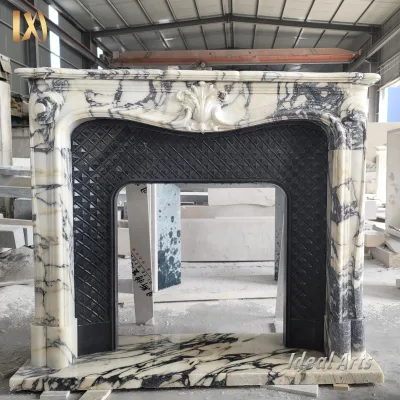
Classic White Marble Fireplace with Good Hand-Carved Quality, Competitive Price
$394.00 - $1599.00
Moq: 1


Foshan Wanmei Decoration Products Co., Ltd.
- Manufacturer
- Guangdong Province, China
- Lead time0 days
- Avg. response≤ 2h
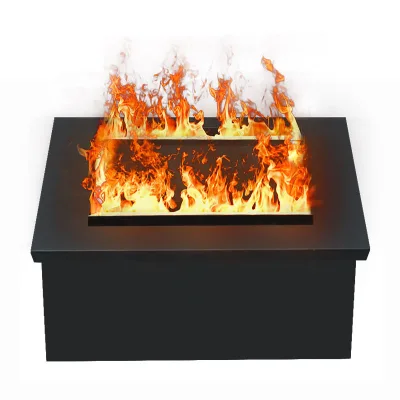
Main products3D Water Vapor Fireplace,Decorative Electronic Fireplace,Fireplace mantel,Electric fireplace,Fire charcoal fireplace
Main marketsDomestic Market(40.0%), Western Europe(18.0%), Southeast Asia(10.0%), South Asia(10.0%), Africa(10.0%), Mid East(10.0%)
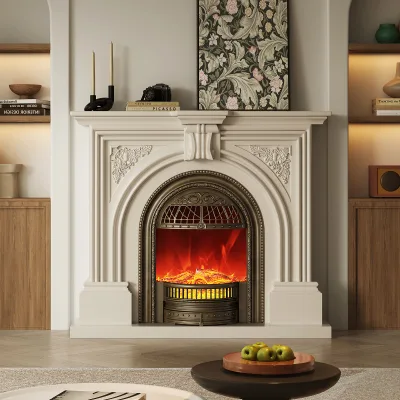
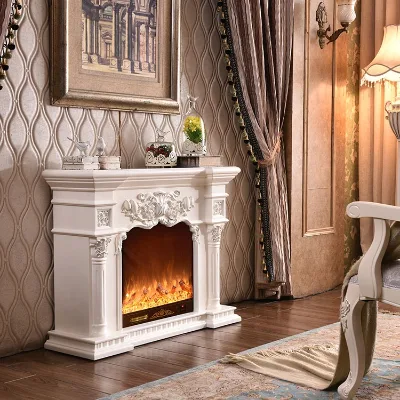
Classic American Style Wooden Fireplace Mantel with Arched Design & Antique Metal Fireplace
$839.00 - $861.00
Moq: 1

HENAN JINBAILAI INDUSTRIAL CO., LTD.
- Verified by BV
- Trading Company
- China Henan
- Lead time23 days
- Avg. response≤ 4h
Main productsBBQ, Gas Fire Pit, Wood Fireplace, Stove, Steel Planter, Metal Decors, Garden Furniture, Garden Landscape
Main marketsEurope,North America

Shanxi C-Trying Machinery Equipment Co., Ltd
- Verified by SGS
- Trading Company
- China Shanxi
- Lead time30 days
- Avg. response≤ 2h
Main productsGasoline Generator, Diesel Generator, DC Generator, Gas Generator, Permanent Magnet Generator, Submersible Mixer, Centrifugal Fan, Solar Generator, Solar Panel, Generator Parts
Main marketsAfrica


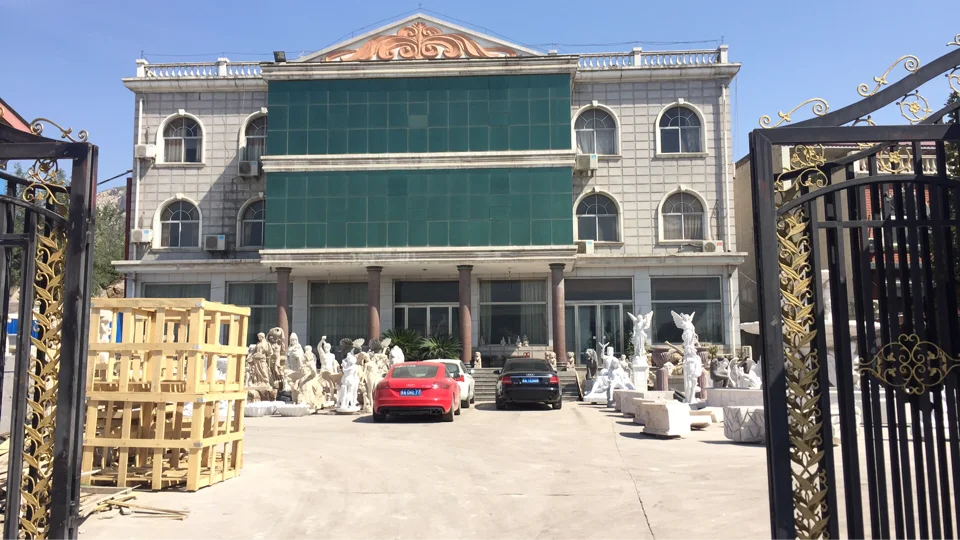
Household Indoor Wood Burning Fireplace Independent Design with Quality Control
$238.00 - $288.00
Moq: 10
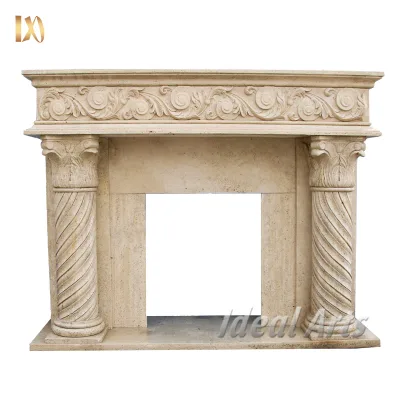
Hebei Ideal Arts Import And Export Corp., Ltd.
- Trading Company
- Hebei, China
- Lead time30 days
- Avg. response≤ 5h
Main productsStone products,west and east figure statue,animals,sculptures,flower pots
Main marketsNorth America(40.0%), Eastern Asia(10.0%), Southeast Asia(10.0%), Eastern Europe(10.0%), Mid East(10.0%), South America(8.5%), Oceania(6.5%), Western Europe(5.0%)

GONGYI HONGDA FURNACE CHARGE CO., LTD.
- Combined
- China Henan
- Lead time23 days
- Avg. response≤ 4h
Main productsRefractory, Ramming Mass, Refractory Castable, Thermal Insulation Material, Refractory Brick, Plastic Refractory
Main marketsSoutheast Asia/ Mideast,Domestic,North America

Modern Gas Hanging Fireplace Hot Sale Indoor Decorative Suspended Wood Burning Fireplace
$880.00 - $1300.00
Moq: 1

Indoor Floating Fireplace Black Suspended Fireplace 360 Degree Rerating Firepit
$909.00 - $1500.00
Moq: 1

China Arts Building Material Group Co.,Limited
- Trading Company,Manufacturer/Factory
- China Fujian
- Lead time23 days
- Avg. response≤ 3h
Main productsStone/ Granite/ Marble, Kitchen Countertop and Vanity Tops, Slab and Tiles, Quartz and Artificial Stone, Composite Products, Mosaic and Medallion, Sink Basin Sculpture and Tomb, Sand Stone, Crafts and Arts, Paving Stone
Main marketsEastern Europe,Mid East,North America,Southeast Asia,Western Europe

CIXI AUCST ELECTRICAL APPLIANCE CO., LTD
- Manufacturer
- China Zhejiang
- Lead time30 days
- Avg. response≤ 2h
Main productsAir Cooler, Fan, Halogen Heater, Quartz Heater, Carbon Heater, Oil Heater, Convection Heater, PTC Heater, Mica Heater, Fireplace
Main marketsSouth America,Southeast Asia/ Mideast,Europe







Comprehensive Sourcing Guide
Modern Vintage Fireplace Screen Supplier Concentration and Factory Types
Supplier listings for the Modern Vintage Fireplace Screen category typically divide into two structural types: manufacturers that produce decorative ironwork in-house, and hybrid manufacturer-trading companies that combine their own fabrication lines with sourcing from nearby workshops. On current results, one supplier type is listed as Manufacturer/Trading Company, which is common in this category because fireplace screens involve both metal forming and finishing processes such as powder coating that some smaller workshops outsource. A buyer should treat the company-type label as a starting signal, not proof of factory ownership, and ask which production stages happen on-site.
Geographic concentration signals appear in the supplied data: one supplier is located in Guangdong, China, while product records for fireplace screens list a place of origin of Fujian, China. This pattern suggests that the decorative metal crafts cluster for this product family sits in southern and southeastern coastal China, but the buyer should confirm the actual production address rather than the registered office address. Fujian is repeatedly shown as the origin on individual fireplace screen listings with iron material, so quoting requests routed to Fujian-based fabrication are plausible for this category.
When clusters cannot be confirmed from listing data, identify them indirectly: filter results by main products such as Metal Crafts or Fireplace Accessories, check whether multiple listings share the same stated province of origin, and confirm workshop addresses through video audits. Suppliers whose main products include Electric Fireplace control boards or complete electric fireplaces may serve adjacent but different supply chains, so match the main-product list to screens specifically before assuming cluster membership.
How to Verify Modern Vintage Fireplace Screen Suppliers
Verification begins with third-party assessment marks shown on the listing. In current results, one supplier displays verification by TüV Rheinland, which indicates an on-site or documented assessment rather than self-declared claims. A buyer should read what the verified assessment actually covered—general company identity, production capability, or product lines—because a verified profile does not automatically validate every product in a catalog. Ask the supplier to state which scope the verification covered and request the assessment summary where available.
System certifications shown on profiles give a second layer of evidence. One supplier in this category lists CE as a system certification, and another lists ISO 9001 alongside ISO 9000, TS 16949, and OHSAS/OHSMS 18001. Note that quality-management certifications apply to the company's systems, not automatically to each fireplace screen model, so request the certificate number and validity dates and confirm the certified scope includes decorative metal goods. For electric fireplace products, CE marking is meaningful for European market access, but a vintage metal screen is typically a non-electrical accessory, so confirm which regulation the mark refers to.
Response behavior is a practical verification signal: listed response times in the results range from roughly 3 hours to about 11.7 hours. Send a technical question—such as mesh gauge, finish durability, or sample policy—rather than a generic inquiry, and judge whether the reply addresses specifics. Finally, cross-check the product attributes in listings, such as material stated as iron and origin stated as Fujian, against what the supplier confirms in writing, and request a live video walkthrough of the workshop where screens are welded, coated, and packed.
What to Compare Across Modern Vintage Fireplace Screen Suppliers
Build a comparison grid from the attributes suppliers actually display, without assuming every field is present for every company. Useful dimensions in this category include lead time, minimum order quantity, response speed, location, main products, and company type. Current results show lead times of 38 and 45 days, MOQs stated as 100 pieces on multiple screen listings, and response times of roughly 3 and 11.7 hours—concrete figures you can place side by side. Where a field is blank, ask the supplier directly instead of inferring a value.
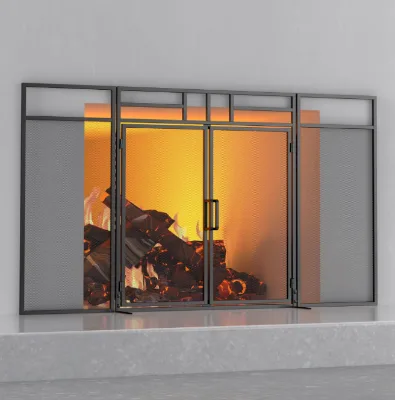
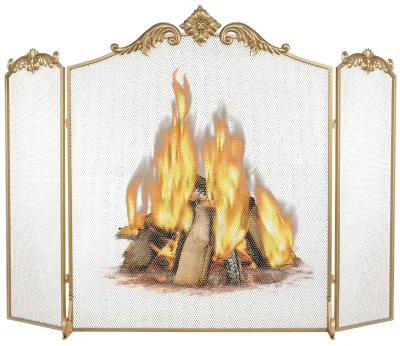
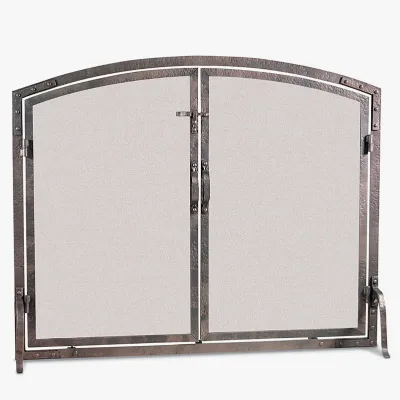
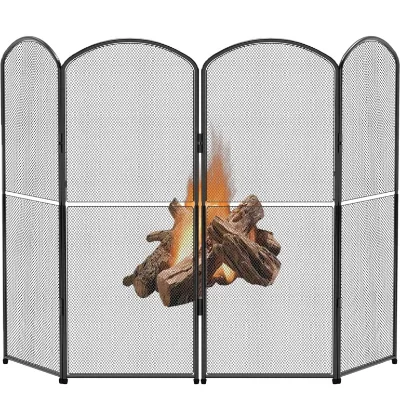
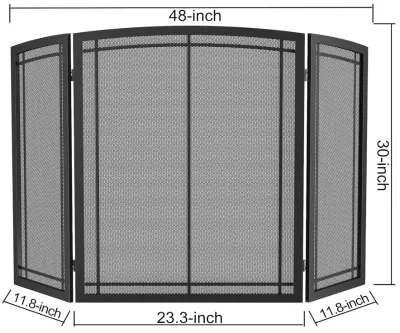
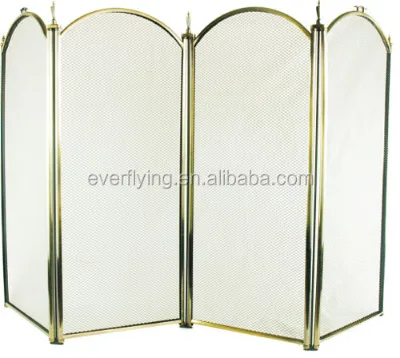
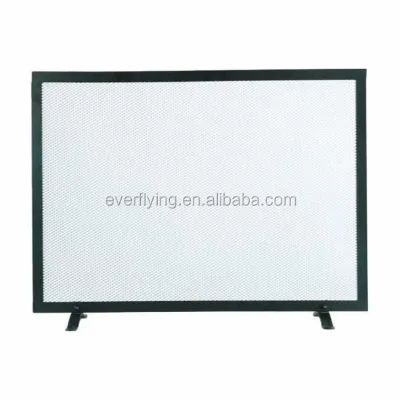
Product-level data deserves equal weight. Compare listing attributes such as material (iron across the supplied listings), panel configuration (2-panel, 3-panel, and 4-panel styles appear), finish (powder coated, antique gold, black), single gross weight (3.5 kg to 4.8 kg in listed examples), and package dimensions. Weight and pack size affect freight cost per unit significantly for screens, so a supplier with a slightly higher unit price but lighter packaging may win on landed cost. Whether logo customization is accepted, as one listing states, matters for retail buyers.
Also compare capability labels: one supplier lists sample processing, graphic processing, and customized on demand; another lists OEM and ODM. These translate differently—sample processing suggests you can validate a vintage design before committing, while ODM suggests the supplier can develop new screen designs from your brief. Finally, weigh main-product alignment: a supplier whose catalog centers on metal crafts and fireplace screens is more likely to hold tooling for scrollwork and mesh panels than one focused on electric fireplace electronics, even if the latter looks larger on paper.
Common Modern Vintage Fireplace Screen Sourcing Risks
The most frequent risk in this category is finish mismatch. Vintage-style screens rely on powder coating, antique gold plating, or stained-glass inserts, and listing photos rarely capture coating texture or color accuracy. One listing describes a "gold quarter foil" usage and another a golden vintage screen; such decorative finishes vary between production batches. Require a physical pre-production sample and approve a retained reference panel before mass production, because color disputes after shipment are difficult to resolve.
Structural and safety risks follow. Screens with child-guard features or spark protection imply mesh integrity and stable feet, yet listing attributes rarely include test data. Do not assume heat resistance or child-safety performance from marketing copy such as "heat-resistant" or "durable"; ask what testing, if any, supports those claims and verify independently if your market requires it. For 2-panel versus 4-panel foldable designs, check hinge durability, since folding joints are the most common failure point in returned units.
Commercial risks center on scope drift between listing and contract. A listing may state customized size and packing, but customization usually raises cost and extends the stated lead time—45 days in one supplied case, which can stretch further with bespoke finishes. MOQs of 100 pieces per model can also force overstock if you want several designs; negotiate mixed-model orders within the same MOQ framework early. Finally, watch for origin ambiguity: listings point to Fujian while the supplier profile may show a different province or a trading office, so confirm the producing entity, since this affects audit logistics, factory visits, and any claims about regional cluster expertise.
Modern Vintage Fireplace Screen Regional Sourcing and Logistics
Regional sourcing for this category should start from the origin data shown on listings. Multiple fireplace screen product records state a place of origin of Fujian, China, while one supplier profile lists Guangdong. This indicates that production of decorative iron fireplace screens in the supplied results is anchored in Fujian, with Guangdong-based trading entities active in the same space. Practical implication: route technical questions—tooling, finish options, sample processing—to whichever entity controls the Fujian production line, and use a Guangdong office mainly for coordination if that is where the registered company sits.
Logistics planning should be driven by the pack data on the listings. Single package sizes such as 69×8×54 cm and 100×5×70 cm, with single gross weights of 3.5 kg to 4.8 kg, show that screens ship flat and are volumetrically light relative to their footprint. Foldable multi-panel designs pack efficiently, which favors sea freight consolidation for orders near the stated 100-piece MOQ and air freight feasibility for samples. Confirm carton stacking strength, since powder-coated frames and stained-glass elements can scuff or crack under compression in mixed containers.
Plan around stated lead times of 38 and 45 days rather than assuming shorter turnaround; these figures already reflect production scheduling for made-to-order finishes. Add sample transit time on top, since one supplier advertises sample processing as a capability, and sample approval gates mass production. When comparing suppliers in different provinces, factor domestic drayage to the export port into total time, and ask each supplier to quote ex-works and FOB separately so regional cost differences become visible instead of buried in one all-in price.
Modern Vintage Fireplace Screen Commercial Terms and Order Planning
Commercial terms should be negotiated against the figures suppliers already publish, then tightened in the contract. Listings in this category state MOQs of 100 pieces and unit price ranges—for example, roughly 8.98–10.00, 13.16–14.19, 13.31–14.13, 14.80–15.80, and 18.15–19.17 in listed screens—so price spreads across designs are real and worth benchmarking before negotiation. Treat displayed prices as reference points, not offers: confirm what finish, panel count, and packaging those prices assume, and require a written quotation for your exact specification.
Order planning should reconcile three published variables: MOQ, lead time, and customization scope. With 100-piece MOQs and lead times of 38–45 days, a multi-design program for a vintage range can be sequenced—order the two best-selling 3-panel and 4-panel models first, then add niche antique-brass or stained-glass variants in a second cycle once sell-through is visible. One listing confirms customized logo acceptance and customized packing; both affect unit cost and lead time, so lock artwork approval deadlines into the schedule so finishing and packing do not push delivery beyond the quoted window.
Payment and milestone structure should follow verification depth rather than habit. For suppliers whose factory status and certifications you have confirmed, standard deposit-and-balance terms are reasonable; for unverified profiles, consider staged payments tied to sample approval and pre-shipment inspection. Ask whether transaction protection such as escrow-style arrangements is available on the channel you use, and document which entity invoices you—the manufacturer or the trading arm—since warranty responsibility for finish defects and hinge failures should sit with the party controlling production in Fujian.
FAQs
What is the typical minimum order quantity for a Modern Vintage Fireplace Screen?
Many listed fireplace screen products carry a minimum order quantity of 100 pieces per model. Smaller trial orders may be possible for some designs, but buyers should confirm this directly with the supplier before quoting. Sample pieces are often available separately, so you can evaluate finish, mesh, and hinge quality before committing to a full production run.
How long does production take after an order is confirmed?
Lead times in the current results range from 38 to 45 days after order confirmation. The exact schedule depends on panel count, finish type such as powder coating or stained glass, and the order volume. Confirm the lead time in writing for your chosen model, and factor in additional days for shipping to your destination port.
Which materials and panel styles are available for these fireplace screens?
The listed screens are made primarily of iron and offered in two-panel, three-panel, and four-panel folding styles. Finishes include powder coating, antique brass, gold, and stained glass accents. Sizes are customizable on most models, so provide your fireplace opening dimensions when requesting a quotation to ensure the freestanding screen fits correctly and clears surrounding hearth surfaces.
Can I customize the logo, packaging, and screen dimensions?
Yes, several listed products state that customized logos and customized packing are accepted, and sizes are described as customizable. Suppliers also list sample processing and graphic processing among their capabilities. Provide artwork files and packaging specifications early in the negotiation, because custom graphics can add time to the quoted lead period and may affect the unit price at your volume.
Do these fireplace screens include any safety or heat-resistant features?
Product descriptions highlight heat-resistant construction and spark protection, with some models adding a child guard feature to the three-panel design. These are marketing descriptions rather than verified test data, so request material thickness, coating specifications, and any applicable test documentation from the supplier. A CE system certification is listed for one supplier, which you should verify for the specific model you order.
What price range should I expect per unit?
Listed fireplace screens range from roughly 8.98 to 19.17 US dollars per unit depending on the model. Simpler two-panel and four-panel designs sit at the lower end, while brass-finished and scroll-detailed two-panel screens cost more. Quoted prices typically vary with order quantity, finish, and customization, so request an itemized quotation that separates product cost from packaging and printing charges.
How quickly do these suppliers respond to buyer inquiries?
Response times recorded in the current results range from about 3 hours to roughly 12 hours. Faster responders are easier to work with during sampling and production stages. Send a detailed inquiry covering model number, quantity, customization, and destination port so the supplier can reply with an accurate quotation in a single response rather than several follow-ups.
Where are these fireplace screens manufactured?
The listed screen products are manufactured in Fujian, China, while one supplier is located in Guangdong. Guangdong suppliers focus more on electric fireplaces and control boards, whereas Fujian manufacturers specialize in iron fireplace screens and metal crafts. Location affects shipping port and freight cost, so confirm the nearest departure port and ocean freight terms when comparing quotations.