multi-function outdoor emergency survival kit Suppliers and Manufacturers
Compare 29 verified suppliers offering multi-function outdoor emergency survival kits from Zhejiang and Jiangsu. Review response times, lead times, certifications, and pricing to source reliable options for your needs; review the available evidence before requesting comparable quotations from suitable candidates.
Updated
Suppliers List

NINGBO THREESOTR OUTDOOR GEAR CO., LTD.
- Verified by TUVRHEINLAND
- Trading Company
- China Zhejiang
- Lead time30 days
- Avg. response≤ 8h
Main productsBlanket&Tarp, Tool Bags, Camping Table&Chair, Survival Kit&First Aid Kit, Emergency Kits, Car Washing Kit, Bicycle&Motorcycle Bags, Travling Bags, Pet Carriers, Storage Organizer
Main marketsSouth America

Yangzhou Super Union Import & Export Co., Ltd.
- Verified by SGS
- Trading Company,Manufacturer/Factory
- China Jiangsu
- Lead time15 days
- Avg. response≤ 5h
Main productsGauze Swab, Gauze Roll, Gauze Ball, Lap Sponge, Paraffin Gauze, Cotton Roll, Non Woven Sponge, Medical Bandage, Medical Tape, Dressing Products
Main marketsSouth America,Mid East,Southeast Asia,Africa


High Quality Outdoor Emergency Medical Kit Camping Survival Kit First Aid Kits
$1.00 - $10.00
MOQ: 100 Pieces

Daqin (luoyang) Supply Chain Co., Ltd.
- Manufacturer, Trading Company
- Henan, China
- Lead time0 days
- Avg. response≤ 2h
Main productsToy Gun,Toy Gun Model,Simulation Toy Weapons,Outdoor Sports,Stuffed Toys
Main marketsEastern Europe(20.00%), Southern Europe(20.00%), Western Europe(20.00%), South America(10.00%), Northern Europe(10.00%), Central America(10.00%), North America(10.00%)
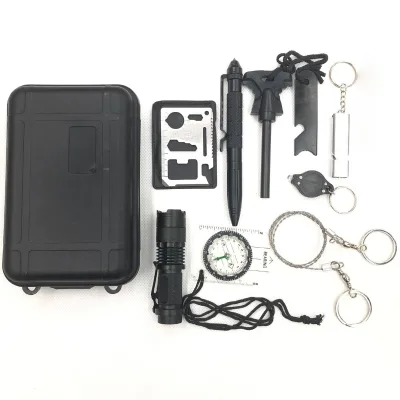
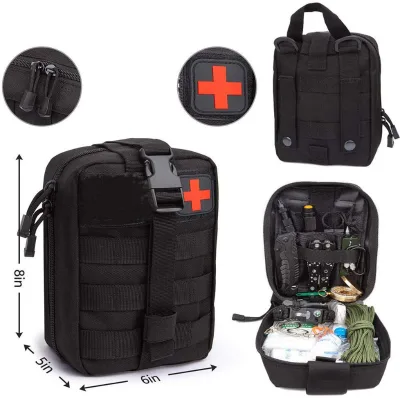
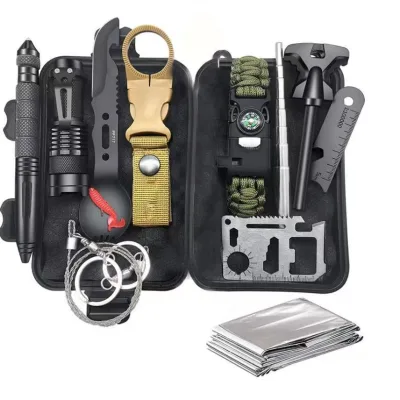
$15.4232 - $17.4783
MOQ: 10 pieces

Shandong Harmowell Trade Co., Ltd.
- Verified by BV
- Trading Company
- China Shandong
- Lead time38 days
- Avg. response≤ 3h
Main productsMedical Equipment, Medical Supply, Hospital Furniture, Blood Collection Tube, Rapid Test Kit, Laboratory Supplies, Medical Catheter, Anesthesia Machine, Laboratory Analyzer, Laboratory Centrifuge
Main marketsSouth America,Eastern Europe,Mid East,North America,Southeast Asia,Eastern Asia,Oceania,Western Europe,Africa

Shenzhen Wap-Health Technology Co., Ltd.
- Verified by SGS
- Combined
- China Guangdong
- Lead time15 days
- Avg. response≤ 9h
Main productsAed Cabinet, Aed Sign Aed Bracket Bags Pads, Aed Keychain Keyring, CPR Mask /Bvm, First Aid Emergency Rescue Products, Healthcare, Scaler Tips Curing Light Autoclave Sterilizer, Dental Handpiece Handpieces, Apex Locator & Endodontic Treatment, Dental Unit Kit Cartridge Amalgamator etc
Main marketsAustralia


Portable Outdoor Emergency Camping Hiking Gears Multipurpose First Aid Survival Kit
$6.40 - $16.90
MOQ: 20 Sets

Outdoor Camping Gear Hiking Emergency Equipment Rescue First Aid Outdoor Survival Kit
$6.40 - $16.90
MOQ: 20 Sets

Portable Home Care Bag First Aid Survival Emergency Kit Outdoor Survival Kits
$3.89 - $5.00
MOQ: 500 Sets

Outdoor Camping Travel Multifunction Wilderness First Aid Sos EDC Emergency Survival Kit
$6.40 - $16.90
MOQ: 20 Sets

15 in 1 Outdoor Emergency Survive Camping Gear Survival Gear First Aid Kit
$6.40 - $16.90
MOQ: 20 Sets
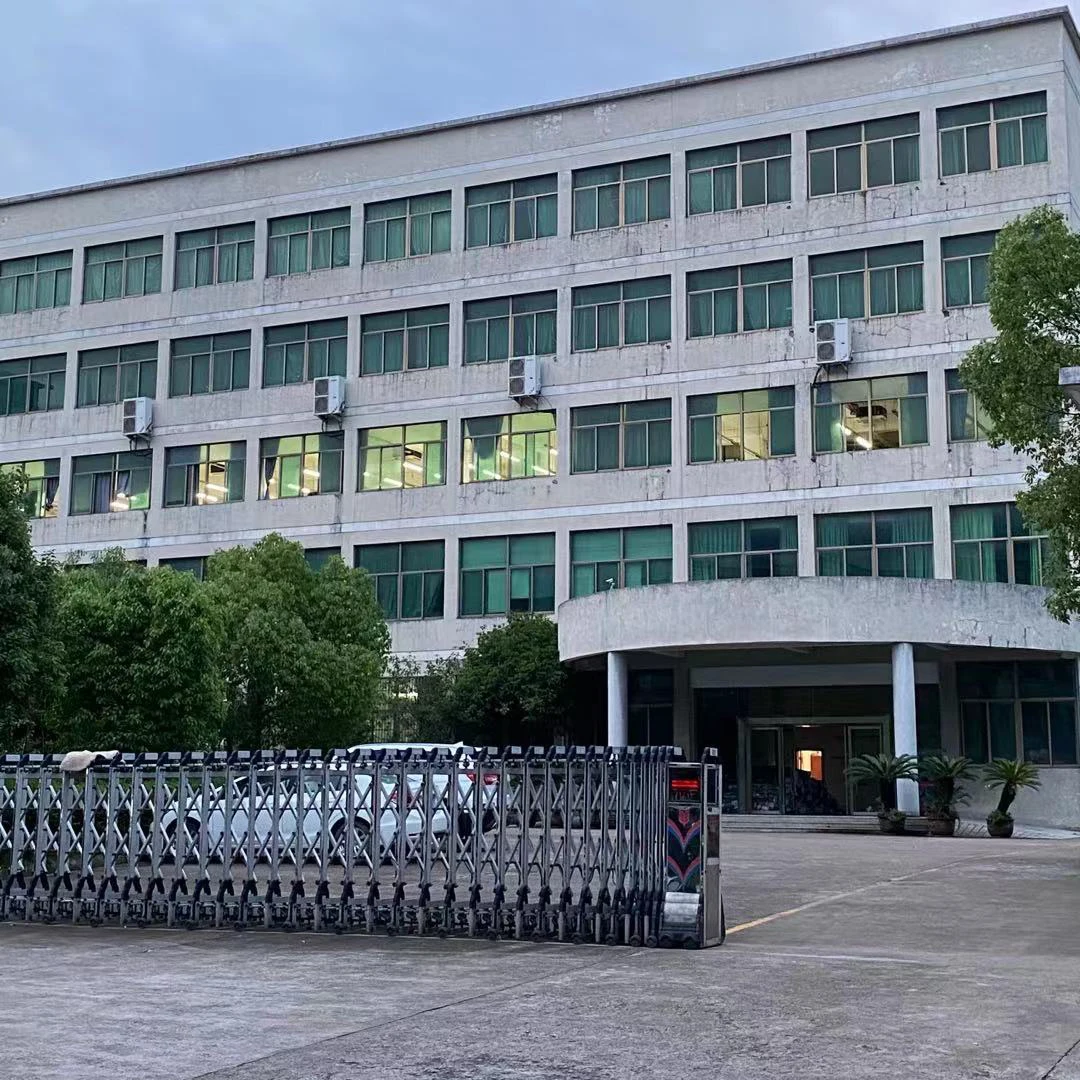
Betoyy (yiwu) Outdoor Supplies Co., Ltd.
- Trading Company
- Zhejiang, China
- Lead time20 days
- Avg. response≤ 2h
Main productsCamping accessories,survival kit,whistle,compass,travel bag
Main marketsNorth America(25.00%), Northern Europe(15.00%), South Asia(8.00%), Southeast Asia(8.00%), Oceania(8.00%), Eastern Europe(6.00%), Domestic Market(5.00%), Eastern Asia(5.00%), Mid East(5.00%), Southern Europe(4.00%), Central America(4.00%), South America(3.00%), Western Europe(2.00%), Africa(2.00%)
Yiwu Runson Outdoor Products Co., Ltd.
- Trading Company
- Zhejiang, China
- Lead time15 days
- Avg. response≤ 10h
Main productsOutdoor survival kit,Outdoor whistle,Outdoor compass,Outdoor poncho,Outdoor sleeping bag
Main marketsNorth America(50.00%), Western Europe(10.00%), Eastern Europe(10.00%), South America(10.00%), Central America(5.00%), Southern Europe(5.00%), South Asia(2.00%), Africa(2.00%), Eastern Asia(2.00%), Mid East(2.00%), Oceania(1.00%), Southeast Asia(1.00%)
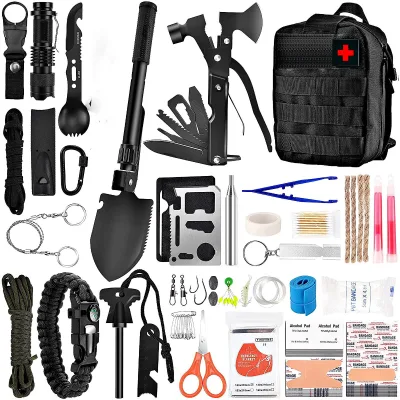
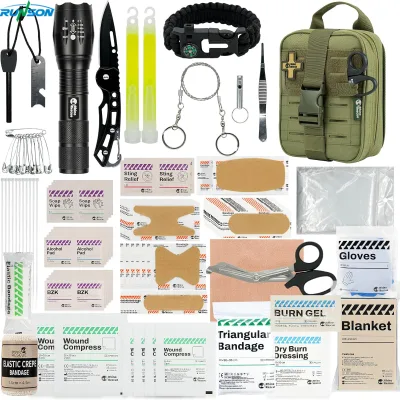
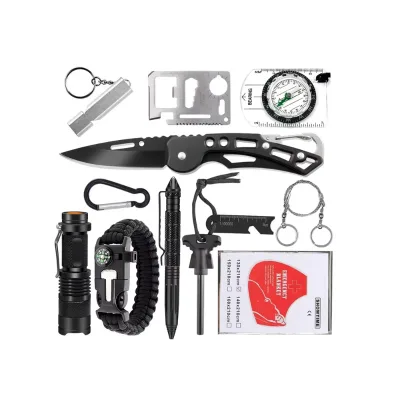
$5.7726 - $6.1969
MOQ: 2 pieces
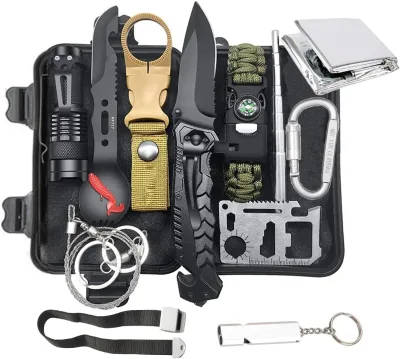
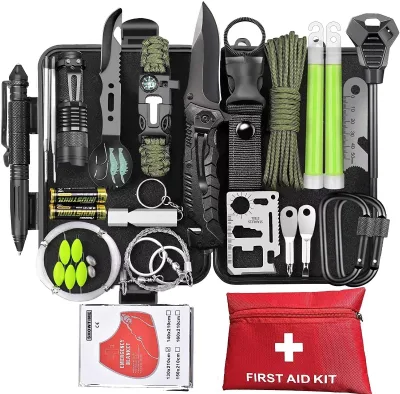
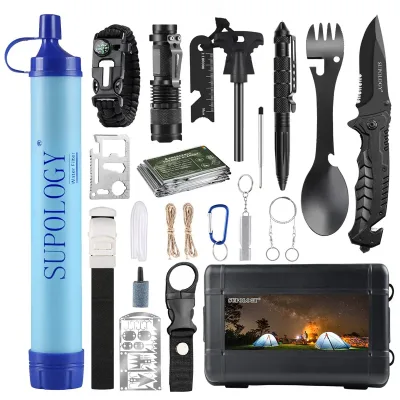
$11.5483 - $13.0068
MOQ: 2 pieces

Tangshan Quark Supply Chain Management Co., Ltd.
- Trading Company
- China Hebei
- Lead time0 days
- Avg. response≤ 8h
Main productsFirst Aid Kit, Survival Kit, Emergency Kit, Medical Supplies, Bulletproof Vest, Bulletproof Helmet, Bulletproof Palte, Camouflage Clothing, Full Protective Suit, Cement


Outdoor Emergency First Aid Kit Hiking Camping Kit Accessories Tactical Kit
$3.20 - $3.80
MOQ: 10 Pieces


Wholesale Portable Outdoor Survival Kit Waterproof Box Multiple Emergency Tools
$6.90 - $7.90
MOQ: 10 Pieces

255PCS Outdoor First Aid Kit Emergency Survival Kit for Hiking Camping Traveling
$29.79 - $40.84
MOQ: 2 Pieces

Tactical First Aid Kit Outdoor Sos Emergency Survival Kit for Hiking Camping
$10.90 - $12.80
MOQ: 10 Pieces

Yangzhou Super Union Medical Material Co., Ltd.
- Combined
- China Jiangsu
- Lead time15 days
- Avg. response≤ 10h
Main productsGauze Swab, Sterile Gauze Sponge, Lap Sponge, Non Woven Sponge, Gauze Roll, Sterile Non Woven Swab, Paraffin Gauze, Gauze Bandage, Triangel Bandage, Cotton Wool
Main marketsSouth America,Africa,Others(foreignTradeCapacity.exportBusinessCapacityMarketOther),Southeast Asia/ Mideast,East Asia(Japan/ South Korea),Domestic,Europe,Australia,North America
Ningbo Jukaiwtec Outdoor Equipments Co., Ltd.
- Verified by Intertek
- Trading Company
- Lead time30 days
- Avg. response≤ 1h
Main productsTent, Camping Cookware, Folding Chair, Foldable Table, Camping Light
Main marketsNorth America(30%), Western Europe(10%), Northern Europe(10%)
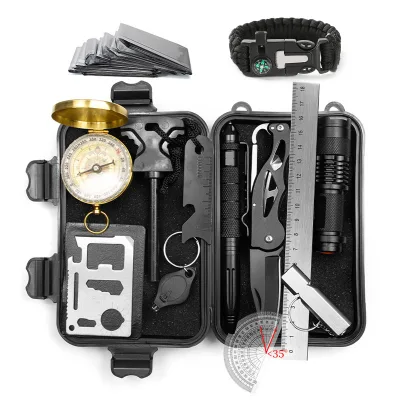
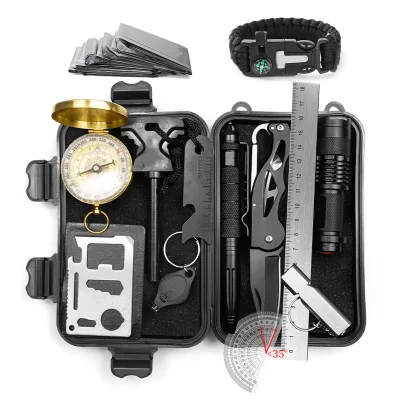
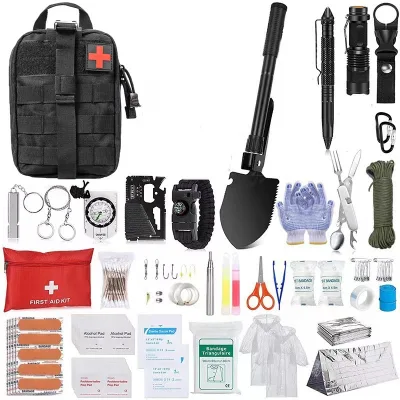
$9.40 - $11.00
MOQ: 1 pieces
Ningbo Brilliantcare Imp &exp Co., Ltd.
- Trading Company
- Zhejiang, China
- Lead time0 days
- Avg. response≤ 3h
Main productsFIRST AID KIT,PILL BOX,WOUND DRESSING,CAR SAFTY KIT,OUTDOOR HUNTING PRODUCTS
Main marketsNorthern Europe(30.00%), North America(30.00%), South America(20.00%), Eastern Europe(15.00%), Central America(10.00%), Southern Europe(5.00%), Mid East(5.00%), Western Europe(5.00%)
- Trading Company
- Zhejiang, China
- Lead time15 days
- Avg. response≤ 3h
Main productsOutdoor Survival First Aid Kit,Bathroom Hook,First Aid Bottle,Climbing Button,Flashlight
Main marketsNorth America(65.00%), Eastern Europe(12.00%), Southern Europe(10.00%), Western Europe(8.00%), Northern Europe(5.00%)

Ningbo Cbmtec Medical Equipment Co., Ltd.
- Verified by BV
- Manufacturer/Factory
- China Zhejiang
- Lead time45 days
- Avg. response≤ 8h
Main productsPatient Monitor, Ventilator, Patient Lift, Anesthesia Machine, Ultrasound Scanner, Gas Cylinder, Oxygen Concentrator, Pulse Oximeter, Oxygen Regulator
Main marketsSouth America,Eastern Europe,Mid East,North America,Southeast Asia,Eastern Asia,Oceania,Western Europe,Africa

$9.00 - $18.00
MOQ: 1000 Sets

Wholesale Outdoor Portable 66PCS First Aid Kit Bag Emergency Survival Kit Set
$35.00 - $55.00
MOQ: 10 Pieces
- Manufacturer, Trading Company
- Jilin, China
- Lead time10 days
- Avg. response≤ 1h
Main productsFirst aid kits,Knee brace,Wrist support,Urine Collection Products,Pet supplies
Main marketsDomestic Market(40.00%), Southeast Asia(10.00%), South Asia(10.00%), Africa(10.00%), North America(8.00%), Central America(8.00%), South America(7.00%), Mid East(5.00%), Eastern Europe(2.00%)
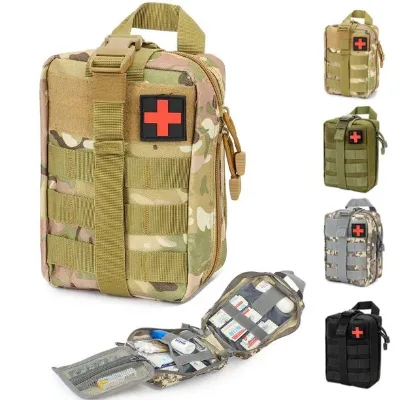
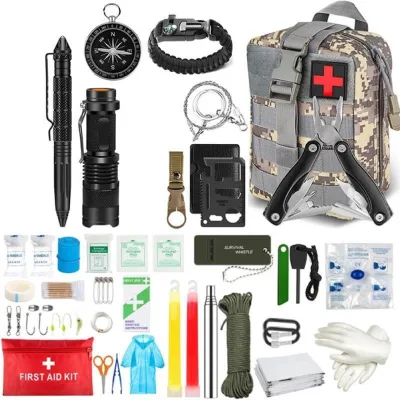
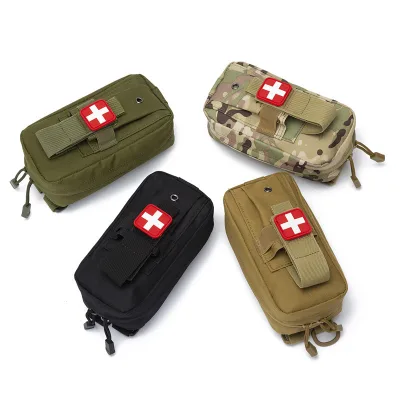
Wholesale Emergency Survival Kit Safety First Aid Travel Kit
$14.30 - $15.50
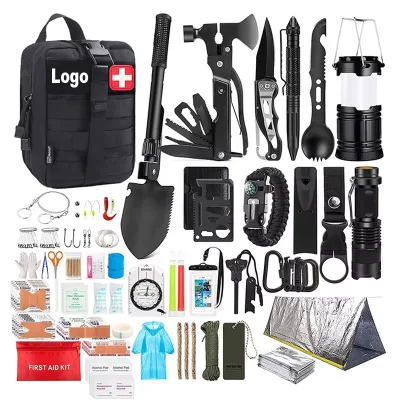

Huaian Construction New Material CO., LTD.
- Verified by SGS
- Trading Company
- China Jiangsu
- Lead time15 days
- Avg. response≤ 5h
Main productsOrthopedic Cast Tape, Cast Padding, Elastic Bandage, Ice Cold Pack, Self Adhesive Bandage, Kinesiology Tape, Hot Water Bottle, Petrolatum Tape, Pipe Wrapping Tape, Pipe Repair Tape
Main marketsEurope,North America


Emergency Survival Outdoor Camping and Travelling First Aid Kit Emergency
$1.50 - $3.00
MOQ: 1000 Pieces

- Combined
- China Guangdong
- Lead time30 days
- Avg. response≤ 12h
Main productsFirst Aid Kits, Kinesiology Tape, Rigid Strapping Tape, Coach Tape, Lite Eab, Precut Kinesio, CPR Mask, Band Aid Box, Zinc Oxide Tape, Cohesive Bandage
Main marketsSouth America,Africa,Southeast Asia/ Mideast,East Asia(Japan/ South Korea),Domestic,Europe,Australia,North America

Multi Functional 7 in 1 Camping Hiking Outdoor Survival Kit Traveling Kit
$0.75 - $1.00
MOQ: 100 Pieces

Saferlife Survival Kit Outdoor Emergency Kit for Camping Hiking Adventure
$2.30 - $4.00
MOQ: 100 Pieces


Portable Outdoor Tools Kit Emergency Survival Kit with Waterproof Plastic Box
$5.50 - $5.80
MOQ: 200 Pieces

Saferlife Survival Kit Outdoor Emergency Kit for Camping Hiking Travelling or Adventures
$2.70 - $3.60
MOQ: 100 Pieces
Hefei Johold Outdoor Products Co., Ltd.
- Trading Company
- Anhui, China
- Lead time15 days
- Avg. response≤ 2h
Main productsSurvival Kits,Flashlight,Emergency Whistle,Camping Tent,Tactical backpack
Main marketsNorth America(30.00%), Western Europe(20.00%), Northern Europe(15.00%), Eastern Europe(15.00%), Southeast Asia(5.00%), South America(5.00%), Eastern Asia(5.00%), Africa(5.00%)
Ningbo Partner Leisure Products Co., Ltd.
- Trading Company
- Zhejiang, China
- Lead time0 days
- Avg. response≤ 8h
Main productspet supplies,cooker,kitchen accessories,egg incubator,storage box
Main marketsNorth America(80.00%), South America(15.00%), Eastern Europe(5.00%)
Shaanxi Jiuyuan Fenghua Medical Technology Co., Ltd.
- Trading Company
- Shaanxi, China
- Lead time20 days
- Avg. response≤ 5h
Main productsFirst aid kit,Oxygen Concentrator,Automated Immunoassay System
Main marketsDomestic Market(90.00%), Eastern Asia(10.00%)
Guangzhou Dinghong Tourism Supplies Co., Ltd.
- Manufacturer
- Lead time旺季: "1 - 10":7,"> 10":"To be negotiated", 淡季: "1 - 10":7,"> 10":"To be negotiated"
- Avg. response≤ 3h
Main productsBackpacks,Vests,Waist Bag,Chest Bag,Pouch
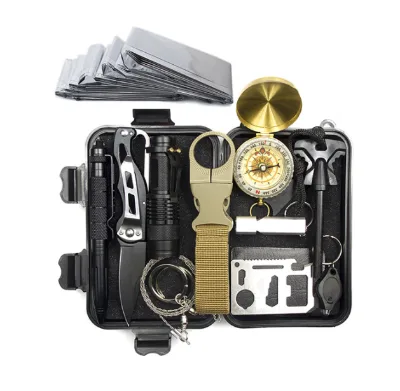
Tactical Survival Gear Outdoor Camping Emergency Survival Kit Easy Carring Survival Tool
$10.00 - $10.30
MOQ: 10 pieces

Jingjiang Dengtu Outdoor Equipment Co., Ltd
- Verified by SGS
- Trading Company
- China Jiangsu
- Lead time15 days
- Avg. response≤ 4h
Main productsSelf Defense Equipment, Outdoor Products, Tactical Equipment, Metal Tool, Flashlight, Detector, Sport Equipment, Keychain Kit Crafts, Security Equipment, Traffic Equipment
Main marketsEurope,North America

Survival Kit Tools Camping Hiking Sos Tactical First Aid Outdoor Emergency Kit
$3.00 - $20.00
MOQ: 10 Pieces

Outdoor Survival Equipment Survival Kit Set Travel Vehicle Self-Rescue The Emergency Kit
$3.00 - $20.00
MOQ: 10 Pieces
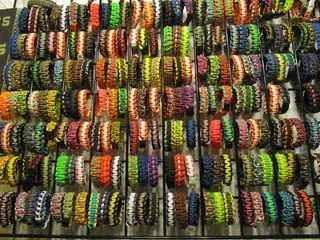
Nanjing Chongfu Outfit Co., Ltd.
- Trading Company
- jiangsu, China
- Lead time5 days
- Avg. response≤ 4h
Main productsparacord,Pe emergency sleeping bag,camping tent rope,outdoor survival,paracorhute cord
Main marketsNorth America(40.00%), Northern Europe(10.00%), Eastern Europe(10.00%), Central America(10.00%), Southern Europe(8.00%), Western Europe(7.00%), Mid East(5.00%), South America(5.00%), Oceania(3.00%), Domestic Market(2.00%)

Zhejiang Ori-Power Medtech Co., Ltd.
- Verified by SGS
- Combined
- China Zhejiang
- Lead time30 days
- Avg. response≤ 11h
Main productsFirst Aid Kit, Elastic Bandage, Adhesive Plaster, Gauze Pad, Non Woven Pad, Emergency Blanket, Wound Dressings, Emergency Kit
Main marketsDomestic
Dongguan Emak Craft Gift Co., Ltd.
- Manufacturer, Trading Company
- Guangdong, China
- Lead time15 days
- Avg. response≤ 6h
Main productsSurvival Kit,Paracord Bracelet,Paracord Watch,Camping Stove,First Aid Kit
Main marketsNorth America(40.00%), Domestic Market(35.00%), Southeast Asia(15.00%)
Nanjing Kango Outdoor Products Co., Ltd.
- Verified by TüVRheinland
- Trading Company
- Lead time20 days
- Avg. response≤ 3h
Main productsCombat Uniform, Tactical Rucksack, Camping Bed, Raincoat, Camouflage Sleeping Bag
Main marketsNorth America(35%), Mid East(30%), Western Europe(20%)
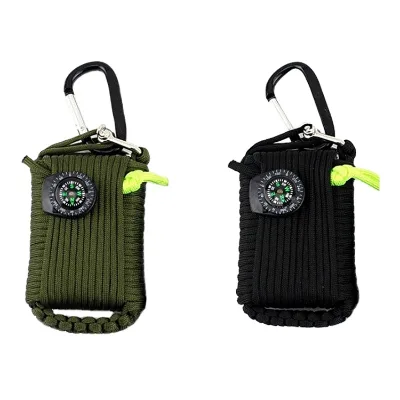
Outdoor Emergency Disaster 72 Hour Survival Kit All in 1 Emergency Survival Kit
$5.6707 - $6.1864
MOQ: 10 pieces
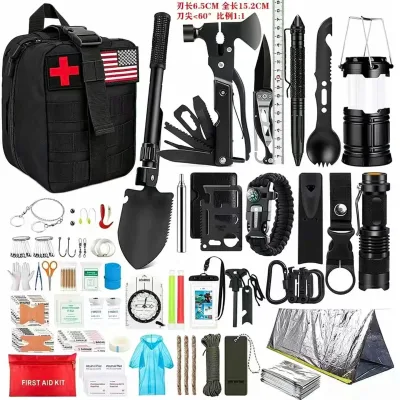

- Verified by TUVRHEINLAND
- Trading Company
- China Zhejiang
- Lead time30 days
- Avg. response≤ 11h
Main productsSports and Outdoor
Main marketsSoutheast Asia/ Mideast,Europe

Ningbo Multi Channel Co., Ltd.
- Trading Company
- China Zhejiang
- Lead time23 days
- Avg. response≤ 12h
Main productsFirst Aid Kit, Wound Dressing, Bandage, Outdoor Emergency Supplies, Hot/Cold Therapy, Surgery Supplies, Laboratory Supplies, Medical Devices, Anethesia Breathing Supplies, Daily Care
Main marketsSouth America,Southeast Asia/ Mideast,East Asia(Japan/ South Korea),Europe,North America


Emergency Survival Tools Kit and First Aid Kit Super Survival Kit for Tool Custom
$8.70 - $9.50
MOQ: 500 Pieces

$15.80 - $17.50
MOQ: 1000 Pieces
- Verified by Intertek
- Manufacturer, Trading Company
- Lead time30 days
- Avg. response≤ 4h
Main productsTent, Tent Pole, Camping Chair, Camping Table, Garden Sofa
Main marketsSouth America(30%), North America(20%), Africa(20%)
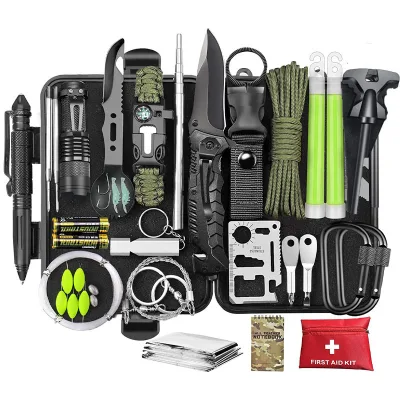
$11.1915 - $15.2988
MOQ: 10 pieces
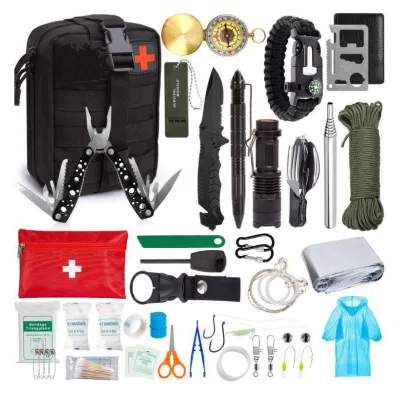
$19.90 - $24.70
MOQ: 10 pieces
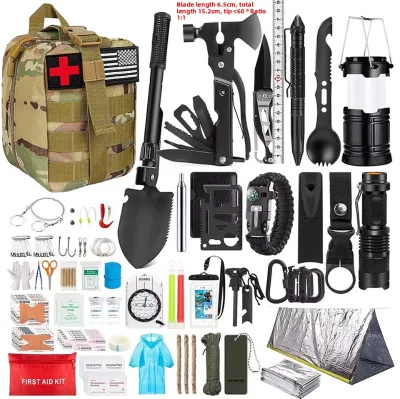
Jiangmen Xinhui Baiyuheng Webbing Co., Ltd.
- Verified by SGS Group
- Manufacturer, Trading Company
- Lead time3 days
- Avg. response≤ 2h
Main productsParacord, Rope, Webbing, Survival Kit, Fire Starter
Main marketsNorth America(73%), Western Europe(10%), Domestic Market(10%)
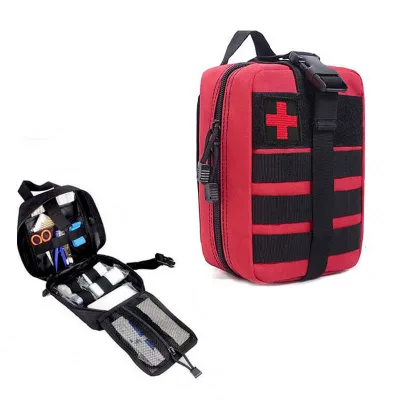
Baiyuheng High Quality Survival Kit Outdoor Myco Survival Kit Hunting Survival Knife Kit
$12.9094 - $14.5283
MOQ: 5 pieces
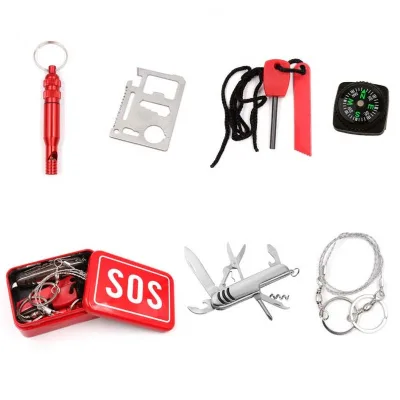
Baiyuheng Hot Sale Survival Emergency Kit Braces Survival Kit Survival Kit Vishaken Vislijn
$2.22 - $2.4793
MOQ: 5 pieces
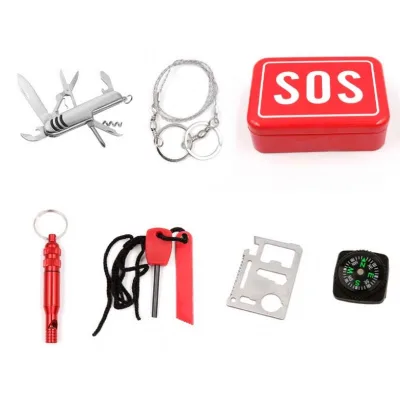
$2.25 - $2.5138
MOQ: 5 pieces
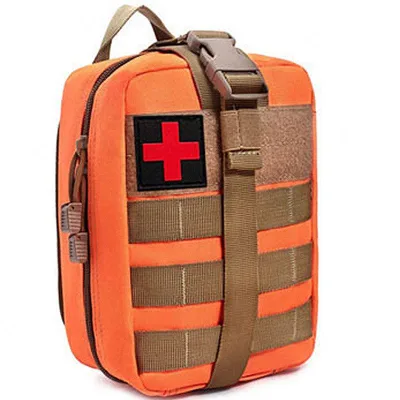
Baiyuheng Factory Direct Family Survival Kit Titorld Survival Kit Emergency and Survival Gears
$12.9094 - $14.5283
MOQ: 5 pieces
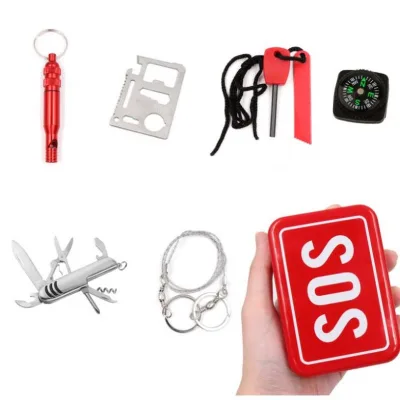
Baiyuheng Low Price Survival Kits Everyday Carry) Gear Maritime Survival Kit Car Survival Gear
$2.25 - $2.5138
MOQ: 5 pieces


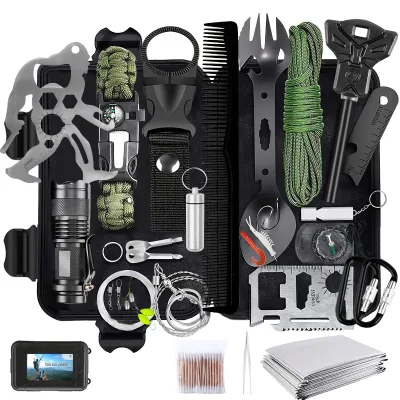
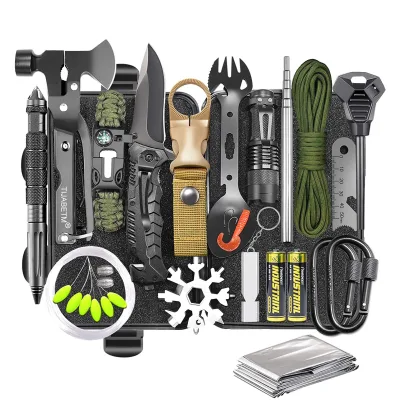


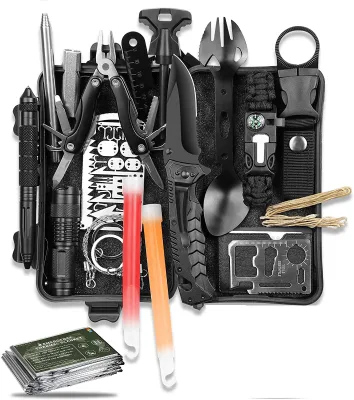
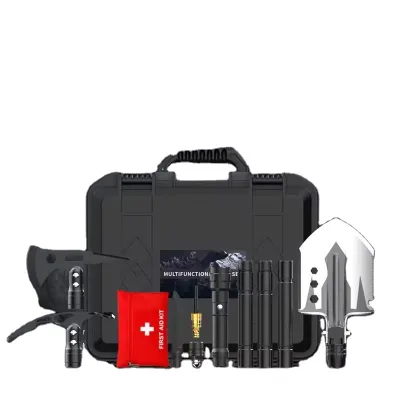
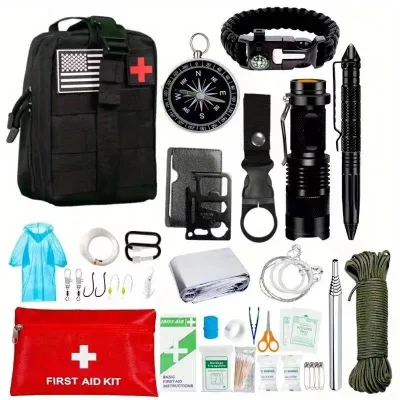
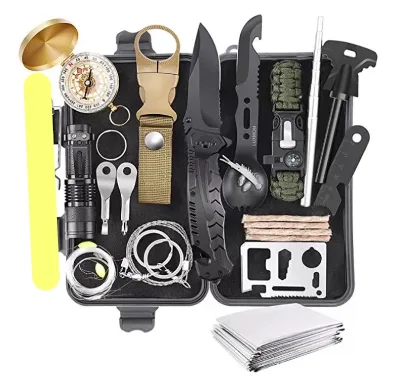
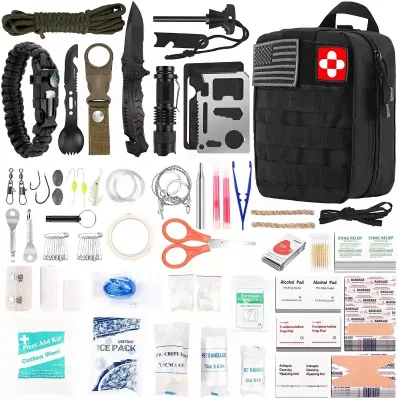
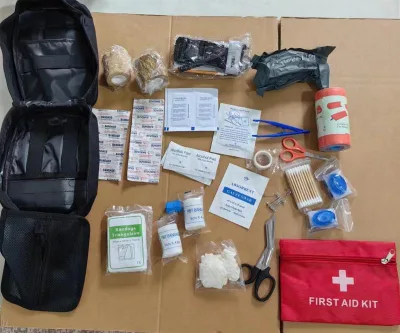
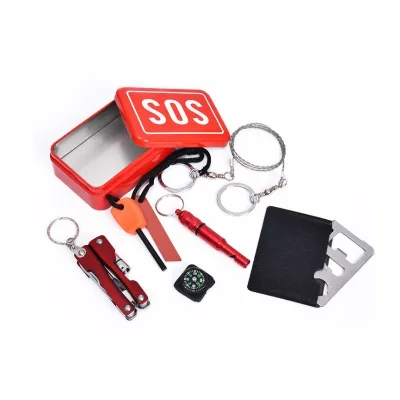
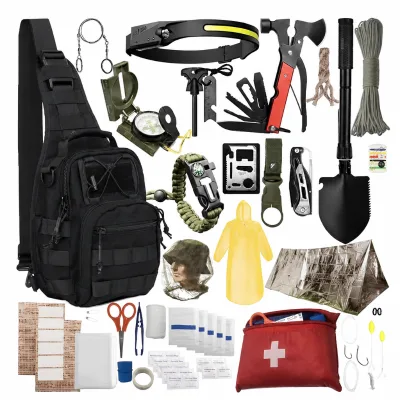




Comprehensive Sourcing Guide
Multi-Function Outdoor Emergency Survival Kit Supplier Concentration and Factory Types
The supplied results for this category show sourcing concentrated in a small number of Chinese provinces, with Zhejiang, Jiangsu and Henan each represented among the visible suppliers. Zhejiang suppliers position themselves around outdoor and camping merchandise broadly — blankets and tarps, tool bags, camping tables and chairs, survival and first aid kits, emergency kits and travel bags — which signals a trading-company profile rather than a specialist medical manufacturer. Jiangsu suppliers in the results combine trading and manufacturing roles and center on gauze, bandages, dressings and medical consumables, meaning their survival kits are built around genuine wound-care contents rather than generic multi-tools. Henan listings in the results come from toy and outdoor sports manufacturers that also list simulation and outdoor products, with survival kits as an adjacent line rather than the core business.
Factory type matters more in this category than in many others. A trading company can assemble kits from purchased components but may struggle to document the medical contents, while a manufacturer with dressing or gauze production in-house can control consumable quality and compliance documentation directly. When you screen candidates, classify each one by company type and main-product list, then match that profile to your requirement: if your kit includes bandages, gauze or other regulated items, favor suppliers whose core catalog is medical; if it is mostly tools, glow sticks and soft goods, an outdoor-goods assembler in Zhejiang may be adequate and more flexible on customization.
How to Verify Multi-Function Outdoor Emergency Survival Kit Suppliers
Verification should start with third-party audit status, because this category mixes ordinary outdoor goods with medical-adjacent contents. In the current results, verification badges differ visibly: one supplier shows TÜV Rheinland verification, another shows SGS, and a third lists no third-party verification at all alongside a blank system-certification field. Treat these differences as meaningful rather than cosmetic — a supplier whose certification field shows nothing requires you to request certificates directly, confirm the certifying body's report number, and check the scope covers the specific kit contents you intend to buy, especially any gauze, dressings or first-aid components.
System certifications should be checked separately from platform badges. The results show one Jiangsu supplier holding ISO 13485, the quality-management standard for medical devices, which is directly relevant if your kit is positioned as a first-aid product. A CE marking also appears in one supplier's product attributes, which you should confirm by examining the certificate itself rather than trusting the listing text. Beyond paperwork, verify actual capability: ask each shortlisted supplier for the kit model numbers they already produce, sample units from those models, and written confirmation of customization options. The supplied listings consistently show OEM availability and customized color and contents, but a listing claim is not proof — request a sample built to your bill of materials and inspect component quality, stitching, zippers and packaging before committing. Response speed during this stage is itself evidence: one listed supplier answers in under three hours while others take five to eight, which previews how smoothly production issues will be handled later.
What to Compare Across Multi-Function Outdoor Emergency Survival Kit Suppliers
Build a comparison sheet using only the attributes actually displayed, since not every supplier publishes every field. Lead time is the clearest differentiator in the current data: one supplier lists 30 days, while a Jiangsu supplier lists 15 days, and one Jiangsu product page separately quotes 35 days after a 30 percent deposit. That internal inconsistency on a single listing is itself worth probing — ask the supplier to reconcile the page figure with their written quotation. Response time varies from roughly two hours to nearly eight hours across the visible suppliers, and it should be weighted as a service metric, not just a convenience.
Compare commercial dimensions next. MOQs in the results range from 100 units on a Jiangsu first-aid kit to 1,000 and 2,000 units on Zhejiang survival kits, and one tactical-gear kit lists 500 — so your order size may effectively select your supplier pool. Price floors differ widely too, from about one dollar on the Jiangsu kit to two-to-five, four-to-eight and six-to-ten dollar ranges on Zhejiang kits; price must always be read against contents, since a kit with real medical supplies costs more than one packed with tools and glow sticks. Also weigh location against logistics, company type against content requirements, and main-product breadth against specialization. Finally, note verification and certification fields — TÜV, SGS, ISO 13485, CE, or blank — and factor any missing credential into your verification workload rather than disqualifying a supplier automatically.
Common Multi-Function Outdoor Emergency Survival Kit Sourcing Risks
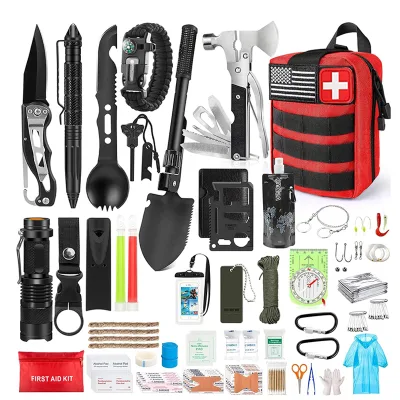
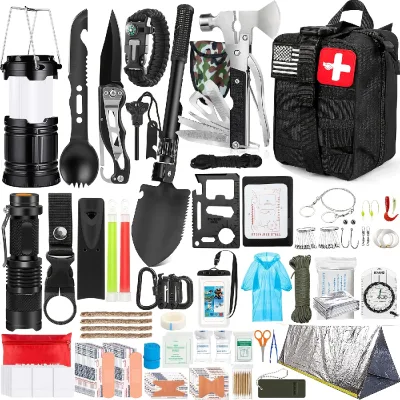
The most common risk in this category is contents substitution. Because these kits are assembled from many small components, a supplier under price pressure may swap glow sticks, multi-tools or dressings for cheaper equivalents while keeping the exterior identical. The listings here describe contents as "customized" with standards such as "multi tools, glow sticks" — deliberately loose descriptions — so your purchase order must specify every item, quantity, brand grade and size, and your approval sample must be sealed as the reference for bulk inspection.
A second risk is regulatory mismatch. A kit marketed as first aid may fall under medical-device rules in your market, and a supplier without medical quality systems cannot support that claim; one supplier in the results holds ISO 13485 while others show no system certification at all, so assume you must fill that gap with your own compliance work where the credential is absent. Third, watch for quotation inconsistencies: one listing in the results shows a 15-day supplier lead time alongside a 35-day product-page delivery term, a discrepancy that suggests the page data is not maintained carefully. Fourth, beware of single-product-line traders whose main catalog is toys or outdoor soft goods — survival kits may be a sideline with shallow sourcing depth. Finally, packing is often polybag only, which offers little retail presentation or transit protection; if you need retail boxes, confirm this explicitly, because the visible listings default to polybag packing and will not volunteer the upgrade.
Multi-Function Outdoor Emergency Survival Kit Regional Sourcing and Logistics
The three provinces represented in the results support different sourcing strategies. Zhejiang, home to one of the listed suppliers, is consistent with an outdoor-goods cluster profile: a trading company whose main products span camping furniture, bags, tarps and pet carriers can usually source varied kit components quickly and accommodate mixed or customized contents, which suits buyers whose kits emphasize tools, gear and packaging variety. Jiangsu, represented by a combined manufacturer and trading company focused on gauze, bandages, dressings and medical tape, fits buyers whose kits must contain credible wound-care supplies with traceable medical inputs; that supplier lists a 15-day lead time and a low unit MOQ, both attractive for trial orders. Henan, where one listed manufacturer trades toys and outdoor sports goods, suggests a general merchandise background where survival kits ride alongside other product lines.
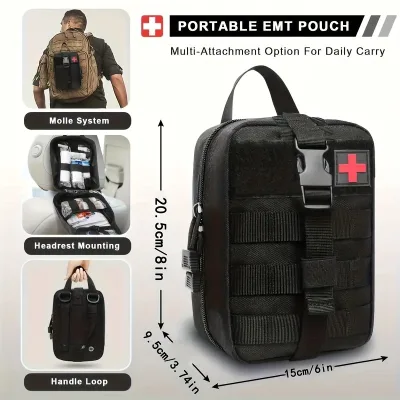
Logistics planning should start from the packed kit rather than the product title. A 10-liter soft dry-bag style kit, a 170×105×50 mm tactical pouch and a bottle-style kit have very different carton volumes and weights, so request packing dimensions and gross weights per model — SK-numbered models in the results cover all three form factors. Confirm polybag default packing against your carton requirements, and clarify whether the quoted lead time starts from deposit receipt or artwork approval. Because no certifications or shipping terms are asserted uniformly across the listings, request Incoterms, export documentation experience and destination-market compliance support in writing from each candidate.
Multi-Function Outdoor Emergency Survival Kit Commercial Terms and Order Planning
Structure your first order around the MOQ and price data actually displayed. The visible range — 100 units at the low end on a Jiangsu first-aid kit, 500 on a tactical kit, and 1,000 to 2,000 on Zhejiang kits — means a pilot order of 100 to 500 units is realistic only with certain suppliers; if your target supplier's MOQ is 2,000, consider starting with their lowest-tier model to validate quality before scaling. Price bands in the results span roughly one dollar to ten dollars, so anchor negotiations to a written bill of materials rather than to the listing price, which often reflects only the contents shown.
Payment and milestone planning should mirror what the listings imply: one Jiangsu page references a 30 percent deposit with delivery 35 days after receipt, a common structure you should confirm in writing. Tie the balance payment to passed inspection against your sealed sample, especially given the contents-substitution risk in this category. Set milestone checkpoints for artwork approval, component sourcing, semi-finished assembly and pre-shipment inspection, and reconcile any lead-time discrepancy between the supplier's profile and their quotation before signing. Finally, document customization scope — the listings broadly show OEM availability with customized color and contents — including logo placement, packaging upgrade beyond polybag, and who bears rework cost if bulk goods deviate from the approved sample. Keep all commercial terms in a single signed annex to avoid reliance on listing data that may change between search results.
FAQs
What is the price range for outdoor survival kits?
Prices for these kits typically range from $1 to $10 per unit depending on the model and customization level. Basic first aid kits start around $1, while specialized tactical or emergency kits cost between $2 and $10. Buyers should check specific product listings for exact pricing tiers based on order volume.
What is the minimum order quantity for these kits?
Minimum order quantities vary significantly by supplier and product type. Some manufacturers require as few as 100 units for standard first aid kits, while others demand 500 or even 2000 units for specialized survival gear. Buyers must verify the MOQ directly with each supplier before placing an order to ensure it fits their budget.
How long does production take for these kits?
Lead times generally range from 15 to 35 days after deposit receipt. Some suppliers offer faster turnaround times of 15 days, while others may require up to 35 days for customized orders. Buyers should confirm the specific delivery schedule with the supplier, as production times depend on order size and customization requirements.
Can I customize the contents and logo of the kit?
Yes, most suppliers offer full customization options including customized contents, colors, and logo printing. OEM services are widely available, allowing buyers to tailor the kit to specific needs. Buyers should confirm customization details and any associated costs with the supplier to ensure the final product meets their exact specifications and branding requirements.
Where are these survival kits manufactured?
These kits are primarily manufactured in China, with key production hubs located in Zhejiang and Jiangsu provinces. Suppliers in these regions offer a wide range of products from basic first aid kits to complex survival gear. Buyers can filter search results by location to find suppliers closer to their preferred shipping routes or logistics partners.
What certifications do these kits have?
Certifications vary by supplier and product type. Some medical-grade first aid kits hold CE certification and are produced by ISO 13485 certified manufacturers. Other survival kits may not have specific medical certifications but focus on durability and utility. Buyers should request certification documents from suppliers to verify compliance with their target market regulations.