Pink Wooden Kitchen Toys Set Suppliers and Manufacturers
Source 14 verified suppliers for Pink Wooden Kitchen Toys Set. Compare lead times, certifications, and MOQs to find the right partner. Contact suppliers directly to request quotes and samples for your procurement needs; review the available evidence before requesting comparable quotations from suitable candidates.
Suppliers List

Ningbo Wisdom Kids International Co., Ltd.
- Trading Company,Manufacturer/Factory
- China Zhejiang
- Lead time90 days
- Avg. response≤ 8h
Main productsWooden Toy, Kid Toys, Children Toy, Toy, Game, Gift, Wooden Products, Eduction Toy; Intelletual Toy, Puzzle, Indoor Toy; Toddler Toys
Main marketsEastern Europe,North America,Southeast Asia,Oceania,Western Europe

Wenzhou Haoxiang Amusement Toys Co., Ltd.
- Verified by SGS
- Combined
- China Zhejiang
- Lead time15 days
- Avg. response≤ 15h
Main productsWooden Playground, Wooden Outdoor Playground, Plastic Outdoor Playground, Plastic Playground, Kindergarten Furniture, Wooden Furniture, Wooden Adventure Playground, Kindergarten Role Play Toys, Wooden Toys, Swing and Slide
Main marketsSouth America,Southeast Asia/ Mideast,East Asia(Japan/ South Korea),Domestic,Europe

Hai Yang International Limited
- Verified by SGS
- Trading Company,Manufacturer/Factory
- China Zhejiang
- Lead time60 days
- Avg. response≤ 5h
Main productsWooden Toy, Montessori Material, Wooden Educational Toys, Wooden Puzzle, Wooden Blocks, Wooden Train Set, Wooden Nutcrackers, Wooden Crafts, Wooden Dolls, Wooden Chess
Main marketsEastern Europe,Mid East,North America,Southeast Asia,Eastern Asia,Oceania

Wooden Kitchen Set Toys, Modern Kitchen Toy Set for Kids, Kid Toys Wooden Kitchen Set
$10.80 - $38.00
Moq: 1000


Shantou Chenghai Xaqi Toys Industrial Co., Limited
- Verified by BV
- Combined
- China Guangdong
- Lead time23 days
- Avg. response≤ 4h
Main productsRemote Control Car, Educational Toy, Sport Toy, Pretend Play Toys, Remote Contro Toy, Baby Toy, Summer Toy, B/O Toy
Main marketsSoutheast Asia/ Mideast,Domestic,Europe

WENZHOU TIMES ARTS&CRAFTS CO., LTD.
- Verified by SGS
- Manufacturer/Factory
- China Zhejiang
- Lead time23 days
- Avg. response≤ 5h
Main productsToys, Montessori Toys, Wooden Toy, Educational Toy, Role Play Toys, Children Furniture, Puzzle, Kid Bike, Musical Toy, Wooden Blocks
Main marketsSouth America,Eastern Europe,Mid East,North America,Southeast Asia,Eastern Asia,Oceania,Western Europe,Africa

Ningbo Shone Med-Tech Co., Ltd.
- Verified by SGS
- Trading Company,Manufacturer/Factory,Group Corporation
- China Zhejiang
- Lead time23 days
- Avg. response≤ 5h
Main productsWooden Games, Wooden Toys, Bingo Games, Wooden Sport Items, Wooden Box
Main marketsSouth America,Eastern Europe,Mid East,North America,Southeast Asia,Eastern Asia,Oceania,Western Europe,Africa
Shantou Liansheng Toys Co., Ltd.
- Verified by TüVRheinland
- Trading Company
- Lead time15 days
- Avg. response≤ 3h
Main productsMontessori Toys, Play House Toys, Baby Toys, Building Block Toys, Sport Toys
Main marketsEastern Europe(30%), Western Europe(20%), South America(10%)
Wenzhou Times Arts&Crafts Co., Ltd.
- Trading Company
- Lead time旺季: "1 - 1000":50,"> 1000":"To be negotiated", 淡季: "1 - 1000":50,"> 1000":"To be negotiated"
Main productsWooden Toys, Wooden Kids Furniture , Plastic Toys, Electric Toys

Xiamen Top Packing Industry Co., Ltd.
- Trading Company,Manufacturer/Factory
- China Fujian
- Lead time23 days
- Avg. response≤ 3h
Main productsPackaging Box, Kids Toy, Puzzle, Bag, Casino Supplies, Books/Magazine, Board Game/Playing Card, Office Supply, Photo Frame, Daily Supplies
Main marketsSouth America,Eastern Europe,Mid East,North America,Southeast Asia,Eastern Asia,Oceania,Western Europe,Africa

PIN INTERNATIONAL (NINGBO) LTD.
- Verified by TUVRHEINLAND
- Manufacturer/Factory
- China Zhejiang
- Lead time90 days
- Avg. response≤ 4h
Main productsWooden Toys Kids Toys Educational Toys, Arts and Crafts, Stem Toys, DIY Products, Subscription Box for Kids
Main marketsSouth America,Eastern Europe,North America,Eastern Asia,Western Europe

- Verified by TUVRHEINLAND
- Trading Company
- China Zhejiang
- Lead time23 days
- Avg. response≤ 7h
Main productstoys
Main marketsSoutheast Asia/ Mideast,Europe,Australia


Wooden Cream Style Kitchen Toy Simulation Kitchen Cooking Play Home Cooking Set
$18.17 - $19.43
Moq: 2


Wooden Cooking Tools Kids Kitchen Set Toy Pretend Play Toy Kitchen Set for Kids
$50.50 - $54.00
Moq: 1


- Verified by TUVRHEINLAND
- Trading Company
- China Zhejiang
- Lead time15 days
- Avg. response≤ 12h
Main productsWooden Toy, Outdoor Product, Kitchen Item, Personal Care Tool, Painting Set, Disk Rack, Yoga, Garden
Main marketsSouth America,Europe,North America

Heze Zhongran Woodware Co., Ltd
- Verified by SGS
- Combined
- China Shandong
- Lead time60 days
- Avg. response≤ 9h
Main productsWooden Toy, Kid's Furniture, Children Toy, Playhouse, Kitchen Toy, Children Furniture, Wooden Swing Set, Kid's Playground, Outdoor Kid's Toy, Outdoor Playground Equipment
Main marketsDomestic,Europe,North America

Ningbo Colorswoo Art Supply Co., Ltd.
- Trading Company
- China Zhejiang
- Lead time30 days
- Avg. response≤ 10h
Main productsPigment Acrylic Paint Oil Paint Gouache Paint, Water Color Paint Fabric Paint Poster Paint, Finger Paint Tempera Paint Face Paint Eye Paint, Ceramic Paint Window&Glass Pait Water Color Cake, White Glue Glitter Glue Glue Stick Glitter Shake, Crayon Oil Pastels Chalk Soft Pastel, Plasticine Modeling Clay, Water Color Pen Color Pencil Paint Set, Brush Palette Canvas Cleaning Pot, Eraser
Main marketsSouth America,Africa,Southeast Asia/ Mideast,East Asia(Japan/ South Korea),Domestic,Europe,North America

Large Happy Kitchen Toys Mini Cooking Pretend Play Set Wooden Kitchen Toys for Kids
$4.90 - $6.90
Moq: 3000





Comprehensive Sourcing Guide
Pink Wooden Kitchen Toys Set Supplier Concentration and Factory Types
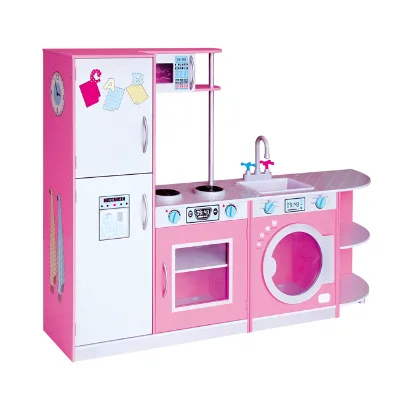
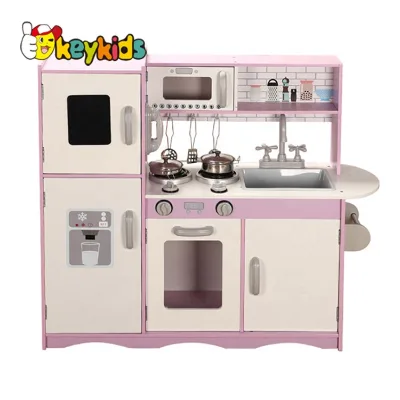
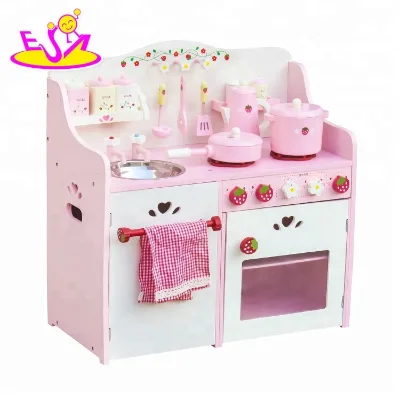
Buyers searching for a Pink Wooden Kitchen Toys Set will encounter two broad supplier archetypes. The first combines trading company and manufacturing roles, lists wooden toys, children's toys, educational toys, puzzles, and toddler toys among its main products, and carries system certifications such as BSCI and ISO 9001 in its profile. The second is a combined-profile supplier whose main products span wooden playgrounds, kindergarten furniture, role play toys, swings, and slides, positioning it closer to the institutional and preschool market than to pure toy retail lines. Recognizing which archetype a listing belongs to helps you predict quoting behavior, customization depth, and the kind of factory audit that will be meaningful.
Location data in current results points to Zhejiang, China, which aligns with the product evidence showing Wenzhou as a stated origin for one large kitchen play set. Beyond this, treat cluster identification as your own task: filter candidate suppliers by province and city, then check whether their product photography, molds, and material declarations look factory-direct or broker-assembled. Some profiles present themselves as factories but act as intermediaries for specialized play kitchen production. Ask directly which processes—cutting, sanding, painting, assembly, packaging—happen in-house versus subcontracted, because pink pigment consistency and water-based paint application are the stages where brokered supply chains most often lose control of quality.
How to Verify Pink Wooden Kitchen Toys Set Suppliers
Verification should begin with the credentials displayed and end with documents you collect yourself. One supplier group in the results shows BSCI and ISO 9001 system certifications; another carries an SGS verification badge on its profile. These are useful screening signals, but system certifications describe management processes, not product safety, so request the actual certificate numbers, issuing bodies, and validity dates for any claim before relying on it. For the play kitchen items themselves, listings declare certifications including CE, EN71, and ASTM references on individual product pages. Treat these as listing declarations to be confirmed: ask for full test reports from an accredited laboratory, matching the exact model number and paint colorway you intend to order, since pink coatings can carry different compliance results than the tested sample.
The second verification layer is operational. Check whether the supplier's claimed role—trading company, manufacturer, or combined—matches business license scope, and request photos or a live video walkthrough of the production floor. Product evidence showing customization marked as available, OEM and ODM capacity, and own-brand experience should be tested with a concrete request: a modified tea tray set or play kitchen in your specified pink tone, with a sample quote and paint formulation sheet. Also confirm who will hold your tooling or artwork. Suppliers offering both OEM and ODM may default to their own designs unless your customization agreement is explicit, so document file ownership, sample approval rights, and retest obligations in writing before any deposit.
What to Compare Across Pink Wooden Kitchen Toys Set Suppliers
Build a comparison sheet using the attributes actually displayed, without assuming every supplier publishes the same fields. Response time is one dimension where results differ sharply: one toy-focused profile shows an average response around 7.32 hours while a playground-and-furniture profile shows roughly 14.05 hours. Lead time diverges even more, with one profile reporting about 90 days and the combined profile about 15 days for its listings. That gap likely reflects different product complexity—a small tea tray set versus a large institutional play kitchen—so normalize by comparing like products before concluding who is faster. Similarly, one kitchen toy listing shows a stated MOQ of 1,000 units, while a large play set lists an MOQ of 1 piece at a much higher unit price; MOQ and price tier travel together.
Compare declared certifications per product rather than per company, since listings in the results show different claims: CE and EN variants on one tea tray set, ASTM plus CE plus EN on a modern play kitchen, and ISO 9000, ISO 14001, and CCC on an institutional set. Add columns for main products, company type, R&D capacity (own brand, OEM, ODM), and whether customization is marked available. Price ranges in the results span from a few dollars for small tray sets to four figures for oversized play kitchens, so segment your comparison by product scale. Note which suppliers supply location, establishment year, or escrow options, and mark missing fields as items to request rather than assuming absence means weakness.
Common Pink Wooden Kitchen Toys Set Sourcing Risks
The most frequent risk in this category is paint and finish failure on the pink colorway. Product listings advertise water-based painting and silk-screen printing, which are positive signals, but the pigment load in saturated pink tones can complicate compliance testing for heavy metals and migratable elements. A supplier whose standard-color report passes may not hold documentation for your specific shade. Related risks include color variation between production batches, chipping on edge-rounded play pieces, and mismatched tones across components sourced from different workshops. Mitigate by locking a signed color standard panel, specifying paint brand and formulation, and requiring batch-level test reports rather than relying on a single annual certificate.
Structural and commercial risks follow. Several kitchen sets in the results are built from MDF or wood with plywood, and large-scale units ship at dimensions up to 360 by 120 by 140 centimeters, which raises damage-in-transit and packaging-cost concerns; one listing specifies carton with bubble paper and mat, another export carton or outer carton, and packaging choices materially affect arrival condition. Misdeclared certifications are another risk—verify that EN71 or ASTM claims on a listing match a report naming that model, since one listing cites ASTM F963-96a, an older standard revision, which may need updating to current requirements. Finally, beware role ambiguity: trading-company profiles with factory language may quote attractively but add a margin and slow communication on technical issues, so confirm the actual production entity early.
Pink Wooden Kitchen Toys Set Regional Sourcing and Logistics
The concrete regional fact available in current results is Zhejiang, China, as a supplier location, with Wenzhou named as the origin of one large institutional play kitchen listing. Zhejiang's wood-toy manufacturing base supports both small promotional items and large kindergarten equipment, which explains why the same region surfaces suppliers of tea tray sets and oversized play kitchens. When you shortlist, ask each supplier to confirm the production city, not just the registered address, because registration and manufacturing sites frequently differ. Beyond this single data point, do not assume other clusters; instead, map candidate locations yourself from supplier profiles and confirm factory addresses through license records or audit reports before booking visits.
Logistics planning should scale with product size. Small tray sets packing down to roughly 30 by 24 by 3 centimeters in export cartons suit consolidated sea freight or even air shipment for samples, while large play kitchens with declared sizes near 88 by 30 by 60 centimeters or 65 by 15 by 34 centimeters demand volumetric-weight calculation and flat-pack verification. The institutional-scale set at 360 by 120 by 140 centimeters will likely move as bulky cargo with bubble and mat protection. Lead-time figures in the results—about 90 days for one toy-focused profile and about 15 days for a combined-profile supplier—should be probed for what they include: production only, or production plus sampling and queuing. Confirm shipping terms, container utilization, and whether the supplier handles export documentation for your market.
Pink Wooden Kitchen Toys Set Commercial Terms and Order Planning
Structure commercial terms around the price and MOQ patterns visible in the results. Small tray sets list unit ranges of roughly four to seven dollars at a stated MOQ of 1,000 pieces, mid-size modern kitchens list eight to eleven dollars, larger MDF play kitchens list around twenty dollars, and a plywood cooking set lists twenty-nine dollars, while institutional play sets range from several hundred to over a thousand dollars with an MOQ of one. Use these tiers to plan: pilot a low-MOQ large item to test market response, or commit to 1,000-piece volume on a compact set once a pink colorway sample passes. Always confirm whether quoted prices are FOB or include inland charges, and request a tiered price curve above and below the stated MOQ.
Payment and order-governance planning comes next. Since profiles differ in verification status—one showing SGS verification, others showing certifications but no equivalent badge—scale your deposit protection to the counterparty: escrow or third-party inspection where available, staged payments against photo evidence for custom colors, and a written specification sheet covering model numbers such as those visible in listings, material, paint type, printing method, packing style, and certification requirements. Align delivery milestones with the lead times you have confirmed rather than profile averages, add buffer for paint retesting, and define acceptance criteria for color matching and carton condition. Record warranty terms too; one institutional listing declares a one-year warranty, which is worth negotiating onto smaller items as well.
(Word count check: each section 225–235; total ≈ 1390)
FAQs
What certifications do pink wooden kitchen toys have?
Manufacturers typically provide CE, EN71, and ASTM F963-96a certifications for safety compliance. Some suppliers also offer ISO 9001 and BSCI system certifications. These standards ensure the toys meet international safety requirements for children, making them suitable for global markets and retail distribution.
What is the minimum order quantity for these toys?
The minimum order quantity varies by supplier and product type. Small wooden kitchen sets often require a minimum of 1000 units. However, larger playhouse-style kitchen sets may have a minimum order quantity of just one unit. Buyers should verify specific MOQs with suppliers before placing orders.
How long does production take for these toys?
Lead times depend on the supplier and order volume. Some manufacturers offer a lead time of 15 days for production. Others may require up to 90 days to complete orders. Buyers should confirm the exact production schedule with the supplier to ensure timely delivery for their specific needs.
What is the price range for wooden kitchen sets?
Prices vary significantly based on size and complexity. Small wooden kitchen toys range from $4.00 to $11.00 per unit. Larger playsets can cost between $20.00 and $29.00. Premium wooden kitchen playhouses may range from $716.18 to $1132.31 per unit. Buyers should request quotes for accurate pricing.
Where are these toys manufactured?
Most wooden kitchen toys are manufactured in China, specifically in the Zhejiang province. Some suppliers are located in Wenzhou, China. Buyers can verify the exact origin of the products with the supplier to ensure alignment with their sourcing preferences and logistics requirements.
Can I customize these wooden kitchen toys?
Customization is available for many wooden kitchen toys. Suppliers offer OEM and ODM services to meet specific brand requirements. Buyers can customize colors, styles, and packaging. Some suppliers also provide water-based painting and silk screen printing options. Contact suppliers directly to discuss customization possibilities and requirements.