Source 100w usb-c power adapter with vga hdmi for Laptop, Phone, Display
Find 11 verified options for a 100w usb-c power adapter with vga hdmi suitable for laptops, phones, and displays. Compare specifications, certifications, and pricing to select the right supplier for your needs; compare the available evidence and request quotations based on your requirements.
Updated
Key considerations
Products List






Comprehensive Sourcing Guide
100w Usb-C Power Adapter With Vga Hdmi Sourcing Guide
Sourcing high-power USB-C adapters that integrate video output requires careful evaluation of both power delivery capabilities and signal integrity. Buyers must distinguish between simple charging hubs and complex docking stations that manage thermal loads while transmitting VGA and HDMI signals simultaneously. The integration of DisplayPort Alternate Mode over USB-C is critical for maintaining video quality, especially when supporting multiple external displays. Procurement teams should prioritize suppliers who demonstrate clear technical documentation regarding bandwidth allocation between data, video, and power channels.
The market for these devices spans various professional and consumer applications, including laptop docking, digital signage, and multimedia presentations. While the core keyword suggests a power adapter, the functional requirement often points toward a multi-port hub or converter that includes power input alongside video outputs. Buyers need to verify if the device acts as a passive splitter or an active converter with internal processing chips. Understanding this distinction is vital for ensuring compatibility with specific laptop models and operating systems, particularly when dealing with legacy VGA connections that require digital-to-analog conversion.
Product Scope and Observed Listing Signals
Market listings for USB-C hubs with video output often display a wide range of specifications and price points. Observed data indicates a price range from 1.35 to 18.88 USD, reflecting significant variation in component quality and feature sets. The minimum order quantity (MOQ) typically ranges from 1 to 500 units, allowing for both sample testing and bulk procurement. Buyers should note that lower-priced items may lack robust heat dissipation or certified power delivery components, which are essential for handling 100W loads safely.
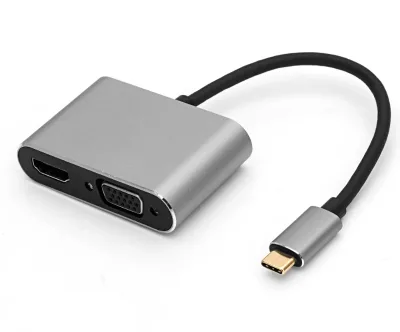
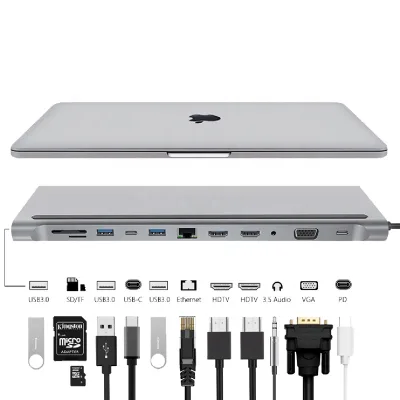
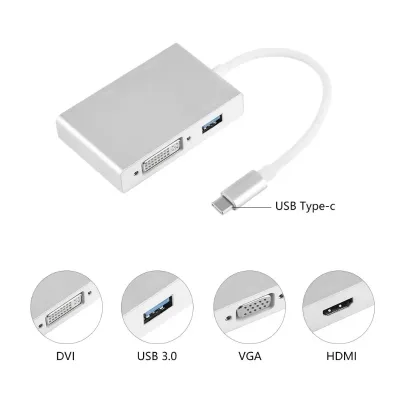
Product attributes observed in current listings include various interface types, such as USB 3.0 converters and multi-port hubs with PD, HDMI, VGA, and RJ45 connections. Some models feature aluminum alloy cases for improved thermal management, while others use plastic housings. Color options vary from black to gray, and packaging ranges from simple PE bags to branded color boxes. These physical attributes often correlate with durability and heat management capabilities, which are crucial for high-power applications. Buyers should examine these details closely to ensure the physical design meets their environmental and aesthetic requirements.
Technical Specifications to Verify
Verifying the technical specifications of USB-C hubs with VGA and HDMI outputs is paramount for ensuring seamless integration with existing IT infrastructure. Buyers must confirm the version of USB-C support, as older standards may not provide sufficient bandwidth for simultaneous video and data transfer. The presence of Power Delivery (PD) is essential for devices requiring up to 100W, ensuring that the laptop receives adequate power while connected to external displays. It is also important to check the number of ports and their specific functions, as some hubs may limit video output when multiple data ports are in use.
Video output specifications require careful scrutiny, particularly regarding resolution support and refresh rates for both HDMI and VGA connections. HDMI ports typically support higher resolutions, while VGA ports require active conversion, which can introduce latency or signal degradation if not properly implemented. Buyers should verify the supported operating systems, such as Windows and iOS, to ensure driver compatibility and plug-and-play functionality. Additionally, checking the input type, such as Type-C 3.1, helps determine the maximum data transfer speeds and power negotiation capabilities available to the end-user.
Compliance and Safety Documentation
Compliance with international safety and environmental standards is non-negotiable for electronic accessories, especially those handling high power levels. Buyers must request certificates such as CE, FCC, and RoHS to ensure the product meets regulatory requirements in target markets. RoHS compliance indicates that the device is free from hazardous substances, which is increasingly important for corporate sustainability goals. CE certification confirms adherence to European health, safety, and environmental protection standards, while FCC certification is mandatory for sales in the United States.
Safety documentation should also include detailed information on electrical ratings, such as rated voltage ranges, to ensure compatibility with local power grids. For devices operating in the 100-250V range, buyers should verify that the internal components are rated for the specific voltage fluctuations in their region. Warranty terms, often ranging from 12 months, provide an additional layer of protection against manufacturing defects. Buyers should ensure that the supplier provides clear instructions for claiming warranty support and that the product includes necessary safety markings and labels as required by local regulations.
Cost Drivers and Commercial Terms
The cost of USB-C hubs with video output is influenced by several factors, including the quality of internal chips, the complexity of the circuit board, and the materials used in the casing. Aluminum alloy cases, while more expensive, offer superior heat dissipation, which is critical for maintaining performance under high-power loads. The inclusion of multiple high-speed ports, such as USB 3.0 and Gigabit Ethernet, also adds to the manufacturing cost. Buyers should understand that lower prices may correlate with reduced thermal management or lower-quality components that could fail under sustained use.
Commercial terms such as Ex-Works (EXW) and Free on Board (FOB) significantly impact the total landed cost. Buyers must account for shipping expenses, which can be incurred via sea or air freight depending on urgency and volume. Packaging methods, such as polybags or cartons, affect shipping efficiency and product protection during transit. Customization options, including private labeling or OEM services, often require higher MOQs, typically around 500 pieces. Understanding these commercial terms helps buyers accurately budget for the project and avoid unexpected costs during the procurement process.
Supplier Qualification and Quality Control
Selecting a reliable supplier is crucial for ensuring consistent product quality and timely delivery. Buyers should verify the supplier’s manufacturing capabilities, including whether they use private molds or standard designs. Suppliers with ODM (Original Design Manufacturing) capabilities may offer more flexibility for customization but require careful evaluation of their design expertise. It is also important to check the supplier’s location, as many manufacturers are based in regions like Guangdong, China, which is known for its electronics manufacturing ecosystem.
Quality control processes should be clearly defined and documented by the supplier. Buyers should request information on incoming material inspections, in-process quality checks, and final product testing. Certifications such as CCC and RoHS indicate that the supplier adheres to specific quality and environmental standards. Additionally, buyers should inquire about the supplier’s defect rate and their process for handling non-conforming products. Establishing a clear communication channel for quality issues ensures that any problems can be resolved quickly and efficiently, minimizing disruption to the supply chain.
Long-Term Procurement Checks
Long-term procurement success depends on establishing a robust relationship with suppliers and implementing continuous improvement processes. Buyers should regularly review supplier performance metrics, including on-time delivery rates, product quality, and responsiveness to issues. Regular audits of the supplier’s quality management system can help identify potential risks before they impact production. Maintaining open communication with the supplier allows for collaborative problem-solving and ensures that both parties are aligned on quality expectations and delivery schedules.
As technology evolves, buyers must stay informed about new standards and features in USB-C and video output technologies. This includes monitoring changes in USB Power Delivery specifications and advancements in video transmission protocols. Buyers should also consider the lifecycle of the products they procure, ensuring that spare parts and support are available for the duration of the deployment. By proactively managing these aspects, buyers can mitigate risks and ensure that their procurement strategy remains effective and competitive in the long run.
FAQs
Can I customize this 100w usb-c power adapter with vga hdmi?
Yes, customization is available for this product line. The minimum order quantity for customization is 500 pieces. Buyers can request specific configurations while maintaining standard certifications like CE and RoHS compliance for international markets.
What certifications does the 100w usb-c power adapter with vga hdmi have?
The product holds CE and RoHS certifications. Some variants also include CCC certification. These standards ensure safety and environmental compliance for electronic devices used in laptops, phones, and displays across various global regions.
How is the 100w usb-c power adapter with vga hdmi shipped?
Shipping is available by sea or air depending on buyer preference. The product is packed in PE bags and cartons or color boxes. Single package sizes vary, with some units measuring 30x12x5 cm for efficient logistics handling.
Which interface types are supported by the 100w usb-c power adapter with vga hdmi?
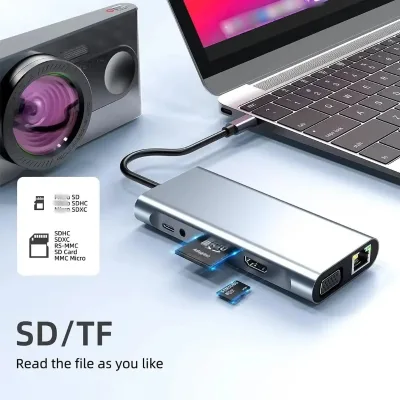
The device supports USB 3.0 and Type-C interfaces. It offers multiple ports including PD, HDTV, VGA, USB, TF, SD, and RJ45. This allows video transfer, charging, and network connectivity for computers and multimedia appliances simultaneously.
What is the origin location of the 100w usb-c power adapter with vga hdmi?
The product originates from Guangdong, China. Specific models are manufactured in this region. Buyers should note that the place of origin is China, which influences shipping terms like FOB and Ex-Works pricing structures.
Can the 100w usb-c power adapter with vga hdmi support Windows and iOS?
Yes, the system supports both Windows and iOS operating systems. It functions as a video transfer and charging solution. The adapter is designed to work with laptops, phones, and displays requiring versatile connectivity options.
What is the warranty period for the 100w usb-c power adapter with vga hdmi?
The product comes with a 12-month warranty. This coverage applies to standard defects under normal usage conditions. Buyers should verify specific terms with the supplier as warranty details may vary by model and region.