Source Biodegradable HDPE Plastic Bag for Shopping, Garbage, Food
Compare 30 listings for Biodegradable HDPE Plastic Bag options with custom sizes, colors, and printing methods. Buyers can review specifications like thickness, material structure, and supply ability from verified suppliers in Guangdong, China; compare the available evidence and request quotations based on your requirements.
Updated
Key considerations
Products List
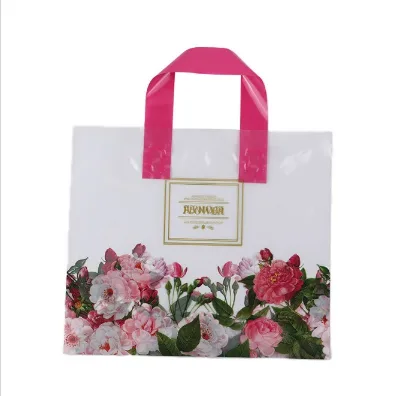
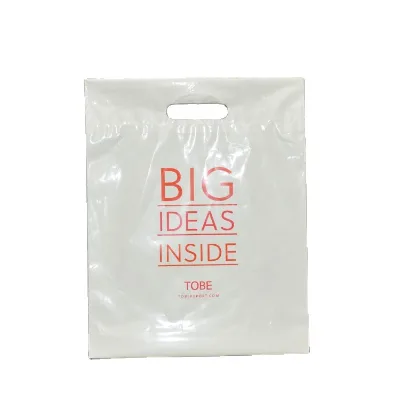
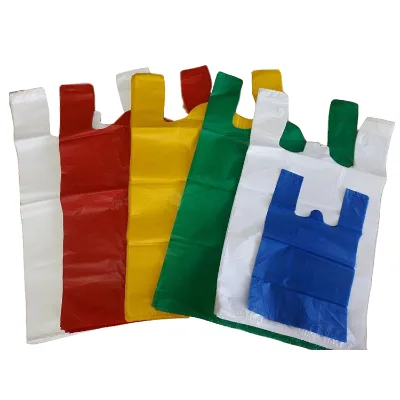
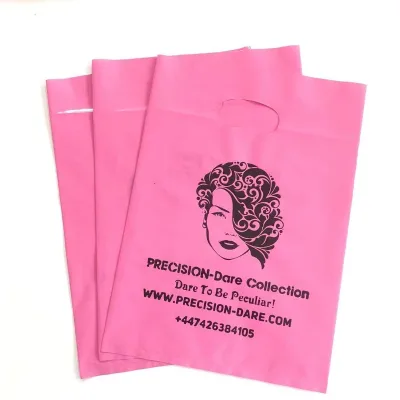


HDPE LDPE Biodegradable Compostable Recyclable Plastic String Garbage Bag
$1400.00 - $1800.00
MOQ: 2 Tons


Hospital HDPE Plastic Disposable Waste Autoclavable Bag Biohazard Bag
$0.024 - $0.418
MOQ: 20000 Pieces




Comprehensive Sourcing Guide
Biodegradable HDPE Plastic Bag Sourcing Guide
Procuring biodegradable HDPE plastic bags at scale requires buyers to balance material performance, degradation claims, and customization requirements against practical commercial terms. These bags serve shopping, garbage, household, and food applications, which means a single sourcing decision often spans multiple product lines within a retail or distribution business. Because biodegradability is both a marketing claim and a technical property, disciplined verification separates reliable suppliers from those who simply label conventional bags as eco-friendly.
This guide walks through the full procurement cycle: interpreting listing signals, verifying specifications, reviewing compliance documentation, understanding cost drivers, qualifying suppliers, and setting up long-term quality controls. Each section addresses one concrete buyer decision so you can move from initial supplier research to a repeatable ordering process without discovering specification gaps after production has started.
Product Scope and Observed Listing Signals
The listings observed for this product category span several distinct bag constructions, and buyers should not assume all listings share the same attributes. Observed variations include square bottom bags with hand length handles and bags with shoulder length handles, in materials listed as HDPE, LDPE, and generic plastic. Sizes range from compact 15x25 cm and 20x30 cm formats up to 25x40 cm and larger, with some listings at 25x35 cm. Thicknesses observed run from 0.12 mm to 0.4 mm, a wide band that materially affects both strength and price.
Additional listing signals worth noting: MOQs observed range from 1,000 to 5,000 pieces, production origins are concentrated in Guangdong, China, and supply capacity is stated as 10 tons per day from one listing. Customization is broadly available, with logo printing, custom colors (up to nine colors in one listing), and custom sizes accepted. Sample times of 5–9 days appear on some listings, giving buyers a realistic window for pre-production evaluation before committing to volume.
Technical Specifications to Verify
Start with material composition and bag type, because these determine load performance and end-of-life behavior. Confirm whether the bag is genuinely HDPE, LDPE, or a blend, and ask how the biodegradable feature is achieved — additive-based degradable films and certified compostable films behave very differently in landfills and composting environments. Verify the bag type (square bottom versus gusseted), handle style (hand length or shoulder length), and sealing method, since one observed listing uses self adhesive seal while shopping bags rely on handles.
Then lock down dimensions and film gauge. Observed thickness options of 0.12 mm, 0.2 mm, 0.3 mm, and 0.4 mm show that suppliers can adjust gauge, so specify the exact value your application requires rather than accepting "custom." Request the single package size (one listing shows 10X20X0.16 cm per unit) and single gross weight (0.01 kg in one case) to calculate freight accurately. Finally, confirm color capabilities — observed palettes include black, blue, green, orange, pink, white, yellow, red, and multicolor — and whether your color requires a minimum run.
Compliance and Safety Documentation
Biodegradability claims are the highest-risk area in this category, so documentation review should come before pricing negotiation. Ask suppliers which standard their biodegradable claim references; the supplied background context includes EN13432 (European compostability) and ASTM D6400 (US compostability) as relevant reference standards. Request the actual test certificates rather than accepting a feature label, and confirm the certificate covers the specific film formulation you are ordering, not merely a similar product in the supplier's catalog.
For shopping and food-related usage, also clarify food-contact suitability if that applies to your market, and ask about recyclability claims separately from biodegradability — one observed listing states both features, which can involve different verification paths. Request material safety documentation, confirm the printing process (screen printing and gravure printing both appear in listings) uses inks appropriate to your application, and keep copies of all certificates on file. Buyers exporting to regulated markets should independently confirm which standards their destination country requires rather than relying on supplier assertions.
Cost Drivers and Commercial Terms
Unit cost in this category is driven primarily by film gauge, bag size, handle construction, and printing complexity. Thicker films (0.3–0.4 mm versus 0.12 mm) consume more resin, and biodegradable formulations typically price above conventional HDPE. Gravure printing supports richer multi-color artwork but requires cylinder costs, while screen printing suits simpler logos; observed listings offering up to nine colors indicate that print count directly shapes tooling investment and per-unit price.
Observed commercial terms give a useful baseline: MOQs of 1,000–5,000 pieces, sample lead times of 5–9 days, carton packing, and dispatch through Shenzhen or Guangzhou ports. Confirm whether quoted prices include printing plates, whether the biodegradable additive carries a surcharge, and how price scales across the observed range — listing prices in this category can vary enormously, so compare quotes on identical specifications. Negotiate payment structure against sample approval and pre-shipment inspection milestones rather than paying large sums against a first production run.
Supplier Qualification and Quality Control
Qualify suppliers on demonstrated production capability rather than listing claims. A stated supply capacity of 10 tons per day signals industrial-scale extrusion, but verify it with capacity questions: film blowing equipment in-house, printing lines available, and whether biodegradable film production is a standard process or an occasional one. Suppliers in Guangdong with direct port access to Shenzhen or Guangzhou simplify logistics, but location alone is not a quality indicator — request factory information, production photos, and references from comparable custom orders.
Establish a quality protocol before the first order. Approve a physical sample covering film gauge, handle strength, seal integrity, print registration, and color match, and treat that sample as the acceptance standard for bulk production. For first orders, consider third-party inspection before shipment, checking thickness distribution across the roll, load performance of handles, and conformity of biodegradable additive dosage to the agreed specification. Document defect tolerances in writing, including acceptable variation in gauge and print position, so inspections have objective pass/fail criteria.
Long-Term Procurement Checks
After the first successful order, shift focus from one-time qualification to repeatable consistency. Biodegradable film formulations can drift between production batches, so request batch-level confirmation that the same additive and resin blend is used each run. Re-verify certificates when suppliers change material sources, and schedule periodic re-inspection — annually or every few orders — rather than assuming early quality persists. Monitor whether sample lead times of 5–9 days remain reliable as your order frequency increases.
Also build resilience into the commercial relationship. Confirm replenishment lead times against your sales forecast, keep carton packing specifications standardized so receiving is predictable, and maintain a qualified backup supplier for your key size and gauge combinations. Track total landed cost over time, since resin markets and biodegradable additive pricing fluctuate; locking in periodic price reviews prevents surprise increases. Finally, retain your approved samples and specification sheets in a shared file so any team member can reorder accurately without restarting the verification cycle.
Final Compliance and Reorder Discipline
Before any repeat order, run a short compliance refresh: confirm that biodegradability certificates remain valid and cover the current formulation, that food or shopping usage claims still match your destination market's rules, and that any recycling or environmental labeling on the bag itself reflects what the material actually is. When suppliers update artwork, film gauge, or handle construction, treat the change as a new specification requiring a fresh sample approval, not a minor edit to an existing order.
For reorders, standardize a one-page specification sheet — material, gauge, size, handle type, seal method, print colors, packing, and certificate references — and require the supplier to confirm it in writing with each quotation. This practice shortens negotiation, prevents specification creep, and gives your inspection team an unambiguous benchmark. Buyers who maintain this documentation discipline consistently avoid the most common failure mode in custom bag sourcing: a reorder that looks like the original but performs differently in the field.
FAQs
What materials are used for these biodegradable plastic shopping bags?
The bags are manufactured using PE plastic, with specific structures including HDPE and LDPE types. These materials allow for the production of durable shopping bags that meet biodegradable standards. The material choice supports various printing methods and ensures the bags are suitable for industrial shopping use while maintaining flexibility and strength for retail applications.
Can I customize the logo and colors on the plastic bags?
Yes, customized logos and colors are accepted for these plastic shopping bags. Buyers can select from options like black, blue, green, orange, pink, white, or yellow, with up to nine colors available for specific models. The surface handling supports screen printing or gravure printing, allowing for detailed branding and design customization to match your business identity.
What is the minimum order quantity for these biodegradable bags?
The minimum order quantity varies by product model, typically ranging from 1000 pieces to 5000 pieces. Some specific listings indicate an MOQ of 1000pcs, while others require 5000pcs. This flexibility allows buyers to place orders that align with their initial inventory needs, ensuring cost-effective sourcing without excessive upfront commitment for bulk retail packaging requirements.
How long does it take to produce samples of these bags?
The sample time for these plastic shopping bags is generally 5 to 9 days. This lead time allows for the creation of prototypes with customized logos, sizes, and colors before full production begins. Buyers can use this period to verify the quality, biodegradable features, and printing accuracy, ensuring the final bulk order meets their specific retail or industrial standards.
What sizes and thicknesses are available for the plastic shopping bags?
Available sizes include 24x35+5 cm, 30x40+6 cm, 25x40 cm, and custom dimensions like 20x30 cm. Thickness options range from 0.12 mm to 0.4 mm, allowing for different durability levels. These specifications cater to various shopping needs, from lightweight retail use to heavier grocery items, ensuring the bags provide adequate strength and functionality for diverse applications.
Where are these biodegradable plastic bags manufactured and shipped from?
These bags are manufactured in Guangdong, China, with a place of origin listed as CN;GUA. The port of dispatch is typically Shenzhen or Guangzhou, facilitating efficient logistics for international buyers. This location in China is a major hub for plastic bag production, offering competitive pricing and reliable supply chain infrastructure for global sourcing of biodegradable packaging solutions.