Source Semi-Automatic Pneumatic Vacuum Capper for Food, Beverage, Chemical
Compare 30 semi-automatic pneumatic vacuum capper options from verified Chinese suppliers. These machines feature pneumatic driving, stainless steel construction, and are suitable for food, beverage, and chemical packaging applications with customizable crimping sizes; compare the available evidence and request quotations based on your requirements.
Updated
Key considerations
Products List
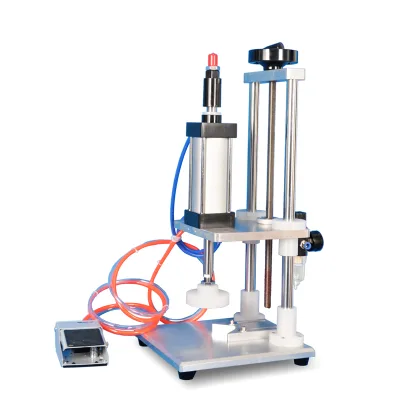
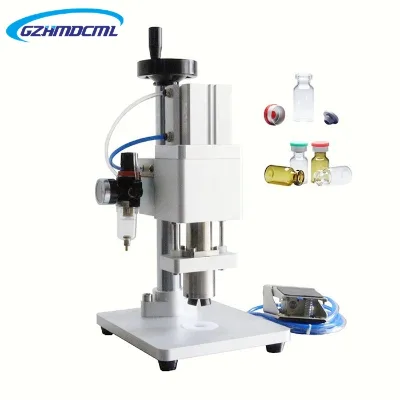


Semi-Automatic Vacuum Capping Machine
$690.00 - $3430.00
MOQ: 1 set
Qingdao Zhongkang Printing and Packaging Machinery Co., Ltd.


Semi-Automatic Metal Capping Machine
$690.00 - $1140.00
MOQ: 1 set
Qingdao Zhongkang Printing and Packaging Machinery Co., Ltd.


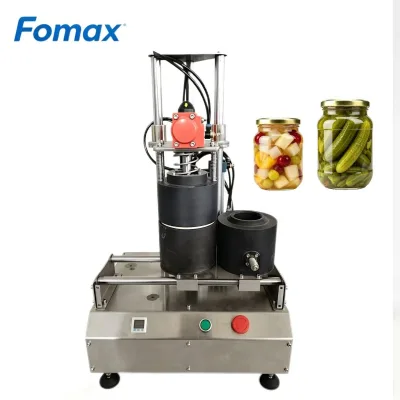
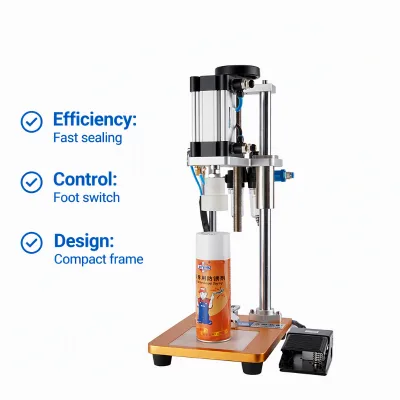
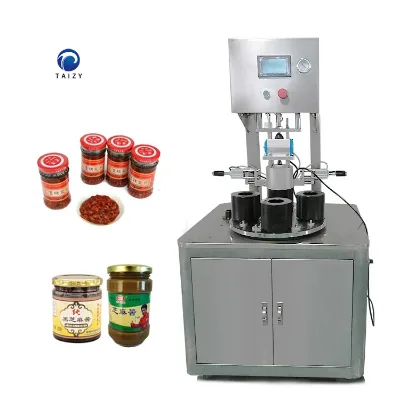
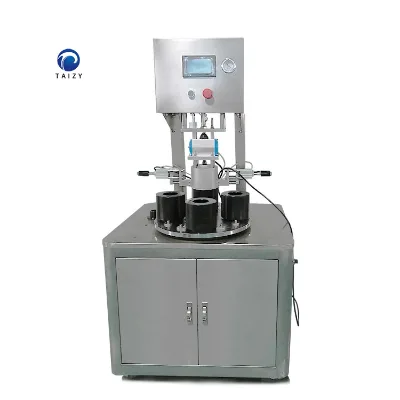
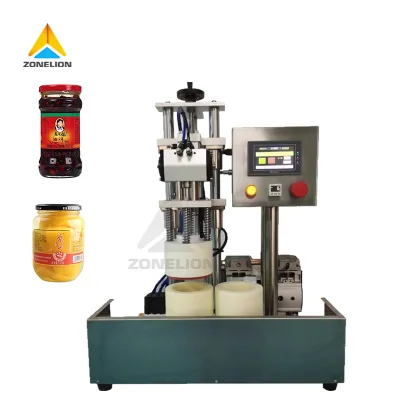
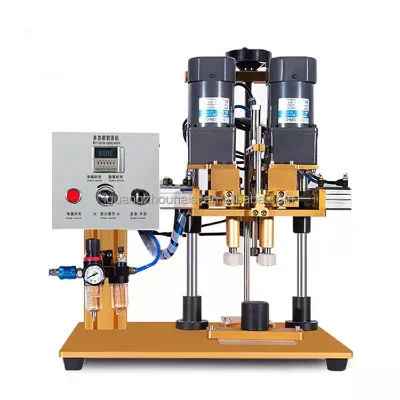
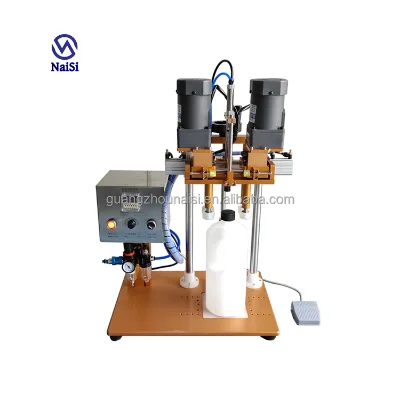
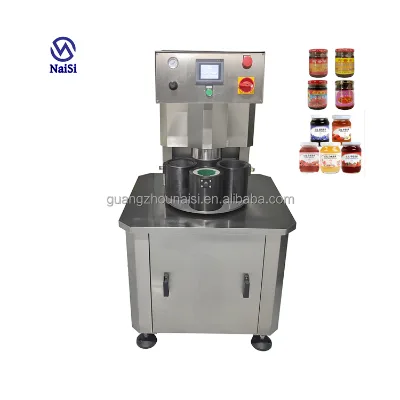
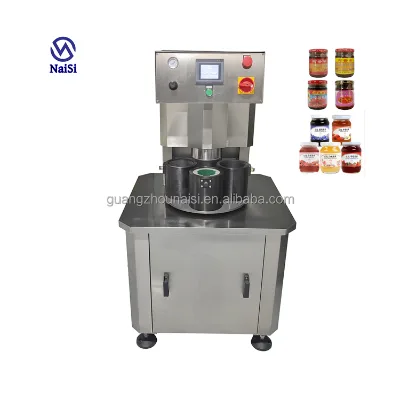

$3500.00 - $30000.00
MOQ: 1 Sets

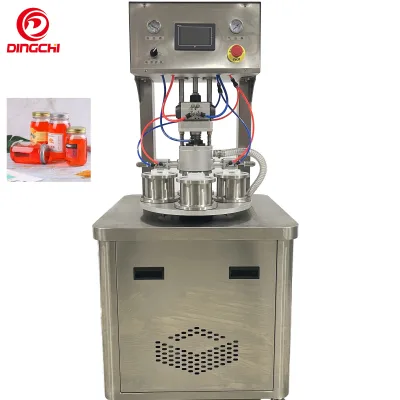
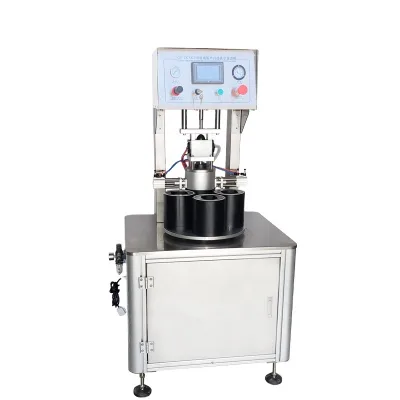
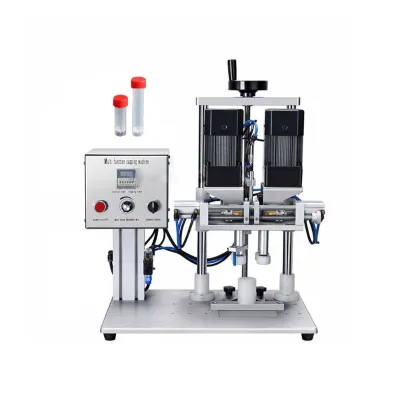
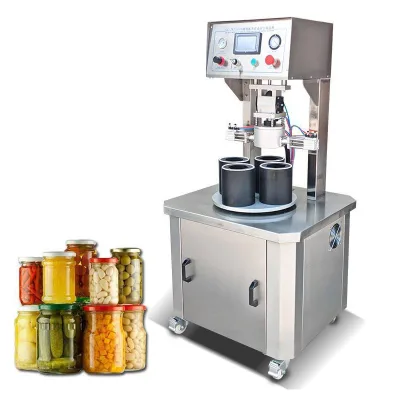
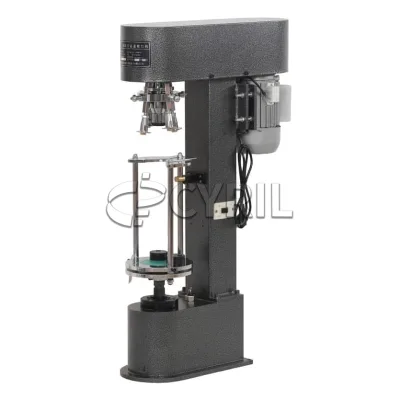

Comprehensive Sourcing Guide
Semi-Automatic Pneumatic Vacuum Capper Sourcing Guide
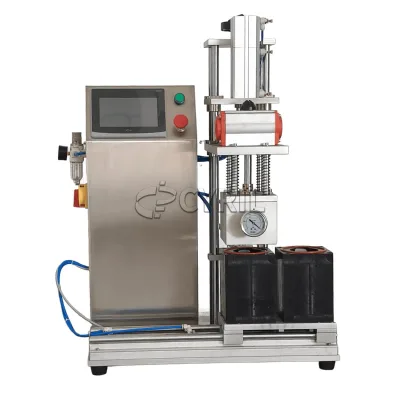
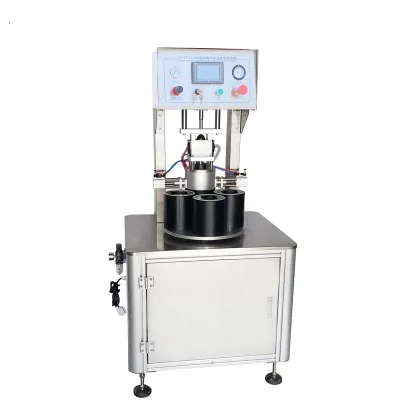
A semi-automatic pneumatic vacuum capper sits between fully manual handheld tools and high-speed rotary capping lines, making it a common entry point for food, beverage, and chemical producers who need reliable bottle sealing without the cost of full automation. In this sourcing guide, the machine in question is a pneumatic-driven, semi-automatic unit listed under keywords such as "pneumatic capping machine," with applications spanning food, beverage, and chemical products, and packaging types including bottles made of plastic and glass.
Because listings for this machine category vary widely in configuration, buyers should treat each product page as a set of observations rather than a guaranteed specification sheet. The listings observed here include machine-plus-crimping-head bundles and crimping heads sold separately in 13mm, 15mm, and 20mm sizes, a "LANDTO" branded model, and a "GZHMD" model from Guangdong, China. Confirming which configuration a quoted price actually covers is the first procurement decision, since head-only purchases cannot cap bottles without a compatible base machine.
Product Scope and Observed Listing Signals
The observed listings describe machines intended for capping and crimping bottles in food, beverage, and chemical settings, with some listings extending applications to cosmetics, oils, dairy products, tea, and household chemicals. The core keyword product is positioned as semi-automatic and pneumatic, with one listing specifying fully pneumatic operation and an air source requirement of 0.4MPa. Buyers should match these signals to their own line: bottle diameter, cap type, and whether vacuum assistance is genuinely required for the product being sealed.
Listing signals also reveal how sellers package their offers. Model numbers reference bundled configurations such as "machine + crimping head for 13mm" or "crimping head only 20mm," indicating that crimping size is custom-made rather than fixed. Key selling points listed include "Long Service Life" and "Easy to Operate," and one machine is described as detachable in design. These are seller assertions, not verified performance claims, so buyers should request demonstration videos or samples before treating them as differentiators between competing quotes.
Technical Specifications to Verify
Several concrete specifications appear in the observed listings and should anchor your technical comparison. One listing states a cylinder size of 6350100mm, a dimension of 302560cm, a middle plate size of 200200mm, and a capping height tolerance of up to 400mm, with a speed of 25-40 bottles per minute. Another lists dimensions of 280350*600mm. Voltage options are stated as 110V or 220V, and one listing requires an air pump delivering more than 30L. Verify each figure against your bottle dimensions and facility power supply.
Beyond the printed numbers, buyers should confirm the operational envelope in practice. The stated speed of 25-40/min presumably assumes an operator feeding bottles continuously; ask how throughput changes with your specific cap and bottle geometry. The 400mm height limit matters for tall bottles, and the middle plate size constrains bottle base stability during capping. For pneumatic units, confirm that your compressor can sustain the listed 0.4MPa air source at the required flow, since an undersupplied air line is the most common cause of underperformance complaints.
Compliance and Safety Documentation
Documentation is a strong signal of supplier seriousness. The observed listings state that a machinery test report is provided, and one offers after-warranty service via video technical support, with engineers available to service machinery overseas. When comparing suppliers, request the actual test report for the specific machine and configuration you are buying, not a generic certificate, and ask what test conditions it documents—air pressure, cap size, and cycle count—so you can judge relevance to your production environment.
Pneumatic machinery also raises safety questions that listings rarely address. Since these machines operate on compressed air and handle glass bottles under pressure or crimping force, ask the supplier for operating and maintenance manuals, air-quality recommendations, and guard or interlock descriptions. For food and beverage use, the stainless steel material claim should be documented—ask which components are stainless and what grade is used—rather than assumed from the material listing. Buyers exporting or importing should independently confirm which certifications their market requires, since none are asserted in the observed listings.
Cost Drivers and Commercial Terms
The observed price range for this machine category runs from 144 to 30,000 USD, an enormous spread that reflects differences in configuration, crimping head inclusion, branding, and seller type. A 144 USD listing is unlikely to be a complete machine-plus-head bundle, while high-end quotes may include custom crimping tooling. All observed listings show a minimum order quantity of 1, which suits buyers testing a single unit, but unit pricing typically improves with volume, so request tiered quotes if scaling is planned.
Commercial terms deserve equal attention to price. One listing specifies wooden case packaging and another box packaging, with single gross weights of 15.0 kg and 19.6 kg and single package sizes of 29X31X70 cm and 58X30X30 cm—details that affect freight cost and should be confirmed before comparing landed prices. Selling units are single items. Customization is listed as available, which may affect both price and lead time. Negotiate warranty scope (1 year is listed), what voids it, and whether spare crimping heads are included, since these consumable-adjacent components drive long-term cost.
Supplier Qualification and Quality Control
Qualifying a supplier for this category should start with the attributes the listings themselves disclose. Both brands observed, LANDTO and GZHMD, state core components: one lists PLC and motor, the other gear. These claims tell you where to focus incoming inspection—ask for component brand names and photographs of the actual PLC, motor, or gearing installed, since listed core components are frequently substituted in production. Place of origin is stated as Guangdong, China, which concentrates the supply base and makes an on-site or third-party factory audit practical.
Quality control should extend beyond the factory to your receiving process. Before shipment, request a video of the machine capping bottles at your specified cap size and air pressure, ideally with your sample bottles and caps if you can supply them. On arrival, inspect the crimping head dimensions against your order, test the full 110V/220V voltage configuration you purchased, and verify the machine achieves its listed 25-40/min speed under your air supply. Document any discrepancies immediately while the 1-year warranty and video technical support commitments are fresh and enforceable.
Long-Term Procurement Checks
Long-term ownership of a semi-automatic pneumatic capper depends on consumables and service continuity. Crimping heads in 13mm, 15mm, and 20mm sizes are sold separately in the observed listings, which means wear parts are orderable—but you should confirm replacement head availability, price, and compatibility with your machine model for years ahead, not just at purchase. The detachable design listed on one unit may simplify cleaning and head changes; verify how disassembly works and whether replacement parts beyond crimping heads, such as seals and pneumatic fittings, are stocked.
Finally, plan for the service relationship after the 1-year warranty expires. The observed after-sales provisions—video technical support and engineers available to service machinery overseas—set expectations, but ask how quickly a supplier responds to support requests and whether remote diagnosis is provided in your language and time zone. Keep a documented record of air pressure settings, cycle counts, and maintenance performed, as this history supports warranty claims and helps you evaluate whether a second unit, or a move to higher automation, is justified as your beverage, food, or chemical packaging volume grows.
FAQs
What is the typical speed of a semi-automatic pneumatic vacuum capper?
The typical capping speed ranges from 25 to 40 caps per minute. This performance level supports efficient production lines for various packaging needs. The machine operates with a pneumatic drive system to ensure consistent and reliable capping results across different bottle types and materials.
Can this machine handle different bottle sizes and materials?
Yes, the machine is designed to handle plastic, glass, and metal packaging materials. It features a detachable design and customizable crimping heads for various sizes. This flexibility allows users to adapt the equipment quickly to different product requirements without extensive downtime or complex adjustments.
What air pressure is required to operate the pneumatic capping machine?
The machine requires an air source pressure of 0.4 Mpa to function correctly. This specific pneumatic requirement ensures stable operation of the capping mechanism. Users must ensure their facility provides adequate compressed air supply to maintain optimal performance and prevent operational interruptions during continuous use.
What warranty and after-sales support are provided for the machine?
The machine comes with a one-year warranty and comprehensive after-sales support. Engineers are available to service machinery overseas, ensuring global reliability. Additionally, video technical support is provided to assist with troubleshooting and maintenance, helping users resolve issues quickly and minimize production downtime effectively.
What are the physical dimensions and weight of the capping machine?
The machine dimensions are approximately 280 by 350 by 600 millimeters. The single gross weight is around 19.6 kilograms, making it manageable for factory floors. These compact specifications allow for easy integration into existing production lines while providing sufficient stability for precise capping operations.