Adjustable Frequency Signal Generator Suppliers and Manufacturers
Compare 26 verified suppliers offering Adjustable Frequency Signal Generator modules from Guangdong, China. Review response times, lead times, certifications, and pricing to source reliable options. Contact suppliers directly to confirm specifications and MOQ; review the available evidence before requesting comparable quotations from suitable candidates.
Updated
Suppliers List
Shenzhen Handiier Technology Co.,Ltd
- Manufacturer, Trading Company
- Guangdong, China
- Lead time10 days
- Avg. response≤ 12h
Main productsshaver,shaving accessories,hair trimmer,Vacuum Cleaner Parts,Air Purifier Parts
Main marketsNorth America(50.00%), Eastern Europe(10.00%), South America(10.00%), Northern Europe(5.00%), Central America(4.00%), Western Europe(3.00%), South Asia(3.00%), Southern Europe(3.00%), Oceania(3.00%), Eastern Asia(2.00%), Mid East(2.00%), Southeast Asia(2.00%), Domestic Market(2.00%), Africa(1.00%)
Shenzhen CXS Electronic Co., Ltd
- Manufacturer, Trading Company, Distributor/Wholesaler
- Guangdong, China
- Lead time0 days
- Avg. response≤ 6h
Main productsIC,Capacitor,Resistor,module,LED
Main marketsSouth America(20.00%), North America(20.00%), Northern Europe(10.00%), Western Europe(10.00%), Mid East(10.00%), Southern Europe(10.00%), Southeast Asia(10.00%), Domestic Market(5.00%), Africa(5.00%)
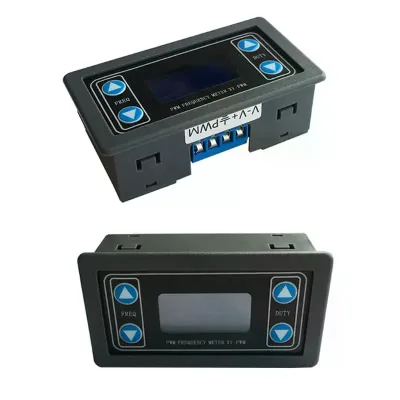
1Hz-150KHz PWM Pulse Frequency Duty Cycle Adjustable Module Signal Generator
$1.6369 - $1.9562
MOQ: 10 Minimum
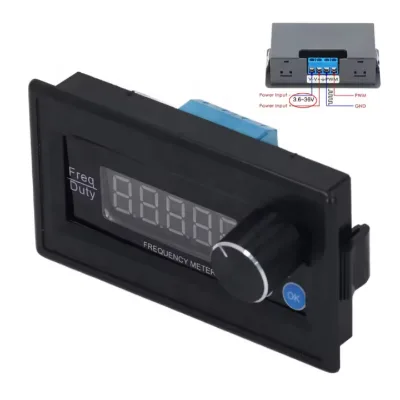
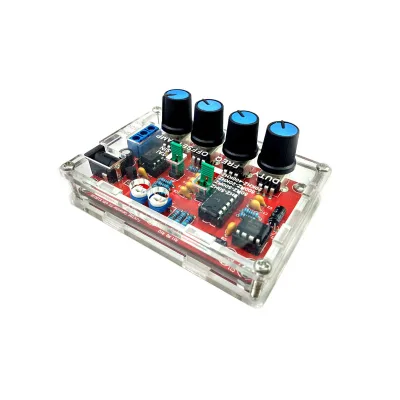
Frequency Generator 1Hz~150KHz Adjustable PWM Square Pulse Digital Display Adjustable for Control
$1.1842 - $1.8318
MOQ: 10 Minimum
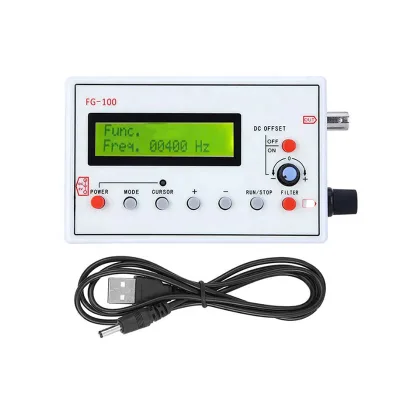
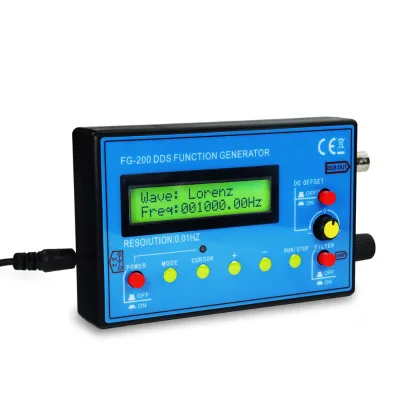
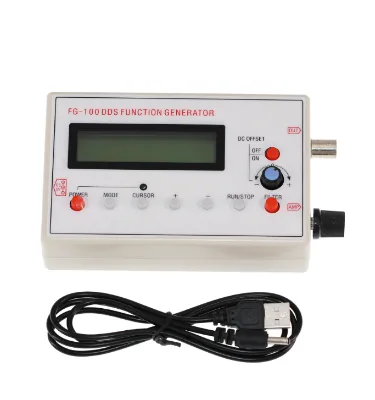
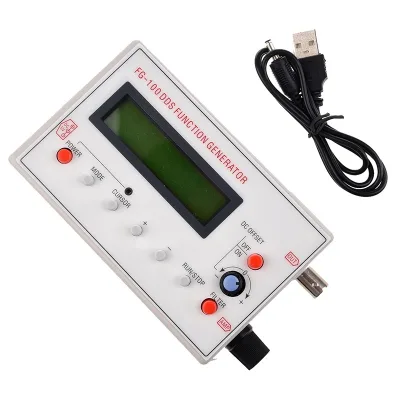
FG-100 Function Signals Generator Frequency Counter 1Hz - 500KHz Signals Source Module
$9.8559 - $10.6864
MOQ: 5 Minimum
Shenzhen Bodunbaili Electronic Co., Ltd.
- Verified by Intertek
- Trading Company
- Lead time15 days
- Avg. response≤ 3h
Main productsDC Power Supply, Microscope, Multimeter
Main marketsEastern Europe(15%), North America(10%), Southeast Asia(10%)
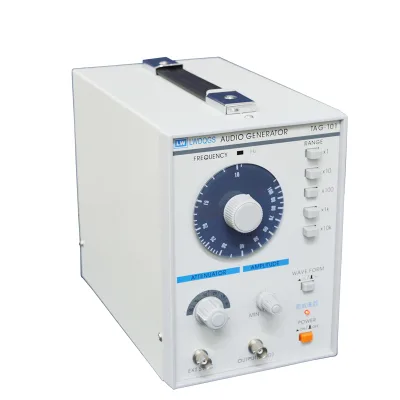
1MHz Low Frequency Signal Generator
$37.69 - $41.29
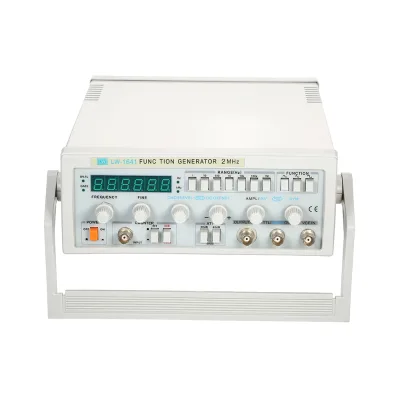
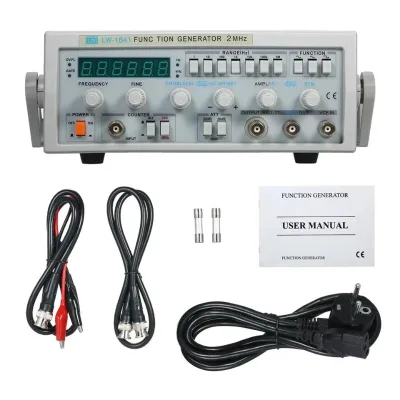
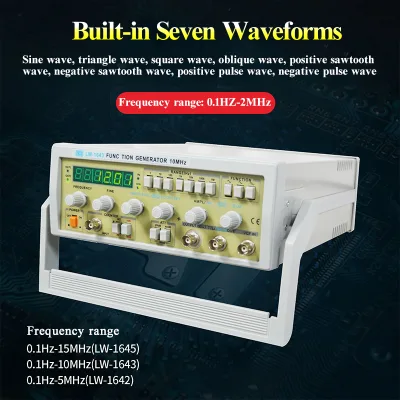
LW-1641 0.1Hz-2MHz Handheld Function Signal Generator Portable Adjustable Signal Generator
$99.69 - $105.69
MOQ: 1 units

Hangzhou Zhongchuang Electron Co., Ltd.
- Trading Company
- Zhejiang, China
- Lead time15 days
- Avg. response≤ 3h
Main productsLCR digital bridge,digital multimeter of high precision,process calibrator,dry blcok temperature calibrator,two-channel funtion generator
Main marketsEastern Asia(20.00%), North America(10.00%), South America(10.00%), Eastern Europe(5.00%)
- Manufacturer, Trading Company, Distributor/Wholesaler
- Guangdong, China
- Lead time3 days
- Avg. response≤ 2h
Main productsIntegrated circuit,Module,PCB,LCD,3D Printer Accessories
Main marketsSouth America(20.00%), Eastern Europe(20.00%), Western Europe(15.00%), North America(10.00%), Southeast Asia(10.00%), South Asia(5.00%), Southern Europe(5.00%), Northern Europe(5.00%), Africa(5.00%), Eastern Asia(5.00%)

Shijiazhuang Chancsmac Machine Technology Co., Ltd.
- Verified by TUVRHEINLAND
- Trading Company,Manufacturer/Factory
- China Hebei
- Lead time30 days
- Avg. response≤ 3h
Main productsPress Machine, Hot Press, High Frequency Press, Hydraulic Press, CNC Machine, Glue Spreader, Planer, Sawing Machine, Sanding Machine, High Frequency Hot Press
Main marketsSouth America,Eastern Europe,Mid East,North America,Southeast Asia,Africa
Shenzhen Gangfasheng Technology Co., Ltd.
- Manufacturer, Trading Company, Distributor/Wholesaler
- Guangdong, China
- Lead time2 days
- Avg. response≤ 5h
Main productsIC,Capacitor,Resistor,LED,module
Main marketsNorth America(15.00%), South America(15.00%), Eastern Europe(15.00%), Southeast Asia(5.00%), Africa(5.00%), Oceania(5.00%), Mid East(5.00%), Eastern Asia(5.00%), Western Europe(5.00%), Central America(5.00%), Northern Europe(5.00%), Southern Europe(5.00%), South Asia(5.00%), Domestic Market(5.00%)
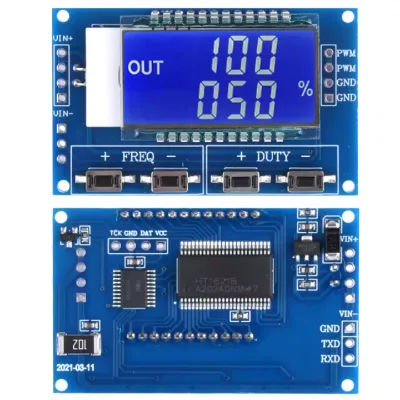
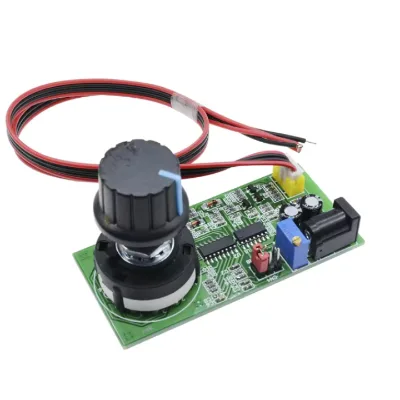
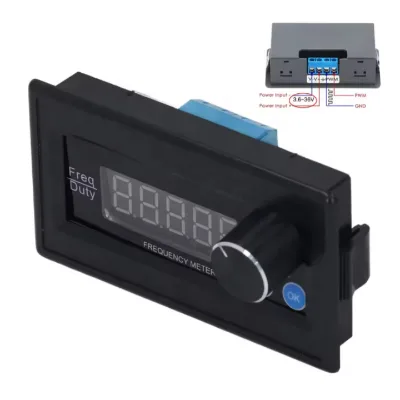
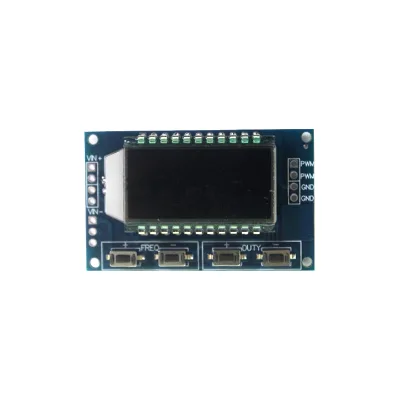
Frequency Generator 1Hz~150KHz Adjustable PWM Square Pulse Digital Display Adjustable for Control
$0.8319 - $1.8723
MOQ: 5 Minimum
Shenzhen Boruijintong Technology Co., Ltd.
- Trading Company
- Guangdong, China
- Lead time3 days
- Avg. response≤ 4h
Main productsIntegrated Circuit ICs, Transistors /IGBT, Modules, Develop Boards And Kits, PCBA
Main marketsSoutheast Asia(22.00%), North America(17.00%), South America(11.00%), Western Europe(11.00%), Eastern Asia(7.00%), Northern Europe(6.00%), Mid East(6.00%), South Asia(5.00%), Central America(5.00%), Eastern Europe(5.00%), Southern Europe(4.00%), Africa(1.00%)

Wuxi Baiyida Electromechanical Technology Co., Ltd.
- Verified by BV
- Manufacturer/Factory
- China Jiangsu
- Lead time0 days
- Avg. response≤ 3h
Main productsInfrared Thermometer, Acceleration Sensor, Data Collector, Modal Exciter, Intelligent Controller, Vibration Calibrator

Shenzhen Alisi Electronic Technology Co., Ltd.
- Trading Company, Distributor/Wholesaler
- Guangdong, China
- Lead time3 days
- Avg. response≤ 2h
Main productselectron component,temperature controller,Auto parts,sensor,Wireless Controller
Main marketsSouth America(20.00%), Eastern Europe(20.00%), North America(15.00%), Western Europe(5.00%), Domestic Market(5.00%), South Asia(5.00%), Southern Europe(5.00%), Northern Europe(5.00%), Central America(5.00%), Eastern Asia(3.00%), Mid East(3.00%), Oceania(3.00%), Africa(3.00%), Southeast Asia(3.00%)
Shenzhen Binyueda Electronics Co., Ltd.
- Trading Company, Agent, Distributor/Wholesaler
- Guangdong, China
- Lead time3 days
- Avg. response≤ 10h
Main productsElectronics Components,Computer Accessories,Integrated Circuit,Electrical Equipment
Main marketsNorth America(30.00%), Western Europe(20.00%), Northern Europe(10.00%), Southeast Asia(10.00%), Mid East(10.00%), South America(5.00%), Eastern Europe(5.00%), South Asia(2.00%), Africa(2.00%)
Shenzhen Brightwin Technology Co., Ltd.
- Trading Company, Distributor/Wholesaler
- Guangdong, China
- Lead time7 days
- Avg. response≤ 1h
Main productsProcess Calibrator,Signal Generator,Signal Isolator,Temperature Transmitter,Load Cell Amplifier
Main marketsSouth Asia(15.00%), North America(15.00%), Southern Europe(10.00%), Northern Europe(10.00%), Southeast Asia(10.00%), Western Europe(10.00%), Oceania(5.00%), Eastern Asia(5.00%), Eastern Europe(5.00%), Mid East(5.00%), Central America(3.00%), South America(3.00%), Domestic Market(2.00%), Africa(2.00%)
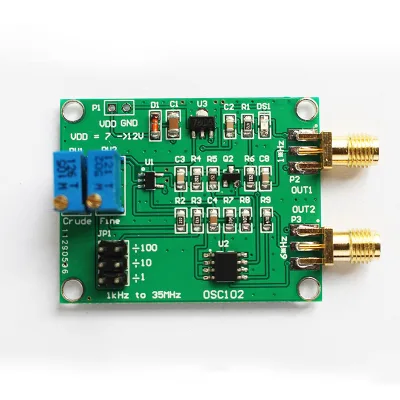
$31.0893 - $34.447
MOQ: 1 pieces
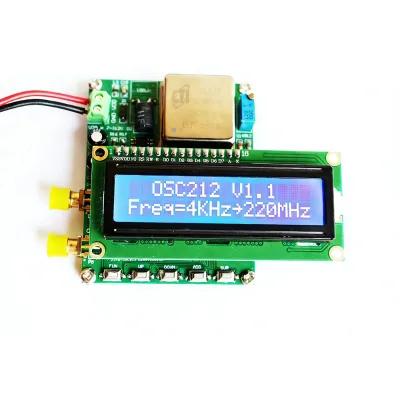
$26.982 - $32.8356
MOQ: 1 pieces
$21.9693 - $26.7287
MOQ: 1 pieces

Shijiazhuang Suin Instruments Co., Ltd.
- Manufacturer
- China Hebei
- Lead time15 days
- Avg. response≤ 6h
Main productsFunction Generator, Spectrum Analyzer, Frequency Counter, Power Quality Analyzer, Programmable DC Power Supply, Millivolt Meter, Digital Multimeter, RF Signal Generator, Pulse/Pattern Generator, Stopwatch Calibrator
Main marketsSouth America,Southeast Asia/ Mideast,Europe


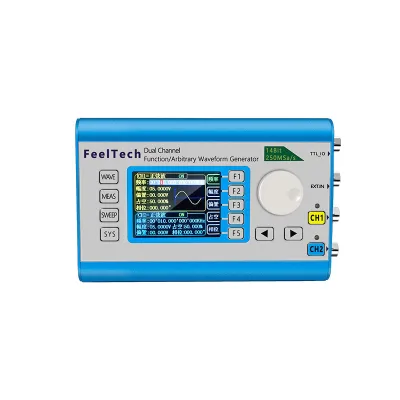
Two Channels High Accuracy Tfg3600 Series Adjustable Functional Signal Generator
$875.00 - $1584.00
MOQ: 1 SET


High Resolution Su3630 3GHz Synthesized Signal Generator with Pulse Modulation Function
$1600.00 - $1728.00
MOQ: 1 SET


Chengdu Fenxel Instrument Co, Ltd.
- Trading Company
- China Sichuan
- Lead time0 days
- Avg. response≤ 3h
Main productsPetroleum Oil Testing Instruments, Microwave Signal Generators, Diodes & Mosfets, Crystal Oscillators, Petroleum Pipeline Valves Spare Parts Position, Aluminum Nitride and Its Products
Shenzhen Jiaxinjie Technology Co., Ltd.
- Trading Company, Agent, Distributor/Wholesaler
- Guang Dong, China
- Lead time3 days
- Avg. response≤ 5h
Main productsElectronic products,Electronic module,IC Chip,Capacitance & Resistance,Medical equipment
Main marketsDomestic Market(10.00%), South Asia(10.00%), Southern Europe(10.00%), Eastern Europe(10.00%), South America(10.00%), North America(10.00%), Oceania(5.00%), Africa(5.00%), Southeast Asia(5.00%), Northern Europe(5.00%), Central America(5.00%), Western Europe(5.00%), Eastern Asia(5.00%), Mid East(5.00%)
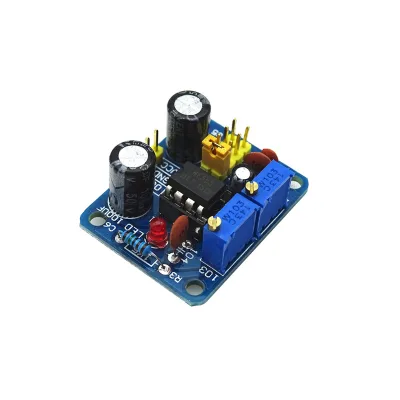
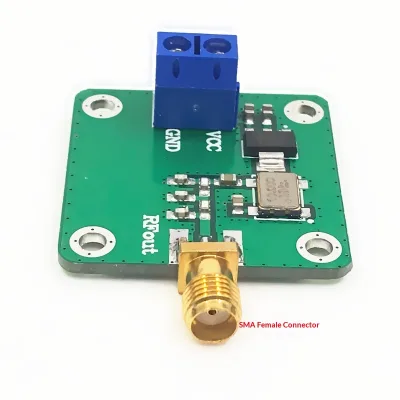
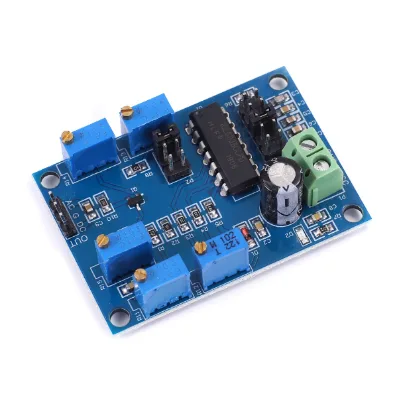
NE555 Pulse Module Adjustable Frequency Duty Cycle Square Wave and Rectangular Wave Signal Generator
$0.8245 - $1.0298
MOQ: 5 Minimum
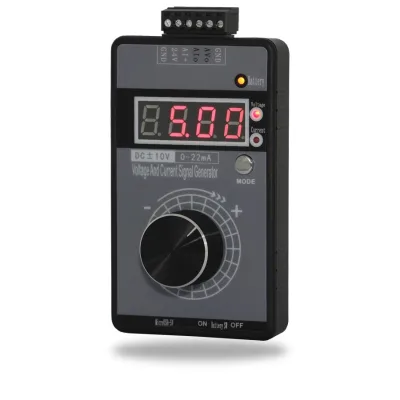
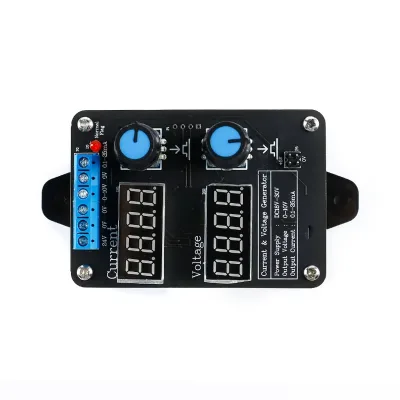
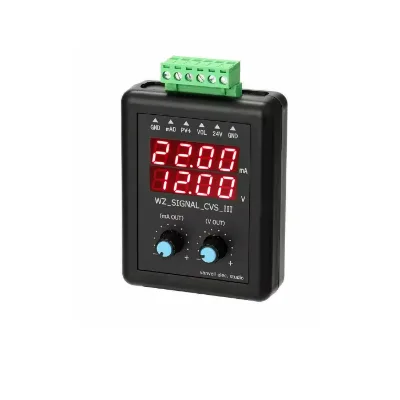
Hand Positive and Negative Voltage 0-10V5V+ Current 0-4-20mA Signal Generator Analog Source
$8.231 - $10.2891
MOQ: 5 Minimum
Shenzhen Crownhaosheng Technology Co., Ltd.
- Manufacturer, Trading Company
- Guangdong, China
- Lead time35 days
- Avg. response≤ 3h
Main productselectronic components,electronic device
Main marketsNorth America(40.00%), Western Europe(35.00%), Eastern Asia(9.00%), South America(8.00%), Eastern Europe(8.00%)

Xi'an Yunyi Instrument Co., Ltd.
- Verified by TUVRHEINLAND
- Combined
- China Shaanxi
- Lead time15 days
- Avg. response≤ 8h
Main productsPressure Transmitter, Pressure Gauge, Temperature Products, Level Meter, Flow Meter, Pressure Calibrator, Piston Dead Weight Teste, Density Meter, Analysis Instrument, Load Cell
Main marketsSouth America,Africa,Southeast Asia/ Mideast,Europe

Industrial Signal Generator for Accurate Pulse Frequency Calibration Applications
$32.00 - $40.00
MOQ: 1 pieces

Low Frequency Portable 4 to 20 Ma Signal Generator 4-20 Ma Signal Generator
$129.00 - $159.00
MOQ: 1 Pieces


Shenzhen Dongheng Electronic Technology Co., Ltd.
- Trading Company, Distributor/Wholesaler
- Guangdong, China
- Lead time0 days
- Avg. response≤ 2h
Main productsElectronic Components,Cables,Integrated Circuit,Development Boards,3D Printer Parts
Main marketsNorth America(40.00%), Southeast Asia(30.00%), South Asia(10.00%), Central America(10.00%), Mid East(10.00%)
Shenzhen Guste Technology Co., Ltd.
- Verified by TüVRheinland
- Trading Company
- Lead time0 days
- Avg. response≤ 2h
Main productsSoldering Tools, Glue Dispenser, Static Removal Equipment, Electric Tools, Electric Heating Equipment
Main marketsSoutheast Asia(30%), North America(15%), Africa(10%)
Shenzhen Huanqiu Xinrui Electronic Technology Co., Ltd.
- Manufacturer, Trading Company, Distributor/Wholesaler
- Guangdong, China
- Lead time30 days
- Avg. response≤ 2h
Main productsPCB,PCBA,Development Board,Raspberry pi board,Power amplifier board
Main marketsNorth America(20.00%), Domestic Market(10.00%), South Asia(10.00%), Northern Europe(10.00%), Central America(10.00%), Mid East(10.00%), Southeast Asia(10.00%), Eastern Europe(10.00%), South America(10.00%)

Hunan Hualai Technology Co., Ltd.
- Trading Company
- Hunan, China
- Lead time0 days
- Avg. response≤ 8h
Main productswireless module,antenna,IC componets,resistor,battery
Main marketsNorthern Europe(10.00%), Western Europe(10.00%), Eastern Asia(10.00%), Southern Europe(10.00%), Oceania(10.00%), Africa(10.00%), Eastern Europe(10.00%), South America(10.00%), North America(10.00%), South Asia(5.00%), Mid East(5.00%)
Shenzhen Chuangheying Electronic Technology Co., Ltd.
- Trading Company
- Guangdong, China
- Lead time0 days
- Avg. response≤ 7h
Main productsIntegrated Circuit; Discrete Semiconductor; Optoelectronic Components; Modules; Connectors
Main marketsSouth America(15.00%), Northern Europe(12.00%), Southeast Asia(10.00%), Eastern Asia(10.00%), Mid East(8.00%), North America(8.00%), Africa(8.00%), Domestic Market(6.00%), Southern Europe(6.00%), Eastern Europe(5.00%), Central America(5.00%), Western Europe(3.00%), Oceania(2.00%), South Asia(2.00%)
$11.3339 - $15.6601
MOQ: 5 Minimum
Shenzhen Chengxiang Technology Co., Ltd.
- Verified by Intertek
- Trading Company
- Lead time0 days
- Avg. response≤ 7h
Main productsSoldering Stations, Spot Welders, Screen Removal Separator, SMT Machine, Heat-transfer Machine
Main marketsSouthern Europe(20%), Eastern Europe(18%), North America(15%)
Shenzhen Jinxi Boyuan Technology Co., LTD
- Verified by TüVRheinland
- Trading Company
- Lead time15 days
- Avg. response≤ 2h
Main productsOscilloscope, Signal Generator, Spectrum Analyzer, Electronic Device Automation Testing System, Current And Voltage Testing System Equipment
Main marketsSoutheast Asia(40%), Eastern Europe(30%), Western Europe(20%)
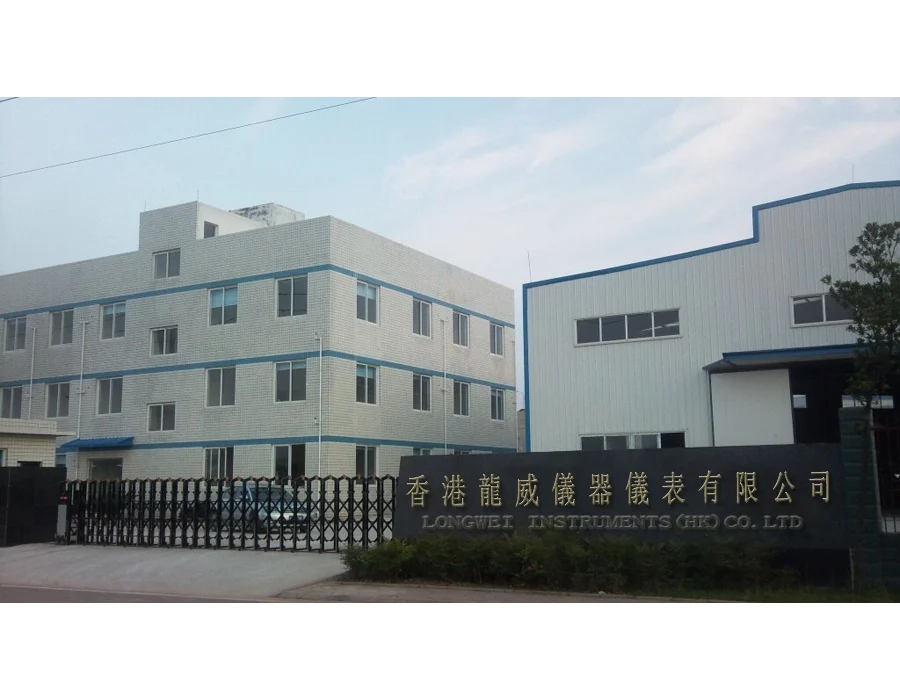
Dongguan Longwei Electronic Technology Co., Ltd.
- Manufacturer, Trading Company
- Gd, China
- Lead time10 days
- Avg. response≤ 6h
Main productsDc power supply,oscilloscope,switching power supply,function generator,digital power supply
Main marketsDomestic Market(30.00%), North America(10.00%), Northern Europe(10.00%), Western Europe(10.00%), Eastern Europe(10.00%), South America(10.00%), Southeast Asia(5.00%), Central America(3.00%), South Asia(3.00%), Eastern Asia(3.00%), Mid East(2.00%), Africa(2.00%), Southern Europe(2.00%)
Desaifu Precision Measuring Instrument (shenzhen) Co., Ltd.
- Verified by SGS Group
- Manufacturer, Trading Company
- Lead time30 days
- Avg. response≤ 7h
Main productsThermal Imager, Hardness Tester, Viscometer, Electric Surfboard, Diving Equipment
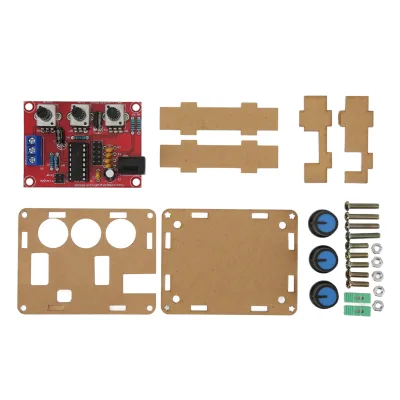
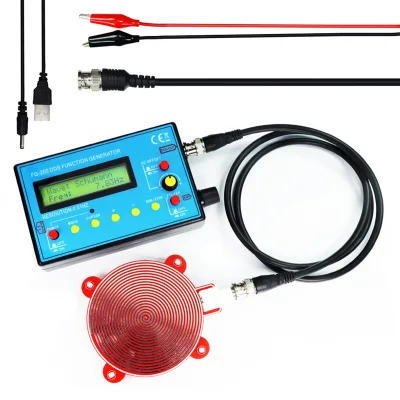
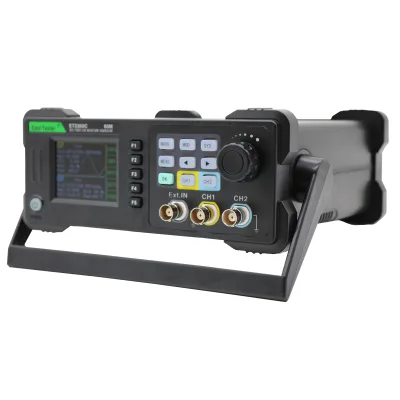






Comprehensive Sourcing Guide
Adjustable Frequency Signal Generator Supplier Concentration and Factory Types
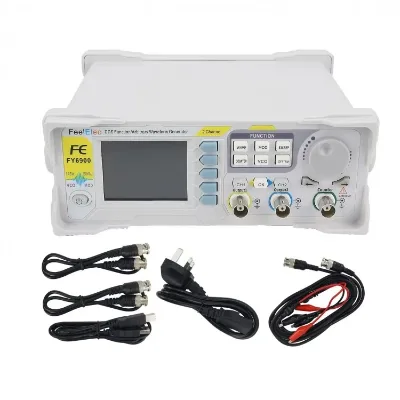
The current supplier landscape for adjustable frequency signal generators reveals a distinct concentration of manufacturing and trading entities within Guangdong, China. This regional clustering is significant because it indicates a mature supply chain ecosystem specialized in electronic modules and testing instruments. Buyers evaluating these suppliers will find that the majority of results originate from this specific province, suggesting that logistics and component sourcing are optimized for this area. When assessing potential partners, it is crucial to recognize that this geographic concentration does not guarantee uniform quality or pricing across all vendors. Instead, it provides a baseline for understanding where the infrastructure for these specific electronic components is most developed. The presence of multiple suppliers in this region allows for comparative analysis of production capabilities, but buyers must verify individual factory credentials rather than assuming regional standards apply universally.
Supplier types in this category vary between pure manufacturers, trading companies, and distributors. Some entities operate as manufacturers with direct control over the assembly of signal generator modules, while others function as trading companies that aggregate products from various factories. This distinction impacts lead times, customization options, and price structures. For instance, manufacturers may offer more flexibility for light customization or graphic processing, whereas trading companies might provide faster response times due to streamlined sales processes. Buyers should carefully review the company type listed for each supplier to align their procurement strategy with their specific needs. If a buyer requires strict quality control and direct communication with production lines, a manufacturer is preferable. Conversely, if speed and variety are priorities, a trading company or distributor might be more suitable. Understanding this structural difference is the first step in effective supplier selection.
How to Verify Adjustable Frequency Signal Generator Suppliers
Verification is a critical step in mitigating risk when sourcing adjustable frequency signal generators from international suppliers. Buyers should prioritize suppliers who have undergone third-party verification processes, such as Intertek, which provides an additional layer of confidence regarding the supplier’s legitimacy and operational standards. While not all suppliers display this verification badge, those who do offer a clearer path to trust. Beyond verification badges, buyers must scrutinize the supplier’s response time and communication efficiency. A response time of three to twelve hours is observed in the current results, indicating varying levels of customer service readiness. Faster response times often correlate with better project management and quicker issue resolution, which is vital for technical products like signal generators. Buyers should test communication channels early in the process to gauge the supplier’s professionalism and technical knowledge.
Certifications and product specifications also serve as key verification metrics. Some suppliers display system certifications such as CE and FCC, which are essential for ensuring that the electronic components meet international safety and electromagnetic compatibility standards. Buyers must confirm that these certifications are valid and applicable to the specific models they intend to purchase. Additionally, examining the product attributes, such as place of origin, model numbers, and package details, helps verify the authenticity of the listings. For example, products listing Guangdong, China as the place of origin align with the broader supplier concentration, but buyers should still request detailed datasheets to confirm technical specifications. It is also advisable to check for escrow payment options, which provide financial protection until the goods are received and verified. By combining verification badges, certification checks, and communication testing, buyers can build a robust assessment framework for potential suppliers.
What to Compare Across Adjustable Frequency Signal Generator Suppliers
When comparing suppliers, buyers should focus on key operational metrics such as lead time, minimum order quantity (MOQ), and pricing structures. Lead times vary significantly, with some suppliers offering rapid turnaround times of one to three days, while others may require up to fifteen days for production and shipping. This variance can impact inventory planning and project timelines, making it essential to align supplier capabilities with business needs. Similarly, MOQs range from single units to ten pieces or more, depending on the supplier and product type. Buyers seeking small batches for prototyping should look for suppliers with low MOQs, while those planning large-scale production may negotiate better terms with suppliers offering higher volume discounts. Understanding these operational differences allows buyers to select suppliers that match their specific order volumes and delivery expectations.
Pricing and payment terms are another critical area for comparison. The observed price ranges for signal generator modules vary, with some products listed between $1.18 and $1.83, while others are priced higher at around $9.85 to $10.68. These differences may reflect variations in component quality, feature sets, or brand positioning. Buyers should not rely solely on the lowest price but should evaluate the value proposition, including warranty support and technical assistance. Payment methods also differ, with some suppliers accepting TT, PayPal, Escrow, or Western Union, while others may have more restrictive terms. Additionally, response times can indicate the supplier’s efficiency in handling inquiries and providing quotes. A supplier with a six-hour response time may offer more agile support than one with a twelve-hour response time. By systematically comparing these factors, buyers can identify suppliers that offer the best balance of cost, speed, and reliability for their Adjustable Frequency Signal Generator needs.
Common Adjustable Frequency Signal Generator Sourcing Risks
One of the primary risks in sourcing adjustable frequency signal generators is the potential mismatch between product specifications and actual performance. Many listings provide generic descriptions or standard attributes, which may not fully capture the technical nuances of the device. For instance, frequency ranges, waveform types, and resolution capabilities can vary significantly between models, even within the same product category. Buyers must carefully review the product keywords and attributes to ensure they match their technical requirements. Relying solely on the product title or main image can lead to receiving components that do not meet the necessary performance standards. To mitigate this risk, buyers should request detailed technical datasheets and, if possible, samples before committing to larger orders. This due diligence helps prevent costly errors and ensures that the purchased signal generators are suitable for their intended applications.
Another significant risk is the variability in supplier reliability and after-sales support. While some suppliers offer comprehensive payment protections and clear shipping methods, others may have limited support structures. The absence of detailed contact information or unclear shipping policies can complicate logistics and dispute resolution. Additionally, the risk of receiving counterfeit or substandard components is present, particularly when dealing with suppliers that do not provide verifiable certifications or quality guarantees. Buyers should be cautious of suppliers that do not clearly state their quality control processes or return policies. It is also important to consider the risk of communication barriers, especially when dealing with suppliers in different time zones or language environments. Misunderstandings regarding technical specifications or delivery terms can lead to delays or incorrect shipments. By identifying these risks early and implementing strict verification protocols, buyers can protect their interests and ensure a smoother sourcing experience.
Adjustable Frequency Signal Generator Regional Sourcing and Logistics
Sourcing adjustable frequency signal generators from Guangdong, China, offers logistical advantages due to the region’s established export infrastructure. The concentration of suppliers in this area facilitates efficient shipping through major ports and airports, reducing transit times and costs. Buyers should leverage this geographic advantage by selecting suppliers who have experience with international shipping and can provide reliable tracking information. The observed shipping methods, including DHL, FedEx, UPS, and EMS, indicate that most suppliers are equipped to handle global deliveries. However, buyers must still verify the specific shipping options and costs associated with their orders, as these can vary based on weight, dimensions, and destination. Understanding the logistics landscape helps buyers plan for potential delays and ensure that their inventory arrives on time.
In addition to shipping methods, buyers should consider the impact of regional trade policies and customs regulations on their imports. While Guangdong is a major export hub, international buyers must navigate varying import duties and documentation requirements in their home countries. Suppliers who are experienced in international trade can often assist with providing the necessary export documents, such as commercial invoices and packing lists. Buyers should confirm that their suppliers can provide accurate documentation to facilitate smooth customs clearance. Furthermore, the choice of shipping method can affect the overall cost and speed of delivery. Express couriers like DHL and FedEx offer faster delivery but at a higher cost, while postal services may be more economical but slower. By carefully evaluating these logistical factors, buyers can optimize their supply chain and minimize disruptions in the procurement of adjustable frequency signal generators.
Adjustable Frequency Signal Generator Commercial Terms and Order Planning
Effective order planning for adjustable frequency signal generators requires a clear understanding of commercial terms, including payment structures and warranty policies. Buyers should prioritize suppliers that offer secure payment methods, such as Escrow, which provides financial protection until the goods are received and verified. This is particularly important for first-time transactions or when ordering high-value items. Additionally, buyers should clarify the warranty terms and return policies before placing an order. Some suppliers may offer limited warranties or no returns for electronic components, which can increase the risk of loss if the product is defective. Understanding these terms helps buyers assess the overall risk and cost of the procurement process. It is also advisable to negotiate payment terms that align with the supplier’s lead times and production schedules, ensuring that cash flow is managed effectively.
Beyond payment and warranty, buyers should consider the scalability of their orders and the supplier’s capacity to handle volume increases. Some suppliers offer light customization or sample processing, which can be beneficial for testing new designs or adjusting specifications. Buyers should inquire about the supplier’s ability to scale production if their requirements grow. Additionally, the lead time for production and shipping should be factored into the order planning process. Suppliers with shorter lead times, such as one to three days, offer greater flexibility for urgent orders, while those with longer lead times may require advance planning. By aligning their order volumes with the supplier’s capabilities and commercial terms, buyers can ensure a smooth and efficient procurement process. This strategic approach helps minimize risks and maximizes the value derived from sourcing adjustable frequency signal generators.
FAQs
What is the price range for adjustable frequency signal generators?
Prices for these modules typically range from approximately $1.18 to $10.69 per unit. The final cost depends on specific features, such as digital displays or frequency counters. Buyers should contact suppliers directly for exact quotes, as some listings indicate unit prices are available upon request rather than fixed online.
What is the minimum order quantity for these signal generators?
Minimum order quantities vary significantly by supplier and product model. Some manufacturers accept orders as low as one piece, while others require a minimum of five or ten units. Buyers should check individual product listings to confirm the specific MOQ, as requirements differ between standard modules and specialized frequency counters.
Where are adjustable frequency signal generators manufactured?
Most available signal generator modules are manufactured in Guangdong, China. This region is a major hub for electronic components and testing equipment. Buyers sourcing these items should expect origins to be listed as Guangdong or Mainland China, ensuring alignment with supply chain preferences for electronics manufacturing.
How quickly do suppliers respond to inquiries?
Supplier response times generally range from three to twelve hours. Faster responses are often associated with verified trading companies or manufacturers with dedicated support teams. Buyers seeking urgent quotes should prioritize suppliers with shorter response windows to ensure timely communication regarding technical specifications and order processing.
What payment methods are accepted for these modules?
Common payment options include Telegraphic Transfer, PayPal, Western Union, and Escrow services. Some suppliers also accept Alipay or credit cards. Buyers should verify specific payment terms with the supplier before placing an order, as methods vary between manufacturers and trading companies to accommodate different transaction sizes.
What certifications do these signal generators have?
Certification availability varies by supplier, with some holding CE and FCC certifications. Verification services like Intertek may also be available for certain manufacturers. Buyers requiring specific compliance standards should request certification documents directly from the supplier to ensure the products meet regional regulatory requirements for electronic testing equipment.