Food Grade PET Jar with Screw Cap Suppliers and Manufacturers
Source Food Grade PET Jar with Screw Cap options from 28 verified suppliers in China. Compare dimensions like MOQ, lead time, and ISO9001:2015 certification to find the right partner. Request samples or quotes today; review the available evidence before requesting comparable quotations from suitable candidates.
Updated
Suppliers List

YUYAO SHUOHONG COMMODITY CO., LTD.
- Verified by BV
- Combined
- China Zhejiang
- Lead time23 days
- Avg. response≤ 5h
Main productsMist Sprayer, Lotion Pump, Trigger Sprayer, Perfume Atomizer, Plastic Cap, Plastic Bottle, Cream Jar, Plastic Tube, Foam Pump, out Spring Lotion Pump
Main marketsSouth America,Africa,Southeast Asia/ Mideast,East Asia(Japan/ South Korea),Europe,Australia,North America
Hebei Mita Biotechnology Co., Ltd.
- Manufacturer, Trading Company
- Hebei, China
- Lead time0 days
- Avg. response≤ 3h
Main productsDropper Bottle,Perfume Bottle,Spray Bottle,Cream Jar,Aluminum Can
Main marketsNorth America(56.00%), Southeast Asia(10.00%), Oceania(10.00%), Eastern Europe(8.00%), Southern Europe(6.00%), South Asia(3.00%), Western Europe(3.00%), Northern Europe(3.00%), Domestic Market(1.00%)
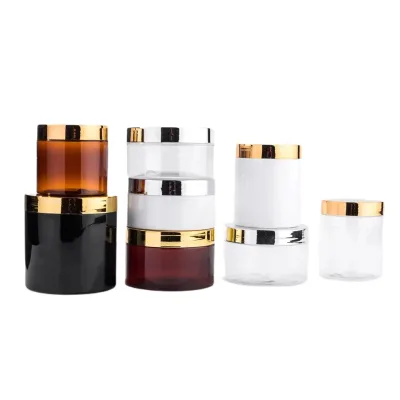
Custom Pet Jar with Label Pet Jar with Aluminium Cap,Plastic Box for Pet Jars
$0.20 - $0.28
MOQ: 500 pieces
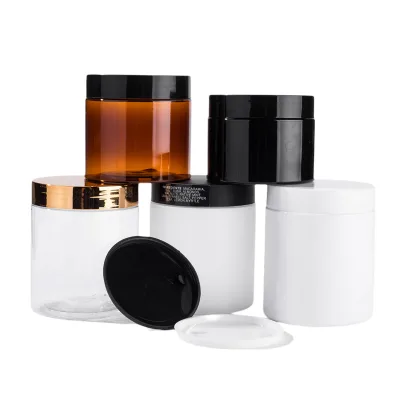
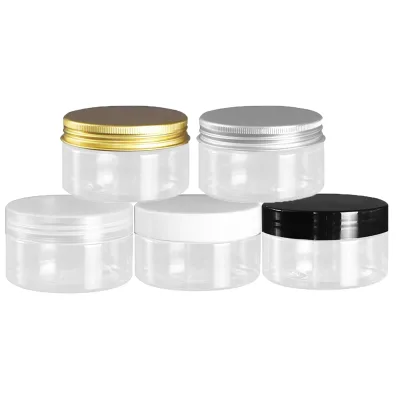
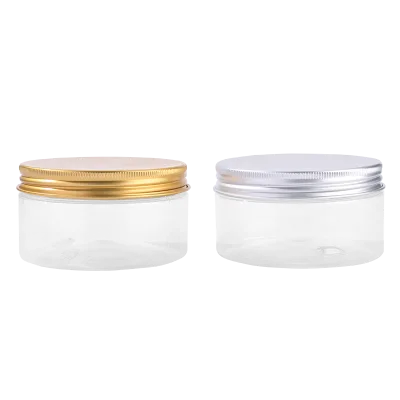
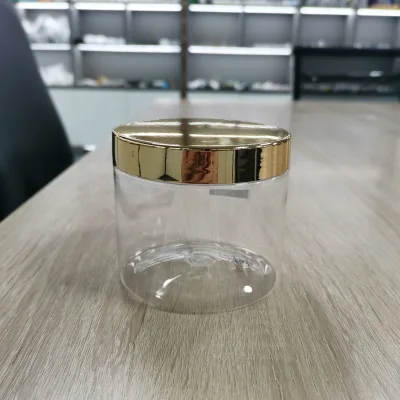
8oz Plastic Jar With Lid 250ml Pet Container 2oz 4oz 6oz Glod Silver Aluminum Lid
$0.2082 - $0.2921
MOQ: 500 pieces

Ningbo Beixuan International Trading Co., Ltd.
- Verified by TUVRHEINLAND
- Manufacturer/Factory
- China Zhejiang
- Lead time15 days
- Avg. response≤ 10h
Main productsPlastic Bottle, Plastic Cup, Plastic Honey Jar, Plastic Food Container, Glass Juice/ Beverage Bottle, Glass Jar, Glass Wine Bottle, Glass Essential Oil Bottles, Cosmetic & Perfume Glass Bottles, Paper Cup
Main marketsSouth America,Eastern Europe,Mid East,North America,Southeast Asia,Eastern Asia,Oceania,Western Europe,Africa


Factory Supply Top-Grade Plastic Pet Round Shape Clear Food Storage Jar with Aluminium Screw Cap
$0.10 - $0.30
MOQ: 5000 Pieces

Food Grade 500ml 100*80mm Pet Plastic Jar with Lid Nut Jar Packaging Jar
$0.15 - $0.35
MOQ: 5000 Pieces


Cixi Yangen Plastic Industry Co., Ltd.
- Verified by TüVRheinland
- Manufacturer, Trading Company
- Lead time10 days
- Avg. response≤ 6h
Main productsPlastic Bottle, Plastic Jar, Spice Bottle, Beverage Bottle, Honey Bottle
Main marketsOceania(23%), Mid East(21%), North America(15%)
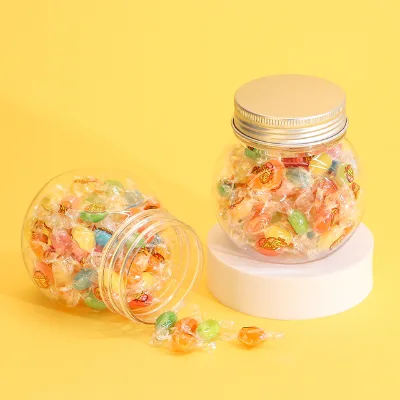
Transparent Pet Jars Food Grade Screw Plastic Jar With Aluminum Lid for Packing Food 270ml
$0.1543 - $0.2577
MOQ: 10000 pieces
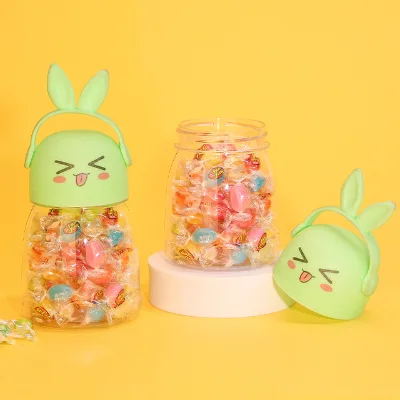
Cream Jar PET Plastic Jar Food Storage Bottles Plastic Clear Food Container Cute Snack Jar 200ml
$0.1233 - $0.1858
MOQ: 10000 pieces

Ningbo Somewang Packaging Co., Ltd.
- Verified by SGS
- Combined
- China Zhejiang
- Lead time23 days
- Avg. response≤ 4h
Main productsCosmetic Packaging, Cosmetic Bottle, Plastic Bottle, Cosmetic Tube, Cream Jar, Lotion Pump, Mist Sprayer, Trigger Sprayer, Plastic Cap, Glass Bottle
Main marketsSoutheast Asia/ Mideast,Europe,North America

Screw Cap Plastic Pet Jars with Lids Empty Cosmetic Container for Food Storage
$0.21 - $0.25
MOQ: 10000 Pieces


$0.26 - $0.28
MOQ: 10000 Pieces


Guangdong Shunde Toyon Plastic Products Co.,Ltd
- Combined
- China Guangdong
- Lead time30 days
- Avg. response≤ 2h
Main productsPP Bottle, PE Bottle, Pet Bottle, Food Packing Bottle, Lubricant Bottle, Cosmetic Packing Bottle, Chemical Packing Bottle, Veterinary Medicine Packing Bottle, Agriculture Packing Bottle
Main marketsSoutheast Asia/ Mideast,Australia,North America


Transparent Pet Plastic Bottle Food Grade Packaging Container Custom Capacity Jar
$0.10 - $0.30
MOQ: 5000 Pieces


Guangzhou Amy Plastic Tube Co., Ltd.
- Verified by BV
- Combined
- China Guangdong
- Lead time30 days
- Avg. response≤ 19h
Main productsCosmetic Packaging Tube, Plastic Tube, Cosmetic Packaging, Cosmetic Tube, Aluminium Laminated Tube, Packaging Solution, Plastic Packaging, Flexible Soft Tube, Cosmetic Container
Main marketsSouth America,Africa,Southeast Asia/ Mideast,East Asia(Japan/ South Korea),Europe,Australia,North America

Anhui Avantis Packaging Technology Co., Ltd.
- Verified by CTI
- Trading Company
- China Anhui
- Lead time23 days
- Avg. response≤ 5h
Main productsGlass Bottle, Glass Container, Rolling Tray, Mylar Bag, Rolling Cone Tube, Plastic Joint Tubes, Glass Tube, Hinged Cap Vials, Child-Resistant Packaging, Sitz Bath
Main marketsSouth America,Africa,Southeast Asia/ Mideast,Europe,Australia,North America

- Trading Company
- Hebei, China
- Lead time10 days
- Avg. response≤ 2h
Main productsplastic bottle with accessories,glass bottle withaccessories,perfume bottle,essential oil bottle,hand sanitizer bottle
Main marketsEastern Europe(30.00%), Western Europe(20.00%), Southern Europe(20.00%), North America(10.00%), South America(10.00%), Northern Europe(10.00%)
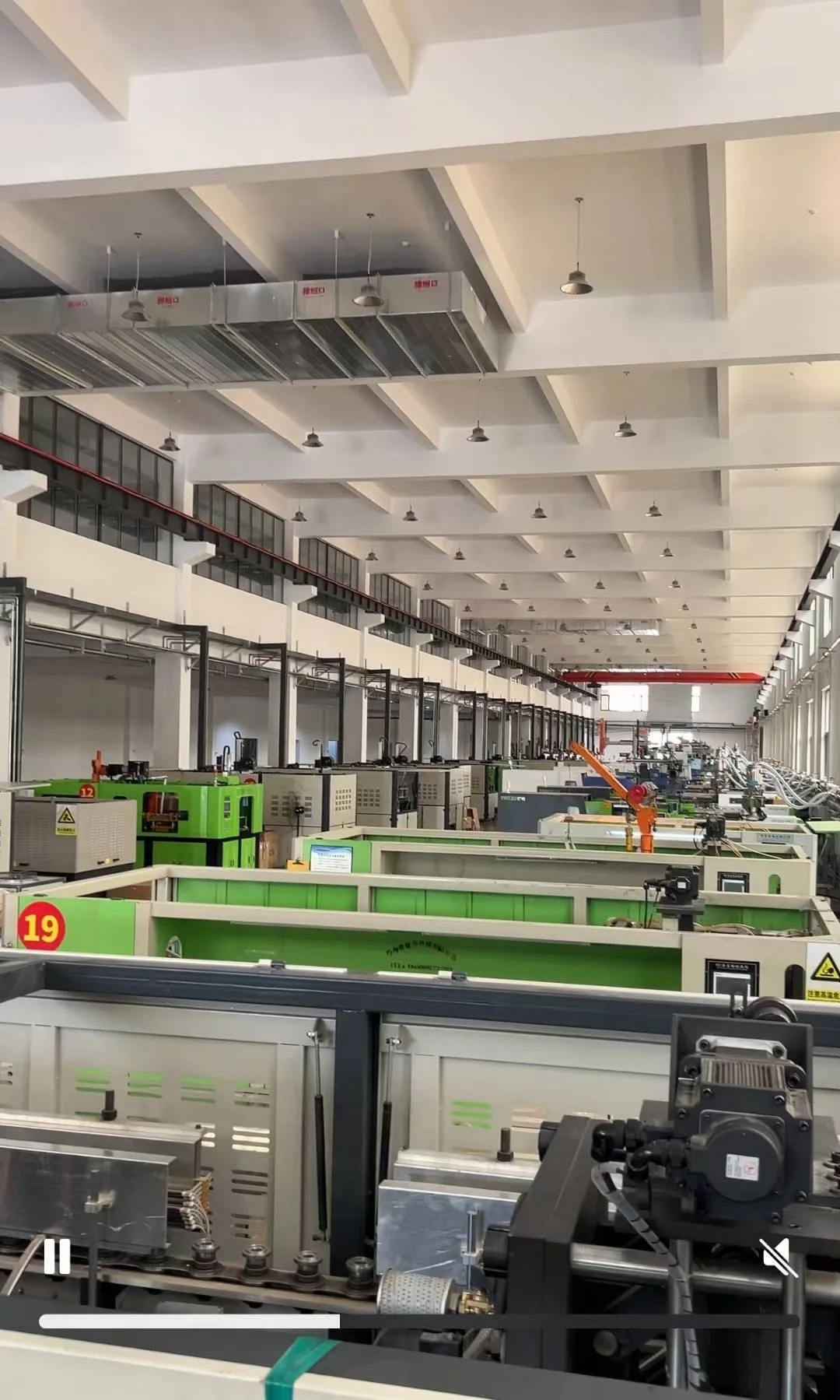
Zhoukou Jiate Packing Products Co., Ltd.
- Manufacturer, Trading Company
- Henan, China
- Lead time10 days
- Avg. response≤ 3h
Main productsPET plastic bottle,PET plastic easy open cans,PET plastic jar,PET plastic container,Sealing Machine
Main marketsDomestic Market(50.00%), Southeast Asia(15.00%), Eastern Asia(8.00%), North America(5.00%), Western Europe(5.00%), Southern Europe(5.00%), Oceania(2.00%), Africa(2.00%), South America(2.00%), Northern Europe(2.00%), Central America(1.00%), South Asia(1.00%), Eastern Europe(1.00%), Mid East(1.00%)

Qingdao Kush Packaging Co., Ltd.
- Verified by SGS
- Trading Company,Manufacturer/Factory
- China Shandong
- Lead time23 days
- Avg. response≤ 3h
Main productsPlastic Packaging Bag, Child Resistant Jar, Concentrate Jar, Glass Syringe, Tin Box, Paper Box, Dropper Bottle, Cartridge Packaging, Preroll Packaging, Rolling Paper
Main marketsSouth America,Eastern Europe,North America,Oceania,Western Europe,Africa

Wholesale Food Grade Storage Jar 100ml 120ml 200ml 250ml Clear Pet Plastic Jars with Screw Lid
$0.15 - $0.45
MOQ: 5000 Pieces

Dongguan Fukang Plastic Products Co., Ltd.
- Verified by SGS Group
- Manufacturer, Trading Company
- Lead time15 days
- Avg. response≤ 2h
Main productsPlastic Bottles
Main marketsDomestic Market(50%), North America(14%), Oceania(14%)
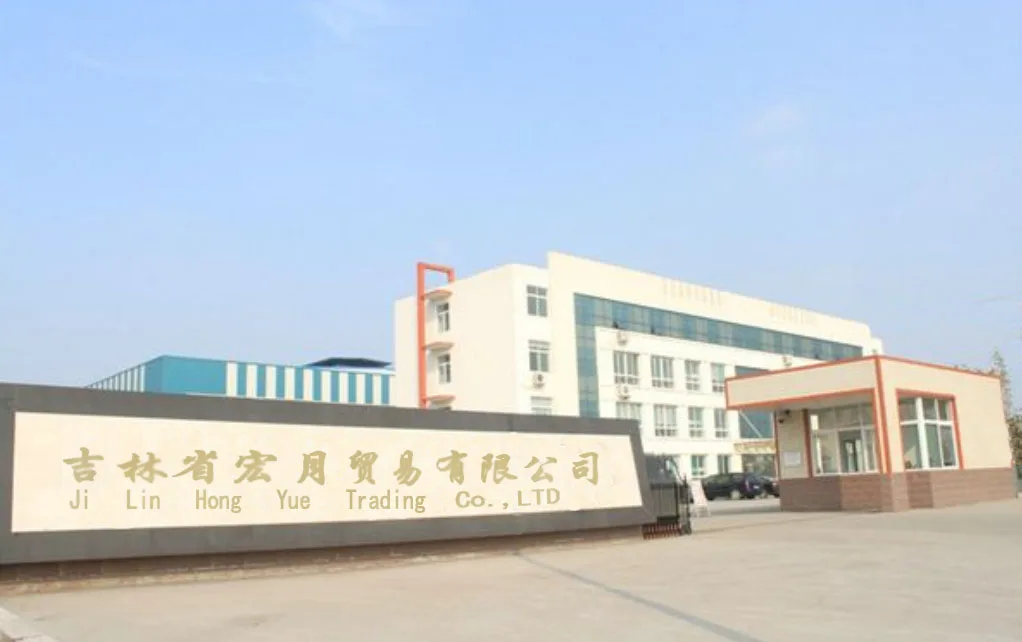
Jilin Hong Yue Trading Co., Ltd.
- Trading Company
- Jilin, China
- Lead time5 days
- Avg. response≤ 1h
Main productsPETG empty lotion bottle,Gift packaging box,pet jar food,pvc/pet box,Plastic box packaging
Main marketsSouth America(18.00%), Eastern Asia(15.00%), North America(12.00%), Western Europe(8.00%), Central America(8.00%), Eastern Europe(7.00%), Northern Europe(6.00%), Mid East(6.00%), Southeast Asia(5.00%), Oceania(4.00%), Africa(4.00%), South Asia(4.00%), Southern Europe(3.00%)
Guangzhou Huihua Packing Products Co., Ltd.
- Verified by TüVRheinland
- Manufacturer, Trading Company
- Lead time7 days
- Avg. response≤ 3h
Main productsPlastic Jars, Plastic Bottles, Paper Tubes, Paper Boxes, Paper Cups
Main marketsNorth America(25%), Domestic Market(25%), Western Europe(10%)
Shijiazhuang Hengzhu Import & Export Co., Ltd.
- Verified by TüVRheinland
- Trading Company
- Lead time5 days
- Avg. response≤ 5h
Main productsGlass Bottles, Glass Jars, Plastic Bottles, Bamboo Cosmetic Package, Cosmetic Packaging
Main marketsWestern Europe(22%), North America(20%), Oceania(20%)
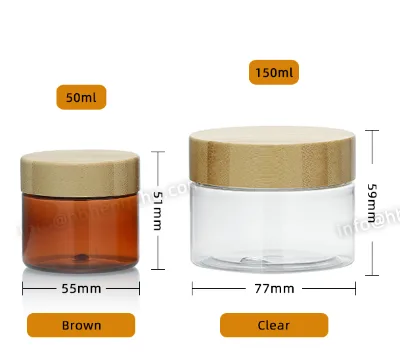
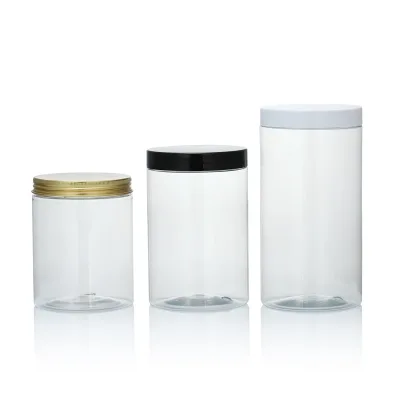
Food Grade Pet Jar Empty Plastic Storage Container With Lid 2oz 4oz 8oz for Dry Food Cookie Jar
$0.15 - $0.45
MOQ: 1000 Minimum
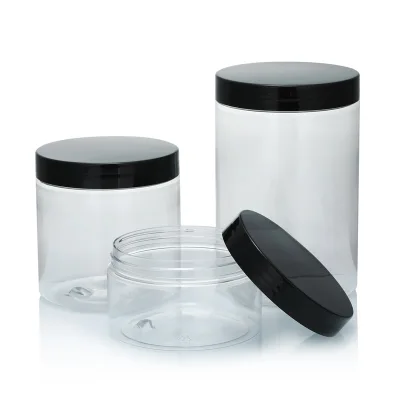

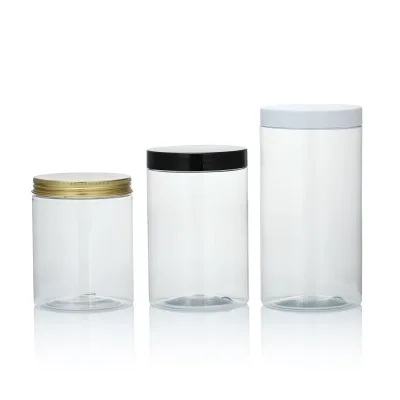
$0.1543 - $0.4629
MOQ: 1000 Minimum

Wholesale Wide Mouth 1oz 4oz 8oz 16oz 120ml 200ml 250ml 500ml Clear Pet Plastic Jar With Lid
$0.15 - $0.45
MOQ: 1000 Minimum

Jinhua Allies Import and Export Co., Ltd.
- Verified by SGS
- Manufacturer/Factory
- China Zhejiang
- Lead time23 days
- Avg. response≤ 6h
Main productsCanister, Container, Bottle, Cosmetic, Make up, Plastic Packaging, Eyeshadow, Palette, Box, Compact Case
Main marketsSouth America,Mid East


Widespread Use Food Grade Pet Bottles Plastic Bottles 8 Oz/250ml Plastic Food Jar Small
$0.10 - $0.80
MOQ: 10000 Pieces
Hebei Qingen Trading Co., Ltd.
- Manufacturer, Trading Company
- Lead time旺季: "1 - 10000":30,"10001 - 50000":35,"50001 - 100000":36,"> 100000":"To be negotiated", 淡季: "1 - 10000":30,"10001 - 50000":35,"50001 - 100000":36,"> 100000":"To be negotiated"
- Avg. response≤ 2h
Main productsAluminum bottles, Aluminum Tins, Plastic Cosmetic Jar, Plastic Bottles, Glass Bottles and Jars
Shanghai Best China Industry Co., Ltd.
- Verified by SGS Group
- Trading Company
- Lead time30 days
- Avg. response≤ 3h
Main productsGlass Bottle, Plastic Bottle, Glass Jar, Plastic Jar
Main marketsNorth America(30%), Oceania(10%), Western Europe(10%)

ningbo crown commodity co.,ltd
- Verified by SGS
- Combined
- China Zhejiang
- Lead time30 days
- Avg. response≤ 25h
Main productsPerfume Sprayer, Lotion Pump, Trigger Sprayer, Pet Bottle, Cosmetic Package, Eyeliner Package
Main marketsAfrica,Southeast Asia/ Mideast,Europe,North America

Xiamen Sinogrinder Houseware Co., Ltd.
- Verified by TUVRHEINLAND
- Trading Company
- China Fujian
- Lead time23 days
- Avg. response≤ 2h
Main productsPepper Grinder, Coffee Grinder, Salt Grinder, Spice Grinder, Salt and Pepper Grinder Set, Spice Bottle, Electric Pepper and Salt Grinder Set, Spice Jar, Salt and Pepper Grinder, Seasoning Bottle
Main marketsSouth America,Others(foreignTradeCapacity.exportBusinessCapacityMarketOther),Southeast Asia/ Mideast

Heshan Yecheng Plastic Products Co., Ltd.
- Verified by TUVRHEINLAND
- Combined
- China Guangdong
- Lead time15 days
- Avg. response≤ 18h
Main productsPet Preform, Pet Jar Storage Container, Pet Bottle Preform
Main marketsSoutheast Asia/ Mideast,North America

Pet Seal Jar 120ml to 250ml Food Jar Candy Jar Honey Jar with Good Quality
$0.54 - $0.85
MOQ: 10000 Pieces

Pet Seal Jar 120ml with Good Quality S150d Food Jar Cosmetic Jar China
$0.54 - $0.60
MOQ: 10000 Pieces
Guangzhou Huaxin Plastic Product Co., Ltd.
- Manufacturer, Trading Company
- Lead time旺季: "1 - 10000":20,"10001 - 100000":25,"> 100000":"To be negotiated", 淡季: "1 - 10000":20,"10001 - 100000":25,"> 100000":"To be negotiated"
- Avg. response≤ 3h
Main productsCosmetic Packing, Plastic Tube, PET Bottle, PET Jar, Emulsion Distributor

Hubei Mingda Plastics Products Co., Ltd.
- Verified by BV
- Manufacturer/Factory
- China Hubei
- Lead time23 days
- Avg. response≤ 12h
Main productsHDPE Bottle, Pet Bottle, Plastic Bottle/Container/Packaging, Pills Bottle, Tablets Bottle, Capsules Bottle, Powder Protein Jar, Food Bottle, Food Container, PCR Plastic Container
Main marketsSouth America,Eastern Europe,Mid East,North America,Southeast Asia,Eastern Asia,Oceania,Western Europe,Africa
Shandong Harvest Import & Export Co., Ltd.
- Trading Company
- Shandong, China
- Lead time15 days
- Avg. response≤ 4h
Main productsCosmetic Bottle,Liquor Bottle,Drinking Bottle,Food Container,Spray Bottle Trigger
Main marketsWestern Europe(15.00%), Southeast Asia(10.00%), Eastern Europe(10.00%), Mid East(10.00%), Southern Europe(8.00%), South America(8.00%), Central America(8.00%), North America(8.00%), South Asia(5.00%), Northern Europe(5.00%), Oceania(5.00%), Africa(5.00%), Eastern Asia(2.00%), Domestic Market(1.00%)
$0.5183 - $1.0351
MOQ: 1 pieces
$0.5183 - $1.0351
MOQ: 1 pieces

Anhui Ruitu Communication Equipment Co., Ltd.
- Verified by SGS
- Combined
- China Anhui
- Lead time15 days
- Avg. response≤ 6h
Main productsPlastic Bucket, Plastic Pail, Plastic Bottle, Plastic Jar, F Style Jug, IBC Tote Fittings, Plastic Jerry Can, IBC Valve, Collapsible Water Bag, Irrigation System
Main marketsOthers(foreignTradeCapacity.exportBusinessCapacityMarketOther),Europe,North America
Shenyang Jingrui Import And Export Co., Ltd.
- Trading Company
- Liaoning, China
- Lead time0 days
- Avg. response≤ 2h
Main productsplastic bottle,glass bottle,Airless Pump Bottle,lotion bottle,cream bottle
Main marketsSoutheast Asia(15.00%), Eastern Europe(15.00%), South America(15.00%), North America(15.00%), Southern Europe(5.00%), Northern Europe(5.00%), Central America(5.00%), Western Europe(5.00%), Eastern Asia(5.00%), Mid East(5.00%), Oceania(5.00%), Africa(5.00%)
Anhui Avantis Packaging Technology Co., Ltd.
- Manufacturer, Trading Company
- Lead time旺季: "1 - 10000":10,"10001 - 50000":18,"> 50000":"To be negotiated", 淡季: "1 - 10000":10,"10001 - 50000":18,"> 50000":"To be negotiated"
- Avg. response≤ 3h
Main productsPlastic Bottle,Glass Jar,Plastic Bag,Tin Box,Paper Bag
Anhui Avantis Packaging Technology Co., Ltd.
- Manufacturer, Trading Company
- Lead time旺季: "1 - 100":7,"101 - 5000":14,"5001 - 10000":20,"> 10000":"To be negotiated", 淡季: "1 - 100":7,"101 - 5000":14,"5001 - 10000":20,"> 10000":"To be negotiated"
- Avg. response≤ 4h
Main productsplastic jars,glass jars






Comprehensive Sourcing Guide
Food Grade PET Jar with Screw Cap Supplier Concentration and Factory Types
When buyers search for food grade PET jars with screw caps, the supplier pool typically includes two broad company types: manufacturers that run their own molding lines, and combined manufacturer-plus-trading entities that also source complementary packaging items. The supplier results on this page illustrate both patterns. One listing is a combined company based in Zhejiang whose main product range spans mist sprayers, lotion pumps, trigger sprayers, perfume atomizers, plastic caps, plastic bottles, cream jars, plastic tubes and foam pumps, with ODM and OEM capacity and an ISO9001:2015 system certificate. Another is a Hebei-based listing that identifies itself as both a manufacturer and a trading company, with main products covering dropper bottles, perfume bottles, spray bottles, cream jars and aluminum cans.
These profiles matter because a jar-only specialist will handle tooling and food-contact material questions differently from a diversified packaging house. A supplier whose catalog is dominated by jars and bottles will usually answer resin-grade and food-contact questions faster, while a multi-category supplier may be better if you plan to consolidate jars with closures, sprayers or bottles from one vendor. Neither profile is inherently better; the deciding factor is whether the factory, not just the storefront, controls the processes that affect food-contact compliance. Buyers should ask which producing entity will actually manufacture the jars and confirm that any trading component does not obscure factory-level responsibility.
How to Verify Food Grade PET Jar with Screw Cap Suppliers
Verification for this category should start with identity and capability documents rather than marketing copy. Some results display third-party verification badges and system certificates; one Zhejiang listing shows BV verification and an ISO9001:2015 certificate, which are useful signals but say nothing specific about food-contact compliance for the resin used in the jar body. Ask each candidate for the material declarations covering the PET resin and any colorants, and confirm the screw cap material separately, since caps are often molded from a different polymer than the jar. If a supplier lists its product origin as a province such as Hebei, confirm that the actual production address matches and ask whether the facility exports food-contact packaging under that same registration.
The second verification layer is sample-based. Several Hebei listings advertise free samples, and one Jar model (listed under model numbers such as GS-006 and PJ-007) offers free sample availability, so take advantage of sampling before committing. Inspect wall thickness — one listing quotes 0.3 mm for a round PET jar and another 0.1 mm for a food-grade jar — because thin walls may affect stiffness and drop performance. Run a simple fill-and-seal test with your actual product to check thread engagement and liner performance. Finally, verify the response behavior you can already observe: the listings show response times around three hours for the Hebei supplier and about 4.91 for the Zhejiang listing, which is a measurable early indicator of how sampling queries will be handled.
What to Compare Across Food Grade PET Jar with Screw Cap Suppliers
Build a comparison table using only attributes suppliers actually display, and leave blank cells where data is missing rather than assuming a value. The listings here show meaningful differences. On minimum order quantity, one Hebei listing quotes 100 pcs for a 500 ml food-grade PET jar with an aluminum lid and 500 pcs for a labeled PET jar, while the Zhejiang listing quotes 10,000 pcs for its 100 ml and 150 ml clear PET jars — a hundredfold spread that will determine which supplier suits a small brand versus a volume buyer. On lead time, the Zhejiang listing displays 23 days at company level and 20 days on its jar products; the Hebei listing shows no displayed lead time, so that value must be requested.
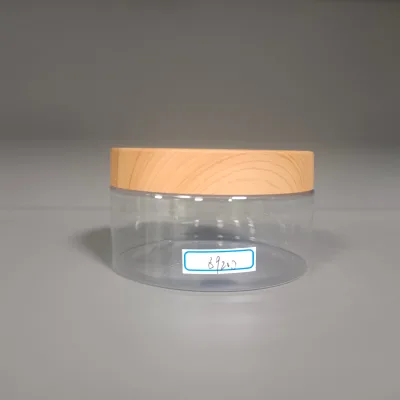
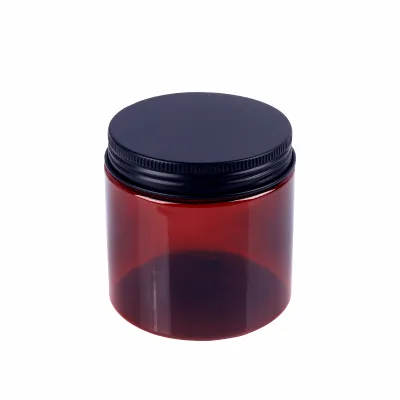
Compare product breadth and customization signals too. The Zhejiang supplier lists ODM and OEM capacity and customization available on its jars, while the Hebei listings advertise customized logo acceptance, silk-screen printing, and cap colors spanning silver, gold, black, amber, clear, white and bamboo. Price ranges displayed — from $0.08–$0.18 for the 500 ml food-grade jar down to $0.20–$0.30 for the 100–150 ml cosmetic jars — are indicative only and should be re-quoted against your volume. Also compare response time, verification status, and whether the supplier's main products (jars versus sprayers and pumps) match your category closely enough to assume real process expertise.
Common Food Grade PET Jar with Screw Cap Sourcing Risks
The most significant risk in this category is conflating cosmetic-grade with food-grade PET. Several listings on this page are positioned for cosmetic and personal-care use, including a 150 ml round clear PET mask jar and 100 ml PET jars for cosmetics cream packaging, while only some listings explicitly claim food-grade status, such as the 16 oz 500 ml PET food-grade jar. A jar molded on the same line with the same resin may be acceptable for creams but never documented for direct food contact. Require written material confirmation per SKU, including the cap, and treat "PET" as a polymer family, not a compliance statement.
Second, watch MOQ and variant creep. Listings advertise wide volume ladders — one Hebei listing spans 30 ml to 2 L and 4 oz to 1040 ml capacities — and buyers often discover that each size, color and cap finish is treated as a separate SKU with its own MOQ. A 100 pcs MOQ on one size does not extend to a custom amber jar with a gold aluminum lid. Third, sampling risk: free samples are easy to obtain but may not come from the production tooling, so confirm whether pre-production samples will match mass-production output. Finally, lead-time opacity is a risk where no lead time is displayed; confirm tooling time separately from production time for custom molds.
Food Grade PET Jar with Screw Cap Regional Sourcing and Logistics
The supplier results here concentrate on two Chinese provinces: Zhejiang and Hebei. Zhejiang is represented by a combined packaging supplier whose catalog centers on dispensing systems and containers, suggesting a coastal export-oriented cluster with access to related closure and pump components. Hebei is represented by a manufacturer-trading company producing PET jars in volumes from 50 ml to 2 L with aluminum and plastic lid options. Rather than assuming these provinces are interchangeable, note the practical differences: a coastal Zhejiang supplier may offer shorter port transit for full-container shipments, while an inland Hebei supplier may quote lower unit prices that are partially offset by domestic trucking to port. Verify freight-included pricing from each region before comparing unit costs.
Packing data in the listings also affects logistics planning. The Zhejiang jar listings specify carton packing of 57×38×40 cm at 1,000 pcs per carton, which lets you calculate container fill rates for your order size. The Hebei listings quote single-package sizes such as 15.3×7.1×7.1 cm and single gross weights of 0.4–0.5 kg, useful for air-freight sampling and small trial orders. Ask every supplier to state carton dimensions, pieces per carton and gross weight per carton for your exact jar size, then model your container utilization before placing the order. Also confirm whether the supplier handles export documentation directly or works through an agent, since this affects who is responsible for customs paperwork.
Food Grade PET Jar with Screw Cap Commercial Terms and Order Planning
Plan your first order around the displayed commercial data, then pressure-test it. On MOQ, the Hebei listings start at 100–500 pcs, making them accessible for market testing, while the Zhejiang supplier's 10,000 pcs MOQ on its 100 ml and 150 ml jars implies a committed volume buy. On pricing, displayed ranges run from $0.08–$0.18 for the 500 ml food-grade jar to $0.20–$0.30 for the 100–150 ml clear PET jars, but treat these as reference points: request formal quotations for your specified capacity, color, cap finish and print, since a custom logo or bamboo lid will move the number. On timing, the Zhejiang supplier's 20-day product-level and 23-day company-level lead times give a planning anchor; ask Hebei suppliers to quote theirs explicitly.
Structure the order in stages: a paid or free sample batch, a pilot run at the supplier's stated MOQ, then scale-up once seal integrity and food-contact documentation are confirmed. For payment, use terms that keep funds traceable until inspection passes, and verify what transaction protections the platform actually offers rather than assuming escrow coverage. One or two sentences of general guidance apply here: confirm the food-contact documentation and per-SKU MOQ before any deposit, because these two items cause most disputes in this category. Finally, agree in writing on replacement terms for leaks, thread failures and color deviations, and set inspection at loading so packing against the quoted carton specification is verifiable.
(Word count: approximately 1,382 words across six sections.)
FAQs
What is the typical lead time for food grade PET jars?
Manufacturers in China typically require 20 to 23 days for production. This timeframe applies to standard orders of plastic jars with screw caps. Buyers should confirm specific delivery schedules with suppliers before finalizing purchase agreements to ensure timely arrival.
What is the minimum order quantity for plastic PET jars?
Minimum order quantities vary significantly by supplier and product type. Some manufacturers require 10,000 pieces for standard plastic jars, while others accept orders as low as 100 pieces for specific food-grade containers. Buyers must verify the exact MOQ with each vendor.
Are free samples available for plastic jar orders?
Yes, several suppliers offer free samples for their plastic jar products. This allows buyers to verify material quality and sealing integrity before committing to bulk orders. Buyers should contact suppliers directly to request these samples and confirm any shipping cost responsibilities.
What certifications do these plastic jar suppliers hold?
Verified suppliers in Zhejiang, China, often hold ISO9001:2015 system certification. This indicates adherence to quality management standards for manufacturing plastic packaging. Buyers should request current certification documents to ensure compliance with their specific regulatory requirements for food contact materials.
What is the price range for 100ml to 500ml PET jars?
Prices for plastic jars typically range from $0.08 to $0.30 per unit. The cost depends on volume, cap material, and customization options. For example, 100ml jars may cost between $0.20 and $0.25, while larger 500ml containers can range from $0.08 to $0.18.
Can suppliers provide custom logo printing on plastic jars?
Yes, customization is available for most plastic jar orders. Suppliers offer silk screen printing and other methods for logos on caps or jars. Buyers should specify their design requirements and confirm printing details, such as color and placement, during the quotation process.