LED Bulb Lamp Converter Suppliers and Manufacturers
Source 18 verified LED Bulb Lamp Converter suppliers from China. Compare response times, lead times, MOQs, and certifications like RoHS and CE. Contact suppliers directly to request quotes and verify production capabilities; review the available evidence before requesting comparable quotations from suitable candidates.
Updated
Suppliers List

Fuzhou Colshine Electric Co., Ltd.
- Verified by SGS
- Trading Company,Manufacturer/Factory
- China Fujian
- Lead time23 days
- Avg. response≤ 14h
Main productsLED Corn Light, LED Street Light, LED Yard Light, LED Dusk to Dawn Light, Sauna Lamp, Pendant Light, Porcelain Lampholder, Metal Lampholder, Halogen Lampholder, Retro Switch & Socket
Main marketsSouth America,Eastern Europe,Mid East,North America,Southeast Asia,Eastern Asia,Oceania,Western Europe,Africa
Henan Amazing Bright Auto Accessories Co., Ltd.
- Trading Company
- Henan, China
- Lead time10 days
- Avg. response≤ 2h
Main productsauto led lights,auto decoration,auto accessories,home lights,motor accessories
Main marketsWestern Europe(10.00%), Central America(10.00%), Mid East(10.00%), Northern Europe(10.00%), South Asia(10.00%), Southeast Asia(10.00%), Eastern Europe(10.00%), South America(10.00%), North America(10.00%), Southern Europe(5.00%), Eastern Asia(2.00%), Oceania(2.00%), Africa(1.00%)
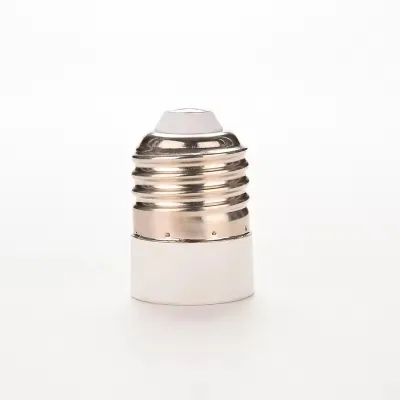
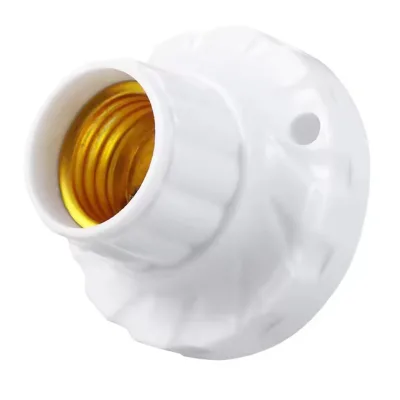
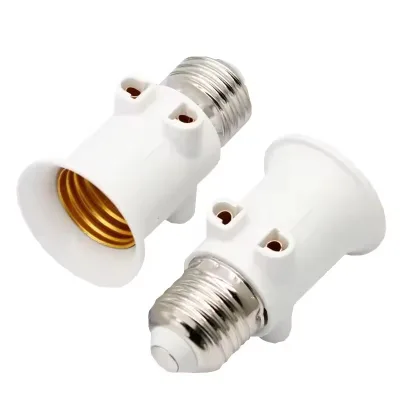
$1.00 - $1.50
MOQ: 50 pieces
Guangzhou Echainer Electronics Co., Ltd.
- Manufacturer, Trading Company, Distributor/Wholesaler
- Guangdong, China
- Lead time5 days
- Avg. response≤ 2h
Main productslamp socket holders,Bulb converter,LED strip connector,Lamp holder,wire connector
Main marketsNorth America(40.00%), Western Europe(10.00%), Eastern Asia(10.00%), Southeast Asia(10.00%), Southern Europe(10.00%), South America(10.00%), Eastern Europe(5.00%), Northern Europe(5.00%)
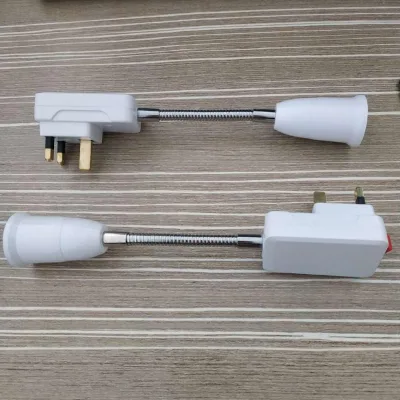
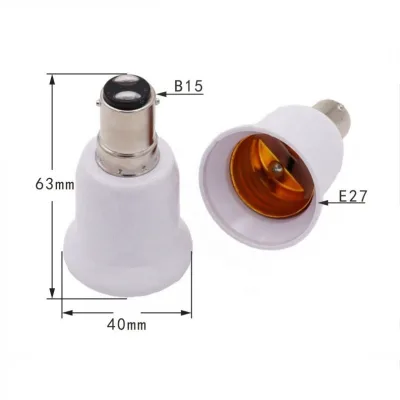
High wide voltage AC110V/220V UK plug connector to E27 base led bulb lamp converter
$0.7295 - $1.0411
MOQ: 200 pieces

Fuzhou Sansheng Industry and Trade Co., Ltd.
- Verified by CTI
- Combined
- China Fujian
- Lead time30 days
- Avg. response≤ 9h
Main productsPorcelain Lamp Holder Insulator Knife Swith, Fuse Holder Plastic Lamp Holder
Main marketsDomestic


High Quality GU10 Converter with E14 Bulb Base Holder for Reliable Lighting Fixture
$0.08 - $0.15
MOQ: 10000 Pieces
Green Lantern Optoelectronic Light Factory
- Manufacturer, Trading Company
- Guangdong, China
- Lead time7 days
- Avg. response≤ 7h
Main productscamping lanetern,head lamp,flashlight,led strip light,led night light
Main marketsWestern Europe(17.00%), Southern Europe(13.00%), Domestic Market(12.00%), Mid East(10.00%), Central America(9.00%), Northern Europe(8.00%), South America(8.00%), North America(7.00%), Eastern Asia(5.00%), Eastern Europe(5.00%), South Asia(2.00%), Africa(1.00%), Southeast Asia(1.00%)
Guangzhou EBY Optoelectronic Technology Co., Ltd.
- Trading Company
- Guangdong, China
- Lead time10 days
- Avg. response≤ 10h
Main productsElectrical Wire,LED Connector,LED Connect Wire,LED Splitter Box,Power Supply
Main marketsWestern Europe(40.00%), North America(30.00%), Domestic Market(15.00%), Oceania(5.00%), Southeast Asia(5.00%), Mid East(5.00%)
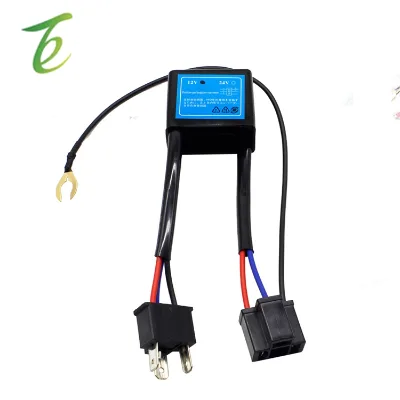
$0.20 - $0.50
MOQ: 500 Minimum
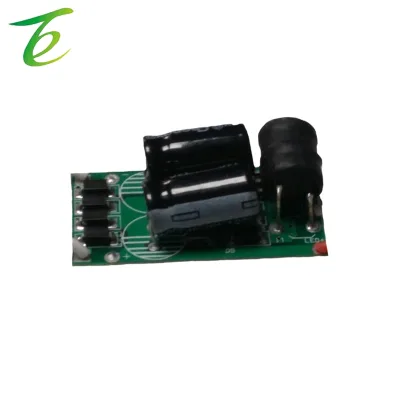
2-year warranty: 3-12W bulb lamp dimming low-voltage bulb driver 11-60v LED street lamp power supply
$1.00 - $10.00
MOQ: 99999 Minimum
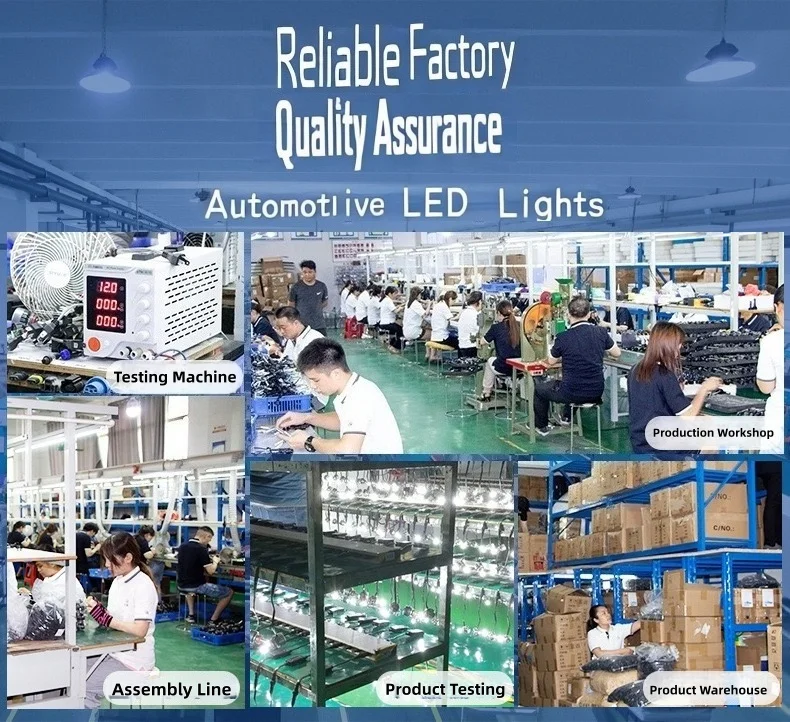
Guangzhou Maisiteng Technology Co., Ltd.
- Manufacturer, Trading Company
- Guangdong, China
- Lead time8 days
- Avg. response≤ 2h
Main productsLed car headlight,Auto LED replacement kits,LED headlight bulbs for cars,Car LED headlamps,LED HID bulbs
Main marketsNorth America(30.00%), Southeast Asia(25.00%), South America(20.00%), Eastern Europe(20.00%), Western Europe(10.00%), Domestic Market(10.00%), Northern Europe(10.00%), Central America(10.00%), Eastern Asia(5.00%), South Asia(5.00%), Southern Europe(5.00%), Oceania(5.00%), Africa(5.00%)

Ninghai Yingjiao Electrical Co., Ltd.
- Verified by BV
- Combined
- China Zhejiang
- Lead time30 days
- Avg. response≤ 23h
Main productsAdapter, Power Adapter, AC/DC Adapter, Power Supply, Battery Charger, AC Adapter, CCTV Power Supply, Linear Power Adapter, LED Driver, Switching Power Adaptor
Main marketsEurope,North America
Zhongshan Lailux Led Lighting Co., Ltd.
- Verified by SGS Group
- Manufacturer, Trading Company
- Lead time7 days
- Avg. response≤ 4h
Main productsMirror Touch Sensor/Wardrobe Sensor/Motion Sensor, Microwave Sensor Bulb/Motion Sensor Light
Main marketsSoutheast Asia(25%), Mid East(20%), Eastern Asia(15%)

Hangzhou Udwells Technology Co., Ltd.
- Verified by TUVRHEINLAND
- Combined
- China Zhejiang
- Lead time15 days
- Avg. response≤ 6h
Main productsHigh Frequency Transformer, Low Frequency Transformer, LED Driver, LED Power Supply, Flyback Transformer, Transformer Bobbin, Inductor
Main marketsEurope
- Verified by SGS Group
- Manufacturer, Trading Company
- Lead time40 days
- Avg. response≤ 3h
Main productsLED Driver, Touch Sensor, IR Sensor, LED Light, LED Light Controller
Main marketsDomestic Market(40%), Western Europe(35%), North America(15%)
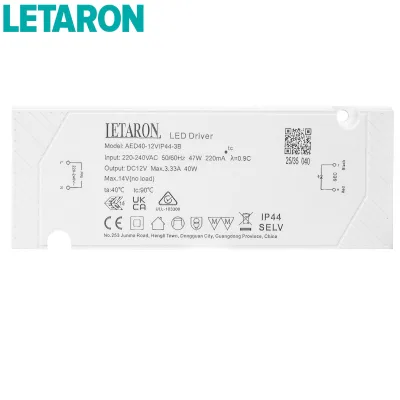
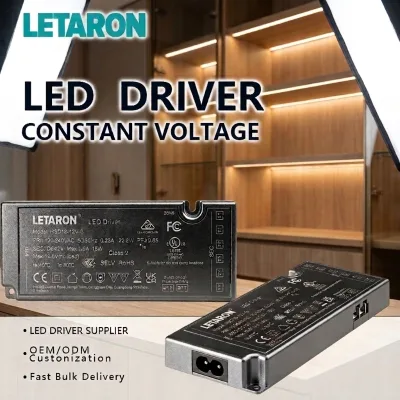
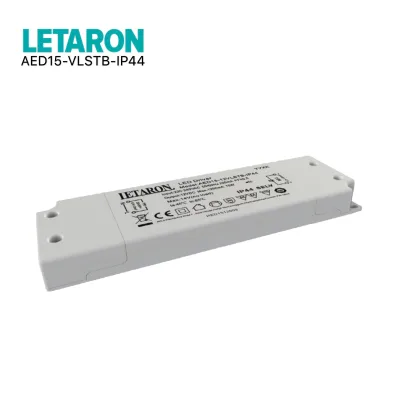
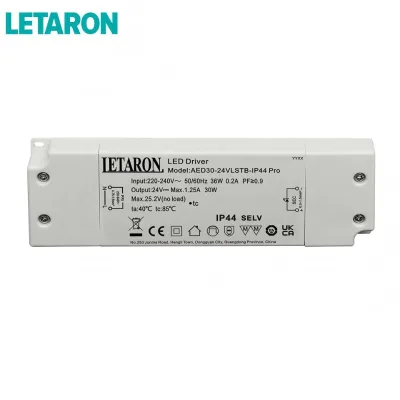
$2.8492 - $2.8687
MOQ: 200 pieces
Zhuhai Shengchang Electronics Co., Ltd.
- Verified by Intertek
- Manufacturer, Trading Company
- Lead time5 days
- Avg. response≤ 5h
Main productsLED Driver, Triac 0-10V 1-10V DALI DALI-2 Push Dimmable LED Driver, DMX512 Zigbee BLE Wifi Dimming LED Light Drivers, Waterproof LED Power Supply, Wall Switch Dimmer
Main marketsNorth America(30%), South America(20%), Domestic Market(20%)

- Verified by TUVRHEINLAND
- Manufacturer/Factory
- China Anhui
- Lead time38 days
- Avg. response≤ 9h
Main productsTransformer, Inductor, Coil, Current Transformer, Choke, Rogowski Coils, Power Supply, R Core Transformer, Toroidal Transformer, Cable Assembly
Main marketsSouth America,Eastern Europe,Mid East,North America,Southeast Asia,Eastern Asia,Oceania,Western Europe,Africa


Customized Transformer for LED Light High Stability High Frequency Transformer
$0.27 - $0.30
MOQ: 100 Pieces
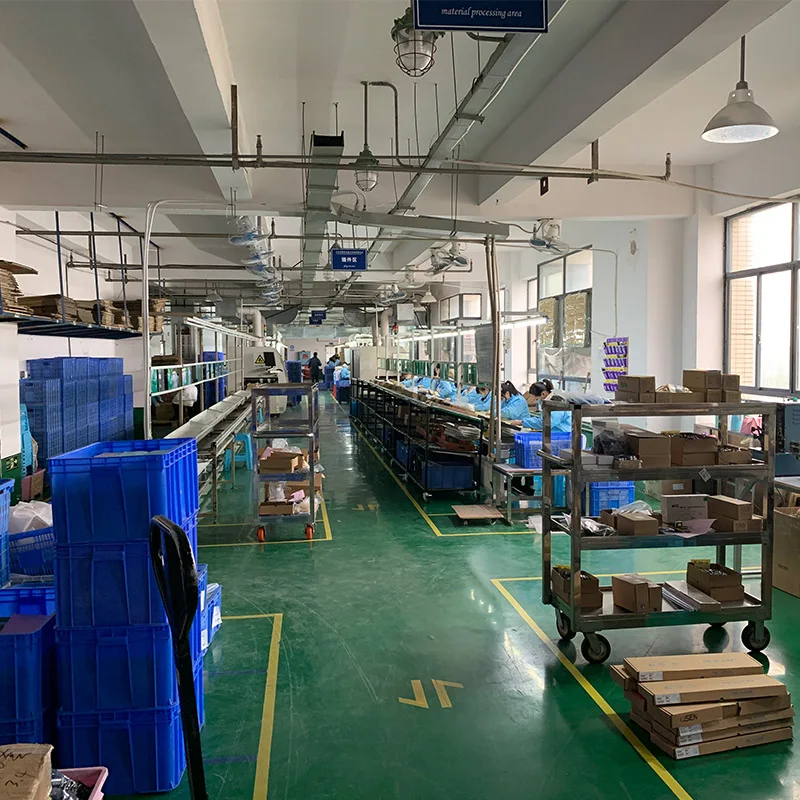
Fuzhou Bailian Chuangxing Network Technology Co., Ltd.
- Manufacturer, Trading Company
- Fujian, China
- Lead time15 days
- Avg. response≤ 3h
Main productsWaterproof Switching Power Supply,Ultra-thin Switching Power Supply,LED Strips,LED Modules,LED strip lights
Main marketsNorth America(22.00%), Western Europe(18.00%), Mid East(13.00%), Southeast Asia(11.00%), South America(9.00%), Eastern Europe(6.00%), Domestic Market(5.00%), Southern Europe(5.00%), Northern Europe(3.00%), Oceania(3.00%), Africa(2.00%), Central America(1.00%), Eastern Asia(1.00%), South Asia(1.00%)
Wenzhou Lumen New Energy Technology Co., Ltd.
- Manufacturer, Trading Company
- Zhejiang, China
- Lead time20 days
- Avg. response≤ 1h
Main productspower tools,electric equipment,lithium battery,garden tools,lighting
Main marketsWestern Europe(80.00%), Eastern Europe(10.00%), Mid East(10.00%)
Shenzhen Bond Optoelectronic Co., Ltd.
- Verified by TüVRheinland
- Manufacturer, Trading Company
- Lead time7 days
- Avg. response≤ 4h
Main productsLED Module, LED Signs, LED Pixel Light, Custom Neon Sign, LED Illuminated Sign
Main marketsNorth America(30%), Southeast Asia(25%), Mid East(20%)

Haining Liya Technology Co., Ltd
- Verified by SGS
- Combined
- China Zhejiang
- Lead time15 days
- Avg. response≤ 1h
Main productsHigh Frequency Transformer, Inductor, Choke Coil
Main marketsDomestic


Effective Energy Saving Transformer for Premium LED Lighting Applications
$0.02 - $0.12
MOQ: 500 Pieces


Dongguan Chengliang Intelligent Technology Co., Ltd.
- Verified by Intertek
- Manufacturer, Trading Company
- Lead time3 days
- Avg. response≤ 4h
Main productsSwitching Power Supply, LED Power Supply, Dimmable LED Driver
Main marketsNorth America(33%), Eastern Europe(22%), Western Europe(10%)
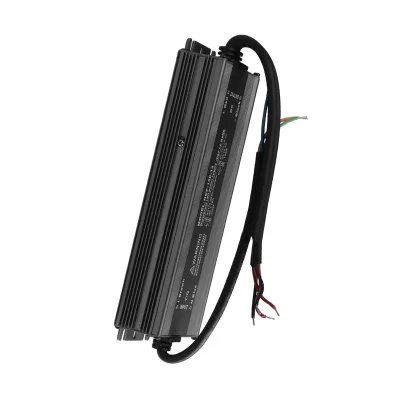
Ul 48V 42V 12V to 220V Inverter Transformer 24V 90W Waterproof Led Driver 240Ma Ip68
$9.1633 - $10.1939
MOQ: 2 pieces
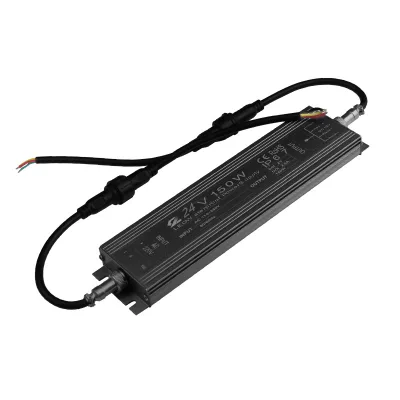
Converters 12V Transformers Waterproof Thin Switching Mode Power Supply Outdoor Ip67
$8.90 - $9.90
MOQ: 2 pieces






Comprehensive Sourcing Guide
LED Bulb Lamp Converter Supplier Concentration and Factory Types
Search results for this category show suppliers concentrated in China, with one profile located in Fujian and another in Henan, while several product listings declare Guangdong as the place of origin. The Fujian-based profile is registered as a combined trading company and manufacturer/factory, supplying lamp holders, bulb adapters, and related lighting accessories alongside LED corn, street, and yard lights. The Henan-based profile is a pure trading company focused on auto lighting and accessories. This mix matters because a converter that looks identical in photos may come from a factory that molds its own plastic housings, from a trading company aggregating factory stock, or from an auto-parts trader repackaging generic items.
Buyers should map the cluster landscape themselves when a listing does not state a location. Check the declared place of origin on individual product attributes rather than the company registration address, since these frequently differ in this category. Classify each candidate as factory, hybrid, or trader before comparing prices, because the Fujian hybrid model typically supports OEM and ODM work under its own brand, whereas a trading intermediary may only offer catalog items. Adapter models such as E14-to-E27, B22-to-E27, E14-to-GU10, B22-to-E14, and G24-to-E27 appear repeatedly across profiles, so matching the exact model code to the supplier type is a reliable first screening step.
How to Verify LED Bulb Lamp Converter Suppliers
Start with third-party verification status. At least one profile in this category carries an SGS verification flag, and the same profile lists system certifications including ISO 9000, ISO 9001, ISO 14000, ISO 14001, and BSCI. Treat these as claims to confirm, not guarantees: ask for the current certificate numbers and scope, and check that the scope covers the entity you will contract with rather than an affiliated factory. For the Henan trading company, no system certification appears in the visible profile, so verification must lean on trade references, sample evaluations, and documentation of who actually manufactures the adapters they resell.
Product-level evidence is the second verification layer. Several converter listings state CE and RoHS certification in their attribute blocks, and one E14-to-E27 model declares RoHS specifically. Request the actual test reports matching those declarations and the exact model codes, because a RoHS mark on one SKU does not transfer to a differently molded adapter. Verify physical details against the listing: one product declares an Inner Box plus Export Carton packing and a 50 by 50 by 70 millimeter standard, while another declares a 10 by 5 by 5 centimeter package with a 0.010 kilogram gross weight—discrepancies here often reveal resellers quoting another factory's data sheet. Finally, confirm responsiveness in practice; advertised response times mean little until a technical question about screw-cap interface style or voltage rating receives a substantive written answer.
What to Compare Across LED Bulb Lamp Converter Suppliers
Build a comparison grid using attributes that are actually displayed, without assuming every supplier shows the same fields. Lead time is directly comparable where stated: one profile in this category declares 23 days, another declares 10 days. Response time also appears on profiles, with one showing roughly 13 hours and another showing about 2 hours; fast response often correlates with trader-staffed sales teams rather than engineering depth, so weigh it alongside company type. Location is a filterable field, but remember that a Henan-registered trader may ship Guangdong-made goods, so compare the origin declared on each product, not just the headquarters.
Minimum order quantities vary enormously and reveal business models. The Fujian hybrid supplier lists an E14-to-E27 adapter at 6,000 pieces, a G24-to-E27 converter at 3,000, a GU10-to-E14 model at 5,000, and a B22-to-E27 adapter at 1,000 pieces, while the Henan trader lists a round E27 holder converter at only 20 pieces. Price ranges follow the same pattern, with one adapter quoted at 0.20 to 0.50 and another fixed at 0.35 per unit. Also compare customization availability, which several listings declare explicitly, OEM/ODM capability, main product breadth (a lighting-accessories specialist versus an auto-accessories generalist), establishment year where shown, and whether payments are escrow-protected. Rank suppliers per segment rather than globally, since the best small-MOQ trader is rarely the best OEM factory partner.
Common LED Bulb Lamp Converter Sourcing Risks
The most frequent risk in this category is certification mismatch. Listings commonly embed CE and RoHS text inside a combined attribute string, and buyers sometimes accept that string as proof for an entire adapter family. In reality each converter geometry—E27, B22, GU10, or G24 variants—needs its own valid declaration, and a supplier quoting one model's certification for another is a red flag. A second risk is origin ambiguity: profiles registered in one province declare products originating in another, and the responsible legal entity for warranty claims may be neither. One listing does declare a one-year warranty, but warranty terms are absent from most other converter listings, so never assume coverage exists.
Quality risks cluster around materials and interface fit. Several converters are declared plastic with a screw-cap interface style; unspecified plastic grade can mean brittle housings or poor heat resistance near higher-wattage lamps, so demand material specifications in writing. Dimensional fit is another silent failure mode—adapter threads that grip loosely cause flicker or dropout in service, which samples must catch. Commercial risks include MOQ baiting, where a low trial MOQ later rises for repeat orders, and packing shortcuts, since only some listings specify export cartons. Finally, verify rating claims: a listing declaring 6A 250V and 12V attributes on similar products shows how easily electrical ratings get copied between models. Require a signed specification sheet before any deposit changes hands.
LED Bulb Lamp Converter Regional Sourcing and Logistics
Regional logic in this category is driven by declared locations and origins rather than assumptions. The visible evidence points to Fujian and Henan as registration bases and Guangdong as a declared product origin, so a single order can involve a northern trading company, a southern factory, and a port on the coast. Ask every candidate to state the actual shipping origin and the nearest export port, then compare consolidated freight to your destination. Because adapters are tiny and light—declared gross weights run from 0.010 to 0.100 kilograms per unit for sampled listings—freight cost per unit is low, but volume packing matters: confirm whether goods ship in inner boxes plus export cartons or loose cartons, since that affects both protection and container utilization.
Lead-time differences deserve logistical scrutiny. A declared 10-day lead time from a trader may simply reflect stock on hand, which is fast but limits customization, whereas a 23-day declared lead time from a hybrid manufacturer may include production scheduling for OEM runs. Align your order calendar with these figures and add buffer for certification-document preparation if your market requires it. For mixed orders—say, E27 adapters from one origin and GU10 converters from another—plan separate shipments or negotiate consolidation. Also confirm who handles export documentation when a trading company sits between you and the factory, and get the factory's name onto shipping papers where possible to simplify future audits and customs queries.
LED Bulb Lamp Converter Commercial Terms and Order Planning
Anchor commercial negotiations on the displayed parameters, then negotiate the gaps. Where prices appear, they range from roughly 0.20 to 0.80 per unit depending on model and supplier type, but treat every figure as a starting quote contingent on volume, material, and packaging. Use MOQ structure as leverage: the same supplier may quote 6,000 pieces for one adapter model and 1,000 for another, so a supplier willing to flex at the lower tier is signaling genuine capacity interest. Ask for a tiered price sheet across the E14, E27, B22, GU10, and G24 families in a single negotiation—bundling models typically improves unit prices and reduces tooling or setup surcharges for customized variants.
Order planning should sequence sampling, specification sign-off, and staged volumes. Begin with the smallest viable quantity from a low-MOQ listing—some go down to 20 pieces—to validate fit and finish before committing to production runs of 3,000 to 6,000 units. Put the declared packing method, model code, place of origin, warranty term where offered, and customization scope into the purchase contract. Confirm the payment mechanism early; escrow-protected transactions reduce counterparty risk with unverified traders, while direct factory terms may require a deposit balance structure. Finally, plan reorders against the declared lead time plus a buffer, and lock pricing windows in writing, because adapter quotations in this category move with resin and component costs between seasons.
Word count check: sections 1 ~232, 2 ~233, 3 ~234, 4 ~231, 5 ~227, 6 ~231; total ≈1388 words.
FAQs
What certifications do the LED bulb lamp converters have?
Many LED bulb lamp converters carry RoHS and CE certifications. Some products also meet BSCI, ISO 9000, ISO 9001, ISO 14001, and ISO 14000 standards. Buyers should verify specific product labels to confirm compliance with their regional safety requirements before placing orders.
What is the typical lead time for these adapters?
Lead times for LED bulb lamp converters vary by supplier. One manufacturer reports a 23-day lead time, while another offers a 10-day turnaround. Buyers should confirm the exact delivery schedule with the supplier to ensure it aligns with their project timeline and inventory needs.
What are the minimum order quantities for these converters?
Minimum order quantities differ across products. Some adapters require 6000 units, while others start at 1000 or 3000 units. A specific automotive adapter has a low MOQ of just 20 pieces. Buyers must check the specific product page to determine the exact threshold for their order.
Where are these LED bulb lamp converters manufactured?
Manufacturing locations include Fujian, Henan, and Guangdong in China. Most products list China as the place of origin. Buyers should verify the specific factory location for each item to assess shipping logistics and potential tariffs associated with the region of production.
Do suppliers offer customization for these lamp adapters?
Yes, customization is available for many LED bulb lamp converters. Products support OEM and ODM services with options for custom branding. Buyers can request specific colors or packaging details. It is essential to discuss customization requirements directly with the supplier to confirm feasibility and additional costs.
What is the price range for these adapters?
Prices for LED bulb lamp converters range from 0.20 to 0.80 USD per unit. Specific models like the E14 to E27 adapter are priced around 0.35 USD, while others range between 0.20 and 0.50 USD. Final pricing depends on order volume and specific product configuration.
How quickly do suppliers respond to inquiries?
Response times vary among suppliers. One supplier has a recorded response time of 13.44 hours, while another responds within 2 hours. Buyers should expect different reply speeds depending on the specific vendor. Checking the supplier profile for current response metrics is recommended for timely communication.