Magnetic Damping Auto Level Suppliers and Manufacturers
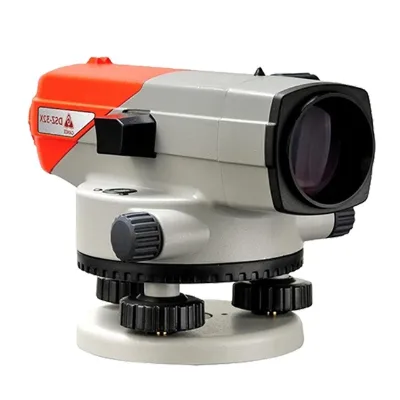
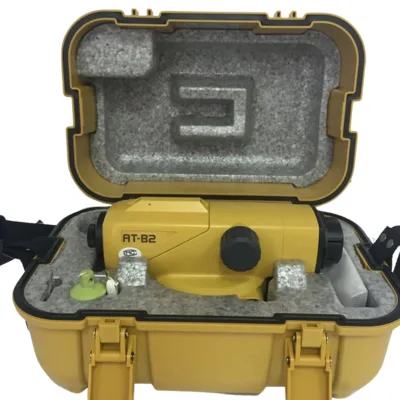
Source Magnetic Damping Auto Level units from 13 verified suppliers. Compare lead times, MOQs, and pricing for models like DSZ-32X and AT-B2. Review specifications such as IP66 ratings and accuracy to select the right partner for your surveying needs; review the available evidence before requesting comparable quotations from suitable candidates.
Updated
Suppliers List
Shangrao Haodi Imp & Exp Trading Co., Ltd.
- Trading Company
- Lead time旺季: "1 - 12":5,"13 - 60":12,"> 60":"To be negotiated", 淡季: "1 - 12":5,"13 - 60":12,"> 60":"To be negotiated"
- Avg. response≤ 2h
Main productsGnss Rtk, Total Station, Auto Level, Slam Scanner, Survey Accessories
Shanghai Apekstool Optoelectronic Technology Co., Ltd.
- Trading Company
- Shanghai, China
- Lead time3 days
- Avg. response≤ 2h
Main productsGNSS RTK GPS Receiver,Total station,Electronic theodolite,Auto level,Laser level
Main marketsSouth America(20.00%), Africa(20.00%), Southeast Asia(18.00%), Mid East(15.00%), Eastern Asia(10.00%), Domestic Market(5.00%), North America(5.00%), Eastern Europe(1.00%), South Asia(1.00%), Southern Europe(1.00%), Northern Europe(1.00%), Central America(1.00%), Western Europe(1.00%), Oceania(1.00%)
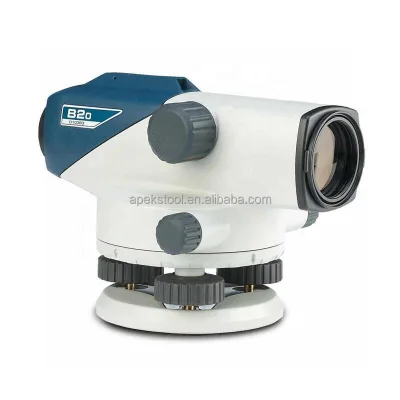
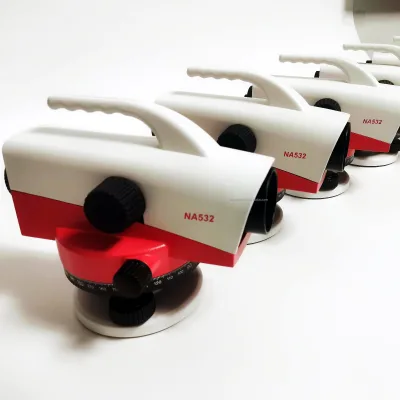
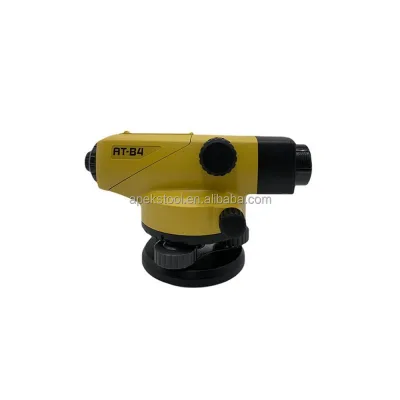
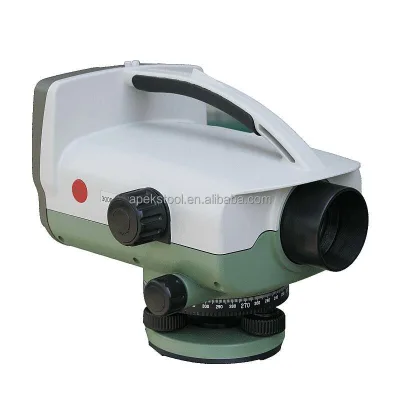
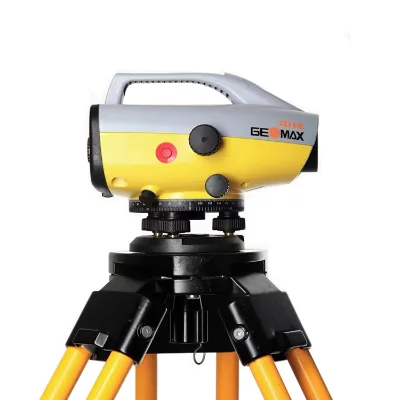
High Precision Digital Level FOIF EL302A Auto Level
$1000.00 - $1200.00
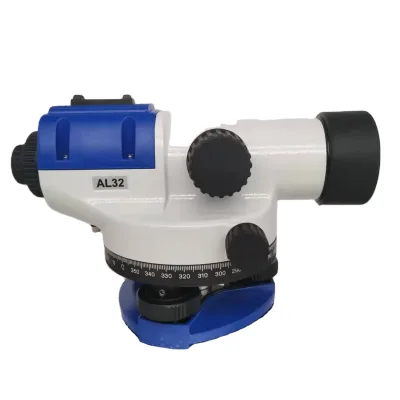
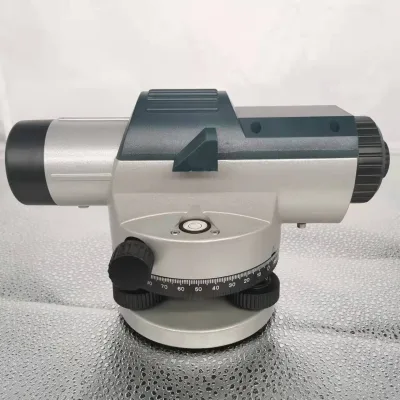
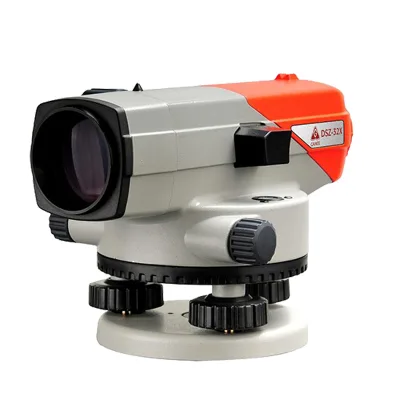
Special Measurement Design Auto Level 32X Magnetic Damping Auto for Sale
$77.111 - $97.6741
MOQ: 2 pieces

Shanghai Apekstool Optoelectronic Technology Co., Ltd.
- Verified by TUVRHEINLAND
- Trading Company
- China Shanghai
- Lead time15 days
- Avg. response≤ 3h
Main productsGnss Rtk, Total Station, Gnss Receiver, Auto Level, Rotary Laser Level, Land Surveying Equipment, Laser Distance Meter, GPS, Hi Target Gnss, Chcnav Gnss
Main marketsSouth America,Eastern Europe,Mid East,North America,Southeast Asia,Eastern Asia,Oceania,Western Europe,Africa

High Precision Magnetic Damping Measuring Instruments 32X Optical Auto Level
$75.00 - $95.00
MOQ: 1 Sets


High Precision 24X Magnification B40 Auto Level Survey Instrument Auto Level
$105.00 - $129.00
MOQ: 30 Sets

High Precision Survey Equipment 24X Magnetic Damper Auto Level B40 Price
$105.00 - $140.00
MOQ: 1 Sets

- Trading Company
- China Jiangsu
- Lead time15 days
- Avg. response≤ 2h
Main productsLaser Level, Surveying Instrument, Surveying Equipment, Leica Prism, Survey Prisms, Levelling Staffs, Tribrachs and Adapters, Instrument Tripods, Automatic Level, Laser Line
Main marketsSoutheast Asia/ Mideast,Europe,Australia,North America


Auto Level with Magnetic Damping Compensator Stable Accuracy and Drop Resistance
$53.00 - $55.00
MOQ: 1 Pieces

Power Adjustable Laser Auto Level with Wire Suspension Magnetic Damping Compensator
$142.00 - $154.00
MOQ: 1 Pieces


SHANGRAO HAODI IMP&EXP TRADING CO., LTD.
- Verified by BV
- Trading Company
- China Jiangxi
- Lead time15 days
- Avg. response≤ 5h
Main productsGnss Rtk, Total Station, Slam Scanner, Optical Level & Laser Plummet, Theodolite, Level Staff&Tripod, Measuring Wheel, Prism Pole&Prism Set, Tribrach and Adapter, Surveying Accessories
Main marketsSouth America,Africa,Southeast Asia/ Mideast


$118.00 - $125.00
MOQ: 1 Pieces

$499.00 - $540.00
MOQ: 1 Pieces


A-38L High Quality Dual-Axis Auto Level Electronic Auto-Leveling Survey Instrument Automatic Level
$98.00 - $102.00
MOQ: 1 Pieces
Shanghai Hexin Survey Instrument Co., Ltd.
- Trading Company
- Shanghai, China
- Lead time3 days
- Avg. response≤ 4h
Main productsTotal station,GNSS products,Theodolite,Automatic level,Survey accessory
Main marketsSouth America(30.00%), Africa(25.00%), Southeast Asia(10.00%), South Asia(5.00%), Western Europe(5.00%), Eastern Asia(5.00%), Mid East(5.00%), Oceania(5.00%), North America(5.00%), Eastern Europe(5.00%)
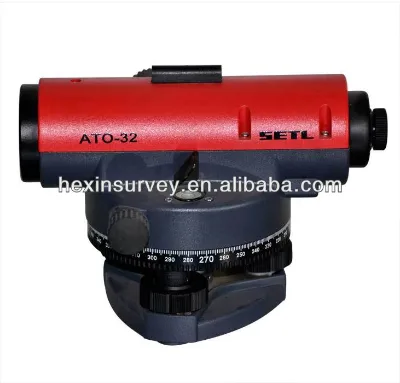
$102.6025 - $112.8638
MOQ: 1 sets
- Trading Company
- Zhejiang, China
- Lead time10 days
- Avg. response≤ 4h
Main productsGNSS Receiver,Rugged Tablet,Lidar Scanner,GIS,Software
Main marketsSouthern Europe(10.00%), Africa(10.00%), Central America(10.00%), Eastern Europe(10.00%), Mid East(10.00%), North America(10.00%), Western Europe(8.00%), South America(6.00%), Eastern Asia(6.00%), South Asia(5.00%), Oceania(5.00%), Northern Europe(5.00%), Southeast Asia(5.00%)
- Trading Company
- Jiangsu, China
- Lead time7 days
- Avg. response≤ 1h
Main productsSurveying Prism; Reflective Targets,Tripod; Prism Pole; Tribrach
Main marketsWestern Europe(70.00%), Africa(10.00%), North America(10.00%), Domestic Market(5.00%), South America(5.00%)
Huipu Opto-Electronic Instrument (Zhenjiang) Co., Ltd.
- Manufacturer, Trading Company
- Jiangsu, China
- Lead time0 days
- Avg. response≤ 8h
Main productsLaser Levels/Laser Distance Meters/Rotary Lasers/Total Station/Laser Rangefinder/Theodolite/Auto Level/Analyzers/Test Instrument,Total Station,Rotary laser level,Analyzers/Metal Detectors,Physical Measuring Instruments
Main marketsEastern Europe(30.00%), Western Europe(20.00%), Eastern Asia(14.00%), South America(10.00%), Southern Europe(5.00%), Southeast Asia(5.00%), North America(5.00%), Africa(3.00%), South Asia(2.00%), Mid East(2.00%), Northern Europe(2.00%), Oceania(2.00%)
Sanming Sky Beidou Surveying And Mapping Equipment Co., Ltd.
- Verified by SGS Group
- Trading Company
- Lead time14 days
- Avg. response≤ 1h
Main productsRTK, Total Station, Auto Level, Theodolite, 3D Laser Scanner

Mount Laser (Changzhou) Instrument Co., Ltd.
- Verified by SGS
- Combined
- China Jiangsu
- Lead time15 days
- Avg. response≤ 4h
Main productsSurveying Tripod, Surveying Pole, Surveying Prism, Adapter Tribrach, Leveling Staff, Auto Level, Theodolite, Optical Collimator
Main marketsSouth America,Africa,Southeast Asia/ Mideast,East Asia(Japan/ South Korea),Europe,Australia,North America

High Accuracy Survey Equipment Magnetic Damping Auto Level 24X for Land Surveying
$118.00 - $126.00
MOQ: 4 Pieces

Factory 32X Automatic Level with X-Shape Wire Suspension Magnetic Damping Compensator
$93.00 - $105.00
MOQ: 4 Pieces
Shangrao Haodi Imp & Exp Trading Co., Ltd.
- Verified by Intertek
- Trading Company
- Lead time15 days
- Avg. response≤ 2h
Main productsGNSS RTK, Total Station, Auto Level, SLAM Scanner, Survey Accessories
Main marketsAfrica(29%), Southeast Asia(28%), Western Europe(15%)
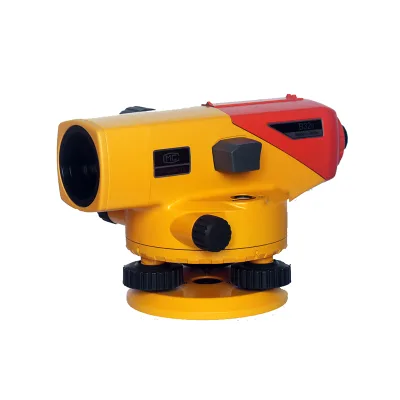
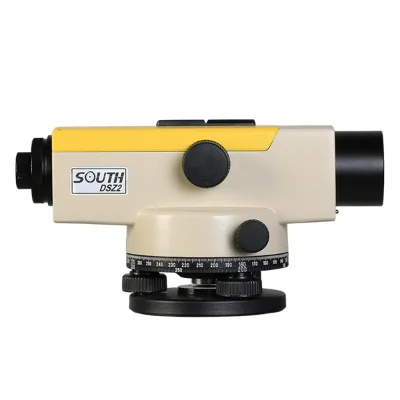
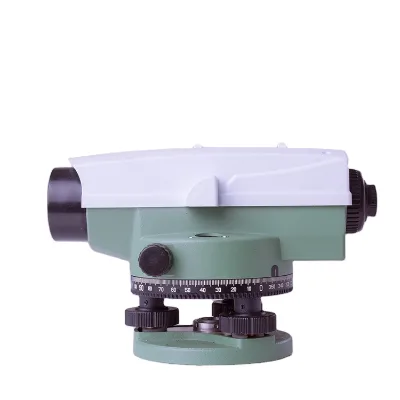
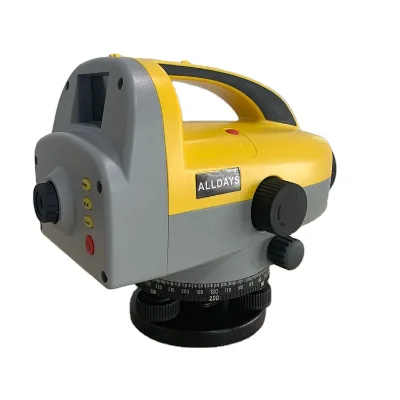
$297.5432 - $307.839
MOQ: 1 units

Shaanxi Deruite Industry and Trade Co., Ltd.
- Verified by BV
- Trading Company
- China Shaanxi
- Lead time23 days
- Avg. response≤ 7h
Main productsSurveying Instrument, Accessories, Tripod, Staff, Prism, Prism Poles
Main marketsSouth America,Africa,Southeast Asia/ Mideast,East Asia(Japan/ South Korea),Europe,Australia,North America
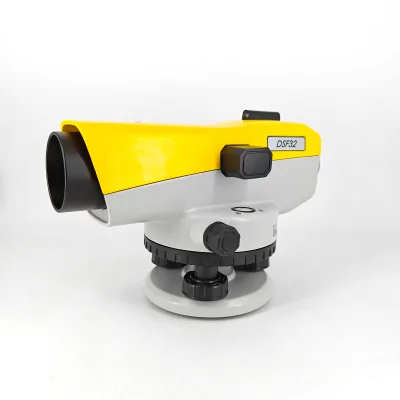
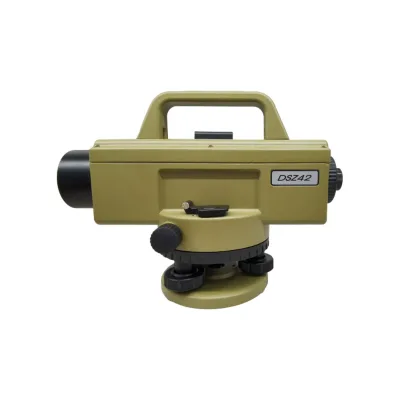
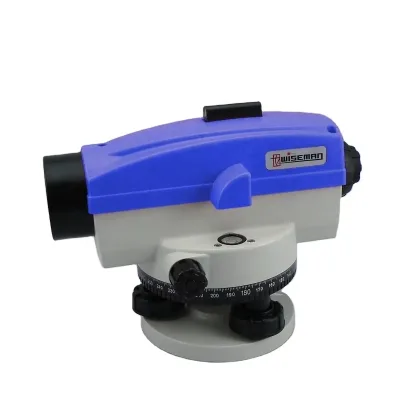
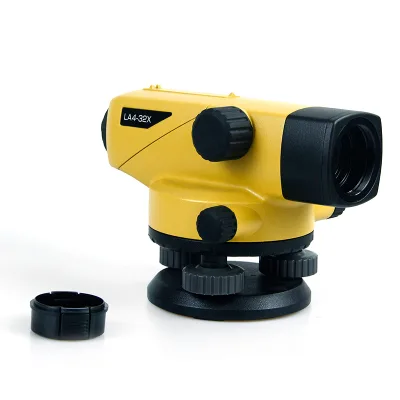
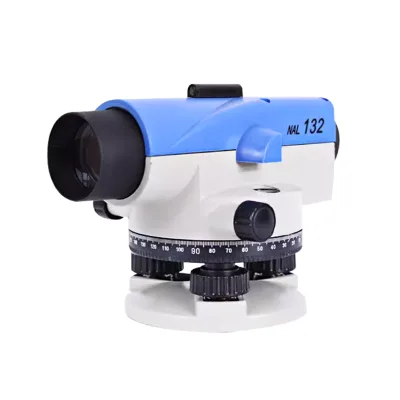
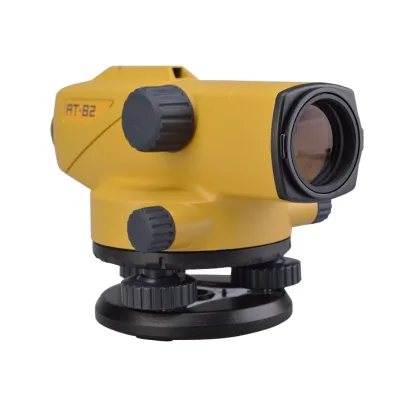
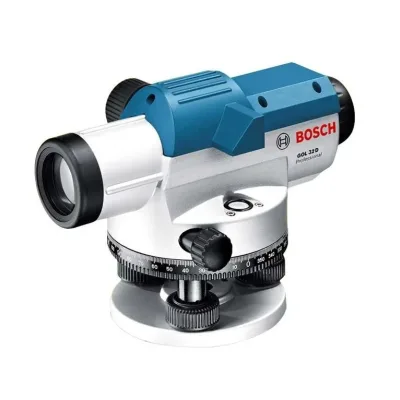
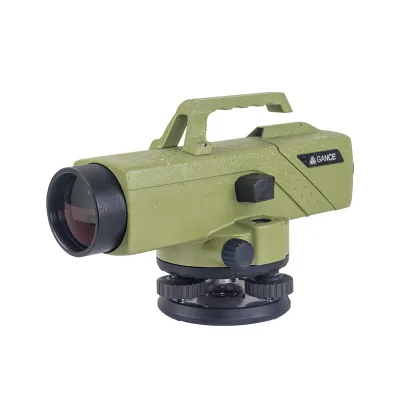


Comprehensive Sourcing Guide
Magnetic Damping Auto Level Supplier Concentration and Factory Types
Suppliers of magnetic damping auto levels on B2B platforms are typically a mix of trading companies and manufacturers, and the distinction matters for how you evaluate them. In the current supplier results, the disclosed company type for one listed seller is a trading company, which is a useful reminder that many listings in this category are intermediaries rather than factory floors. Trading companies can be legitimate and useful, especially when they consolidate surveying accessories, total stations, GNSS RTK receivers, auto levels, and related instruments into one order. However, a buyer should not assume factory-direct pricing or engineering depth from any listing until the company type is confirmed and, where relevant, an audit or video walkthrough verifies production involvement.
Geographic concentration in this category should be inferred only from evidence supplied on the page. Several disclosed products list a place of origin in Chinese provinces such as Jiangxi and Jiangsu, which suggests that sourcing conversations will likely involve manufacturers or exporters in China's established surveying-instrument supply chains. Do not generalize beyond what a supplier discloses: not every listing shows an origin, and an origin shown for one product does not prove where every catalog item is made. When location data is absent, ask the supplier directly for the assembly site, identify whether the cluster they rely on specializes in optical instruments, and cross-check consistency between the stated origin, the shipping port offered, and the lead times quoted for your order quantity.
How to Verify Magnetic Damping Auto Level Suppliers
Verification starts with separating displayed facts from assumptions. Some listings in this category disclose concrete attributes, such as an IP66 rating, a one-year warranty, magnification options of 24X, 28X, or 32X, magnetic compensators, and aluminum alloy construction, while others reveal only a keyword and a price. Begin by asking each candidate to confirm in writing the compensator type, the IP protection level, the leveling accuracy specification, and the warranty term. A supplier who can state these precisely, with a specification sheet rather than marketing copy, is more likely to control quality. Then request sample units and test them against the claimed 1-kilometer double-run leveling error and shortest sighting distance, because compensator performance under vibration and temperature change is exactly where cheap auto levels fail.
Company-level verification matters just as much. Check whether the platform shows a verified business license, years in operation, transaction history, and any trade assurance or escrow arrangement, and confirm which of these apply before you transfer funds. For suppliers whose company type is shown as a trading company, ask which factory produces the instruments, whether the factory permits direct communication, and whether joint factory visits or third-party inspections are possible. Confirm the warranty service route: whether repairs run through the seller, the brand, or a domestic service center. Finally, request references from other surveying-equipment buyers and verify that the model numbers quoted in negotiation match the specification sheets provided, since model-name drift is a common early warning sign of unreliable sourcing in this category.
What to Compare Across Magnetic Damping Auto Level Suppliers
Build a comparison table from the attributes suppliers actually display, and mark every missing cell as "verify" rather than filling it in. Useful product-side dimensions include magnification, objective aperture, compensator type, accuracy such as the ±0.7mm or ±0.1% figures shown on some listings, IP rating, weight, and warranty length. Price ranges in the current results span from roughly the $65–79 band for entry 32X alloy-body units, through the $80–135 band for 24X and complete-set offerings, up to $200–230 for a Japan-brand-style AT-B2 style instrument and around $1,000–1,200 for a high-precision digital level. Comparing price without magnification, accuracy, and compensator class will produce misleading rankings, so normalize quotes against identical specifications first.
Supplier-side dimensions deserve equal weight. Record each seller's location, response time, stated lead time, and minimum order quantity. In the disclosed results, one supplier reports a two-hour response time, another reports a three-unit lead-time figure, one product shows an MOQ of a single unit, and lead-time schedules distinguish peak season from off-season and by quantity bands. Do not assume every supplier displays all of these attributes; absence of a shown MOQ or lead time is a question to ask, not a defect to invent. Also compare main product lines: a seller listing GNSS RTK receivers, total stations, electronic theodolites, laser levels, and auto levels may consolidate an entire surveying kit shipment, while a specialist may offer better instrument depth. Weight both profiles against your order structure before shortlisting.
Common Magnetic Damping Auto Level Sourcing Risks
The most frequent risk in this category is specification ambiguity. Listings that disclose only length, material, and a generic level type, without stating accuracy, compensator damping quality, or IP rating, leave room for downgraded components. Magnetic damping compensators vary widely in settling time and temperature stability, and a supplier can substitute an inferior compensator without changing the model name. Counter this by requiring a signed specification sheet, batch-level inspection reports, and the right to test random samples from production rather than golden samples alone. Another common risk is brand confusion: several disclosed products carry an OEM brand name or reference well-known Japanese instrument naming, so confirm trademark rights, whether the product is a genuine branded unit, or a compatible clone, before importing.
Operational risks concentrate in packaging and logistics. Disclosed single-package weights in this category range from around 1.4 kg to 26 kg gross, and gross weights of 7–8 kg per unit appear on some listings, which materially changes freight cost calculations. Optical instruments are vibration- and moisture-sensitive, so weak inner packaging leads to transit damage and compensator misalignment. Warranty enforcement is another gap: a one-year warranty printed on a listing is only as good as the repair or replacement route behind it. Finally, peak-season lead-time inflation is disclosed by at least one supplier, so confirm whether quoted lead times are off-season figures. Put all confirmed parameters, tolerances, and remedies into the contract, not into chat messages that cannot be enforced later.
Magnetic Damping Auto Level Regional Sourcing and Logistics
Regional analysis should follow the evidence on each listing rather than assumptions. Where a disclosed place of origin exists, such as Jiangxi or Jiangsu in the current results, treat it as the assembly point and plan logistics from the nearest major export gateway, confirming the actual port with the supplier rather than guessing. For listings with no disclosed origin, ask directly for the manufacturing city, the export port, and whether production and shipment occur at the same site. This matters because surveying instruments combine optics, electronics, and machined aluminum, and some suppliers assemble while outsourcing components; knowing where final quality control happens tells you which inspection point and which freight origin to plan around.
Logistics planning for this category hinges on weight, volume, and protection. With single gross weights ranging from a few kilograms for handheld auto levels to 26 kg for boxed digital-level packages, air freight is viable for samples and small urgent orders, while consolidated sea or rail freight suits bulk orders of complete sets with tripods and leveling staffs. Confirm whether the supplier packs instruments with foam-lined cases and desiccant, and require shock indicators on cartons for optical goods. If ordering from a trading company, verify whether it consolidates multiple factories into one shipment and who handles export documentation. Ask about seasonal capacity early, since disclosed peak-season schedules show lead times extending with order quantity, and book inspection and freight forwarding slots before the factory queue builds.
Magnetic Damping Auto Level Commercial Terms and Order Planning
Commercial terms should be negotiated against the attributes actually shown. Some current listings display an MOQ of one unit, which enables low-risk sampling, while others show no MOQ at all, so the minimum must be requested in writing. Price behavior in the disclosed results shows clear tiers: roughly $65–79 for entry 32X units, $80–135 for 24X models and complete sets with tripod and staff, $150–175 for magnetic-damping 32X instruments, and $200–1,200 for branded and digital-level products. Use these tiers to sanity-check quotes, but never assume a displayed price applies to your configuration, quantity, or incoterm. Confirm whether quotes are FOB, CIF, or EXW, and which of escrow, trade assurance, or telegraphic transfer the supplier accepts for payment protection.
Order planning should sequence samples, pilot orders, and scale-up. Start with one or two units across shortlisted suppliers, test compensator stability, accuracy claims, and waterproofing, then place a pilot order sized to reveal batch consistency. Confirm lead-time bands in writing, including how they change with quantity and season, since disclosed schedules show fixed day counts for small orders and negotiated timelines above larger quantities. Lock the warranty term, the repair route, spare parts availability for compensators and reticles, and OEM or ODM branding terms if you plan private labeling, which at least one disclosed listing supports. Finally, define acceptance criteria and remedies in the purchase contract, and reconcile every negotiated parameter against the original listing before payment release.
FAQs
What is the price range for magnetic damping auto levels?
Prices for magnetic damping auto levels typically range from $65 to $1200 depending on precision and features. Basic alloy models start around $65, while high-precision digital options like the EL302A cost between $1000 and $1200. Standard optical levels generally fall between $80 and $230, allowing buyers to select based on budget and required accuracy.
What lead times should I expect for these instruments?
Lead times vary by order quantity and season. For orders of 1-12 units, production takes approximately 5 days, while 13-60 units require 12 days. Larger orders exceeding 60 units have lead times that must be negotiated directly with the supplier. These timelines apply to both peak and off-peak seasons for most standard models.
What is the minimum order quantity for auto levels?
The minimum order quantity is typically 1 unit for most magnetic damping auto levels. This low MOQ allows buyers to purchase single samples for testing or small-scale projects without committing to bulk inventory. Suppliers generally support this flexible purchasing model to accommodate diverse business needs and initial quality verification requirements.
What accuracy levels are available for these auto levels?
Accuracy varies by model, with standard optical levels offering precision around ±0.1% to ±0.3%. High-precision digital models like the EL302A achieve a round-trip error of ≤1mm per kilometer. Buyers should verify specific accuracy ratings for their project needs, as optical magnification and compensator type significantly influence measurement precision.
Where are these auto levels manufactured?
Most magnetic damping auto levels are manufactured in China, specifically in regions like Jiangxi and Jiangsu. Suppliers are often located in Shanghai, facilitating logistics and trade. Buyers should verify the specific place of origin for each product listing to ensure compliance with regional sourcing requirements and quality standards.
What customization options are available for auto levels?
Many suppliers offer OEM, ODM, and OBM customization support for auto levels. Buyers can request custom branding, software reengineering, and specific packaging configurations. These options allow businesses to tailor products to their market needs. Buyers should confirm specific customization capabilities and minimum requirements directly with the supplier before placing orders.