Class I Zig-Zag Medical Cotton Suppliers and Manufacturers
Source Class I Zig-Zag Medical Cotton from 13 verified suppliers in China. Compare response times, lead times, MOQs, and certifications like ISO 13485 and FDA. Review product attributes and pricing to identify the right partner for your medical supply needs.
Suppliers List

Yangzhou Rich-You Daily Healthcare Products Co., Ltd.
- Trading Company,Manufacturer/Factory
- China Jiangsu
- Lead time0 days
- Avg. response≤ 6h
Main productsCotton Pads, Cotton Roll, Medical Tape, Kinesiology Tape, All Bandage, Zigzag Cotton, Cotton Ball

Shanghai Honsung Medical Instruments Co., Ltd.
- Verified by TUVRHEINLAND
- Trading Company
- China Shanghai
- Lead time15 days
- Avg. response≤ 6h
Main productsBlood Collection Tube, Isolation Gown, Blood Collection Needle, Infusion Set, Foley Catheter, Cautery Pencil, Alcohol Prep Pad, Surgical Suture, Surgical Tape
Main marketsAfrica,Southeast Asia/ Mideast,Europe,North America

Huaian Construction New Material CO., LTD.
- Verified by SGS
- Trading Company
- China Jiangsu
- Lead time15 days
- Avg. response≤ 5h
Main productsOrthopedic Cast Tape, Cast Padding, Elastic Bandage, Ice Cold Pack, Self Adhesive Bandage, Kinesiology Tape, Hot Water Bottle, Petrolatum Tape, Pipe Wrapping Tape, Pipe Repair Tape
Main marketsEurope,North America


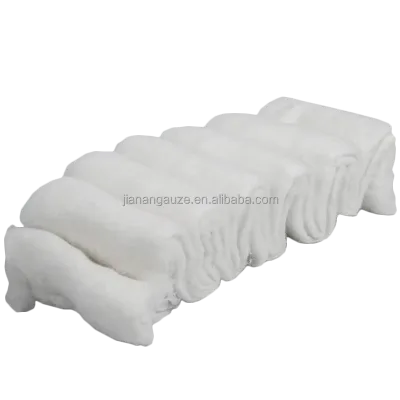
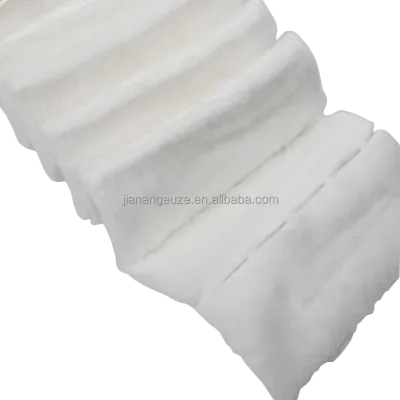
Medical Absorbent Zig Zag Cotton Wool Surgical Zig Zag Cotton Wool Cosmetic Use Zig-Zag Cotton
$0.51 - $4.57
MOQ: 2000 Pieces

Disposable Zig-Zag Cotton Surgical Zig Zag Cotton Wool for Medical Use with 100% Cotton
$0.51 - $4.57
MOQ: 2000 Pieces


Shanghai Even Medical Instruments Co., Ltd.
- Verified by BV
- Manufacturer/Factory
- China Shanghai
- Lead time45 days
- Avg. response≤ 5h
Main productsSurgical Suture, Alcohol Pad, Blood Lancet, Spinal Needle, Medicine Envelope, Urine Container, Surgical Blade, Face Mask 3ply, Isolation Gown, Sterile Swab Stick
Main marketsSouth America,Mid East,North America,Western Europe,Africa

Lianyungang Baishun Medical Treatment Articles Co., Ltd.
- Trading Company,Manufacturer/Factory
- China Jiangsu
- Lead time23 days
- Avg. response≤ 4h
Main productsCotton Roll, Gauze Roll, Cotton Pad, Gauze Swab, Dental Cotton, Lab Sponge, Zigzag Cotton, Bandage, Cotton Coil, Jumbo Gauze Roll
Main marketsSouth America,Eastern Europe,Mid East,North America,Southeast Asia,Eastern Asia,Oceania,Western Europe,Africa


Disposable Medical Surgical Absorbent Bleached Zig Zag Cotton pH Value 5.5-7.5
$0.12 - $1.99
MOQ: 2000 Bags
Nantong Jianan Medical Products Co., Ltd.
- Verified by Intertek
- Manufacturer, Trading Company
- Lead time30 days
- Avg. response≤ 5h
Main productsMedical Surgical Masks, Disposable Medical Masks, Medical Gauze, Medical Bandages
Main marketsSoutheast Asia(25%), Africa(20%), Mid East(18%)

Jiangsu Baishun Medical Group Co., Ltd.
- Manufacturer, Trading Company
- Jiangsu, China
- Lead time30 days
- Avg. response≤ 5h
Main productsCotton Roll, Bandage, Tape, Surgical Gauze, Wound Dressings
Main marketsAfrica(30.00%), Mid East(30.00%), North America(10.00%), South America(10.00%), Western Europe(10.00%), Southeast Asia(10.00%)
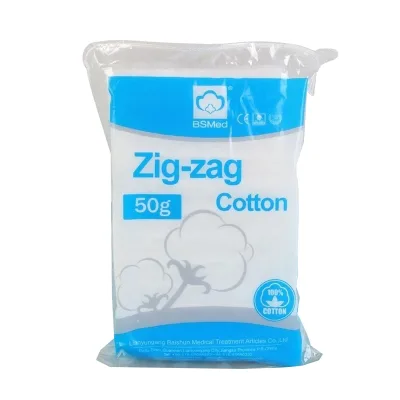
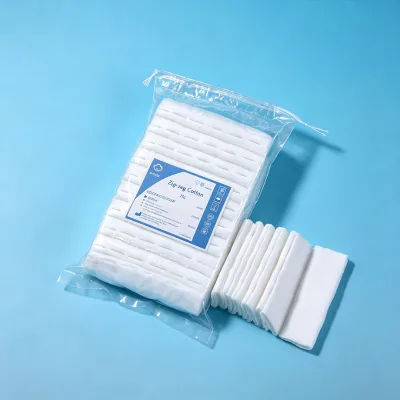
Wholesale Factory 25g 50g 100g Medical Wool Zig Zag Cotton for Hospital Use
$0.20 - $1.02
MOQ: 5000 bags
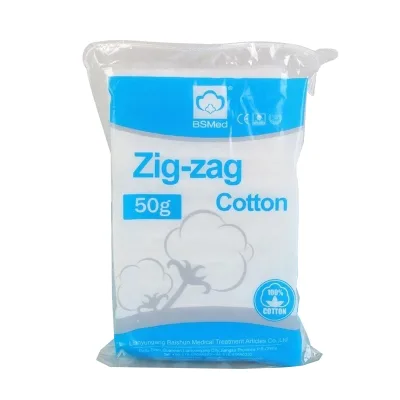
Hot sale medical absorbent wool pleat zig zag cotton sterile hemostatic zig zag cotton
$0.21 - $1.03
MOQ: 5000 bags
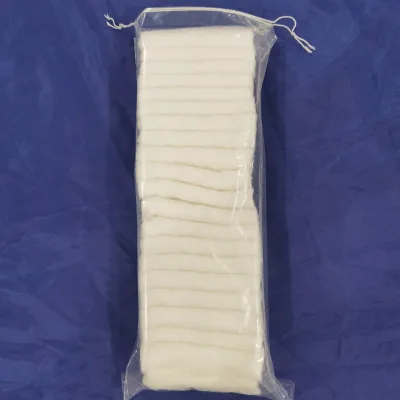
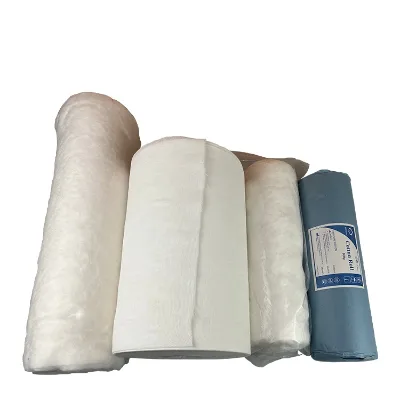
Manufacturer Direct Sale Medical Absorbent Wool Customization Zig Zag Cotton Roll
$0.21 - $1.03
MOQ: 5000 bags
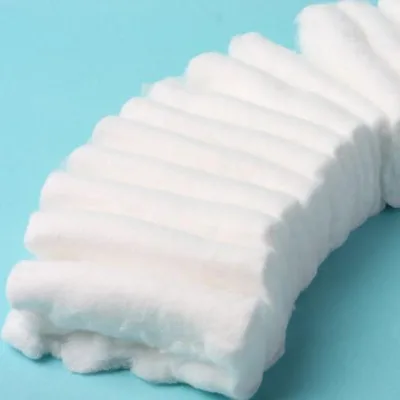
Manufacturer Direct Sale Medical Absorbent Wool Cotton High Quality Zig Zag Cotton with Break
$0.21 - $1.03
MOQ: 5000 bags

NINGBO VITAL INTERNATIONAL TRADING CO., LTD.
- Verified by BV
- Trading Company
- China Zhejiang
- Lead time0 days
- Avg. response≤ 12h
Main productsPVC Tube, Medical Dressing, Cotton Ball, Gauze Pad, Nonwoven Pad, Wound Plaster, Wipe, Bandage, Face Mask, Disposable Cap

Cost-Effective Sterile Medical Zig Zag Cotton for Wound Cleaning & Disinfection
$0.10 - $5.00
MOQ: 10000 Bags

40s 90cm X 91m Medical 100% Natural Cotton Zigzag Absorbent Folded Gauze Roll
$9.30 - $12.50
MOQ: 5000 Rolls

Hangzhou Wehere Medical Technology Co., Ltd.
- Verified by BV
- Trading Company
- China Zhejiang
- Lead time30 days
- Avg. response≤ 2h
Main productsProtective Gown, Face Mask, Thermometer, Dust Mask, Respirator, Pulse Oximeter, Forehead Thermometer, Cadaver Bag, Isolation Gown, Surgical Drape
Main marketsSouth America,Africa,East Asia(Japan/ South Korea),Europe


Absorbent Surgical Zig Zag Cotton Roll Medical Dental Absorbent Cotton Roll Wool
$0.15 - $1.81
MOQ: 2000 Bags


Shanghai Goldenwell Medical Technology Co., Ltd.
- Verified by CTI
- Trading Company
- China Shanghai
- Lead time15 days
- Avg. response≤ 7h
Main productsMedical Devices, Sports Support, Medical Dressings
Main marketsSoutheast Asia/ Mideast,Europe

Yangzhou Goldenwell Import&Export Co., Ltd.
- Verified by BV
- Trading Company,Manufacturer/Factory
- China Jiangsu
- Lead time23 days
- Avg. response≤ 5h
Main productsMedical Devices, Syringe, Medical Tape, Medical Bandage
Main marketsSouth America,Eastern Europe,Mid East,North America,Southeast Asia,Eastern Asia,Oceania,Western Europe,Africa

Anhui Jinye Industrial Co., Ltd.
- Verified by SGS
- Trading Company,Manufacturer/Factory
- China Anhui
- Lead time120 days
- Avg. response≤ 6h
Main productsFace Mask, Nitrile Glove, PE Glove, PE Apron, CPE Gown, Coveralls, Disposable Isolation Gown, Shoe Cover, Lab Coat, Clip Cap
Main marketsSouth America,Eastern Europe,Mid East,North America,Southeast Asia,Eastern Asia,Oceania,Western Europe,Africa

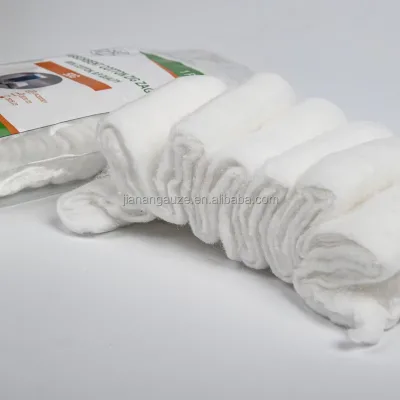
Hot Selling Medical Surgical Absorbent Non-Allergenic Zig Zag Cotton Wool
$0.10 - $1.00
MOQ: 5000 Bags

Factory Supply Medical Grade Absorbent Cotton Wool Zigzag for Hospital with/Without Cutting
$0.10 - $1.00
MOQ: 5000 Bags

Nantong Glory Medical Material Co., Ltd.
- Trading Company
- China Jiangsu
- Lead time30 days
- Avg. response≤ 10h
Main productsGauze Swab, Medical Bandage, Non-Woven Products, Wet Wipe, Medical Tapes, Absorbent Cotton, Ostomy Bags, Syringes, First Aid Kit Accessories, Infusion Sets
Main marketsSoutheast Asia/ Mideast,Europe,North America




Comprehensive Sourcing Guide
Class I Zig-Zag Medical Cotton Supplier Concentration and Factory Types
Current data indicates that suppliers for Class I Zig-Zag Medical Cotton are concentrated in specific regions of China, with Jiangsu province appearing as a primary manufacturing cluster. Fact records show origins in Xinghua, Taizhou, and general Jiangsu locations, suggesting a regional density of production facilities. These suppliers operate as a mix of trading companies and manufacturers, offering different value propositions based on their structural type. Buyers should verify if a supplier is a direct factory or a trading intermediary, as this distinction impacts control over production quality and lead time management. The presence of both company types in the results suggests a mature supply chain where trading companies may aggregate products from various factories to offer broader catalogs.
When evaluating the factory type, buyers must look for specific evidence of manufacturing capability rather than relying on general claims. Some suppliers list their company type explicitly as a Manufacturer/Factory, while others identify as Trading Companies. This classification is critical because manufacturers often have direct control over raw material sourcing, such as pure cotton, and sterilization processes like Ethylene Oxide treatment. Trading companies may offer more flexibility in customization and logistics but might have less direct oversight on the production floor. Buyers should request proof of facility ownership or production lines to confirm the manufacturer status, ensuring that the Class I medical device classification is maintained through the entire production cycle without third-party dilution of quality standards.
How to Verify Class I Zig-Zag Medical Cotton Suppliers
Verification of suppliers requires a rigorous check of third-party credentials and system certifications to ensure compliance with medical device standards. Available data shows that some suppliers hold verification from entities like TÜV Rheinland, SGS, and BV, which serve as external validations of their business legitimacy and operational stability. Additionally, system certifications such as ISO 13485, GMP, and HACCP are critical indicators for medical supply manufacturers, confirming that their quality management systems meet international regulatory requirements. Buyers should not assume these certifications are universal; instead, they must request current certificates and verify their validity dates directly with the issuing bodies to avoid relying on outdated or unverified claims.
Beyond external certifications, buyers must scrutinize product-specific attributes and regulatory classifications to confirm the Class I status of the medical cotton. Product evidence indicates that items are classified as Class I instruments, which generally implies lower risk but still requires adherence to specific safety and labeling standards. Buyers should verify that the product attributes, such as "Without Ethylene Oxide Sterilization" or "With Logo Printing," match the intended application and regulatory needs of their market. It is essential to confirm that the supplier can provide test reports or batch records that align with the declared product properties, ensuring that the medical grade cotton meets the necessary absorbency and purity requirements for surgical or wound care applications.
What to Compare Across Class I Zig-Zag Medical Cotton Suppliers
Comparing suppliers requires a detailed analysis of operational metrics such as response time, lead time, and minimum order quantities to determine logistical feasibility. Data shows response times ranging from approximately 4.29 to 5.76 hours, indicating varying levels of customer service responsiveness. Lead times also differ significantly, with some suppliers listing zero days while others indicate 15 or 45 days, reflecting differences in inventory availability and production scheduling. Buyers must weigh these factors against their own procurement timelines, understanding that a shorter lead time might come with higher costs or limited customization options, while longer lead times may allow for more flexible production runs.
Minimum Order Quantities (MOQ) and pricing structures are equally critical variables in the comparison process. Current records display MOQs ranging from 1,000 to 5,000 units, with price points varying from $0.107 to $4.573 depending on the specific product configuration and packaging. Buyers should calculate the total cost of ownership, including shipping and potential customs duties, rather than focusing solely on the unit price. It is also important to compare the standard packaging options, such as "1PC/Polybag with Pulling Rope" versus bulk carton packing, as these affect storage efficiency and product protection during transit. Evaluating these commercial terms side-by-side helps buyers identify suppliers that align with their budget constraints and volume requirements.
Common Class I Zig-Zag Medical Cotton Sourcing Risks
One significant risk in sourcing Class I Zig-Zag Medical Cotton involves the variability in sterilization methods and product disinfection status. Product evidence reveals a split between items marked "Without Ethylene Oxide Sterilization" and those explicitly stating "Ethylene Oxide Sterilization" is applied. This inconsistency can lead to compliance issues if a buyer requires a specific sterilization method for their target market or hospital protocols. Buyers must clearly define their sterilization requirements before engaging with suppliers to avoid receiving non-compliant goods that cannot be used in sterile medical environments. Failing to verify this attribute can result in rejected shipments or regulatory penalties in the destination country.
Another critical risk is the potential mismatch between the declared product origin and the actual manufacturing location, which can affect quality consistency and supply chain transparency. While some records specify origins like Xinghua, Taizhou, or Jiangsu, others simply list "China" as the origin. This lack of specificity can make it difficult to trace the supply chain back to the specific factory floor, complicating quality audits and recall procedures. Buyers should insist on detailed origin information and request facility addresses to ensure they are dealing with the actual production site. Additionally, the availability of stock and customization options varies, with some suppliers offering "Freely" samples and others requiring specific production runs, which can delay order fulfillment if not managed proactively.
Class I Zig-Zag Medical Cotton Regional Sourcing and Logistics
Regional sourcing strategies should focus on the identified manufacturing clusters in Jiangsu, China, where a concentration of suppliers and raw material access exists. The data points to specific cities like Xinghua and Taizhou as hubs for production, suggesting that logistics from these areas may be optimized for medical supply exports. Buyers should consider the proximity of these clusters to major ports to minimize inland transportation costs and reduce the risk of delays. However, if specific city data is unavailable for a particular supplier, buyers should verify the exact location to assess the logistical feasibility of their supply chain, ensuring that the distance from the factory to the port does not negatively impact delivery schedules.
Logistics planning must also account for the varying lead times and packaging standards observed across different suppliers. Some suppliers offer immediate availability with zero lead time, while others require up to 45 days for production, necessitating different inventory strategies. Packaging details, such as "100gram/Bag, 100bags/CTN" or "1roll/Polybag," influence how goods are loaded into containers and handled during transit. Buyers should coordinate with their freight forwarders to ensure that the packaging dimensions and weights align with shipping constraints, preventing damage to the medical cotton during transit. Understanding these regional and logistical nuances allows buyers to build a resilient supply chain that can adapt to fluctuations in production capacity and shipping availability.
Class I Zig-Zag Medical Cotton Commercial Terms and Order Planning
Commercial terms for Class I Zig-Zag Medical Cotton often include specific customization options and sample policies that influence order planning. Evidence shows that some suppliers offer "With Logo Printing" and "Customization: Available," while others provide "Sample: Freely" to facilitate product evaluation. Buyers should leverage these terms to validate product quality before committing to large orders, ensuring that the customization meets their branding and functional requirements. It is crucial to clarify the terms for sample requests, including shipping costs and lead times for samples, to avoid unexpected expenses or delays in the initial evaluation phase. Clear communication on these terms helps streamline the transition from sampling to full-scale production.
Order planning must also consider the established capacity and production capabilities of the supplier, such as OEM or ODM services. Some suppliers list their capacity as "Own brand," while others offer "ODM, OEM" services, indicating their ability to produce private label goods or design custom solutions. Buyers should assess whether the supplier's capacity aligns with their projected demand, especially if they require high-volume production or specialized product features. Additionally, the presence of stock, indicated by "Stock: Yes" in some records, can significantly reduce lead times for urgent orders. Buyers should plan their inventory levels based on these capacity indicators, ensuring they have sufficient buffer stock to handle market fluctuations while maintaining a steady supply of Class I medical cotton for their operations.
FAQs
What is the minimum order quantity for Class I zig zag cotton?
The minimum order quantity varies by supplier, with observed values starting at 1000 units. Some suppliers require 2000 units, while others set the threshold at 5000 units. Buyers should verify the specific MOQ with each vendor before placing an order to ensure compliance with their purchasing needs.
Are Class I zig zag cotton products sterilized with ethylene oxide?
Sterilization methods differ among suppliers. Some products are explicitly marked as without ethylene oxide sterilization, while others confirm the use of ethylene oxide sterilization. Buyers must check the specific product attributes for each supplier to determine the sterilization status required for their medical applications.
What is the typical response time for these medical cotton suppliers?
Response times for suppliers offering Class I zig zag cotton range from approximately 4.29 to 5.76 hours. This variation depends on the specific company and their current workload. Buyers should expect a response within this window but should confirm the exact timing with the supplier directly.
Do suppliers offer logo printing services for this medical cotton?
Yes, many suppliers provide logo printing services for Class I zig zag cotton products. This customization is available across multiple vendors listed in the results. Buyers seeking branded packaging should confirm the specific logo printing options and any associated costs with the supplier before finalizing the purchase.
What certifications do suppliers of this cotton hold?
Certifications vary by supplier, with some holding ISO 13485, GMP, HACCP, or FDA approvals. Others may display ISOCE or verification from agencies like SGS or BV. Buyers need to verify the specific certification status for each supplier to ensure the products meet their regulatory and quality standards.
Where are the manufacturers of Class I zig zag cotton located?
Manufacturers and trading companies are primarily located in China, specifically in Jiangsu and Shanghai. Some products originate from Xinghua, Taizhou, Jiangsu. Buyers should confirm the exact origin location with the supplier to understand shipping logistics and potential import requirements for their specific region.
What is the lead time for shipping these medical cotton products?
Lead times vary significantly among suppliers, with some listing zero days while others indicate up to 45 days. This difference depends on stock availability and production schedules. Buyers must confirm the specific lead time with the supplier to plan their inventory and delivery schedules effectively.