Customized DIN933 Titanium Alloy Screws Suppliers and Manufacturers
Find 31 verified suppliers offering Customized DIN933 Titanium Alloy Screws with ISO 9001 certification and En10204-3.1b documentation. Compare response times, lead times, and MOQs to source fasteners from Zhejiang or Shaanxi factories; review the available evidence before requesting comparable quotations from suitable candidates.
Updated
Suppliers List

HANGZHOU KING TITANIUM CO., LTD.
- Trading Company,Manufacturer/Factory
- China Zhejiang
- Lead time23 days
- Avg. response≤ 7h
Main productsTitanium Wire, Titanium Bar, Titanium Sheet, Titanium Tube, Titanium Anode, Titanium Flange, Titanium Screw, Titanium Forging, Titanium Plate, Titanium Pipe
Main marketsSouth America,Eastern Europe,Mid East,North America,Southeast Asia,Eastern Asia,Oceania,Western Europe,Africa

SHAANXI RUIYANG IMPORT EXPORT CO., LTD.
- Verified by TUVRHEINLAND
- Trading Company,Manufacturer/Factory
- China Shaanxi
- Lead time23 days
- Avg. response≤ 5h
Main productsSteel Pipe, Stainless Steel, Steel Wire Rope, Stainless Steel Bar, Aluminium, Anchor Bolt, Marine Hardware, Reformer Tube, Bolts and Nuts, Centrifugal Cast Tube
Main marketsSouth America,Eastern Europe,Mid East,North America,Southeast Asia,Eastern Asia,Oceania,Western Europe,Africa
- Manufacturer, Trading Company
- Shaanxi, China
- Lead time20 days
- Avg. response≤ 7h
Main productsTitanium,Zirconium,Niobium,Chromium,Nickel
Main marketsNorth America(50.00%), Domestic Market(30.00%), Western Europe(16.00%), Eastern Europe(2.00%), Northern Europe(2.00%)

- Verified by TUVRHEINLAND
- Manufacturer/Factory
- China Shaanxi
- Lead time38 days
- Avg. response≤ 2h
Main productsDial Indicators, Micrometers, Calipers, Thickness Gauges, Bore Gauges, Depth Gauges, Height Gauges, Bevel Protractors, Oil Pipe Thread Instruments, CNC Lathe
Main marketsSouth America,Eastern Europe,North America,Western Europe,Africa
Baoji Chengjin Titanium Industry Co., Ltd.
- Verified by TüVRheinland
- Manufacturer, Trading Company
- Lead time15 days
- Avg. response≤ 2h
Main productsTitanium Fasteners, Titanium CNC Processing Parts, Titanium CNC Pipe Parts And Connector, Titanium Bolt, Titanium Screw
Main marketsNorth America(60%), Western Europe(20%), Eastern Europe(4%)
- Trading Company
- Zhejiang, China
- Lead time15 days
- Avg. response≤ 5h
Main productsSprinkler & Sprayer,Brass/Stainless steel connector,Titanium Parts,Brass/SS Valve,Brass/stainless steel Fitting
Main marketsNorth America(20.00%), Southern Europe(10.00%), Western Europe(10.00%), Southeast Asia(10.00%), Eastern Europe(10.00%), South America(10.00%), South Asia(5.00%), Mid East(5.00%), Northern Europe(5.00%), Central America(5.00%), Africa(5.00%), Eastern Asia(5.00%)
Hangzhou Hardware Products Co., Ltd.
- Manufacturer, Trading Company
- Zhejiang, China
- Lead time15 days
- Avg. response≤ 6h
Main productsFastener,Bolt,Nuts,Washer,C parts
Main marketsWestern Europe(25.00%), Eastern Europe(20.00%), Northern Europe(15.00%), Domestic Market(10.00%), South America(5.00%), North America(5.00%), Mid East(5.00%), Southeast Asia(5.00%), Southern Europe(5.00%), Africa(3.00%), Oceania(2.00%)
Dongguan Dalang Jiubiao Trading Firm (individual Business)
- Trading Company
- Guangdong, China
- Lead time0 days
- Avg. response≤ 3h
Main productscar screw,precision parts,Automobile parts,sole screw,Custom screw
Main marketsDomestic Market(30.00%), North America(15.00%), Eastern Europe(12.00%), Northern Europe(10.00%), Southeast Asia(5.00%), Western Europe(5.00%), South Asia(4.00%), South America(4.00%), Southern Europe(3.00%), Oceania(3.00%), Eastern Asia(3.00%), Mid East(3.00%), Central America(2.00%), Africa(1.00%)
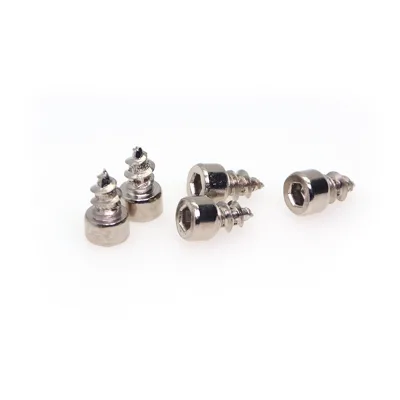
$0.03 - $0.05
MOQ: 2000 units
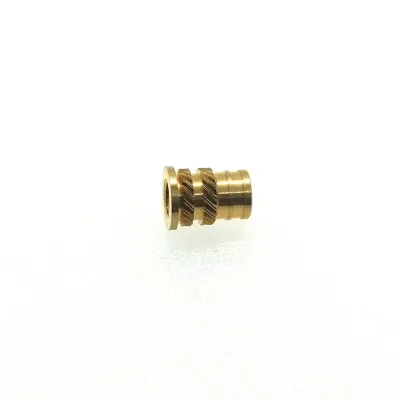
Copper screw, hexagon screw, #6 - 32 M3X0.5
$0.05 - $0.10
Guangzhou Fast Precise Hardware Co., Ltd.
- Manufacturer, Trading Company
- Guangdong, China
- Lead time30 days
- Avg. response≤ 8h
Main productsScrew/Bolt
Main marketsDomestic Market(71.00%), Western Europe(15.00%), North America(5.00%), Eastern Europe(3.00%), Oceania(2.00%), Mid East(2.00%), Southeast Asia(2.00%)
Dongguan Yingjiaxing Hardware Products Co., Ltd.
- Manufacturer
- Guangdong, China
- Lead time10 days
- Avg. response≤ 3h
Main productsTitanium products,CNC machining,Hardware stamping parts,Laser cutting piece,Titanium electrode
Main marketsEastern Europe(20.00%), North America(15.00%), South America(10.00%), Northern Europe(10.00%), Central America(10.00%), Western Europe(10.00%), Southern Europe(8.00%), Mid East(5.00%), Southeast Asia(5.00%), Eastern Asia(5.00%), Africa(2.00%)
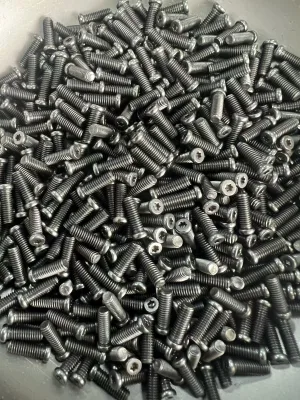
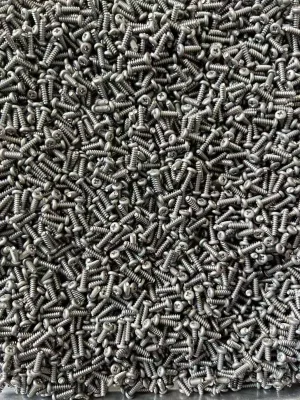
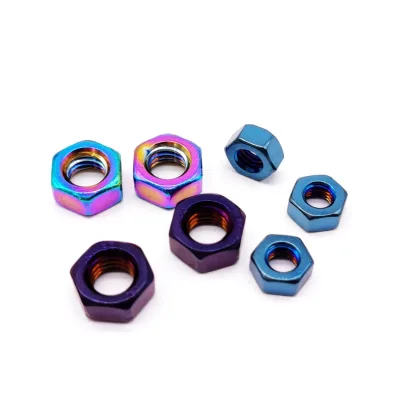
Round Head Titanium Self Tapping Screws Anti Rust Fasteners for Plastic Metal Assembly
$0.10 - $0.20
MOQ: 1000
Dongguan Weierjian Hardware Products Co., Ltd.
- Verified by SGS Group
- Manufacturer, Trading Company
- Lead time7 days
- Avg. response≤ 2h
Main productsScrew, Bolt, Nut, CNC Machining, Stamping Washer
Main marketsDomestic Market(44%), North America(15%), Western Europe(8%)

CHANGZHOU XIETONG INDUSTRIES CO., LTD.
- Trading Company
- China Jiangsu
- Lead time15 days
- Avg. response≤ 10h
Main productsMedical Bone Drill Bit, Orthopedic Instrument Set, Orthopedic Implants, Spare Medical Instrument, Orthopedic Plates, Orthopedic Screws, Locking Nails, Dental Tools, Ppek Carbon Medical Products, Surgical Reamers
Main marketsSoutheast Asia/ Mideast,Europe,North America

Orthopedic Implants Titanium Alloy Variable and Fixed Angle Screw for Spine System
$6.10 - $7.70
MOQ: 10 Pieces

Luoyang Combat Tungsten & Molybdenum Material Co., Ltd.
- Verified by TüVRheinland
- Manufacturer, Trading Company
- Lead time15 days
- Avg. response≤ 4h
Main productsTungsten Product, Molybdenum Product, Titanium Product, Tantalum Product, Niobium Product
Main marketsDomestic Market(95%), North America(1%), Eastern Europe(1%)
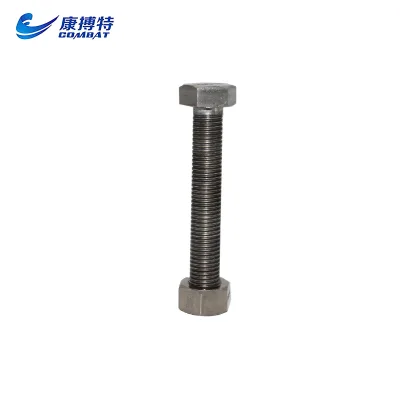
$5.8686 - $6.0754
MOQ: 100 pieces
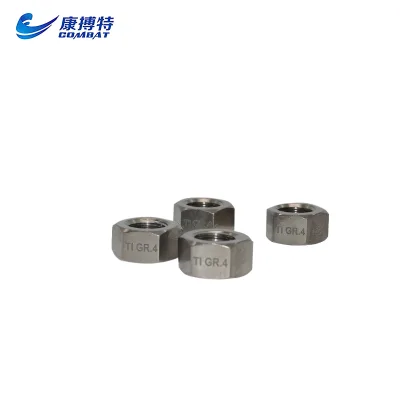
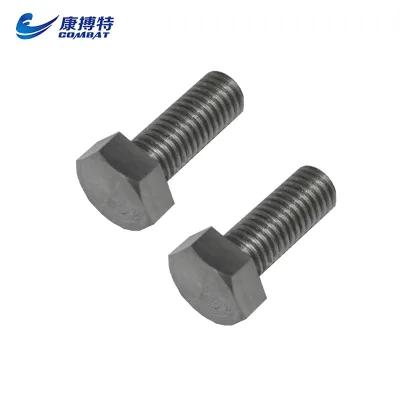
The factory supplies hot sales TZM Molybdenum alloy screw from Luoyang Combat
$83.00 - $85.00
MOQ: 1 kilograms
Baoji Boze Metal Products Co., Ltd.
- Verified by Intertek
- Manufacturer, Trading Company
- Lead time5 days
- Avg. response≤ 2h
Main productsTitanium Motorcycle Parts, Titanium Fasteners, Titanium Sports And Entertainment Accessories, Titanium Customized Parts, Titanium Materials
Main marketsNorth America(30%), Western Europe(30%), Oceania(20%)
Shenzhen Huaxianglian Hardware Co., Ltd.
- Manufacturer, Trading Company
- Lead time旺季: "1 - 5000":10,"> 5000":"To be negotiated", 淡季: "1 - 5000":10,"> 5000":"To be negotiated"
- Avg. response≤ 4h
Main productsHardware Fasteners,CNC Machining Parts,Metal Working Parts,Custom Screws/Bolts,Custom Dowel Pins

- Verified by SGS
- Combined
- China Tianjin
- Lead time30 days
- Avg. response≤ 9h
Main productsScrews, Bolts, Nuts, Washers, Rivets, Nails, Machines
Main marketsOthers(foreignTradeCapacity.exportBusinessCapacityMarketOther),Europe,North America

- Verified by CTI
- Manufacturer/Factory
- China Jiangsu
- Lead time23 days
- Avg. response≤ 3h
Main productsOrthopedic Implant, Orthopedic Wound, Orthopeadic Trauma Products, Orthopedic Locking Plate, Orthopedic Spinal Products, Orthopedic Instruments, Orthopedic Power Tools, Trauma Implant, Fusion Cage in Spine
Main marketsSouth America,Eastern Europe,Mid East,Southeast Asia,Eastern Asia,Oceania,Western Europe,Africa


Titanium Non-Locking Screw for Fixing Fracture Use Together with Locking Plate
$5.00 - $9.00
MOQ: 10 Pieces

Jinjiang Tagong Hardware Forging Manufacturer Co. Ltd.
- Verified by BV
- Manufacturer/Factory
- China Fujian
- Lead time90 days
- Avg. response≤ 4h
Main productsFastener, Nuts, Wheel Hub Bolt, Hexagon Nuts, Slotted Nuts, Wheel Nuts, Flange Nuts, Railway Nuts, Truck Nuts, Nylon Insert Nuts
Main marketsSouth America,Eastern Europe,Mid East,North America,Southeast Asia,Eastern Asia,Oceania,Western Europe,Africa
Ningbo Kingstar Fasteners Co., Ltd.
- Verified by SGS Group
- Trading Company
- Lead time15 days
- Avg. response≤ 5h
Main productsNail, Screw, Bolt, Anchor, Nut
Main marketsNorth America(20%), South America(20%), Western Europe(15%)

Lock Technology(shenzhen)Co., LTD.
- Verified by SGS
- Combined
- China Guangdong
- Lead time15 days
- Avg. response≤ 1h
Main productsPrecision Fasteners, CNC Turning Parts, Stamping Parts, CNC Machining Parts, Custom Fastener, Micro Tiny Fastener, Standard/Non-Standard Bolts, Stainless Machining Parts, Long Bolt, Precision CNC Machining
Main marketsSoutheast Asia/ Mideast,Domestic,Europe,North America
Baoji Pengyuan Nonferrous Metal Co., Ltd.
- Verified by SGS Group
- Manufacturer, Trading Company
- Lead time7 days
- Avg. response≤ 2h
Main productsTitanium Fastener, Titanium Bolt, Titanium Nut, Titanium Customized Parts, Titanium Bar
Main marketsNorth America(30%), Southeast Asia(30%), Western Europe(20%)

Jiaxing Goshen Hardware Co., Ltd.
- Trading Company,Manufacturer/Factory
- China Zhejiang
- Lead time23 days
- Avg. response≤ 4h
Main productsFasteners, Bolts, Nuts, Screws, Stainless Steel Screw, Threaded Rod, Stainless Steel Bolt, Customized Bolt, Washer, Carriage Bolt
Main marketsSouth America,Eastern Europe,Mid East,North America,Southeast Asia,Eastern Asia,Oceania,Western Europe,Africa
Taicang Jukairui Fasteners Co., Ltd.
- Verified by Intertek
- Manufacturer, Trading Company
- Lead time0 days
- Avg. response≤ 2h
Main productsHex Flange Head Long Screw, Hex Head Long Screw, Hex Socket Head Long Screw, Hex Flange Head Concrete Anchor Bolt, Self-tapping Long Screw

Dongguan Jingyan Metal Products Co., Ltd.
- Manufacturer
- Guangdong, China
- Lead time7 days
- Avg. response≤ 7h
Main productsCNC milling parts,CNC turning parts,pogo pin,probe test pin,Fasteners
Main marketsWestern Europe(16.67%), Southeast Asia(16.67%), North America(16.67%), South America(16.65%), Eastern Asia(13.21%), Mid East(10.00%), Central America(6.70%), Eastern Europe(3.43%)

Qingdao Pengrui Machinery Co., Ltd.
- Verified by TUVRHEINLAND
- Combined
- China Shandong
- Lead time15 days
- Avg. response≤ 15h
Main productsFastener, Pins, Screw, Clamps, Metal Fabrication, Plastic Fastener, Screw Plunger, Bolt, Nuts
Main marketsNorth America
Handan Wangsheng Fastener Co., Ltd.
- Verified by TüVRheinland
- Manufacturer, Trading Company
- Lead time15 days
- Avg. response≤ 5h
Main productsBolt, Nut, Washer, Anchor Bolt, Stud Bolt
Main marketsDomestic Market(20%), South Asia(15%), Africa(10%)

Ningbo Geobo Hardware Co., Ltd.
- Verified by CTI
- Trading Company
- China Zhejiang
- Lead time45 days
- Avg. response≤ 4h
Main productsstainless steel screw nut
Main marketsSouth America,Africa,Southeast Asia/ Mideast,Europe,Australia,North America

Guangdong Taiyuanfeng Metal Products Co., Ltd.
- Verified by BV
- Combined
- China Guangdong
- Lead time15 days
- Avg. response≤ 3h
Main productsScrews, Bolts, Rivets, Nuts, Pins, CNC Parts, Stamping Parts, Non-Standard Screws, Wrench, Nails
Main marketsDomestic

Zhejiang Unit Hardware Products Co.,Ltd
- Verified by TUVRHEINLAND
- Manufacturer/Factory
- China Zhejiang
- Lead time90 days
- Avg. response≤ 7h
Main productsStainless Steel Self Drilling Screw, Stainless Steel Self Tapping Screw, Stainless Steel Bolt and Nut, Brass Hex Bolt and Nut, Brass Machine Screw, Brass Self Tapping Screw, Brass Wood Screw, Brass Flat Washer, Stainless Steel Machine Screw, Rivet Nuts
Main marketsSouth America,Eastern Europe,Mid East,North America,Southeast Asia,Oceania,Africa

- Verified by SGS
- Trading Company
- China Guangdong
- Lead time15 days
- Avg. response≤ 2h
Main productsCNC Machined Part, Bolts, Screws, Machined Part(Electronic Component), Stamped Part, Springs, Rivets, Auto Spare Parts, Fasteners
Main marketsNorth America
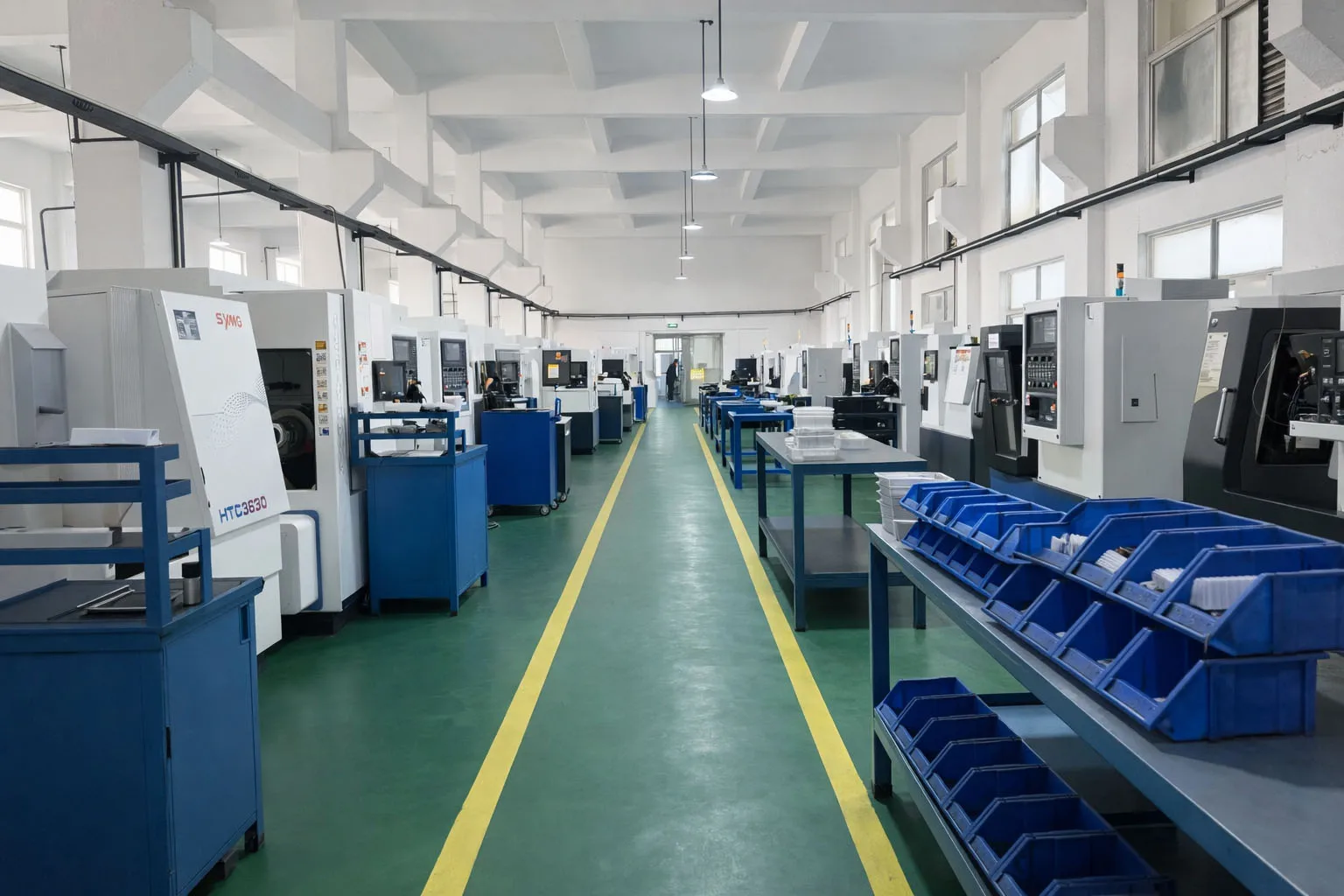
Ningbo Jiuyi Precision Mould Co., Ltd.
- Manufacturer
- Zhejiang, China
- Lead time10 days
- Avg. response≤ 3h
Main productsPunch,Mold,fastener,Stamped part,Hand tools
Main marketsDomestic Market(50.00%), Southeast Asia(13.00%), Mid East(10.00%), Central America(5.00%), Northern Europe(5.00%), North America(3.00%), Eastern Europe(3.00%), Western Europe(3.00%), Eastern Asia(2.00%), South Asia(2.00%), Africa(1.00%), Oceania(1.00%), Southern Europe(1.00%), South America(1.00%)














Comprehensive Sourcing Guide
Customized DIN933 Titanium Alloy Screws Supplier Concentration and Factory Types
The sourcing landscape for customized DIN 933 titanium alloy screws reveals a distinct concentration of manufacturing capabilities within specific industrial regions in China. Current supplier data indicates that production facilities are heavily clustered in Zhejiang and Shaanxi provinces, which serve as primary hubs for titanium processing and fastener manufacturing. Buyers evaluating these suppliers will find that the majority of entities operating in these locations identify as either Trading Companies or Manufacturer/Factory entities. This dual classification is critical for assessment, as it dictates the level of direct control a buyer has over the production process. Suppliers in Zhejiang often emphasize a broad range of titanium products, including wires, bars, sheets, and tubes, suggesting a vertical integration that can support complex screw manufacturing. Meanwhile, facilities in Shaanxi frequently list titanium, zirconium, niobium, and other specialty metals as main products, indicating a strong metallurgical foundation. Understanding this geographic and structural distribution allows buyers to target regions with established supply chains for raw titanium materials, which is essential for maintaining the integrity of customized DIN 933 specifications.
Beyond geography, the operational model of these suppliers varies significantly, influencing customization capabilities and lead times. Many factories in these clusters offer OEM and ODM services, allowing for tailored solutions that meet specific DIN 933 requirements. Some suppliers also maintain their own brands, such as KING or RUIYANG, which may indicate a focus on standardized quality control and brand reputation. The presence of trading companies alongside manufacturers suggests a layered market where some entities act as intermediaries, potentially offering broader product assortments but less direct oversight. Buyers must discern whether a supplier is a direct producer with in-house machining and threading capabilities or a trader aggregating products from multiple sources. This distinction is vital for customized orders, as direct manufacturers can adjust tooling and processes more rapidly to accommodate unique thread pitches, head styles, or surface treatments required for DIN 933 screws. The concentration of these factory types in Zhejiang and Shaanxi provides a concentrated pool of potential partners, but careful vetting is required to ensure the chosen entity aligns with the specific customization needs of the project.
How to Verify Customized DIN933 Titanium Alloy Screws Suppliers
Verifying the legitimacy and capability of suppliers for customized DIN 933 titanium alloy screws requires a rigorous examination of their certifications and verification status. Buyers should prioritize suppliers who hold recognized system certifications, such as ISO 9001, which indicates a standardized quality management system. Some suppliers in the current results also display additional certifications like ISO 14001 or BSCI, reflecting environmental and social compliance standards. Furthermore, third-party verification badges, such as those from TÜV Rheinland, provide an additional layer of trust regarding the supplier’s business legitimacy and operational stability. These credentials are not merely decorative; they serve as foundational evidence that the supplier adheres to international standards for manufacturing and business practices. When evaluating potential partners, buyers must cross-reference these certifications with the supplier’s claimed capabilities to ensure that the quality management systems are actively applied to the production of titanium fasteners. The presence of specific product certifications, such as EN 10204-3.1b, is also crucial, as it guarantees material traceability and test results for the titanium alloy used in the screws.
In addition to certifications, buyers should assess the supplier’s response time and verification history to gauge reliability and communication efficiency. Data shows that response times can vary, with some suppliers averaging around 4.93 hours and others taking up to 7 hours. A faster response time often correlates with better customer service and quicker resolution of technical queries related to DIN 933 specifications. Buyers should also look for suppliers who provide detailed product attributes, such as material grades, surface treatments, and standard compliance (e.g., DIN, ANSI, GOST). The availability of customization options, such as available head styles or special groove types, should be explicitly confirmed through direct inquiry. It is essential to verify that the supplier’s stated capabilities match the specific requirements of the order, including thread standards and tolerance levels. By combining certification checks with an analysis of response metrics and product detail transparency, buyers can build a robust profile of each supplier’s reliability. This multi-faceted verification process helps mitigate the risk of engaging with entities that may lack the necessary technical expertise or quality control measures for producing high-integrity titanium screws.
What to Compare Across Customized DIN933 Titanium Alloy Screws Suppliers
When comparing suppliers for customized DIN 933 titanium alloy screws, lead time and minimum order quantity (MOQ) are pivotal commercial metrics that impact project planning and inventory management. Current data indicates that lead times can range from approximately 20 to 23 days, depending on the supplier’s production schedule and customization complexity. Buyers must evaluate whether these timelines are realistic for their specific order volume and urgency. Similarly, MOQs vary significantly, with some suppliers requiring a minimum of 1 piece for testing or small batches, while others set thresholds at 100 or 300 pieces. This variation allows buyers to select partners based on their order size, whether they are prototyping or running large-scale production. Comparing these metrics across multiple suppliers helps identify those who offer the most favorable terms for the buyer’s specific needs. It is also important to consider the supplier’s capacity for OEM and ODM services, as this influences their ability to handle customized orders efficiently. Suppliers with established own brands may have streamlined processes for standard items, whereas those focusing on OEM might offer more flexibility for unique specifications.
Price and product range are additional critical factors in the comparison process. Price ranges for titanium screws can vary, with some listings showing minimum prices around $0.10 and maximums up to $3.00 per piece, depending on size, grade, and surface treatment. Buyers should request detailed quotations that break down costs based on material, processing, and packaging. Additionally, comparing the breadth of a supplier’s product catalog can reveal their expertise and versatility. Suppliers offering a wide range of titanium products, such as screws, bolts, nuts, and washers, may provide better value through consolidated shipping and unified quality standards. The availability of different standards, including DIN, ANSI, GOST, and JIS, is also a key differentiator. Buyers should assess whether the supplier can produce screws that meet specific international standards required for their application. Furthermore, examining the supplier’s customization options, such as available head styles and surface finishes like pickled or polished, ensures that the final product meets technical requirements. By systematically comparing lead times, MOQs, prices, and product capabilities, buyers can make informed decisions that balance cost, speed, and quality.
Common Customized DIN933 Titanium Alloy Screws Sourcing Risks
One of the primary risks in sourcing customized DIN 933 titanium alloy screws is the potential mismatch between stated material grades and actual product specifications. Titanium alloys come in various grades, such as Grade 2, Grade 5, and Grade 7, each with distinct mechanical properties and chemical compositions. Suppliers may list multiple grades in their product attributes, but buyers must ensure that the specific grade required for their application is clearly specified and verified. There is a risk that suppliers might substitute a lower-grade material for a higher-grade one to reduce costs, which could compromise the performance and safety of the final assembly. To mitigate this risk, buyers should insist on material test reports and certifications, such as EN 10204-3.1b, which provide detailed chemical and mechanical analysis of the titanium used. Additionally, buyers should verify that the supplier has the capability to produce the exact grade required, as not all manufacturers stock every titanium alloy. Clear communication of grade requirements in the purchase order and contract is essential to prevent misunderstandings and ensure that the delivered screws meet the necessary technical standards.
Another significant risk involves the consistency of surface treatments and dimensional tolerances, which are critical for the functionality of DIN 933 screws. Surface treatments like pickling, polishing, or oxidation can affect corrosion resistance and appearance, but inconsistencies in these processes can lead to premature failure or aesthetic defects. Buyers must ensure that the supplier has strict quality control measures in place to maintain uniformity across batches. Dimensional tolerances, particularly for thread pitch and head dimensions, must adhere strictly to DIN 933 standards. Any deviation can result in assembly issues or compromised joint integrity. Suppliers may claim compliance with various standards, but buyers should verify this through third-party inspections or sample testing before committing to large orders. Additionally, there is a risk related to packaging and handling, as titanium screws can be susceptible to damage if not packed correctly. Suppliers often use wooden cases or carton boxes, but the adequacy of this packaging should be assessed to prevent damage during transit. By identifying and addressing these risks through rigorous verification and clear specifications, buyers can protect their projects from quality-related setbacks and ensure the reliability of their customized titanium screw supply.
Customized DIN933 Titanium Alloy Screws Regional Sourcing and Logistics
Sourcing customized DIN 933 titanium alloy screws from specific regions in China, such as Zhejiang and Shaanxi, offers logistical advantages but also presents challenges that buyers must manage. Zhejiang province is known for its robust manufacturing infrastructure and proximity to major ports, which can facilitate faster shipping times and lower logistics costs for international buyers. Suppliers in this region often have experience with export procedures and can handle complex documentation requirements efficiently. On the other hand, Shaanxi province, while further inland, is a hub for heavy industry and metallurgy, providing access to high-quality raw materials. Buyers sourcing from Shaanxi may need to account for additional inland transportation costs and longer transit times to coastal ports. Understanding these regional differences allows buyers to optimize their supply chain by selecting suppliers based on their logistical strengths. For instance, buyers with urgent delivery requirements might prioritize suppliers in Zhejiang, while those seeking specialized metallurgical expertise might look to Shaanxi. It is also important to consider the supplier’s experience with international shipping, as they should be able to provide accurate estimates for freight costs and delivery timelines.
Logistics planning for customized titanium screws also involves considerations for packaging and handling to ensure product integrity during transit. Suppliers typically use wooden cases or carton boxes for packaging, but the adequacy of this packaging must be verified to prevent damage. Buyers should discuss packaging requirements with their chosen supplier, especially for large orders or shipments to destinations with rough handling conditions. Additionally, buyers must be aware of any import regulations or tariffs that may apply to titanium fasteners in their destination country. These regulations can impact the total landed cost and delivery timeline. Working with suppliers who have experience in exporting to the buyer’s region can help navigate these complexities. Suppliers should be able to provide necessary documentation, such as commercial invoices, packing lists, and certificates of origin, to facilitate smooth customs clearance. By carefully planning logistics and selecting suppliers with strong export capabilities, buyers can minimize delays and ensure that their customized DIN 933 titanium screws arrive in optimal condition. This proactive approach to logistics management is essential for maintaining supply chain efficiency and meeting project deadlines.
Customized DIN933 Titanium Alloy Screws Commercial Terms and Order Planning
Effective order planning for customized DIN 933 titanium alloy screws requires a clear understanding of commercial terms, including payment methods, pricing structures, and after-sales support. Buyers should negotiate payment terms that align with their cash flow and risk tolerance, such as using secure payment platforms or escrow services to protect their funds until the goods are received and verified. Pricing for customized screws can vary based on factors like material grade, surface treatment, and order volume, so buyers should request detailed quotations that break down these costs. It is also important
FAQs
What certifications do titanium screw suppliers hold?
Suppliers in China Zhejiang and Shaanxi hold ISO 9001 and ISO 9000 certifications. Some also possess ISO 14001 and ISO 14000 system certifications. Verification by TÜV Rheinland is available for select manufacturers. Buyers should request En10204-3.1b certificates for specific product batches to ensure material traceability and quality compliance.
What is the typical lead time for titanium screws?
Typical lead times range from 20 to 23 days for manufacturing customized titanium screws. This duration applies to standard production runs in China. Buyers requiring expedited delivery should contact suppliers directly, as response times vary between 4.93 and 7.00 hours. Confirming specific timelines with the supplier is essential for project planning.
What are the minimum order quantities for titanium fasteners?
Minimum order quantities vary significantly by supplier. Some manufacturers accept orders as low as one piece, while others require a minimum of 100 or 300 pieces. Buyers should verify the specific MOQ for their desired grade and size. Customization availability often influences these thresholds, so direct inquiry is recommended.
What standards are used for titanium screw specifications?
Titanium screws are manufactured to DIN, ANSI, GOST, GB, BSW, and JIS standards. Common specifications include DIN 84 and DIN 912. Materials range from pure titanium to titanium alloys like Grade 5 and Grade 7. Buyers must specify the exact standard and grade to ensure compatibility with their assembly requirements.
What is the price range for titanium screws?
Prices for titanium screws typically range from $0.10 to $3.00 per piece. This range depends on the grade, size, and surface finish. Customization options may affect the final cost. Buyers should request detailed quotes based on their specific quantity and technical requirements to obtain accurate pricing from verified suppliers.
Where are titanium screw manufacturers located?
Major titanium screw manufacturers are located in China, specifically in Zhejiang and Shaanxi provinces. These regions offer established supply chains for titanium and titanium alloy products. Buyers can source from both trading companies and direct manufacturers in these locations. Verifying the exact location helps in assessing logistics and shipping costs.
What customization options are available for titanium screws?
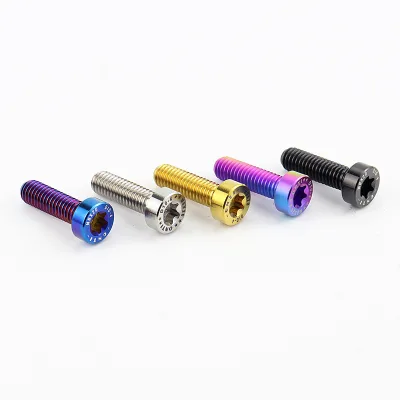
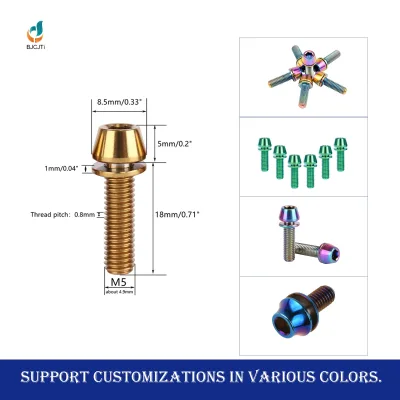
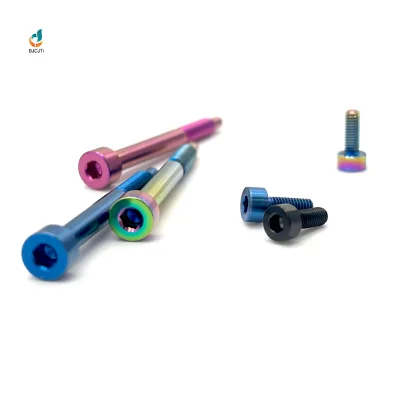
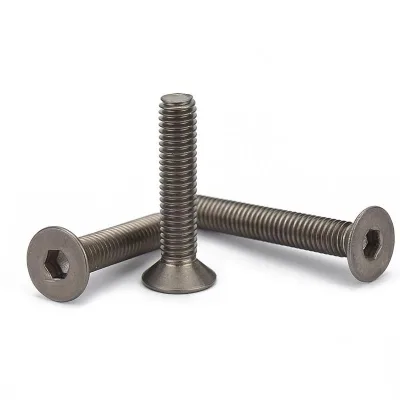
Customization is available for head style, thread type, and surface finish. Options include round, countersunk, and hexagon heads. Surface treatments like pickling, polishing, and oxidation are offered. Buyers can specify custom dimensions and grades. Confirming customization capabilities with the supplier ensures the product meets precise engineering specifications.