Dishware Suppliers and Manufacturers in China
Source 18 verified Dishware suppliers in China for ceramic and melamine tableware. Compare response times, lead times, MOQs, and certifications like ISO9001:2015 and FDA. Review product specs and request quotes directly; review the available evidence before requesting comparable quotations from suitable candidates.
Updated
Suppliers List

Chaozhou Chaoan Chaoda Ceramics Co., Ltd.
- Manufacturer
- Guangdong, China
- Lead time7 days
- Avg. response≤ 6h
Main productsCeramic Plates,Ceramic Bowls,Ceramic Cups
Main marketsWestern Europe(50.00%), North America(25.00%), Southeast Asia(15.00%), South America(10.00%)
Fujian Meneed Import And Export Trade Co., Ltd.
- Verified by Intertek
- Trading Company
- Lead time45 days
- Avg. response≤ 5h
Main productsMelamine Tableware, Bamboo Fiber Tableware
Main marketsNorth America(55%), South America(20%), Western Europe(20%)

Dongguan ShunTa Melamine Products Co., Ltd.
- Verified by CTI
- Combined
- China Guangdong
- Lead time15 days
- Avg. response≤ 9h
Main productsMelamine, Table Ware, Tableware, Household, Kitchen Ware, Pets Accessories, Chopsticks, Ashtray, Cushions, Bowls
Main marketsSoutheast Asia/ Mideast,East Asia(Japan/ South Korea),Domestic,Europe,Australia,North America


Restaurant Supplies Melamine 6" Plate Dishwasher Safe Unbreakable Serving Plate
$1.07 - $1.32
MOQ: 96 Pieces


Melamine 5 Pair Set Japanese Style Dishwasher Safe 8 Inch Black Chopsticks
$0.37 - $0.46
MOQ: 1000 Pairs

Zibo Timestone International Co., Ltd.
- Manufacturer/Factory
- China Shandong
- Lead time45 days
- Avg. response≤ 11h
Main productsCeramic Dinnerware, Ceramic Mugs, Stainless Steel Bottles Mugs and Tumblers, Glass Bottles Mugs and Tumblers, Dinnerware, Tableware, Glassware, Kitchenware, Household Items, Ceramic Granding Balls and Filters
Main marketsSouth America,Eastern Europe,Mid East,North America,Southeast Asia,Eastern Asia,Oceania,Western Europe,Africa
Guangzhou Hucheng Tableware Co., Ltd.
- Verified by SGS Group
- Manufacturer, Trading Company
- Lead time30 days
- Avg. response≤ 3h
Main productsMelamine Plates, Melamine Bowl, Melamine Tray, Melamine Dinner Set, Melamine Cups
Main marketsDomestic Market(40%), North America(10%), South America(10%)

Zensun Stainless Steel Products Co. , Ltd.
- Verified by SGS
- Trading Company
- China Guangdong
- Lead time30 days
- Avg. response≤ 10h
Main productsGn Pan, Chafing Dish, Food Tray, Stock Pot, Kettle, Cutlery, Kitchenware, Cookware, Restraurant and Hotel Supplies, Milk Pot
Main marketsDomestic

Good Quality Kitchen Utensils Elegant Multi-Use Dishware for Hotels and Catering Services
$31.95 - $41.95
MOQ: 20 Pieces

$31.95 - $41.95
MOQ: 20 Pieces

Hot Sale Kitchen Utensils Eco-Friendly School Canteen Plate for Healthy Meal Options
$1.25 - $3.59
MOQ: 100 Pieces

Wholesale Food Grade Durable Stainless Steel Food Divided Plate for Everyday Use
$1.25 - $3.59
MOQ: 100 Pieces

Chinese New Design Good Stainless Steel Eco-Friendly Food Grade Divided Plate for Healthy Meals
$1.25 - $3.59
MOQ: 100 Pieces
- Trading Company
- Anhui, China
- Lead time15 days
- Avg. response≤ 13h
Main productsRPET tableware,PLA tableware,Bamboo fiber tableware,outdoor furniture,ECO daily necessities
Main marketsEastern Europe(15.00%), Western Europe(15.00%), North America(15.00%), Oceania(13.00%), Domestic Market(10.00%), Northern Europe(10.00%), Southern Europe(10.00%), Eastern Asia(5.00%), Mid East(3.00%), South America(2.00%), Southeast Asia(2.00%)
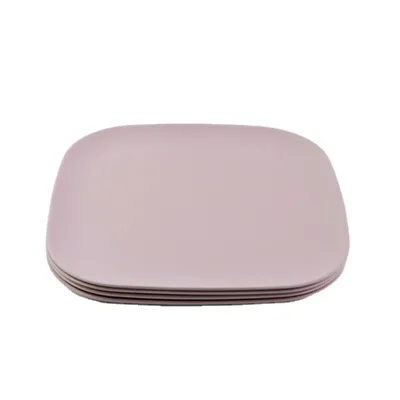
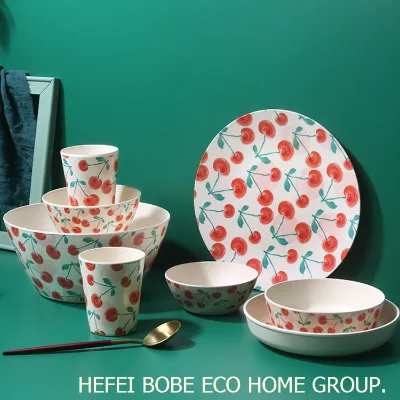
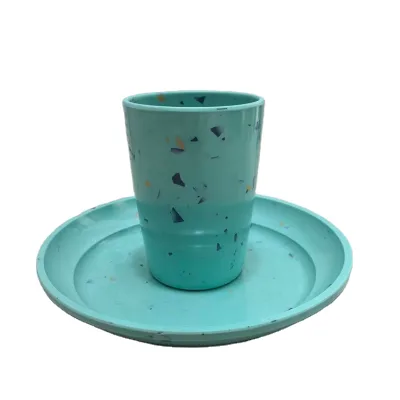
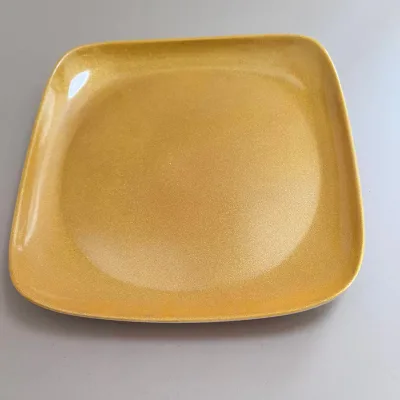
$0.103 - $0.3101
MOQ: 500 pieces
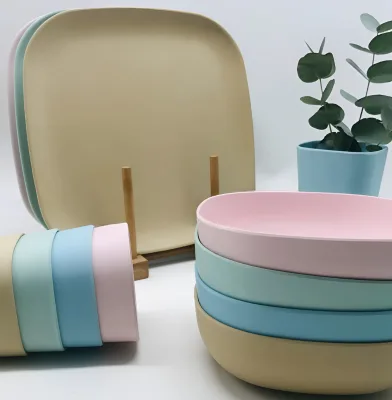
Guangzhou Hucheng Melamine Products Co., Ltd.
- Verified by SGS Group
- Manufacturer, Trading Company
- Lead time20 days
- Avg. response≤ 2h
Main productsMelamine Products
Main marketsDomestic Market(18%), South Asia(12%), South America(10%)

Minhou Forao Arts & Crafts Co., Ltd.
- Verified by SGS
- Combined
- China Fujian
- Lead time45 days
- Avg. response≤ 22h
Main productsDining Plate, Plastic Plate
Main marketsAustralia,North America

Elegant Round/Square Full Shell Pattern Decorative Dishware with Wholesale Price
$0.70 - $0.90
MOQ: 1000 Pieces

Elegant Round/Square Gilded Embossed Patterrn Decorative Dishware with Wholesale Price
$0.70 - $0.90
MOQ: 1000 Pieces

Elegant Round/Square Gold Blossom Decorative Dishware with Wholesale Price
$0.70 - $0.90
MOQ: 1000 Pieces

Elegant Round/Square Rope Edge Decorative Dishware with Wholesale Price
$0.70 - $0.90
MOQ: 1000 Pieces

Elegant Round/Square Snowflake Decorative Dishware with Wholesale Price
$0.70 - $0.90
MOQ: 1000 Pieces

Elegant Round/Square Wheat Ear Textured Edge Decorative Dishware with Wholesale Price
$0.70 - $0.90
MOQ: 1000 Pieces
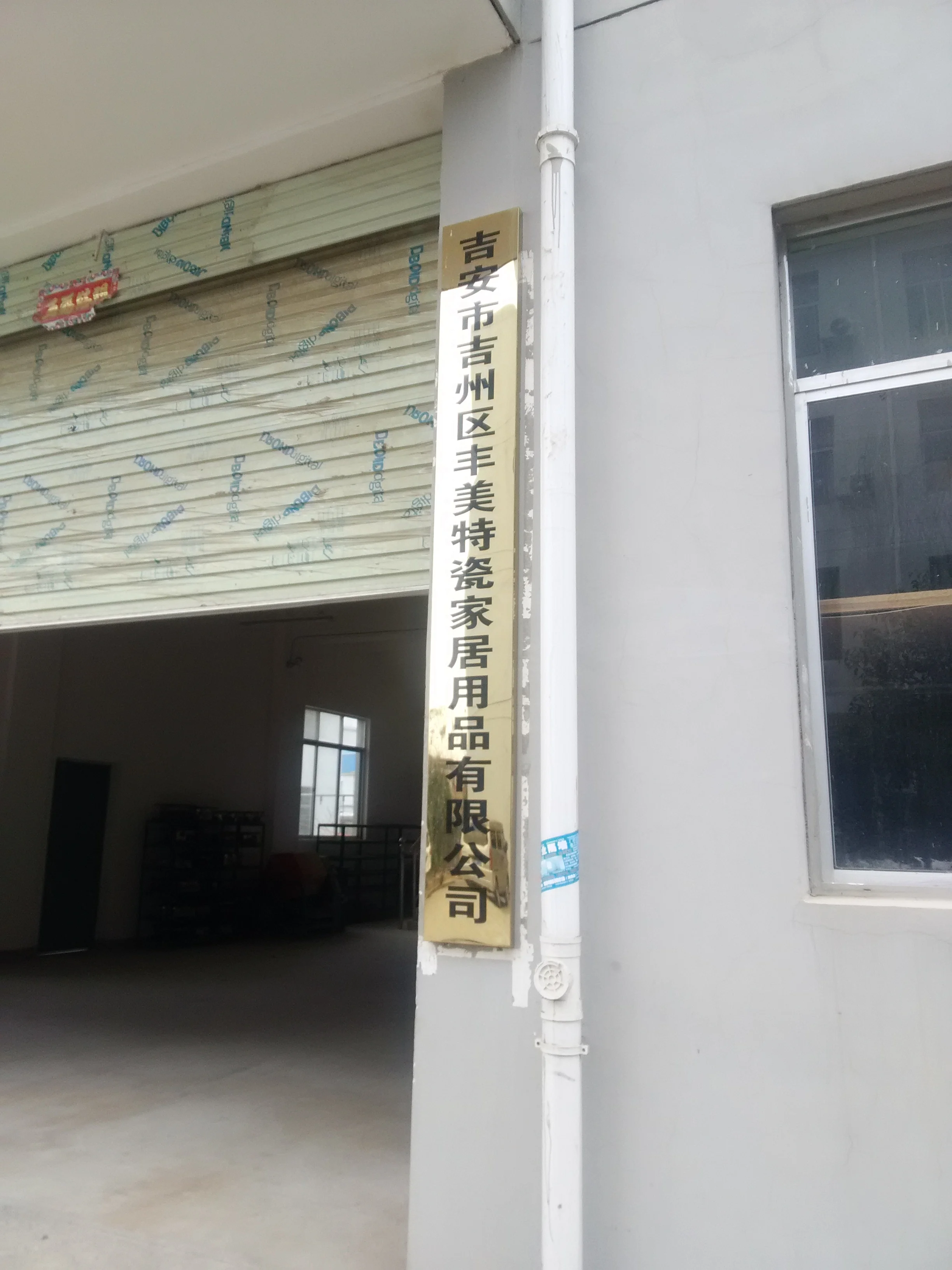
Ji'an City Jizhou District Fengmei Special Porcelain Household Products Co., Ltd.
- Manufacturer, Trading Company
- Jiangxi, China
- Lead time30 days
- Avg. response≤ 5h
Main productsbowl,plate,dish,tray,cup
Main marketsEastern Asia(50.00%), North America(30.00%), South Asia(10.00%), Western Europe(10.00%)
- Trading Company
- Lead time旺季: "1 - 10000":15,"> 10000":"To be negotiated", 淡季: "1 - 10000":15,"> 10000":"To be negotiated"
- Avg. response≤ 5h
Main productsUmbrellas, Bags, Keychain, Cups, Hats
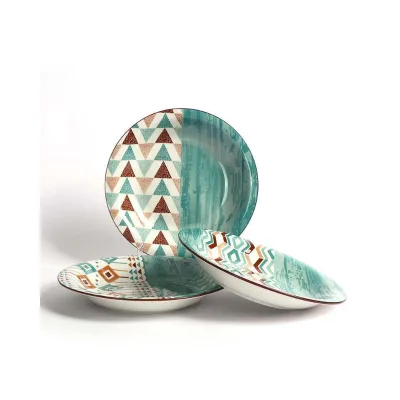
Hot Selling Factory Price 9.25"Soup Plate Under Glaze Pad Ceramics Tableware Porcelainware
$0.34 - $0.38
MOQ: 2700 pieces
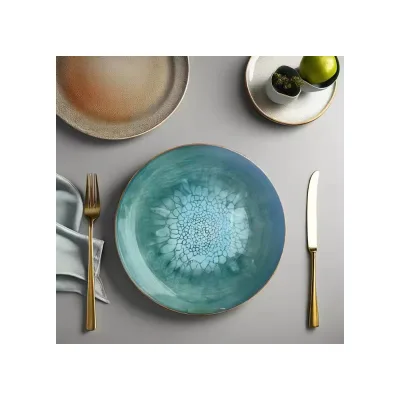
Hot Selling Factory Price10.5"Coup Plate Active Glaze Porcelainware Ceramics Tableware
$0.60 - $0.67
MOQ: 1600 pieces
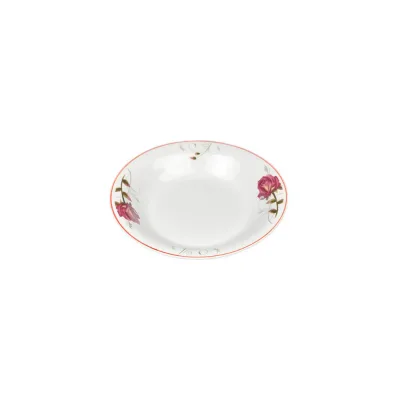
Hot Selling Factory Price 9.25 Inch Omage Soup Plate with Decals Porcelain Ceramics Tableware
$0.30 - $0.34
MOQ: 3000 pieces
Changsha Happy Go Products Developing Co., Ltd.
- Trading Company
- Hunan, China
- Lead time60 days
- Avg. response≤ 9h
Main productsDinner Set,Dinnerware,ceramic mug,coffee mug,tableware
Main marketsWestern Europe(32.96%), Northern Europe(15.30%), Eastern Europe(14.30%), South America(9.25%), Eastern Asia(9.14%), Africa(6.50%), North America(6.02%), Southeast Asia(4.93%), Oceania(1.60%)
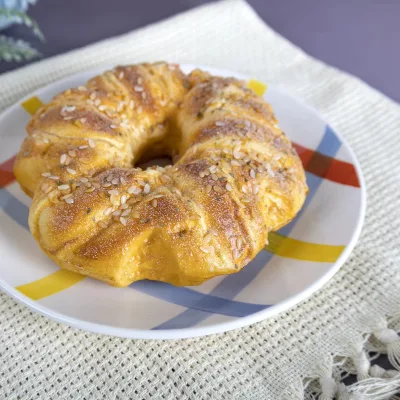
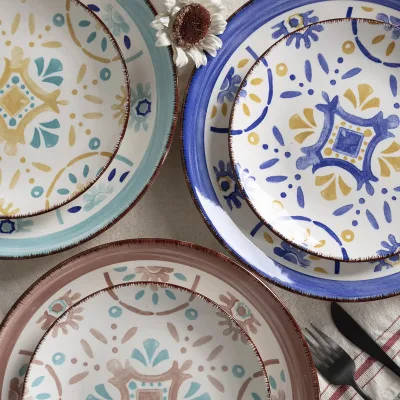
Eco-Friendly 26.5cm Dinner Plate with Two Tone Pad Printing with Brown Brush Rim
$0.99 - $1.02
MOQ: 3000 pieces
Hunan Dongyu Technology Co., Ltd.
- Verified by Intertek
- Manufacturer, Trading Company
- Lead time0 days
- Avg. response≤ 3h
Main productsMelamine Tableware Set, Melamine Tableware Plates
Main marketsDomestic Market(60%), Western Europe(10%), Northern Europe(10%)
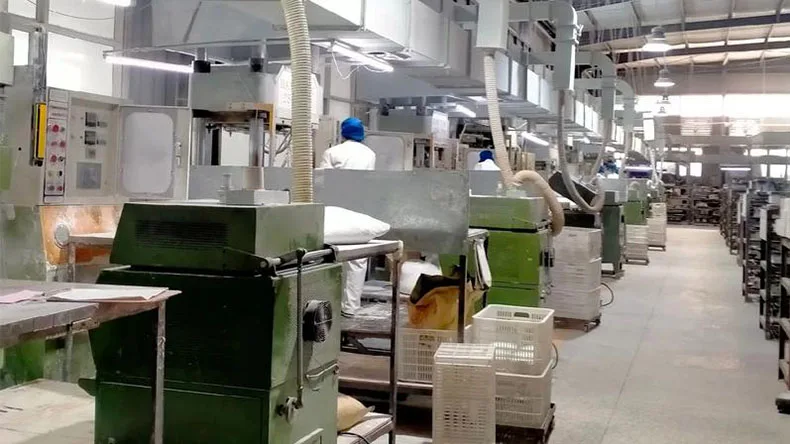
Guangzhou Dinghao Hotel Supplies Co., Ltd.
- Manufacturer, Trading Company, Distributor/Wholesaler
- Guangdong, China
- Lead time0 days
- Avg. response≤ 1h
Main productsMelamine tableware,Hotel tableware,Hotel supplies,melamine,plastic
Main marketsNorth America(20.00%), Domestic Market(18.00%), South Asia(10.00%), Central America(10.00%), Mid East(10.00%), Southeast Asia(10.00%), South America(10.00%)
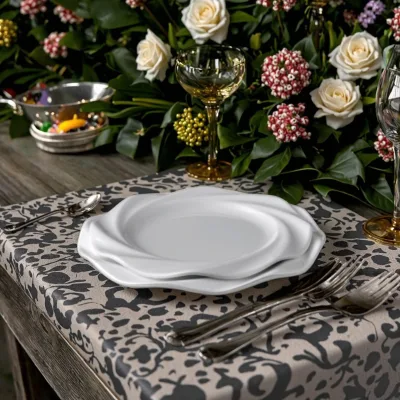
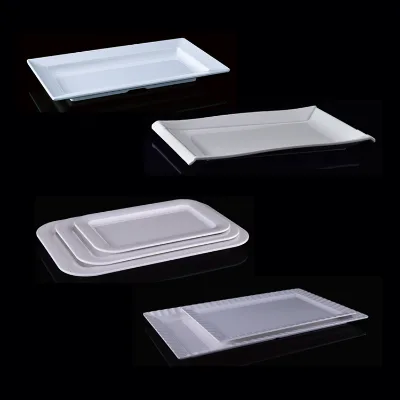
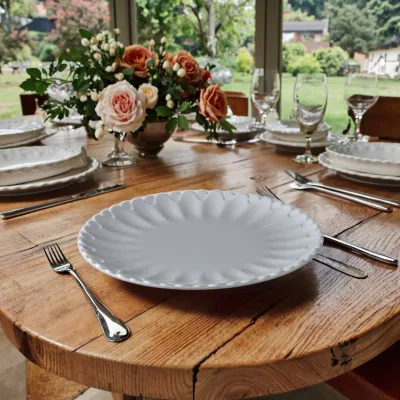
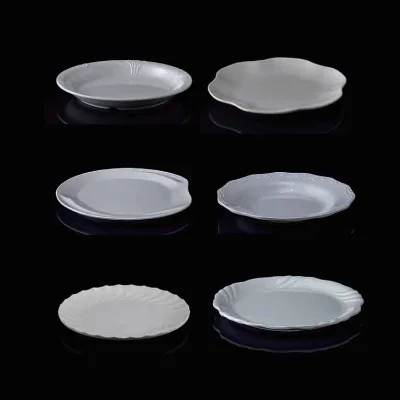
$0.57 - $2.69
MOQ: 100 Minimum
Yixing Oumeike Ceramics Co., Ltd.
- Manufacturer, Trading Company
- Jiangsu, China
- Lead time30 days
- Avg. response≤ 3h
Main productsCeramic tableware,kitchenware,tea set
Main marketsSoutheast Asia(40.00%), North America(30.00%)
Yongkang Taige Daily Necessities Business Department.
- Trading Company
- Jinhua, China
- Lead time15 days
- Avg. response≤ 2h
Main productscup,bottle,Musical Instruments,bicycle,camping
Main marketsCentral America(30.00%), North America(20.00%), South America(20.00%), Southern Europe(10.00%), Northern Europe(10.00%), Western Europe(10.00%)
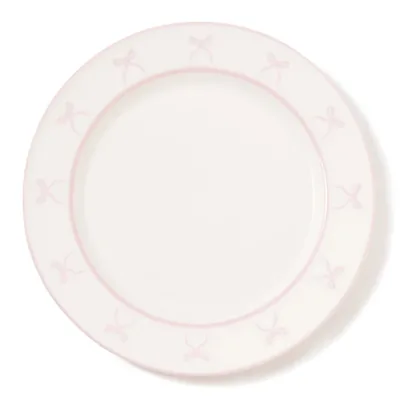
Creative Cream Pink Bow Ceramic Breakfast Vegetable Plate Light Luxury Ceramic Western Pasta Plate
$2.3294 - $2.7863
MOQ: 200 pieces
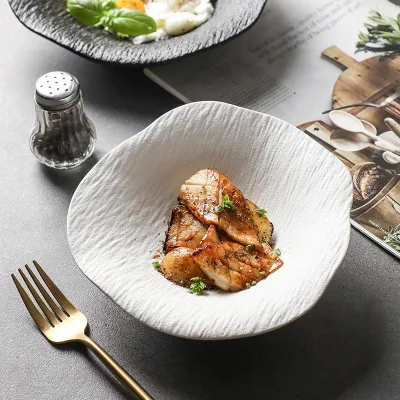
Creative Stone Pattern Simple Ceramic Tableware Set Irregular Flower Shaped Ceramic Deep Plate
$2.7758 - $3.5203
MOQ: 20 Minimum
Chaozhou Jingli Trading Co., Ltd.
- Manufacturer, Trading Company
- Guangdong, China
- Lead time0 days
- Avg. response≤ 3h
Main productsCutlery set,Kitchen Utensils,bakware set,Barware set,plate
Main marketsNorth America(30.00%), Western Europe(10.00%), Mid East(10.00%), Oceania(10.00%), Eastern Europe(10.00%), South Asia(10.00%), Southern Europe(10.00%), Southeast Asia(5.00%), South America(5.00%)
Dongguan Huayue Business Co., Ltd.
- Verified by SGS Group
- Manufacturer, Trading Company
- Lead time15 days
- Avg. response≤ 4h
Main productsStainless Steel Baby Cutlery, BBQ Tools, Stainless Steel Cutlery Sets, Cookie Cutter, Cutlery With Polyresin Handles
Main marketsMid East(28%), North America(20%), Eastern Europe(19%)



Comprehensive Sourcing Guide
Dishware Supplier Concentration and Factory Types
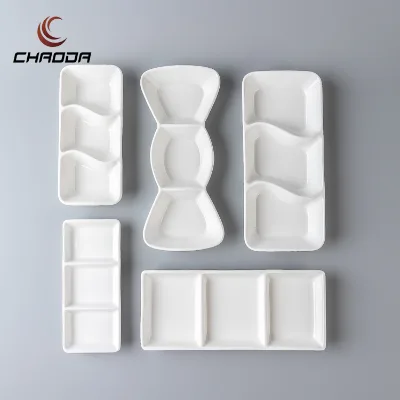
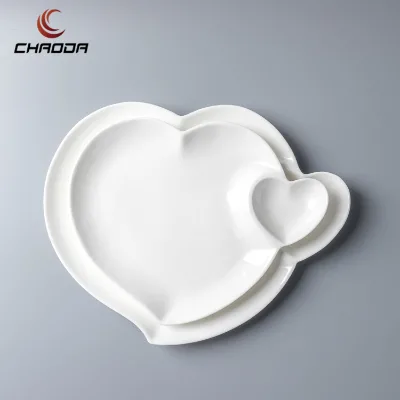
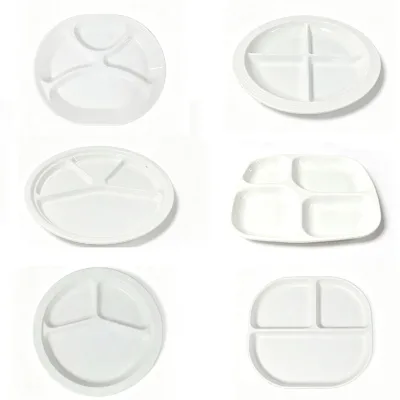
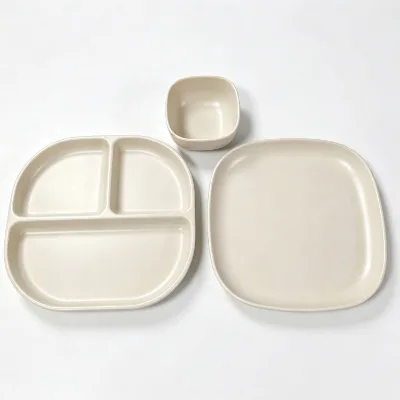
Dishware sourcing covers a wide product spectrum, and the supplier list in this category reflects that breadth. Ceramic manufacturers based in Guangdong, China, list products such as three-compartment tableware for home and hotel use, heart-shaped porcelain dishes, and white porcelain plates ranging from 8 to 16 inches, with diameters and dimensions specified down to centimeter level. These listings are typically described as dishwasher safe, microwave suitable, and eco-friendly, which signals a factory base oriented toward both household and hospitality channels. Supplier type matters here: manufacturers in this category produce ceramic plates, bowls, and cups as their stated main products, which suggests direct production capability rather than reselling.
Alongside ceramic makers, the category includes trading companies specializing in melamine and bamboo fiber tableware, and combined-type suppliers handling melamine, household goods, kitchen ware, pets accessories, chopsticks, and other lines. Product origin listed on one melamine plate points to Fujian, China, a region commonly associated with melamine production; buyers should confirm origin with any supplier they contact rather than assuming it. When identifying clusters on your own, filter supplier lists by stated location and main products, then note which regions appear repeatedly across verified profiles. Established manufacturing provinces in China dominate this category, but concentration claims should always be confirmed from the supplier's own profile, not from general market reputation. Match the factory type to your material first, then assess the region.
How to Verify Dishware Suppliers
Verification starts with the credentials displayed on the supplier profile, but you must read them precisely. In this category, one melamine trading company shows Intertek verification, while a combined-type supplier lists an ISO9001:2015 certificate and CTI verification. These are third-party inspection and quality-management signals, not product safety approvals, so treat them as baseline credibility indicators. Individual product listings may also carry claims such as CE/EU and FDA certification for melamine plates and dishes. Never assume these certifications cover your entire order; ask the supplier for the specific certificate documents, confirm which product models they apply to, and check whether the certificate is current.
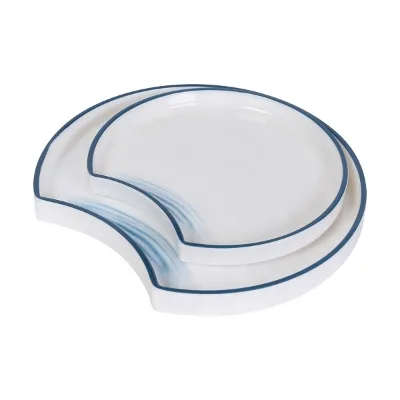
Beyond profile badges, verification should follow the evidence trail in the listings themselves. One supplier's three-compartment ceramic dish carries detailed dimensional data for five size variants, which suggests genuine product engineering rather than a copied listing. A melamine moon-shaped plate listing specifies sample lead times of 7-10 days for customized samples and 2 days for stock samples, alongside OEM/ODM availability and decal, silk, and heat-transfer printing options. Ask suppliers to confirm these details in writing, then order a paid sample from your shortlist before committing to production. Request factory audit availability directly; one listing explicitly invites inquiries about factory audits. For food-contact Dishware, verify that any food-grade or BPA-free claims are supported by test reports from the supplier, and check whether escrow or platform payment protection applies to your transaction.
What to Compare Across Dishware Suppliers
Build a comparison table from the attributes suppliers actually display, and leave blanks where data is missing rather than guessing. In this category, lead times range widely: a ceramic manufacturer lists 7 days, a combined melamine supplier lists 15 days, and a melamine and bamboo fiber trading company lists 45 days. That spread matters most if you are restocking against a seasonal deadline. Response times are also displayed and vary from around 5 to 8.6 hours, which is a practical proxy for how quickly a supplier will handle production questions. Not every supplier displays every attribute, so note the gaps as part of the comparison.
MOQs in this category differ sharply by material and product. Ceramic plate listings show MOQs as low as 10 or 20 pieces, while a melamine sauce plate is listed at 500 pieces and a custom-pattern moon-shaped plate at 3,000 pieces. Price bands also vary: ceramic plates are listed at roughly $1.00-$2.00, melamine soup plates at about $0.80, sauce plates at $0.70-$0.88, and custom melamine plates at $1.20. Compare like-for-like: size, material, and customization level all shift price. Also compare main products to confirm specialization, supplier type to decide whether you need factory-direct pricing, verification status, customization capability such as ODM or OEM, and location for logistics planning.
Common Dishware Sourcing Risks
The most common risk in this category is assuming certifications shown on a product listing apply to your specific configuration. A melamine sauce plate listing displays CE/EU and FDA certification alongside a 105 mm model number, but if you change the color, size, or add a custom logo, the certified configuration may no longer match. The same applies to dishwasher-safe, BPA-free, and food-grade claims on melamine and porcelain listings. Always request the underlying test documentation for the exact model you intend to order, and confirm which laboratory issued it. Another frequent risk is sample-versus-production inconsistency; the printed finish on a customized plate, whether decal or heat transfer, can differ between a stock sample and a full production run.
Lead-time risk is also significant because this category spans materials with very different production cycles. Ceramic plates may be listed at 7 days while customized melamine production is listed at 35-40 days, with a separate 45-day supplier lead time elsewhere. If your launch date is fixed, build the longest stated production time into your plan rather than the shortest. MOQ risk is equally practical: committing to 3,000 pieces of a custom-pattern plate is a different exposure than 10-piece ceramic trials, and unsold inventory of customized designs is rarely resaleable. Finally, trading companies versus manufacturers create transparency risk; ask who actually molds or fires the product, and whether audits can cover the underlying factory.
Dishware Regional Sourcing and Logistics
The location data available in this category points to Guangdong, China, for ceramic manufacturers, with a product listing for melamine plates indicating Fujian as the place of origin. Guangdong's coastal position generally supports access to major export ports for both ceramic and melamine shipments, which matters for container availability and freight cost, though you should confirm port proximity with each supplier rather than assuming it from province alone. Fujian's association with melamine tableware means that sourcing melamine and ceramic from two provinces may split your consolidation points, increasing inland freight and coordination effort if you combine both materials in one order.
Logistics planning should start from product weight and fragility rather than freight rates alone. Ceramic plates listed with precise dimensions, such as an 8-inch plate at roughly 20.5 by 12 by 2 centimeters, allow you to estimate carton counts and container utilization, while a melamine plate listing provides a single package size of 30 by 30 by 15 centimeters and a gross weight of about 1 kilogram per unit. Ask both types of suppliers for their packing specification, inner box plus master carton configuration where available, and breakage allowance on ceramic orders. Production timing also varies by region and supplier: 35-40 days for customized melamine against shorter ceramic lead times affects when you book freight. Always request the actual loading port, transit options, and whether the supplier handles export documentation.
Dishware Commercial Terms and Order Planning
Commercial terms in this category reward careful sequencing. Start with samples: one melamine listing states 2 days for stock samples and 7-10 days for customized samples, which lets you test two phases, first the material and shape, then your printed design. Only after sample approval should you lock pricing, and note that listed prices here span roughly $0.70 to $2.00 depending on material, size, and customization. Confirm whether quoted prices hold at your MOQ, since a custom melamine plate at 3,000 pieces may be priced differently from the 500-piece stock sauce plate tier. Clarify printing method costs, as decal, silk, and heat-transfer printing are each quoted separately by some suppliers.
Order planning should reconcile the trade-off between customization and flexibility. Stock items, such as white melamine soup plates or standard ceramic compartment dishes, carry low MOQs of 10 to 500 pieces and shorter lead times of 7 to 15 days, making them suitable for testing market demand. Customized designs with 35-40 day production times and 3,000-piece MOQs belong in your second or third order, once sell-through is proven. Confirm payment protection before transferring funds; ask whether the transaction qualifies for escrow on the platform you use. Finally, plan reorders against the longest stated lead time of 45 days and confirm restock capacity in writing, since seasonal demand in back-to-school and hospitality channels can compete with your production slot.
FAQs
What is the price range for ceramic and melamine Dishware?
Ceramic Dishware typically costs between $1.00 and $2.00 per unit, while melamine options range from $0.70 to $1.20. Prices vary based on material, size, and customization requirements. Buyers should verify specific quotes for bulk orders to ensure accurate pricing for their needs.
What are the minimum order quantities for these products?
Minimum order quantities vary significantly by product type. Ceramic plates often require a minimum of 10 to 20 units. In contrast, melamine items like moon-shaped plates may require 3,000 units, while sauce plates might need 500 units. Always check the specific product listing for exact MOQs.
How long does production and delivery take?
Lead times differ by supplier and product. Ceramic items generally have a lead time of 7 days. Melamine products can take 15 to 45 days depending on customization. Sample times for custom melamine designs range from 2 to 10 days. Confirm timelines with the supplier before ordering.
Are these Dishware items dishwasher and microwave safe?
Many ceramic plates are explicitly labeled as dishwasher and microwave safe. Melamine items are often dishwasher safe and BPA-free but may have microwave restrictions. Always verify the specific product attributes for safety certifications and usage guidelines to ensure compliance with your operational requirements.
What certifications are available for melamine tableware?
Melamine Dishware often carries CE/EU and FDA certifications. Some suppliers offer ISO9001:2015 system certifications. Factory audits are also available upon request. Buyers should verify specific certification documents for each product to ensure they meet regional safety and quality standards for food contact.
Can I customize the logo or design on the plates?
Customization is available for many melamine and ceramic products. Options include decal printing, silk printing, and heat transfer printing for logos. Custom patterns and shapes are also supported. Suppliers typically offer OEM and ODM services. Confirm customization details and additional costs with the manufacturer directly.