eco-friendly bird spike Suppliers and Manufacturers
Compare 25 verified eco-friendly bird spike suppliers by response time, lead time, and certifications like ISO 9001. Review product specs and pricing to select a source for your pest control needs; review the available evidence before requesting comparable quotations from suitable candidates.
Updated
Suppliers List
Hebei Hengshi Wire Mesh Product Co., Ltd.
- Verified by TüVRheinland
- Manufacturer, Trading Company
- Lead time10 days
- Avg. response≤ 2h
Main productsWelded Wire Mesh, Wire Mesh Fence, Gabion Box, Metal Cages, Woven Wire Mesh
Main marketsWestern Europe(14%), Africa(12%), Southeast Asia(11%)
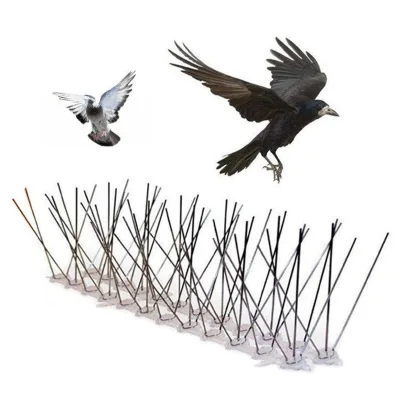
Bird Control Spike Anti-bird Spikes 60 cm Bird Spike
$0.36 - $1.00

CANGZHOU DEMAND HARDWARE PRODUCTS CO.,LTD
- Verified by SGS
- Trading Company
- China Hebei
- Lead time30 days
- Avg. response≤ 6h
Main productsPost Anchor, Ground Screw, Post Holder, Post Bearer, Ground Pile, Post Caps, Wood Connector, Water Tank, Stainless Steel Valves, Pipe Fittings
Main marketsEurope


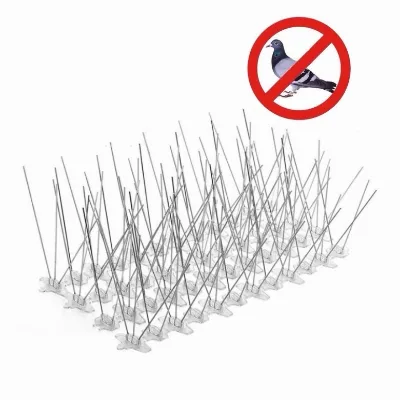
Hot Sales Bird Spiker Bird Spikes Stainless Steel Anti Bird Spike Manufacturer
$0.30 - $0.80
MOQ: 100 Pieces


Hebei Yongkun Metal Products Co., Ltd.
- Combined
- China Hebei
- Lead time15 days
- Avg. response≤ 5h
Main productsWedge Wire Screen, Gabion, Sintered Mesh, Knitted Mesh, Metal Conveyor Belt, Stainless Steel Wire Mesh, Filter Element, Mining Screen, Filter Disc, Perforated Sheet
Main marketsSouth America,Africa,Southeast Asia/ Mideast,East Asia(Japan/ South Korea),Europe,North America

Dezhou Hualude Hardware Products Co., Ltd.
- Verified by BV
- Trading Company
- China Shandong
- Lead time15 days
- Avg. response≤ 7h
Main productsIron Nail, Iron Wire, Fence Post, Fence Gate, Wire Mesh, Galvanized Corrugated Sheet, Galvanized Coil, Roll Forming Machine, Concrete Accessory, PPGI Coils
Main marketsSoutheast Asia/ Mideast,Europe,Australia,North America
Hebei Crown Wealth Metal Products Co.,Ltd.
- Verified by SGS Group
- Manufacturer, Trading Company
- Lead time15 days
- Avg. response≤ 2h
Main productsPole Line Hardware, Fiber Optic Accessories, Pest Control, Wood Construction Connector
Main marketsNorth America(25%), South America(20%), Southern Europe(10%)
Hangzhou Kunda Technology Co., Ltd.
- Manufacturer, Trading Company
- Zhejiang, China
- Lead time20 days
- Avg. response≤ 5h
Main productsGlue Traps,Mouse Traps,Pest Repeller,household cleaning,Gardening Products
Main marketsNorth America(25.00%), Mid East(20.00%), South America(15.00%), Southern Europe(10.00%), Western Europe(10.00%), Eastern Europe(10.00%), Central America(5.00%)
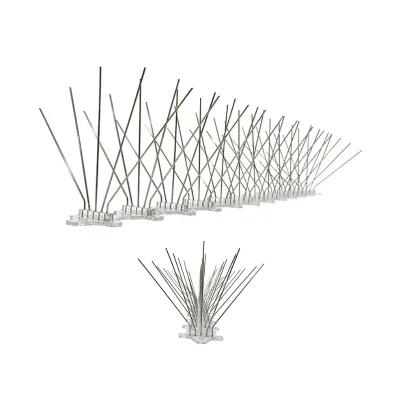
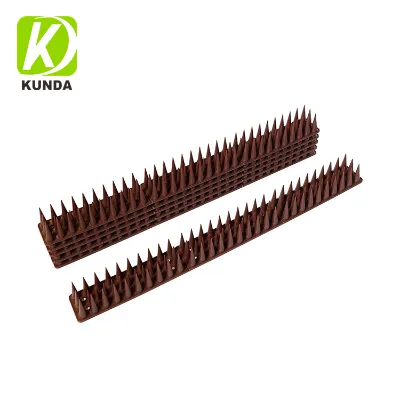
Plastic Repellent Spike Bird Spike for Birds and Cats Bird Spikes Anti Pigeon
$4.8598 - $6.1129
MOQ: 1000 boxes
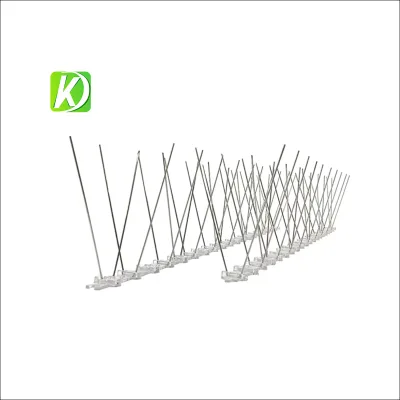
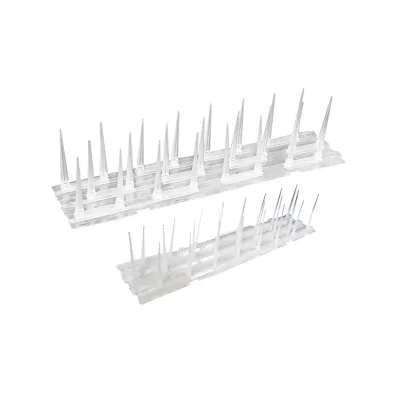
Garden Farm Dedicated Bird Spikes Plastic Spikes for Birds Hot Sale Bird Spike Pest Control
$0.46 - $0.56
MOQ: 1000 bags
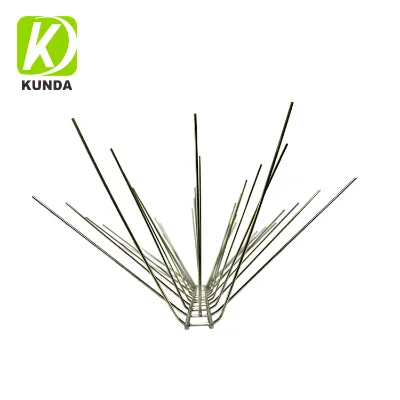
Hot Sale Stainless Steel Stainless Steel Bird Spikes Assembled Bird Spikes
$0.61 - $1.09
MOQ: 3000 pieces
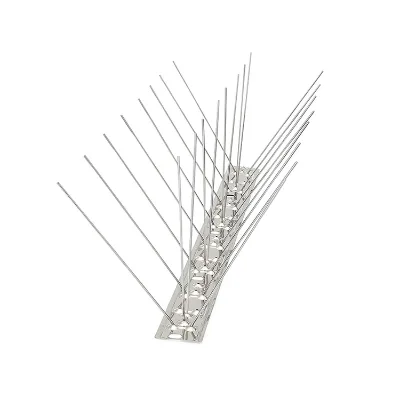
100cm Length 72 Spikes Stainless Steel Bird Spike Bird Spike Pest Control
$0.90 - $1.50
MOQ: 3000 pieces

Hebei Jinshi Industrial Metal Co., Ltd.
- Verified by TUVRHEINLAND
- Combined
- China Hebei
- Lead time15 days
- Avg. response≤ 6h
Main productsGabion
Main marketsOthers(foreignTradeCapacity.exportBusinessCapacityMarketOther),Domestic,Australia

Hot Sale Stainless Steel Pigeon Control Eco-Friendly Feature Bird Spikes
$0.97 - $1.06
MOQ: 200 Pieces


Keep Bird off Bird Away Bird Pigeon Spikes Bird Spikes for Pigeons Small Birds Cat
$0.65 - $1.27
MOQ: 200 Pieces
Dongguan Shouxin Hardware Products Co., Ltd.
- Verified by SGS Group
- Manufacturer, Trading Company
- Lead time30 days
- Avg. response≤ 9h
Main productsMouse Trap
Main marketsNorth America(80%), Western Europe(11%), South America(2%)
Xi'an Huan Yu Jingjie Trading Co., Ltd.
- Trading Company
- Shaanxi, China
- Lead time0 days
- Avg. response≤ 3h
Main productsseeder,seedling transplnater,Grain grinder,Feed Processing Machines,fertilizer spreader machine
Main marketsSouthern Europe(30.00%), South Asia(10.00%), Africa(10.00%), Central America(10.00%), Western Europe(10.00%), Eastern Asia(10.00%), Mid East(10.00%), Oceania(10.00%)
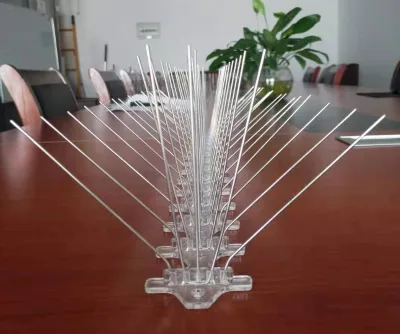
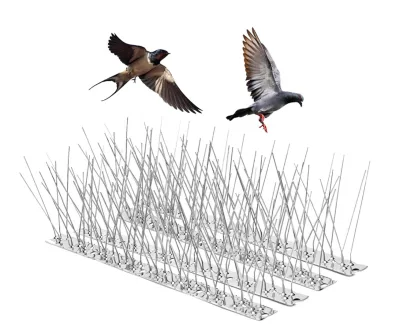
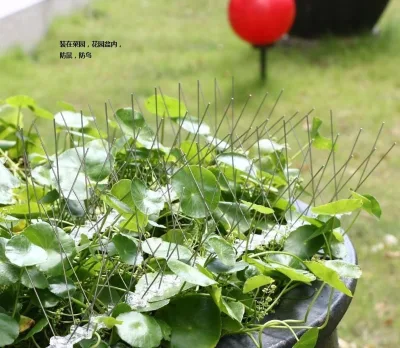
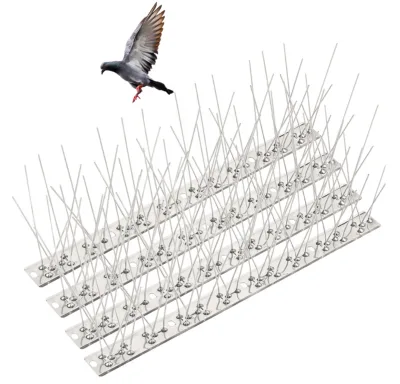
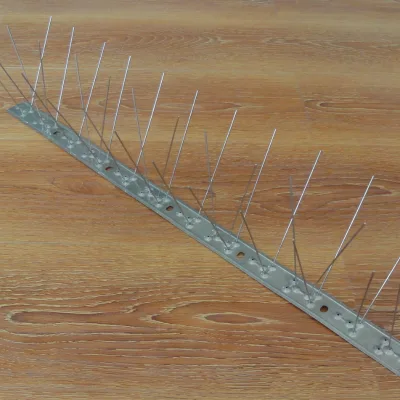
30cm 50cm 60cm Bird Spikes Bunnings Steel Anti Pigeon Bird Repellent Spikes
$0.60 - $1.00
MOQ: 100 pieces
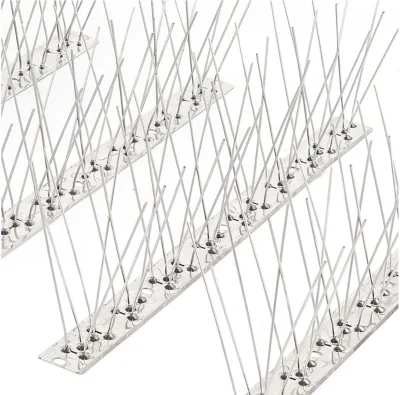
Hebei Jinshi Industrial Metal Co., Ltd.
- Verified by SGS Group
- Manufacturer, Trading Company
- Lead time10 days
- Avg. response≤ 3h
Main productsFence Post, Garden Gate, Gabions, Razor Wire, Bird Spike
Main marketsOceania(53%), North America(15%), Western Europe(10%)
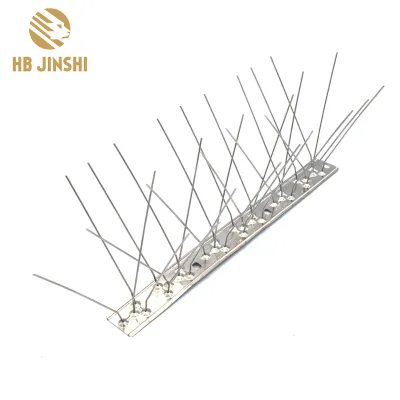
25 cm System Stainless Steel Polycarbonate Plastic Long Anti-Roosting Bird Pigeon Anti Birds Spike
$0.5127 - $1.484
MOQ: 500 sets
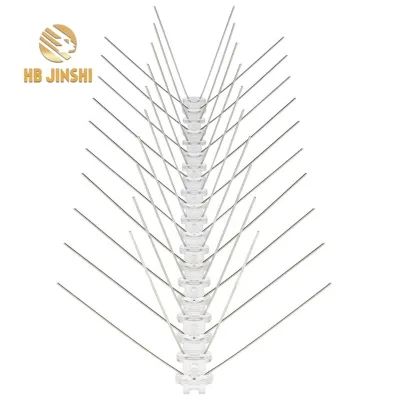

High Quality Outdoor Control Bird Spikes Eco-Friendly Plastic for Bird Small Animal Control
$0.99 - $1.20
MOQ: 200 pieces

Hebei Wanchi Metal Wire Mesh Products Co., Ltd.
- Verified by BV
- Combined
- China Hebei
- Lead time15 days
- Avg. response≤ 1h
Main productsStainless Steel Rope Mesh, Barbecue Net, Gabion Mesh, Fence Mesh, Welded Wire Mesh, Stainless Steel Ring Mesh, Defence Barrier, Plastic Mesh, Perforated Mesh, Welded Gabion Box
Main marketsSouth America,Africa,Southeast Asia/ Mideast,East Asia(Japan/ South Korea),Domestic,Europe,Australia,North America


Keep Bird off Bird Away Bird Pigeon Spikes Bird Spikes for Pigeons Small Birds Cat
$0.19 - $0.37
MOQ: 500 Pieces
Zhangzhou Changyi Hardware Co., Ltd.
- Verified by Intertek
- Manufacturer, Trading Company
- Lead time30 days
- Avg. response≤ 1h
Main productsBrackets, Spring, Hook, Bird Spike
Main marketsNorth America(90%), Eastern Europe(10%)
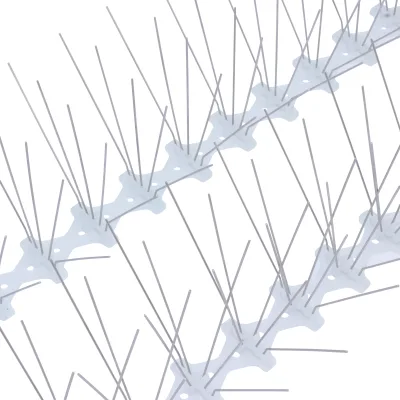
Solid Eco-Friendly Plastic Base Bird Spike for Garden Bird Control Solution
$0.3313 - $0.4557
MOQ: 500 pieces
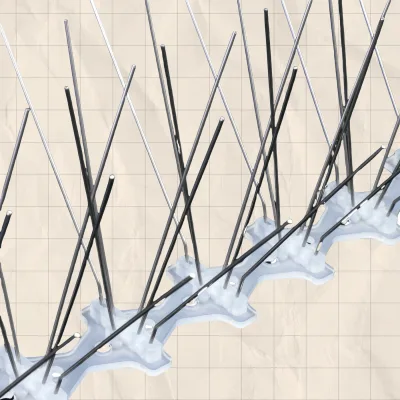
Factory Wholesale Birds Scare Single Joint Bird Spike Plastic Anti Bird Spikes
$0.32 - $0.44
MOQ: 500 pieces
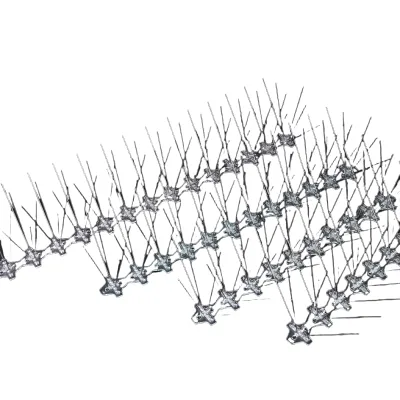
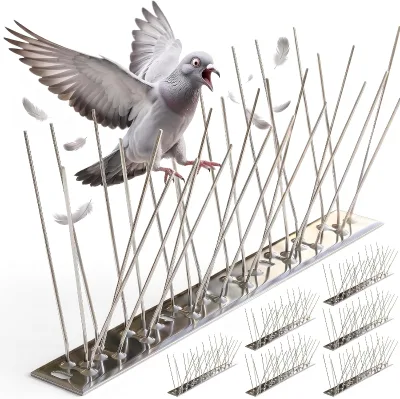
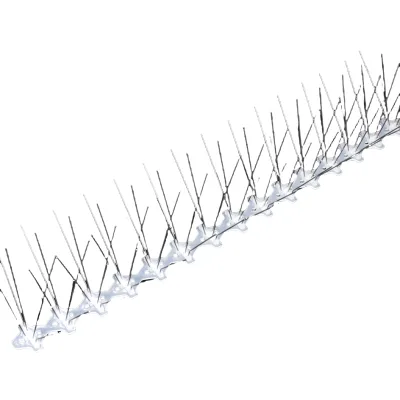
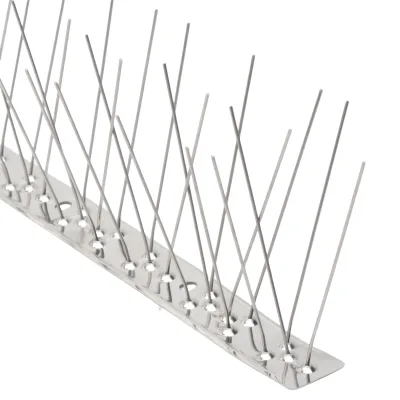
Factory Direct Supply Eco-friendly Safety Practical Thorn Bird Spike Stainless Steel
$0.24 - $0.36
MOQ: 500 pieces

Dongguan Qingyou Biotechnology Co., Ltd
- Manufacturer, Trading Company
- Guangdong, China
- Lead time7 days
- Avg. response≤ 5h
Main productsMosquito Killer Lamp, Flea Trap, Bird Spikes, Wasp Trap, Animal Repeller
Main marketsNorth America(40.00%), Eastern Europe(20.00%), Southeast Asia(8.00%), Africa(7.00%), South Asia(5.00%), Oceania(5.00%), Western Europe(5.00%), Southern Europe(5.00%), Eastern Asia(5.00%)
Cangzhou Jinglong Technology Co., Ltd.
- Verified by SGS Group
- Manufacturer, Trading Company
- Lead time20 days
- Avg. response≤ 2h
Main productsTrap Cage, Mouse Trap, Bird Spike, Insect Light Trap, Rat Bait Station
Main marketsNorth America(20%), South America(15%), Oceania(12%)
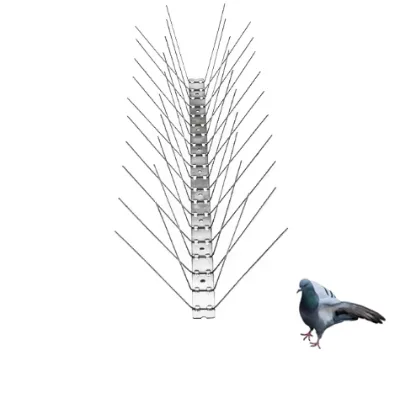
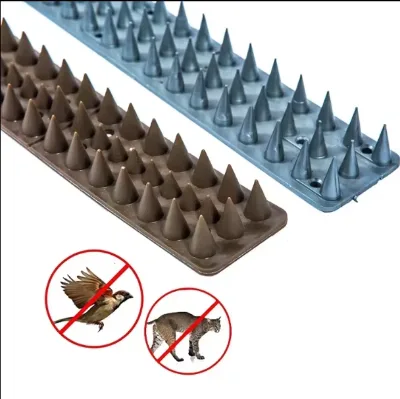
Modern Minimalism Brown Eco-Friendly Plastic Bird Spike Repellent Cat Repellent Spikes for Sale
$0.45 - $0.70
MOQ: 1000 pieces

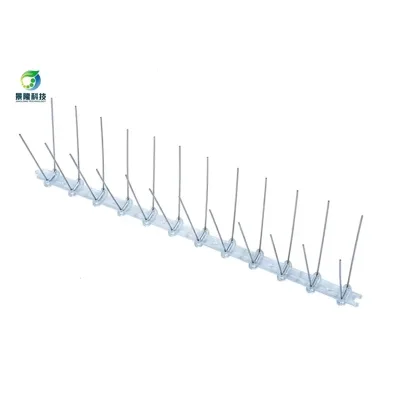
Quality Assurance Pest Control Adjustable Repellent Stainless Bird Spike Free Shipping
$0.65 - $0.75
MOQ: 200 pieces
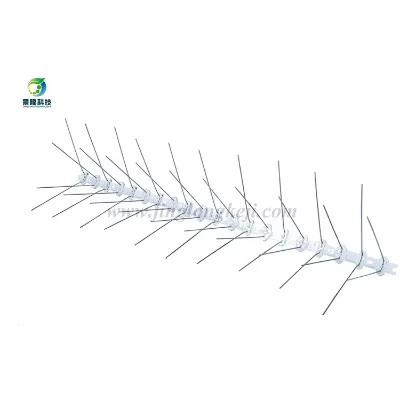
$0.50 - $0.80
MOQ: 500 pieces

Xiamen Lucky Pacific Industry Co., Ltd
- Combined
- China Fujian
- Lead time30 days
- Avg. response≤ 15h
Main productsMouse Trap
Main marketsSouth America,Southeast Asia/ Mideast,Europe,Australia,North America


Bird Spikes Environmentally Friendly Bird Spikes with Polycarbonate Pedestal
$0.85 - $0.89
MOQ: 2000 Pieces

Xiamen Consolidates Manufacture and Trading Co., Ltd.
- Verified by BV
- Combined
- China Fujian
- Lead time30 days
- Avg. response≤ 10h
Main productsPest Control, Mouse Trap, Rodent Control, Insect Control
Main marketsSouth America,Africa,Southeast Asia/ Mideast,East Asia(Japan/ South Korea),Europe,Australia,North America


Outdoor Flexible Stainless Steel Bird Spike Control Anti Bird and Pigeons Spikes
$4.00
MOQ: 5000 Pieces

Flexible Stainless Steel Bird Spike Control Anti Bird and Pigeons Spikes
$2.36 - $2.60
MOQ: 1000 Pieces

Cangzhou Antour Hardware Products Co., Ltd.
- Manufacturer
- Hebei, China
- Lead time15 days
- Avg. response≤ 2h
Main productsstainless steel bird spikes, mouse trap, plastic bird spikes, bait station box, bird repellent wire
Main marketsWestern Europe(30.00%), North America(20.00%), Mid East(20.00%), Oceania(10.00%), Eastern Asia(10.00%), Eastern Europe(10.00%)
Hebei Kunxian Trading Co., Ltd.
- Trading Company
- Hebei, China
- Lead time15 days
- Avg. response≤ 4h
Main productsSteel products,steel wire rods,galvanized wire,stainless steel wire rope,machine
Main marketsEastern Europe(30.00%), North America(30.00%), Western Europe(10.00%), Mid East(10.00%), Oceania(10.00%), Southeast Asia(10.00%)

Hangzhou Clean PCO Technology Co., Ltd.
- Manufacturer, Trading Company
- Zhejiang, China
- Lead time10 days
- Avg. response≤ 9h
Main productsPest Control Products
Main marketsNorth America(20.00%), Domestic Market(20.00%), Western Europe(15.00%), South Asia(5.00%), Central America(5.00%), Northern Europe(5.00%), Eastern Europe(5.00%), Mid East(5.00%), Africa(4.00%), Southeast Asia(3.00%), South America(2.00%), Eastern Asia(1.00%), Oceania(1.00%)
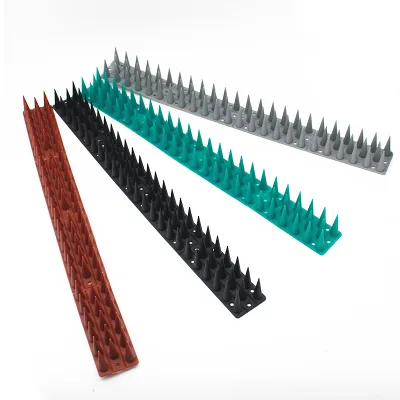
Wholesale Outdoor Animal Control Plastic Anti Bird Spikes, Bird Prevention Spikes
$0.28 - $0.55
MOQ: 12 pieces
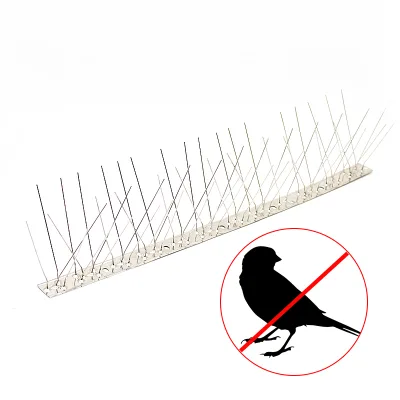
Hot Selling Anti Bird Thorn Bird Repeller Bird Spikes 50 cm with Stainless Steel Base
$0.3598 - $0.5127
MOQ: 500 pieces
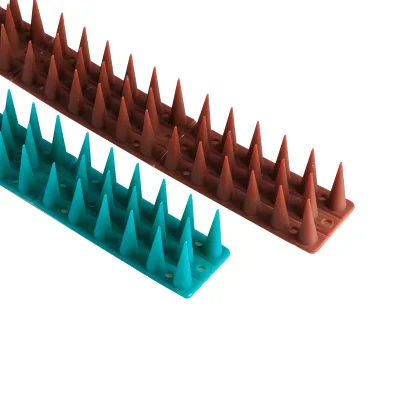
Professional Supplier Hot Sale Polycarbonate Anti Bird Pigeon Spikes Traps
$0.2878 - $0.5651
MOQ: 12 pieces

Guangdong Meizhongkai Security Technology Co., Ltd
- Verified by CTI
- Combined
- China Guangdong
- Lead time15 days
- Avg. response≤ 14h
Main productsBird Spikes, Dummy Camera, Personal Alarm, Cat Spikes, Battery Storage Box, Flashlight
Main marketsDomestic,Europe,North America
- Verified by TüVRheinland
- Manufacturer, Trading Company
- Lead time30 days
- Avg. response≤ 2h
Main productsPersonal Safety Alarm, Home Security Alarm, White Noise Machine, Personal Care, Personal Clean Supplies
Main marketsWestern Europe(20%), Eastern Europe(15%), Northern Europe(15%)
Ningbo Bestwin Commodity Co., Ltd.
- Verified by Intertek
- Manufacturer, Trading Company
- Lead time30 days
- Avg. response≤ 16h
Main productsFly Insects Control, Mouse Rat Animal Control, Cockroach Spider Ants Control, Birds Wasp Control, Lint Roller With Handle and Refills
Main marketsEastern Europe(37%), Central America(28%), Domestic Market(15%)
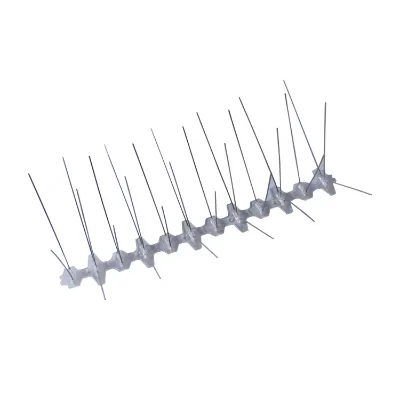
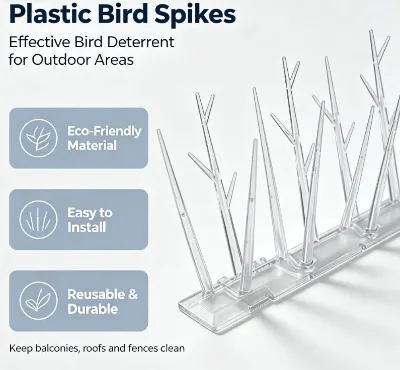
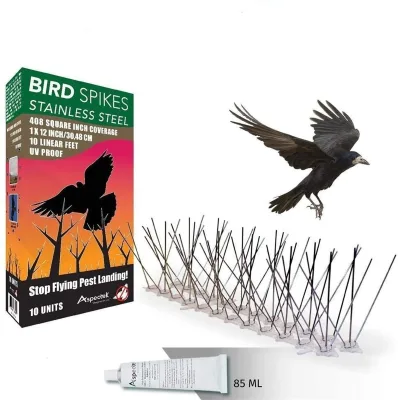

$0.94 - $1.12
MOQ: 11850 pieces
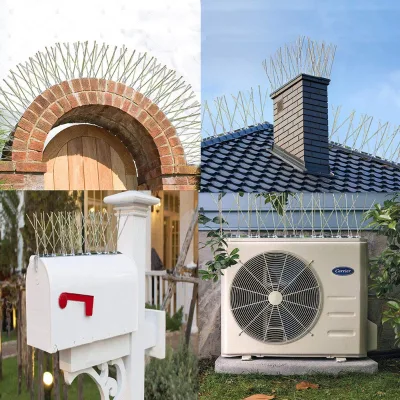
Shenzhen Zeerin Industry Development Co., Ltd.
- Manufacturer, Trading Company, Buying Office
- Guangdong, China
- Lead time15 days
- Avg. response≤ 1h
Main productspest repeller,Physiotherapy heating,insect repellant,Heating pad,rat repellent
Main marketsNorth America(30.00%), Eastern Europe(20.00%), South Asia(10.00%), Western Europe(10.00%), Southern Europe(10.00%), South America(5.00%), Oceania(5.00%), Central America(2.00%), Southeast Asia(2.00%), Mid East(2.00%), Domestic Market(1.00%), Africa(1.00%), Eastern Asia(1.00%), Northern Europe(1.00%)
Hangzhou Clean PCO Technology Co., Ltd.
- Manufacturer, Trading Company
- Lead time旺季: "1 - 200":15,"> 200":"To be negotiated", 淡季: "1 - 200":15,"> 200":"To be negotiated"
- Avg. response≤ 6h
Main productsPest Control Products
Shenzhen Boyoud Industry Co., Ltd.
- Trading Company
- Guangdong, China
- Lead time20 days
- Avg. response≤ 2h
Main productsMole Repeller,Pest Repeller,Mosquito Killer,Bird Spike,Sensor Light
Main marketsNorth America(40.00%), Western Europe(20.00%), Southern Europe(15.00%), Eastern Europe(10.00%), Northern Europe(5.00%), Oceania(5.00%), Eastern Asia(5.00%)
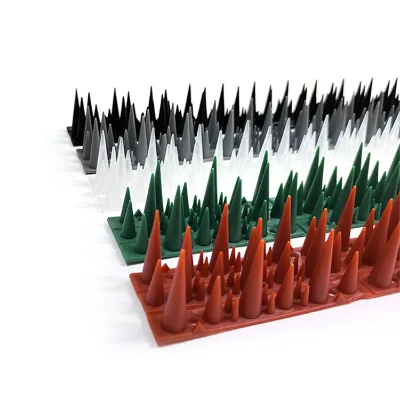
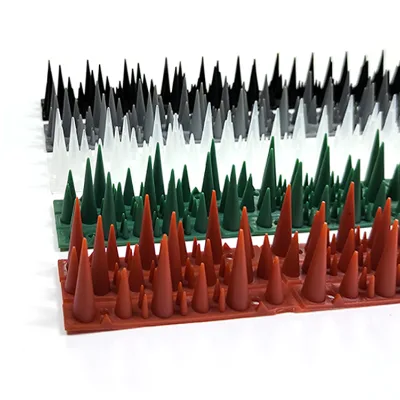
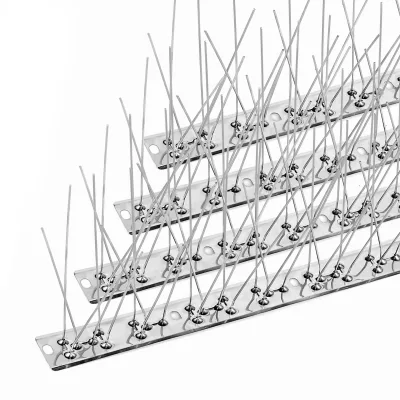
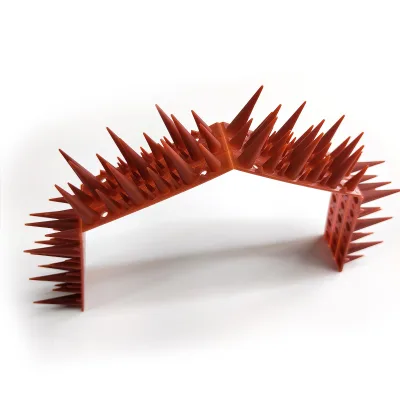
$0.2878 - $0.3088
MOQ: 10 pieces
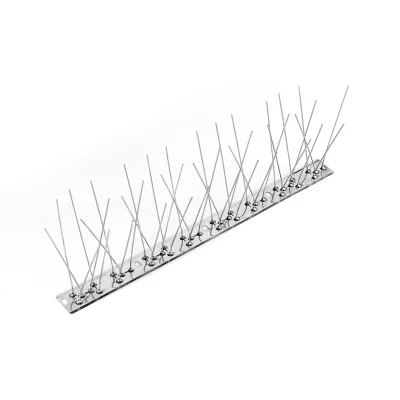
No More Bird Nests Stainless Steel Spikes Bird Control Spike Manufacturer
$0.4737 - $0.5966
MOQ: 1 pieces
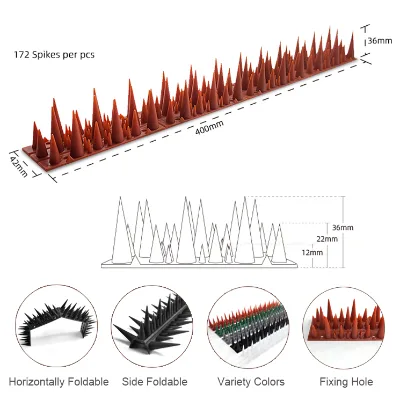


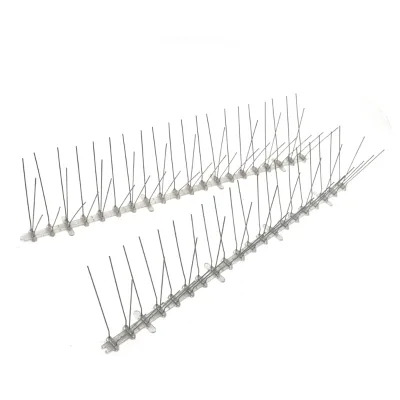
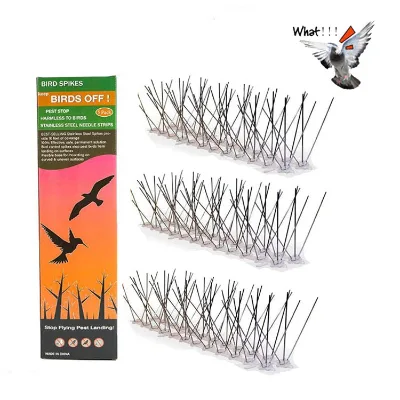
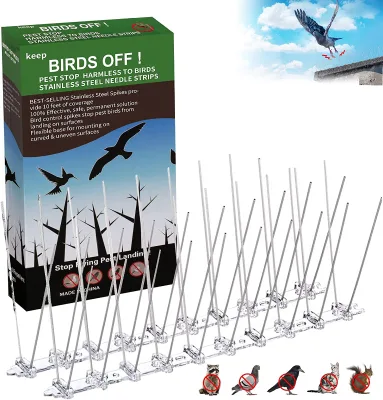
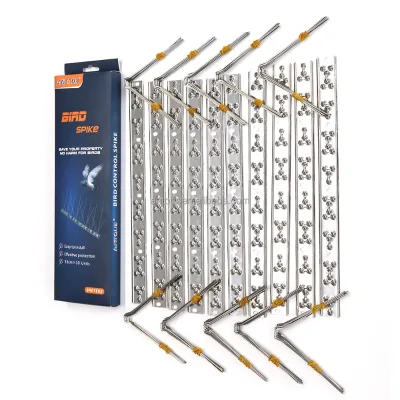


Comprehensive Sourcing Guide
Eco-Friendly Bird Spike Supplier Concentration and Factory Types
The current supplier landscape for eco-friendly bird spikes reveals a diverse mix of manufacturing capabilities and business models, primarily centered in China. Data indicates that suppliers are categorized as manufacturers, trading companies, or combined entities, each offering distinct advantages for procurement teams. Manufacturers often provide direct access to production lines, which can facilitate customization and potentially lower costs for large volumes. In contrast, trading companies may offer a broader portfolio of related products, such as post anchors, ground screws, and various wire mesh solutions, allowing buyers to consolidate orders for fencing and pest control infrastructure. This variety suggests that sourcing strategies should align with specific operational needs, whether prioritizing direct factory engagement or leveraging the logistical flexibility of trading partners.
Geographic concentration is a notable factor in this sector, with specific results pointing to Hebei, China, as a key production hub. This region is associated with the manufacturing of stainless steel wire components and plastic bases, which are critical materials for durable bird spike systems. The presence of suppliers in this area implies established supply chains for raw materials like stainless steel and polycarbonate. Buyers should consider how regional clustering affects lead times and shipping logistics. While Hebei is a confirmed location for some suppliers, the broader market may include other manufacturing centers. Understanding the specific origin of a supplier’s facility helps in assessing the reliability of material sourcing and the potential for quality consistency across different production batches.
How to Verify Eco-Friendly Bird Spike Suppliers
Verification is a critical step in ensuring that suppliers meet quality and compliance standards before committing to large orders. Several suppliers in the current results display third-party verification badges, such as TÜV Rheinland and SGS, which indicate that independent audits have been conducted on their business operations or product lines. These verifications provide a layer of confidence regarding the supplier’s legitimacy and operational stability. Additionally, system certifications like ISO 9001 and ISO 14001 are present in the data, suggesting adherence to international quality management and environmental management standards. Buyers should prioritize suppliers who hold these certifications, as they often correlate with more consistent manufacturing processes and better traceability of materials.
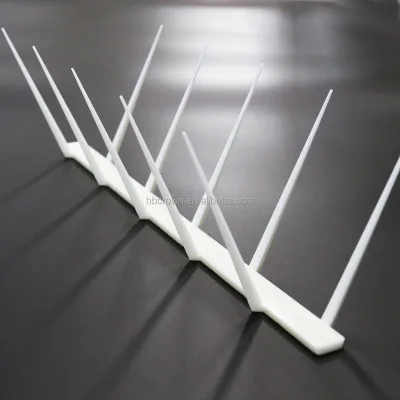
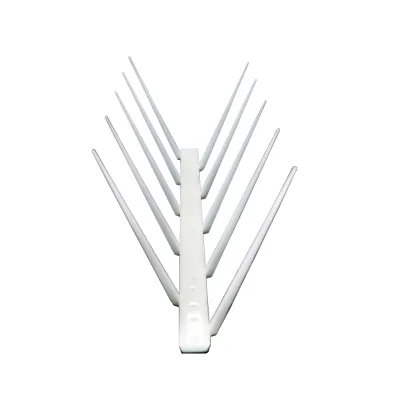
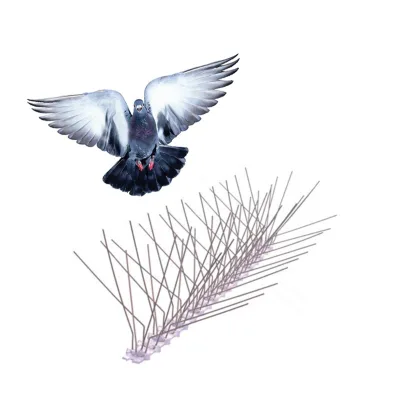
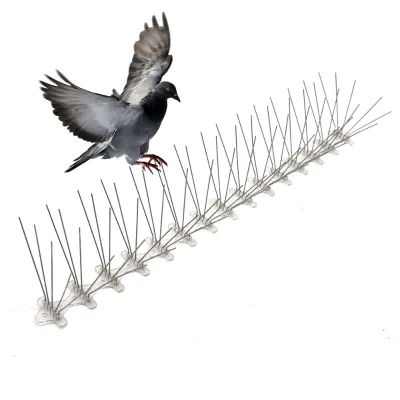
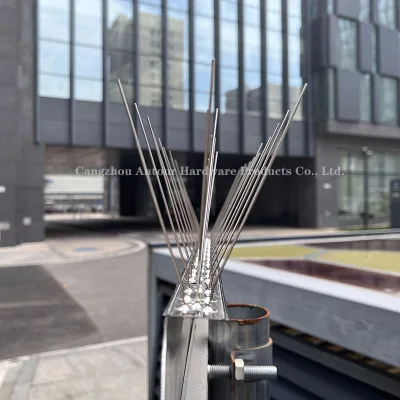
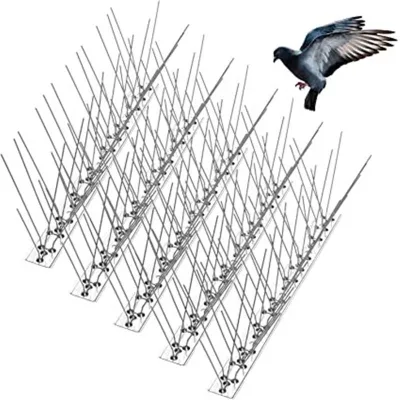
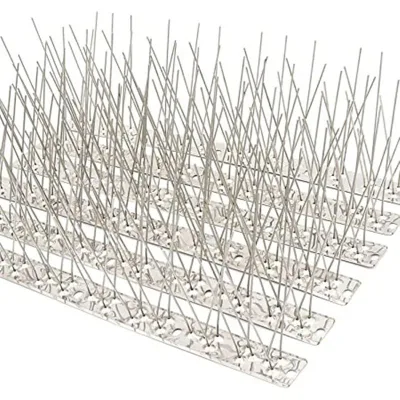
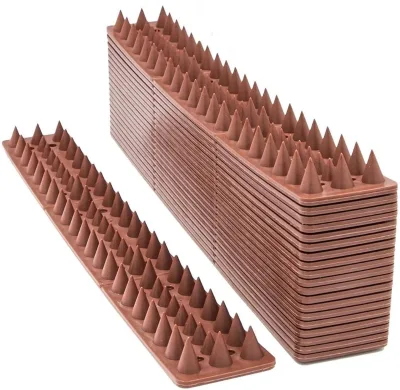
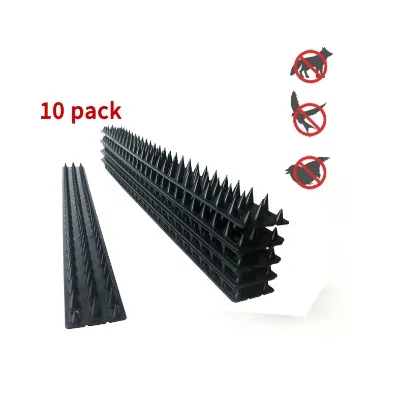
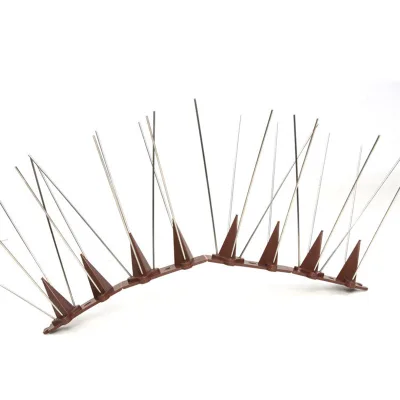
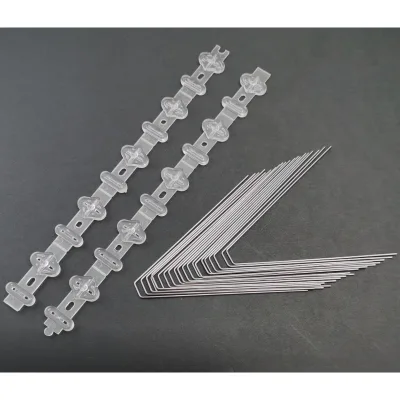
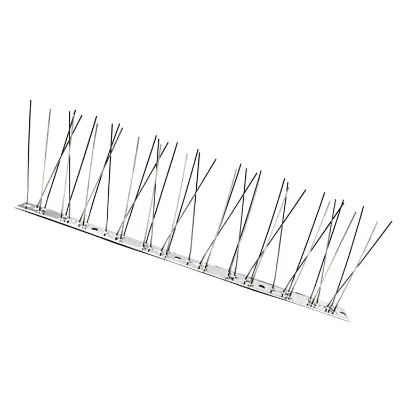
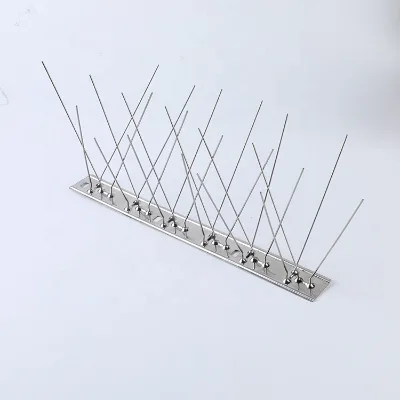
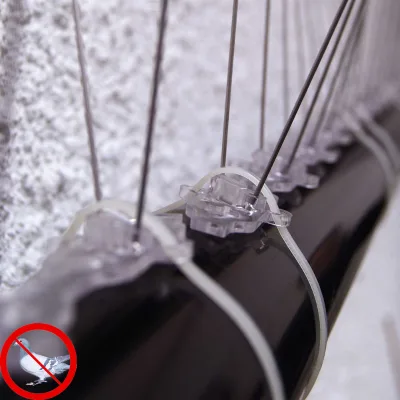
Beyond certifications, buyers should examine the specific product attributes and material compositions listed by suppliers. For instance, eco-friendly bird spikes are often described as being made from stainless steel wire combined with a plastic or PC base, with some models explicitly labeled as eco-friendly or disposable. It is essential to verify that the materials claimed match the actual product specifications, such as spike diameter, base width, and length options. Some suppliers offer customization, including ODM and OEM capabilities, which requires a closer look at their R&D capacity and sample processing abilities. Buyers should request detailed product data sheets and, if possible, physical samples to confirm that the spikes meet the required durability and environmental standards for their specific application, whether for outdoor commercial use or residential pest control.
What to Compare Across Eco-Friendly Bird Spike Suppliers
When evaluating multiple suppliers, several key performance indicators should be compared to determine the best fit for your procurement needs. Response time is a significant metric, with some suppliers indicating a response time of 2 hours, while others may take longer. Faster response times can be crucial for resolving technical questions or negotiating custom specifications efficiently. Lead times also vary, with some suppliers offering a lead time of 10 days, while others may require 15 to 30 days. This difference can impact your inventory planning and project timelines, so it is important to align supplier lead times with your delivery requirements. Additionally, the minimum order quantity (MOQ) is a critical factor, with some suppliers requiring as few as 100 pieces, while others may have higher thresholds, such as 1000 pieces.
Price ranges and supply abilities are another area for comparison. The data shows price points ranging from approximately $0.30 to $3.00 per unit, depending on the model, material, and order volume. Suppliers with higher supply abilities, such as those capable of producing 50,000 pieces per day, may be better suited for large-scale projects. It is also important to compare the main products offered by each supplier. Some focus primarily on bird spikes and pest control solutions, while others offer a wider range of metal products, including welded wire mesh, gabion boxes, and filter elements. This diversification can be advantageous if you have broader infrastructure needs. By systematically comparing these metrics, buyers can identify suppliers that offer the best balance of cost, speed, and capacity for their specific requirements.
Common Eco-Friendly Bird Spike Sourcing Risks
One of the primary risks in sourcing eco-friendly bird spikes is the potential discrepancy between claimed environmental attributes and actual material composition. While some products are marketed as eco-friendly or disposable, the underlying materials, such as stainless steel and plastic bases, may have varying recyclability or environmental impacts. Buyers must carefully review the product specifications to ensure that the materials align with their sustainability goals. For example, some spikes are described as having a PC base, while others may use different plastics. Without clear verification, it is difficult to assess the true environmental footprint of the product. Additionally, the term "eco-friendly" may be used loosely, and buyers should seek specific certifications or detailed material breakdowns to validate these claims.
Another significant risk is the variability in product durability and effectiveness. Bird spikes are designed for long-term outdoor use, with some suppliers claiming a lifespan of 3-5 years. However, the actual performance can depend on the quality of the stainless steel and the integrity of the base attachment. Buyers should be cautious of suppliers who do not provide detailed specifications on spike diameter, base width, or installation methods. Inconsistent product quality can lead to premature failure, requiring frequent replacements and increasing long-term costs. Furthermore, the lack of standardized testing results for bird deterrence effectiveness can make it challenging to compare suppliers objectively. Buyers should request test data or case studies to verify the performance of the spikes in real-world conditions, ensuring that the investment yields the desired pest control results.
Eco-Friendly Bird Spike Regional Sourcing and Logistics
Sourcing from specific regions, such as Hebei, China, can offer logistical advantages due to established manufacturing clusters and supply chains. The concentration of suppliers in this area suggests a robust infrastructure for producing stainless steel components and plastic bases, which are essential for bird spike manufacturing. Buyers should consider how this regional focus impacts shipping costs and delivery times. Proximity to major ports, such as Tianjin, can facilitate efficient export logistics, potentially reducing transit times for international orders. However, buyers must also account for customs clearance and import regulations in their destination country, which can affect the overall timeline and cost of the shipment.
Logistics planning should also include an assessment of packaging and handling requirements. Suppliers often use carton or color carton packaging, sometimes with pallets, to protect the spikes during transit. The single package size and gross weight, such as 30x30x3 cm and 8.0 kg, are important factors for calculating shipping volumes and costs. Buyers should verify the packaging details with their chosen supplier to ensure that the products are adequately protected and that the packaging dimensions align with their storage and handling capabilities. Additionally, the port of dispatch, such as Tianjin, should be confirmed to avoid any unexpected logistical delays. By carefully planning the logistics based on the supplier’s location and packaging specifications, buyers can optimize their supply chain and minimize risks associated with international shipping.
Eco-Friendly Bird Spike Commercial Terms and Order Planning
Commercial terms and order planning are essential for managing the procurement process effectively. Buyers should negotiate clear terms regarding payment methods, shipping responsibilities, and warranty policies. Some suppliers may offer escrow services, which provide an additional layer of security for transactions. It is important to clarify the lead time for sample processing and graphic customization, as these can impact the overall project timeline. Suppliers with capabilities in ODM and OEM should be evaluated based on their ability to meet specific design requirements and quality standards. Buyers should also consider the supply ability of the supplier, ensuring that they can meet the required volume within the desired timeframe.
Order planning should take into account the minimum order quantity and price tiers offered by suppliers. With MOQs ranging from 100 to 1000 pieces, buyers can choose suppliers that align with their initial order size and budget. It is advisable to start with a smaller order to test the product quality and supplier reliability before committing to larger volumes. Additionally, buyers should plan for potential variations in lead times and response speeds, which can affect inventory management. By establishing clear communication channels and setting realistic expectations for delivery and quality, buyers can mitigate risks and ensure a smooth procurement process. Regularly reviewing supplier performance and adjusting order quantities based on demand can help optimize costs and maintain a steady supply of eco-friendly bird spikes.
FAQs
What is the price range for eco-friendly bird spikes?
Prices typically range from $0.30 to $3.00 per unit depending on material and length. Stainless steel options with PC bases generally cost between $0.36 and $1.00, while specialized models may reach up to $3.00. Buyers should verify exact pricing based on order volume and specific customization requirements.
What materials are used in eco-friendly bird spikes?
Most eco-friendly spikes use stainless steel wire combined with a plastic or PC base. This combination ensures durability while remaining environmentally friendly. Some products feature silver or white colors and are designed for long-term outdoor use without harmful chemicals, making them safe for gardens and perimeter areas.
What is the minimum order quantity for bird spikes?
Minimum order quantities vary by supplier, typically starting at 100 pieces for some models and 1000 pieces for others. Buyers should check specific product listings for exact MOQs. Bulk orders often benefit from lower unit prices, so verifying the threshold with the supplier is essential for cost planning.
How long does production take for bird spikes?
Lead times generally range from 10 to 30 days depending on the supplier and order size. Some manufacturers offer faster turnaround times, while others may require up to a month for production. Buyers should confirm the specific lead time with the supplier before placing orders to ensure timely delivery.
Where are eco-friendly bird spikes manufactured?
These products are primarily manufactured in Hebei, China. Suppliers in this region offer various models, including stainless steel spikes with PC bases. Buyers can verify the place of origin on product listings to ensure alignment with sourcing preferences and logistics planning for international shipments.
What certifications do bird spike suppliers hold?
Suppliers often hold ISO 9001 and ISO 14001 certifications, ensuring quality and environmental management standards. Some also possess CE, RoHS, or PVoC certifications. Buyers should verify these credentials directly with suppliers to confirm compliance with international standards and specific regulatory requirements for their target markets.