Source Automatic Commercial Meat Smoker for Sausage, Fish, and Meat Processing
Find 30 verified Automatic Commercial Meat Smoker units suitable for sausage, fish, and meat processing plants. Compare specifications including voltage, capacity, and power to select the right equipment for your facility; compare the available evidence and request quotations based on your requirements.
Updated
Key considerations
Products List


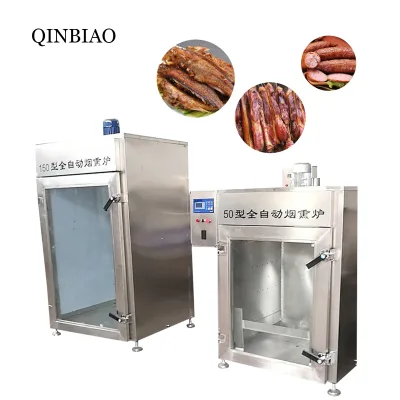
High Efficiency Chicken Fish Sausage Smoker for Beef Jerky Lamb Smoked Meat
$12000.00 - $18000.00
MOQ: 1 Sets

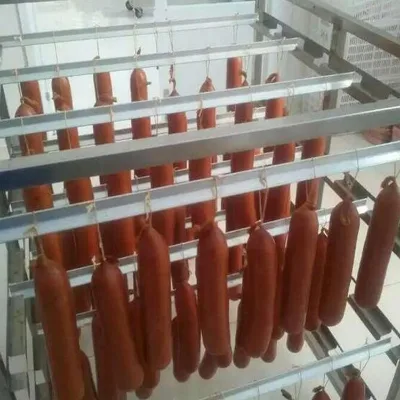
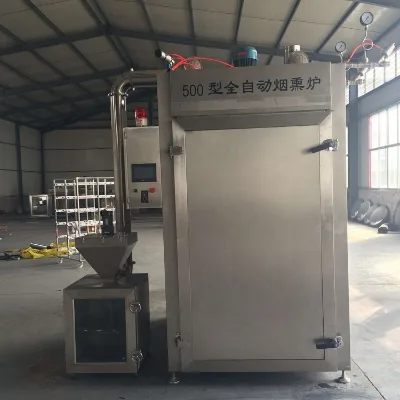

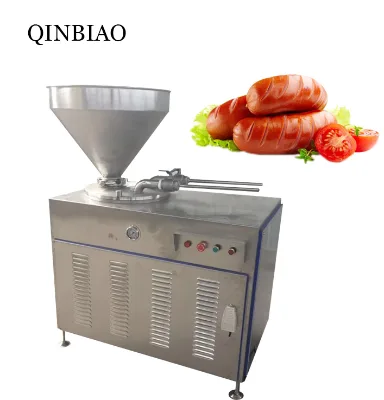
Industrial Cold Bean Curd Chicken Commercial Automatic Sausage Meat Smoker
$11000.00 - $13000.00
MOQ: 1 Pieces


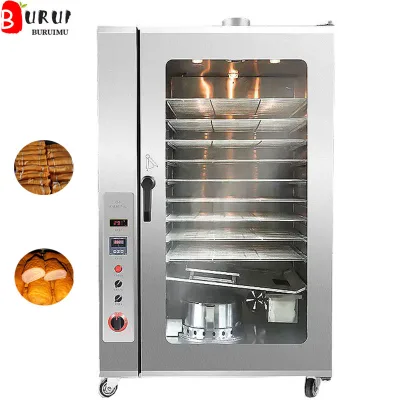
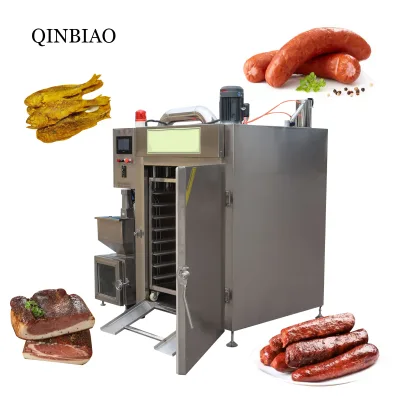
Automatic Sausage Bacon Fish Catfish Smoked Meat Oven Industrial Commercial Meat Smoker
$1287.707 - $1319.2429
MOQ: 1 Minimum
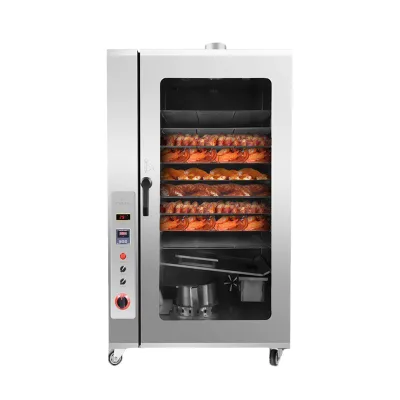
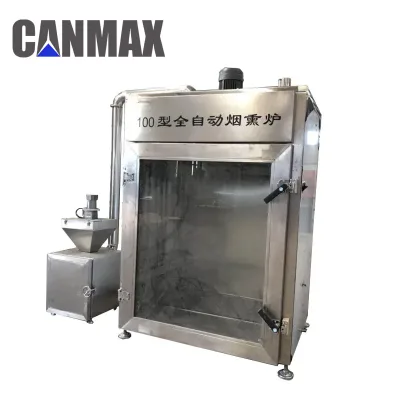

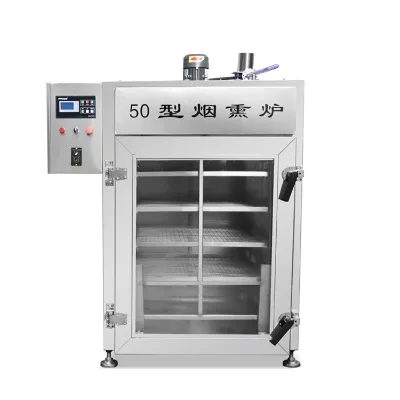
Gas Automatic Commercial Fish Smoke House Meat Industrial Chicken Sausage Smoker
$1980.00 - $6800.00
MOQ: 1 Pieces

Industrial Cold Bean Curd Chicken Commercial Automatic Sausage House Meat Smoker
$10000.00 - $13500.00
MOQ: 1 Pieces

Automatic Meat Smoking Chamber Fish Smoker Smoking Oven Smoke House Meat Smoker
$9000.00 - $26900.00
MOQ: 1 Pieces

Professional Electric Smoker for Sausages and Fish Fillets Meat Smoker
$13500.00 - $14000.00
MOQ: 1 Pieces


Comprehensive Sourcing Guide
Automatic Commercial Meat Smoker Sourcing Guide
Procuring an Automatic Commercial Meat Smoker requires a careful balance between throughput capacity and precise environmental control within the smoking chamber. Buyers must first define their primary processing volume, as observed listings indicate capacities ranging from 50kg to 500kg per furnace cycle. This variance directly impacts the required footprint and utility connections, necessitating a clear assessment of daily production targets before evaluating specific machine models.
The automation level is a critical differentiator, with available units spanning from semi-automatic to fully automatic grades. Fully automatic systems often integrate advanced motor-driven components and precise temperature regulation, reducing manual labor requirements to a single operator. However, buyers should verify whether the "automatic" designation implies full process control or merely assisted loading, as this distinction significantly affects labor costs and operational consistency in high-volume food processing plants.
Product Scope and Observed Listing Signals
Market listings for automatic commercial meat smokers reveal a diverse range of configurations tailored to specific meat processing needs. Observed product models include the HR-QZX500IV and QT-YX1, each designed with distinct dimensional footprints and power requirements. These variations suggest that buyers cannot rely on a one-size-fits-all approach; instead, they must match the machine’s physical dimensions, such as 2700x1500x2720mm or 1300x1100x1500mm, to their available floor space and workflow layout.
Voltage and power source specifications also vary, with common observations of 380V electric systems, though some units support 220V or customizable voltage options. Total power consumption can reach up to 16.5kw, which demands robust electrical infrastructure. Buyers must confirm the specific electrical requirements of their facility to avoid costly retrofitting, ensuring that the selected smoker’s power profile aligns with existing industrial supply capabilities and safety protocols.
Technical Specifications to Verify
Key technical parameters for automatic commercial meat smokers include air pressure, steam pressure, and temperature control ranges. Verified specifications indicate an air pressure requirement of greater than 0.4MPa and a high-pressure steam pressure range of 0.3-0.6MPa. Additionally, water pressure must exceed 0.2MPa to ensure consistent operation. Buyers should request detailed utility connection diagrams to verify that their facility’s utility lines can sustain these minimum pressure thresholds without flow restrictions.
Temperature and time metrics are equally critical for product quality. Observed data shows a low-pressure furnace temperature of 100℃ and a high-pressure furnace temperature under 85℃, alongside a smoke ignition time of less than four minutes. These parameters influence the smoking profile and efficiency. Procurement teams must validate that the machine’s control system can precisely maintain these temperatures to achieve consistent flavor penetration and texture, preventing under-processing or overheating of sensitive meat products.
Compliance and Safety Documentation
Safety and compliance documentation are non-negotiable for industrial food processing equipment. Buyers must request machinery test reports and verify that core components, such as the motor, meet relevant industrial standards. While CE certification is observed in some listings, it should not be assumed for all units; instead, buyers must confirm that the specific model complies with local electrical and mechanical safety regulations in their operating jurisdiction.
Warranty terms and after-sales support structures also form part of the compliance and risk management framework. Standard offerings often include a one-year warranty, but buyers should scrutinize the scope of coverage, including parts and labor. Understanding the warranty conditions helps mitigate long-term operational risks. Additionally, verifying the availability of spare parts and technical support ensures that any compliance-related issues or mechanical failures can be resolved promptly, minimizing production downtime.
Cost Drivers and Commercial Terms
The cost of automatic commercial meat smokers is influenced by several factors, including customization options, material quality, and production capacity. Observed price ranges span from $895 to $35,000, reflecting the wide variance in machine sophistication and build quality. Buyers should identify which features drive the price, such as the use of 304 stainless steel for raw materials or advanced automation features, to ensure they are paying for capabilities that align with their operational needs.
Minimum order quantities (MOQ) are typically set at one set, offering flexibility for small to medium-sized enterprises. However, buyers should negotiate commercial terms carefully, including payment structures and shipping arrangements. Since packaging is often done in wooden boxes or wooden packing, logistics costs and handling requirements should be factored into the total cost of ownership. Understanding these commercial terms helps in budgeting accurately and avoiding hidden costs associated with delivery and installation.
Supplier Qualification and Quality Control
Supplier qualification is essential to ensure the reliability and longevity of the purchased equipment. Buyers should verify the supplier’s place of origin, with common sources including Hebei and Henan in China, and assess their manufacturing capabilities. Requesting detailed information about the supplier’s quality control processes, including how they test core components and final assemblies, provides insight into the consistency of their output.
Quality control checks should also extend to the supplier’s ability to provide customized solutions. Since customization is available, buyers must ensure that the supplier has the engineering capacity to adapt the machine to specific requirements without compromising structural integrity or performance. Evaluating the supplier’s track record in delivering customized automatic food meat smoking machines helps mitigate the risk of receiving equipment that does not meet precise operational specifications.
Long-Term Procurement Checks
Long-term procurement success depends on the machine’s ease of operation and maintenance requirements. Observed features highlight easy operation and high efficiency, which are crucial for reducing labor training costs and improving throughput. Buyers should verify the operational simplicity by requesting user manuals or video demonstrations, ensuring that the control interface is intuitive and that routine maintenance tasks can be performed by existing staff without specialized training.
Finally, buyers must consider the scalability and adaptability of the equipment for future production needs. As production volumes grow, the ability to upgrade or expand the smoking capacity becomes important. Evaluating the machine’s modular design or potential for software updates ensures that the investment remains viable over time. Regularly reviewing performance metrics against initial specifications helps in planning for future upgrades or replacements, ensuring sustained operational efficiency.
FAQs
What is the power consumption of the Automatic Commercial Meat Smoker?
The Automatic Commercial Meat Smoker typically consumes 10.35kw or 16.5kw of total power depending on the specific model selected. This electric power source ensures consistent heating for smoking, drying, and baking processes. Users should verify the exact wattage for their chosen unit to ensure proper electrical infrastructure compatibility in their facility.
Can the voltage be customized for the Automatic Commercial Meat Smoker?
Yes, the voltage can be customized to meet specific regional electrical standards. While standard models often operate at 380V or 220V, manufacturers offer customization options to accommodate different power requirements. Buyers should specify their preferred voltage during the ordering process to ensure the machine integrates seamlessly with their existing plant infrastructure.
What is the production capacity of the Automatic Commercial Meat Smoker?
The production capacity varies by model, with some units processing up to 500kg per furnace cycle. Other models may handle between 50kg and 500kg depending on the specific configuration. This capacity range allows businesses to select a machine that aligns with their daily processing volume needs for meat and sausage products efficiently.
What is the minimum order quantity for the Automatic Commercial Meat Smoker?
The minimum order quantity is typically one set for the Automatic Commercial Meat Smoker. This low MOQ allows businesses to purchase a single unit for testing or initial deployment without committing to large bulk orders. It provides flexibility for small to medium-sized food processing plants to acquire professional-grade equipment easily.
What materials are used in the construction of the Automatic Commercial Meat Smoker?
The Automatic Commercial Meat Smoker is constructed using 304 stainless steel for its raw materials. This material choice ensures durability, corrosion resistance, and compliance with food safety standards for meat processing applications. The robust construction supports long-term use in commercial environments while maintaining hygiene and ease of cleaning for operators.
What is the warranty period for the Automatic Commercial Meat Smoker?
The Automatic Commercial Meat Smoker generally comes with a one-year warranty covering core components like the motor. This warranty provides assurance for the machinery's performance and reliability during the initial operational period. Buyers should review the specific warranty terms provided by the manufacturer to understand coverage details for parts and labor.