Source Medium Diesel Crawler Loader for Construction, Farming, and Landscaping
Find 30 Medium Diesel Crawler Loader options with hydraulic transmission and crawler walking modes. Compare models like CSL25 and TS350, rated loads from under 1t to 3t, and various bucket capacities for diverse industrial applications; compare the available evidence and request quotations based on your requirements.
Updated
Key considerations
Products List


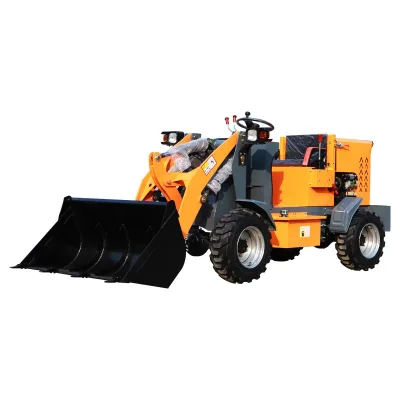
Front Loader Diesel Mini Wheel Loaders Crawler Driving Style Mini Loader
$5000.00 - $12000.00
MOQ: 1 Pieces

Crawler Loader with Backhoe Mini Mechanical Wheel Loader Tractor Front Loader
$5000.00 - $12000.00
MOQ: 1 Pieces
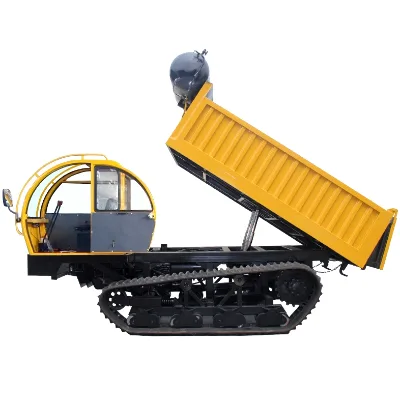
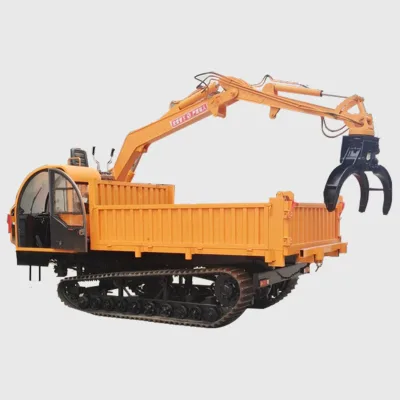
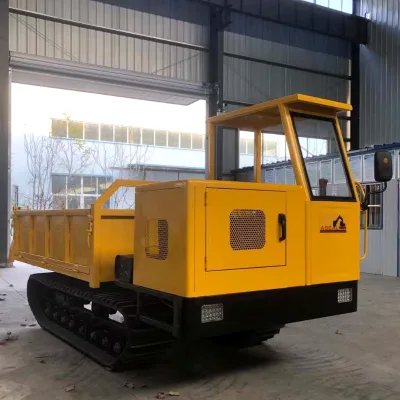

Crawler Diesel Loader Front End Loader Large Loader 30t Working Weight
$150000.00 - $300000.00
MOQ: 1 Pieces


$32500.00 - $33680.00
MOQ: 1 Pieces
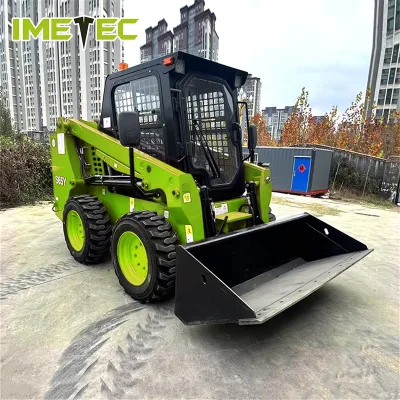
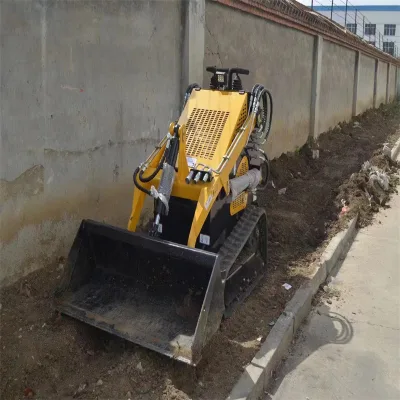
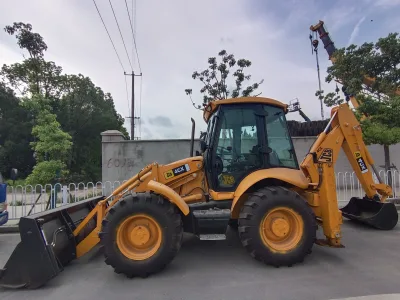
Mini Backhoe Loader With Price Mini Tractor Loader Backhoe Excavator With Digger Machine
$16226.7305 - $17482.9935
MOQ: 1 pieces

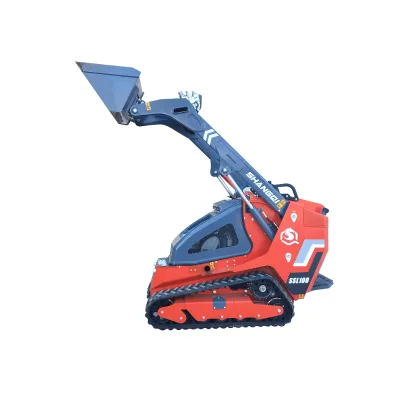
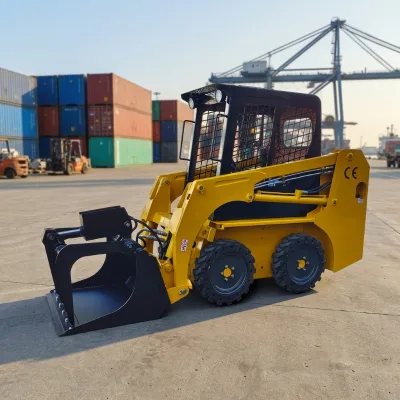
450kg Capacity Grapple Compact Track Crawler Skid Steer diesel Loader with Attachment
$12475.3834 - $15594.2292
MOQ: 1 units

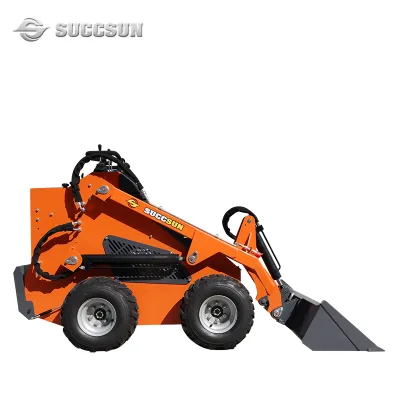
Diesel Mini Loader Wheel Crawler Optional for Compact Jobsites Meet Various Construction Needs
$10163.999 - $10321.1419
MOQ: 1 Minimum
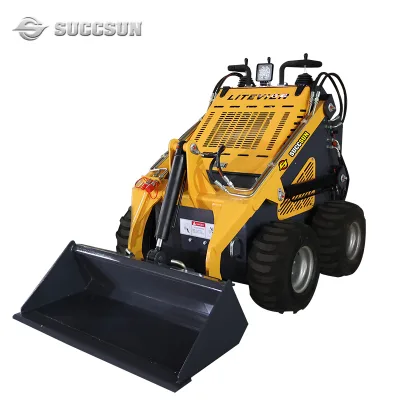

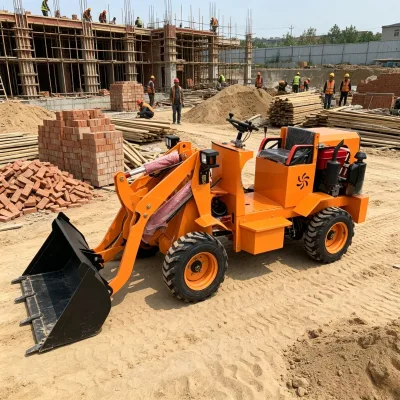


Hot Sale Hydraulic with Diesel Engine Earth-Moving Machinery Mini Skid Steer Loader
$4399.00 - $6200.00
MOQ: 1 Pieces

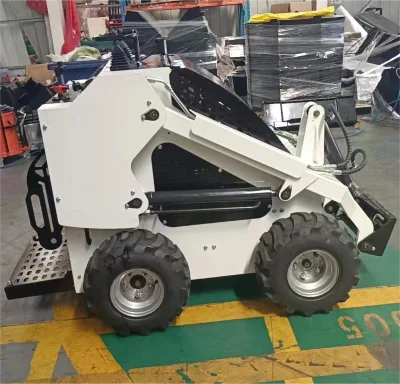
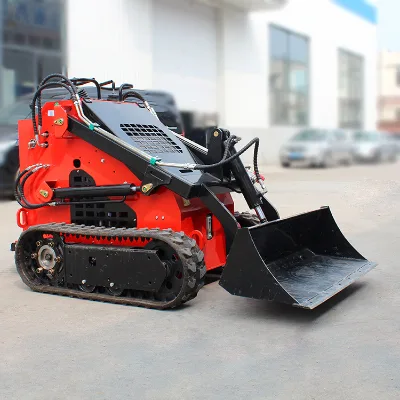
Chinese-made Small Crawler-type Loader, High-quality Crawler-type Loader
$2089.00 - $2689.00
MOQ: 1 pieces


Comprehensive Sourcing Guide
Medium Diesel Crawler Loader Sourcing Guide
Medium diesel crawler loaders occupy a practical middle ground between compact skid steers and full-size track loaders, and buyers approaching this category should treat sourcing as a structured verification exercise rather than a price comparison alone. The listings observed in this category include small crawler loader models such as the CSL25 and TS25/TS350 series, which are positioned as small loaders with rated loads generally in the range of under one tonne to three tonnes. This tells buyers that the "medium" label in supplier catalogs can cover a wide spread of machine capability, so the first sourcing decision is to define your own payload, working height, and site access requirements before comparing offers.
Because these machines are crawler-based rather than wheeled, they suit soft ground, confined worksites, and applications where ground pressure matters. Buyers should shortlist based on operating load, dump height, and overall machine dimensions, then request specification sheets that confirm every published figure against the physical unit. The remainder of this guide walks through scope, technical verification, compliance, cost, supplier qualification, and long-term checks in that order.
Product Scope and Observed Listing Signals
The observed listings cluster around compact crawler loaders of Chinese origin, with models such as the CSL25 (listed at 2950mm × 1402mm × 2050mm), TS25, and TS350 appearing under the "small loader" type classification. Condition is listed as new, customization is marked available, and certifications cited include CE, ISO, and in some cases RoHS and TUV. Packing is listed as container or nude-in-container shipment. These signals indicate a supplier base oriented toward export buyers who need machines shipped in standard containers with some flexibility on configuration.
Price observations across the category span roughly USD 1,000 to 300,000, which is an enormous spread that reflects differences in machine class, options, and listing quality rather than a single product family. MOQ is listed as one unit across the observed range, which is typical for capital equipment but should not be assumed universally. Buyers should treat listing data as starting points: confirm the exact model, configuration, and factory documentation before drawing conclusions from any single listing.
Technical Specifications to Verify
The most consequential specifications are dimension and capacity figures, and the observed listings show how much these vary even within a narrow product type. The TS350 listing cites an operating load of 350kg, bucket capacity of 0.06m³, overall operating weight of 900kg, and overall height of 1390mm, with detailed figures such as dumping height of 1564mm, dumping reach of 446mm, and rollback angles of 25° on the ground and 115° at full height. The TS25 listing cites a maximum working height of 3200mm, maximum unloading height of 1890mm, maximum unloading angle of 38°, wheelbase of 710mm, ground clearance of 120mm, and system pressure of 25MPa. Verify each of these on the specific unit you are quoted, since models sharing a family name can differ substantially.
Dimensional Cross-Check
Buyers should build a checklist covering transport dimensions, working dimensions, and performance dimensions separately. Transport-critical figures include overall length with and without bucket (for example, 2650mm with bucket versus 2000mm without on one observed model), overall width (900–1402mm observed), and height (1390–2050mm observed). Working figures include bucket hinge pin height, dumping angle at maximum height, and crawl track type (one listing cites 150×36×72). Confirm that quoted dimensions reference the same measurement conventions as your worksite clearance calculations.
Compliance and Safety Documentation
Certification claims in the observed listings include CE, ISO, RoHS, and TUV, but buyers should not accept logo strings on a product page as evidence of compliance. Request the actual certificate numbers, issuing bodies, validity dates, and scope statements, and verify that the certificate covers the specific model and configuration quoted. CE marking for machinery implies a technical file, a Declaration of Conformity, and risk assessment documentation; a supplier unable to produce these for the quoted model may be applying marks to a family of machines selectively.
Beyond certifications, ask for operator and maintenance manuals in your required language, safety decal sets, and rollover or falling-object protective documentation where the machine design provides it. Because crawler loaders operate with a raised bucket and hydraulic systems running at pressures as high as the observed 25MPa, request evidence of hydraulic hose quality, pressure relief settings, and test procedures. Document all of this before shipment, not after arrival, since retrofitting documentation is far harder than collecting it at the factory.
Cost Drivers and Commercial Terms
The observed price range of roughly USD 1,000 to 300,000 makes it essential to normalize quotes before comparing. Cost drivers within this category include engine specification, hydraulic system configuration, track and undercarriage quality, cab versus open station, attachment packages, and customization level — a listing attribute explicitly marked available. A low headline price paired with a bare configuration can cost more in total than a higher quote with the attachments and options your application requires. Ask each supplier to quote an itemized configuration so differences are visible line by line.
On commercial terms, confirm Incoterms, container packing method (the observed listings show both container and nude-in-container options), loading port, payment structure, and delivery scope. MOQ of one unit is observed but should be confirmed in the contract. Because customization is offered, agree in writing which options are included in the quoted price and which incur charges, including any changes to dimensions or hydraulic settings. Clarify warranty scope, warranty period, and which party bears freight for warranty parts, since these terms materially affect lifetime cost.
Supplier Qualification and Quality Control
Qualify suppliers by verifying business licenses, export history with this product type, and factory capability to produce crawler loaders rather than acting as a trading intermediary. Request references from buyers in your region or application, and where feasible conduct an audit or third-party factory inspection before committing. A supplier that lists detailed dimensional specifications — dumping reach, rollback angles, ground clearance — is more likely to have genuine engineering documentation than one offering only marketing photographs, but verify even detailed listings against the physical machine.
Pre-Shipment Inspection
Commission a pre-shipment inspection that covers dimensional verification against the agreed specification, hydraulic system pressure testing, engine start and load behavior, track tension and undercarriage condition, and a full functional cycle of the loader including raise, dump, and rollback movements. Check weld quality, paint finish, fastener torque, and fluid levels, and photograph serial plates and configuration for your records. Tie final payment to acceptance of the inspection report, and agree on a punch-list resolution process for any non-conformities found.
Long-Term Procurement Checks
Plan for the ownership period before purchase by confirming parts availability for wear items: track assemblies (observed track type 150×36×72 in one listing), bucket teeth, hydraulic hoses, filters, and seals. Ask the supplier for a recommended spare parts list with prices, the expected service intervals, and the lead time for parts shipments to your country. Machines using proprietary components are riskier over a five-to-ten-year horizon than those using commonly available engine and hydraulic brands, so identify the major component suppliers behind each quoted machine.
Also plan the documentation lifecycle: maintain the operator manual, service records, warranty correspondence, and inspection reports from delivery onward, since these support resale value and any warranty claims. Establish a commissioning procedure at your site covering fluid checks, track adjustment, control familiarization, and operator training. Finally, schedule periodic reviews of supplier performance — parts responsiveness, technical support quality, and any field failures — so your next procurement cycle benefits from documented experience rather than impressions, and adjust your specification accordingly.
FAQs
What is the rated load capacity for small crawler loaders?
The rated load capacity for these small crawler loaders ranges from under 1 ton up to 3 tons. This variation depends on the specific model selected, such as the CSL25 or TS25. Buyers should verify the exact tonnage against their material handling requirements to ensure the machine meets operational safety standards and efficiency goals for light construction tasks.
Which certifications are available for these crawler loaders?
These crawler loaders are available with CE, ISO, RoHS, and TUV certifications. These credentials ensure compliance with international safety and quality standards. Buyers can select models that meet specific regional regulatory requirements, facilitating smoother import processes and ensuring the equipment meets the necessary operational benchmarks for global deployment in various construction environments.
Can these loaders be customized for specific projects?
Yes, customization is available for these crawler loaders to suit specific project needs. Buyers can request modifications to accommodate unique operational requirements or site conditions. This flexibility allows for tailored solutions, ensuring the equipment integrates seamlessly into existing workflows. Customization options help optimize performance and efficiency for diverse applications in construction and landscaping sectors.
What is the bucket capacity for the TS350 model?
The bucket capacity for the TS350 model is 0.06 cubic meters. This compact size is ideal for precise material handling in confined spaces. The small bucket capacity allows for controlled loading and unloading, making it suitable for detailed work. Buyers should consider this capacity when planning material movement volumes to ensure efficient project execution and minimal downtime.
How is the overall operating weight defined for these units?
The overall operating weight for these units is approximately 900 kg. This lightweight design enhances maneuverability on soft or uneven terrain. The low weight reduces ground pressure, minimizing soil compaction and damage. Buyers benefit from improved stability and ease of transport, making these loaders suitable for residential, agricultural, and small-scale commercial construction projects requiring agile equipment.
What is the maximum working height for the TS350?
The maximum working height for the TS350 is 3200 mm. This height allows for effective loading into trucks or containers. The robust lifting capability ensures efficient material transfer in various operational scenarios. Buyers can rely on this specification for tasks requiring elevated dumping, ensuring the loader meets the vertical clearance needs of their specific site layout and equipment requirements.
Where are these crawler loaders manufactured?
These crawler loaders are manufactured in China, specifically in Shandong province. This location is a major hub for heavy machinery production, offering competitive pricing and robust supply chains. Buyers can expect consistent quality and availability from these sources. The Chinese origin also facilitates easier logistics and shipping arrangements for international clients seeking cost-effective construction equipment solutions.