Carbon Fiber Honeycomb Pickleball Paddle Suppliers and Manufacturers
Source 10 verified suppliers for Carbon Fiber Honeycomb Pickleball Paddle products. Compare key dimensions including location, lead time, MOQ, and response time to identify the right partner. Review product specifications and request quotes directly; review the available evidence before requesting comparable quotations from suitable candidates.
Suppliers List

Guangdong Shenyang New Material Technology Co., Ltd.
- Verified by CTI
- Combined
- China Guangdong
- Lead time15 days
- Avg. response≤ 1h
Main productsCarbon Fiber Composite Materials, Carbon Fiber Sheets, Carbon Fiber Tubes, Carbon Fiber Drone Frames, Carbon Fiber Sports Equipment, Carbon Fiber Automotive Parts, Carbon Fiber Aerospace Components, Carbon Fiber Industrial Products, Carbon Fiber Medical Devices, Carbon Fiber Consumer Goods
Main marketsSouth America,Africa,Southeast Asia/ Mideast,East Asia(Japan/ South Korea),Domestic,Europe,Australia,North America
Shandong Rarlon Carbon Fiber Products Co., Ltd
- Verified by CTI
- Combined
- China Shandong
- Lead time30 days
- Avg. response≤ 9h
Main productsPadel, Padel Racket, Beach Tennis, Beach Tennis Racket, Racket, Paddle, Pickleball, Raquet, Tennis Racket, Carbon Padel Racket
Main marketsEast Asia(Japan/ South Korea),Europe,North America

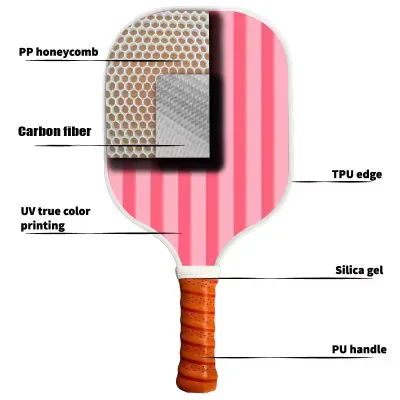
Custom Branding Unibody PP Honeycomb Core Carbon Fiber Pickleball Paddle
$14.50 - $15.00
MOQ: 500 Pieces


Huizhou Double-Star Sports Goods Co., Ltd.
- Combined
- China Guangdong
- Lead time45 days
- Avg. response≤ 11h
Main productsSnooker Table, Air Hockey Table, Pool Table, Soccer Table
Main marketsEurope,Australia,North America


Factory Price Carbon Fiber Pickleball Paddle for Entertainment with High Quality
$22.10 - $22.40
MOQ: 30 Pieces

- Verified by SGS
- Manufacturer/Factory
- China Anhui
- Lead time23 days
- Avg. response≤ 6h
Main productsPickleball Paddle, Pickleball Ball, Beach Padel, Football Flags Belt, Padel Racket, Pickleball, Joola, Selkirk, Outdoor Pickleball, Indoor Pickleball
Main marketsSouth America,Eastern Europe,Mid East,North America,Southeast Asia,Eastern Asia,Oceania,Western Europe,Africa

Premium Carbon Fiber Honeycomb Core Pickleball Paddle for Ultimate Performance
$6.00 - $6.20
MOQ: 50 Pieces

16mm Thickness Custom Carbon Fiber Pickleball Paddle with PP Honeycomb Core
$6.00 - $6.50
MOQ: 50 Pieces

Usapa 13mm Thickness Custom Carbon Fiber Pickleball Paddle with PP Honeycomb Core
$6.80 - $7.00
MOQ: 50 Pieces


Shenzhen Haiguo Mingtu Technology Co., Ltd.
- Manufacturer, Trading Company
- Guangdong Province, China
- Lead time15 days
- Avg. response≤ 3h
Main productsPickleball Paddle,Pickleball
Main marketsNorth America(50.0%), Southeast Asia(50.0%)

TIANCHANG ZHENGMU TECHNOLOGY CO., LTD.
- Verified by CTI
- Combined
- China Anhui
- Lead time30 days
- Avg. response≤ 1h
Main productsBaseball&Softball Bats, Baseball&Softballs, Laminated&Rubber Basketball, Machine-Stitched&Rubber Football, Machine-Stitched&Laminated Soccer, Multiple Rackets, Volleyball and Badminton Combo Set, Horsehoes Set, Volleyball Set, Bocce Set
Main marketsSouth America,Domestic,Europe,North America

Xiamen Chengfengxin Industry & Trade Co., Ltd.
- Verified by BV
- Trading Company
- China Fujian
- Lead time23 days
- Avg. response≤ 14h
Main productsBamboo Cutting Board, Bamboo Bathtub Rack Caddy, Bamboo Tablet Computer Desk, Bamboo Kitchenwares Holder Organization, Bamboo Home Storage, Home Office Collection, Eco-Friendly Kitchen Products, Bamboo Kitchen Tools, Bamboo Diffuser, Eco-Friendly Green Products
Main marketsSoutheast Asia/ Mideast,Europe,Australia,North America
- Manufacturer, Trading Company
- Sichuan, China
- Lead time10 days
- Avg. response≤ 4h
Main productsComposite Materials Processing Services,CNC Carbon Fiber Parts,CNC Machining Service,CNC Turning Parts,CNC Milling Parts
Main marketsEastern Europe(25.0%), North America(15.0%), Southern Europe(10.0%), Northern Europe(10.0%), Western Europe(10.0%), Oceania(5.0%), South America(5.0%), Southeast Asia(5.0%), Central America(5.0%), Eastern Asia(5.0%), Mid East(5.0%)
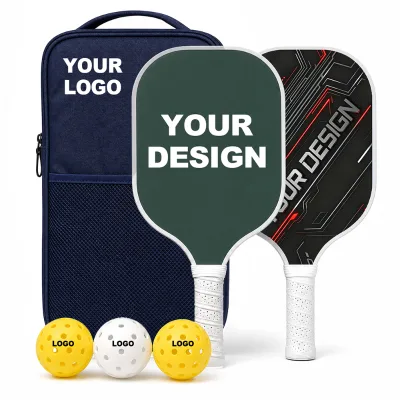
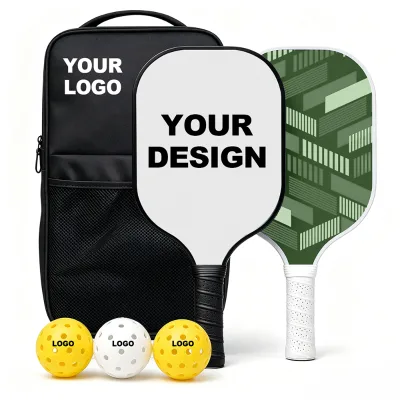
Custom 16mm Carbon Fiber Pickleball Paddle Honeycomb Core Wrapped Grip Adult Recreation
$16.00 - $18.00
MOQ: 100

Dmantis Sports Goods Co., Ltd.
- Verified by SGS
- Combined
- China Hunan
- Lead time60 days
- Avg. response≤ 2h
Main productsBadminton Shuttlecock, Badminton Racket, Tennis Racket, Tennis Ball, Pickleball Paddle, Table Tennis Ball, Table Tennis Racket, Jump Rope
Main marketsSoutheast Asia/ Mideast,East Asia(Japan/ South Korea),Europe,Australia,North America

High Quality Honeycomb Core Pickleball Paddle Set Carbon Fiber Pickle Ball Paddles
$11.00 - $18.00
MOQ: 1 Pieces

Wholesale Lightweight Honeycomb Core Carbon Fiber Custom Pickleball Paddle Set
$28.88 - $39.80
MOQ: 2 Sets

Ivory Tiger Technology (Shenzhen) Co., Ltd.
- Verified by SGS
- Trading Company
- China Guangdong
- Lead time30 days
- Avg. response≤ 17h
Main productsDrone, Scooter, Motor, ATV, UTV, Sport Products, Pool Table, Drift Go Kart - Mini Porsche
Main marketsDomestic




Comprehensive Sourcing Guide
Carbon Fiber Honeycomb Pickleball Paddle Supplier Concentration and Factory Types
Current data indicates that manufacturing for carbon fiber honeycomb pickleball paddles is concentrated in specific Chinese provinces, with Guangdong and Shandong emerging as primary hubs. Factories in Guangdong, such as those in Shenzhen, often report shipping origins from that city and may operate with substantial factory areas, sometimes reaching ten thousand square meters. These facilities frequently employ over one hundred staff members and offer combined company types that blend manufacturing with trading capabilities. In contrast, suppliers located in Shandong may focus on different product lines like padel or beach tennis while also offering carbon fiber options. Buyers should verify the specific location of each factory to understand the logistical implications of their sourcing strategy.
The supplier landscape includes a mix of combined entities that handle both OEM and ODM services, allowing for significant customization of the honeycomb core and carbon fiber surface. Some manufacturers possess their own brands, while others specialize strictly in private label production for international clients. The presence of ODM and OEM capacities suggests that buyers can request specific weave patterns, such as 1.5K, 3K, or 12K carbon fiber, and custom core thicknesses like 14mm or 16mm. However, not all suppliers offer the same level of in-house research and development. It is essential to confirm whether a supplier has the specific RD capacity required for your project, as some may rely on external partners for advanced material engineering.
How to Verify Carbon Fiber Honeycomb Pickleball Paddle Suppliers
Verification of supplier credibility often begins with checking their verification status and system certifications. Some suppliers in the current results display a CTI verification status, which serves as a third-party validation of their business operations. While many suppliers list their main products as carbon fiber composites, others may hold specific industry certifications like ISO9001:2015, which indicates a standardized quality management system. Buyers must distinguish between suppliers who claim certification and those who provide verifiable documentation, as some entries may show "NIL" for system certification. Relying solely on a supplier's self-reported status without cross-referencing with independent verification bodies can lead to sourcing errors.
Response time and lead time are critical metrics for assessing supplier reliability and operational efficiency. Data shows that response times can vary significantly, ranging from under one hour to nearly eleven hours, which impacts the speed of initial negotiations and sample requests. Similarly, lead times for official orders can span from fifteen days to forty-five days, depending on the complexity of the customization and the supplier's current production load. Buyers should prioritize suppliers with faster response times for urgent projects but must also account for the longer lead times associated with complex honeycomb core manufacturing. Always request a confirmed production schedule before placing an order to ensure the timeline aligns with your market launch requirements.
What to Compare Across Carbon Fiber Honeycomb Pickleball Paddle Suppliers
When evaluating potential partners, buyers should compare minimum order quantities (MOQ) and pricing structures to determine financial feasibility. Current product listings reveal a wide range of MOQs, from as low as one piece for samples to five hundred pieces for bulk custom branding. Pricing also varies, with some suppliers offering units starting at ten cents while others charge fifteen dollars or more per paddle. These differences often reflect the level of customization, the quality of the carbon fiber used, and the specific core material, such as polypropylene honeycomb versus other composites. Buyers must calculate the total landed cost, including shipping and duties, rather than focusing solely on the unit price to avoid budget overruns.
Another vital comparison point is the specific product attributes and customization options available from each factory. Suppliers may offer different surface finishes, ranging from matte to glossy, and various weave types that affect the paddle's weight and durability. Some manufacturers provide specific model numbers like P19A or SZX-PK03, which indicate standardized designs, while others offer fully bespoke solutions with custom logos and dimensions. It is crucial to verify if the supplier can meet specific performance standards, such as USAPA approval or specific thickness requirements like 14mm or 16mm. Comparing these technical specifications ensures that the final product meets the intended performance criteria for competition or training use.
Common Carbon Fiber Honeycomb Pickleball Paddle Sourcing Risks
One significant risk in sourcing carbon fiber honeycomb paddles is the inconsistency in material quality and mechanical properties. While some suppliers specify high-performance types with strength ratings like T300 or T1000, others may not provide detailed mechanical property data. The raw materials, such as polyacrylonitrile-based carbon fiber, can vary in quality, directly impacting the paddle's strength and longevity. Buyers must request material test reports to confirm that the carbon fiber meets the advertised specifications. Without this verification, there is a risk of receiving paddles that are prone to cracking or delamination under high-impact conditions.
Another risk involves the discrepancy between sample lead times and official order lead times. Some suppliers quote a sample lead time of seven to ten days but may require thirty-five days or more for the full production run. This gap can disrupt supply chain planning, especially if the supplier faces unexpected delays or capacity constraints. Additionally, packaging standards vary, with some suppliers using hard outer packaging cartons while others rely on regular bubble bags. Inadequate packaging can lead to damage during transit, particularly for fragile carbon fiber components. Buyers should explicitly define packaging requirements in the contract to mitigate the risk of product damage upon arrival.
Carbon Fiber Honeycomb Pickleball Paddle Regional Sourcing and Logistics
Sourcing from China offers distinct logistical advantages, particularly when dealing with suppliers in Guangdong and Shandong. Factories in Shenzhen, for instance, often list their shipping origin as Shenzhen, which can streamline export procedures and reduce inland transportation costs. However, buyers must account for the distance between the factory and the port of loading, as this affects the overall transit time. Suppliers in Shandong may have different port access, potentially influencing the shipping route and cost. Understanding the specific shipping origin of each supplier is essential for accurate freight cost estimation and delivery timeline planning.
Logistics planning must also consider the variability in lead times and the potential for customs delays. While some suppliers offer a lead time of fifteen days, others may require up to forty-five days for production. This variance necessitates a buffer in the supply chain schedule to accommodate potential delays. Furthermore, the type of packaging used by the supplier can impact the volume and weight of the shipment, affecting freight charges. Buyers should verify the packing details, such as whether the paddles are packed in custom boxes or standard cartons, to optimize container loading and reduce shipping costs. Clear communication regarding logistics expectations is key to a smooth import process.
Carbon Fiber Honeycomb Pickleball Paddle Commercial Terms and Order Planning
Commercial terms for carbon fiber honeycomb paddles often include specific customization requirements and branding options. Many suppliers offer OEM logo printing and custom packaging, but the minimum order quantity for these services can be high, sometimes requiring two hundred pieces or more. Buyers need to clarify the cost implications of customization, as adding a custom logo or specific weave pattern may increase the unit price. Additionally, some suppliers may require a deposit or specific payment terms before production begins. Understanding these commercial terms is crucial for managing cash flow and ensuring that the supplier is committed to the order.
Order planning should also account for the availability of samples and the process for quality assurance. While some suppliers allow a minimum order of one piece for sampling, others may have a higher threshold. It is advisable to order samples from multiple suppliers to compare the quality of the honeycomb core and carbon fiber surface before committing to a large order. Buyers should also verify the sample lead time, which can range from seven to ten days, and plan accordingly. Establishing a clear quality assurance protocol, including inspection criteria for thickness and surface finish, will help ensure that the final product meets the required standards before mass production begins.
FAQs
What is the price range for carbon fiber honeycomb pickleball paddles?
Prices for these paddles typically range from $0.10 to $17.00 per unit depending on specifications. Basic models start at $0.10, while specialized professional versions cost around $17.00. Buyers should verify exact pricing based on customization needs and order volume to ensure accurate budgeting for their procurement strategy.
What are the minimum order quantities for these paddles?
Minimum order quantities vary significantly by supplier, ranging from 1 piece to 500 pieces. Some manufacturers accept orders as low as one unit for sampling, while others require bulk purchases of 200 or 1000 pieces. Buyers must check specific supplier requirements to determine the feasible entry point for their order size.
How long does production take for these paddles?
Production lead times generally span 15 to 45 days. Some suppliers offer faster turnaround times of 15 days, while others require up to 35 or 45 days for official orders. Sample production may take 7 to 10 days. Buyers should confirm specific timelines with suppliers to align with their delivery schedules.
Are customization options available for these paddles?
Yes, customization is widely available for logos, packaging, and specific dimensions. Suppliers offer OEM and ODM services, allowing for custom branding and unique design features. Buyers can request specific core types, surface finishes, and handle sizes. This flexibility supports brand differentiation and meets specific performance requirements for competitive play.
Where are these paddles manufactured?
Manufacturing locations include China, specifically in Guangdong and Shandong provinces. Products often ship from Shenzhen. Buyers should verify the exact factory location to assess logistics costs and shipping times. Regional manufacturing hubs offer distinct advantages in supply chain efficiency and material sourcing for carbon fiber components.
What certifications do these paddles have?
Certification status varies by supplier. Some products hold USAPA approval, ensuring compliance with official tournament standards. Other suppliers may hold ISO9001:2015 certification for quality management systems. Buyers should request specific certification documents to verify product standards and ensure the paddles meet regulatory requirements for their target markets.