Disposable Surgical Bouffant Cap Suppliers and Manufacturers
Compare 27 verified suppliers of Disposable Surgical Bouffant Cap by location, lead time, and certification. Review product specs like size and material, then request quotes to finalize your sourcing decision; review the available evidence before requesting comparable quotations from suitable candidates.
Updated
Suppliers List

WuHan LanYuan Protective Co., Ltd.
- Verified by BV
- Trading Company
- China Hubei
- Lead time23 days
- Avg. response≤ 11h
Main productsElectric Tricycle, Motorized Tricycle Cargo, Shoe Cover, Isolation Gown, Mob Cap, PE Apron, Hospital Uniform, Blood Segment Device, Surgical Gown, Smear Making Safe Blood Dispenser
Main marketsSoutheast Asia/ Mideast,Europe,North America

Shanghai Best Medical Products Company Limited
- Manufacturer/Factory
- China Shanghai
- Lead time30 days
- Avg. response≤ 13h
Main productsHospital, Lab, Dentist's, Industry Supplies, Beauty Salon, SPA, Bathroom Supplies, Restaurant, Kitchen, Hotel Supplies
Main marketsSouth America,Eastern Europe,Mid East,North America,Southeast Asia,Eastern Asia,Oceania,Western Europe,Africa


Nonwoven Disposable Bouffant Cap, Disposable Round Cap, Surgical Cap
$0.005 - $0.015
MOQ: 50000 Pieces


- Verified by BV
- Manufacturer/Factory
- China Hubei
- Lead time23 days
- Avg. response≤ 19h
Main productsDisposable Medical Supplies, Disposable Nonwoven Products, Disposable Polyethylene Products, Disposable Paper Consumables
Main marketsSouth America,Eastern Europe,Mid East,North America,Southeast Asia,Eastern Asia,Oceania,Western Europe,Africa

Xiantao Topmed Nonwoven Protective Products Co., Ltd.
- Verified by BV
- Combined
- China Hubei
- Lead time23 days
- Avg. response≤ 5h
Main productsSurgical Gown, Surgical Pack, Surgical Drape, Lsolation Gown, Lab Coat, Disposable Coverall, Bed Sheet, Disposable Cap, Face Mask, Dental Bib
Main marketsSouth America,Europe,North America

Hubei Mingerkang Health & Safety Appliances Co., Ltd.
- Verified by SGS
- Trading Company,Manufacturer/Factory
- China Hubei
- Lead time23 days
- Avg. response≤ 5h
Main productsFace Mask, Shoe Cover, Protective Clothing, Isolation Gown, Bouffant Cap, Surgical Gown, Lab Coat, Disposable Coverall, Disposable Face Mask, Medical Face Mask
Main marketsSouth America,Eastern Europe,Mid East,North America,Southeast Asia,Eastern Asia,Oceania,Western Europe,Africa

Wellmien Healthcare Tech. (Suzhou) Co., Ltd.
- Verified by BV
- Trading Company
- China Jiangsu
- Lead time15 days
- Avg. response≤ 3h
Main productsUnderpads, Surgical Pack, Wound Care, Emergency Blanket, Face Masks, Surgical Masks, Shoe Cover, First Aid Product, Emergency Transfer Sheet, Body Bag
Main marketsSouth America,Southeast Asia/ Mideast,Europe
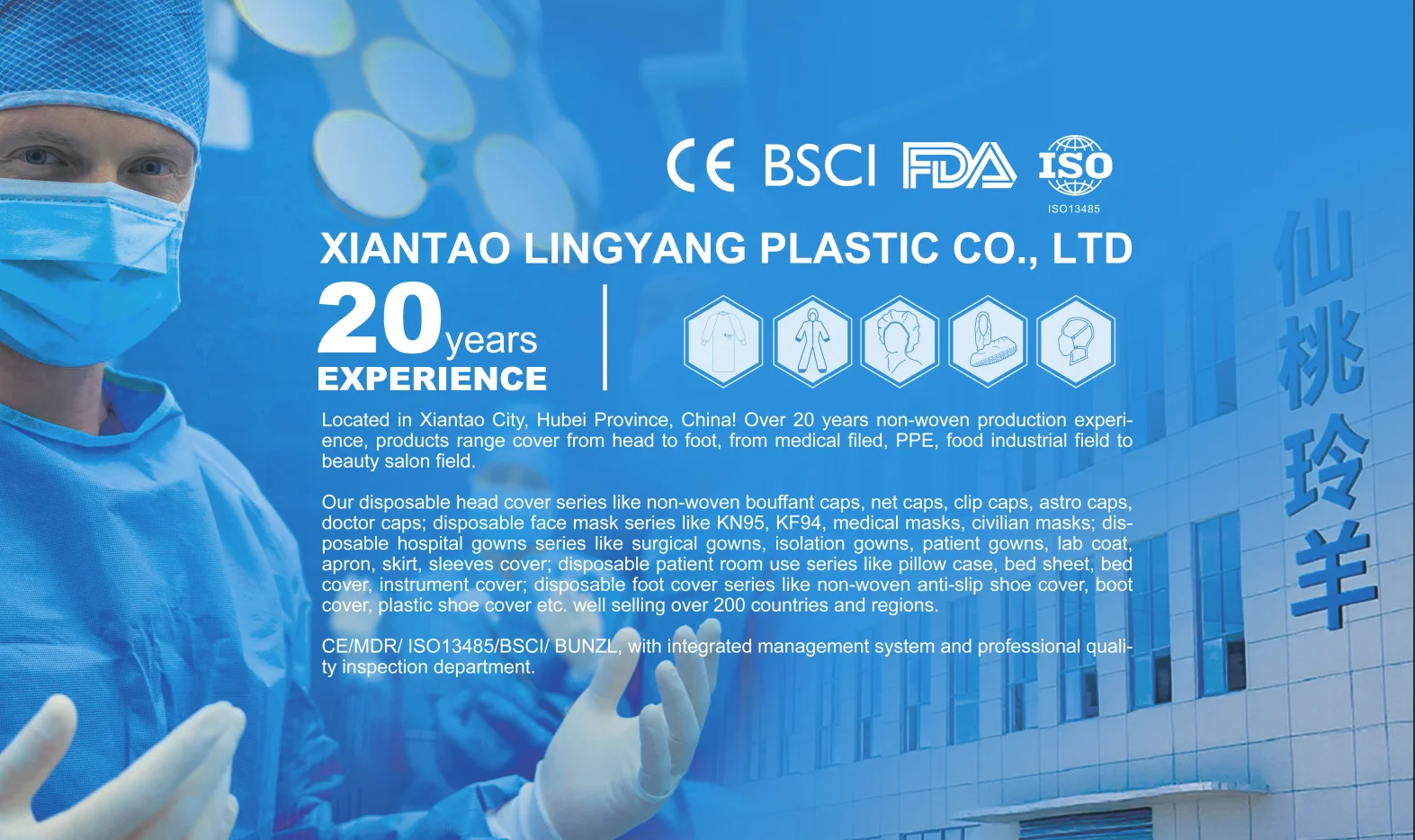
Xiantao Lingyang Plastic Co., Ltd.
- Manufacturer
- Hubei, China
- Lead time30 days
- Avg. response≤ 5h
Main productsIsolation Gown,Disposable Shoe Cover,Disposable Bed Sheet,Disposable Bouffant Cap,Disposable Coverall
Main marketsWestern Europe(35.00%), Southeast Asia(15.00%), North America(10.00%), Northern Europe(5.00%), Southern Europe(5.00%), Eastern Europe(5.00%), Mid East(5.00%), Oceania(5.00%), Africa(5.00%), South America(4.00%), South Asia(3.00%), Eastern Asia(2.00%), Central America(1.00%)
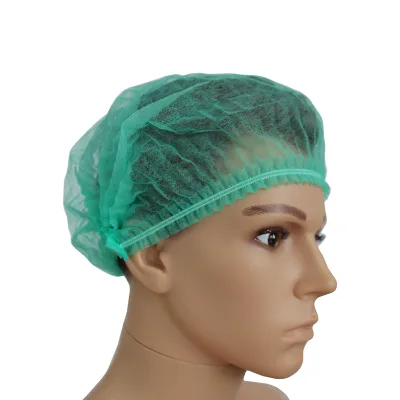
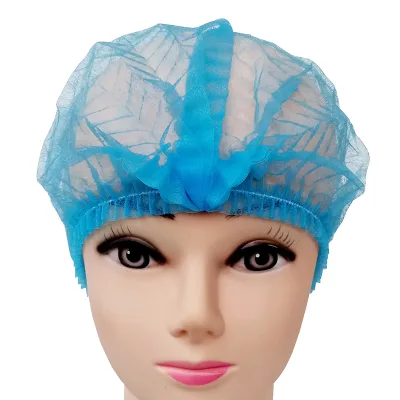
Disposable PP Nonwoven Hospital Medical Surgical Bouffant Mob Cap/Clip Cap
$0.0061 - $0.0092
MOQ: 100 Minimum
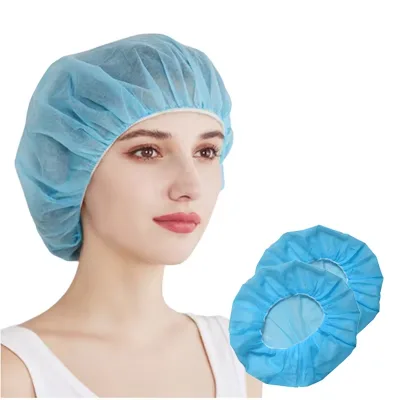
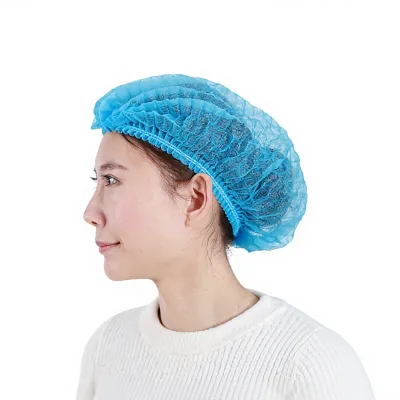
Personal Protective Head Cover Disposable Non Woven Mob Cap Bouffant Cap
MOQ: 100000 Minimum
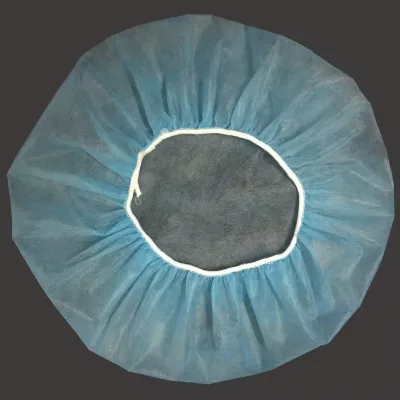
$0.01 - $0.02
MOQ: 100000 Minimum

Anhui Guohong Industrial and Trading Co., Ltd.
- Verified by BV
- Combined
- China Anhui
- Lead time15 days
- Avg. response≤ 13h
Main productsFace Mask, Disposable Glove, Coverall, Bouffant Cap, Hairnet, Lab Coat, Shoe Cover, PE Apron, Sleeve Cover, Surgical Gown
Main marketsSouth America,Southeast Asia/ Mideast,Europe,North America


Nonwoven Disposable Bouffant Cap, Disposable Round Cap, Surgical Cap
$0.0108 - $0.012
MOQ: 200000 Pieces


Shijiazhuang Yide Medical Device Manufacturing Co., Ltd.
- Combined
- China Hebei
- Lead time15 days
- Avg. response≤ 13h
Main productsPortable Suction Machine, Anti-Bedsore Air Mattress, Nebulizer, Isolation Gown, Isolation Shoe Cover, Protective Clothing, Infrared Thermometer, Digital Thermometer, Medical Mask, Pulse Oximeter
Main marketsSouth America,Africa,Southeast Asia/ Mideast,East Asia(Japan/ South Korea),Domestic,Europe,Australia

Yangzhou Super Union Medical Material Co., Ltd.
- Combined
- China Jiangsu
- Lead time15 days
- Avg. response≤ 10h
Main productsGauze Swab, Sterile Gauze Sponge, Lap Sponge, Non Woven Sponge, Gauze Roll, Sterile Non Woven Swab, Paraffin Gauze, Gauze Bandage, Triangel Bandage, Cotton Wool
Main marketsSouth America,Africa,Others(foreignTradeCapacity.exportBusinessCapacityMarketOther),Southeast Asia/ Mideast,East Asia(Japan/ South Korea),Domestic,Europe,Australia,North America

Anhui Lin-Med Imp & Exp Co., Ltd.
- Trading Company
- Anhui, China
- Lead time10 days
- Avg. response≤ 5h
Main productsface mask,isolation gown,surgical gown,clip cap,coverall
Main marketsSouth America(30.00%), North America(30.00%), Southeast Asia(20.00%), Mid East(10.00%), Africa(10.00%)
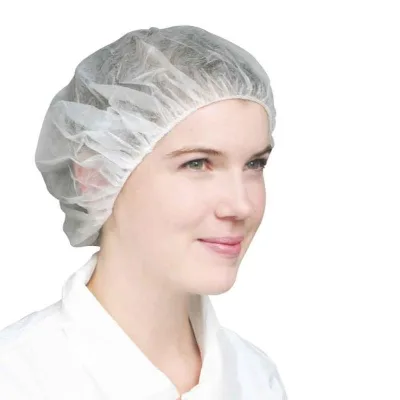
Hot Sale Disposable Non Woven Bouffant Cap Elastic Disposable Cheap Bouffant Cap
$0.01
MOQ: 20000 pieces
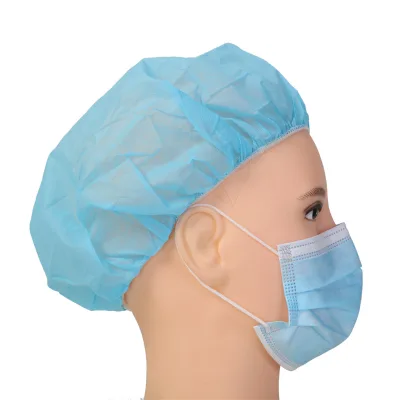
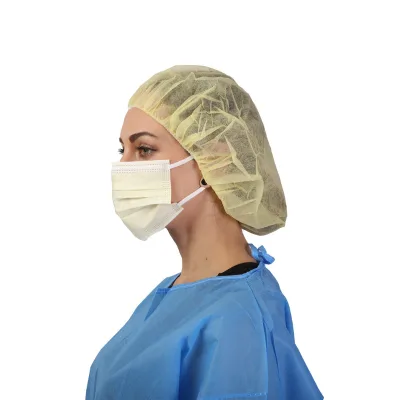
CE ISO13485 Medical Disposable PP Surgical Cap Doctor Nurse Bouffant Cap Used in Hospital
$0.0082 - $0.0134
MOQ: 2 Minimum
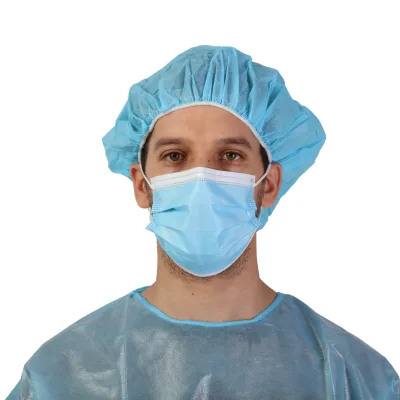
Wholesale Advantageous Price Disposable Bouffant Cap Nonwoven Round Caps Charlotte Jetable
$0.0082 - $0.0134
MOQ: 2 Minimum

Lu'an Xinjiayi Medical Supplies Co., Ltd.
- Verified by SGS
- Combined
- China Anhui
- Lead time30 days
- Avg. response≤ 3h
Main productsSurgical Gown, Isolation Gown, Surgical Pad Sheet, Surgical Pack
Main marketsDomestic

Disposable Fluffy Non-Woven Disposable Lab Medical Cap Medical Surgical Bouffant Cap
$0.03 - $0.05
MOQ: 100 Pieces

Medical Surgical Bouffant Cap Elastic Colours Can Be Customised Disposable High Stretch Cap
$0.03 - $0.05
MOQ: 100 Pieces

Disposable Protection Surgical Medical Disposable Comfortable Breathable Cap
$0.03 - $0.05
MOQ: 100 Pieces
Hubei Lioncare Protective Products Co., Ltd.
- Verified by Intertek
- Trading Company
- Lead time10 days
- Avg. response≤ 3h
Main productsDisposable Coveralls, Disposable Face Masks , Isolation Gowns , Disposable Caps, Disposable Lab Coats
Main marketsEastern Europe(30%), North America(20%), Oceania(10%)
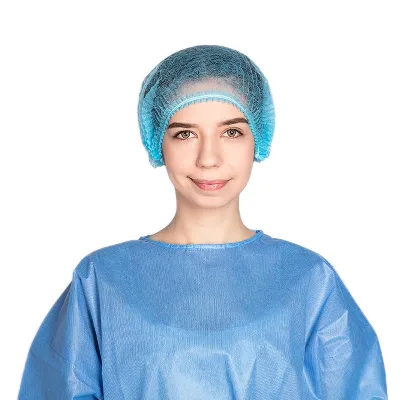
Non Woven Surgical Medical Disposable Bouffant Mob Clip Head Cap Nurse Doctor Hair Cap
$0.0103 - $0.0206
MOQ: 200 pieces
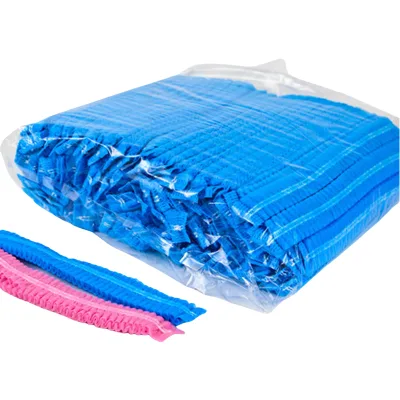
Hebei Dianya Medical Technology Co., Ltd.
- Verified by SGS Group
- Trading Company
- Hebei, China
- Lead time30 days
- Avg. response≤ 2h
Main productsHousehold Medical Devices, Medical Consumables, Professional Medical Devices
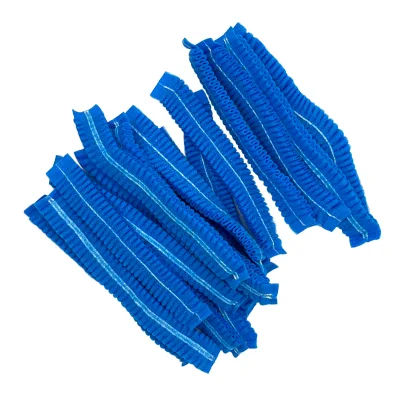
$0.0047 - $0.0092
MOQ: 10 Minimum
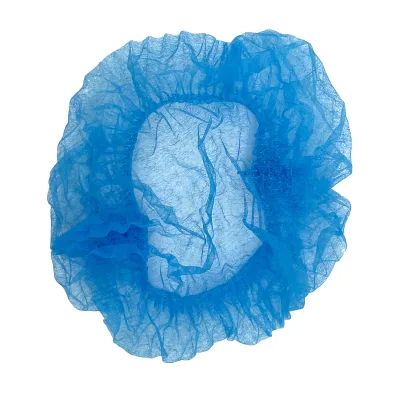
Medical Disposable Non-woven Fabric Sterile Surgical Hat Factory Direct Sales Surgical Cap
$0.0206 - $0.3613
MOQ: 500 pieces

Pingdingshan Med-Healthily Supplies Co., Ltd.
- Manufacturer, Trading Company
- Henan, China
- Lead time30 days
- Avg. response≤ 2h
Main productsDisposable surgical Gowns /Suits,Disposable Surgical Drapes,Disposable Surgical Pack /Kits,Medical Instrument Covers,Dressing Kits
Main marketsSoutheast Asia(18.00%), Central America(15.00%), South America(15.00%), Africa(10.00%), Southern Europe(5.00%), Northern Europe(5.00%), Eastern Europe(5.00%), Western Europe(5.00%), Eastern Asia(5.00%), South Asia(5.00%), Oceania(5.00%), North America(5.00%), Mid East(2.00%)
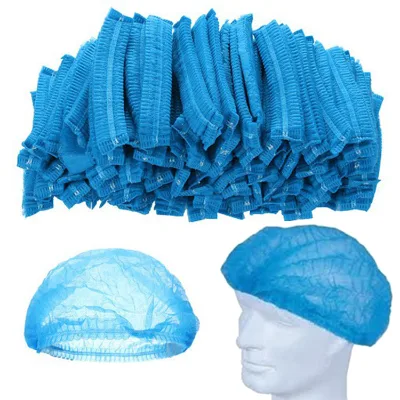
Disposable Non Woven Strip Clip Cap Bouffant Head Cover Surgical Doctor Hat Round Mob Cap Nurse Cap
$0.0207
MOQ: 20000 Minimum
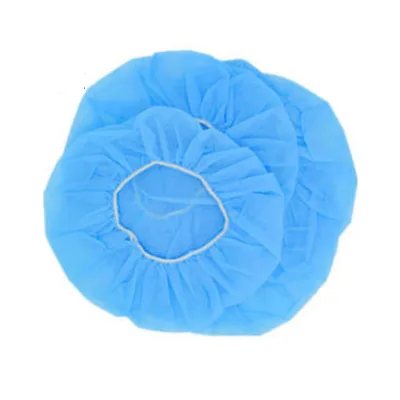
Hot Selling Medical Disposable Nurse Bouffant Cap Non Woven with Factory Price
$0.0207 - $0.0373
MOQ: 10000 Minimum
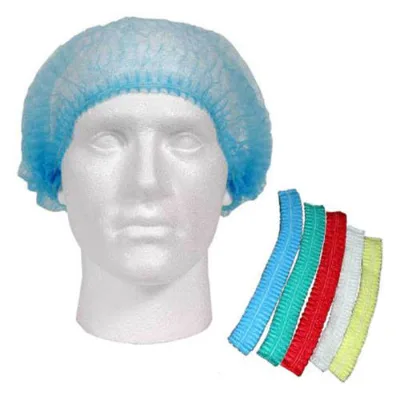
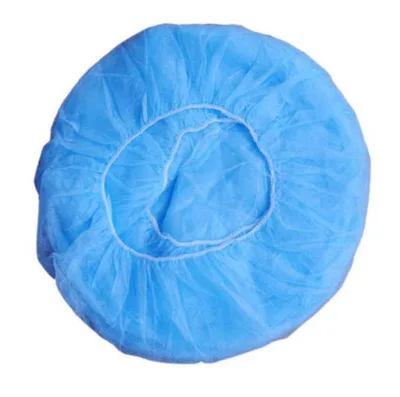
Factory Price Non-woven Caps Disposable Surgical Head Cap Hair Cover for Nurse&Doctor
$0.0207 - $0.0372
MOQ: 10000 Minimum

Hubei Qianjiang Kingphar Medical Material Co., Ltd.
- Combined
- China Hubei
- Lead time30 days
- Avg. response≤ 11h
Main productsGauze Swabs, Laparotomy Sponge, Sterile Gauze Ball, Gauze Roll, Non Woven Swabs, Mask, Bandage, Sterile Cotton Ball, Cotton Dental Wool, Disposable Facial Towel
Main marketsEurope

Medical Colorful Bouffant Cap Disposable Non-Woven Double Elastic Surgical Bouffant Cap
$0.0012 - $0.02
MOQ: 100000 Pieces


Fujian Angel Nonwoven Fabric Tech Co., Ltd.
- Verified by SGS
- Manufacturer
- China Fujian
- Lead time15 days
- Avg. response≤ 7h
Main productsNonwoven Fabric, Disposable Bed Sheet, Meltblown, Nonwoven Bag, Mattress Cover, Earloop/Nose Wire for Mask, PLA/Pet Nonwoven Fabric, Landscape Cover, Weed Control, TNT Table Cloth
Main marketsSoutheast Asia/ Mideast,Europe
Huizhou Xinjunda Plastic Products Co., Ltd.
- Manufacturer, Trading Company
- Guangdong, China
- Lead time0 days
- Avg. response≤ 7h
Main productsGlove, Shoe Cover, Strip Cap, Apron, Cuff
Main marketsDomestic Market(69.00%), North America(10.00%), Northern Europe(5.00%), Eastern Europe(5.00%), Western Europe(2.00%), Southern Europe(2.00%), Mid East(2.00%), South Asia(1.00%), South America(1.00%), Eastern Asia(1.00%), Central America(1.00%), Southeast Asia(1.00%)
Jining Jianda Medical Device Technology Co., Ltd.
- Verified by Intertek
- Manufacturer, Trading Company
- Lead time15 days
- Avg. response≤ 2h
Main productsSurgical pack, Surgical gown, Medical surgical mask, Underpad, Wound dressing
Hubei Huanfu Plastic Products Co., Ltd.
- Verified by SGS Group
- Manufacturer, Trading Company
- Lead time7 days
- Avg. response≤ 1h
Main productsNonwoven Fabric, PE/CPE Film, Medical Protective Suit, Face Mask, Disposable Isolation Suit
Main marketsNorth America(20%), South America(20%), Western Europe(20%)
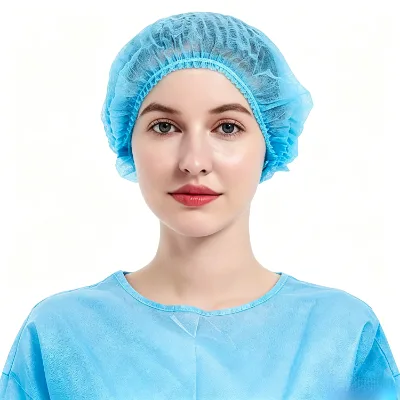
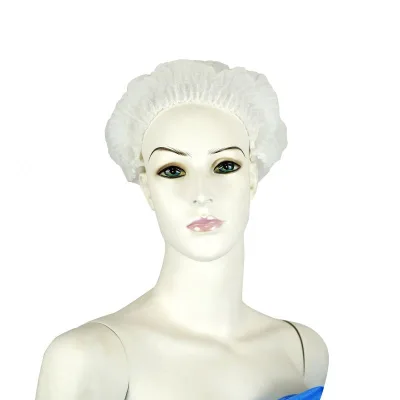
$0.1844 - $0.3897
MOQ: 100000 bags
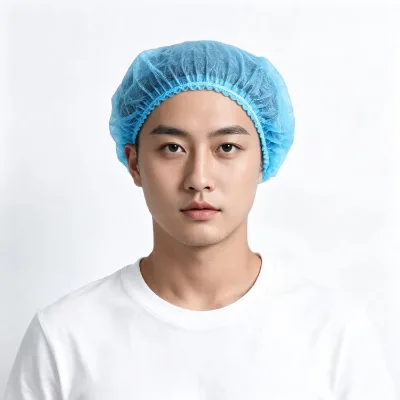
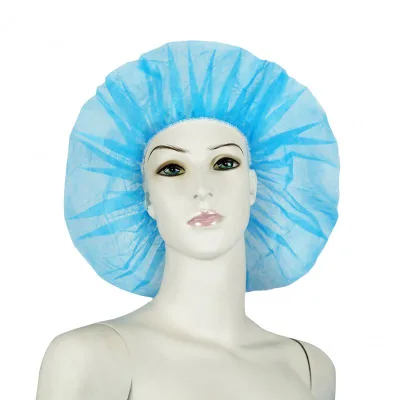
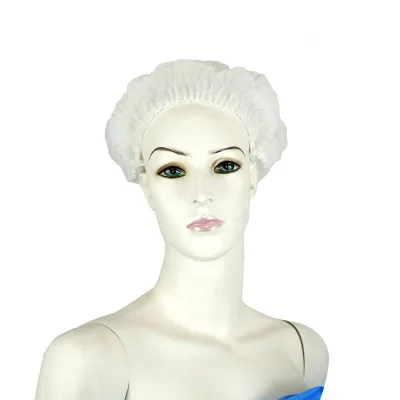
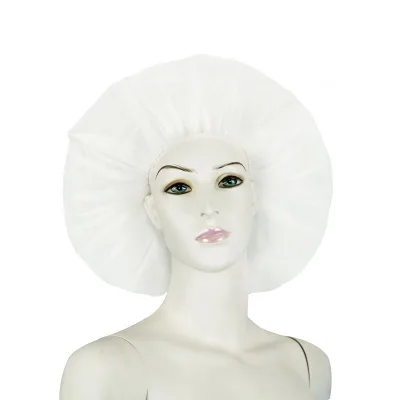
Disposable Non Woven Clip Cap Medical Disposable Hair Cover Cap pp Surgical Surgeon Cap
$0.1859 - $0.2893
MOQ: 100000 bags
Hubei Yinshun Protective Equipment Co., Ltd.
- Manufacturer
- Lead time旺季: "1 - 50000":3,"50001 - 200000":5,"200001 - 1000000":10,"> 1000000":"To be negotiated", 淡季: "1 - 50000":3,"50001 - 200000":5,"200001 - 1000000":10,"> 1000000":"To be negotiated"
- Avg. response≤ 5h
Main productsDisposable Medical Face Mask/Isolation Gown/Shoes Cover/Medical Cap
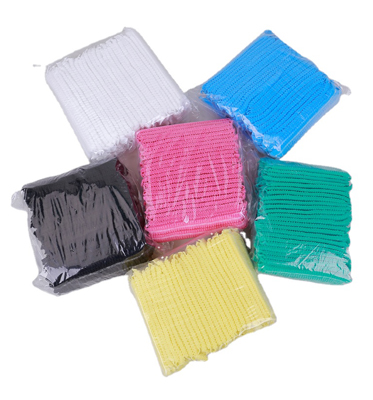
Good Quality Nonwoven Mob Cap pp Mob Cap Disposable Bouffant Cap at the Wholesale Price
$0.0103 - $0.0309
MOQ: 50 Minimum
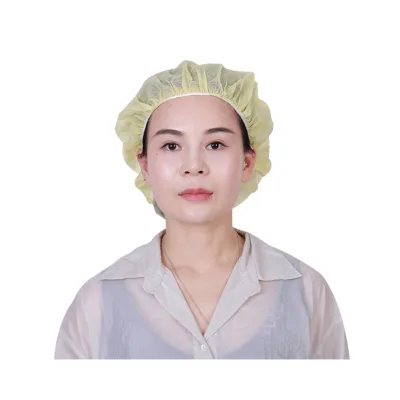
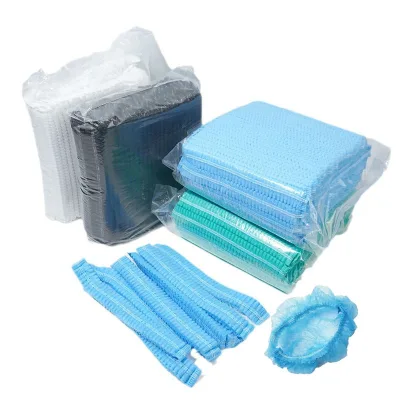
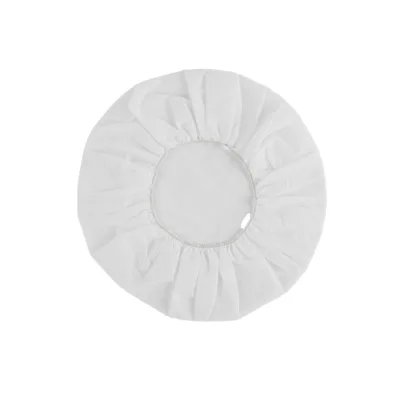
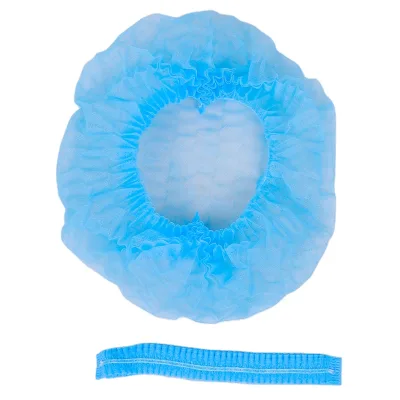
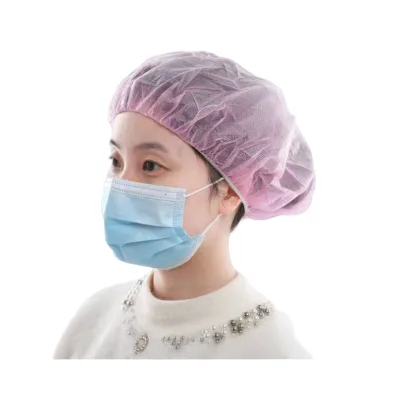
19 Inch Disposable Surgical Caps with Loop Disposable Mob Cap Clip Capdisposable Shower Cap
$0.01 - $0.03
MOQ: 2000 pieces
Hubei Yinshun Protective Equipment Co., Ltd.
- Manufacturer
- Hubei, China
- Lead time30 days
- Avg. response≤ 6h
Main productsDisposable Shoe Covers,Disposable Isolation Gowns,Disposable Protective Clothing,Disposable Strip Caps,Disposable Sleeve Covers
Main marketsNorth America(30.00%), Eastern Asia(25.00%), South America(5.00%), Western Europe(5.00%), Mid East(5.00%), Oceania(5.00%), Africa(5.00%), Southern Europe(5.00%), Southeast Asia(5.00%), Northern Europe(3.00%), Central America(3.00%), South Asia(2.00%), Eastern Europe(2.00%)

Changzhou Operson Medical Devices Co.,Ltd.
- Verified by SGS
- Combined
- China Jiangsu
- Lead time30 days
- Avg. response≤ 18h
Main productsWounder Plaster, Catheter, Surgical Suture, Medical Consumables, Wounder Dressing, Surgical Disposables, Surgical Equipment, Bandage, First Aid Kit, Syringe
Main marketsDomestic

Ningbo Yiyuankang International Trade Co., Ltd.
- Combined
- China Zhejiang
- Lead time30 days
- Avg. response≤ 23h
Main productsMedical Bandage, Tape, Medical First Aid, Alcohol Pad, Face Mask, Adhesive Bandage, Bandage
Main marketsSouth America,Africa,Southeast Asia/ Mideast,East Asia(Japan/ South Korea),Europe,Australia,North America


Factory Direct Medical Non-Woven Disposable Bouffant Cap in Low Price
$0.01 - $0.015
MOQ: 10000 Pieces
Hubei Kangning Protective Products Co., Ltd.
- Verified by Intertek
- Manufacturer, Trading Company
- Lead time30 days
- Avg. response≤ 8h
Main productsDisposable Medical Face Masks, Disposable Medical Bed Sheet, Disposable Isolation Gown, Disposable Medical Caps, Disposable Medical Shoe Cover
Main marketsWestern Europe(25%), Domestic Market(25%), Eastern Asia(15%)
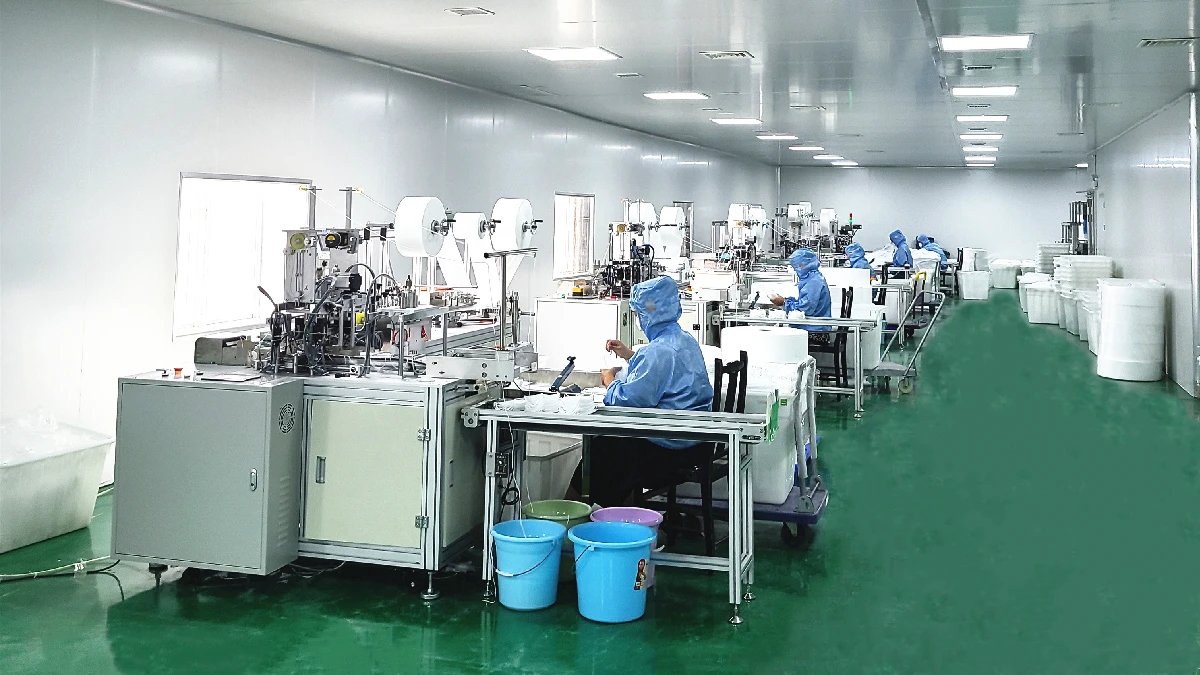
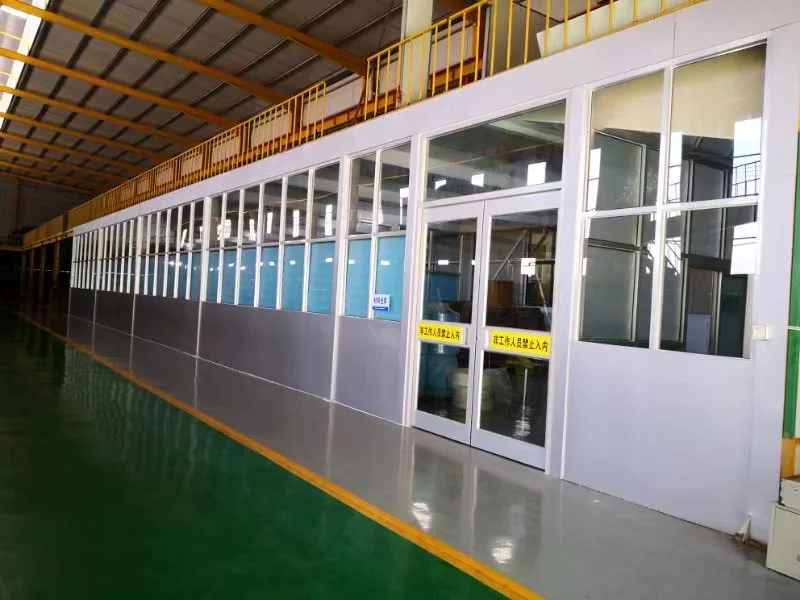
Hubei Yazhi Hygiene Products Co., Ltd.
- Manufacturer
- Hubei, China
- Lead time30 days
- Avg. response≤ 4h
Main productsFace Mask,Cap,Protective Clothes,Isolation Gown,Shoe Cover
Main marketsNorth America(30.00%), Southern Europe(13.00%), Northern Europe(13.00%), Eastern Europe(12.00%), Western Europe(12.00%), Domestic Market(10.00%), Southeast Asia(10.00%)
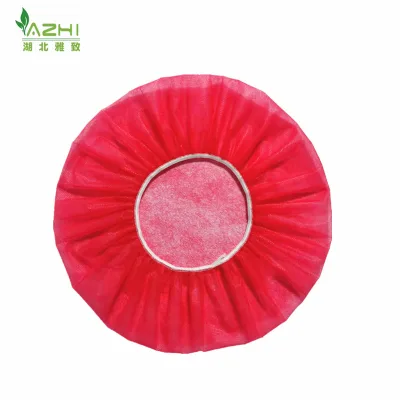
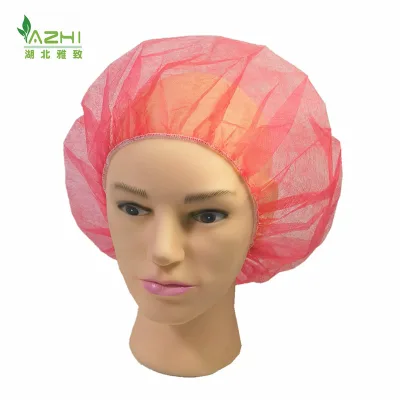
High Quality China Factory Disposable Surgical Caps Non Woven Medical Red Bouffant Round Cap
$0.0082 - $0.2069
MOQ: 90000 Minimum
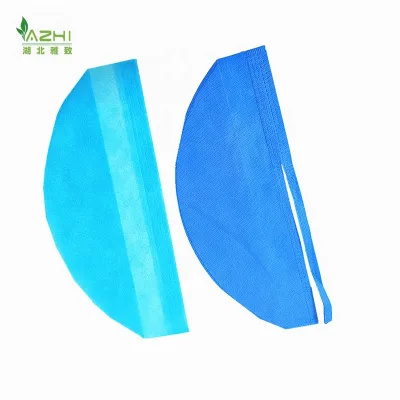
Medical Bouffant Cap Disposable Nurse Hat machine made Non Woven doctors Cheap SMS Caps with ties
$0.01 - $0.15
MOQ: 90000 Minimum
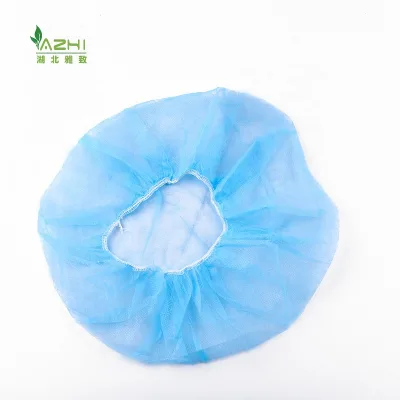
$0.0104 - $0.1559
MOQ: 90000 Minimum
Jinan Huayutianshun Hotel Supplies Co., Ltd.
- Manufacturer, Trading Company
- Shandong, China
- Lead time10 days
- Avg. response≤ 4h
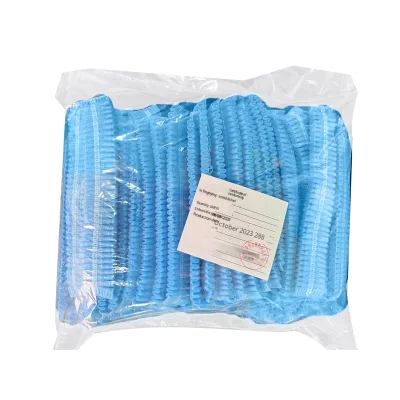
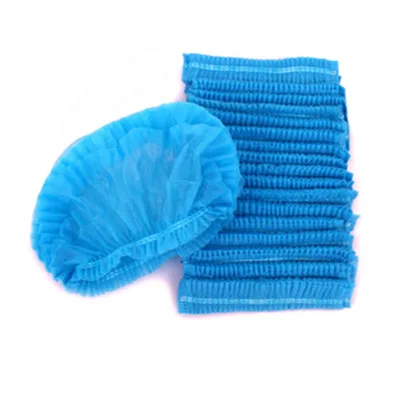
Main productsPaper Doily, Non-woven Mop Cap, Non-woven Shoe Cover, Three Layers Face Mask, Independent Packaging PE Gloves
Main marketsEastern Europe(30.00%), Mid East(20.00%), Western Europe(10.00%), Northern Europe(10.00%), North America(5.00%), South America(5.00%), Oceania(5.00%), Eastern Asia(5.00%), Africa(5.00%), Southeast Asia(5.00%)


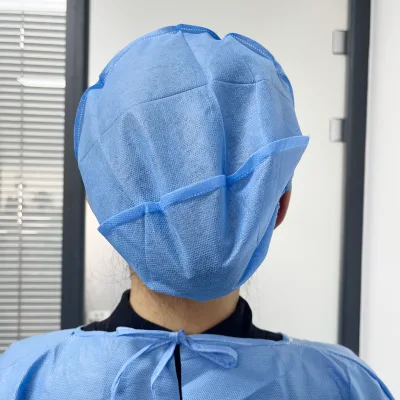
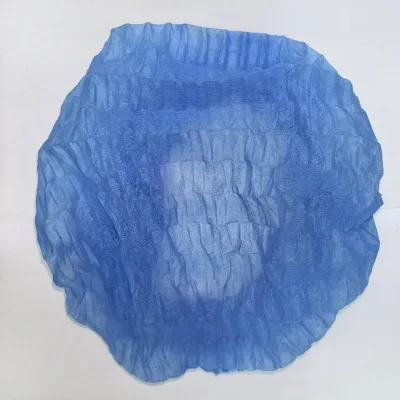
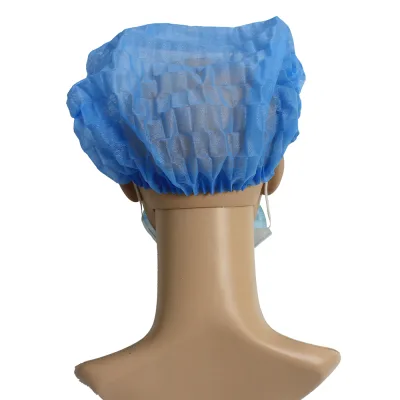


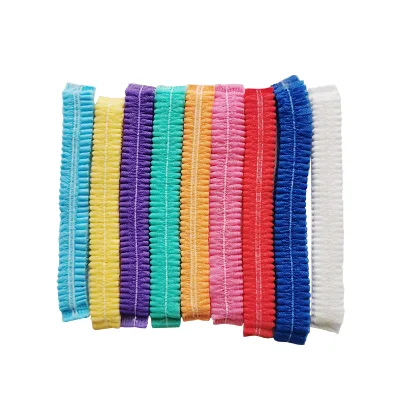
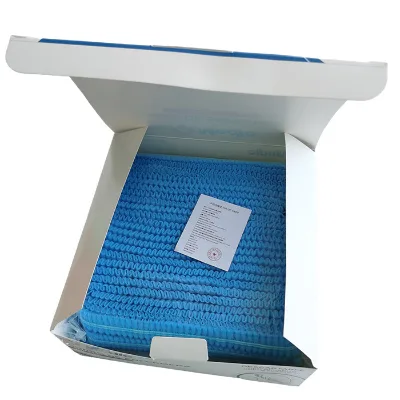
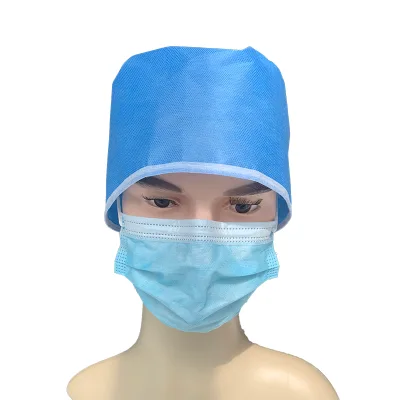

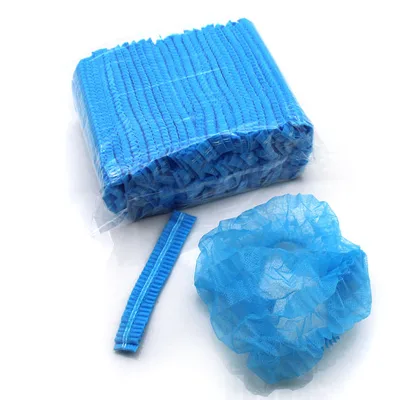
Comprehensive Sourcing Guide
Disposable Surgical Bouffant Cap Supplier Concentration and Factory Types
The current supplier landscape for disposable surgical bouffant caps reveals a distinct concentration of manufacturing and trading entities within specific Chinese provinces, most notably Hubei and Shanghai. This geographic clustering is significant for buyers because it often correlates with established supply chains for nonwoven materials and medical consumables. Suppliers located in Hubei frequently list their origin as such, indicating a regional hub for production. Meanwhile, entities based in Shanghai may serve as trading companies or manufacturers with direct access to major ports like Shanghai and Wuhan, facilitating international logistics. Understanding this spatial distribution helps buyers narrow their search to regions with proven infrastructure for producing items like nonwoven caps, isolation gowns, and other general medical supplies. The presence of both manufacturers and trading companies in these areas means buyers must distinguish between those who control the production line and those who aggregate products from various factories. This distinction impacts quality control, customization capabilities, and overall supply chain transparency.
Company types vary significantly across the available results, ranging from pure trading companies to integrated manufacturers and factories. Some suppliers identify primarily as trading companies, which may offer a broader range of related products such as shoe covers, PE aprons, and hospital uniforms, leveraging their network to source bouffant caps alongside other PPE. In contrast, manufacturer/factory entities often highlight specific production capacities, such as OEM and ODM services, and may hold certifications like ISO 9001 or ISO 20000. These factories might also possess their own brands, such as Everest, indicating a level of market maturity and brand recognition. The diversity in company types suggests that buyers can choose between suppliers who offer specialized, high-volume production capabilities and those who provide flexible, multi-product sourcing solutions. Evaluating the specific business model of each supplier is crucial, as it directly influences the level of direct communication, technical support, and potential for long-term partnership. Buyers should prioritize suppliers whose company type aligns with their specific needs for customization, volume, and direct factory interaction.
How to Verify Disposable Surgical Bouffant Cap Suppliers
Verification is a critical step in ensuring the reliability and compliance of suppliers offering disposable surgical bouffant caps. Buyers should prioritize suppliers who have undergone third-party verification processes, such as BV (Bureau Veritas) certification, which adds a layer of trust regarding the supplier's business legitimacy and operational capabilities. Additionally, checking for system certifications like ISO 9001, ISO 13485, and ISO 20000 is essential, as these standards indicate adherence to quality management systems and medical device regulations. Some suppliers may also display specific product standards such as SBPP, PP, SMS, or SPUNLANCE, which relate to the material quality and manufacturing processes. Buyers must carefully review these certifications to ensure they meet the regulatory requirements of their target markets. It is important to note that not all suppliers will display every certification, so buyers should actively request documentation for any missing credentials to verify compliance.
Beyond certifications, buyers should assess the supplier's response time and verification status to gauge their professionalism and reliability. Response times can vary, with some suppliers responding within approximately 10 to 19 hours, which is a key indicator of their operational efficiency and customer service commitment. A faster response time often correlates with better communication throughout the sourcing process, from initial inquiry to post-order support. Buyers should also look for suppliers who provide detailed product attributes, such as sterilization methods (e.g., Ethylene Oxide Sterilization or Non-Sterilized), material composition (e.g., Nonwoven, PP, SMS), and customization options. These details help buyers verify that the supplier has the technical expertise to produce caps that meet specific medical or industrial requirements. By combining verification checks with an evaluation of communication speed and product transparency, buyers can build a more robust and reliable supplier base for their Disposable Surgical Bouffant Cap needs.
What to Compare Across Disposable Surgical Bouffant Cap Suppliers
When evaluating multiple suppliers for disposable surgical bouffant caps, buyers must compare key operational metrics to determine the best fit for their procurement strategy. Lead times are a critical factor, with some suppliers offering production cycles of around 23 to 30 days. This variation can impact inventory planning and order fulfillment, especially for buyers with tight deadlines or high-volume requirements. Alongside lead times, buyers should compare the Minimum Order Quantities (MOQs), which can range significantly from as low as 50 units to as high as 50,000 units. Suppliers with lower MOQs may be more suitable for trial orders or smaller-scale projects, while those with higher MOQs might offer better economies of scale for large-volume purchases. Understanding these thresholds helps buyers align their orders with supplier capabilities and avoid unnecessary costs or delays.
Price and customization options are also essential comparison points. Prices for disposable bouffant caps can vary, with some listings showing specific price points such as $0.006 to $0.04 per unit, depending on material, size, and order volume. Buyers should request detailed quotes to understand the total cost, including packaging and shipping. Customization availability is another key differentiator, with some suppliers offering OEM/ODM services, logo printing, and various size options ranging from 17 inches to 24 inches. Material specifications, such as GSM (grams per square meter) ranging from 10g to 40g, also affect both price and performance. Buyers should compare these attributes across suppliers to ensure they are getting the best value for their specific quality and branding requirements. By systematically comparing lead times, MOQs, prices, and customization capabilities, buyers can make informed decisions that balance cost, speed, and product quality.
Common Disposable Surgical Bouffant Cap Sourcing Risks
Sourcing disposable surgical bouffant caps involves several potential risks that buyers must proactively manage to ensure product quality and supply chain stability. One significant risk is the variability in product specifications, such as material type, sterilization status, and size dimensions. Suppliers may offer caps with different features, such as elastic vs. non-elastic, or with varying GSM weights, which can impact comfort and protection levels. Buyers must clearly define their requirements and verify that the supplier's products match these specifications exactly. Another risk is the inconsistency in packaging and labeling, which can affect storage, handling, and regulatory compliance. Some suppliers may offer different packing options, such as 100PCS/Bag or 1000PCS/CTN, and buyers need to ensure these align with their logistical needs.
Quality control and certification compliance are also major concerns. Buyers must verify that suppliers adhere to relevant standards and provide necessary documentation, such as test reports or certification copies. Failure to do so can result in regulatory issues or product recalls in the buyer's market. Additionally, there is a risk of communication gaps, especially when dealing with trading companies or suppliers with slower response times. Misunderstandings regarding customization, delivery dates, or payment terms can lead to delays or disputes. Buyers should maintain clear and documented communication with all suppliers to mitigate these risks. Furthermore, relying on a single supplier or region can expose buyers to supply chain disruptions. Diversifying suppliers and maintaining a buffer stock can help mitigate these risks. By identifying and addressing these potential pitfalls early in the sourcing process, buyers can build a more resilient and reliable supply chain for their Disposable Surgical Bouffant Cap needs.
Disposable Surgical Bouffant Cap Regional Sourcing and Logistics
Regional sourcing plays a pivotal role in determining the efficiency and cost-effectiveness of procuring disposable surgical bouffant caps. Suppliers located in China, particularly in provinces like Hubei and cities like Shanghai, offer distinct logistical advantages. Hubei-based suppliers often benefit from established manufacturing clusters for nonwoven products, which can streamline production and reduce lead times. Meanwhile, Shanghai-based suppliers may have direct access to major international ports, facilitating faster and more cost-effective shipping to global destinations. Buyers should consider the proximity of suppliers to key logistics hubs when evaluating their options, as this can significantly impact transit times and freight costs. Understanding the regional strengths of different suppliers helps buyers optimize their supply chain and reduce overall procurement costs.
Logistics planning also involves considering the loading ports and shipping methods offered by suppliers. Some suppliers may list multiple loading ports, such as Shanghai, Wuhan, or others, providing flexibility in shipping arrangements. Buyers should coordinate with their freight forwarders to determine the most efficient shipping routes and methods based on the supplier's location and the destination market. Additionally, buyers must account for customs clearance and import regulations in their target markets, which can vary significantly by region. Ensuring that suppliers provide accurate and complete documentation, such as commercial invoices, packing lists, and certificates of origin, is crucial for smooth customs clearance. By carefully planning regional sourcing and logistics, buyers can minimize delays, reduce costs, and ensure timely delivery of their Disposable Surgical Bouffant Cap orders.
Disposable Surgical Bouffant Cap Commercial Terms and Order Planning
Commercial terms and order planning are essential components of a successful sourcing strategy for disposable surgical bouffant caps. Buyers must carefully negotiate payment terms, such as T/T, L/C, or escrow services, to ensure financial security and flexibility. Escrow services can provide an additional layer of protection by holding funds until the buyer confirms receipt and quality of the goods. Lead times and production schedules should be clearly defined in the contract to avoid delays and ensure timely delivery. Buyers should also consider the impact of order volume on pricing and customization options, as larger orders may qualify for discounts or more flexible terms. Understanding these commercial terms helps buyers manage cash flow and mitigate financial risks.
Order planning involves forecasting demand, managing inventory, and coordinating with suppliers to ensure consistent supply. Buyers should establish clear communication channels with suppliers to track production progress and address any issues promptly. Regularly reviewing supplier performance metrics, such as response time, lead time adherence, and product quality, can help identify areas for improvement and strengthen the partnership. Buyers should also consider diversifying their supplier base to reduce dependency on a single source and enhance supply chain resilience. By implementing robust commercial terms and strategic order planning, buyers can optimize their procurement process, reduce costs, and ensure a steady supply of high-quality disposable surgical bouffant caps for their operations.
FAQs
What is the price range for disposable surgical bouffant caps?
Prices typically range from $0.005 to $0.04 per unit depending on material quality and order volume. Specific listings show fixed prices like $0.006 or $0.04 for standard non-woven options. Buyers should verify exact costs based on selected GSM and packaging requirements.
What is the minimum order quantity for these caps?
MOQs vary significantly by supplier, ranging from 50 units to 50,000 units. Some manufacturers require bulk orders of 10,000 or more, while others accommodate smaller trial orders. Always confirm the specific MOQ with the supplier before finalizing purchase agreements.
Are the caps sterilized or non-sterilized?
Most available options are non-sterilized, though some suppliers offer ethylene oxide sterilization. Products are often labeled as non-sterilized with customization available for sterilization needs. Verify the sterilization status and certification details directly with the supplier to ensure compliance with medical standards.
What materials are used for surgical bouffant caps?
Caps are primarily made from non-woven materials such as PP, SMS, and spunlace. GSM ranges from 10g to 40g, affecting durability and comfort. Some products also feature antistatic or dust-proof properties. Material specifications should be confirmed based on the intended medical or industrial application.
What are the typical lead times for production?
Lead times generally range from 23 to 30 days for standard orders. Suppliers located in China, such as those in Hubei or Shanghai, report these durations. Expedited shipping options may be available, but buyers should confirm production schedules and delivery windows with the manufacturer.
Can suppliers provide OEM or logo printing services?
Yes, many suppliers offer OEM and ODM services with logo printing available. Customization options include specific sizes, packaging, and material GSM. Buyers should discuss branding requirements and minimum quantities for custom orders directly with the supplier to ensure alignment with their manufacturing capabilities.