Eco Friendly Bamboo Knot Skewers Suppliers and Manufacturers
Compare 20 verified suppliers of Eco Friendly Bamboo Knot Skewers by location, lead time, and certifications. Review product specs and response times to select a factory that meets your customization needs; review the available evidence before requesting comparable quotations from suitable candidates.
Updated
Suppliers List

Wenzhou Qiangsen Import and Export Co., Ltd.
- Verified by BV
- Trading Company
- China Zhejiang
- Lead time30 days
- Avg. response≤ 4h
Main productsFood Container, Cornstarch Cutlery, Paper Plate, Salad Bowl, Paper Bag, Bamboo Stick, Wooden Cutlery, Greaseproof Paper, Bamboo Cutlery, Paper Cup
Main marketsSoutheast Asia/ Mideast,North America


Decorative Bamboo Knot Skewers BBQ Skewers Bamboo Loop Skewer Cocktail Skewer
$0.0018 - $0.002
MOQ: 8000 pc

Eco Friendly Disposable Bamboo Knot Skewers Bamboo Knot Picks Bamboo Picks
$0.0045 - $0.005
MOQ: 8000 pc

Eco Friendly Knotted Looped Skewer Bamboo Knot Picks Tableware Fruit Skewer
$0.0045 - $0.005
MOQ: 8000 pc

Food Grade Biodegradable Disposable Natural Bamboo Knot Skewers Bamboo Picks Bamboo Skewers
$0.0045 - $0.005
MOQ: 8000 pc

JIANGXI XIZHU BAMBOO INDUSTRY CO., LTD.
- Verified by TUVRHEINLAND
- Combined
- China Jiangxi
- Lead time23 days
- Avg. response≤ 3h
Main productsDisposable Bamboo Chopsticks, Bamboo Incense Stick, Bamboo BBQ Skewer, Bamboo Stick
Main marketsSoutheast Asia/ Mideast
Anhui Hongye Group Hongliang Bamboo Industry Co., Ltd.
- Manufacturer
- Anhui, China
- Lead time10 days
- Avg. response≤ 17h
Main productsBamboo Chopsticks,Bamboo Skewers,Toothpick,Bamboo Straw,Bamboo stick
Main marketsEastern Asia(20.00%), Domestic Market(20.00%), Southeast Asia(17.00%), South America(10.00%), South Asia(5.00%), North America(5.00%), Western Europe(5.00%), Mid East(4.00%), Oceania(3.00%), Southern Europe(3.00%), Eastern Europe(3.00%), Northern Europe(2.00%), Africa(2.00%), Central America(1.00%)
Anhui Yien Import-Export Trading Co., Ltd.
- Verified by SGS Group
- Trading Company
- Lead time20 days
- Avg. response≤ 3h
Main productsBamboo Skewer, Bamboo Coffee Stirrer, Bamboo Toothpick, Disposable Cutlery, Bamboo Knot Skewer
Main marketsSouth Asia(13%), Southern Europe(12%), Western Europe(11%)
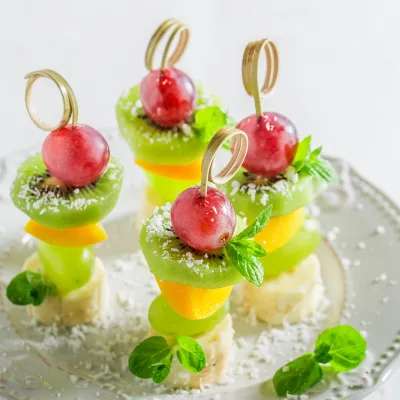
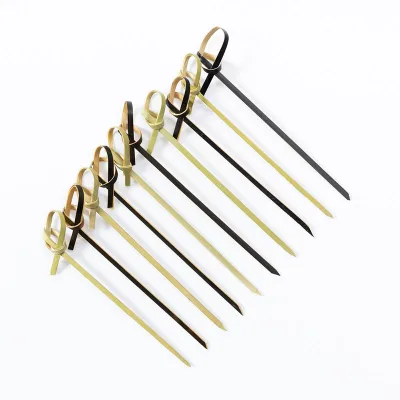
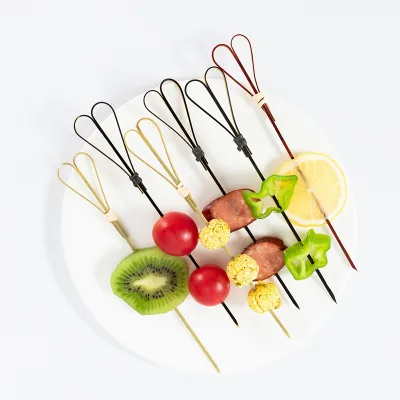
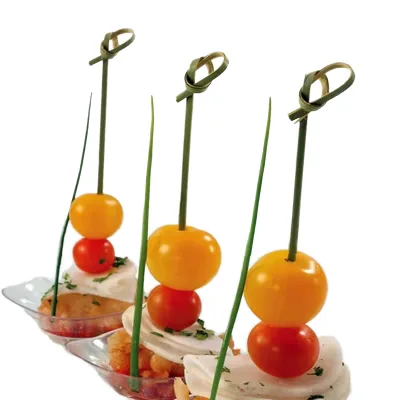
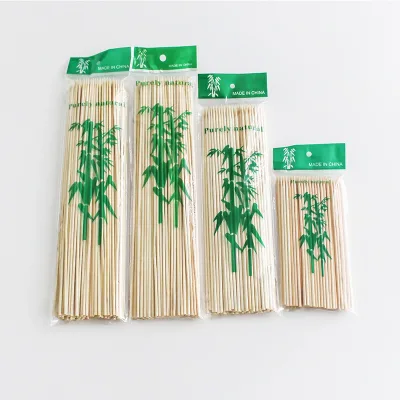
Natural Biodegradable Custom Double Pointed Bamboo Skewers 35cm with Printed Bag
$0.35 - $0.40
MOQ: 20000 bags
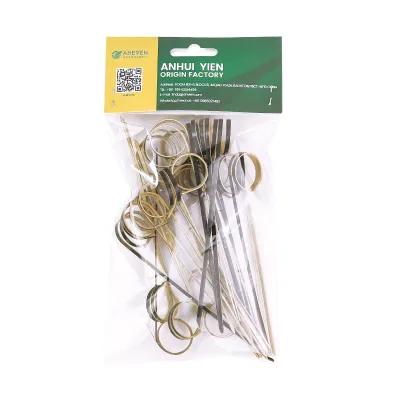
Hot Sell Disposable Biodegradable Twist Knot Skewer for Fruit Hamburger Decoration
$1.30 - $1.40
MOQ: 500

Anhui Hongye Group Ecological Bamboo Fiber Technology Co., Ltd.
- Trading Company,Manufacturer/Factory
- China Anhui
- Lead time15 days
- Avg. response≤ 23h
Main productsBamboo Straw, Bamboo Ice Cream Stick, Bamboo Skewer, Bamboo Toothpicks, Bamboo Chopsticks
Main marketsSouth America,Eastern Europe,Mid East,North America,Southeast Asia,Eastern Asia,Oceania,Western Europe,Africa

GANZHOU FUCHENG HOUSEHOLD PRODUCTS CO., LTD.
- Verified by BV
- Combined
- China Jiangxi
- Lead time15 days
- Avg. response≤ 8h
Main productsMasking Film, Pre Taeped Masking Film, PE Film, Plastic Film, Bamboo Sticks, Bamboo Skewer, Toothpick, Fiber Difuseer Stick, Diffuser Stick
Main marketsSouth America,Southeast Asia/ Mideast,Europe


Factory Wholesale Natural Bamboo Made Disposable Food Grade Bamboo Knot Skewers
$0.0035 - $0.009
MOQ: 1 Pieces


Nature Bamboo Sticks Disposable Bamboo Skewer Ring Dessert Knot Pick Skewer
$0.0032 - $0.008
MOQ: 1 Pieces

Anhui Nature Imp. & Exp. Co., Ltd.
- Verified by SGS
- Trading Company
- China Anhui
- Lead time15 days
- Avg. response≤ 2h
Main productsBamboo Products, Wooden Products, Multiple Knife Fork & Spoon, Bamboo Scissors Stick, Bamboo Sushi Curtain, Disposable Creative Bead Bamboo Stick, Bamboo Straw, Bamboo Stick, Wooden Cutlery, Wooden Knife Spoon Fork
Main marketsSoutheast Asia/ Mideast,Europe,North America


Eco-Friendly Hot Sale Skewers Bamboo Knot Skewer Bamboo Knotted Skewer Picks
$0.0099 - $0.0199
MOQ: 50000 Pieces


High Quality Biodegradable Disposable Eco-Friendly Bamboo Knot Skewers for BBQ
$0.02
MOQ: 50000 Pieces

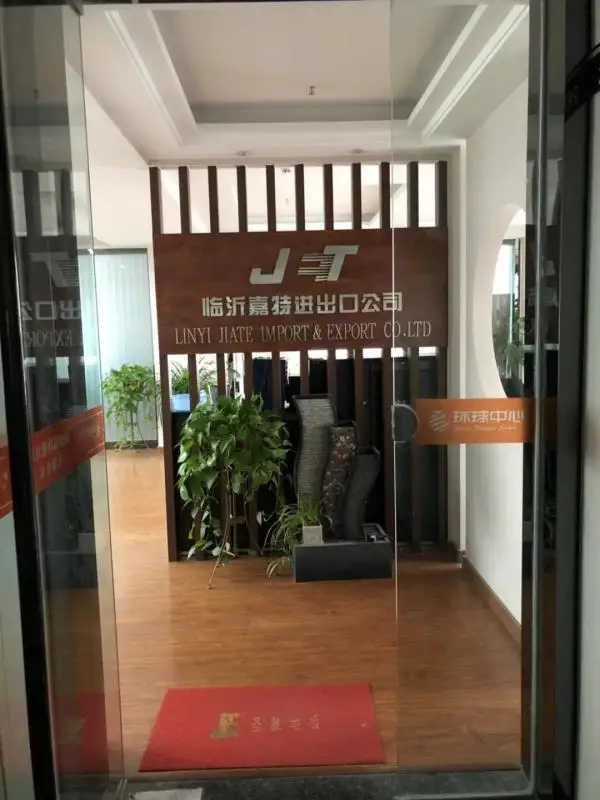
Linyi Jiate Import & Export Co., Ltd.
- Trading Company
- Shandong, China
- Lead time30 days
- Avg. response≤ 14h
Main productsbamboo skewer,bamboo teppo skewer,bamboo sticks,bamboo marshmallow stick,bamboo smoking sticks
Main marketsNorth America(40.00%), Africa(10.00%), Eastern Europe(10.00%), South America(10.00%), Western Europe(5.00%), Southern Europe(5.00%), Mid East(5.00%), Oceania(5.00%), Central America(5.00%), Domestic Market(1.00%), South Asia(1.00%), Eastern Asia(1.00%), Northern Europe(1.00%), Southeast Asia(1.00%)
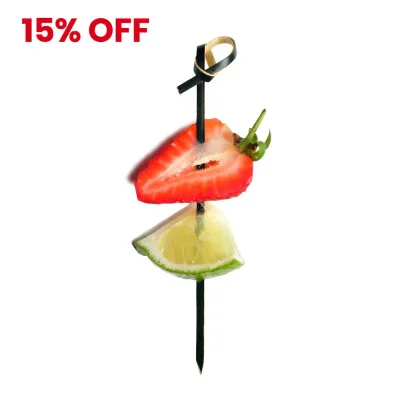
Combo Pack Bamboo Knot Skewers, 4 Inch Knotted Skewers & 6 Inch Knotted Skewers
$49.00 - $59.00
MOQ: 10 cartons

Eco friendly FSC certificatenatural bamboo ring skewer disposable bamboo knot skewer
$49.00 - $59.00
MOQ: 10 cartons
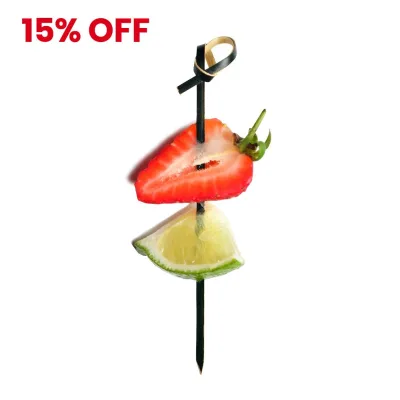
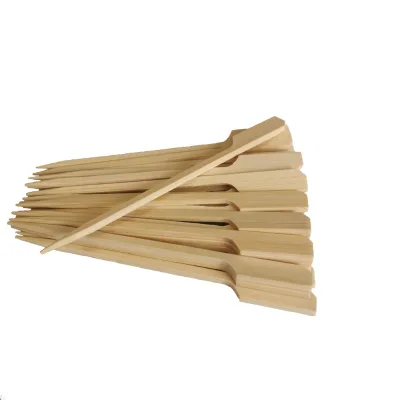
Bamboo Stick Safe Skewer for Kids Hot Sale
$32.00 - $35.00
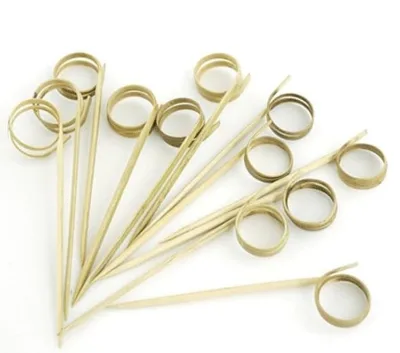
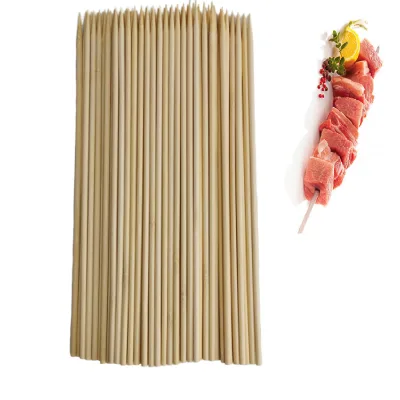
Eco-friendly Wholesale BBQ Round Bamboo Skewers and Toothpicks With Knots 3.5mm/4.0mm/4.5mm/5.0mm
$33.00 - $35.00
MOQ: 100 cartons
Guangzhou Gorlando Commodity Co., Ltd.
- Trading Company
- Lead time旺季: "1 - 100":15,"> 100":"To be negotiated", 淡季: "1 - 100":15,"> 100":"To be negotiated"
- Avg. response≤ 4h
Main productsBamboo Skewers,Bamboo Toothpicks,Bamboo Chopsticks,Bamboo And Wood Coffee Sticks,Bamboo And Wood Knife Fork Spoon

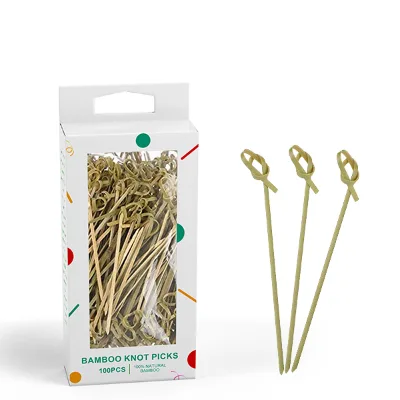
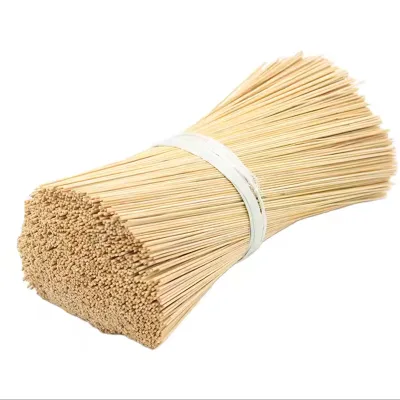
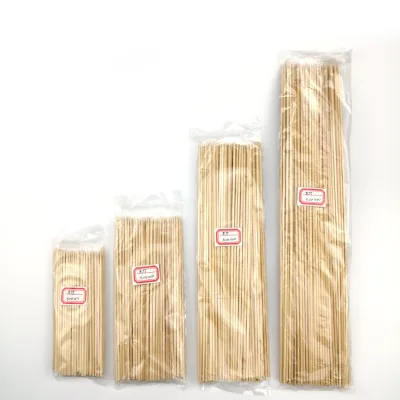
Natural Bamboo Disposable Bamboo Skewer 40 cm 50cm 60cm 30cm 90cm with Custom Package logo
$0.1025 - $0.4617
MOQ: 5 bags

Anhui Julie Import and Export Co., Ltd.
- Verified by SGS
- Trading Company
- China Anhui
- Lead time30 days
- Avg. response≤ 10h
Main productsBamboo Skewer, Wooden Cutlery, Toothpick, Paper Straw, Bamboo Chopsticks, Ice Cream Stick, Paper Cutlery, Wooden Skewer, Clothes Peg, Bamboo Straw
Main marketsSouth America

Xiamen Chengfengxin Industry & Trade Co., Ltd.
- Verified by BV
- Trading Company
- China Fujian
- Lead time23 days
- Avg. response≤ 1h
Main productsBamboo Cutting Board, Bamboo Bathtub Rack Caddy, Bamboo Tablet Computer Desk, Bamboo Kitchenwares Holder Organization, Bamboo Home Storage, Home Office Collection, Eco-Friendly Kitchen Products, Bamboo Kitchen Tools, Bamboo Diffuser, Eco-Friendly Green Products
Main marketsSoutheast Asia/ Mideast,Europe,Australia,North America

Premium Eco-Friendly Bamboo Skewers with Elegant Floral Knot Design
$0.0015 - $0.0025
MOQ: 10000 Pieces


Guilin Sanyou Economic And Trade Co., Ltd.
- Trading Company
- Guangxi, China
- Lead time0 days
- Avg. response≤ 6h
Main productsbarbecue stick,stirring rod
Main marketsNorth America(1.00%)
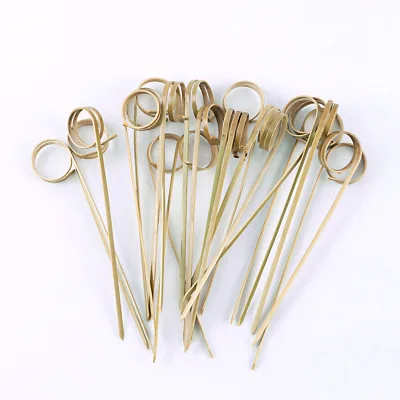
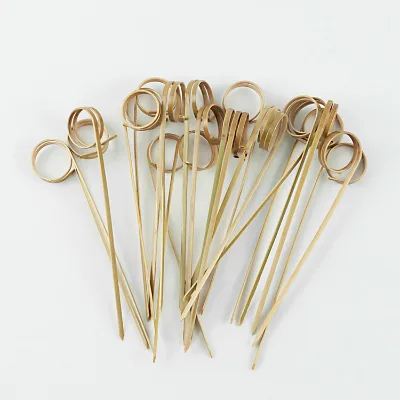
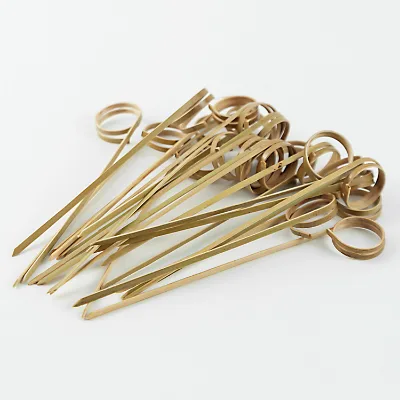
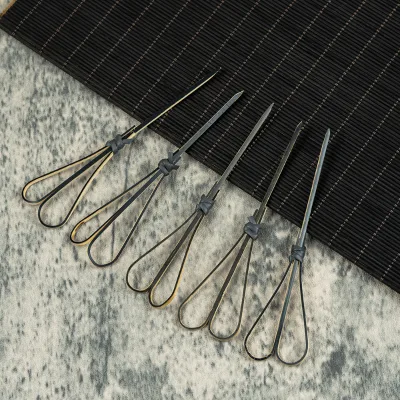
Factory Sale of Bamboo Knot Skewer
$0.01 - $0.03
$0.01 - $0.03
MOQ: 5000 pieces
Dalian Huayufei International Trade Co., Ltd.
- Verified by SGS Group
- Trading Company
- Lead time30 days
- Avg. response≤ 4h
Main productschopsticks,bamboo chopsticks,wooden chopsticks,bamboo sushi rolling mat,bamboo skewer
Main marketsNorth America(20%), Southeast Asia(20%), Eastern Asia(20%)
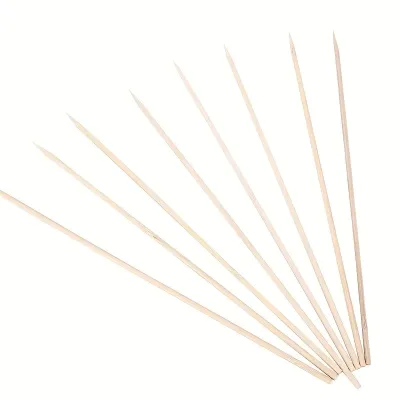
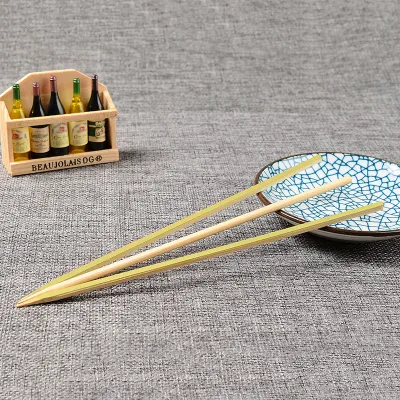
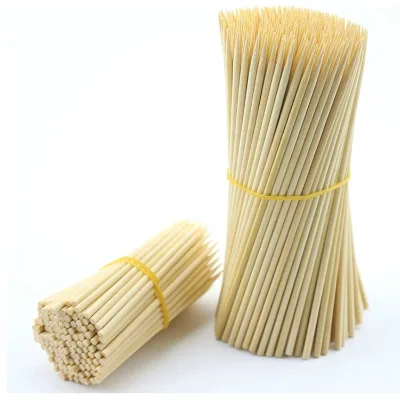
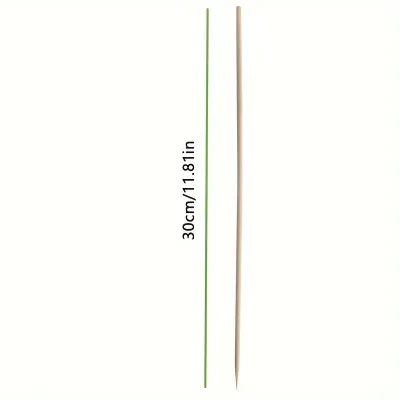
High Quality Chinese Bamboo BBQ Skewer 10" Flat Bamboo Skewers Natural Bamboo Skewers
$0.0103
MOQ: 100 Minimum


Shuifu Huiyang Agricultural Technology Co., Ltd.
- Verified by SGS
- Trading Company
- China Yunnan
- Lead time23 days
- Avg. response≤ 4h
Main productsBamboo Products, Bamboo Crafts, Bamboo Chopsticks, Bamboo Skewers, Bamboo Weaving, Bamboo Tray, Bamboo Box, Bamboo Placemat, Bamboo Fruit Bowl, Lamp Shades
Main marketsDomestic

Taojiang Meiling Bamboo Products Manufacturer
- Verified by BV
- Combined
- China Hunan
- Lead time23 days
- Avg. response≤ 2h
Main marketsSoutheast Asia/ Mideast,North America

Bamboo Knot Kebabbbq Safe Skewers Bamboo Sharp Both Sides Skewer Bamboo Skewer
$21.00 - $25.00
MOQ: 600 Boxes


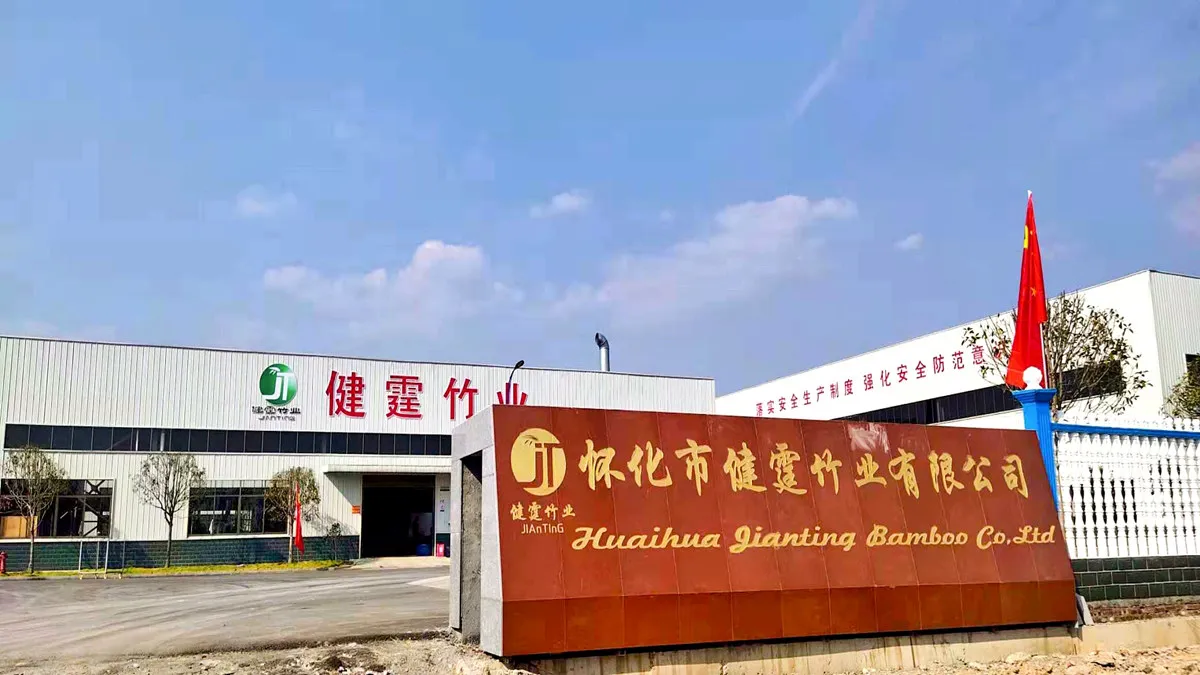
Huaihua Jianting Bamboo Co., Ltd.
- Manufacturer, Trading Company
- Hunan, China
- Lead time15 days
- Avg. response≤ 4h
Main productsDisposable bamboo chopsticks,Round bamboo sticks,Bamboo skewers,Bamboo fork knife spoon,Reusable bamboo chopsticks
Main marketsDomestic Market(30.00%), North America(10.00%), Southern Europe(10.00%), Northern Europe(10.00%), Western Europe(10.00%), Southeast Asia(10.00%), Eastern Europe(10.00%), South America(10.00%)
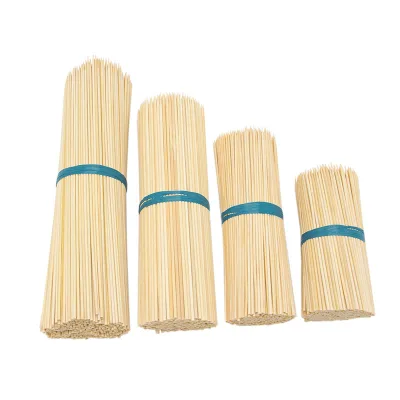
$15.00 - $16.00
MOQ: 1 cartons
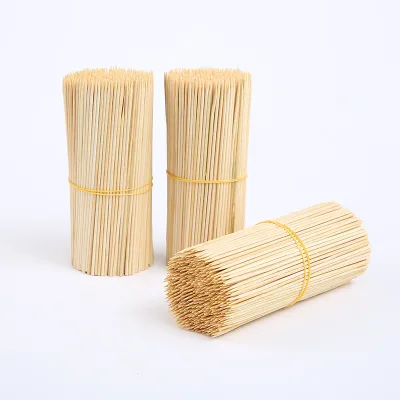
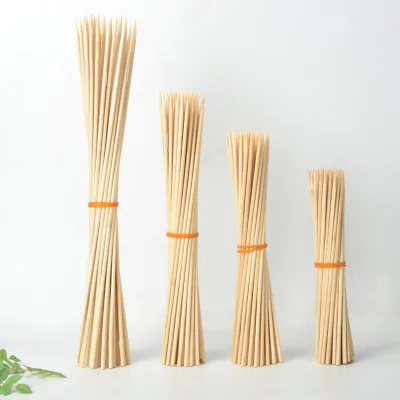
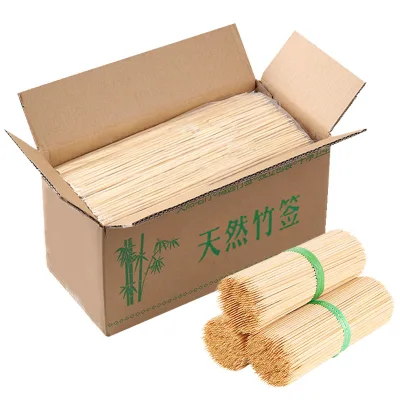
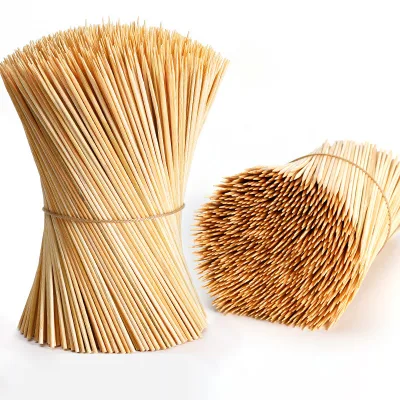
Handy Bamboo Skewers for Brunch Grill Pancake Kabob Beverage Decoration
$15.00 - $16.00
MOQ: 1 cartons
Hefei Craft Tableware Co., Ltd.
- Verified by SGS Group
- Manufacturer, Trading Company
- Lead time30 days
- Avg. response≤ 3h
Main productsWooden Cutlery, Bamboo Skewers, Sugarcane Bagasse Containers, Wooden Stirrers, Bamboo Cutlery
Main marketsWestern Europe(30%), North America(16%), Oceania(12%)

Dalian Kaixuan Wooden Product Co., Ltd.
- Trading Company
- Liaoning, China
- Lead time10 days
- Avg. response≤ 3h
Main productsWooden Cutlery; Coffee Stick; Toothpick; Ice Cream Stick; Round Stick; Popsicle Mold
Main marketsNorth America(30.00%), South America(30.00%), South Asia(15.00%), Southeast Asia(15.00%), Northern Europe(10.00%)
- Verified by SGS Group
- Manufacturer, Trading Company
- Lead time15 days
- Avg. response≤ 3h
Main productsDisposable Wooden Cutlery, Disposable Bamboo Cutlery, Disposable Bagasse Tableware, Disposable Paper Product
Main marketsWestern Europe(30%), Southern Europe(30%), North America(20%)

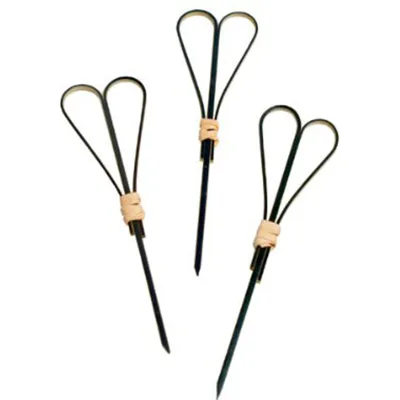
Custom Long Scissors Skewer Bamboo Knot Skewer for Outdoor BBQ Tool for Camping Home
$0.0103 - $0.0308
MOQ: 1 pieces
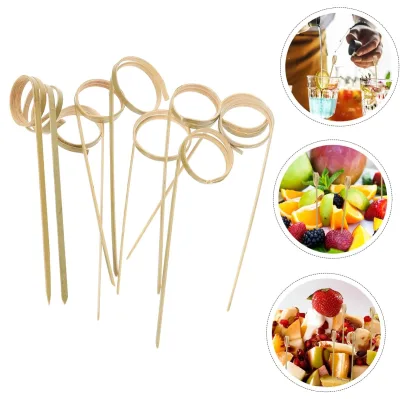
Hot Sale Knotted Skewers 9cm 12cm 15cm Bamboo Ring Skewer Different Shape for BBQ Party
$8.20 - $8.57
MOQ: 1 cartons

Yangjiang C&B Consumer Product Limited
- Verified by CTI
- Trading Company
- China Guangdong
- Lead time15 days
- Avg. response≤ 6h
Main productsBarbecue Tongs, Grilling Brushes, Outdoor Shovel, Grilling Tools, Kitchen Ware, Outdoor Products, Pizza Tools, Knife Set
Main marketsSouth America,Africa,Southeast Asia/ Mideast,Europe,Australia,North America


Customizable Size Bamboo Kebab Skewers - High-Quality Biodegradable BBQ Tools
$0.78 - $1.68
MOQ: 3000 Sets




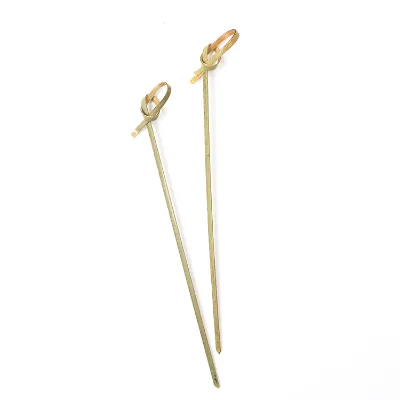
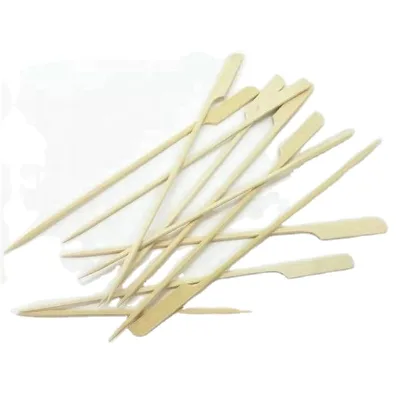
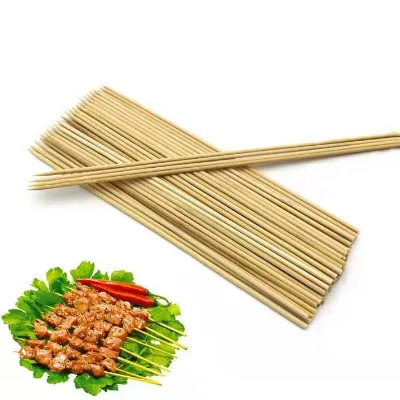
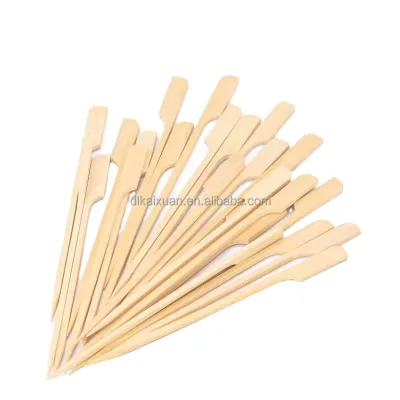
Comprehensive Sourcing Guide
Eco Friendly Bamboo Knot Skewers Supplier Concentration and Factory Types
The current supplier landscape for Eco Friendly Bamboo Knot Skewers reveals a distinct concentration of manufacturing and trading entities within specific Chinese provinces, primarily Zhejiang and Jiangxi. These regions serve as critical hubs for bamboo processing, leveraging local raw material availability to support both small-scale artisanal production and large-scale industrial output. Suppliers in Zhejiang are often identified as trading companies, which suggests a business model focused on aggregating products from various workshops or factories to offer a broader catalog to international buyers. This structure allows for flexibility in sourcing different types of bamboo skewers, including those with specific knot designs or looped ends, without necessarily owning the primary processing machinery. In contrast, suppliers located in Jiangxi may present as combined entities or direct manufacturers, potentially offering more direct control over the raw material sourcing and initial processing stages. The presence of these geographic clusters indicates that buyers can find specialized suppliers based on their specific needs, whether they require high-volume commodity skewers or customized, premium-grade products. Understanding this geographic distribution helps in assessing the logistical advantages and potential supply chain resilience, as proximity to bamboo forests can influence both cost structures and environmental sustainability claims.
Factory types vary significantly across the available results, ranging from pure trading companies to combined operations that handle both production and sales. Trading companies often provide a wider variety of related products, such as food containers, paper plates, and other tableware items, which can be advantageous for buyers seeking a one-stop-shop solution for their entire event or restaurant supply needs. These entities typically excel in customer service and order consolidation, allowing buyers to mix different product types in a single shipment. On the other hand, combined or manufacturing-focused suppliers may emphasize their production capabilities, such as OEM and ODM services, which are crucial for buyers looking to brand their own skewers or customize dimensions and packaging. The distinction between these factory types is vital for determining the level of direct communication with the production floor and the potential for customizing product attributes like length, diameter, and point type. Buyers should carefully review the company type listed for each supplier to align their sourcing strategy with their operational requirements, whether that involves maximizing product variety through a trading partner or ensuring production consistency through a direct manufacturer.
How to Verify Eco Friendly Bamboo Knot Skewers Suppliers
Verifying the credibility and operational capacity of Eco Friendly Bamboo Knot Skewers suppliers requires a multi-layered approach that goes beyond simple product listings. One of the primary indicators of supplier reliability is the presence of third-party verification badges, such as BV or TÜV Rheinland, which indicate that an independent agency has audited the company’s business license, factory conditions, or management systems. These verifications provide a baseline level of trust, confirming that the entity exists and operates within legal frameworks. However, verification badges alone do not guarantee product quality or delivery performance, so buyers must look for additional evidence of operational competence. This includes examining the supplier’s response time, which serves as a proxy for their customer service efficiency and organizational responsiveness. A faster response time, such as under three days, often correlates with a more agile and attentive support team, which is crucial for resolving issues related to custom orders or urgent shipments. Buyers should prioritize suppliers who demonstrate consistent and prompt communication, as this trait is often indicative of a well-managed internal process that extends to order fulfillment and quality control.
Beyond verification badges and response metrics, buyers should scrutinize the specific certifications and standards claimed by the supplier. For eco friendly bamboo products, certifications such as ISO9001:2015 are significant indicators of a structured quality management system, ensuring that production processes are standardized and monitored. Additionally, the material composition claims, such as "100% Natural Bamboo" or "Food Grade," should be backed by tangible evidence or test reports, although these are not always explicitly displayed in initial search results. Buyers must be cautious of vague claims and should request detailed product specifications that include material origin, processing methods, and any coatings or treatments applied. The presence of customization options, such as available branding or specific size adjustments, also suggests a mature production capability. By cross-referencing these verification details with the supplier’s stated main products and company type, buyers can build a comprehensive profile of each potential partner. This due diligence process helps mitigate the risk of engaging with unreliable suppliers and ensures that the chosen partner aligns with the buyer’s quality and ethical standards.
What to Compare Across Eco Friendly Bamboo Knot Skewers Suppliers
When evaluating multiple suppliers for Eco Friendly Bamboo Knot Skewers, buyers must systematically compare key operational metrics to identify the most suitable partner for their specific needs. One of the most critical factors is the minimum order quantity (MOQ), which can vary drastically from a few thousand pieces to millions, depending on the supplier’s production scale and business model. Suppliers with lower MOQs, such as those requiring only 8,000 pieces, are often more accessible for small to medium-sized businesses or those testing new markets, while higher MOQs may indicate a focus on large-scale industrial clients. Alongside MOQ, the lead time is a crucial determinant of supply chain efficiency, with some suppliers offering turnaround times as short as 23 days, while others may require 30 days or more. This difference can impact inventory management and customer satisfaction, particularly for time-sensitive events or seasonal demand spikes. Buyers should also compare the price ranges, noting that costs can fluctuate based on material quality, customization requirements, and order volume, with some suppliers offering competitive rates for bulk purchases while others may charge premiums for specialized features.
In addition to quantitative metrics, buyers should assess the qualitative aspects of the supplier’s offerings, such as product customization capabilities and packaging options. The availability of customization, including logo printing, specific knot designs, or unique point types, can be a significant differentiator for brands looking to stand out in the market. Suppliers that offer flexible packaging solutions, such as individual wrapping or custom carton configurations, add value by simplifying logistics and enhancing product presentation. Furthermore, the range of product attributes, such as length, diameter, and material grade, should be compared to ensure alignment with the buyer’s specific application requirements, whether for BBQ, fruit skewering, or cocktail garnishes. The supplier’s main product focus also provides insight into their expertise; those specializing in bamboo skewers may offer deeper technical knowledge and higher quality consistency compared to general trading companies. By meticulously comparing these factors, buyers can make informed decisions that balance cost, quality, and operational flexibility, ultimately selecting a supplier that best supports their business objectives and customer expectations.
Common Eco Friendly Bamboo Knot Skewers Sourcing Risks
Sourcing Eco Friendly Bamboo Knot Skewers from international suppliers introduces several potential risks that buyers must proactively manage to ensure a smooth procurement process. One significant risk is the variability in product quality, particularly regarding the material’s natural characteristics. Bamboo is a natural product, and variations in grain, color, and strength can occur between batches, which may affect the consistency of the final product. Buyers must be aware that claims of "100% Natural Bamboo" do not automatically guarantee uniformity, and without strict quality control measures, inconsistencies can lead to customer dissatisfaction or product failures during use. Additionally, the risk of miscommunication regarding product specifications is high, especially when dealing with suppliers who offer extensive customization options. Ambiguities in dimensions, point types, or packaging requirements can result in orders that do not meet the buyer’s expectations, leading to delays and additional costs for rework or returns. To mitigate this, buyers should insist on detailed technical drawings and sample approvals before placing bulk orders, ensuring that all specifications are clearly documented and agreed upon.
Another critical risk is the reliability of delivery and the potential for supply chain disruptions. Lead times can be affected by various factors, including raw material availability, production capacity, and logistical constraints, particularly during peak seasons or global events. Suppliers who do not have robust inventory management or production planning systems may struggle to meet deadlines, impacting the buyer’s ability to fulfill their own customer orders. Furthermore, the risk of non-compliance with international standards or certifications cannot be overlooked. While some suppliers display certifications like ISO9001:2015, buyers must verify that these certifications are current and relevant to the specific product being sourced. There is also the risk of hidden costs, such as freight charges for samples or additional fees for customization, which can inflate the total cost of ownership if not clearly disclosed upfront. By identifying these risks early and implementing strict quality assurance and communication protocols, buyers can protect their interests and ensure a more predictable and successful sourcing experience.
Eco Friendly Bamboo Knot Skewers Regional Sourcing and Logistics
The geographic location of suppliers plays a pivotal role in determining the logistics and cost structure for sourcing Eco Friendly Bamboo Knot Skewers. Suppliers located in Zhejiang and Jiangxi provinces in China benefit from established industrial clusters and infrastructure that facilitate efficient production and export. Zhejiang, in particular, is known for its robust trading networks and proximity to major ports, which can streamline the shipping process for international buyers. This regional advantage often translates to faster transit times and more competitive freight rates, especially for shipments destined for North America, Europe, and other major markets. Buyers should consider the logistical implications of sourcing from these regions, as the concentration of suppliers can offer greater competition and potentially better pricing. However, it is also important to evaluate the supplier’s experience with international shipping and their ability to handle customs documentation and compliance requirements, as these factors can impact the overall efficiency of the supply chain.
Logistics planning must also account for the specific packaging and handling requirements of bamboo skewers, which are lightweight but bulky. Suppliers often use carton or woven bag packaging to optimize space and protect the products during transit. Buyers should work closely with their chosen supplier to determine the most cost-effective shipping method, whether by sea, air, or express courier, depending on the urgency and volume of the order. For large bulk orders, sea freight is typically the most economical choice, while smaller or urgent orders may require air freight or express services. Additionally, buyers should consider the environmental impact of their logistics choices, aligning with the eco-friendly nature of the product by selecting suppliers who prioritize sustainable packaging and carbon-neutral shipping options where available. By carefully planning the logistics strategy and leveraging the regional strengths of the supplier’s location, buyers can minimize costs and ensure timely delivery, enhancing their overall competitiveness in the market.
Eco Friendly Bamboo Knot Skewers Commercial Terms and Order Planning
Effective order planning for Eco Friendly Bamboo Knot Skewers requires a thorough understanding of the commercial terms and payment structures offered by suppliers. Payment methods such as L/C, T/T, Western Union, and PayPal are commonly accepted, each offering different levels of security and convenience for the buyer. For larger orders, letters of credit (L/C) provide a secure payment mechanism that protects both parties, while telegraphic transfers (T/T) are often preferred for their speed and lower transaction fees. Buyers should negotiate clear payment terms, including deposit percentages and balance due dates, to manage cash flow effectively. Additionally, the availability of sample policies, such as free samples with freight collect or immediate delivery, can be a valuable tool for quality assessment before committing to a large order. Understanding these commercial terms helps buyers establish a transparent and mutually beneficial relationship with their suppliers, reducing the risk of disputes and ensuring a smooth transaction process.
Order planning should also incorporate strategies for managing inventory and forecasting demand, taking into account the supplier’s lead times and MOQ requirements. Buyers should maintain a buffer stock to account for potential delays or quality issues, ensuring that they can meet customer demand without interruption. Regular communication with the supplier regarding production schedules and inventory levels can help anticipate any potential bottlenecks and allow for proactive adjustments to the order plan. Furthermore, buyers should consider the long-term relationship with their supplier,
FAQs
What is the price range for Eco Friendly Bamboo Knot Skewers?
Prices for Eco Friendly Bamboo Knot Skewers typically range from $0.0018 to $0.005 per unit depending on specifications. Some bulk listings show higher per-carton costs around $528 to $611. Buyers should verify exact unit pricing based on order volume and customization requirements before placing orders.
What is the minimum order quantity for bamboo skewers?
Minimum order quantities vary significantly by supplier and product type. Some suppliers require a minimum of 8,000 pieces, while others accept 1,000 bags or 200 cartons. Large-scale industrial orders may have minimums reaching 2,000,000 pieces. Buyers must check specific product listings for accurate MOQ details.
How long does production take for bamboo skewers?
Production lead times for bamboo skewers generally range from 23 to 30 days. Suppliers in China, particularly in Zhejiang and Jiangxi provinces, offer these timelines. Buyers should confirm exact delivery schedules with suppliers, as lead times may vary based on order size and customization needs.
Are Eco Friendly Bamboo Knot Skewers customizable?
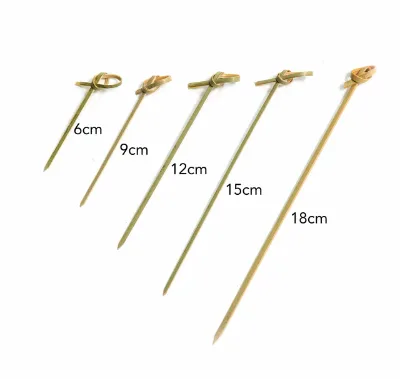
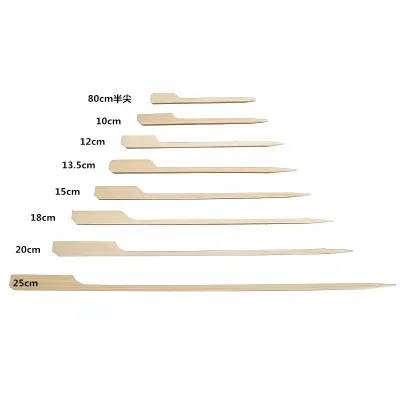
Yes, customization is available for Eco Friendly Bamboo Knot Skewers. Suppliers offer options for custom branding, sizes, and packaging. Standard sizes include 9cm, 10cm, 12cm, 15cm, and 18cm. Buyers can request specific dimensions, point types, and packaging configurations to meet their product requirements.
What certifications do bamboo skewer suppliers have?
Suppliers may hold ISO9001:2015 certification and undergo verification by BV or TÜV Rheinland. These credentials indicate adherence to quality management standards. Buyers should request current certification documents to verify compliance with international quality and safety standards before finalizing procurement agreements.
Where are bamboo skewer suppliers located?
Bamboo skewer suppliers are primarily located in China, specifically in Zhejiang and Jiangxi provinces. These regions are known for bamboo product manufacturing. Buyers can source from trading companies or combined manufacturers in these areas, ensuring proximity to raw material supplies and established production infrastructure.