Reusable Liquid Spout Pouch Suppliers and Manufacturers
Compare 27 verified suppliers of reusable liquid spout pouches by location, response time, and certifications. Review product specifications like material structure and MOQ before contacting factories in Fujian and Guangdong for quotes; review the available evidence before requesting comparable quotations from suitable candidates.
Updated
Suppliers List

- Verified by TUVRHEINLAND
- Combined
- China Fujian
- Lead time23 days
- Avg. response≤ 5h
Main productsSpout Pouch, Packaging Film, Chicken Bag, Stand up Pouch, Zipper Bag, Laminate Film, Vacuum Bag, Aluminum Bag, Pet Food Packaging, Quad Pouch
Main marketsSoutheast Asia/ Mideast,Europe,Australia

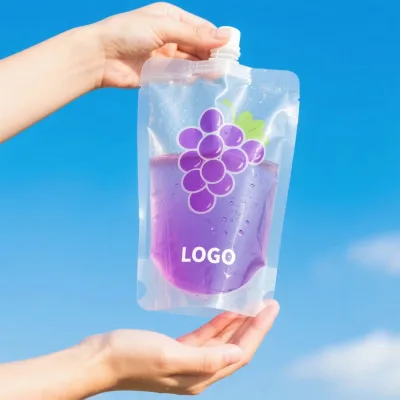
Reusable Waterproof Liquid Spout Bag Portable Juice Drink Spout Pouch Recyclable Liquid Pouch
$0.001 - $0.10
MOQ: 70000 Pieces


$0.001 - $0.10
MOQ: 70000 Pieces

Wholesale Plastic Spout Liquid Pouches Food Packaging Spout Pouch Custom Liquid Pouch with Spout
$0.001 - $0.10
MOQ: 70000 Pieces


Aluminum Lining Spout Plastic Bags Logo Custom Liquid Spout Pouches Stand up Liquid Pouch with Spout
$0.001 - $0.10
MOQ: 70000 Pieces
Guangzhou Jet Biofiltration Co., Ltd.
- Manufacturer, Trading Company
- Guangdong, China
- Lead time30 days
- Avg. response≤ 10h
Main productstissue culture products,serological pipettes,centrifuge tubes,petri dishes,ELISA plates
Main marketsWestern Europe(11.11%), Eastern Asia(11.11%), Mid East(11.11%), Oceania(11.11%), Africa(11.11%), Southeast Asia(11.11%), Eastern Europe(11.11%), South America(11.11%), North America(11.11%)

JIANGMEN MST PACKAGING GROUP LIMITED
- Verified by BV
- Trading Company
- China Guangdong
- Lead time30 days
- Avg. response≤ 2h
Main productsPackaging Bag, Box Pouch, Kraft Paper Bag, Paper Bag, Coffee Bag, Plastic Bag, Compostable Bags, Recyclable Bags, Biodegradable Bags, Spout Pouch
Main marketsEurope,Australia,North America

- Verified by SGS
- Trading Company
- China Liaoning
- Lead time23 days
- Avg. response≤ 5h
Main productsStand up Pouch, Filter Cloth, Dust Filter Bag, Car Seat Cover, Control Room Console, Meeting Table, Food Packaging Bag, Zipper Bag, Modern Smart Console, Coffee Desk
Main marketsSouth America,Africa,Southeast Asia/ Mideast,North America

Guangdong Danqing Printing Co., Ltd.
- Verified by BV
- Combined
- China Guangdong
- Lead time23 days
- Avg. response≤ 10h
Main productsFood Packaging, Plastic Bag, Zipper Pouch, Spout Pouch, Plastic Film, Quad-Seal Flat Bottom Pouch, Shrink Sleeves, Stand up Zipper Pouch, Roll Film, Food Pouch
Main marketsSouth America,Africa,Southeast Asia/ Mideast,Europe,Australia,North America

High Quality Liquid Detergent Plastic Packaging Refill Spout Pouch Spout Pouch
$0.01 - $0.20
MOQ: 50000 Pieces


Custom Printed Spout Pouch Bag Plastic Liquid Stand up Pouch Spout Pouch
$0.015 - $0.80
MOQ: 50000 Pieces

Liquid Drinking Spout Pouch Beverage Pouch with Spout Juice Packaging Bag
$0.02 - $0.04
MOQ: 50000 Pieces


Tianjin Unipack Packaging Material Co., Ltd
- Verified by BV
- Manufacturer/Factory,Group Corporation
- China Tianjin
- Lead time23 days
- Avg. response≤ 9h
Main productsAesptic Bag, Packaging Bag, Pet Bottle, Food Bag, Microwave Popcorn Bag, Bag in Box, Stand up Pouch, Food Packaging Bag, Snack Bag, Spout Bag
Main marketsSouth America,Eastern Europe,Mid East,North America,Southeast Asia,Eastern Asia,Oceania,Western Europe,Africa


Our Spill-Proof Spout Pouch Is Designed for Ultimate Convenience and Freshness
$0.03
MOQ: 10000 Pieces

Dongguan Auspicious Industrial Co., Ltd.
- Trading Company
- Lead time旺季: "1 - 100000":28,"> 100000":"To be negotiated", 淡季: "1 - 100000":28,"> 100000":"To be negotiated"
- Avg. response≤ 3h
Main productsInsulated Thermal Bags, Ice Bags, Food Packing Bags, PVC /EVA Bags, Document File Bags
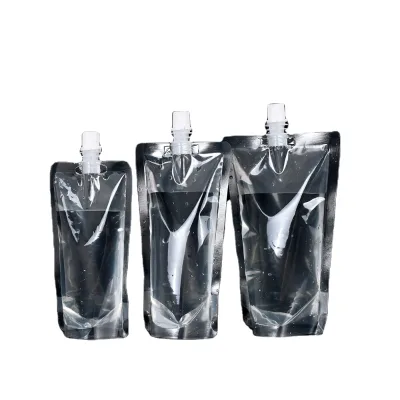
Transparent Custom Liquid Drinking Storage Plastic Stand up Spout Pouch
$0.08 - $0.21
MOQ: 10000 Minimum
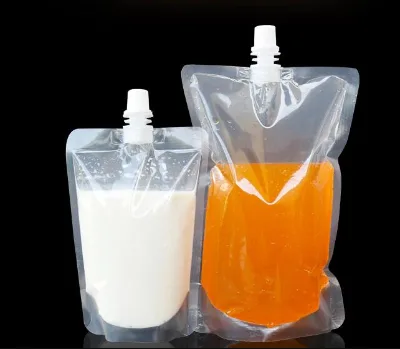

Hebei Xiongan Plante Material Co., Ltd
- Verified by SGS
- Combined
- China Hebei
- Lead time15 days
- Avg. response≤ 4h
Main productsPackaging Bag, Cosmetic Packaging, Food Packaging, Custom Packaging, Doypack Bag, Coffee Packing Bag, Plastic Packaging, Product Packaging, Coffee Bag
Main marketsSoutheast Asia/ Mideast,Europe,North America
Shantou Chuangxin Weinuo Plastic Packaging Products Co., Ltd.
- Verified by TüVRheinland
- Manufacturer, Trading Company
- Lead time10 days
- Avg. response≤ 3h
Main productsPlastic Bottles, Hair Oil Bottles, Cosmetic Jars, Cosmetic Tube, Plastic Pouch
Main marketsWestern Europe(30%), Domestic Market(30%), North America(25%)
Shantou Full Mark Packaging Co., Ltd.
- Verified by SGS Group
- Manufacturer, Trading Company
- Lead time15 days
- Avg. response≤ 8h
Main productsShrink Label, Stand Up Zipper Pouch, Spout Pouch, Coffee Bag, Packaging Roll Film
Main marketsDomestic Market(24%), North America(15%), Africa(15%)
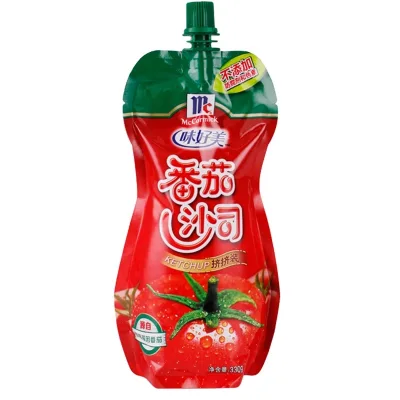
OEM Custom Paste Sauce Spout Pouch 300ml Aluminum Foil Packaging Liquid Food Spout Pouch
$0.0205 - $0.0308
MOQ: 10000 pieces
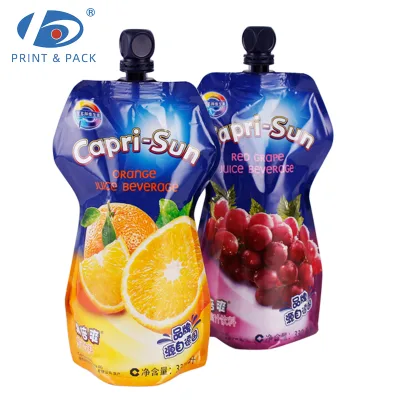
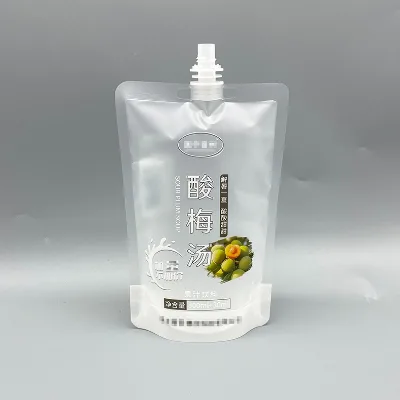
$0.0206 - $0.0309
MOQ: 10000 pieces
Guangdong Danqing Printing Co., Ltd.
- Verified by TüVRheinland
- Manufacturer, Trading Company
- Lead time15 days
- Avg. response≤ 5h
Main productsStand Up Pouch With Spout, Cup Sealing Film, Stand Up Zipper Pouch, Plastic Film, Flat Bottom Pouch
Main marketsAfrica(20%), Southeast Asia(15%), Mid East(15%)
Shanghai Cailyn Industrial Co., Ltd.
- Verified by TüVRheinland
- Manufacturer, Trading Company
- Lead time12 days
- Avg. response≤ 3h
Main productsCoffee Packaging, Food Packaging, Gift Packaging, Supplement Packaging, Coffee Filter
Main marketsNorth America(50%), Western Europe(20%), Oceania(10%)
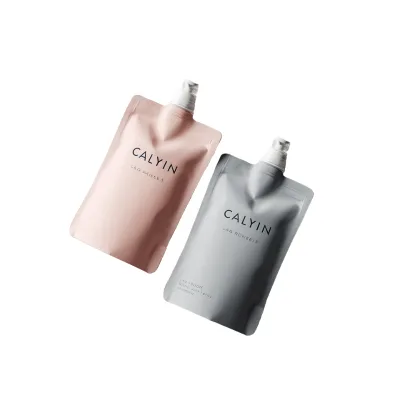
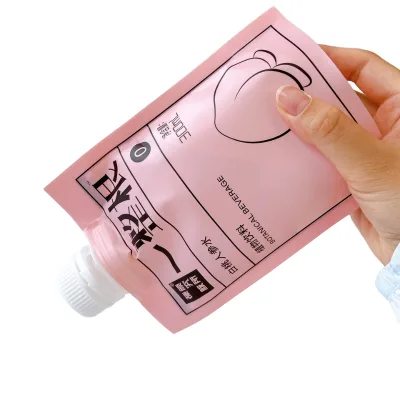
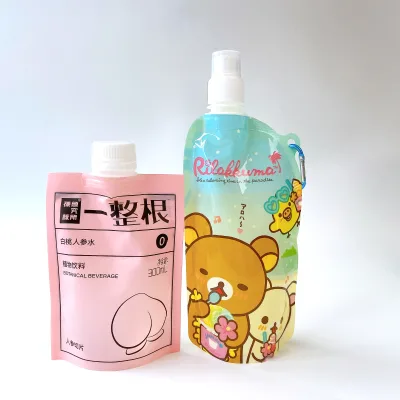
500ml Stand-Up Spout Pouch Durable Juice Beverage Plastic Bag with Spout for Convenient Pouring
$0.0413 - $0.1964
MOQ: 1 pieces

Henan Baolai Packaging Co., Ltd.
- Verified by SGS
- Combined
- China Henan
- Lead time23 days
- Avg. response≤ 3h
Main productsFood Bag, Coffee Bag, Aluminum Bag, Vacuum Bag, Pet Food Bag, Paper Bag, Ziplock Bag, Flat Bottom Bag, Spout Pouch, Stand up Pouch
Main marketsSouth America,Africa,Others(foreignTradeCapacity.exportBusinessCapacityMarketOther),Southeast Asia/ Mideast,Domestic,Europe,Australia,North America

$0.03 - $0.09
MOQ: 10000 Pieces

Packaging Pouch Spout Pouch Plastic Liquid Stand up Pouch with Spout Juice Bag
$0.03 - $0.06
MOQ: 50000 Pieces


Qingdao Zhongbang Packaging Co., Ltd.
- Verified by SGS
- Manufacturer/Factory
- China Shandong
- Lead time15 days
- Avg. response≤ 5h
Main productsPlastic Bag, Food Bag, Food Packaging Bag, Coffee Bag, Pet Food Bag, Stand up Pouch, Kraft Paper Bag, Zipper Bag, Spout Pouch, Plastic Packaging Bag
Main marketsSouth America,Eastern Europe,Mid East,North America,Southeast Asia,Eastern Asia,Oceania,Western Europe,Africa


High Quality Reusable Liquid Packaging Standing Plastic Spout Pouch with Nozzle
$0.02 - $0.90
MOQ: 10000 Pieces


Dongguan Jmei Packaging Company Limited.
- Trading Company
- Guangdong, China
- Lead time15 days
- Avg. response≤ 4h
Main productsFlat Bottom Zipper Bag,Spout Pouch,Stand Up Zipper Pouch,Vacuum bags,Kraft Paper Bag
Main marketsNorth America(29.00%), Western Europe(13.00%), Northern Europe(11.00%), Mid East(6.00%), Southeast Asia(6.00%), Southern Europe(5.00%), Africa(5.00%), South America(5.00%), Eastern Europe(4.00%), South Asia(3.00%), Oceania(3.00%), Domestic Market(3.00%), Central America(3.00%), Eastern Asia(3.00%)
Guangdong Zhongbao Color Plastic Industrial Co., Ltd.
- Manufacturer, Trading Company
- Lead time旺季: "1 - 50000":16,"50001 - 100000":18,"> 100000":"To be negotiated", 淡季: "1 - 50000":16,"50001 - 100000":18,"> 100000":"To be negotiated"
- Avg. response≤ 2h
Main productsFood Packaging Bag, Packing Film Roll, Laminated Pouch, Heat Shrink Wrap Sleeve, Cosmetic Packaging Bag
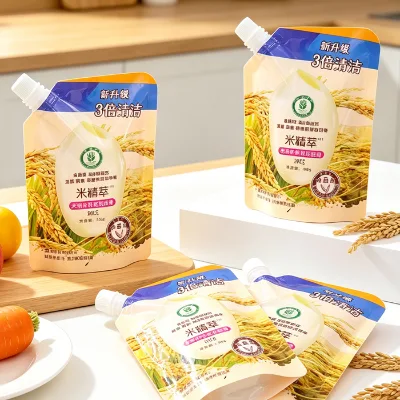
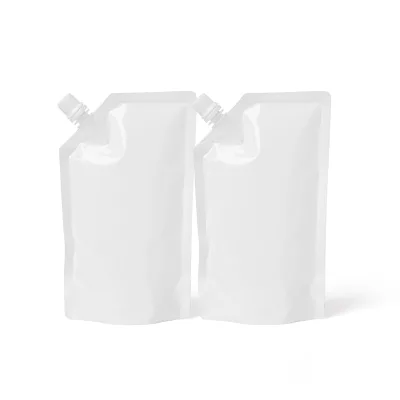
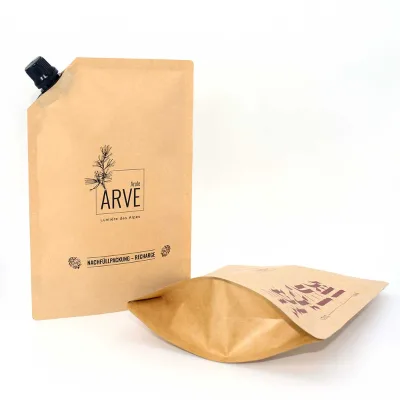
$0.0621 - $0.1559
MOQ: 10000 pieces
Dongguan Favoritetec Industry Co., Ltd.
- Manufacturer, Trading Company
- Guangdong, China
- Lead time25 days
- Avg. response≤ 4h
Main productsSpout Pouch,Food Grade Laminated Packaging Bag,Color Box,BIB Bag In Box,100% Biodegradable Bag
Main marketsNorth America(50.00%), Western Europe(10.00%), Southern Europe(10.00%), Northern Europe(10.00%), Eastern Europe(10.00%), Oceania(5.00%), Southeast Asia(5.00%)

Guangdong Min Sun Environmental Protection Packaging Technology Co., Ltd.
- Verified by SGS
- Manufacturer
- China Guangdong
- Lead time15 days
- Avg. response≤ 2h
Main productsPlastic Packaging Products, Printed Plastic Products, Film Rolls, Laminated Plastic Packaging Products, Food Packaging Bag, Industry Packaging Bag, Medicine Use Packaging Bag, Shrink Label, Gravure Printing Products, Custom Packaging Service
Main marketsEurope,North America
Wenzhou Feiao Packaging Co., Ltd.
- Verified by SGS Group
- Manufacturer, Trading Company
- Lead time0 days
- Avg. response≤ 7h
Main productsStand Up Pouch, Packing Film, Food Packing, Plastic Products, Paper Bags
Main marketsSoutheast Asia(80%), Africa(10%), South America(5%)

Silver Dragon Industrial Limited
- Trading Company,Manufacturer/Factory
- China Guangdong
- Lead time15 days
- Avg. response≤ 13h
Main productsPlastic Bags, Labels, Non Woven Bags, Paper Bags, Cling Film, Packing Tapes, Paper Containers, Laminated Bags, Nitto Adhesive Tapes
Main marketsSouth America,Eastern Europe,Mid East,North America,Southeast Asia,Eastern Asia,Oceania,Western Europe,Africa

Shantou Weiyi Packaging Co., Ltd.
- Verified by SGS
- Combined
- China Guangdong
- Lead time15 days
- Avg. response≤ 10h
Main productsSpout Pouch, Coffee Bag, Food Packaging Bag, Packaging Film, Stand up Pouch, Zipper Bag, Plastic Bag, Tea Bag, Aluminum Foil Bag, Packaging Bag
Main marketsSoutheast Asia/ Mideast,Domestic


High Quality Custom Design Foil Laminated Liquid Spout Pouch for Juice
$0.035 - $0.065
MOQ: 50000 Pieces


Zhongshan Dongfeng Town Orient Printing Plastic Factory
- Verified by SGS
- Combined
- China Guangdong
- Lead time15 days
- Avg. response≤ 1h
Main productsBag, Roll Film, Packing, Gift Bag, Light Chemical Products, Gift Box, Doypack, Degradable Material, Composite Matrial
Main marketsDomestic

Jiangxi Yixing Packaging Co., Ltd.
- Verified by BV
- Combined
- China Jiangxi
- Lead time23 days
- Avg. response≤ 11h
Main productsPackaging Bag, Packaging Film, Packaging Machine, Spout Pouch, Stand up Pouch, Coffee Bag, Paper Bag, Paper Box, Back Sealing Bag, Special-Shaped Bag
Main marketsSouth America,Africa,Southeast Asia/ Mideast,East Asia(Japan/ South Korea),Europe,Australia,North America
Weihai Haodong Packing Co., Ltd.
- Verified by SGS Group
- Manufacturer, Trading Company
- Lead time15 days
- Avg. response≤ 2h
Main productsPlastic Packaging Bag, Food Bag, Pet Food Bag, Packaging Film, Stand Up Pouch
Main marketsNorth America(30%), Domestic Market(30%), Oceania(8%)
Guangdong Zhongbao Color Plastic Industrial Co., Ltd.
- Manufacturer
- Guangdong, China
- Lead time10 days
- Avg. response≤ 3h
Main productsShrink Film,Shrink Sleeve,Laminated Packaging Bag,Plastic Bag,Paper Bag
Main marketsDomestic Market(11.11%), Western Europe(11.11%), Eastern Asia(11.11%), Mid East(11.11%), Oceania(11.11%), Africa(11.11%), Eastern Europe(11.11%), South America(11.11%), North America(11.11%)
Chaozhou Chaoan District Bosheng Packaging Co., Ltd.
- Manufacturer, Trading Company
- Guangdong, China
- Lead time15 days
- Avg. response≤ 2h
Main productsPackaging Bag
Main marketsDomestic Market(40.00%), North America(25.00%), Southeast Asia(20.00%), Eastern Europe(15.00%)

Dongguan Encolors Packing Co., Ltd.
- Manufacturer, Trading Company
- Guangdong, China
- Lead time20 days
- Avg. response≤ 3h
Main productsFood Bag,Stand up Pouch,Zipper Bag,Flexible Packaging,Recyclable packaging
Main marketsDomestic Market(46.10%), North America(18.20%), Southeast Asia(9.10%), Western Europe(6.50%), Oceania(5.60%), South Asia(5.60%), South America(4.80%), Africa(1.30%), Mid East(1.10%), Eastern Asia(1.10%), Central America(0.20%), Northern Europe(0.20%), Eastern Europe(0.20%)
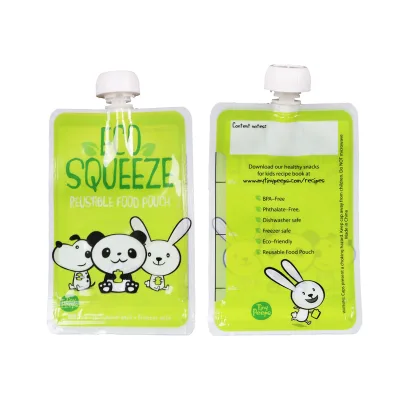
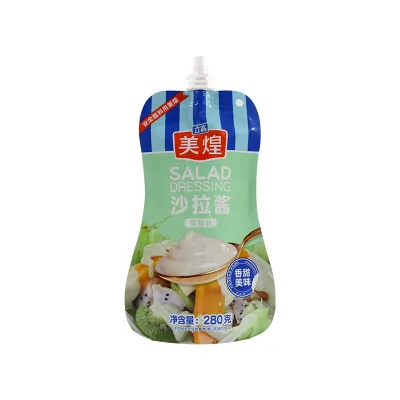
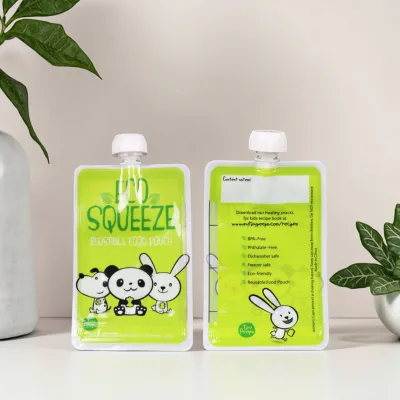
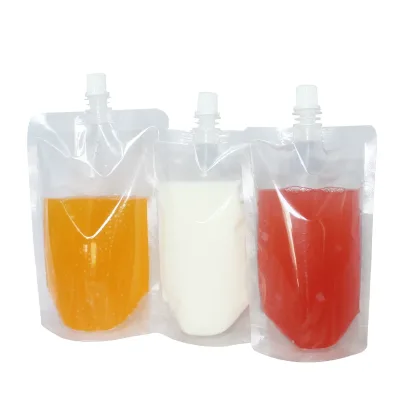
$0.05 - $0.10
MOQ: 10000 Minimum






Comprehensive Sourcing Guide
Reusable Liquid Spout Pouch Supplier Concentration and Factory Types
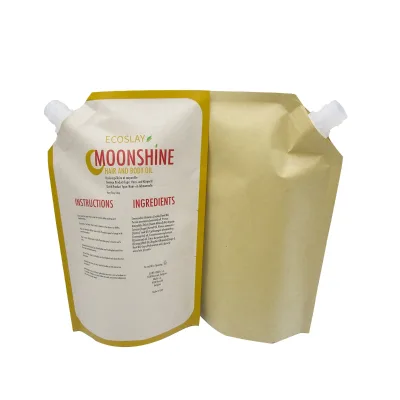
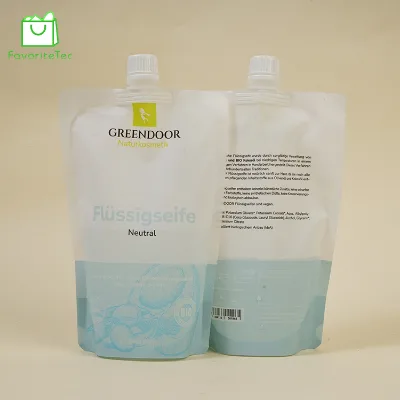
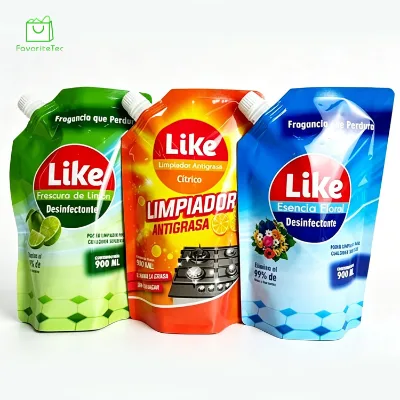
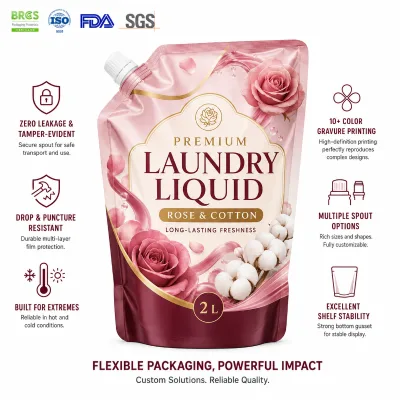
The Reusable Liquid Spout Pouch category in the current results shows supplier locations concentrated in China's Fujian and Guangdong provinces. A Fujian-based combined manufacturer and trader lists spout pouches, packaging film, zipper bags, vacuum bags and pet food packaging among its main products, with a product origin recorded in Jinjiang, Fujian Province. A Guangdong trading company in the same results covers packaging bags, kraft paper bags, compostable bags, recyclable bags and spout pouches. A third listing, also Guangdong-based, appears under lab supplies rather than packaging, showing that spout pouch products can surface under unexpected category headings.
Supplier types differ in ways that matter for Reusable Liquid Spout Pouch sourcing. Combined manufacturers and trading companies can offer both production capability and brokerage, while pure trading companies may rely on partner factories. The Fujian listing advertises ODM, OEM and own-brand capacity, which signals in-house development rather than only resale. Buyers should treat location labels as a starting point: confirm whether the entity named on the profile owns converting equipment such as bag-making machines and spout-welding lines, or whether it subcontracts. Ask for the factory address, business license scope and photos of the production floor for the specific pouch models you need. When no location is displayed for a listing, request it directly before shortlisting, since freight cost, audit access and sample lead times all depend on where the pouches are actually made.
How to Verify Reusable Liquid Spout Pouch Suppliers
Verification starts with third-party assessment status. In the current results, one Fujian supplier shows TÜV Rheinland verification and another Guangdong supplier shows BV verification, while others display no verification badge at all. A platform badge confirms an on-site or document check was performed; it does not certify product quality. Ask each shortlisted supplier for copies of the underlying audit reports and check the certificate scope covers pouch manufacturing, not a different product line. Certificates listed on product records, such as ISO22000, SGS and BRC on one Fujian listing and ISO9001, BRC-IOP and HACCP-type references on Guangdong listings, should be validated against originals with the issuing body.
Second, verify the product itself. The listings reference material structures such as PET/AL/NY/PE and PET/AL/NY/RCPP, so request material declarations and confirm the laminate suits reusable, liquid-contact use, including food-contact compliance for your destination market. Order samples of the exact model codes shown, such as KD-SP-20, KD-SP-51, KD-SP-06, KD-SP-05, KD-SP-49, KD-SP-11 or ZD011, and inspect spout fit, weld strength and leak resistance before committing. Third, verify the company behind the profile: cross-check the registered entity name, establishment year and export history. If a listing places spout pouches under an unrelated category, such as lab supplies, ask directly whether the seller manufactures pouches or trades them. Verification that stops at a badge leaves the buyer exposed; the badge is only the first filter.
What to Compare Across Reusable Liquid Spout Pouch Suppliers
Build a comparison table using the attributes actually displayed, because not every listing shows every field. Useful dimensions from the current results include location, company type, verification status, response time, lead time, MOQ and price band. For response speed, the listings show figures such as 1.91 hours, 4.44 hours and 10 hours; fast responders are easier to work with during artwork revisions and production issues, though response time says nothing about quality. For lead time, displayed values include 23 days and 30 days, and one listing shows 10; confirm whether quoted lead times run from artwork approval or from deposit.
MOQ and price spread deserve close attention. One Fujian listing shows an MOQ of 70,000 pieces with prices from 0.001 to 0.100 per unit, while a Guangdong listing shows an MOQ of 10,000 pieces with prices from 0.010 to 0.500, and other listings quote flat per-piece figures such as 0.05 or 0.09. Wide price bands usually reflect customization options, so compare quotes on identical specifications: material structure, spout diameter (8.6mm and 10mm appear in listings, plus custom spouts), printing colors, and bag size. Also compare main-product breadth; a supplier whose main products are entirely flexible packaging will likely handle spout pouches better than one listing them incidentally. Weight verified status, ODM/OEM capability and certification evidence above headline price, and record which attributes each supplier declined to disclose so follow-up questions are targeted.
Common Reusable Liquid Spout Pouch Sourcing Risks
The most common risk is material mismatch. Reusable liquid pouches need laminates that survive repeated filling, squeezing and washing; listings reference structures such as PET/AL/NY/PE and PET/AL/NY/RCPP with features like moisture proof, shock resistance and antistatic behavior. If a supplier substitutes a cheaper film or omits a barrier layer, pouches may leak at the spout weld or delaminate. Mitigate this by specifying the exact material structure in the purchase contract, referencing the model code, and requiring pre-shipment leak and drop testing on production samples, not just on golden samples approved months earlier.
A second risk is category confusion and trading-company opacity. One supplier in the results lists spout pouches under lab supplies alongside serological pipettes and petri dishes, which suggests incidental resale rather than specialization; buying from such a source adds a margin layer and weakens technical accountability. Third, certification risk: certificates named in listings, including ISO22000, SGS, BRC and ISO9001 variants, must be checked for validity dates and scope, because expired or out-of-scope certificates are frequently overlooked. Fourth, MOQ and lead-time drift: quoted MOQs of 10,000 or 70,000 pieces and lead times of 23 or 30 days can change once custom spouts, molds or print colors are added. Fifth, spout compatibility risk: confirm that your filling equipment matches the supplied spout diameter and cap thread, since a dimension mismatch discovered at filling is expensive. Finally, treat unverified profiles cautiously and ask for verifiable factory evidence before transferring deposit funds.
Reusable Liquid Spout Pouch Regional Sourcing and Logistics
Within the current results, the geographic picture centers on Fujian and Guangdong. The Fujian listing records product origin in Jinjiang, Fujian Province, a location the supplier itself displays, and the combined company type there suggests both manufacturing and trading functions. Guangdong listings add a second packaging cluster, and Guangdong's export infrastructure generally supports consolidated shipments of flexible packaging. Because these locations come from the supplier profiles themselves, they are reasonable anchors for planning, but buyers should still confirm the physical factory address, since profile locations sometimes reflect offices rather than production sites.
Logistics planning for reusable liquid spout pouches should account for the product's low density and compressibility. Packing methods named in the listings include wooden pallets, wraps and cartons for one supplier and PE bag plus carton plus pallet for another, so agree on carton dimensions, pallet configuration and load stacking before shipping to maximize container utilization. Lead times of 23 and 30 days displayed on profiles should be treated as baseline production time only; add time for custom molds, printed cylinders, material procurement and pre-shipment inspection. Ask whether quoted terms are EXW, FOB or CIF and from which port, since Guangdong and Fujian shipments route through different gateway ports with different sailings to your market. For air-freighted samples, pouches are light, so sample logistics are inexpensive; plan to compare samples from multiple regions before locking a factory. Record incoterms, pallet specs and port names in the contract to avoid disputes at loading.
Reusable Liquid Spout Pouch Commercial Terms and Order Planning
Commercial terms in this category vary widely, so negotiate each element explicitly. Displayed price ranges run from 0.001 to 0.100 per unit on one listing, 0.010 to 0.500 on another, and flat figures such as 0.05 and 0.09 on others; these bands reflect differences in material structure, size, printing and volume. MOQs shown include 10,000 and 70,000 pieces, so clarify what sits behind the number: whether it applies to stock sizes or custom prints, whether mixed SKUs can share a run, and whether a trial order at reduced quantity is possible. For custom spouts and molds, listings note various kinds of molds and spout options including 8.6mm, 10mm and buyer-supplied spouts, so agree on mold ownership, tooling cost and whether the tool is exclusive to you.
Order planning should sequence milestones against the displayed lead times of roughly 23 to 30 days, adding buffer for artwork, cylinders, material lead time and inspection. Tie payment milestones to verifiable events: deposit after sample approval, balance after passing pre-shipment inspection against agreed standards such as the ISO22000, SGS or BRC references in listings, validated independently. Confirm packing (wooden pallets, wraps, cartons, or PE bag plus carton plus pallet), spout dimensions, print colors up to ten where offered, and Incoterms in writing. If escrow-style or trade-assurance payment protection is available, use it for first orders; where it is not displayed, verify the supplier's accepted payment methods and request a proforma invoice itemizing every specification before paying.
(Total: approximately 1,390 words)
FAQs
What is the price range for reusable liquid spout pouches?
Prices typically range from $0.001 to $0.50 per unit depending on material structure and customization. Specific models like KD-SP-20 start near $0.001, while specialized options may reach $0.50. Buyers should verify exact costs based on order volume and selected features such as moisture proofing or recyclability.
What is the minimum order quantity for these pouches?
Minimum order quantities vary by supplier, with common thresholds at 10,000 or 70,000 units. Some suppliers require larger volumes for specific material structures like Pet/Al/Ny/PE. Buyers must confirm the exact MOQ with the supplier before placing an order to ensure production feasibility.
How long does production take for custom spout pouches?
Lead times generally range from 23 to 30 days after order confirmation. This duration depends on the complexity of the mold and printing requirements. Buyers should plan their inventory accordingly and confirm the specific timeline with the supplier to avoid delays in receiving their customized packaging.
What certifications are available for food-grade spout pouches?
Common certifications include ISO22000, SGS, BRC, ISO9001, HACCP, and QS. These ensure the pouches meet food safety and quality standards. Buyers should request valid certificates to verify compliance with international regulations and ensure the packaging is suitable for direct food contact applications.
Where are these spout pouch suppliers located?
Suppliers are primarily located in Fujian and Guangdong provinces in China. Jinjiang in Fujian and various areas in Guangdong host manufacturers offering these products. Buyers can filter results by these locations to find suppliers with established logistics networks and regional manufacturing capabilities.
What material structures are used for these pouches?
Standard structures include Pet/Al/Ny/PE and Pet/Al/Ny/Rcpp. These layers provide moisture proofing, shock resistance, and recyclability. Buyers can choose based on their specific needs for durability and barrier properties, ensuring the pouch protects the liquid contents effectively during storage and transport.