Wooden Chocolate Cake Stand with Lid Suppliers and Manufacturers
Explore 30 verified options for Wooden Chocolate Cake Stand with Lid products from manufacturers in China. Compare response times, lead times, certifications like CE/EU and FDA, and pricing ranges to find the right partner. Contact suppliers directly to request samples and confirm customization details.
Updated
Suppliers List

Shaowu City Nafu Bamboo and Wood Industry Co., Ltd.
- Manufacturer
- China Fujian
- Lead time15 days
- Avg. response≤ 16h
Main productsBamboo and Wood Cutting Board Cheese Board, Bamboo and Wood Storage Box, Bamboo and Wood Plate, Bamboo and Wood Tray, Marble Wood Cheese Board, Bamboo and Wood Table, Bamboo and Wood Bathroom Products, Bamboo and Wood Shelf, Bamboo and Wood Kitchen Utensil, Bamboo and Wood Bowl
Main marketsEast Asia(Japan/ South Korea),Domestic,Europe,Australia,North America

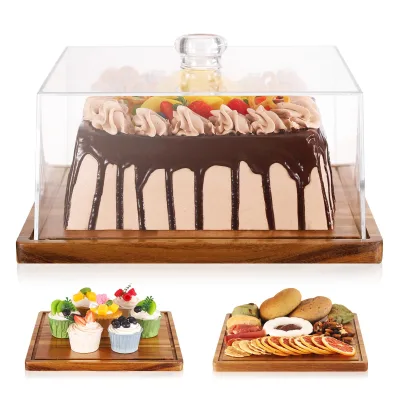
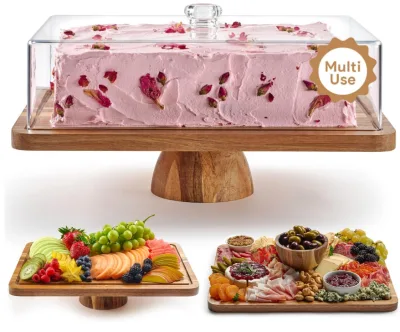
Square Shape Wooden Cake Stand with Dome Cake Stand with Lid for Wedding
$0.50 - $2.00
MOQ: 300 Pieces


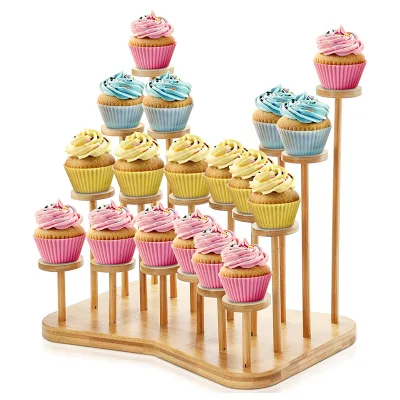
Wood Candy Dessert Cupcake Cake Stand Tiered Serving Tray Cake Plate Stand
$5.50 - $6.50
MOQ: 300 Pieces

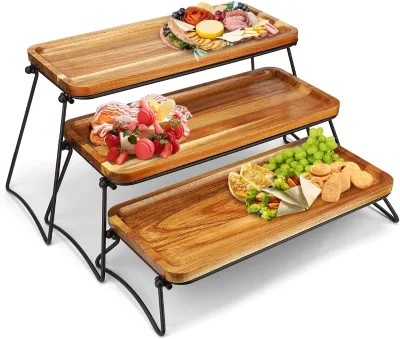
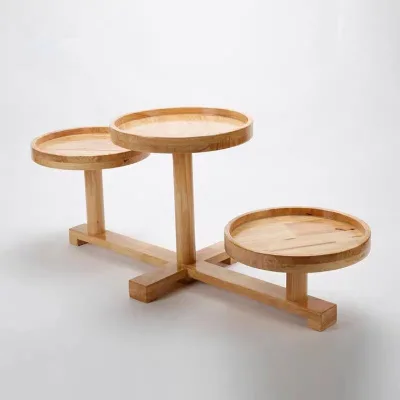
Three Layer Bamboo and Wood Dried Fruit Tray Compartment Snack Cake Tray Cake Stand for Wedding
$2.00 - $5.00
MOQ: 300 Pieces

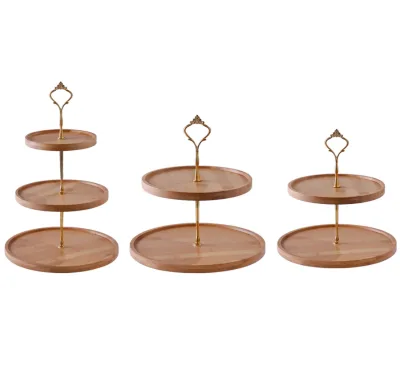
2 Tier Wood Cup Cake Stand Acacia Cake Stand Fruit Dessert Display for Wedding
$2.00 - $4.00
MOQ: 300 Pieces

Cao County Hengyu Woods Co., Ltd.
- Manufacturer, Trading Company
- Lead time旺季: "1 - 1500":20,"1501 - 3000":30,"> 3000":"To be negotiated", 淡季: "1 - 1500":20,"1501 - 3000":30,"> 3000":"To be negotiated"
- Avg. response≤ 2h
Main productsWood Gifts and Crafts
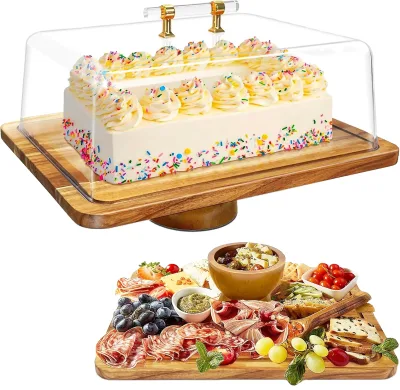
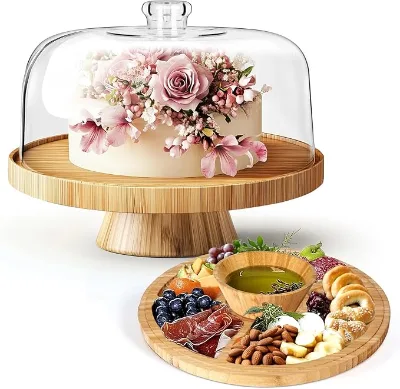
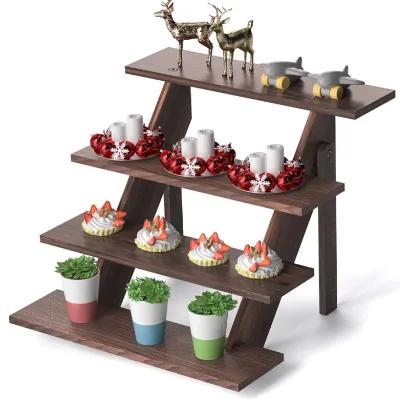
$7.00 - $7.40
MOQ: 1000 pieces
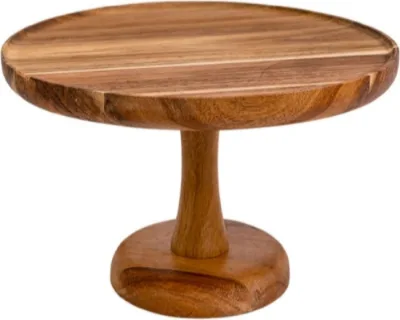
$7.00 - $8.00
MOQ: 500 pieces

Suzhou Highbright Enterprise Limited
- Combined
- China Jiangsu
- Lead time30 days
- Avg. response≤ 5h
Main productsShopping Trolley, Shopping Cart, Gondola Shelf, Display Shelf, Shop Fittings, Store Fixtures, Roll Container, Shopping Basket, Checkout Counter, Swing Gate
Main marketsSouth America,Africa,Southeast Asia/ Mideast,East Asia(Japan/ South Korea),Europe,Australia,North America

Golden Ace Industrial Co., Ltd.
- Verified by BV
- Combined
- China Shandong
- Lead time60 days
- Avg. response≤ 13h
Main productsGlassware, Kitchenware, Houseware, Glass Vase, Giftware
Main marketsAfrica,Southeast Asia/ Mideast,Europe,Australia,North America
Fuzhou Jiashu Import And Export Co.,ltd.
- Trading Company
- Fujian, China
- Lead time40 days
- Avg. response≤ 5h
Main productsWood/Bamboo Cutting Board, Wood/Bamboo Cheese Board Set, Wood/Bamboo Tray, Wood/Bamboo Bowls, Wood/Bamboo Cake Stand
Main marketsNorth America(35.00%), Western Europe(35.00%), Mid East(30.00%)
Cao County Puchuang Wood Industry Co., Ltd.
- Manufacturer, Trading Company
- Shandong, China
- Lead time7 days
- Avg. response≤ 11h
Main productswooden mealtray,wooden Food container,Natural Wood Slices,Christmas Ornaments,Diy Crafts
Main marketsNorth America(20.00%), Eastern Europe(15.00%), South America(15.00%), Central America(10.00%), Western Europe(10.00%), Mid East(10.00%), Oceania(10.00%), South Asia(5.00%), Northern Europe(5.00%)
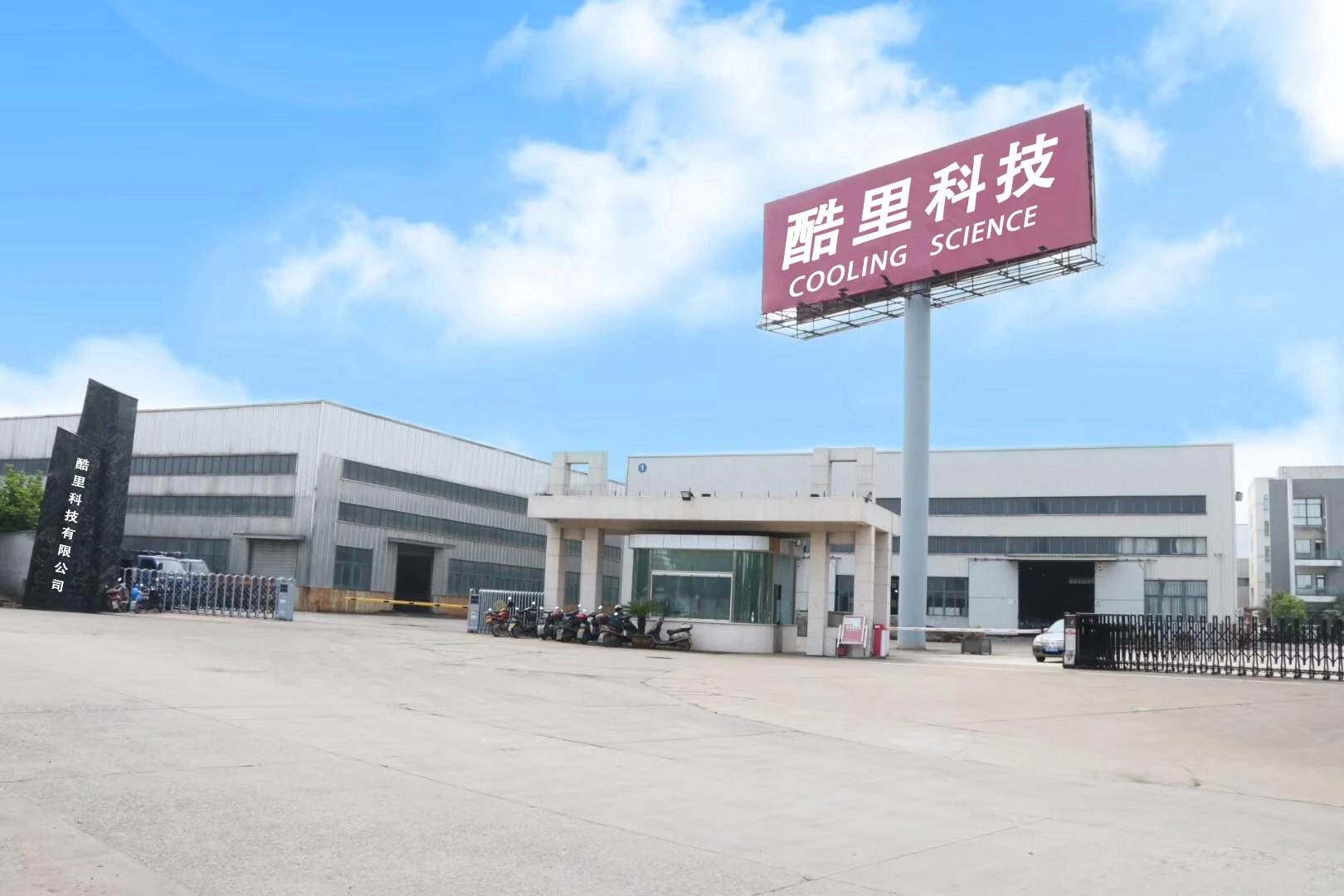
Hefei Cooling Science And Technology Co., Ltd.
- Manufacturer, Trading Company
- Anhui, China
- Lead time50 days
- Avg. response≤ 9h
Main productsTableware,Organizer,Home decoration,Kitchenware,Servingware
Main marketsEastern Europe(25.00%), Western Europe(15.00%), Southern Europe(15.00%), North America(12.00%), Northern Europe(11.00%), Central America(9.00%), Southeast Asia(8.00%), South America(5.00%)
Jiangmen Houselin Wood Product Co., Ltd.
- Verified by TüVRheinland
- Manufacturer, Trading Company
- Lead time25 days
- Avg. response≤ 10h
Main productsHousehold Items, Garden Supplies, Crafts, Kitchen Tools, Daily Wooden Products
Main marketsNorth America(20%), Western Europe(20%), Oceania(15%)
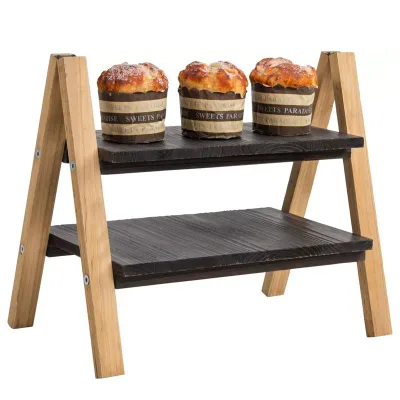
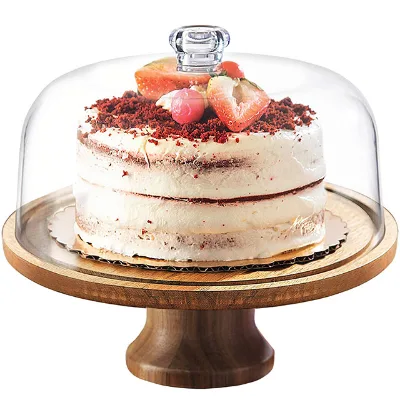
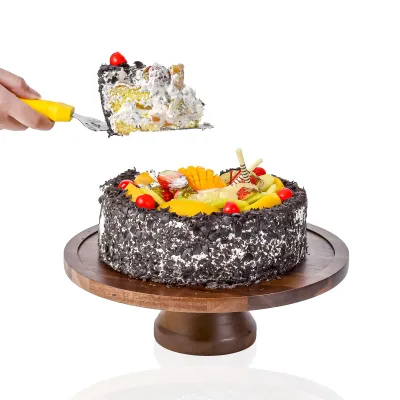
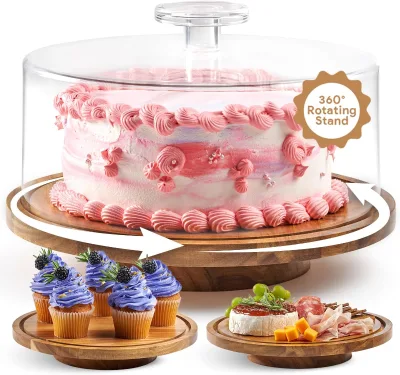
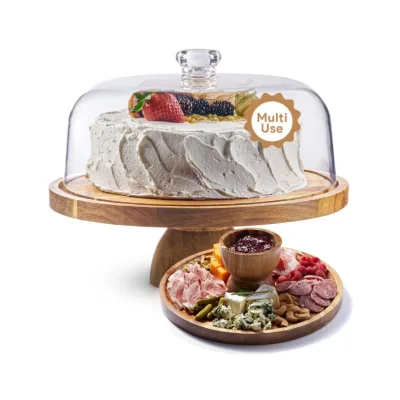
Wooden Dessert Cake Display Stand Acrylic Lid Party Wedding Restaurant Round Cake Stand
$5.8956 - $6.5266
MOQ: 500 pieces
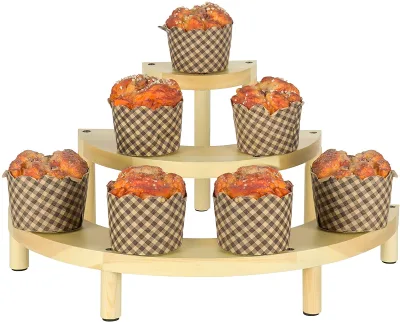
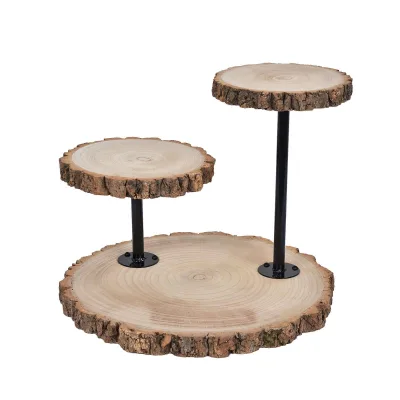
3 Tier Bread Holder Cake Stand Wood Cupcake Dessert Display Stand Nail Polish Holder
$5.2375 - $5.9555
MOQ: 500 pieces
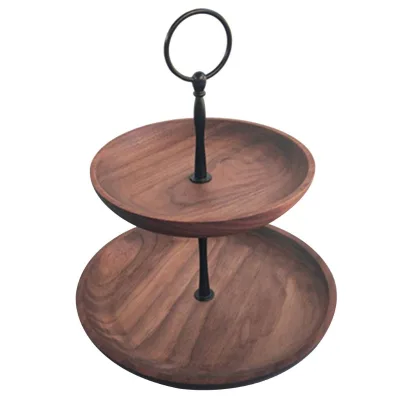
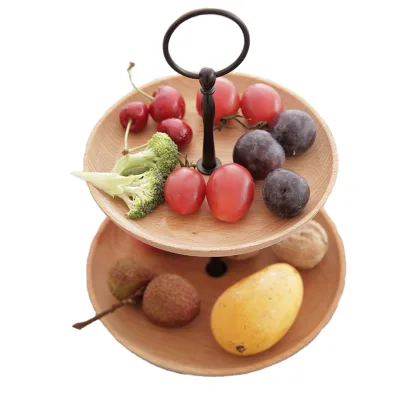
$6.7905 - $7.2027
MOQ: 500 pieces

Adidea (Xiamen) Industry And Trade Co., Ltd.
- Trading Company
- China Fujian
- Lead time30 days
- Avg. response≤ 17h
Main productsMetal Display Shelf, Display Stand, Metal Display Rack, MDF Display Showcase, Solid Wood Display Stand, Acrylic Display Stand, Supermarket Display Shelves, Wine Beverage Food Display Rack, Garment Bag Shoe Jewelry Display Stand, Tile Stone Granite Quartz Mosaic Display Stand
Main marketsSoutheast Asia/ Mideast,Europe,North America

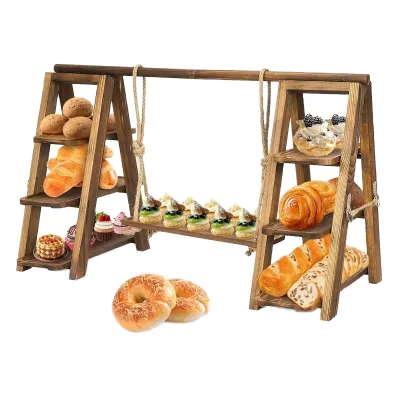
Food Table Rustic Wood Cake Stands Buffet Crate Wooden Dessert Display Stand
$50.00 - $80.00
MOQ: 100 Pieces

Acacia Cupcake Display Stand for Vendors Wood Cupcake Stands for Dessert Wooden Display Shelves
$15.00 - $20.00
MOQ: 100 Pieces

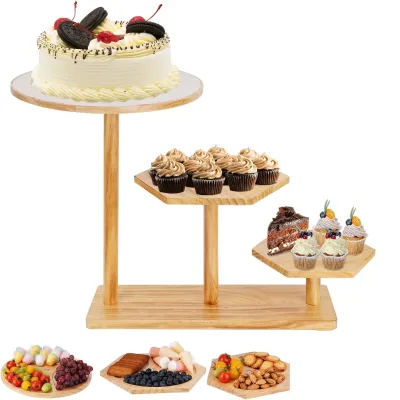
3 Tier Wood Display Stand Wooden Cupcake Display Stand Dessert Stand for Birthday Wedding Event
$10.00 - $15.00
MOQ: 100 Pieces

Wood Dessert Table Display Set Wooden Cake Stand Cupcake Tower Rectangular Serving Tray
$60.00 - $80.00
MOQ: 100 Pieces

$7.00 - $10.00
MOQ: 100 Pieces

$10.00 - $15.00
MOQ: 100 Pieces
- Verified by SGS Group
- Manufacturer, Trading Company
- Lead time20 days
- Avg. response≤ 2h
Main productsBird House, Wooden Box, Wooden Crafts, Wooden Furniture, Wooden Storage
Main marketsNorth America(40%), Western Europe(30%), Domestic Market(30%)

Xiamen Athome Household Products Co., Ltd.
- Verified by SGS
- Trading Company
- China Fujian
- Lead time30 days
- Avg. response≤ 3h
Main productsXiamen Athome Household Products Co. Ltd. Is a, Custom Matcha Tea Set, Wooden &Bamboo Kitchenware, Custom Gifts & Souvenirs, Home & Seasonal Decor, Tableware &Dinner Set, Custom Candle Holer, Seasonal & Promotional Gifts, Drinkware, Sourdough & Baking Tools
Main marketsSoutheast Asia/ Mideast,East Asia(Japan/ South Korea)

$3.09 - $11.28
MOQ: 1 Pieces

2-Tier Dessert Stand Wooden Cake Display Rack Cupcake Stand Pastry Serving Tray Countertop Organizer
$2.98 - $10.58
MOQ: 300 Sets


Fujian Hoyee Household Items Co., Ltd.
- Verified by BV
- Manufacturer/Factory
- China Fujian
- Lead time0 days
- Avg. response≤ 7h
Main productsBamboo Products, Cutting Board, Bathtub Caddy, Bath Mat, Bath Towel Rack, Shoes Rack, Office Organizer, Desk Organizer, Cheese Board, Serving Tray


3-Tier Wood Cake Stand Dessert Stand Cupcake Stand Tea Party Serving Platter
$15.30 - $16.70
MOQ: 1000 Pieces


Caoxian Fengdan Wood Industry Co., Ltd.
- Verified by SGS Group
- Manufacturer, Trading Company
- Lead time45 days
- Avg. response≤ 2h
Main productsWooden Cutting & Serving Board, Wooden Trays, Wooden Box, Wooden Bowl, Wooden Rack

XIAMEN TWO CITY IMP AND EXP CO., LTD.
- Verified by SGS
- Trading Company
- China Fujian
- Lead time30 days
- Avg. response≤ 4h
Main productsBamboo Panel, Bamboo Plywood, Bamboo Cutting Board, Bamboo Chopping Board, Bamboo Products, Bamboo Kitchenware, Bamboo Tableware, Bamboo Furniture, Wood Product, Wood Root Carving Product
Main marketsSoutheast Asia/ Mideast,Europe,North America


Acacia Wood Round Wooden Cupcake Tower Stand Rustic Dessert Cake display Stands
$5.05 - $7.63
MOQ: 500 Pieces

Factory Price 4 Tiered Wooden Cupcake Stand Retail Display Stand Rustic Cupcake Stand Dessert Stand
$5.25 - $7.65
MOQ: 500 Pieces

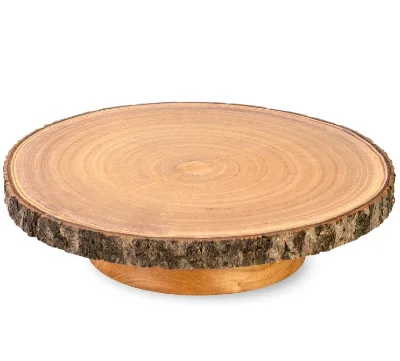
Cheap Price Natural Rustic Cake Stand Wooden Cake Stand Slab Slice Tray Wood Slice Cake Stand
$3.05 - $4.63
MOQ: 500 Pieces


Caoxian Shuanglong Arts & Crafts Plant
- Verified by SGS Group
- Manufacturer, Trading Company
- Lead time30 days
- Avg. response≤ 1h
Main productsWooden packaging, Wooden pet products, Wooden holiday decoration, Wooden home decoration, Wooden box
Main marketsDomestic Market(45%), North America(8%), Southeast Asia(8%)
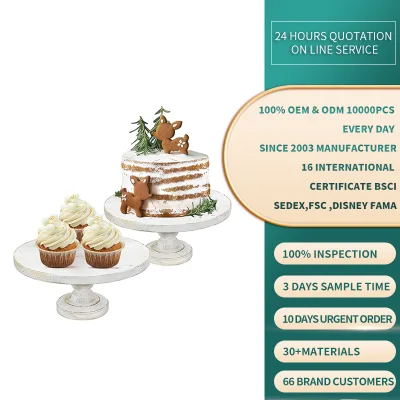
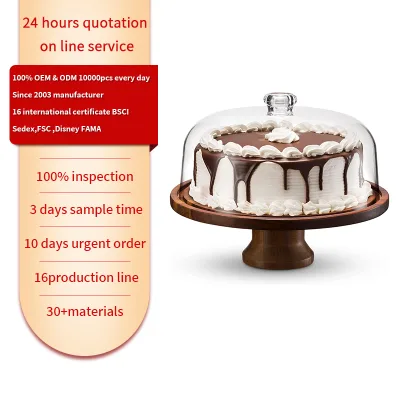
Cake Stand Shatterproof Acrylic Cover Shatterproof Acrylic Cover Wooden Cake Stand
$4.3786 - $5.0636
MOQ: 1000 pieces

Fujian Hoyee Household Items Co., Ltd.
- Manufacturer, Trading Company
- Fujian, China
- Lead time30 days
- Avg. response≤ 2h
Main productsWood & Bamboo Products
Main marketsWestern Europe(30.00%), North America(30.00%), Northern Europe(15.00%), Southeast Asia(15.00%), South Asia(5.00%), South America(5.00%)

Qingdao Shengxintian New Materials Co., Ltd.
- Verified by CTI
- Combined
- China Shandong
- Lead time15 days
- Avg. response≤ 11h
Main productsAluminum Foil Cardboard, Flame Retardant Paper, Paper Corner Protectors, Paper Pallets, Honeycomb Paperboards, Paper Slip Sheets, Honeycomb Meshpaper
Main marketsDomestic,Europe

Shuifu Huiyang Agricultural Technology Co., Ltd.
- Verified by SGS
- Trading Company
- China Yunnan
- Lead time23 days
- Avg. response≤ 4h
Main productsBamboo Products, Bamboo Crafts, Bamboo Chopsticks, Bamboo Skewers, Bamboo Weaving, Bamboo Tray, Bamboo Box, Bamboo Placemat, Bamboo Fruit Bowl, Lamp Shades
Main marketsDomestic
Cao County Jinpengyuan Container Packaging Co., Ltd.
- Verified by SGS Group
- Manufacturer, Trading Company
- Lead time30 days
- Avg. response≤ 4h
Main productsOak Barrel, Wooden Box, Wood Tray, Fumigator, Cutting Board
Main marketsDomestic Market(30%), North America(15%), South America(10%)
Qingdao Enjoy Global Industry Co., Ltd.
- Verified by TüVRheinland
- Manufacturer, Trading Company
- Lead time25 days
- Avg. response≤ 1h
Main productsWooden Shelf, Wooden Cat Tree, Wooden Box, Wooden Crafts, Wooden Furniture
Main marketsNorth America(40%), Eastern Asia(15%), Western Europe(14%)
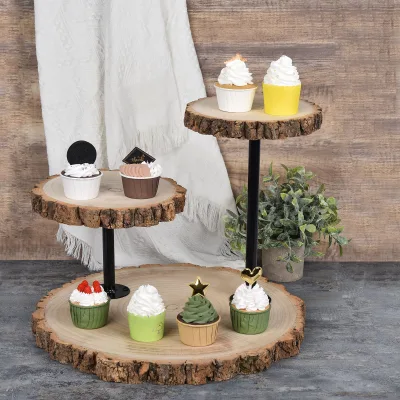
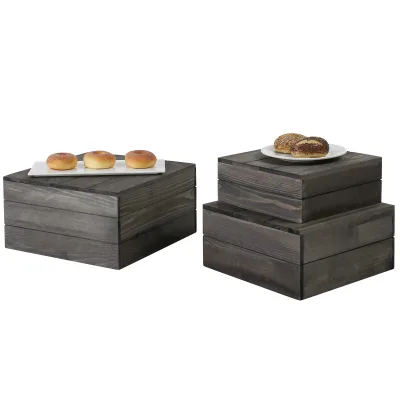
Custom Crate Style Wood Cupcake Stand Vintage Gray Wooden Cake Stand Dessert Appetizer Display Riser
$5.00 - $13.70
MOQ: 500 units
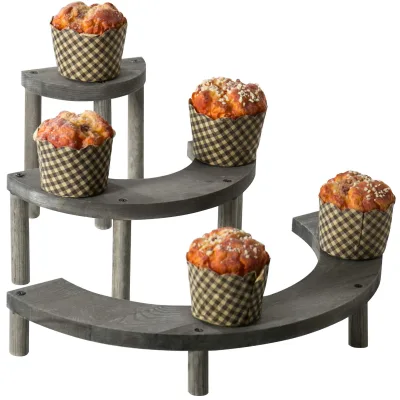

Caoxian Zhongyi Wooden Co.,Ltd
- Verified by BV
- Combined
- China Shandong
- Lead time30 days
- Avg. response≤ 14h
Main productsWoodwork
Main marketsEurope
Fujian Zhenghe Jiuqiang Bamboo & Wood Co., Ltd.
- Verified by TüVRheinland
- Manufacturer, Trading Company
- Lead time35 days
- Avg. response≤ 1h
Main productsBamboo Kitchenware, Bamboo Bathroom Accessories, Bamboo Living Room Items, Bamboo Furniture, Bamboo Storage Products
Main marketsNorth America(50%), Western Europe(40%), Southeast Asia(10%)
Xiamen Ehang Household Products Co., Ltd.
- Trading Company
- Fujian, China
- Lead time37 days
- Avg. response≤ 5h
Main productsKitchenware,bamboo and wooden products,Houseware,Kitchen gadgets,Garden
Main marketsSoutheast Asia(20.00%), North America(20.00%), Southern Europe(10.00%), Northern Europe(10.00%), Western Europe(10.00%), South America(10.00%), Eastern Europe(10.00%), Central America(5.00%), Domestic Market(1.00%), Mid East(1.00%), Oceania(1.00%), Eastern Asia(1.00%), Africa(1.00%)

Xiamen Ebei Import & Export Co., Ltd.
- Verified by CTI
- Trading Company,Manufacturer/Factory
- China Fujian
- Lead time45 days
- Avg. response≤ 2h
Main productsEco-Friendly Products, Bamboo Tableware, Bamboo Furniture, Bamboo Kitchenware, Bamboo Office Supply, Bamboo Fibre Products, Biodegradable Products, Bamboo Towel, Solar Energy Products, Bamboo Garden Products
Main marketsSouth America,Eastern Europe,Mid East,North America,Southeast Asia,Eastern Asia,Oceania,Western Europe,Africa
Quanzhou Bestowal Trading Co., Ltd.
- Verified by Intertek
- Trading Company
- Lead time60 days
- Avg. response≤ 2h
Main productsBamboo Rack/Shelf, Bamboo Furniture, Bamboo Kitchenware Accessories
Main marketsMid East(35%), South Asia(30%), North America(25%)
Caoxian Kangyi Wood Products Co., Ltd.
- Manufacturer, Trading Company
- Lead time旺季: "1 - 500":35,"501 - 1000":40,"1001 - 3000":45,"> 3000":"To be negotiated", 淡季: "1 - 500":35,"501 - 1000":40,"1001 - 3000":45,"> 3000":"To be negotiated"
- Avg. response≤ 2h
Main productsWooden Tableware, Serving Trays, Small Furniture, Wooden Outdoor Goods
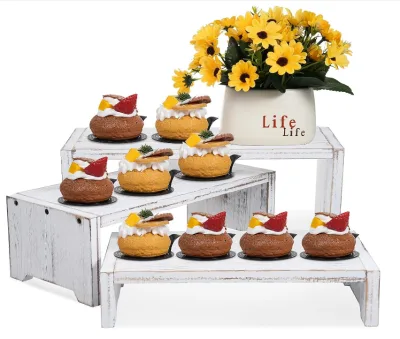
Hot Selling Rustic 3-Tier Wooden Cupcake Stand & Display Risers Display Stand
$4.17 - $4.95
MOQ: 500 pieces
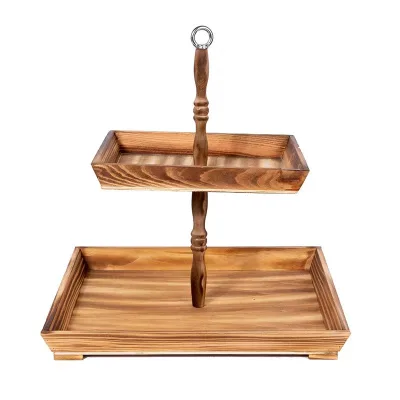
Wholesale Custom logo Wooden Multi-layer Tray Dessert Stand Wooden Display Stand
$4.00 - $4.85
MOQ: 500

Lihao Houseware (Guangzhou) Co., Ltd
- Verified by SGS
- Manufacturer/Factory,Other
- China Guangdong
- Lead time23 days
- Avg. response≤ 2h
Main productsHotel Restaurant Supplies, Hotel & Restaurant Essentials, Catering Equipment, Commercial Catering Equipment, Chafing Dishes & Food Warmers, Hotelware, Buffet Serving Ware, Tableware (Dinnerware / Cutlery), Glassware, Food Display Stand
Main marketsSouth America,Eastern Europe,Mid East,North America,Southeast Asia,Eastern Asia,Oceania,Western Europe,Africa


Dessert Display Stand Buffet Bread Tray Cold Meal Wooden Ornament Cake Rack
$149.99 - $349.99
MOQ: 10 Sets


Cupcake Stand 3-Tier Dessert Plates Mini Cakes Fruit Candy Display Buffet Holder
$29.99 - $49.99
MOQ: 10 Sets

Caoxian Kaituo Wooden Co., Ltd.
- Manufacturer, Trading Company
- Shandong, China
- Lead time30 days
- Avg. response≤ 8h
Main productswall shelf,wooden decoration,wooden tray,wooden organizer,wooden Pet products
Main marketsNorth America(80.00%), Southern Europe(5.00%), Northern Europe(5.00%), Western Europe(5.00%), Eastern Europe(5.00%)
Cao County Grandview Arts & Crafts Co., Ltd.
- Manufacturer, Trading Company
- Shandong, China
- Lead time20 days
- Avg. response≤ 4h
Main productskitchen knife rack,wooden trash bin,wooden frames,kitchen wall shelf,bathroom storage rack
Main marketsNorth America(35.00%), Western Europe(13.00%), South Asia(10.00%), Eastern Europe(7.00%), Mid East(7.00%), Southern Europe(5.00%), Domestic Market(5.00%), Eastern Asia(5.00%), Southeast Asia(5.00%), Northern Europe(4.00%), Oceania(2.00%), Africa(2.00%)

Henan Qingchengzhilian Wedding Props Co., Ltd.
- Verified by BV
- Trading Company
- China Henan
- Lead time15 days
- Avg. response≤ 22h
Main productsWedding Arch
Main marketsDomestic

Modern Decorative Golden Metal Cake Stand Luxury Dessert Stand Candy Display Stand
$31.50 - $37.00
MOQ: 10 Pieces


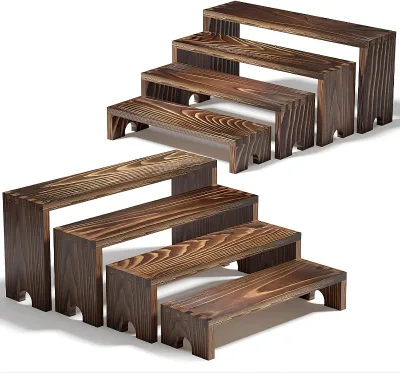
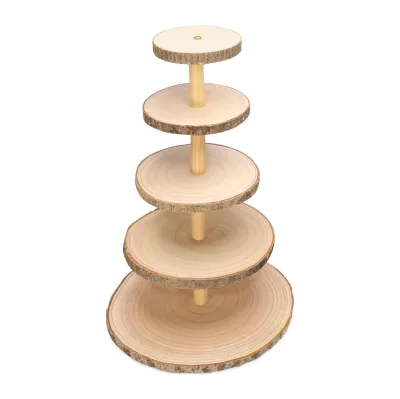
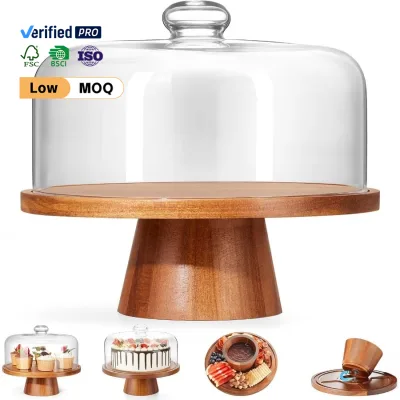
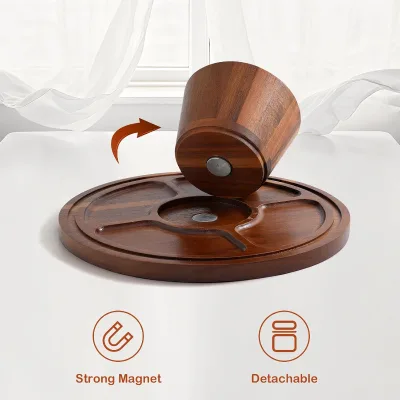
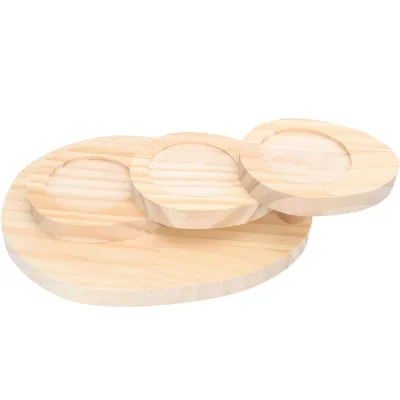
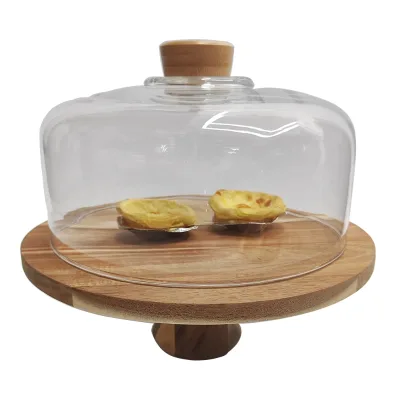


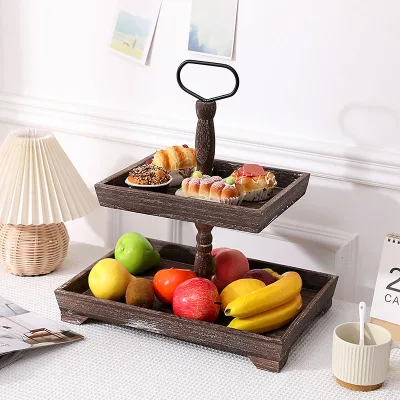


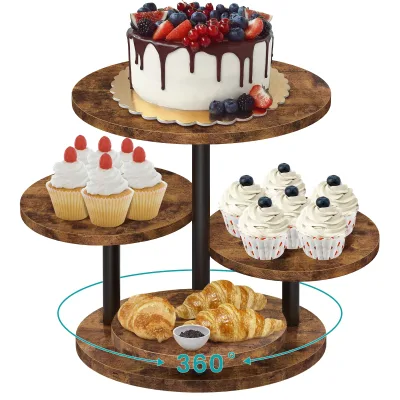


Comprehensive Sourcing Guide
Wooden Chocolate Cake Stand with Lid Supplier Concentration and Factory Types
The sourcing landscape for wooden chocolate cake stands with lids reveals a distinct concentration of manufacturing capabilities in specific regional clusters, particularly within China’s Fujian province. This area is recognized as a primary hub for bamboo and wood processing, offering suppliers direct access to raw materials like acacia and bamboo, which are frequently cited in product specifications for these items. Buyers evaluating suppliers should note that many entities in this region operate as manufacturers, providing OEM and ODM services that allow for significant customization of dimensions, finishes, and packaging. The presence of established factories in Shaowu City, for instance, indicates a mature supply chain where specialized knowledge in wood treatment and food-safe finishing is readily available. This geographic concentration often translates to competitive pricing and faster production cycles for standard items, as the infrastructure for woodworking is deeply embedded in the local economy.
However, the supplier base is not exclusively limited to pure manufacturing entities, as some results indicate a mix of manufacturers and trading companies. This distinction is critical for buyers who may prioritize direct factory communication for complex customizations versus the broader catalog access that trading companies might offer. While manufacturers typically control the production line and quality assurance processes directly, trading companies may aggregate products from multiple workshops, potentially offering a wider variety of designs but with less direct oversight of the manufacturing process. Buyers must carefully review the company type listed in supplier profiles to understand who they are engaging with. Understanding whether a supplier is a factory or a trader helps in assessing the flexibility of order modifications and the depth of technical support available during the development phase of a Wooden Chocolate Cake Stand with Lid.
How to Verify Wooden Chocolate Cake Stand with Lid Suppliers
Verifying the legitimacy and capability of suppliers requires a close examination of their response times and communication efficiency, which serve as early indicators of operational reliability. Data shows that response times can vary significantly, with some suppliers taking over fifteen hours to reply, while others respond within two hours. For a buyer managing tight project timelines, a rapid response is often a proxy for a well-organized internal team that can quickly address queries regarding material sourcing, certification documentation, or production scheduling. Slow response times may suggest a lack of dedicated customer service resources or a high volume of unmanaged inquiries, which could lead to delays in resolving critical issues during the order fulfillment process. Therefore, initiating contact with multiple suppliers to gauge their responsiveness is a practical first step in the verification process before committing to any larger orders.
Beyond communication speed, buyers must rigorously verify product certifications and material claims to ensure compliance with food safety standards, especially since these stands are used for serving edible items. Suppliers often list certifications such as FDA and CE/EU, which are essential for markets with strict regulatory requirements regarding food contact materials. Buyers should request copies of these certificates and cross-reference them with the issuing bodies to confirm their validity and scope. Additionally, the material composition should be explicitly confirmed, as some products may blend bamboo with other woods or use adhesives that require specific safety validations. The presence of eco-friendly features and non-disposable classifications also suggests a focus on durability and sustainability, which are increasingly important to end consumers. Verifying these attributes through direct supplier inquiry or third-party audits ensures that the Wooden Chocolate Cake Stand with Lid meets both legal and brand-specific quality expectations.
What to Compare Across Wooden Chocolate Cake Stand with Lid Suppliers
When comparing suppliers, lead time and minimum order quantity (MOQ) are pivotal factors that influence inventory planning and cash flow management. Lead times for wooden products can range from standard fifteen-day cycles to more complex schedules that vary by season and order volume, with some suppliers indicating negotiated terms for larger quantities exceeding three thousand units. Buyers should clearly understand whether the quoted lead time includes material preparation, production, and packaging, as well as any potential delays due to peak seasons. Similarly, MOQs can vary widely, with some suppliers requiring as few as three hundred units while others may demand five hundred or even one thousand pieces. These thresholds directly impact the initial investment required and the ability to test the market with smaller batches. Comparing these operational metrics across different suppliers helps buyers identify partners whose production capacities and order flexibility align with their specific business model and sales velocity.
Price ranges and customization options also play a crucial role in the comparison process, as they determine the potential profit margins and product differentiation. Prices for wooden cake stands with lids can range from low-cost entry-level items to higher-priced premium designs, depending on the complexity of the tiered structure, the quality of the wood, and the inclusion of additional features like acrylic lids or specific finishes. Buyers should analyze the price per unit against the specified MOQ to understand the true cost structure. Furthermore, the availability of customization services, such as logo engraving, custom packaging, or unique dimensional adjustments, adds value for brands seeking to stand out in the market. Suppliers that offer robust OEM and ODM capabilities can provide tailored solutions that meet specific aesthetic or functional requirements, whereas those with limited customization options may only offer standard catalog items. Evaluating these factors holistically allows buyers to select suppliers that offer the best balance of cost, quality, and flexibility.
Common Wooden Chocolate Cake Stand with Lid Sourcing Risks
One significant risk in sourcing wooden products is the inconsistency in material quality and finish, which can lead to customer dissatisfaction and returns. Wood is a natural material that can vary in grain, color, and density, and without strict quality control measures, batches may exhibit noticeable differences. Buyers must ensure that suppliers have robust inspection protocols in place to minimize defects such as splintering, warping, or uneven staining. The use of oils or coatings for preservation must also be verified to ensure they are food-safe and do not emit strong odors that could affect the chocolate or other foods served on the stand. Additionally, the durability of the stand, particularly for multi-tiered designs, is a critical concern. Structural integrity must be maintained to prevent collapse under weight, which requires careful engineering and high-quality joinery techniques. Buyers should request samples to physically assess the build quality and stability before placing bulk orders.
Another risk involves the accuracy of product specifications and the potential for miscommunication regarding dimensions and packaging. Discrepancies between the ordered product and the delivered item can result in logistical challenges, such as fitting issues in retail displays or storage spaces. For instance, the standard dimensions of cake stands and their lids must be precise to ensure a proper fit, which is essential for maintaining the aesthetic appeal and functionality of the product. Packaging also plays a vital role in protecting the wooden items during transit, as wood can be susceptible to damage from moisture or impact. Buyers should verify that suppliers use appropriate packaging methods, such as shrink wrap, color labels, and sturdy cartons, to prevent damage. Clear communication of all technical specifications, including tolerances and packaging requirements, is essential to mitigate these risks and ensure that the final product meets the buyer’s expectations.
Wooden Chocolate Cake Stand with Lid Regional Sourcing and Logistics
Sourcing from regions like Fujian, China, offers logistical advantages due to the proximity to major shipping ports and established export infrastructure. This geographic location facilitates efficient transportation of heavy wooden items, which can be costly to ship if sourced from more remote areas. Buyers should consider the impact of logistics costs on the total landed cost of the product, as freight charges for bulky items like cake stands can significantly affect profitability. Understanding the port of origin, such as Qingdao or other nearby ports, helps in estimating transit times and selecting appropriate shipping methods, whether by sea or air. Sea freight is often more cost-effective for large orders, while air freight may be necessary for urgent replenishments or smaller, high-value batches. Evaluating the logistical capabilities of the supplier, including their experience with export documentation and customs clearance, ensures a smoother supply chain process.
Additionally, the choice of supplier location can influence the availability of raw materials and the overall sustainability of the product. Regions with abundant bamboo and wood resources, such as Fujian, may offer more sustainable sourcing options, provided that the suppliers adhere to responsible forestry practices. Buyers interested in eco-friendly products should inquire about the source of the wood and whether it is certified by recognized environmental standards. This information can be a valuable selling point for consumers who prioritize sustainability. Furthermore, the local manufacturing ecosystem can provide opportunities for collaborative innovation, such as developing new designs that utilize local materials in unique ways. By leveraging the strengths of regional sourcing clusters, buyers can access high-quality products while supporting sustainable and efficient supply chain practices.
Wooden Chocolate Cake Stand with Lid Commercial Terms and Order Planning
Establishing clear commercial terms is essential for protecting both parties and ensuring a smooth transaction process. Buyers should negotiate payment terms that align with their cash flow needs, such as using escrow services for initial orders to mitigate financial risk. Escrow provides a secure mechanism where funds are held until the buyer confirms receipt and satisfaction with the goods. This is particularly important for new supplier relationships where trust has not yet been established. Additionally, buyers should clarify the responsibilities for shipping costs, insurance, and customs duties, as these can vary depending on the agreed Incoterms. Understanding these terms helps in accurately calculating the total cost of ownership and avoiding unexpected expenses. Clear communication regarding warranty policies and return procedures for defective items is also crucial, as it defines the recourse available in case of quality issues.
Order planning should take into account the supplier’s production capacity and seasonal variations in lead times. As noted, lead times can extend during peak seasons, so buyers should plan their inventory replenishment cycles accordingly to avoid stockouts. Building a long-term relationship with a reliable supplier can provide benefits such as priority production scheduling and better pricing for repeat orders. Buyers should also consider the potential for expanding their product range with complementary items, such as wooden serving trays or storage boxes, which many suppliers in this category also offer. This can simplify logistics and reduce administrative overhead by consolidating orders with a single partner. By carefully planning orders and establishing strong commercial terms, buyers can optimize their sourcing strategy and achieve greater efficiency in their supply chain operations.
FAQs
What certifications do wooden cake stands with lids have?
Most wooden cake stands with lids carry FDA and CE/EU certifications to ensure food safety. These standards confirm the materials used are safe for direct food contact. Buyers should verify specific certificates for their target market to ensure full regulatory compliance and product safety.
What is the typical lead time for orders?
Lead times generally range from 15 to 30 days depending on order volume and season. Some suppliers offer a standard 15-day turnaround for smaller batches. Larger orders exceeding 3000 units may require negotiation for extended production schedules to ensure quality control and timely delivery.
What is the minimum order quantity for custom stands?
Minimum order quantities typically start at 300 units for standard bamboo and wood designs. Some suppliers require 500 units for specific models or custom packaging options. Higher volume orders may have different thresholds, so buyers should confirm the exact MOQ for their desired customization level.
Are these cake stands eco-friendly and reusable?
Yes, wooden cake stands are generally eco-friendly and non-disposable. They are crafted from sustainable materials like bamboo and acacia wood. These features make them suitable for repeated use in weddings and parties, offering a durable and environmentally conscious alternative to plastic or single-use serving ware.
What is the price range for wooden cake stands?
Prices for wooden cake stands with lids typically range from $0.50 to $9.00 per unit. The cost varies based on material, tier count, and customization options. Simple single-tier models are more affordable, while multi-tier or complex designs with specific packaging commands higher prices within this market range.
Can I customize the size and packaging of the stand?
Customization is available for size, material, and packaging details. Buyers can request specific dimensions and eco-friendly packing options like shrink wrap or color boxes. Suppliers often support OEM and ODM services to tailor the product to your brand requirements and specific market needs effectively.