Source Washable Non Slip Door Mat for Home Hotel Office
Explore 30 listings of Washable Non Slip Door Mat options featuring custom designs, rubber backing, and anti-slip properties. Buyers can compare specifications like thickness, material, and MOQ to find suitable solutions for home, hotel, and office applications; compare the available evidence and request quotations based on your requirements.
Updated
Key considerations
Products List


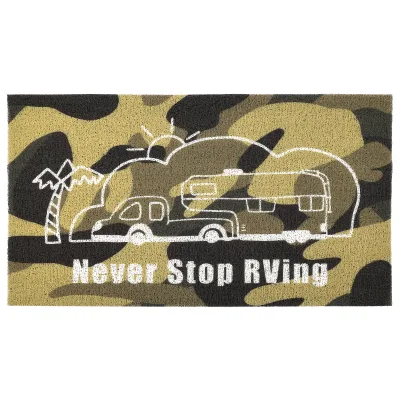
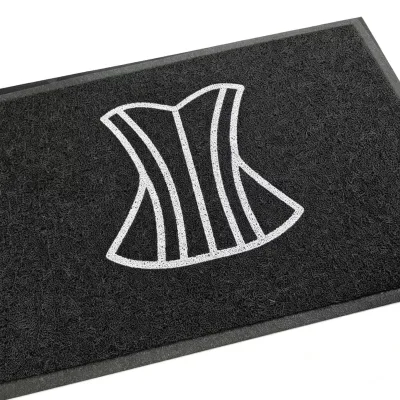
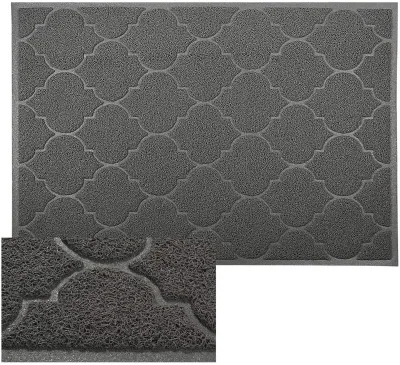


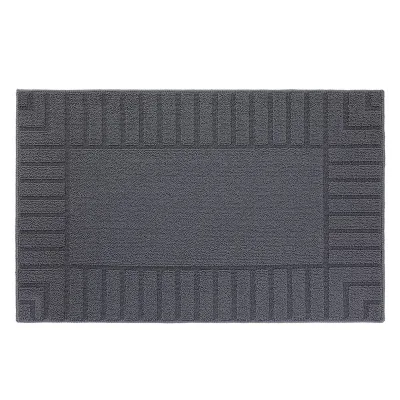
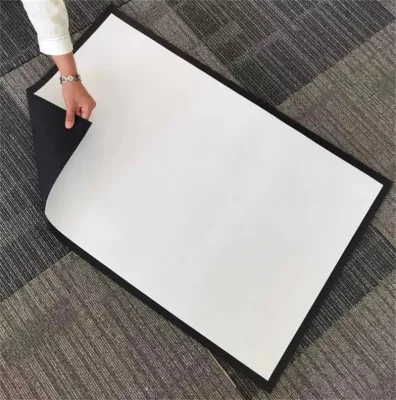
Modern Non Slip Washable PVC Coil Door Mats with Colorful Colors
$2.80 - $6.80
MOQ: 1000 Square Meters

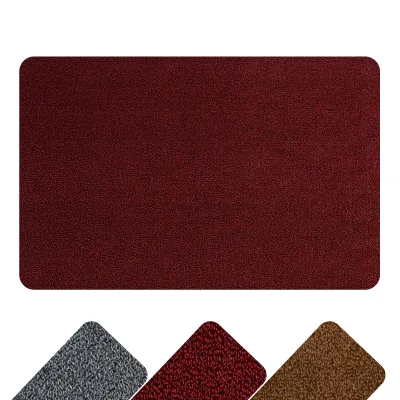
Customized Non Slip Washable PVC Coil Door Mats with Colorful Colors
$2.80 - $6.80
MOQ: 1000 Square Meters



Comprehensive Sourcing Guide
Washable Non Slip Door Mat Sourcing Guide
Washable non slip door mats occupy a practical middle ground in the floor covering trade: they must perform functionally at an entrance, resist moisture and dirt, and survive repeated laundering without losing grip or shape. Buyers sourcing this category typically serve hotels, homes, commercial entrances, and bathroom or outdoor settings, so the same product line often needs to satisfy several usage environments at once. Before evaluating suppliers, define which channels you sell into, because a mat destined for a hotel entrance faces different durability and appearance expectations than a bath mat.
This guide walks procurement teams through the decisions that matter most: interpreting product listings realistically, verifying technical specifications, assembling compliance documentation, understanding commercial terms, qualifying suppliers, and building long-term quality control. Each section is written to support direct negotiation with manufacturers rather than passive catalog browsing, with emphasis on the attributes and variations actually observed in current listings for this product type.
Product Scope and Observed Listing Signals
Listings in this category present the product under several names—door mat, printed PVC coil door mat, non-slip entry mat, kitchen water-absorbent mat—reflecting the same core form: a floor carpet rug positioned at entrances or wet areas. Product form is consistently listed as rugs, and installation location is floor carpet placement. Buyers should treat these name variations as channel positioning rather than distinct product types, then confirm with each manufacturer which construction they actually produce.
Several attributes recur across listings: modern design, anti-slip feature, washable care instructions, and customization available with customized colors or as-request color matching. Usage statements span home, hotel, decoration, bath, outdoor, and commercial applications, sometimes within a single listing. Origins cited include Zhejiang and Hebei, China, with some entries marked simply as China. Model identifiers such as HR-CD, JT-M4, and KHL9235 appear, and packing is described as woven bags or plastic bags. These signals help buyers shortlist suppliers, but each should be confirmed directly.
Technical Specifications to Verify
Thickness is one of the few numeric specifications visible in listings, with observed values of 12mm and 13mm—close enough that buyers should not assume a meaningful performance difference, but should confirm the tolerance a factory can hold in production. Surface weight is listed at 650–950GSM, a range wide enough to affect pile density, absorbency, and feel. Ask each manufacturer where their standard construction sits within that band and whether custom weights are achievable, since heavier surfaces typically cost more.
Materials and construction also need direct confirmation. Listings cite nylon surfaces and PVC material, with rubber backing or non-slip rubber backing, and technics described as both hand made and digital print—two very different production methods that will not appear in the same sample unless explicitly confirmed. Size is listed as custom with rectangle as the stated shape, and patterns are customizable or custom by request. Ask for dimensional tolerances, backing adhesion methods, and how printed patterns are applied, then verify all of this against a physical pre-production sample.
Compliance and Safety Documentation
Because these mats combine a textile or polymer surface with rubber backing, buyers should request material composition declarations from suppliers before placing orders. Listings themselves do not establish any certification status, so the buyer's job is to ask which test reports the factory already holds for the specific surface material—nylon or PVC—and the backing compound, and to commission third-party testing where no current reports exist. Rubber and PVC compounds can vary in formulation, so documentation should reference the actual batch, not a generic product family.
Anti-slip and washable are the two performance features claimed in listings, and both deserve documented evidence rather than catalog language. Ask how anti-slip performance is tested and request the method used, and clarify what "washable" means in practice: laundering temperature limits, machine versus hand washing, and expected appearance after repeated cycles. For hotel and commercial buyers, written care instructions matching the supplier's washing claims should be obtained so end-user handling does not invalidate the product's performance expectations.
Cost Drivers and Commercial Terms
Observed listings show prices spanning roughly 0.7 to 14 USD and minimum orders ranging from 50 pieces to 1000 pieces, with some listings quoting 500pcs and others quoting 100 square meters. This spread tells buyers two things: pricing depends heavily on construction, size, and surface weight within the 650–950GSM band, and MOQ flexibility exists but is supplier-specific. Digital print versus hand-made production, custom colors, and custom sizes will each push unit cost upward compared with stock designs.
Commercial terms vary by seller. One observed listing accepts PayPal, Western Union, TT, and Trade Assurance, and ODM/OEM cooperation is explicitly accepted in another, with brand name fields showing both "NA" and a manufacturer name. Negotiate payment structure against order risk: smaller deposits and balance-after-inspection favor buyers on first orders. Confirm incoterms, packing format—woven bags or plastic bags as listed—and whether customized patterns carry tooling or setup charges that reappear on reorder.
Supplier Qualification and Quality Control
Qualify suppliers by matching their stated capabilities against your requirements in writing. Ask which production method they use—hand made or digital print—since listings contain both, and confirm whether their surface is nylon, PVC coil, or another construction. Verify location details independently: observed origins include Zhejiang and Hebei provinces, and provincial specialization often indicates the supply chain a factory can access. Request factory photos, production floor evidence, and references from other export buyers in the same category.
Quality control should be anchored on a golden sample approved before mass production. Define an inspection checklist covering dimensions, thickness against the 12–13mm reference points, GSM weight within the stated 650–950GSM range, color accuracy against your customized palette, backing adhesion, and edge finishing. For first orders, arrange pre-shipment inspection—internally or through a third party—checking a statistically reasonable sample against the checklist. Document every agreed specification in the purchase contract so discrepancies at inspection have contractual weight.
Long-Term Procurement Checks
Long-term value in this category comes from consistency, not just the first shipment. Because customization is available across most observed listings, build a specification file with each supplier: approved pattern files, Pantone or equivalent color references for the as-request color matching, size drawings, backing type, and packing format. This file becomes the baseline for every reorder and prevents drift when a factory changes materials or subcontractors. Reconfirm the specification at each reorder rather than assuming continuity.
Monitor supplier performance over time with simple metrics: defect rate per shipment, on-time delivery trend, responsiveness to claims, and willingness to reissue test reports when materials change. For hotels and commercial accounts, track field performance—how mats hold color and anti-slip properties after real washing cycles—and feed failures back to the supplier with batch numbers. Diversify across at least two qualified factories in the Zhejiang, Hebei, or broader China supply base so a single disruption does not interrupt your product availability.
FAQs
How thick are the washable non slip door mats available?
The washable non slip door mats are available in thicknesses of 12mm and 13mm depending on the specific model selected. These dimensions provide sufficient cushioning for entryways while maintaining durability for high-traffic areas in homes or hotels.
What customization options exist for the door mat patterns?
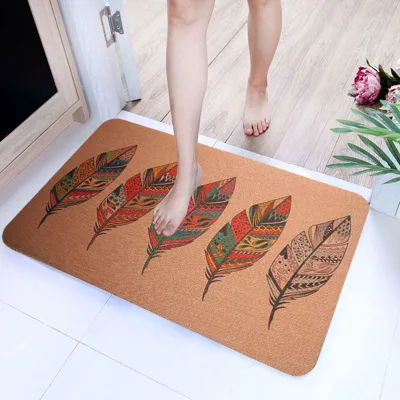
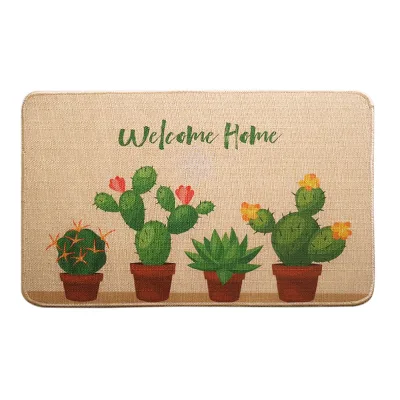
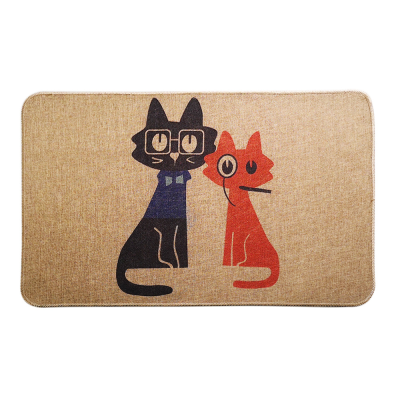
Customization is available for the door mat patterns, allowing buyers to request specific designs or colors. The surface can be printed digitally or woven, and the color can be customized as requested to match specific interior decoration needs.
Which materials are used for the washable non slip door mats?
The washable non slip door mats are constructed using materials such as PVC, Nylon, and Rubber backing. These materials ensure the mats are anti-slip, washable, and suitable for various applications including bathrooms, kitchens, and commercial entrances.
Can buyers order small quantities of the washable non slip door mats?
Buyers can order small quantities with a minimum order quantity starting at 50 pieces for some models. Other variants may require a minimum of 100 square meters, so the specific product model determines the exact minimum order requirement for purchase.
How are the washable non slip door mats packed for shipping?
The washable non slip door mats are packed in woven bags or plastic bags depending on the specific product type. This packaging ensures the mats remain clean and protected during transit from the manufacturing location in China to the final destination.
What is the surface weight range for the washable non slip door mats?
The surface weight for the washable non slip door mats ranges from 650 to 950 grams per square meter. This weight range indicates a dense construction that supports the anti-slip features and ensures longevity for frequent use in entryways.
Where are the washable non slip door mats manufactured?
The washable non slip door mats are manufactured in China, specifically in regions like Zhejiang and Hebei. These locations serve as the primary production hubs for these products, ensuring efficient supply chains for international buyers seeking these specific items.