App Controlled Electric Stove Suppliers and Manufacturers
Source 12 verified suppliers for App Controlled Electric Stove units. Compare grounded dimensions including lead times, MOQs, certifications, and response rates. Review product specs and request quotes directly from factories in China; review the available evidence before requesting comparable quotations from suitable candidates.
Suppliers List

Zhongshan Longstar Electrical Appliance Co., Ltd.
- Verified by BV
- Combined
- China Guangdong
- Lead time30 days
- Avg. response≤ 9h
Main productsInduction Cooker, Infrared Cooker
Main marketsSoutheast Asia/ Mideast

Shenzhen XinYingxin Electronics Technology Co., Ltd.
- Trading Company,Manufacturer/Factory
- China Guangdong
- Lead time38 days
- Avg. response≤ 12h
Main productsElectric Fireplace APP Control Board, Fireplace&Appliance Customizing Control Board, Intelligent Home System Products, Modern Electric Fireplace, Fireplace Electronics Accessories, Wood Plastic Composite Flooring, Electric Fireplace
Main marketsSouth America,Eastern Europe,Mid East,North America,Southeast Asia,Eastern Asia,Oceania,Western Europe,Africa


Stove with Intelligent Phone APP Remote Control
Contact supplier

Anhui Huining International Trade Co., Ltd.
- Verified by SGS
- Combined
- China Anhui
- Lead time30 days
- Avg. response≤ 3h
Main productsCoffee Maker, Commercial Water Boilers, Food Container, Plastic Cup, Thermostat, Disposable, Home Appliance, Electric Appliance, Kitchen Appliance, Home Appliance Parts
Main marketsSouth America,Africa,Southeast Asia/ Mideast,Europe,North America

Zhejiang Haoda Electrical Appliance Co., Ltd.
- Combined
- China Zhejiang
- Lead time30 days
- Avg. response≤ 4h
Main productsFloor Cleaner, Deep Fryer, Infrared Ceramic Cooker, Electric Hotplate, Electric Buffet Warmer, Electric BBQ, Electric Chopper, Vacuum Cleaner, Air Fryer
Main marketsSoutheast Asia/ Mideast,Europe,North America

Zhongshan Daofey Electrical Co., Ltd.
- Verified by TUVRHEINLAND
- Combined
- China Guangdong
- Lead time30 days
- Avg. response≤ 9h
Main productsInduction Cooker, Infrared Cooker, Built in Cooker, Induction Cooktop, Ceramic Cooker, Built Induction Cooker, Built Ceramic Cooker, Hot Plate
Main marketsOthers(foreignTradeCapacity.exportBusinessCapacityMarketOther),Europe

Reliable Kitchen Appliance: Electric Stove with Induction and Infrared Features
$35.00 - $40.00
MOQ: 400 Pieces

Durable Electric Induction Stove: Compact and Reliable Home Cooking Appliance
$35.00 - $40.00
MOQ: 400 Pieces


High-Power Electric Stove with Infrared Heating for Quick Meals Infrared Cooker
$10.00 - $12.00
MOQ: 1000 Pieces

ZHONG SHAN MEILONG ELECTRONIC CO.,LTD
- Verified by BV
- Combined
- China Guangdong
- Lead time30 days
- Avg. response≤ 2h
Main productsGas Stove, Range Hoods, Induction
Main marketsSouth America,Africa,Southeast Asia/ Mideast
Hangzhou Qianghua Cup Industry Co., Ltd.
- Verified by TüVRheinland
- Manufacturer, Trading Company
- Lead time15 days
- Avg. response≤ 2h
Main productsCeramic Mug, Glass Cup, Water Bottle, Thermos Series, Stylish Vase
Main marketsNorth America(25%), Eastern Europe(15%), South America(10%)

- Verified by BV
- Combined
- China Guangdong
- Lead time15 days
- Avg. response≤ 2h
Main productsHood Type Dishwasher, Conveyor Type Dishwasher, Ultrasonic Dishwasher, Undercounter Dishwasher, Bakery Equipment, Food Processor
Main marketsSouth America,Africa,Others(foreignTradeCapacity.exportBusinessCapacityMarketOther),North America

Jiangmen SHT Metal Products Co., Ltd.
- Manufacturer
- China Guangdong
- Lead time30 days
- Avg. response≤ 3h
Main productsPizza Oven, BBQ Grill, Outdoor Kitchen, Gas Grill, Kitchen Cabinet, Barbecue Grill, Charcoal Grill, BBQ Gas Grill, Outdoor Grill, Gas Pizza Oven
Main marketsEurope,Australia,North America

Guangzhou Sunrry Kitchen Equipment Co., Ltd.
- Verified by CTI
- Trading Company,Manufacturer/Factory
- China Guangdong
- Lead time30 days
- Avg. response≤ 3h
Main productsCommercial Kitchen Solutions, Turnkey Kitchen Solutions, Catering Equipment, Restaurant Equipment, Commercial Refrigeration Equipment, Commercial Bakery Equipment, Commercial Cooking Equipment, Stainless Steel Equipment, Commercial Food Prep Equipment, Commercial Kitchen Equipment
Main marketsSouth America,Eastern Europe,Mid East,North America,Southeast Asia,Eastern Asia,Oceania,Western Europe,Africa

- Verified by SGS
- Trading Company
- China Guangdong
- Lead time30 days
- Avg. response≤ 5h
Main productsAir Fryer, Air Fryer Oven, Toaster Oven, Electric Oven, Toaster, Pressure Cooker, Commercial Microwave Oven, Commercial Oven, Aroma Diffuser, Ice Maker
Main marketsEast Asia(Japan/ South Korea),Europe,North America

FOSHAN KITCHENSTAR ELECTRICAL APPLIANCES CO., LTD.
- Combined
- China Guangdong
- Lead time30 days
- Avg. response≤ 13h
Main productsInduction Hob
Main marketsSoutheast Asia/ Mideast,Europe,North America


China Factory Direct Sales Sensor Touch Control Electric Stove 3500W 2 Burner Induction Cooker Hob
$35.13 - $389.61
MOQ: 50 Pieces


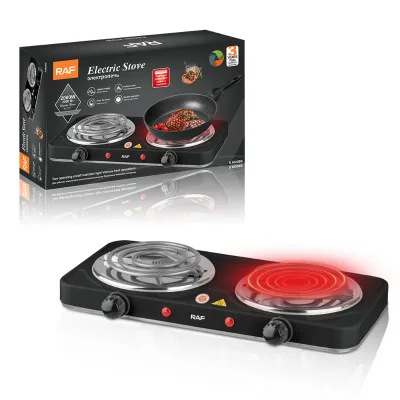
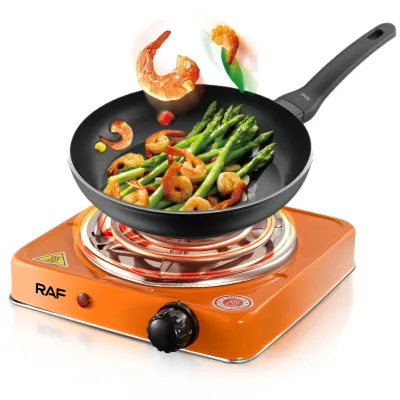


Comprehensive Sourcing Guide
App Controlled Electric Stove Supplier Concentration and Factory Types
The available data indicates that suppliers for app-controlled electric stoves are concentrated in the Guangdong province of China, a region known for its dense manufacturing ecosystem for home appliances. This location is confirmed by specific product origin tags and supplier location facts, suggesting that buyers should prioritize regions with established industrial clusters for this category. Factories in this area often combine manufacturing capabilities with trading operations, offering a hybrid model where production and sales are managed under a single entity. This structure can streamline communication but requires careful verification to ensure the factory directly controls the production line rather than acting solely as an intermediary.
When evaluating company types, the results show a mix of combined entities, trading companies, and manufacturers. Some suppliers list their main products as electric fireplaces and control boards alongside stoves, indicating a broader specialization in heating electronics and smart home integration. This diversification suggests that these suppliers may have robust R&D capacities for OEM and ODM services, which is critical for customizing app-controlled features. Buyers should verify if the supplier's primary focus is on the specific stove technology they need, as a company specializing in control boards might offer superior software integration but less expertise in thermal engineering compared to a dedicated appliance manufacturer.
How to Verify App Controlled Electric Stove Suppliers
Verification of suppliers in this category relies heavily on third-party audit reports and specific certification data points found in the product listings. Some suppliers display BV verification status, which serves as a baseline indicator of business legitimacy, while others may lack this specific badge. Buyers must cross-reference these verification statuses with the system certifications listed, such as ISO 9001, OHSAS 18001, or TS 16949, which appear in the data for certain manufacturers. The presence of product-specific certifications like CE, RoHS, EMC, CB, and UL is equally critical, as these validate that the electrical components and app connectivity meet international safety and electromagnetic compatibility standards.
Beyond static certifications, the response time and lead time metrics provide insight into operational reliability. Data shows response times ranging from approximately 8 to 11 hours, which can indicate the efficiency of the communication channel and the availability of technical support for app-related issues. A supplier with a longer lead time, such as 38 days compared to 30 days, may have different production scheduling or capacity constraints that could impact project timelines. Buyers should request proof of these metrics through direct inquiry, asking for recent client references or video audits that confirm the factory's ability to deliver the specific app-controlled features promised in the product specifications.
What to Compare Across App Controlled Electric Stove Suppliers
Comparing suppliers requires a detailed analysis of product attributes, specifically focusing on the customization options and technical specifications provided in the product evidence. The data reveals variations in burner configurations, with some models offering single burners while others support double or four-burner setups. Crucially, the availability of customization is explicitly marked as "Available" across multiple listings, allowing buyers to tailor glass sizes, housing materials, and control interfaces. Buyers should compare the specific glass dimensions, such as 290x370mm versus 360x280mm, and the housing materials, which range from stainless steel to metal or ceramic, to ensure the physical design matches their target market requirements.
Pricing and minimum order quantities (MOQ) are another vital dimension for comparison, as they vary significantly based on the product model and complexity. For instance, some electric stoves have an MOQ of 2,000 units with a price range of $16.50 to $18.00, while others with more advanced features like built-in induction or app control may have an MOQ of 100 units with prices ranging from $259.00. The variation in MOQ suggests that suppliers cater to different order volumes, from small batch testing to large-scale distribution. Buyers must align their order volume with the supplier's capacity, noting that higher-priced items with lower MOQs might offer better flexibility for new product launches, whereas lower-priced items with high MOQs are better suited for established volume sales.
Common App Controlled Electric Stove Sourcing Risks
One significant risk in sourcing app-controlled stoves is the potential mismatch between the claimed smart features and the actual product capability. While product keywords mention "APP Control" and "Intelligent Phone Remote Control," the underlying hardware specifications, such as the heating element type or installation method, must be verified to ensure compatibility with the intended app ecosystem. Some listings indicate a "Coil" heating element, while others specify "Ceramic / Glass" surfaces, which may require different control logic. Buyers should demand detailed technical documentation or firmware samples to confirm that the app integration is not merely a marketing label but a functional component of the device.
Another risk involves the consistency of quality standards and the reliability of the supply chain. The data shows that some products are labeled as "A-Grade Polished Black Crystal Plate," but without a unified global standard, the actual quality can vary between batches. Furthermore, the absence of specific system certifications like ISO 9001 for some suppliers, contrasted with their presence for others, highlights a disparity in quality management systems. Buyers must be cautious of suppliers who do not provide clear evidence of their production standards, as this can lead to defects in the final product, particularly in the sensitive electronic components required for app connectivity and safety features like overheating protection.
App Controlled Electric Stove Regional Sourcing and Logistics
Sourcing from the confirmed location of Guangdong, China, offers logistical advantages due to the region's mature infrastructure for exporting home appliances. The proximity to major ports facilitates efficient shipping, which is essential for managing the lead times observed in the data, ranging from 30 to 38 days. Buyers should factor in the time required for production and shipping when planning their inventory, as the lead time can vary based on the complexity of the app customization and the specific model ordered. Understanding the regional logistics network helps in predicting delivery windows and managing the transition from factory to distribution center.
However, regional sourcing also presents challenges related to customs and compliance, especially when importing products with electronic components that require specific certifications like CE or UL. The data indicates that different models carry different certification sets, and buyers must ensure that the specific unit they order meets the regulatory requirements of their destination country. Logistics planning should also account for the packaging standards, such as "Giftbox+Carton" or "Neutral Packing," which can affect shipping costs and product protection during transit. Buyers should verify the packaging details with the supplier to ensure that the goods arrive in optimal condition, minimizing the risk of damage during the long-distance transport from the manufacturing hub.
App Controlled Electric Stove Commercial Terms and Order Planning
Commercial terms for app-controlled electric stoves vary significantly based on the product model and the supplier's capacity. The data shows a wide range of pricing, from approximately $16.50 for basic models to $259.00 for advanced units with app control and heating power up to 1500W. Buyers must carefully review the price ranges and MOQs to determine the total cost of ownership, including the initial investment required to meet the minimum order threshold. For example, an order with an MOQ of 2,000 units at a lower price point requires a larger upfront capital outlay compared to an order with an MOQ of 100 units at a higher price point, which may be more suitable for testing the market.
Order planning must also consider the response time and the availability of customization services. Suppliers with faster response times, such as those around 8 hours, may be better equipped to handle urgent inquiries or last-minute changes to the app interface or product specifications. Additionally, the availability of OEM and ODM capabilities allows for tailored solutions, but this requires clear communication of requirements and potentially longer lead times for development. Buyers should establish a clear timeline that accounts for the supplier's response speed, the production lead time, and the time needed for quality assurance testing before the final shipment, ensuring a smooth transition from order placement to product delivery.
FAQs
What is the typical lead time for electric stove orders?
The typical lead time for these electric stove orders is 30 days. Some suppliers offer a longer lead time of 38 days depending on production schedules. Buyers should confirm specific timelines before placing bulk orders to ensure timely delivery.
What are the minimum order quantities for induction cookers?
Minimum order quantities vary significantly by model. Single burner ceramic stoves require 2000 units, while double burner built-in models need 800 units. Electric fireplaces with app control have a lower threshold of 100 units for initial orders.
Which certifications are available for built-in induction cookers?
Built-in induction cookers often carry CE, RoHS, EMC, and CB certifications. Some electric fireplace models include UL and CE marks. Buyers must verify specific product certifications as system certifications like ISO 9001 apply to the supplier rather than individual units.
Where are these electric stove manufacturers located?
Manufacturers of these electric stoves are located in China, specifically in Guangdong and Shenzhen. All listed products originate from these regions. Buyers should verify exact factory addresses during the sourcing process to confirm logistics capabilities.
What customization options exist for ceramic stove models?
Customization is available for various ceramic stove models including glass size and branding. Buyers can request specific dimensions like 290 by 370mm or 360 by 280mm. OEM and ODM services are offered by combined trading companies and manufacturers.
How fast do suppliers typically respond to inquiries?
Suppliers typically respond within 8 to 12 hours based on current data. One supplier shows an average response time of 8.07 hours while another averages 11.62 hours. Faster response times help streamline the negotiation process for bulk purchases.
What materials are used for electric stove surfaces?
Electric stove surfaces primarily use ceramic or glass materials. Some models feature A-Grade Polished Black Crystal Plates. Housing materials for built-in units often include stainless steel or metal to ensure durability and safety during high-temperature cooking operations.