Commercial Underwater Bike Suppliers and Manufacturers
Source 14 verified suppliers for Commercial Underwater Bike equipment. Compare dimensions including stainless steel construction, ISO certifications, and lead times. Request quotes to evaluate pricing and customization options for your facility needs; review the available evidence before requesting comparable quotations from suitable candidates.
Updated
Suppliers List

Guangdong Fenlin Swimming Pool & Sauna Equipment Co., Ltd.
- Verified by TUVRHEINLAND
- Combined
- China Guangdong
- Lead time30 days
- Avg. response≤ 1h
Main productsSauna Equipment, Swimming Pool Equipment, Fountain, SPA Products, Sauna Heater, Sauna Steam Generator, Sauna Room, Swimming Pool Ladder, Starting Block, Swimming Pool Cover Film
Main marketsSouth America,Africa,Others(foreignTradeCapacity.exportBusinessCapacityMarketOther),Southeast Asia/ Mideast,Domestic,Europe,North America

Guangzhou Hongshida Biotechnology Co., Ltd.
- Verified by BV
- Manufacturer
- China Guangdong
- Lead time23 days
- Avg. response≤ 2h


Guangdong Water Crown High Quality Stainless Steel Underwater Sports Bike
$600.00 - $1000.00
MOQ: 10 Pieces

- Verified by CTI
- Trading Company,Manufacturer/Factory
- China Jiangsu
- Lead time38 days
- Avg. response≤ 6h
Main productsUnderwater Lighting, Swimming Pool Light, Fountain Light, SPA Light, Aqua Bike, PAR56 Light, Water Pump, Pool Lighting, Aqua Trampoline, LED Light
Main marketsSouth America,Eastern Europe,Mid East,North America,Southeast Asia,Eastern Asia,Oceania,Western Europe,Africa

High Quality Factory Direct Selling Aqua Bike for Commercial Underwater Bicycle
$369.00 - $385.00
MOQ: 1 Pieces

Stainless Steel Resistance Aqua Bike Underwater Commercial Pool Exercise Riding Underwater
$435.00 - $445.00
MOQ: 1 Pieces

Amazing Quality Factory Direct Selling Aqua Bike for Commercial Underwater Bicycle Top Item
$370.00 - $376.00
MOQ: 1 Pieces

$369.00 - $385.00
MOQ: 1 Pieces


Dezhou Bodi Fitness Equipment Co., Ltd.
- Verified by TüVRheinland
- Manufacturer, Trading Company
- Lead time20 days
- Avg. response≤ 6h
Main productsFitness Equipment, Treadmill, Exercise Bike, Dumbbell, Fitness Accessories
Main marketsDomestic Market(50%), Western Europe(20%), North America(10%)

Dezhou Eagle Fitness Equipment Co., Ltd.
- Verified by SGS
- Trading Company
- China Shandong
- Lead time15 days
- Avg. response≤ 6h
Main productsFitness Equipment, Gym Equipment, Commercial Treadmill, Spinning Bike, Air Bike Rowing Machine, Hammer Strength, Hydraulic Circuit Training Equipment, Pilates Equipment, Crossfit Equipment, Fitness Accessory
Main marketsAfrica,Europe,Australia


Underwater Bike Stainless Steel Water Exercise Bike for Swimming Pool Accessories
$330.00 - $360.00
MOQ: 1 Pieces
- Verified by Intertek
- Trading Company
- Lead time20 days
- Avg. response≤ 3h
Main productsLED Pool Light, Garden Light, Rehabilitation Equipment, Fitness Equipment, Controller
Main marketsNorth America(64%), Oceania(9%), Mid East(8%)
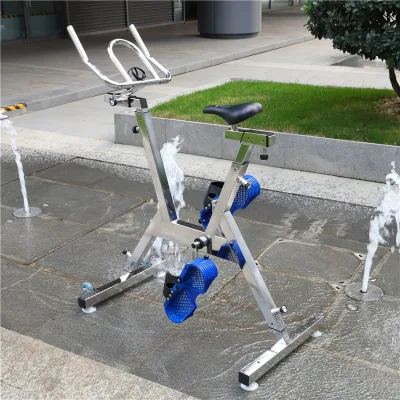
Sea Bike Hydro Gym Equipment Underwater Exercise Bike
$381.00 - $385.00
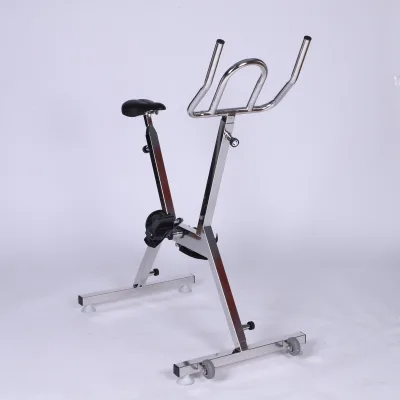
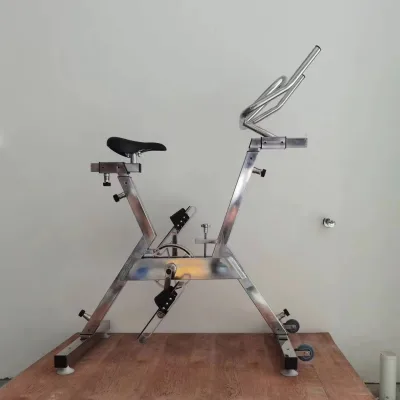
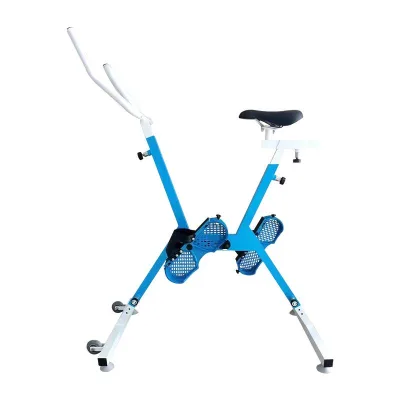
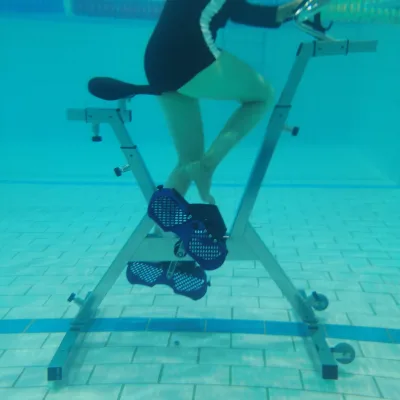
Cheap Simple Aqua Bike Swimming Pool Bike Underwater Excise Daily Workout for Sale
$272.00 - $298.00
MOQ: 5

WUXI FUNSOR MARINE EQUIPMENT CO., LTD.
- Verified by TUVRHEINLAND
- Manufacturer/Factory,Group Corporation
- China Shandong
- Lead time23 days
- Avg. response≤ 7h
Main productsInflatable Boat, Fiberglass Rib Boat, Aluminum Rib Boat, Stand-up Paddle Board, Inflatable Fishing Boat, Inflatable Drift Boat, Electric Trolling Motor, Gasoline Outboard Engine, Inflatable Boat Trailer
Main marketsSouth America,Eastern Europe,Mid East,North America,Southeast Asia,Eastern Asia,Oceania,Western Europe,Africa

Guangzhou Meilan Yacht Co., Ltd.
- Verified by SGS
- Combined
- China Guangdong
- Lead time15 days
- Avg. response≤ 4h
Main productsOutdoor Gear, Water Amusement Facilities, Outdoor Crafts, Hardware Accessories, Space Capsule
Main marketsDomestic
Guangzhou Baiyun Meierya Water Sports Equipment Factory
- Manufacturer, Trading Company
- Guangdong, China
- Lead time7 days
- Avg. response≤ 4h
Main productsWater Sports Equipment, Electric Boat, Pedal Boat, Bumper Boat, Assault Boat
Main marketsMid East(25.00%), Southeast Asia(23.00%), North America(16.00%), South America(10.00%), Africa(10.00%), South Asia(9.00%), Eastern Asia(4.00%), Oceania(1.00%), Western Europe(1.00%), Central America(1.00%)
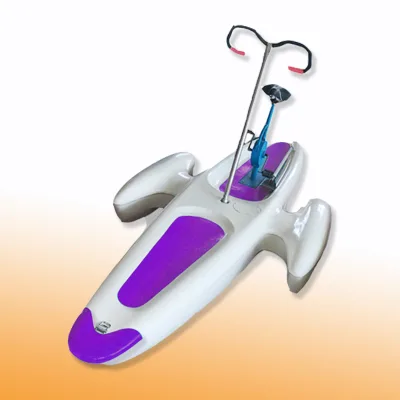
$440.6019 - $461.0956
MOQ: 3 units
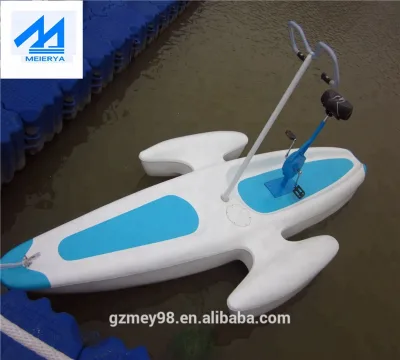
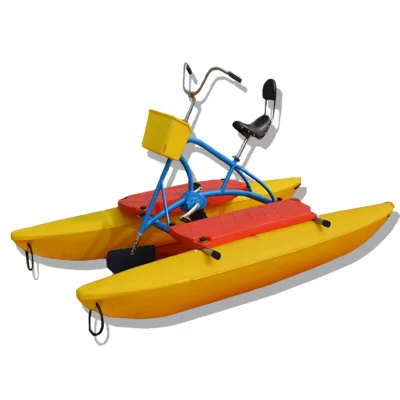
China Supplier Fiberglass Aqua Bike Adult Water Bike for Sale (M-030)water Pedal Bike
$512.3276 - $532.8213
MOQ: 5 pieces
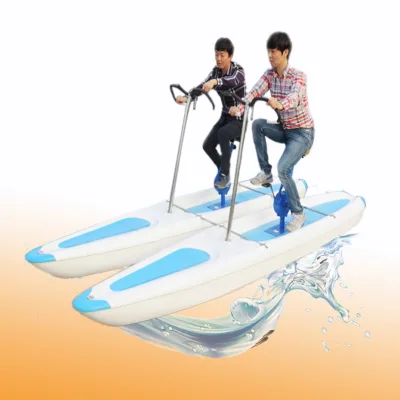
Water Sports Hot Selling Fiberglass Propeller Water Bikes Water Bicycle Sea Bikes Supply
$512.3276 - $908.8694
MOQ: 3 sets
Jiangsu Chitong Amusement Equipment Co., Ltd.
- Verified by TüVRheinland
- Manufacturer, Trading Company
- Lead time3 days
- Avg. response≤ 3h
Main productsBumper Boat, Electric Boat, Pedal Boat, Leisure Boat, Water Karting
Main marketsDomestic Market(50%), South America(8%), Eastern Europe(7%)
Zhengzhou Great Amusement Rides Co., Ltd.
- Verified by Intertek
- Trading Company
- Lead time30 days
- Avg. response≤ 2h
Main productsLeisure Boat, Speed Boat, Fishing Boat, Houseboat, Passenger boat
Main marketsDomestic Market(50%), North America(15%), Southeast Asia(15%)
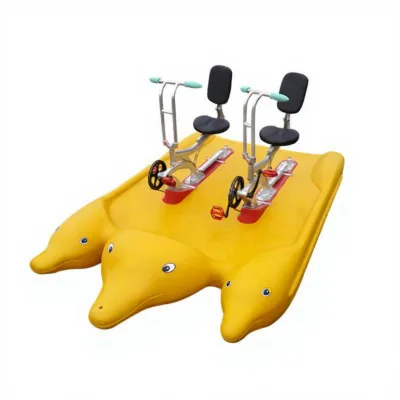
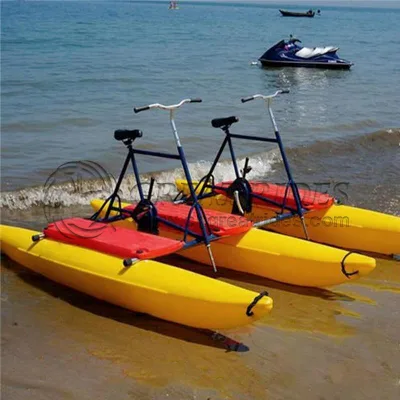
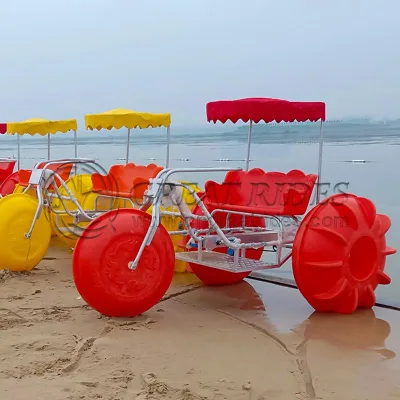
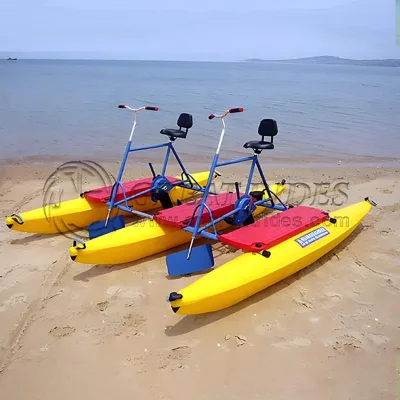
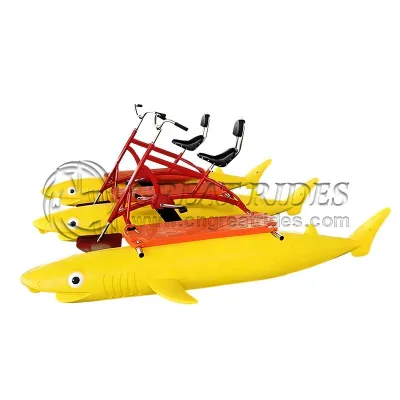
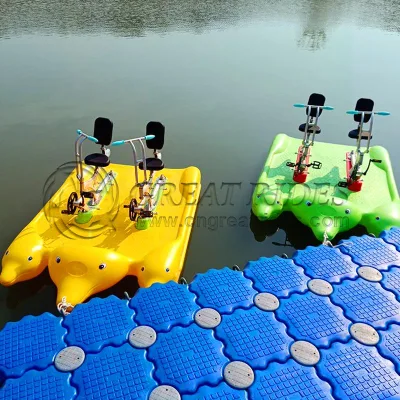
Water Sports Equipment Cycle Pedal Two Person Water Bike Hydro Bike Sea Bicycle for Sale
$574.1214 - $1026.832
MOQ: 6 Minimum
Shenzhen Hoverstar Innovations Technology Co.,Ltd
- Verified by Intertek
- Manufacturer, Trading Company
- Lead time40 days
- Avg. response≤ 3h
Main productsElectric Mini Jet Boat, Electric Surfboard, Underwater Scooter, Remote Controlled Lifebuoy, Water Rescue Rowing Boat
Main marketsNorth America(26%), Western Europe(23%), Southeast Asia(19%)
Henan Hengtaihua Amusement Equipment Co., Ltd.
- Manufacturer, Trading Company
- Henan, China
- Lead time15 days
- Avg. response≤ 11h
Main productsInflatable Toys (Inflatable Bouncy Castle,Inflatable Slide,Inflatable Tent,Inflatable Water Park Products,Inflatable Advertisement Products)
Main marketsDomestic Market(78.40%), Africa(4.60%), North America(3.50%), South Asia(2.30%), Mid East(2.00%), Southeast Asia(1.90%), Western Europe(1.50%), Eastern Europe(1.30%), Eastern Asia(1.20%), Central America(0.90%), Oceania(0.70%), South America(0.70%), Northern Europe(0.60%), Southern Europe(0.40%)

Qingdao Joineasy International Trade Co., Ltd.
- Verified by TUVRHEINLAND
- Trading Company,Manufacturer/Factory
- China Shandong
- Lead time0 days
- Avg. response≤ 5h
Main productsInflate & Deflate Valves &, Oars & Accessories, Mooring Ropes, PVC Fabrics, Rubbing Strips, Outdoor Folding Series, Pumps & Accessories, Feeding Bucket, Boat The Accessories, Ice Bath Tub






Comprehensive Sourcing Guide
Commercial Underwater Bike Supplier Concentration and Factory Types
Buyers searching for commercial underwater bikes will encounter suppliers concentrated in China, and the current results point to two provinces in particular: Guangdong and Jiangsu. Guangdong-based companies in these results include combined-type enterprises whose main product lines span sauna equipment, swimming pool equipment, fountains, SPA products, and water play equipment, with underwater aqua bikes appearing among listings for pool exercise bikes and aquatic walkers. Jiangsu-based suppliers combine trading company and manufacturer/factory roles, listing aqua bikes alongside underwater lighting, pool lights, water pumps, and aqua trampolines. This tells you the product typically sits inside a broader pool-equipment or fitness-equipment portfolio rather than being a standalone specialty.
Supplier structure matters for sourcing strategy. Manufacturer and combined-type companies may offer ODM or OEM capacity, which appears in the results for at least one Guangdong supplier, while hybrid trading/manufacturing firms can consolidate aqua bikes with complementary pool hardware in one shipment. Fitness-equipment manufacturers and trading companies also appear, positioning the aqua bike as a cardio training product. When identifying clusters beyond what a results page shows, buyers should search by product keyword plus province, check where listed production origins are registered, and compare which suppliers list the product category natively versus as an adjacency. Confirm whether the entity you contact is the factory, an export office, or a trading intermediary, since this affects pricing transparency, customization depth, and accountability for quality issues discovered after shipment.
How to Verify Commercial Underwater Bike Suppliers
Verification should begin with third-party assessment status, which several suppliers in these results display. Observed verification labels include TUVRHEINLAND, BV, CTI, and TüVRheinland, and system certifications range from ISO9001:2015 and ISO14001:2015 at one end to a supplier listing NIL, meaning no system certification is shown. A Jiangsu supplier displays a long list including BSCI, ISO 9001, ISO 14001, and HACCP, while a fitness-equipment supplier shows CE. Treat displayed labels as claims to be confirmed: request the certificate numbers, issuing bodies, and validity dates, and check that the certificate is held by the exact legal entity quoting you, not an affiliated company.
Product-level documentation is equally important for this category. Listings in the results reference product standards such as CE, SGS, and ISO on one aqua bike, and CE certification plus a frame warranty on another, but attribute completeness varies significantly between listings, so ask each supplier to state its actual certification scope in writing. Verify material claims directly, since stainless steel grade determines corrosion life in chlorinated water; at least one listing specifies SS316 and another lists 304/316 options, so request mill certificates or material test reports for the grade you are quoted. Additional verification steps include confirming the production origin listed on the product record, checking business licenses, and validating that customization offers, which appear as "Available" on multiple listings, are backed by documented engineering capability rather than a sales-line promise.
What to Compare Across Commercial Underwater Bike Suppliers
Build a comparison sheet using the attributes suppliers actually display, recognizing that not every supplier publishes every field. Observed dimensions include lead time, with values of 23, 30, and 38 days appearing in the results; response time, where figures range from under one hour to several hours across different suppliers; minimum order quantity, with observed aqua bike listings showing MOQs of 1 and 10 units; and supplier type, spanning manufacturer, combined, trading company, and hybrid trading/factory structures. Location is another column: Guangdong and Jiangsu are both represented. Main products help you judge whether the aqua bike is a core line or an adjunct to sauna, lighting, or fitness equipment portfolios.
Price is comparable only when specifications match. Quoted price ranges in these results vary widely, from the low hundreds of US dollars for a stainless steel 304/316 aquatic bicycle up to a $350–$1,000 range on another listing, reflecting differences in model, grade, and configuration. Always compare like for like: the same steel grade, resistance mechanism, pedal adjustability, packaging, and warranty terms. Other comparison points include customization availability, which several listings mark as available; warranty terms, such as the one-year frame warranty shown on one model; packing method, consistently carton in the observed listings; and whether the seller offers OEM/ODM. Weight responses and displayed service commitments, such as 24-hour service statements, as directional signals to be tested with a real pre-sales technical question.
Common Commercial Underwater Bike Sourcing Risks
The most frequent risk in this category is material substitution. Listings commonly say "stainless steel" without a grade, while only some, like those specifying SS316 or 304/316, give precision. Underwater bikes operate in continuously chlorinated water, so a 304 frame marketed as marine-grade can corrode within a season in commercial use. Require the grade in the purchase contract, tie payment milestones to material certificates, and inspect weld points and fasteners on the pre-shipment sample, since joints fail before flat surfaces do. A second risk is certification ambiguity: displayed labels such as CE appear at product level for some listings but not others, and system certifications range from full ISO sets to NIL, so never assume a factory-level certificate covers an individual product.
Commercial risks concentrate around role confusion and lead-time drift. A trading company quoting a factory's product may not control production scheduling, and observed lead times already span 23 to 38 days, so delays compound when intermediaries are involved. Very low MOQs, such as the single-unit minimum shown on one listing, can signal sample-friendly sellers whose unit economics change sharply at commercial volumes, so confirm the price break schedule in writing. Warranty wording also needs scrutiny; one listing shows "Frame One Yea," a truncated field that should prompt clarification of exactly which components are covered, for how long, and whether spare parts ship internationally. Finally, verify that customization promises are honored on the delivered batch, not just the golden sample.
Commercial Underwater Bike Regional Sourcing and Logistics
Regional sourcing within China offers trade-offs between the two provinces visible in these results. Guangdong suppliers in the pool and spa equipment space benefit from a dense supply chain for stainless steel fabrication and pool hardware, and one Guangdong listing records its product origin as Guangzhou. Jiangsu suppliers pair aqua bikes with pool lighting and water treatment products, which suits buyers building full aquatic facility orders; one Jiangsu listing names Shanghai or Ningbo as shipping ports. When shortlisting, match province to priority: proximity to component ecosystems and fabrication depth in Guangdong versus consolidated pool-equipment sourcing through Jiangsu, and confirm which port each supplier actually ships from rather than assuming the nearest one.
Logistics planning should account for the product's physical profile. Observed carton dimensions for individual bikes run around 96–99 cm by 96 cm by 25 cm, making aqua bikes a flat-packed, palletizable freight item that ships economically in full container loads but less favorably in small parcel volumes for commercial orders. Lead times of 23 to 38 days observed across suppliers should be buffered with production confirmation, especially for customized or OEM units where tooling or finishing adds time. For commercial buyers mixing bikes with pool ladders, covers, or lighting from the same region, ask whether consolidated packing into mixed containers is supported. Always confirm Incoterms, export documentation responsibility, and whether carton marking and inner packing meet the destination market's retail or club-delivery requirements before booking.
Commercial Underwater Bike Commercial Terms and Order Planning
Order planning starts with aligning MOQ and pricing tiers to your deployment schedule. Observed MOQs range from 1 unit on some aqua bike listings to 10 units on another, so a hotel or studio piloting two bikes faces different negotiation dynamics than a fitness chain ordering forty. Ask for a tiered price schedule from the first unit to container quantities, and confirm whether the quoted range, which on observed listings spans from roughly $252 to as high as $1,000 depending on model, reflects your specified grade, resistance system, and accessories. Payment terms deserve explicit agreement: typical structures pair a deposit with balance before shipment, and buyers of verified suppliers may also ask about platform-backed escrow arrangements where displayed, though not every listing indicates one.
Lead time commitments of 23 to 38 days observed in these results should be written into the contract with a defined start point, usually deposit receipt and drawing approval. For customized orders, one listing states production time is according to order quantity, so secure a written schedule tied to your volume. Warranties, such as the one-year frame coverage shown on one model, should be extended into a spare-parts plan covering pedals, bearings, and fasteners for commercial duty cycles. Sequence your orders: place a sample or pilot batch, conduct pool-side corrosion and stability testing over several weeks, then release volume production with pre-shipment inspection. Retain the approved golden sample specification as the contractual reference for all repeat orders.
FAQs
What is the price range for commercial underwater bikes?
Prices typically range from $252 to $1000 per unit depending on material and customization. Stainless steel models are available at various price points. Buyers should verify specific costs based on order quantity and required features like resistance adjustments or frame warranties.
What materials are used in commercial underwater bikes?
Most commercial units are constructed from stainless steel, including SS304 and SS316 grades for corrosion resistance. Some models offer customizable materials. Buyers should confirm the specific steel grade and finish to ensure durability in chlorinated or saltwater environments for long-term commercial use.
What is the typical lead time for manufacturing?
Manufacturing lead times generally range from 23 to 38 days depending on the supplier and order volume. Some factories quote 30 days for standard production. Buyers should confirm exact timelines with suppliers to align with project schedules and account for potential customization delays.
What certifications do underwater bikes typically have?
Common certifications include CE, SGS, and ISO standards for product quality and safety. Suppliers may also hold ISO9001 or ISO14001 system certifications. Buyers should request valid certificates to ensure compliance with international safety regulations and quality management standards for commercial fitness equipment.
What is the minimum order quantity for these bikes?
Minimum order quantities vary, with some suppliers accepting orders as low as one unit. Others may require a minimum of 10 units for commercial batches. Buyers should check specific MOQ requirements to determine feasibility for small trials or large-scale facility installations.
Where are commercial underwater bikes primarily manufactured?
Major manufacturing hubs are located in China, specifically in Guangdong and Jiangsu provinces. Guangzhou is a common origin point for stainless steel models. Buyers should verify factory locations to assess logistics costs and ensure alignment with regional sourcing strategies for efficient supply chain management.