Laboratory Temperature Humidity Meter Suppliers and Manufacturers
Source 18 verified suppliers for Laboratory Temperature Humidity Meter devices. Compare grounded dimensions including ISO 9001 certification, SGS verification, lead times, and MOQs. Review product specifications and request quotes directly from manufacturers and trading companies; review the available evidence before requesting comparable quotations from suitable candidates.
Updated
Suppliers List

Shenzhen Yowexa Measurement Technology Co., Ltd.
- Verified by SGS
- Manufacturer/Factory
- China Guangdong
- Lead time23 days
- Avg. response≤ 17h
Main productsCoating Thickness Gauge, Data Logger, Temperature Humidity Monitor, Air Quality Monitor, Thermometer, Yw Meter
Main marketsSouth America,Eastern Europe,North America,Southeast Asia


Sensor Measuring Meter Temperature Humidity Monitor Digital Temperature Humidity Gauge
$33.10 - $42.40
MOQ: 1 Pieces


Digital Large LCD Hygrometer Thermometer Indoor Humidity Temperature Meter
$33.10 - $42.40
MOQ: 1 Pieces

Room Air Pressure Temperature and Humidity Monitor for Hospital and Laboratory
$45.60 - $60.80
MOQ: 1 Pieces

Xi'an Lonn M&E Equipment Co., Ltd.
- Verified by TUVRHEINLAND
- Combined
- China Shaanxi
- Lead time30 days
- Avg. response≤ 4h
Main productsClamp Meter, Laser Distance Meter, Coating Thickness Gauge, Gas Analyzer, Mass Flowmeter, Digital Food Thermometer, Hygrometer Thermometer, Wireless Bluetooth Thermometer, Weather Station, pH Meter
Main marketsEurope,North America


Indoor Room Digital Thermometer Hygrometer Meter for Temperature and Humidity
$1.60 - $2.70
MOQ: 100 Pieces


Guangzhou Amittari Instruments Co., Ltd.
- Trading Company
- China Guangdong
- Lead time0 days
- Avg. response≤ 9h
Main productsPaint Thickness Meter, Coating Thickness Gauge, Roughness Tester, Hardness Tester, Moisture Meter, Vibration Meter, Tension Tester, Window Tint Meter, Glossmeter, Anemometer

Shenzhen RPD Sensor Technology Co., Ltd
- Verified by SGS
- Combined
- China Guangdong
- Lead time15 days
- Avg. response≤ 6h
Main productsTemperature Sensor
Main marketsSouth America,Africa,Southeast Asia/ Mideast,East Asia(Japan/ South Korea),Domestic,Europe,Australia,North America


Temp Humidity Temperature and Humidity Gauge Digital Temperature and Humidity Meter
$2.20 - $3.80
MOQ: 1000 Pieces
Shenzhen Feng Chipsource Electronic Co., Ltd.
- Manufacturer, Trading Company, Distributor/Wholesaler
- Guangdong, China
- Lead time2 days
- Avg. response≤ 8h
Main productsIntegrated Circuit,Electronic Components,Development Board,Wifi module,Bluetooth module
Main marketsNorth America(20.00%), Northern Europe(16.00%), Southern Europe(10.00%), South America(10.00%), Western Europe(10.00%), Eastern Europe(10.00%), Domestic Market(3.00%), South Asia(3.00%), Oceania(3.00%), Africa(3.00%), Central America(3.00%), Southeast Asia(3.00%), Eastern Asia(3.00%), Mid East(3.00%)
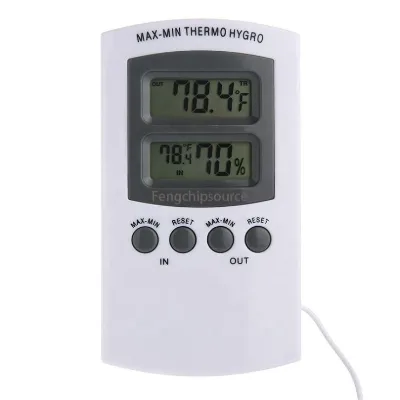
$1.6838 - $3.3765
MOQ: 10 Minimum
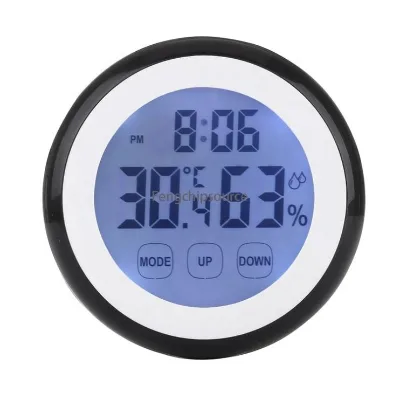
$1.3482 - $2.6964
MOQ: 10 Minimum
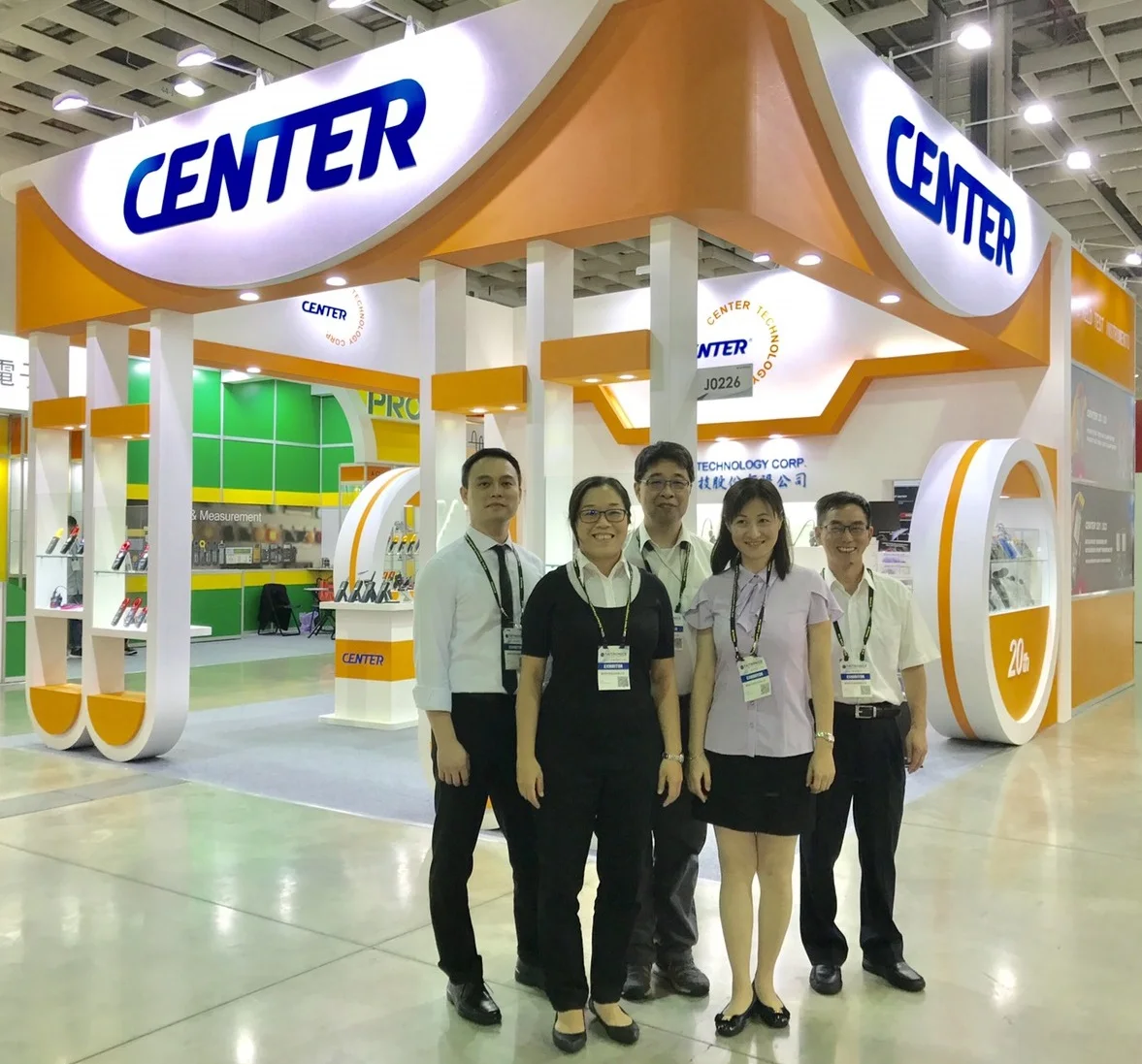
- Manufacturer
- Taiwan, China
- Lead time30 days
- Avg. response≤ 5h
Main productsClamp Meter,Refrigerant Leakage Dectector,Gas Leak Detector,Insulation Tester,RTD Thermometer
Main marketsWestern Europe(32.00%), Eastern Asia(28.00%), North America(27.00%), Eastern Europe(2.00%), Southern Europe(2.00%), South America(1.00%), Domestic Market(1.00%), South Asia(1.00%), Northern Europe(1.00%), Central America(1.00%), Africa(1.00%), Mid East(1.00%), Oceania(1.00%), Southeast Asia(1.00%)

Xiuyan Precision Instrument Factory
- Manufacturer
- China Liaoning
- Lead time0 days
- Avg. response≤ 15h
Main productsFlow Meter, Level Meter, Electromagnetic Flowmeter, Ultrasonic Flowmeter, Ultrasonic Level Meter, Vortex Flowmeter, Turbine Flowmeter, Target Flowmeter, Krohne Flow Meter, Flowmeter
Shenzhen Lianxinyuan E-Commerce Co., Ltd.
- Manufacturer, Trading Company, Distributor/Wholesaler, Other
- Guangdong, China
- Lead time3 days
- Avg. response≤ 1h
Main productsTraffic tools,charger,Electronic products,integrated circuit,Solar products
Main marketsNorth America(30.00%), Northern Europe(15.00%), South America(15.00%), South Asia(10.00%), Southern Europe(10.00%), Eastern Europe(10.00%), Western Europe(10.00%)

Shanghai Qualitywell Industrial Co., Ltd.
- Verified by SGS
- Combined
- China Shanghai
- Lead time30 days
- Avg. response≤ 7h
Main productsBimetal Thermometer, Pressure Gauge, Temperature and Pressure Gauge, Thermowell, HVAC Gauge, Hygrometer, Remote Reading Thermometer, Surface Thermometer, Digital Thermometer, Glass Thermometer
Main marketsSoutheast Asia/ Mideast,Domestic,Europe,North America

Temperature Humidity Meter with Application Workshop, Warehouse, Storage
$5.74 - $6.15
MOQ: 100 Pieces

Temperature Humidity Meter with Installation Easily Installed and Maintained
$5.74 - $6.15
MOQ: 100 Pieces

TZONE DIGITAL TECHNOLOGY CO., LTD.
- Combined
- China Guangdong
- Lead time23 days
- Avg. response≤ 4h
Main productsGPS Tracker, GPS, Tracking Software
Main marketsSouth America,Africa,Southeast Asia/ Mideast,East Asia(Japan/ South Korea),Europe,Australia,North America

Thermometer Temperature Humidity Meters Sensor for Air-Conditioning and Monitoring System
$29.00 - $33.00
MOQ: 5 Pieces

$78.00 - $83.00
MOQ: 1 Pieces
Shenzhen Graigar Technology Co., Ltd.
- Manufacturer, Trading Company
- Guangdong, China
- Lead time3 days
- Avg. response≤ 2h
Main productsUltrasonic Flaw Detector,Ultrasonic Flow Meter,Thickness Gauge,Underground Metal Detector,Leeb Hardness Tester
Main marketsNorth America(20.00%), Western Europe(15.00%), South America(10.00%), Mid East(10.00%), Oceania(10.00%), Africa(10.00%), Southeast Asia(10.00%), Eastern Europe(10.00%), Domestic Market(5.00%)
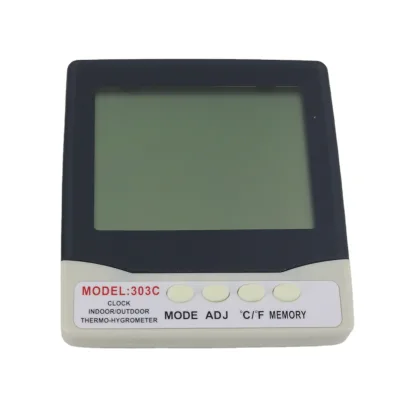
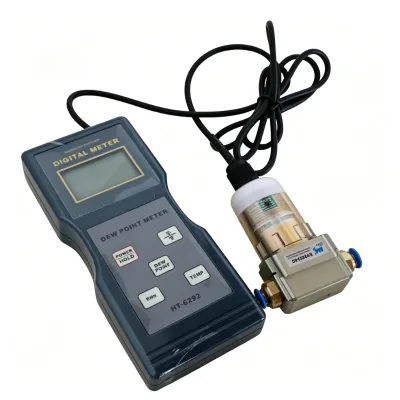
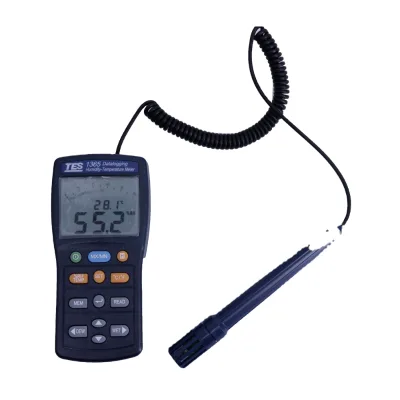
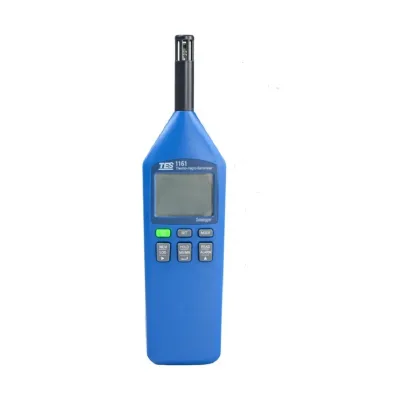
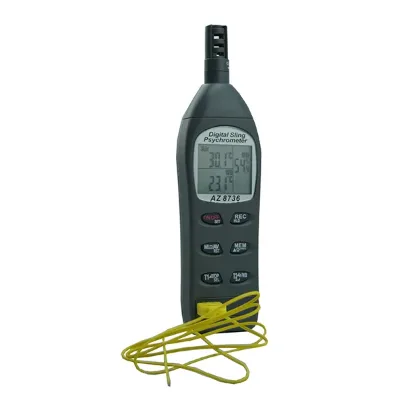
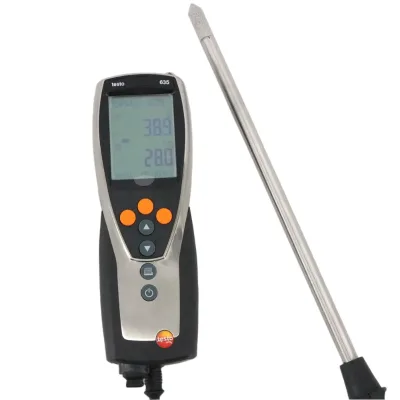
Testo 635-1 Temperature and Humidity Measuring Instrument with Probe 0636 9735
$1000.00 - $1300.00
MOQ: 1 Minimum
- Trading Company
- Hong Kong S.A.R.
- Lead time5 days
- Avg. response≤ 5h
Main productsAir Quality Monitor,Thermometer,Water Quality Meter,Gem Tester,Measuring Instruments
Main marketsSouth Asia(10.00%), Northern Europe(10.00%), Central America(10.00%), Western Europe(10.00%), Eastern Asia(10.00%), Mid East(10.00%), Southeast Asia(10.00%), Eastern Europe(10.00%), South America(10.00%), North America(10.00%)
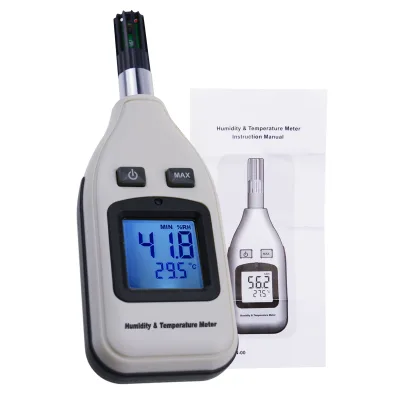
$10.3257 - $12.4229
MOQ: 1 sets
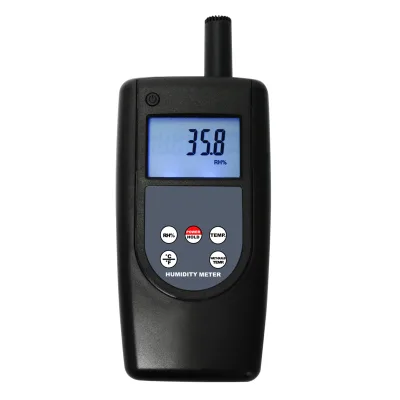

Qingdao Tlead International Co., Ltd.
- Trading Company
- China Shandong
- Lead time23 days
- Avg. response≤ 25h
Main productspH Meters, Counter Meters, Arbor Press, Tools, Ddvp
Main marketsSouth America,Africa,Southeast Asia/ Mideast,East Asia(Japan/ South Korea),Europe,Australia,North America
Guangzhou Qingmai Electronics Co., Ltd.
- Manufacturer, Trading Company
- Guangdong, China
- Lead time0 days
- Avg. response≤ 5h
Main productsMetal scanner/Temperature and humidity meter/Temperature and humidity indicator/Carbon dioxide detector/Formaldehyde temperature and humidity meter/Air quality test form/Industrial temperature and humidity recorder/Temperature and humidity transmitter,air quality meter,Temperature and humidity meter,Temperature and humidity sensors,thermometer
Main marketsDomestic Market(49.00%), Central America(10.00%), Eastern Asia(10.00%), Southeast Asia(8.00%), South Asia(5.00%), Africa(5.00%), Northern Europe(3.00%), North America(2.00%), Mid East(2.00%), South America(2.00%), Oceania(1.00%), Eastern Europe(1.00%), Western Europe(1.00%), Southern Europe(1.00%)
$28.3362 - $30.7989
MOQ: 5 pieces
Shenzhen CXS Electronic Co., Ltd
- Manufacturer, Trading Company, Distributor/Wholesaler
- Guangdong, China
- Lead time0 days
- Avg. response≤ 6h
Main productsIC,Capacitor,Resistor,module,LED
Main marketsSouth America(20.00%), North America(20.00%), Northern Europe(10.00%), Western Europe(10.00%), Mid East(10.00%), Southern Europe(10.00%), Southeast Asia(10.00%), Domestic Market(5.00%), Africa(5.00%)
Xiongan Jinsheng Trading Co., Ltd.
- Verified by TüVRheinland
- Trading Company
- Lead time15 days
- Avg. response≤ 2h
Main productsMultimeter, Metal Detector, Industrial Thermal Imager, Spot Welder, Resistance Tester
Main marketsMid East(30%), Southeast Asia(20%), Africa(20%)
$34.9573 - $37.0141
MOQ: 1 bags

Zhejiang Top Cloud-Agri Technology Co., Ltd.
- Combined
- China Zhejiang
- Lead time15 days
- Avg. response≤ 8h
Main productsSoil Nutrient Analyzer, Seed Tester Meter, Chlorophyll Meter, Leaf Area Meter, Fat Analyzer, Fruit Hardness Tester, Incubator, Grain Testing Meter Tester, Plant Physical Tester, Flour and Oil Testing Instrument
Main marketsAfrica,Southeast Asia/ Mideast,Europe
Shanghai Total Industrial Co., Ltd.
- Verified by SGS
- Manufacturer/Factory
- China Shanghai
- Lead time0 days
- Avg. response≤ 24h
Main productsFeeder Clamp, Weather Shield Enclosure, Rubber Grommet, Hoisting Grip, Cable Entry, Flexible Jumper Cable, Cablen Ties, Terminal Lugs, Conduit and Fittings, Hole Saw

Negotiable


Negotiable








Comprehensive Sourcing Guide
Laboratory Temperature Humidity Meter Supplier Concentration and Factory Types
When you search for a Laboratory Temperature Humidity Meter, the supplier results you see will typically include several distinct company types, and understanding the mix is the first step in narrowing your shortlist. Some listings are manufacturers or factories that build measuring instruments under their own brands and offer OEM services; others are combined enterprises that both produce and trade; and still others are trading companies that source from multiple factories. Each type changes what you can expect from customization, pricing floors, and accountability when a batch fails specification.
Location signals in the results can help you sense where supply is concentrated. For example, some verified instrument makers in this category are based in Guangdong, while others operate from Shaanxi, and product-level records may list origins such as Shenzhen. Electronic measurement instruments cluster heavily in southern China's electronics manufacturing belt, so when a result shows a Guangdong or Shenzhen origin, it is reasonable to treat that as a genuine cluster indicator for this product family. Where a result does not display a location at all, do not guess: use the company's product origin fields, main product lines, and verification badges to infer whether it is a maker of instruments or a generalist reseller. A supplier whose main products are coating thickness gauges, data loggers, and air quality monitors is far more likely to be a legitimate source for this category than one listing unrelated goods.
How to Verify Laboratory Temperature Humidity Meter Suppliers
Verification begins with the credentials a platform displays and ends with evidence you request directly. In current results, some suppliers carry third-party verification badges such as SGS or TÜV Rheinland, and some show an ISO 9001 system certification. Others display no system certification at all, which is not automatically disqualifying but means you must compensate with deeper due diligence. Treat verification badges as a filter, not a guarantee: they confirm the company exists and was audited at some point, not that a specific meter model meets your accuracy requirements.
Go beyond badges by requesting documents tied to the exact model you intend to buy. Product records in this category sometimes list certifications such as CE and RoHS at the model level, and some suppliers state that customization is available, which signals a real production operation rather than a pure reseller. Ask for the test report for the specific hygrometer or monitor model, confirm the stated product origin, and check whether the model number on the certificate matches the quotation. Response behavior is itself a verification signal: suppliers in these results show response times ranging from roughly three hours to nearly seventeen, and a slow or evasive reply to a technical question predicts slow support after payment. Finally, verify declared capacity claims, such as OEM or own-brand status, by asking for evidence of the brand name and asking which parts of production happen in-house versus outsourced.
What to Compare Across Laboratory Temperature Humidity Meter Suppliers
Build a comparison table using the attributes that actually appear in supplier results, since not every supplier displays every field. Useful dimensions include lead time, minimum order quantity, response speed, company type, location, verification status, system certification, and main product lines. In the current results, lead times range from about twenty-three days to thirty days, with at least one supplier showing no lead time at all, which means you must ask directly. Minimum order quantities vary dramatically: one supplier's digital thermometer hygrometer lists an MOQ of one unit at a unit price in the low tens of dollars, while another supplier's similar household model requires five hundred units at roughly two to three dollars per piece.
These differences reveal strategy, not just size. A high-MOQ, low-price listing usually indicates a factory optimizing for volume production runs, while a single-unit MOQ at a higher price suits buyers testing the market or sourcing samples. Compare product-level evidence as well as company-level data: sampling time, measuring ranges, accuracy classes, power supply, dimensions, and packing details all appear in product records and should be tabulated side by side. Also weigh specialization. A supplier whose main products are thermometers, hygrometers, and air quality monitors will likely resolve technical questions faster than a broad trading company. Finally, compare what is absent: if a supplier shows no response-time figure, no lead time, or no certification, request those values in writing before ranking it.
Common Laboratory Temperature Humidity Meter Sourcing Risks
The most frequent risk in this category is a mismatch between the meter's claimed accuracy and what the certificate actually covers. Product attributes may state a humidity range of ten to ninety-nine percent RH or an accuracy of one degree Celsius, but these figures describe the specification sheet, not proof of calibration for your unit. Laboratories that rely on these instruments for compliance work need calibrated or verifiable devices, so a supplier who cannot produce a calibration certificate or point to an accredited test is a risk even if every badge looks legitimate.
A second cluster of risks involves identity and capability. Trading companies can be excellent partners, but if you assume you are buying from a factory and later discover the goods are resold, your ability to enforce customization changes or quality corrective actions weakens. Watch for generic or recycled product photos, model numbers that change between listings, and origin fields that conflict with the company's registered location. Pricing anomalies are another warning sign: if one supplier quotes a humidity meter at over one hundred dollars while comparable household units sit near two or three dollars, clarify what drives the difference, such as industrial-grade sensors, sampling speed, or packaging, rather than assuming either figure is wrong. Finally, battery life claims, such as one year at twenty-five degrees Celsius, and micro-USB interfaces should be confirmed against your usage environment, because assumptions here surface as field failures after deployment.
Laboratory Temperature Humidity Meter Regional Sourcing and Logistics
Regional context matters because instrument supply in this category is not evenly distributed. Results currently show verified suppliers operating from Guangdong and from Shaanxi, and some product records specify Shenzhen as the production origin. Guangdong and the Shenzhen area form one of the world's densest electronics supply chains, which for this category means easier access to sensor components, LCD modules, and contract assembly, often translating into shorter iteration cycles when you request customization. Suppliers based elsewhere, including inland provinces, may still be fully capable, so treat region as one factor among several rather than a simple quality proxy.
Logistics planning should start from the lead times displayed in the results, which currently span roughly twenty-three to thirty days for the suppliers that disclose them. Because humidity and temperature instruments contain sensors and electronics, ask how the units are packed, since carton packing is standard for several models in this category but may not protect against humidity exposure during ocean transit. Confirm whether the supplier ships from the production origin or from a consolidated warehouse, because this affects both transit time and who is responsible if goods are damaged. For buyers outside China, also clarify export documentation responsibilities early, since instruments sometimes require accurate product descriptions for customs. When comparing two otherwise similar suppliers, a shorter disclosed lead time and a clear packing specification are worth more than a marginal price difference, especially for repeat orders that must arrive on a laboratory deployment schedule.
Laboratory Temperature Humidity Meter Commercial Terms and Order Planning
Commercial terms should be negotiated against the data each supplier actually discloses. Use the observed ranges as anchors: minimum order quantities in these results span from a single unit on one model to five hundred units on another, and listed unit prices range from under three dollars for basic household thermometer hygrometers to more than one hundred dollars for an industrial digital humidity meter. Ask each shortlisted supplier to confirm current MOQ, price tiers at two or three quantity breaks, and whether customization affects the MOQ, since some results explicitly state that customization is available while others do not mention it.
Order planning should account for payment protection, production lead time, and reordering economics. If a platform offers escrow or trade assurance, confirm the coverage applies to your specific order rather than assuming it. Where no protection program is visible, use staged payments tied to inspection milestones. Sequence your first order as samples or a small trial even when the MOQ allows more, then scale after you have verified accuracy consistency across units, since sensor drift between production batches is a known category concern. Confirm in writing whether quoted prices include packaging in the stated format, such as a white box or customized carton, and who bears freight. Finally, calendar the disclosed lead time, add buffer for pre-shipment inspection, and ask about spare-part or recalibration support so that ongoing laboratory use does not stall between purchase orders.
FAQs
What is the price range for laboratory temperature humidity meters?
Prices for these meters typically range from $1.60 to $110.00 per unit depending on the model and specifications. Basic digital hygrometers start at the lower end, while specialized monitors with certifications like RoHS and CE command higher prices. Buyers should check specific product listings for exact quotes based on quantity and customization needs.
What is the minimum order quantity for these devices?
Minimum order quantities vary significantly by supplier and product type. Some manufacturers accept orders as low as one unit for testing, while others require bulk purchases of 100 or 500 units. Buyers seeking small batches should look for suppliers with an MOQ of one, whereas large-scale procurement may benefit from suppliers requiring 500 units for better pricing.
How long does delivery take for these instruments?
Lead times for manufacturing and shipping these meters generally range from 23 to 30 days. Some suppliers list zero lead time, which may indicate stock availability or specific terms. Buyers should confirm the exact production schedule with the supplier before placing orders to ensure timely delivery for laboratory setup or project requirements.
Are these meters certified for industrial or laboratory use?
Many available models carry RoHS and CE certifications, ensuring compliance with safety and environmental standards. Some products are explicitly designed for civil and industrial applications, including laboratory environments. Buyers should verify specific certification documents and accuracy ratings, such as 1°C precision, to ensure the meter meets their specific laboratory quality control requirements.
What is the response time for supplier inquiries?
Supplier response times vary, with some providers replying within approximately 3.25 hours and others taking up to 16.72 hours. Faster response times often indicate more active sales teams or automated support systems. Buyers seeking quick clarification on technical specifications or pricing should prioritize suppliers with shorter reported response times for efficient communication.
Can these meters be customized for specific laboratory needs?
Customization is available for many models, allowing buyers to specify features like display type, accuracy, or packaging. Suppliers offer OEM and ODM services, enabling brand integration and specific technical adjustments. Buyers should discuss their exact requirements, such as measuring range or interface types, directly with the manufacturer to ensure the final product fits their laboratory workflow.