Construction Excavator Quick Hitch Suppliers and Manufacturers
Source Construction Excavator Quick Hitch from 28 verified suppliers in China. Compare response times, lead times, MOQs, and certifications like ISO9001. Contact suppliers directly to request quotes and verify specifications; review the available evidence before requesting comparable quotations from suitable candidates.
Updated
Suppliers List

Yantai Zhuoxin Machinery Technology Co., Ltd.
- Verified by BV
- Combined
- China Shandong
- Lead time23 days
- Avg. response≤ 1h
Main productsHydraulic Breaker, Quick Hitch Coupler, Hydraulic Pile Hammer, Hydraulic Shear, Hydraulic Pulverizer, Hydraulic Compactor, Hydraulic Breaker Hammer, Excavator Hydraulic Bucket, Excavator Earth Augers, Hydraulic Breaker Parts
Main marketsEurope

Construction Machinery Quick Coupler Hitch Excavator Hydraulic Quick Hitch
$340.00 - $500.00
MOQ: 1 Pieces


Construction Machinery Hydraulic Quick Hitch Excavator Tilt Rotator Quick Hitch for 1-40t Excavator
$240.00 - $500.00
MOQ: 1 Pieces

Hot Sell Excavator Hydraulic Quick Coupler Excavator Tilt Hitch Quick Hitch
$460.00 - $500.00
MOQ: 1 Pieces

Excavator Attachment Quick Coupler Hydraulic Quick Hitch for 30 Ton Excavators
$240.00 - $500.00
MOQ: 1 Pieces


Yantai Shengxin Construction Machinery Co., Ltd
- Verified by SGS
- Combined
- China Shandong
- Lead time23 days
- Avg. response≤ 1h
Main productsHydraulic Breaker, Hydraulic Plate Compactor, Swing Quick Connector, Hammer Back Clamp, Field Mower, Hydraulic Power Shear, Ripper
Main marketsEast Asia(Japan/ South Korea)


Dust-Tight Sealed Excavator Quick Hitch for Desert Construction Projects
$179.00 - $1571.00
MOQ: 1 Pieces


Yantai Juxiang Construction Machinery Co., Ltd
- Verified by BV
- Combined
- China Shandong
- Lead time30 days
- Avg. response≤ 2h
Main productsVibro Hammer, Hydraulic Breaker, Excavator Long Reach Boom, Primary Crusher, Hydraulic Metal Shear, Secondary Crusher, Screening Bucket, Quick Hitch Coupler, Plate Compactor, Hydraulic Attachments
Main marketsSouth America,Africa,Southeast Asia/ Mideast,East Asia(Japan/ South Korea),Domestic,Europe,Australia,North America
Huamaoji Construction Machinery Trading (beijing) Co., Ltd.
- Trading Company
- Beijing, China
- Lead time10 days
- Avg. response≤ 8h
Main productsshovel,Machete,Undercarriage Part,Rubber track,Diesel Engine Assy
Main marketsAfrica(30.00%), Eastern Asia(20.00%), Domestic Market(10.00%), Southeast Asia(7.00%), Oceania(6.00%), South America(5.00%), Mid East(5.00%), South Asia(5.00%), Eastern Europe(2.00%), North America(2.00%), Southern Europe(2.00%), Northern Europe(2.00%), Central America(2.00%), Western Europe(2.00%)

Yantai Shijin Machinery Co., Ltd.
- Verified by SGS
- Combined
- China Shandong
- Lead time15 days
- Avg. response≤ 2h
Main productsHydraulic Breaker, Earth Drill, Grapple, Ripper, Tree Shear, Quick Coupler, Hydraulic Pliers, Hydraulic Thumb, Lawn Mower
Main marketsSouth America,Africa,Southeast Asia/ Mideast,Europe,Australia,North America


Excavator Attachment Excavator Parts Hydraulic Quick Coupler Quick Hitch
$150.00 - $200.00
MOQ: 1 Pieces

Excavator Parts Quick Coupler High Efficiency Excavator Hydraulic Quick Hitch
$150.00 - $200.00
MOQ: 1 Pieces

Excavator Parts Excavator Hydraulic Quick Hitch Multi-Purpose Powertilt Quick Hitch
$150.00 - $200.00
MOQ: 1 Pieces


Jinan Changhao Machinery Equipment Co., Ltd.
- Verified by BV
- Combined
- China Shandong
- Lead time38 days
- Avg. response≤ 6h
Main productsHydraulic Rock Breaker, Hydraulic Breaker Spare Parts, Hydraulic Breaker Piping Kits, Hydraulic Breaker, Excavator Attachments, Jack Hammer
Main marketsSouth America,Africa,Southeast Asia/ Mideast,Europe,Australia,North America

Construction Machinery Attachments Excavator Quick Hitch with Excavator Bucket
$100.00 - $1000.00
MOQ: 1 Piece

Hydraulic Quick Hitch Tilt Rotating Quick Hitch Excavator Tilt Rotator Quick Hitch
$1800.00 - $2500.00
MOQ: 1 Pieces

DONGGUAN BOZHIDA ENGINEERING MACHINERY MANUFACTURE CO., LTD.
- Manufacturer, Trading Company
- Guangdong, China
- Lead time30 days
- Avg. response≤ 20h
Main productsExcavator Boom,Excavator Arm,Long Reach Boom,Long Reach Arm,Excavator Bucket
Main marketsSouthern Europe(15.00%), Domestic Market(15.00%), South America(15.00%), South Asia(15.00%), North America(15.00%), Southeast Asia(3.00%), Eastern Europe(3.00%), Northern Europe(3.00%), Central America(3.00%), Western Europe(3.00%), Eastern Asia(3.00%), Mid East(3.00%), Africa(2.00%), Oceania(2.00%)

Shandongpaili En Machinery Manufacturing Co., Ltd.
- Verified by BV
- Combined
- China Shandong
- Lead time15 days
- Avg. response≤ 4h
Main productsDrilling Rig, Rock Splitter, Mini Water Well Drilling Rig, Water Well Drilling Machine, Snow Pusher, Snow Broom, Salt Spreader, Snow Blower, Road Ice Breaker, Olive Harvester
Main marketsSouth America,Africa,Others(foreignTradeCapacity.exportBusinessCapacityMarketOther),Southeast Asia/ Mideast,Domestic,Europe,Australia,North America

Multi-Function Construction Excavator Rotating Quick Hitch for Rapid Switching & Flexible Operation
$1200.00 - $3000.00
MOQ: 1 piece

High Qualityexcavator Rotating Quick Hitch Bearing Hydraulic Quick Hitch Excavator
$500.00 - $1000.00
MOQ: 1 Pieces
Guangzhou Honour Time Machinery Limited
- Verified by SGS Group
- Trading Company
- Lead time3 days
- Avg. response≤ 2h
Main productsDiesel Engine Liner Kit, Machinery Engine Parts, Diesel Engine Assy, Diesel Engine Repair Kit, Excavator Parts
Main marketsSouth America(30%), Southeast Asia(30%), Africa(20%)

Shandong Lingdong Intelligent Equipment Co., Ltd
- Verified by TUVRHEINLAND
- Combined
- China Shandong
- Lead time30 days
- Avg. response≤ 3h
Main productsHydraulic Breaker
Main marketsEast Asia(Japan/ South Korea)

Xuzhou Shenfu Construction Machinery and Equipment Co., Ltd.
- Verified by BV
- Combined
- China Jiangsu
- Lead time30 days
- Avg. response≤ 16h
Main productsRipper, Excavator Part, Excavator Bucket
Main marketsSouth America,Africa,Southeast Asia/ Mideast,Domestic,Europe,Australia,North America


Excavator Quick Coupler Excavator Tilting Quick Hitch Hydraulic Tilt Quick Hitch
$2800.00 - $4000.00
MOQ: 1 Pieces
Guangzhou CSW Machinery Co., Limited
- Verified by SGS Group
- Trading Company
- Lead time25 days
- Avg. response≤ 3h
Main productsHeavy Equipments Repair Tools, Excavator Attachments, Excavator Hydraulic Parts, Excavator Undercarriage Parts, Excavator Parts
Main marketsNorth America(15%), Oceania(15%), South America(10%)
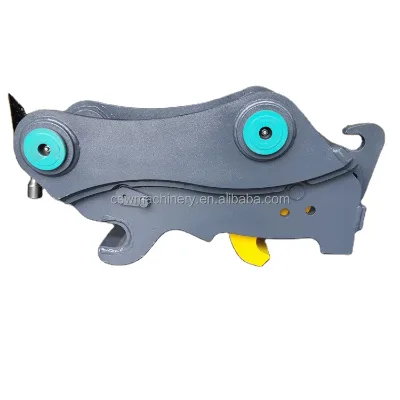
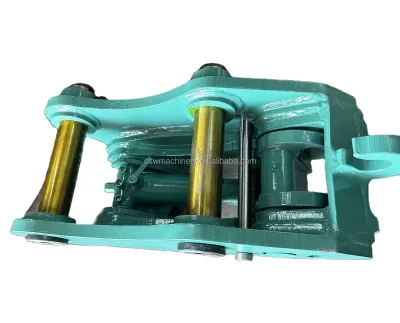
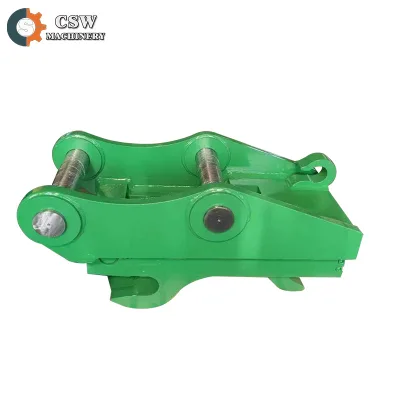
Construction Hydraulic Excavator Backhoe Attachment Quick Coupler
$266.0388 - $695.7925
MOQ: 1 Minimum
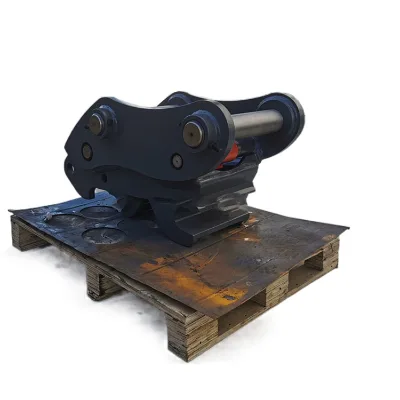
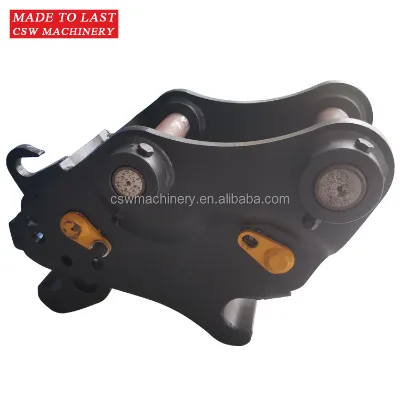
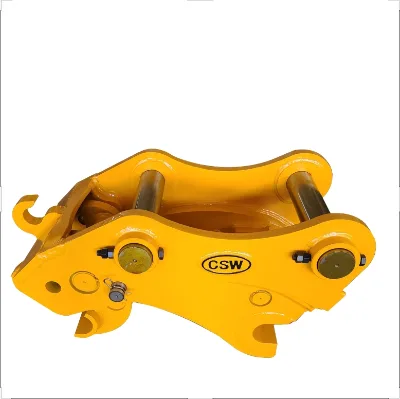
Yantai Donghong Construction Machinery Co., Ltd.
- Verified by TüVRheinland
- Manufacturer, Trading Company
- Lead time30 days
- Avg. response≤ 4h
Main productsQuick Coupler, Hydraulic Grapple, Hydraulic Hammer, Tilt Rotator, Concrete Crusher
Main marketsSoutheast Asia(20%), Eastern Asia(20%), North America(10%)
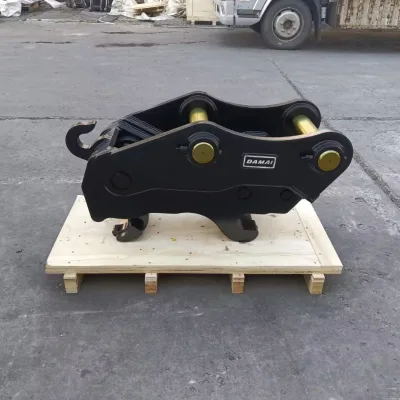
$485.88 - $555.88
MOQ: 1 pieces
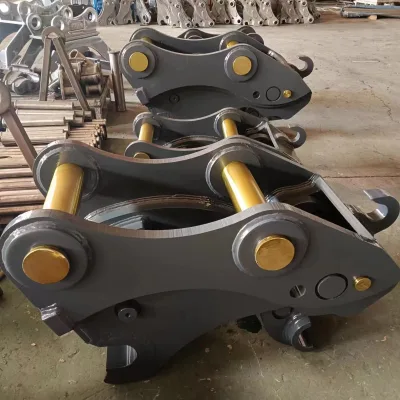
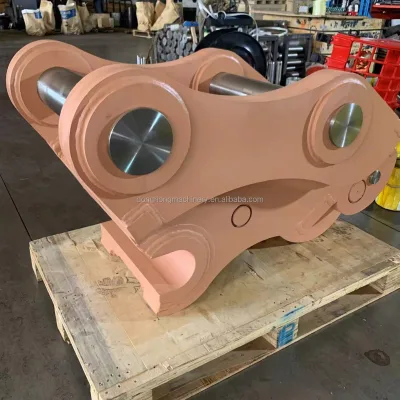
Hyundai Quick Hitch Coupler Enhancing Large Excavator Efficiency on Mining Sites
$4200.00 - $4225.00
MOQ: 1 sets
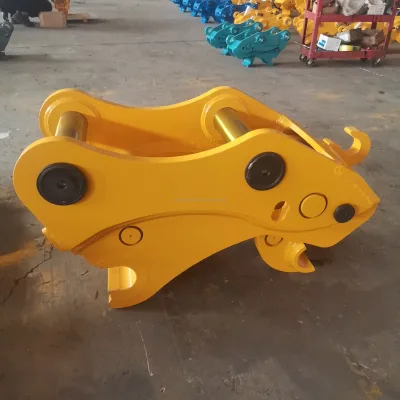
25mm Pin Hydraulic Quick Hitch Construction Machinery Attachments
$240.00 - $250.00
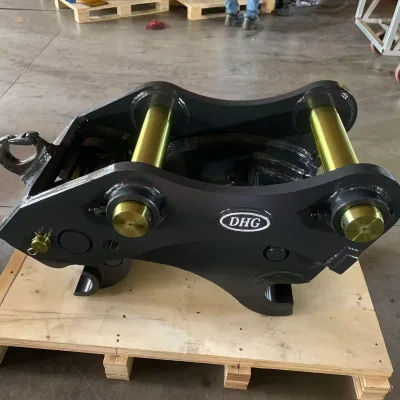
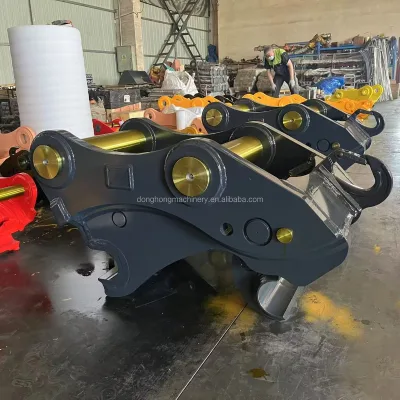
Forged Steel Quick Hitch 60Ton Excavator Attachment Made for Heavy Impact Mining
$2810.00 - $2820.00
MOQ: 1 sets
Yantai Jiwei Construction Machinery Equipment Co., LTD
- Verified by Intertek
- Manufacturer, Trading Company
- Lead time7 days
- Avg. response≤ 2h
Main productsHydraulic Breaker, Hydraulic Grapple, Excavator Pulverizer, Excavator Quick Hitch, Hydraulic Shear
Main marketsNorth America(28%), Western Europe(16%), South America(13%)
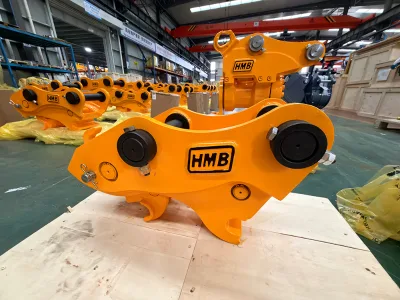
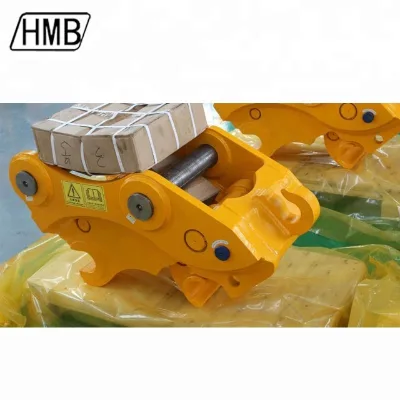
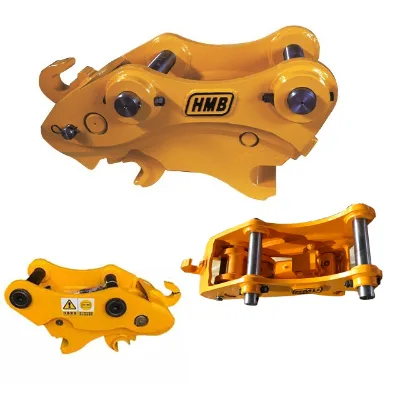
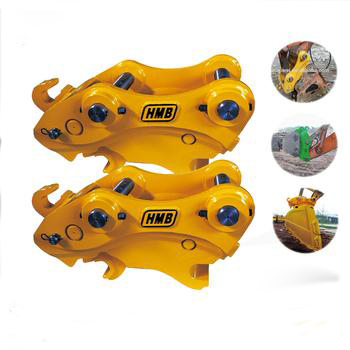
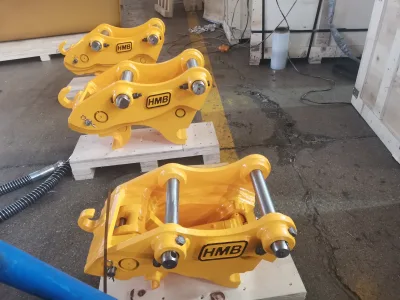
High Quality Excavator Mounted Hydraulic Quick Hitch for Yuchai/Takeuchi Use
$289.0706 - $412.9567
MOQ: 1 Minimum
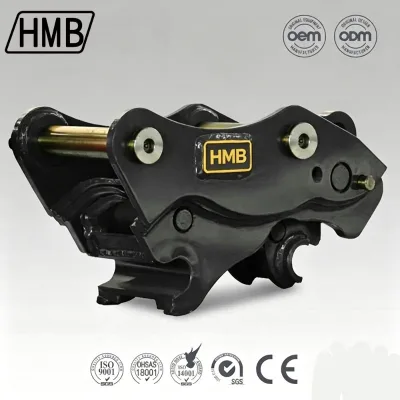
Jinan Changhao Machinery Equipment Co., Ltd.
- Verified by Intertek
- Manufacturer, Trading Company
- Lead time3 days
- Avg. response≤ 2h
Main productsHydraulic Breaker Piping Kits, Hydraulic Breaker , Hydraulic Breaker Parts, Spare Parts Of Hydraulic Breaker Piping Kits, Excavator Attachments
Main marketsDomestic Market(34%), South America(19%), Southeast Asia(17%)

Yantai Donghong Construction Machinery Co., Ltd.
- Verified by TUVRHEINLAND
- Combined
- China Shandong
- Lead time15 days
- Avg. response≤ 7h
Main productsTilt Rotator, Quick Hitch, Tilt Hitch, Rock Breaker, Pulverizer, Grapple, Ripper, Bucket, Thumb Bucket, Hydraulic Thumb
Main marketsEast Asia(Japan/ South Korea),Europe,Australia,North America

Heavy Duty Quick Hitch for 20t Excavator with CE in Mining and Construction Applications
$910.00 - $930.00
MOQ: 1 sets


Yantai Chengtai Construction Machinery Co., Ltd.
- Manufacturer, Trading Company
- Shandong, China
- Lead time10 days
- Avg. response≤ 4h
Main productsHydraulic Breaker hammer,Post Driver,Sheet Pile Hammer,Quick hitch,Hydraulic Plate Compactor
Main marketsDomestic Market(60.00%), Mid East(10.00%), Oceania(8.00%), Africa(5.00%), Eastern Asia(5.00%), Central America(3.00%), Eastern Europe(3.00%), North America(1.00%), South Asia(1.00%), Southern Europe(1.00%), Northern Europe(1.00%), South America(1.00%), Southeast Asia(1.00%)

Wuhan Visbull Machinery Co., Ltd.
- Verified by SGS
- Trading Company
- China Hubei
- Lead time15 days
- Avg. response≤ 11h
Main marketsSouth America,North America

Changchun Zhongcheng Hydraulic Machinery Equipment Co., Ltd.
- Verified by SGS
- Combined
- China Jilin
- Lead time23 days
- Avg. response≤ 1h
Main productsAuger Drill
Main marketsDomestic


Versatile Hydraulic Quick Hitch for Excavators, OEM Customization Offered
$390.00 - $950.00
MOQ: 1 Sets
Guangzhou Huitong Heavy Machinery Co., Ltd.
- Verified by Intertek
- Manufacturer, Trading Company
- Lead time15 days
- Avg. response≤ 5h
Main productsExcavator Long Boom, Excavator Bucket, Excavator Ripper Boom, Excavator Flail Mower, Excavator Quick Hitch
Main marketsNorth America(20%), Southeast Asia(15%), Oceania(15%)

Yantai Hope Precision Machinery Co.,Ltd.
- Verified by SGS
- Combined
- China Shandong
- Lead time23 days
- Avg. response≤ 2h
Main marketsSouth America,Others(foreignTradeCapacity.exportBusinessCapacityMarketOther),Southeast Asia/ Mideast,East Asia(Japan/ South Korea)
Changzhou Raymond International Trading Co., Ltd.
- Verified by TüVRheinland
- Manufacturer, Trading Company
- Lead time7 days
- Avg. response≤ 1h
Main productsEarth Auger, Quick Hitch, Demolition Grapple, Hydraulic Shear, Log Grapple
Main marketsNorth America(60%), Southeast Asia(15%), South America(6%)
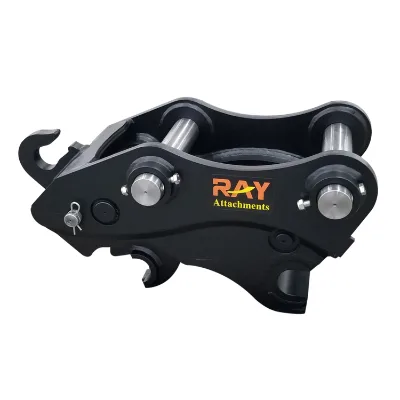
Kobelco Excavator Quick Attachments/Double Safety Model Quick Hitch for Sale
$885.4229 - $3449.0282
MOQ: 1 Minimum
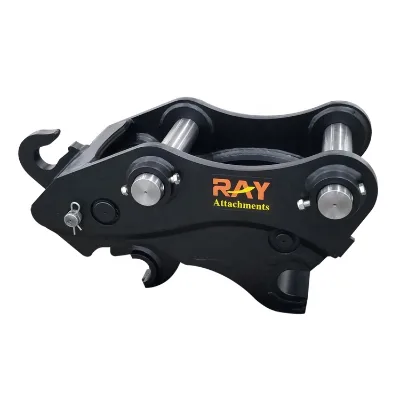
Hydraulic Quick Hitch Excavator Quick Coupler for Connecting Bucket
$480.00 - $520.00
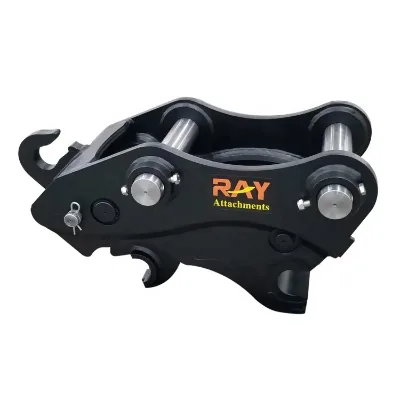
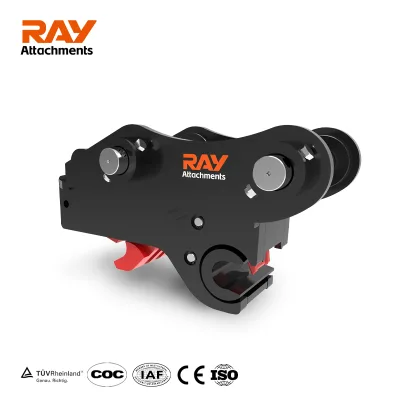
CE Certified High-Tensile Steel Quick Hitch Triple Safety Quick Attach for Distributor Programs
$300.00 - $555.00
MOQ: 1 Minimum
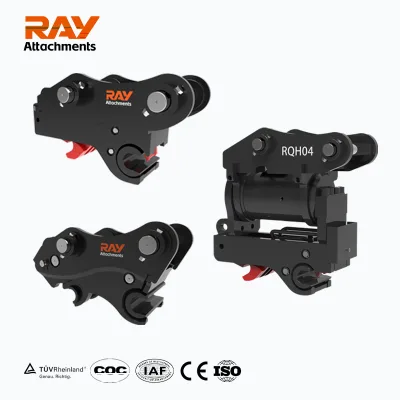
$307.8075 - $569.4452
MOQ: 1 Minimum
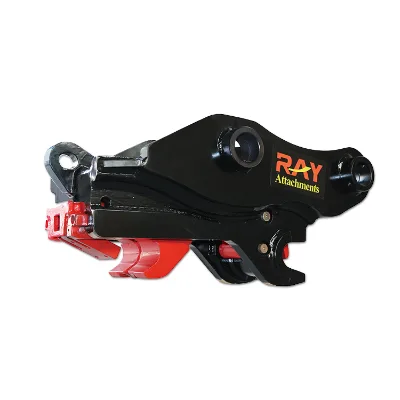

Yantai Rongzhen Sheng Foreign Trade Co., Ltd.
- Verified by SGS
- Combined
- China Shandong
- Lead time23 days
- Avg. response≤ 3h
Main marketsAfrica,Europe,North America


Hydraulic Quick Hitch for Excavators-No Cracks, No Deformation, and No Accidental Release
$295.00 - $305.00
MOQ: 1 Sets

Efficient Durable Long Service Life Excavator Quick Hitch with Hydraulic Tilt Rotator
$7340.00 - $7450.00
MOQ: 1 Sets

Yantai Dongheng Machinery Co., Ltd
- Verified by TUVRHEINLAND
- Manufacturer/Factory
- China Shandong
- Lead time15 days
- Avg. response≤ 3h
Main productsAuger Drive, Hydraulic Breaker, Cone Log Splitter, Mixer Bucket, Hydraulic Compactor, Hedge Trimmer, Saw Head, Tree Shear, Chain Trencher, Quick Hitch Coupler
Main marketsSouth America,Eastern Europe,Mid East,North America,Southeast Asia,Eastern Asia,Oceania,Western Europe,Africa

Bucket Change Hydraulic Quick Hitch Excavator Coupler Hydraulic Quick Hitch
$299.00 - $799.00
MOQ: 1 Pieces

Quick Hitch Excavator Coupler Hydraulic Quick Hitch for Connecting Bucket
$299.00 - $799.00
MOQ: 1 Pieces


Hunan Hongda Global Machinery Trading Co., Ltd
- Verified by TUVRHEINLAND
- Combined
- China Hunan
- Lead time60 days
- Avg. response≤ 5h
Main productsBucket, Mechanical Quick Change, Hydraulic Quick Change
Main marketsSouth America,Southeast Asia/ Mideast,Europe


Excavator Attachments Hydraulic Quick Hitch for 2-50 Ton Excavators S60-340
$90.00 - $132.00
MOQ: 1 Pieces

Linyi County Luxiang Construction Machinery Trading Department
- Trading Company
- China Shandong
- Lead time0 days
- Avg. response≤ 4h
Main productsExcavator, Motor Grader, Wheel Loader, Bulldozer, Truck Crane, Backhoe Loader, Tractor, Three Wheeler, Forklift Truck, Road Roller

Yantai Chengtai Construction Machinery Co., Ltd.
- Verified by TUVRHEINLAND
- Trading Company,Manufacturer/Factory
- China Shandong
- Lead time23 days
- Avg. response≤ 6h
Main productsHydraulic Breaker Factory, Hydraulic Rock Breaker Factory, Hydraulic Hammer Factory, Hydraulic Demolition Shears, Excavator Concrete Crusher, Hydraulic Compactor, Hydraulic Breaker Hammer Factory, Earth Auger, China Breaker Hammer Factory, Tilting Quick Hitch
Main marketsSouth America,Eastern Europe,Mid East,North America,Southeast Asia,Eastern Asia,Oceania,Western Europe,Africa

Cthb 360 Degree Rotating Excavator Quick Hitch for 0.5-60 Ton Excavator
$1800.00 - $2000.00
MOQ: 5 Pieces


Weihai GJ Engineering Machinery Co., Ltd.
- Verified by SGS
- Combined
- China Shandong
- Lead time23 days
- Avg. response≤ 1h
Main products360°Rotary Quick Hitch, Tilt Rotator, Quick Hitch, Quick Coupler, Tilt Quick Hitch, Hydraulic Breaker, Hydraulic Hammer
Main marketsEast Asia(Japan/ South Korea),Europe,Australia,North America

Heavy-Duty Quick Hitch Attachment for 2-3t Excavators - Easy Install
$1200.00 - $1300.00
MOQ: 1 Pieces








Comprehensive Sourcing Guide
Construction Excavator Quick Hitch Supplier Concentration and Factory Types
The current supplier landscape for construction excavator quick hitches reveals a concentration of manufacturing capabilities within specific industrial regions, with China Shandong identified as a key location for these operations. This geographic clustering suggests a mature supply chain ecosystem where raw materials, such as the wear plates and Q355b steel mentioned in product specifications, are readily accessible to manufacturers. Buyers evaluating this market should recognize that suppliers in this region often operate as combined entities, meaning they may function as both trading companies and factories. This dual nature can offer flexibility in order sizes but requires careful verification to ensure direct access to production lines. The presence of multiple supplier types indicates a competitive environment where differentiation is often achieved through customization capabilities rather than just price. Many suppliers list extensive main products that include hydraulic breakers, pile hammers, and various excavator attachments, suggesting that a quick hitch is part of a broader portfolio of heavy machinery components. This breadth of product range can be advantageous for buyers seeking a single source for multiple attachments, as it implies a unified quality control system and shared logistical infrastructure. However, it also means that the core competency of any given supplier must be assessed individually, as a company strong in hydraulic breakers may have different expertise levels in quick hitch engineering. The concentration in Shandong does not guarantee uniform quality across all listings, so buyers must look beyond location to assess the specific technical capabilities and production history of each potential partner. Understanding this regional dynamic helps in narrowing down the initial pool of candidates to those who are geographically positioned for efficient supply chain management while maintaining the necessary industrial depth to support complex manufacturing requirements.
How to Verify Construction Excavator Quick Hitch Suppliers
Verification is a critical step in mitigating risk when sourcing construction excavator quick hitches, as the market includes a mix of verified and unverified entities. Buyers should prioritize suppliers who hold third-party verification badges, such as BV or SGS, which provide an additional layer of confidence regarding the legitimacy and operational stability of the business. These verifications often involve on-site checks of manufacturing facilities, quality management systems, and financial standing, offering a more reliable indicator of supplier capability than self-reported data alone. In addition to verification badges, buyers should scrutinize the system certifications listed by suppliers, such as ISO9001:2015, which indicates a standardized approach to quality management. However, it is important to note that not all suppliers display system certifications, and the absence of a visible certificate does not necessarily imply non-compliance, but it does require further inquiry. Buyers should request copies of these certificates and verify their validity through the issuing bodies to ensure they are current and applicable to the specific products being ordered. Furthermore, the response time metric provided by the platform can serve as a proxy for supplier engagement and operational efficiency. A supplier with a rapid response time, such as under one hour, may indicate a more agile and customer-focused organization, whereas slower responses could signal potential communication bottlenecks during the production process. Buyers should also examine the product evidence provided, including detailed specifications like seal brands and material grades, to assess the technical transparency of the supplier. Suppliers who provide comprehensive product attributes, such as specific pin diameters and suitable excavator tonnage ranges, demonstrate a higher level of professionalism and attention to detail. This transparency is a strong indicator of a supplier’s willingness to engage in a rigorous procurement process and their confidence in their product offerings.
What to Compare Across Construction Excavator Quick Hitch Suppliers
When evaluating multiple suppliers for construction excavator quick hitches, buyers must compare a range of technical and commercial attributes to identify the best fit for their specific operational needs. One of the most critical factors is the customization availability, as quick hitches must often be tailored to specific excavator models and bucket configurations. Suppliers that offer available customization options, including color and packing, provide greater flexibility for buyers with unique requirements. Buyers should also compare the minimum order quantities (MOQ), which can vary significantly across the market. Some suppliers may accept an MOQ of just one unit, which is ideal for small-scale projects or testing purposes, while others may have higher thresholds that are better suited for bulk procurement. The weight and dimensions of the quick hitch are also important comparative metrics, as they directly impact the compatibility with the excavator’s hydraulic system and structural integrity. For instance, products with weights ranging from 120 to 150kg may be suitable for mid-sized excavators, while lighter or heavier variants may be required for different applications. Buyers should also assess the lead times offered by each supplier, as these can range from 23 to 30 days or more, depending on the complexity of the order and current production capacity. A shorter lead time can be crucial for projects with tight deadlines, but it should not come at the expense of quality. Additionally, the price range is a key differentiator, with costs varying from approximately $180 to over $1500 depending on the model, size, and features. Buyers should not solely focus on the lowest price but should consider the value proposition, including the quality of materials like wear plates and the reliability of seals. Comparing these attributes side-by-side allows buyers to create a weighted scoring system that aligns with their specific priorities, whether they are cost-driven, quality-focused, or speed-sensitive.
Common Construction Excavator Quick Hitch Sourcing Risks
Sourcing construction excavator quick hitches from international suppliers introduces several risks that buyers must proactively manage to ensure a successful procurement outcome. One significant risk is the potential mismatch between the product specifications and the actual excavator models in the buyer’s fleet. Quick hitches are highly specialized attachments, and even minor discrepancies in pin distances, cylinder strokes, or arm widths can render the product unusable. Buyers must carefully verify the technical parameters, such as the suitable excavator tonnage range and pin diameter, against their existing equipment before placing an order. Another risk is the variability in product quality, particularly regarding the durability of seals and the strength of the main materials. While some suppliers specify high-quality components like Nok seals and wear plates, others may use inferior substitutes that can lead to premature failure and costly downtime. Buyers should request detailed material certifications and test reports to validate the claims made by suppliers. Additionally, the lack of standardized certifications among some suppliers poses a risk to compliance and safety. Buyers should ensure that the quick hitches meet relevant safety standards and are constructed to withstand the high stresses of heavy construction work. Communication barriers and time zone differences can also lead to misunderstandings regarding order details and delivery schedules. Buyers should establish clear communication protocols and confirm all specifications in writing to minimize the risk of errors. Finally, logistical risks, such as damage during transit, must be addressed through proper packaging and insurance. Buyers should verify that suppliers use standard export packing or customized packaging solutions that protect the product during shipping. By identifying and addressing these risks early in the sourcing process, buyers can protect their investments and ensure the reliable performance of their excavator attachments.
Construction Excavator Quick Hitch Regional Sourcing and Logistics
The regional sourcing of construction excavator quick hitches from China Shandong offers distinct logistical advantages and challenges that buyers must consider when planning their supply chain. Proximity to major ports and industrial hubs in this region can facilitate efficient shipping and reduce transit times, which is beneficial for maintaining inventory levels and meeting project deadlines. However, buyers must also account for the complexities of international freight, including customs clearance, documentation requirements, and potential delays due to global shipping disruptions. The lead times provided by suppliers, which can range from 23 to 30 days, typically include production time but may not fully account for shipping duration. Buyers should work closely with their freight forwarders to estimate total delivery times and plan accordingly. Additionally, the weight and dimensions of the quick hitches, which can vary from compact models to heavy-duty units, will impact shipping costs and container utilization. Buyers should optimize their orders to maximize container space and minimize per-unit shipping costs. For buyers in regions with high demand for construction machinery, establishing a relationship with a supplier in a concentrated manufacturing cluster can provide access to a wider range of products and competitive pricing. However, buyers should also consider the environmental and social governance (ESG) implications of their sourcing decisions, ensuring that their suppliers adhere to ethical labor practices and environmental standards. The ability to visit the manufacturing facility, if feasible, can provide valuable insights into the supplier’s operational capabilities and quality control processes. Buyers should also evaluate the supplier’s experience with international logistics, including their familiarity with export documentation and compliance with international trade regulations. By carefully managing the logistical aspects of sourcing, buyers can ensure a smooth and cost-effective supply chain for their construction excavator quick hitches.
Construction Excavator Quick Hitch Commercial Terms and Order Planning
Effective commercial terms and order planning are essential for securing construction excavator quick hitches at competitive prices while maintaining quality and delivery reliability. Buyers should negotiate clear payment terms that align with their cash flow needs and risk tolerance, such as using escrow services to protect their funds until the goods are received and inspected. The price range for quick hitches can vary significantly, from as low as $180 to over $1500, depending on the model, customization options, and order volume. Buyers should leverage their order volume to negotiate better pricing, especially if they are placing repeat orders or purchasing multiple units. It is also important to clarify the Incoterms, such as FOB or CIF, to determine who is responsible for shipping costs and insurance. Buyers should also consider the total cost of ownership, including maintenance and replacement parts, when evaluating the price of the quick hitch. Suppliers that offer OEM or ODM services may provide additional value by allowing buyers to customize the product with their branding or specific technical requirements. Buyers should ensure that all customization details are clearly documented in the purchase order to avoid disputes. Additionally, buyers should plan for after-sales support, including warranty terms and the availability of spare parts. Suppliers that offer comprehensive support can help minimize downtime and extend the lifespan of the quick hitch. Buyers should also consider the supplier’s capacity to handle large orders, as indicated by their ODM and OEM capabilities. By carefully planning their commercial terms and order strategy, buyers can optimize their procurement process and achieve better value for their investment in construction excavator quick hitches.
FAQs
What is the minimum order quantity for excavator quick hitches?
The minimum order quantity is one unit. This low threshold allows buyers to test product quality and fit before committing to larger procurement volumes. It supports flexible sourcing strategies for small fleets or specific project needs without requiring bulk inventory investment.
What is the typical lead time for manufacturing quick hitches?
Manufacturing lead times typically range from 23 to 30 days. This duration covers production, quality checks, and preparation for shipment. Buyers should account for this window when planning equipment deployment schedules to avoid project delays caused by supply chain bottlenecks.
Which certifications are available for construction excavator quick hitches?
Products often carry CE and ISO9001 certifications. These standards verify compliance with international safety and quality management requirements. Buyers should verify specific certificate validity with suppliers to ensure the equipment meets local regulatory standards for construction machinery operations and safety protocols.
What is the price range for hydraulic quick couplers?
Prices generally range from $179 to $1,571 per unit. Costs vary based on specifications, weight, and suitable excavator tonnage. Higher prices often reflect larger dimensions, specialized materials like Wear Plate 450, or additional customization options required for heavy-duty applications.
What is the response time for supplier inquiries?
Supplier response times vary, with some averaging 0.07 hours and others around 1.20 hours. Faster responses indicate active sales teams ready to assist with technical queries. Buyers should expect prompt communication to clarify specifications and negotiate terms efficiently during the sourcing process.
Where are these quick hitches manufactured?
Manufacturing locations are primarily in China, specifically Shandong province. This region is a known hub for construction machinery components. Buyers should verify origin details to assess logistics costs and potential import duties associated with sourcing equipment from this specific geographic area.