Frameless Contemporary Wall Mirror Suppliers and Manufacturers
Compare 23 verified suppliers offering frameless contemporary wall mirrors with varying lead times, response speeds, and certifications. Review product specs like thickness and packing, then request quotes to confirm pricing and MOQ details; review the available evidence before requesting comparable quotations from suitable candidates.
Updated
Suppliers List

Hangzhou Kongshing Smart Home Co., Ltd.
- Verified by SGS
- Combined
- China Zhejiang
- Lead time23 days
- Avg. response≤ 5h
Main productsMirror Tempered Glass
Main marketsDomestic


Custom Frameless Bathroom Wall Mirror for Household Installation
$6.99 - $13.99
MOQ: 100 Square Meters


Frameless Wall Mounted Bathroom Mirror, Decorative Furniture Mirror
$6.99 - $13.99
MOQ: 100 Square Meters

Custom Frameless Full Body Wall Hanging Mirror for Decor Projects
$6.99 - $13.99
MOQ: 100 Square Meters

- Combined
- China Shandong
- Lead time15 days
- Avg. response≤ 7h
Main productsTempered Glass, Furniture Glass, Laminated Glass, Mirror, Float Glass, Louver Glass, Low E Glass, Silk Printing Glass, Tinted Glass, Reflective Glass
Main marketsDomestic


Cheap Price Non Frame Customized Dressing Wall Mirror with Different Shape
$0.50 - $10.00
MOQ: 500 Square Meters


Qinhuangdao Tianyao Glass Co., Ltd
- Verified by SGS
- Trading Company
- China Hebei
- Lead time15 days
- Avg. response≤ 2h
Main productsClear Float Glass, Float Glass, Tempered Glass, Laminated Glass, Glass Sheet
Main marketsAfrica,Southeast Asia/ Mideast,North America

Rectangular Frameless Aluminum Wall Mirror for Contemporary Dining Rooms
$3.00 - $25.00
MOQ: 100 Square Meters


Shouguang Shuangyuan Glass Products Co., Ltd
- Verified by SGS
- Combined
- China Shandong
- Lead time15 days
- Avg. response≤ 3h
Main productsMirror, Tempered Glass, Frame Mirror, Ultra-Clear Glass, Bathroom Mirror, LED Mirror, Laminated Glass
Main marketsSoutheast Asia/ Mideast,Australia,North America

$6.20 - $6.80
MOQ: 100 Pieces

Wholesale Modern Stylish Frameless Irregular Bevel Wall Mirror Hotel Bathroom Livingroom
$6.10 - $6.80
MOQ: 100 Pieces


- Combined
- China Shandong
- Lead time15 days
- Avg. response≤ 9h
Main productsMirror, Silver Mirror, Beveled Mirror, Mirror Glass, Glass Mirror, Lacquered Glass, Back Painted Glass, Frosted Glass, Solar Mirror, Safety Mirror
Main marketsEurope,Australia,North America


Hot Sale Frameless Rectangular Mirrors Decor Wall Large Beveled Glass Mirror for Bathroom
$0.75 - $2.75
MOQ: 100 Square Meters
Hebei Huicheng Glass Products Co., Ltd.
- Verified by SGS Group
- Manufacturer, Trading Company
- Lead time0 days
- Avg. response≤ 2h
Main productsFloor Mirror, Home Decoration Mirror, LED Mirror, Mural, Furniture
Main marketsWestern Europe(46%), Mid East(20%), Oceania(19%)

Qingdao Salience Industry Co.,Ltd
- Verified by SGS
- Trading Company,Manufacturer/Factory
- China Shandong
- Lead time15 days
- Avg. response≤ 2h
Main productsLaminated Glass, Tempered Glass, Silver Mirror, Aluminium Mirror, Reflective Glass, Building Glass, Tinted Glass, Float Glass, Acid Etched Glass, Pattern Glass
Main marketsSouth America,Eastern Europe,Mid East,North America,Southeast Asia,Eastern Asia,Oceania,Western Europe,Africa

Factory Custom Size Modern Wall-Mounted Frameless Mirror for Tempered Bathroom Mirror
$5.68 - $9.14
MOQ: 1000 Square Meters

Large Frameless Decorative Wall Colored Antique Silver Glass Mirror
$2.48 - $9.24
MOQ: 1000 Square Meters


$2.23 - $9.65
MOQ: 1000 Square Meters

Qingdao New Hope Industry & Trade Co., Ltd.
- Verified by SGS Group
- Trading Company
- Lead time20 days
- Avg. response≤ 2h
Main productsGlass Mirror, Tempered Glass, Furniture Glass, Laminated Glass, Insulating Glass
Main marketsNorth America(30%), Oceania(25%), Eastern Europe(10%)
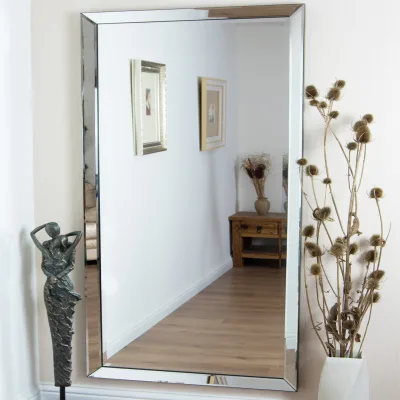
Full Length Decorative Wall Mirror with Bevelled Infinity Mirror Cheap Frameless Wall Mirror
$23.1341
MOQ: 50 Minimum

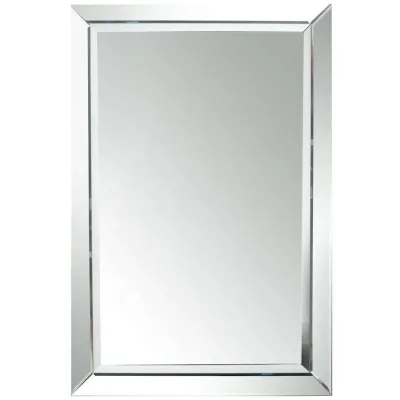
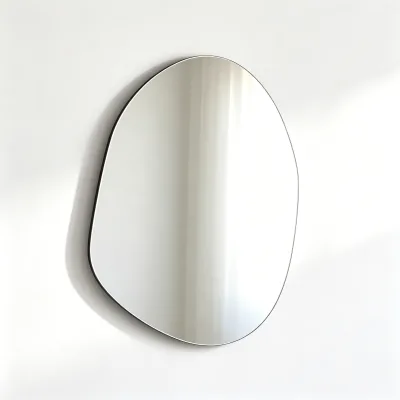
- Verified by TüVRheinland
- Manufacturer, Trading Company
- Lead time20 days
- Avg. response≤ 1h
Main productsWall Mirror, Floor Mirror, Bathroom Mirror, LED Mirror, Glass
Main marketsNorthern Europe(40%), North America(30%), Eastern Europe(30%)

Hangzhou Surfing Smart Home Co., Ltd.
- Verified by TUVRHEINLAND
- Combined
- China Zhejiang
- Lead time30 days
- Avg. response≤ 4h
Main productsLED Bathroom Mirror, LED Mirror, Mirror, Bathroom Mirror, Mirror Glass, Wall Mirror, Espejos, Dressing Mirror, Anti Fog Mirror, Aluminum Frame Mirror
Main marketsDomestic

Factory Modern Luxury Decor Rectangle Wall Frameless LED Bathroom Mirror
$15.83 - $19.88
MOQ: 10 Pieces

- Verified by TüVRheinland
- Manufacturer, Trading Company
- Lead time40 days
- Avg. response≤ 1h
Main productsDecorative Mirror, Mirror Frame, Photo Frame, Picture Frame, Furniture
Main marketsWestern Europe(25%), North America(20%), Northern Europe(10%)
Dongguan Xinkai Glass Mirror Industry Co., Ltd.
- Verified by SGS Group
- Manufacturer, Trading Company
- Lead time15 days
- Avg. response≤ 2h
Main productsBathroom Led Mirror, Mirror Cabinet, LED Mirror, Full-length Mirror, Frame Mirror
Main marketsNorth America(20%), Northern Europe(20%), Southern Europe(20%)
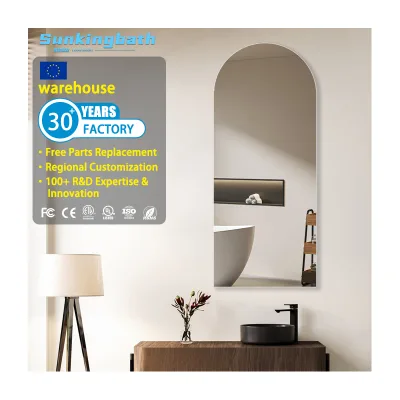
$15.00 - $30.00
MOQ: 20 pieces
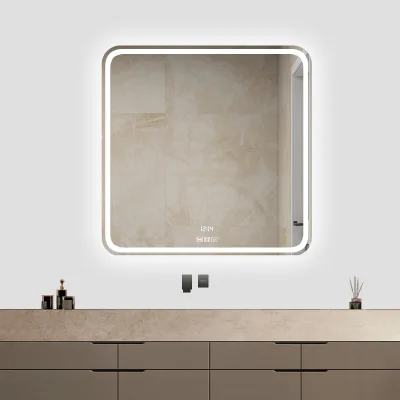
High Quality IP44 Waterproof Square Modern Frameless LED Bathroom Mirror for Showerroom
$45.9893 - $48.9723
MOQ: 10 pieces

Hangzhou Blossom Import&Export Co., Ltd.
- Verified by BV
- Trading Company,Manufacturer/Factory
- China Zhejiang
- Lead time23 days
- Avg. response≤ 5h
Main productsBathroom Mirror, Bathroom LED Mirror, Glass Wall Mirror, Glass Shower Enclosure, Glass Shower Door, Wash Basin, Bathroom Sink, Artificial Stone Bathroom Countertops, Wall Mirror, Bathroom Vanity Tops
Main marketsSouth America,Eastern Europe,Mid East,Southeast Asia,Oceania,Western Europe,Africa

Minimalist Frameless Rectangular Striped Three-Color Luminous Layered Wall Mirror
$11.90 - $30.90
MOQ: 10 Pieces

Narrow Frameless Lightweight and Stylish Smart Defogging and Dimming Wall Mirror
$11.90 - $30.90
MOQ: 10 Pieces
Hebei Balee Intelligent Technology Co., Ltd.
- Verified by TüVRheinland
- Manufacturer, Trading Company
- Lead time25 days
- Avg. response≤ 1h
Main productsBathroom Mirror, Full-Length Mirror, Dressing Mirror, Wall Mirror, Smart Mirror
Main marketsDomestic Market(40%), North America(10%), Oceania(10%)
Shandong Harvest Glass Co., Ltd.
- Manufacturer, Trading Company
- Shandong, China
- Lead time15 days
- Avg. response≤ 3h
Main productsConvex mirror glass,Auto side mirror glass,Chrome mirror glass,OEM custom products,Tempering mirror glass
Main marketsNorth America(23.00%), Domestic Market(20.00%), South America(12.00%), Africa(9.00%), Mid East(8.00%), Central America(8.00%), Northern Europe(8.00%), Eastern Europe(5.00%), Southeast Asia(3.00%), Oceania(2.00%), Western Europe(1.00%), Southern Europe(1.00%)
Milestone (hainan) Technology Co., Ltd.
- Verified by TüVRheinland
- Trading Company
- Lead time15 days
- Avg. response≤ 2h
Main productsMirror, Floor Mirror, LED Mirror, Makeup Mirror, Glass
Main marketsNorth America(30%), Eastern Europe(20%), Western Europe(10%)
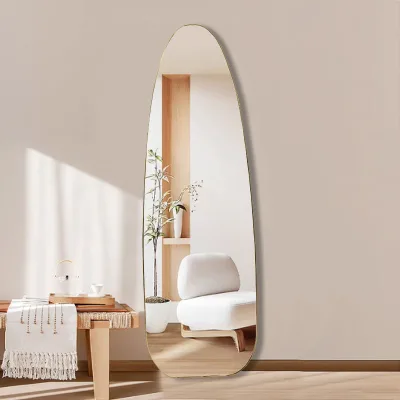
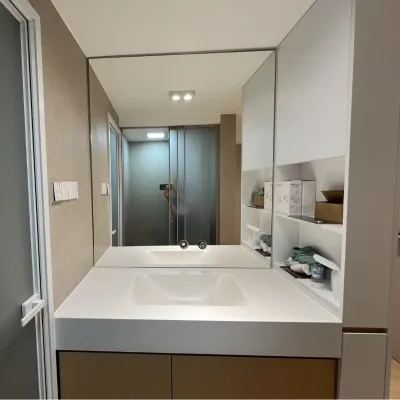
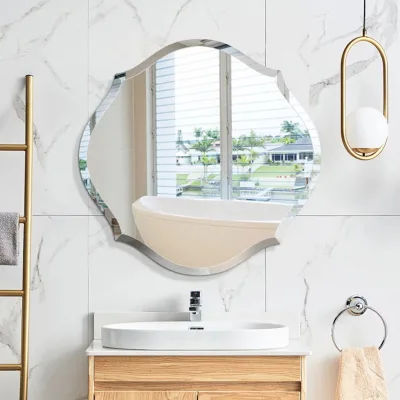
$21.9169 - $23.9855
MOQ: 50 pieces

DEZHOU HAVI ELECTRONICS CO., LTD.
- Verified by BV
- Combined
- China Shandong
- Lead time15 days
- Avg. response≤ 9h
Main productsAluminum Mirror, Tempered Glass, Convex Mirror, LED Mirror
Main marketsDomestic

Wholesale Reflector Frameless Customized Aluminum Mirror Glass Wall Mirror Glass
$1.35 - $1.40
MOQ: 100 Square Meters

Qingdao Haisen Glass Co., Ltd.
- Verified by Intertek
- Manufacturer, Trading Company
- Lead time15 days
- Avg. response≤ 2h
Main productsLaminated Glass, Architectural Glass, Aluminum Glass, Card Mirror, Super Mirror
Main marketsSoutheast Asia(37%), South America(20%), North America(10%)

Foshan Xingang Glass Co., Ltd.
- Manufacturer/Factory
- China Guangdong
- Lead time15 days
- Avg. response≤ 4h
Main productsTinted Float Glass, Decorative Glass, Table Top, Sintered Stone, Art Glass, Tempered Glass, Safety Glass, Laminated Glass, Insulating Glass, Bevelled Glass Mirrors
Main marketsSouth America,Eastern Europe,Mid East,North America,Southeast Asia,Eastern Asia,Oceania,Western Europe,Africa

Wholesale Mirrors Frame Mirror Frameless Mirror Dressing Mirror Furniture and Floor Mirrors
$10.00 - $30.00
MOQ: 100 Pieces

Framed Wall Mirror Full Length Mirror Dressing Mirror Floor Length Mirror Standing Mirror
$10.00 - $30.00
MOQ: 100 Pieces

Zhongshan Chaolang Lighting Co., Ltd.
- Verified by SGS
- Combined
- China Guangdong
- Lead time30 days
- Avg. response≤ 1h
Main marketsEurope


High Quality Elegant Matte Black Framed Wall Mirror for Apartment Bathroom
$10.00 - $15.00
MOQ: 10 Pieces


- Verified by SGS
- Combined
- China Hubei
- Lead time30 days
- Avg. response≤ 1h
Main productsGlass Deep Processing, Clear Tempered Glass, Laminated Glass, Wired Glass, Pattern Glass, Glazed Glass, Mirror, Oil Sand Glass, Insulating Glass, Paint Glass
Main marketsDomestic,North America
Chaozhou City Kaling Sanitary Ware Technology Co., Ltd.
- Manufacturer
- Guangdong, China
- Lead time30 days
- Avg. response≤ 6h
Main productsbasin,toilet,bathroom cabinet,wall-hung urinal,bathroom accessories
Main marketsSoutheast Asia(17.00%), Mid East(17.00%), North America(17.00%), Domestic Market(15.00%), Eastern Asia(11.00%), Africa(11.00%), South America(3.00%), South Asia(3.00%), Northern Europe(3.00%), Central America(3.00%)

- Trading Company,Manufacturer/Factory
- China Shandong
- Lead time15 days
- Avg. response≤ 12h
Main productsMirror, Reflective Glass, Float Glass, Laminated Glass, Tempered Glass, Patterned Glass, Painted Glass, Tinted Glass, Low-E Glass, Insulated Glass
Main marketsSouth America,Eastern Europe,Mid East,North America,Southeast Asia,Eastern Asia,Oceania,Western Europe,Africa


Mirror Glass/Bathroom Mirror/Decorative Mirror/Silver Mirror/Wall Mirrors/Float Silver Mirror
$0.99 - $29.99
MOQ: 1 Square Meters


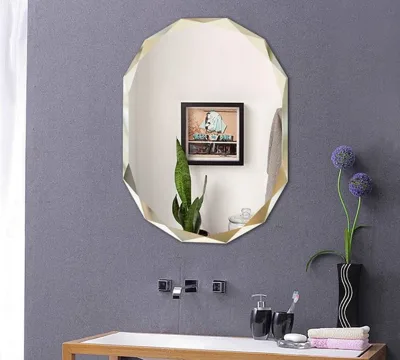
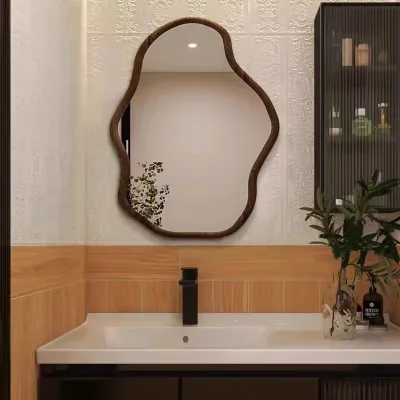
Comprehensive Sourcing Guide
Frameless Contemporary Wall Mirror Supplier Concentration and Factory Types
The current supplier landscape for frameless contemporary wall mirrors reveals a distinct geographic and structural distribution that buyers must navigate carefully. Evidence indicates that manufacturing and trading entities are concentrated in specific Chinese provinces, with Zhejiang and Shandong emerging as notable hubs for this category. Suppliers located in Zhejiang are often categorized as combined entities, suggesting a hybrid operational model that may blend manufacturing capabilities with trading functions. This structure can offer flexibility in product customization and order handling, as these suppliers frequently list capabilities such as OEM and ODM services. In contrast, suppliers based in Shandong appear to operate with a broader focus on glass products, including tempered glass, laminated glass, and various mirror types. This diversification in main products suggests that Shandong-based factories may have robust production lines for glass processing, which can be leveraged for frameless mirror orders. Additionally, suppliers in Hebei are identified as trading companies, which implies they may not own the manufacturing facilities directly but instead facilitate access to a wider network of producers. Understanding these company types is crucial for buyers, as trading companies might offer different service levels, such as consolidated shipping or broader product ranges, compared to direct factories. The presence of these varied entity types across different regions means that buyers should not assume a uniform production capability across all suppliers. Instead, they must assess whether the supplier’s specific structure aligns with their needs for customization, volume, or direct factory interaction. The concentration in these regions also hints at established supply chains for raw materials like aluminum and glass, which are essential for producing high-quality frameless mirrors. Buyers should consider how these regional specializations might impact lead times, quality control, and overall cost efficiency when selecting a partner.
How to Verify Frameless Contemporary Wall Mirror Suppliers
Verification is a critical step in ensuring that the suppliers you engage with meet your quality and reliability standards. One key indicator of supplier credibility is the verification status provided by third-party inspection agencies. For instance, some suppliers in the current results are verified by SGS, a globally recognized inspection and certification company. This verification suggests that the supplier has undergone rigorous checks regarding their business legitimacy, production capabilities, and quality management systems. Buyers should prioritize suppliers with such verifications, as they provide an additional layer of trust and reduce the risk of dealing with fraudulent or unreliable entities. Beyond verification badges, buyers should also examine the supplier’s response time, which serves as a proxy for their operational efficiency and customer service quality. Suppliers with faster response times, such as those averaging around 1.30 to 4.31 hours, are likely more responsive to inquiries and better equipped to handle urgent requests or complex customization needs. Additionally, buyers should look for evidence of established standards and certifications, such as ISO, CE, or CCC, which indicate that the supplier adheres to international quality and safety norms. These certifications are particularly important for frameless mirrors, as they ensure that the glass and aluminum components meet specific durability and safety requirements. Buyers should also verify the supplier’s production capacity and customization options, as these factors directly impact their ability to fulfill large or specialized orders. By cross-referencing these verification details with the supplier’s stated capabilities, buyers can build a more accurate profile of each potential partner. This due diligence process helps mitigate risks associated with quality inconsistencies, delayed shipments, or non-compliance with industry standards.
What to Compare Across Frameless Contemporary Wall Mirror Suppliers
When evaluating multiple suppliers for frameless contemporary wall mirrors, buyers should focus on comparing key operational and commercial metrics to identify the best fit for their specific requirements. One of the most critical factors to compare is the minimum order quantity (MOQ), which can vary significantly across suppliers. For example, some suppliers may have an MOQ of 100 units, making them suitable for smaller or trial orders, while others may require MOQs of 500 or even 1000 units, which is more appropriate for large-scale procurement. Buyers should also compare lead times, as these directly impact inventory management and project timelines. Suppliers with shorter lead times, such as 15 to 23 days, can offer faster delivery, which is advantageous for time-sensitive projects. Another important metric is the price range, which can provide insights into the supplier’s cost structure and value proposition. Prices for frameless mirrors in the current results range from as low as $0.20 to over $13.99 per unit, depending on factors such as thickness, size, and customization options. Buyers should also assess the supplier’s response speed, as quicker responses often correlate with better communication and problem-solving capabilities. Additionally, comparing the supplier’s main products and customization capabilities can help determine their expertise in frameless mirrors. Suppliers that specialize in a wide range of glass products may offer more flexibility in terms of materials and finishes. By systematically comparing these metrics, buyers can create a weighted scoring system to objectively evaluate and rank potential suppliers. This approach ensures that the final selection is based on data-driven insights rather than subjective impressions.
Common Frameless Contemporary Wall Mirror Sourcing Risks
Sourcing frameless contemporary wall mirrors from international suppliers involves several inherent risks that buyers must proactively manage to ensure a smooth procurement process. One significant risk is the potential for quality inconsistencies, particularly when dealing with suppliers who offer extensive customization options. While customization allows for tailored products, it also increases the complexity of quality control, as each order may have unique specifications that require careful monitoring. Buyers should be aware that not all suppliers may have the same level of expertise in handling complex customizations, which can lead to defects or deviations from the agreed-upon standards. Another risk is the variability in lead times, which can be influenced by factors such as raw material availability, production capacity, and logistical constraints. Suppliers with longer lead times may struggle to meet tight project deadlines, potentially causing delays in installation or sales. Additionally, buyers should be cautious of suppliers who do not provide clear information about their certifications or standards, as this can indicate a lack of adherence to industry best practices. The absence of verified certifications like ISO or CE may also raise concerns about the safety and durability of the mirrors, especially in commercial or high-traffic environments. Furthermore, buyers should consider the risk of communication barriers, particularly when working with suppliers in different time zones or language backgrounds. Miscommunication can lead to errors in order specifications, shipping instructions, or payment terms, resulting in costly rework or disputes. To mitigate these risks, buyers should establish clear communication channels, request detailed product specifications, and consider using escrow services to protect their payments until the goods are received and inspected.
Frameless Contemporary Wall Mirror Regional Sourcing and Logistics
The geographic location of suppliers plays a crucial role in determining the logistics and shipping costs associated with sourcing frameless contemporary wall mirrors. Suppliers located in different Chinese provinces may have varying access to ports and transportation networks, which can impact delivery times and overall costs. For instance, suppliers in Zhejiang and Shandong are situated in regions with well-developed port infrastructure, facilitating efficient sea freight shipments. This proximity to major ports can reduce transit times and lower shipping costs, making these locations advantageous for buyers seeking timely delivery. In contrast, suppliers in Hebei, while also in China, may have different logistical advantages depending on their specific location and connections to inland transportation networks. Buyers should also consider the transportation methods offered by suppliers, such as sea, train, or air freight, as these options can affect both cost and speed. Sea freight is typically the most cost-effective option for large volumes, while air freight may be necessary for urgent or smaller orders. Additionally, buyers should be aware of the packaging standards employed by suppliers, as frameless mirrors are fragile and require secure packaging to prevent damage during transit. Suppliers that use wooden or plywood crates, as indicated in some product details, are likely better equipped to protect the mirrors during shipping. Buyers should also verify the supplier’s experience with international shipping, as this can influence their ability to handle customs clearance and documentation efficiently. By understanding the logistical implications of regional sourcing, buyers can make informed decisions that balance cost, speed, and reliability.
Frameless Contemporary Wall Mirror Commercial Terms and Order Planning
Effective order planning and clear commercial terms are essential for successful procurement of frameless contemporary wall mirrors. Buyers should carefully review the payment terms, delivery conditions, and warranty policies offered by each supplier to ensure they align with their business needs. One important aspect to consider is the supplier’s flexibility in handling custom orders, as frameless mirrors often require specific dimensions, finishes, or packaging. Suppliers that explicitly state customization availability and provide detailed product attributes, such as thickness, frame material, and style, are better positioned to meet these requirements. Buyers should also assess the supplier’s ability to provide samples before placing large orders, as this allows for quality verification and specification confirmation. Additionally, buyers should consider the supplier’s capacity to handle volume orders, as indicated by their stated production capabilities and past performance. Suppliers with OEM and ODM capabilities may offer more competitive pricing for large orders, as they can optimize production processes for efficiency. Buyers should also negotiate clear terms for quality assurance, including inspection rights and return policies, to protect against defective products. Furthermore, understanding the supplier’s lead time commitments is crucial for project planning, as delays can have cascading effects on downstream operations. By establishing transparent commercial terms and maintaining open communication, buyers can build a reliable supply chain that supports their business objectives. This proactive approach helps minimize risks and ensures that the procurement process runs smoothly from order placement to final delivery.
FAQs
What is the price range for frameless contemporary wall mirrors?
Prices for frameless contemporary wall mirrors typically range from $0.20 to $13.99 per unit depending on thickness and customization. Basic aluminum mirrors start at lower price points, while custom household or hotel-grade options cost more. Buyers should verify specific pricing based on order volume and material specifications.
What is the minimum order quantity for these mirrors?
Minimum order quantities vary significantly by supplier, ranging from 100 to 1000 pieces. Some manufacturers accept orders as low as 100 units for customized designs, while others require 500 or 1000 pieces for standard frameless glass mirrors. Buyers must check individual supplier listings to confirm the exact MOQ applicable to their project.
How long does production take for these mirrors?
Production lead times generally range from 15 to 23 days for frameless contemporary wall mirrors. Suppliers in China offer varying turnaround speeds based on order complexity and stock availability. Buyers should confirm specific delivery schedules with suppliers before placing orders to ensure timely project completion.
Are these mirrors customizable for specific projects?
Yes, most suppliers offer customization options including shape, size, and packaging. Many manufacturers support OEM and ODM services for household, hotel, or commercial use. Buyers can request specific thicknesses, finishes, or packing methods to meet unique project requirements and branding standards.
What certifications do these mirrors have?
Certification standards vary by supplier, with some products meeting ISO, CE, or CCC standards. Certain manufacturers hold SGS verification for quality assurance. Buyers should request specific certification documents for each product batch to ensure compliance with local building codes and safety regulations.
Where are these mirrors manufactured?
Manufacturing locations include provinces such as Zhejiang, Shandong, and Hebei in China. Suppliers in these regions specialize in tempered glass, aluminum mirrors, and decorative wall mirrors. Buyers can filter results by location to prioritize suppliers near specific shipping ports or logistics hubs.